Extending and Evolving Services
         to the Cloud
           Suren Pinto
          CEO WaveNET
Going Once…
Going Twice…
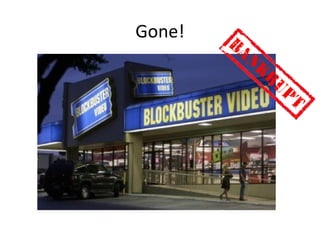
Gone!
What happened?
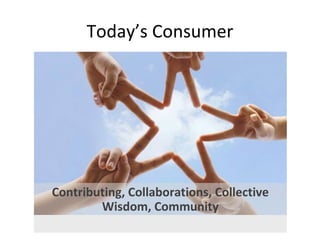
Today’s Consumer


Contributing, Collaborations, Collective
        Wisdom, Community
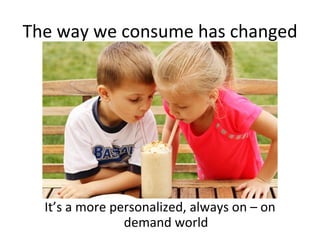
The way we consume has changed


  It’s a more personalized, always on – on
                demand world
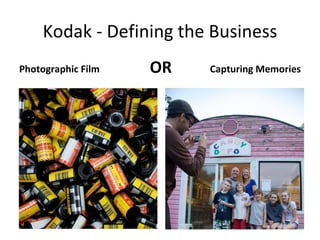
Kodak - Defining the Business
Photographic Film   OR   Capturing Memories
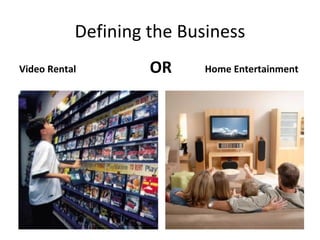
Defining the Business
Video Rental        OR     Home Entertainment
The Need is there!


It’s the way its consumed that is different
Telecom Today
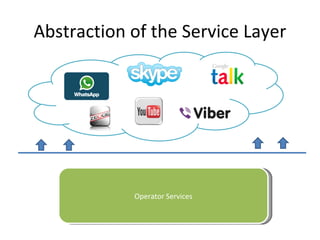
Abstraction of the Service Layer


            Operator Services
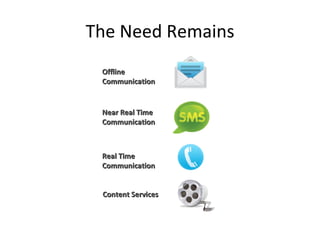
The Need Remains
 Offline
 Communication


 Near Real Time
 Communication


 Real Time
 Communication


 Content Services
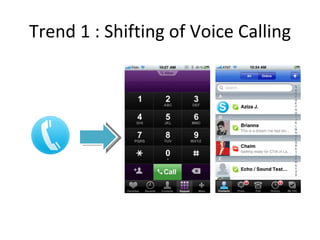
Trend 1 : Shifting of Voice Calling
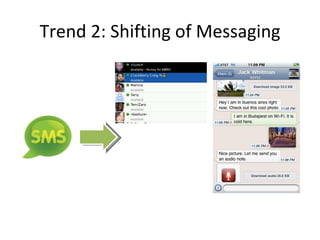
Trend 2: Shifting of Messaging
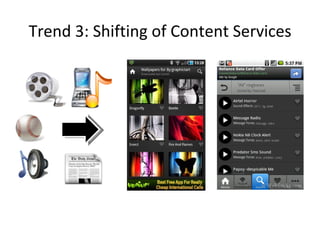
Trend 3: Shifting of Content Services
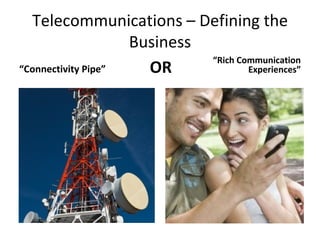
Telecommunications – Defining the
                    Business
                             “Rich Communication
“Connectivity Pipe”   OR             Experiences”
Rich communications – How?
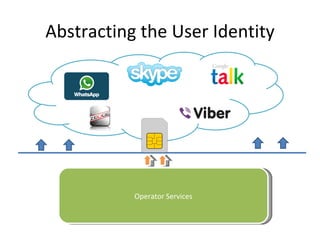
Abstracting the User Identity


           Operator Services
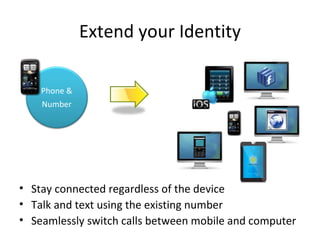
Extend your Identity

    Phone &
    Number


• Stay connected regardless of the device
• Talk and text using the existing number
• Seamlessly switch calls between mobile and computer
Disrupting the Roaming Paradigm
Access Across Boundaries


           07-xxx-xxx
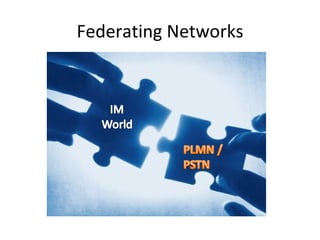
Federating Networks
What is Rightfully Yours…
www.globalwavenet.com

Suren_Pinto_extending and evolving services to the cloud v1.6

Editor's Notes

  • #3 During most of the 20th century Kodak, the imaging company, held a dominant position in photographic film. In 1976 Kodak had a 90% market share of photographic film sales in the United States…. In January 2012, Kodak filed for Chapter 11 bankruptcy protection… One year later announced that they would cease operations in most core business areas and simply focus on the corporate digital imaging market. Kodak’s story is not an isolated one, it is simply the most high profile case of a long list of imaging organizations that failed to EVOLVE their business models to adapt to the changing environments
  • #4 Another major industry for over half a century, which not only had significant commercial clout but cultural significance as well, the music retail business is now on the verge of collapsing. Within the tiny span of just under a decade, with the advent of online music retailing, the power of music distribution slowly shifted away from record companies and music retail stores.
  • #5 Another industry that is seeing its last days, is the home video and video game rental industry. With it’s heyday in the VHS era far behind them, multinational companies such as blockbuster have filed for bankruptcy in light of the growing dominance of on-demand Internet streaming media providers such as Netflix. This coupled with internet piracy, and the constantly reducing cost of retail media, has meant that fewer and fewer visit their local video rental store anymore.
  • #7 Begin by understanding “Today’s Consumer”. Today’s consumer is a more radically different creature compared to the one just a decade ago. This consumer is highly focused on “Contributing”, and “Collaboration”,; he is more dependent on “Collective Wisdom”, and most importantly believes in the POWER of “Community”. The “new internet” is gearing rapidly towards offering this, and more and more consumers are coming on aboard.
  • #9 Where these organizations, and most others go wrong is in accurately DEFINING what business they are in. Kodak when faced with this may have responded with “The photographic film business”, however they should have actually identified that they are in the business of “Capturing Memories”
  • #10 Blockbuster on the other hand might have identified themselves as being in the “Video Rental business”; what they should have realized that they are in the “Home Entertainment Business”. If kodak and Blockbuster had correctly defined their business and adapted their business models accordingly, chances are they wouldn’t be in this current predicament.
  • #11 The telecommunications industry has seen an overwhelming changes over the last decade. Former Industry pillars, such as Nokia are struggling to remain relevant whilst virtual outliers like Apple and Google are now at the helm of the entire industry.
  • #14 We must not forget that the consumer NEED for communication has not changed, it is the way he meets this need that has. Offline communication for instance was primarily carried out via Email, but new research clearly indicates that web mail for instance is on the decline, whereas facebook messaging is increasing exponentially. Similarly whilst we use to use SMS predominantly in the past, we are now using IM applications. Whilst voice conferencing was popular earlier now consumers are shifting towards services such as Google Hangouts.
  • #15 Whilst voice calls were previously the sole realm of the operator, now consumers are increasingly meeting their communication needs with third party services such as Skype and Viber, gradually diminishing one of the operators core revenue stream. This is clearly demonstrated by the statistic that with an estimated 96 billion minutes of international talk time, Skype is now the world’s largest international voice carrier (FT.com, 2011)
  • #16 Voice Calling is not the only area that is at risk, the situation is even more dire in the case of operator messaging services. Operator services are being rapidly supplanted by IM apps such as BBM, and Whats App. The immense popularity of these apps is indicated by the fact that VoIP and IM applications increased 110% in mobile networks over the past six months (Allot Mobile Trends Report, 2011). Research has clearly indicated that People who use MIM, use SMS significantly less (compared to all consumers) (TNS Technology MIM Report, 2008).
  • #17 Previously consumers use to rely solely on operators for content, from games to wallpapers to ringtones, operators were the sole provider to the subscribes. That is now completely changed, with subscribers utilizing the cloud for their content requirements. Myriads of content applications offer a much larger array of content to consumers than they previously used to have access to. They can access this content independent of the network they are in at a fraction of the cost.
  • #18 First and foremost we must DEFINE the business we are in. We must differentiate as to whether we are just a “Connectivity Pipe” or are we in the business of offering “Rich Communication Experiences”!!! We must adapt both our business and operational models accordingly.
  • #21 Today users activity is revolves around the phone Talk and text using the existing number not limited to the phone
  • #22 At WaveNET we have been working on solutions that enable operators to disrupt and truly revolutionize the existing roaming landscape. WaveNET’s solutions enable the extension of voice and text services into the cloud.
  • #24 WaveNET’s cloud solutions also goes that extra mile by bridging the gap between operator networks and internet networks. This will enable subscribers to make and receive calls between 2 networks, such as from Gtalk to mobile! This solution holds immense revenue potential as it allows the operator to exceed his traditional reach and potentially capture hundreds of millions users in the networks such as Gtalk , SIP, etc.
  • #25 The rise of the cloud presents an ideal opportunity for operators to extend their services to the web and open up their network to millions of users in the cloud, thereby increase revenue potential and retention by combating non-traditional competition. Most importantly it gives them the ability to “be where the consumers are” and thereby regain vital consumer mindshare. This will empower operators to remain relevant in an increasingly data centric world