AGENDA
•   NEED
•   WHAT IS UC
•   COMPONENTS OF UC
•   ARCHITECTURE
•   CHALLENGES & BENEFITS
•   MARKET & MAJOR PLAYERS – OVERVIEW
•   FUTURE OF UC
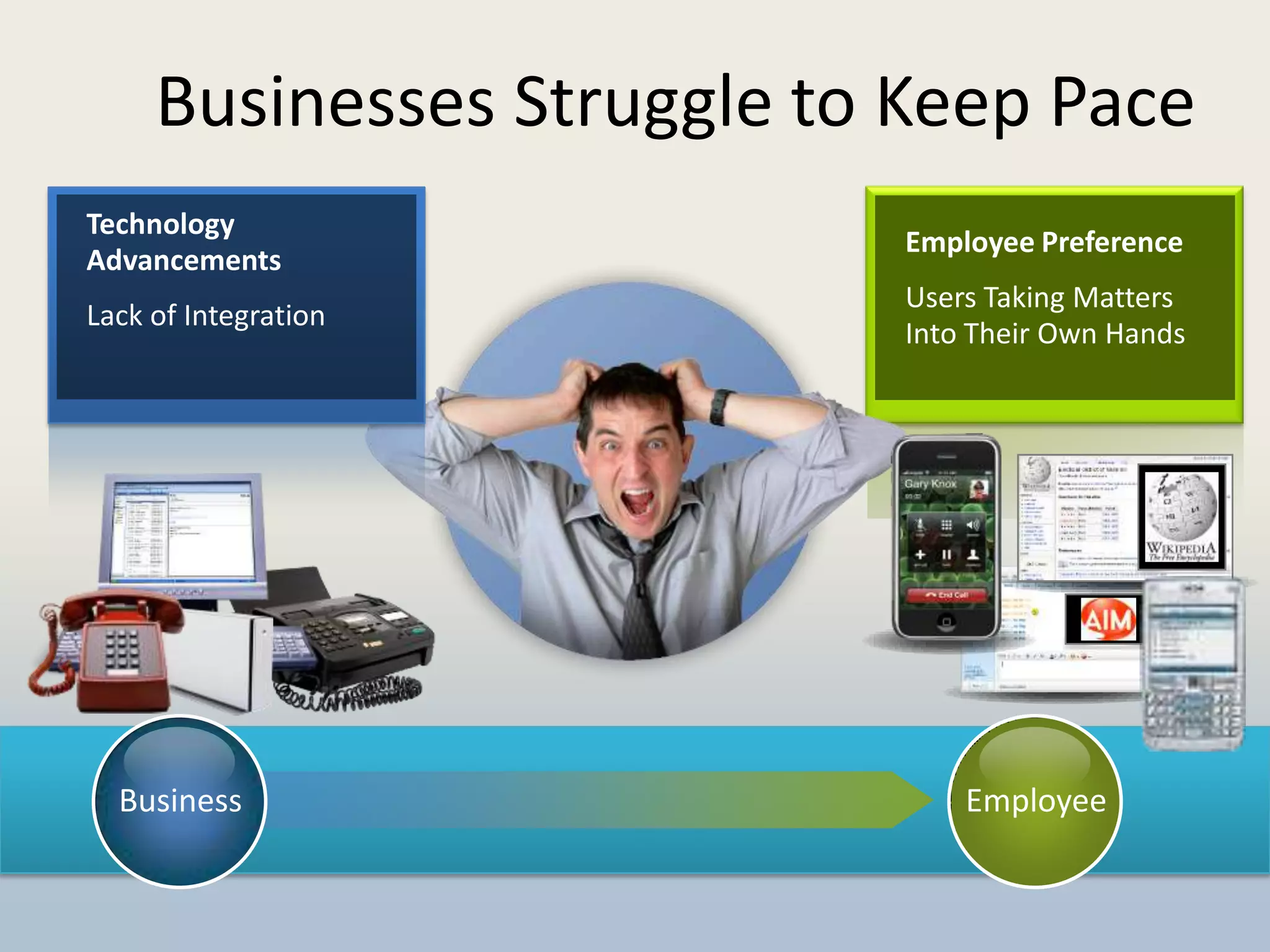
Businesses Struggle to Keep Pace
Technology
                            Employee Preference
Advancements
                            Users Taking Matters
Lack of Integration
                            Into Their Own Hands


  Business                      Employee
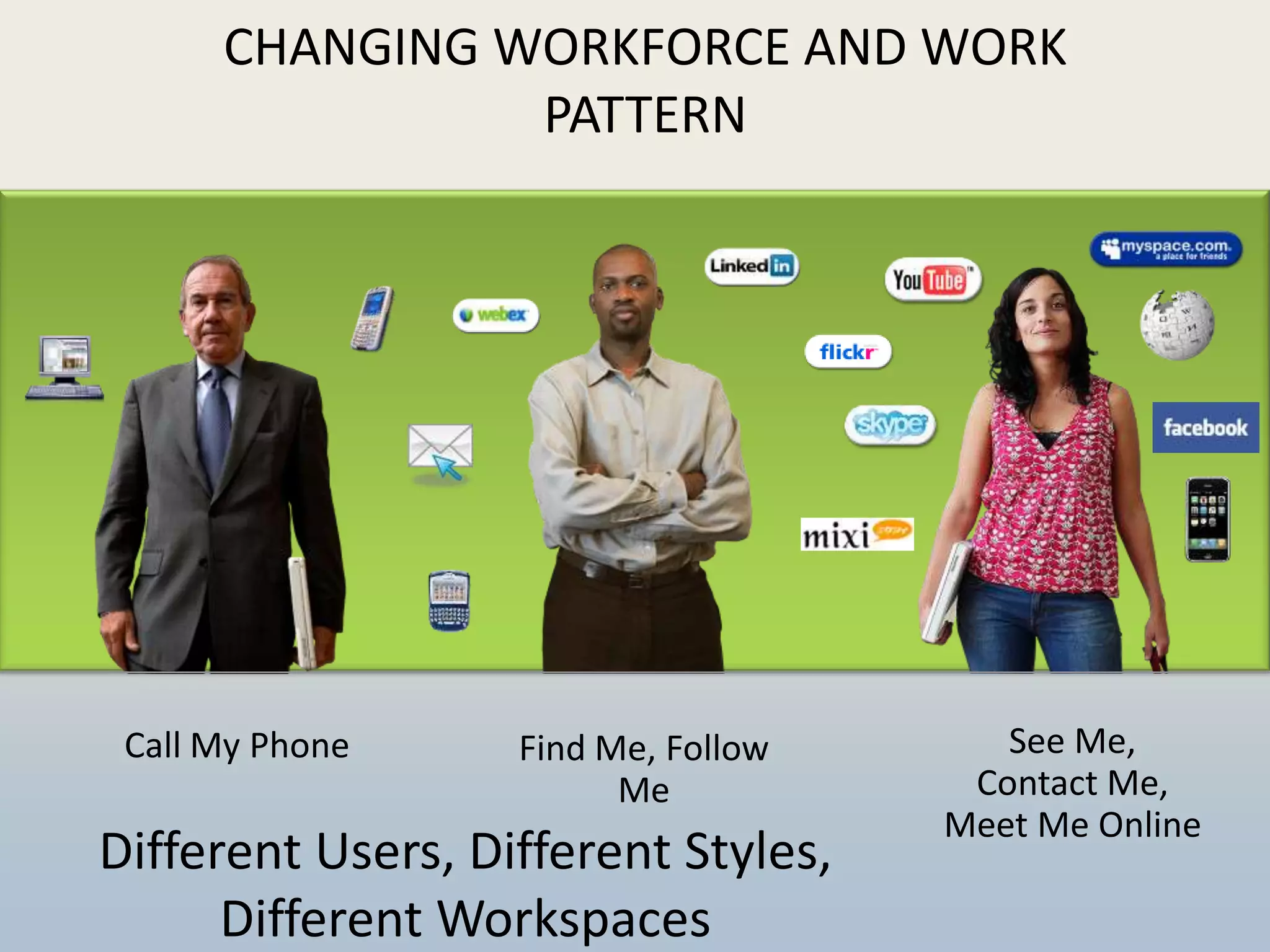
CHANGING WORKFORCE AND WORK
                PATTERN


 Call My Phone     Find Me, Follow      See Me,
                         Me           Contact Me,
                                     Meet Me Online
Different Users, Different Styles,
      Different Workspaces
The Way We Work Is Changing
             and Technology Can Help
           Operations across time zones               Continuous connectivity
           The evolving workspace                     Real-time information

                        Business                              Technology


                                             UC

           Legal                           Competition                            Society

 New and changing regulations       Empowered employees           Social networks and Web 2.0
 Policies                           Customer intimacy             Mobile workforce
 Security                           Larger businesses             Green initiatives
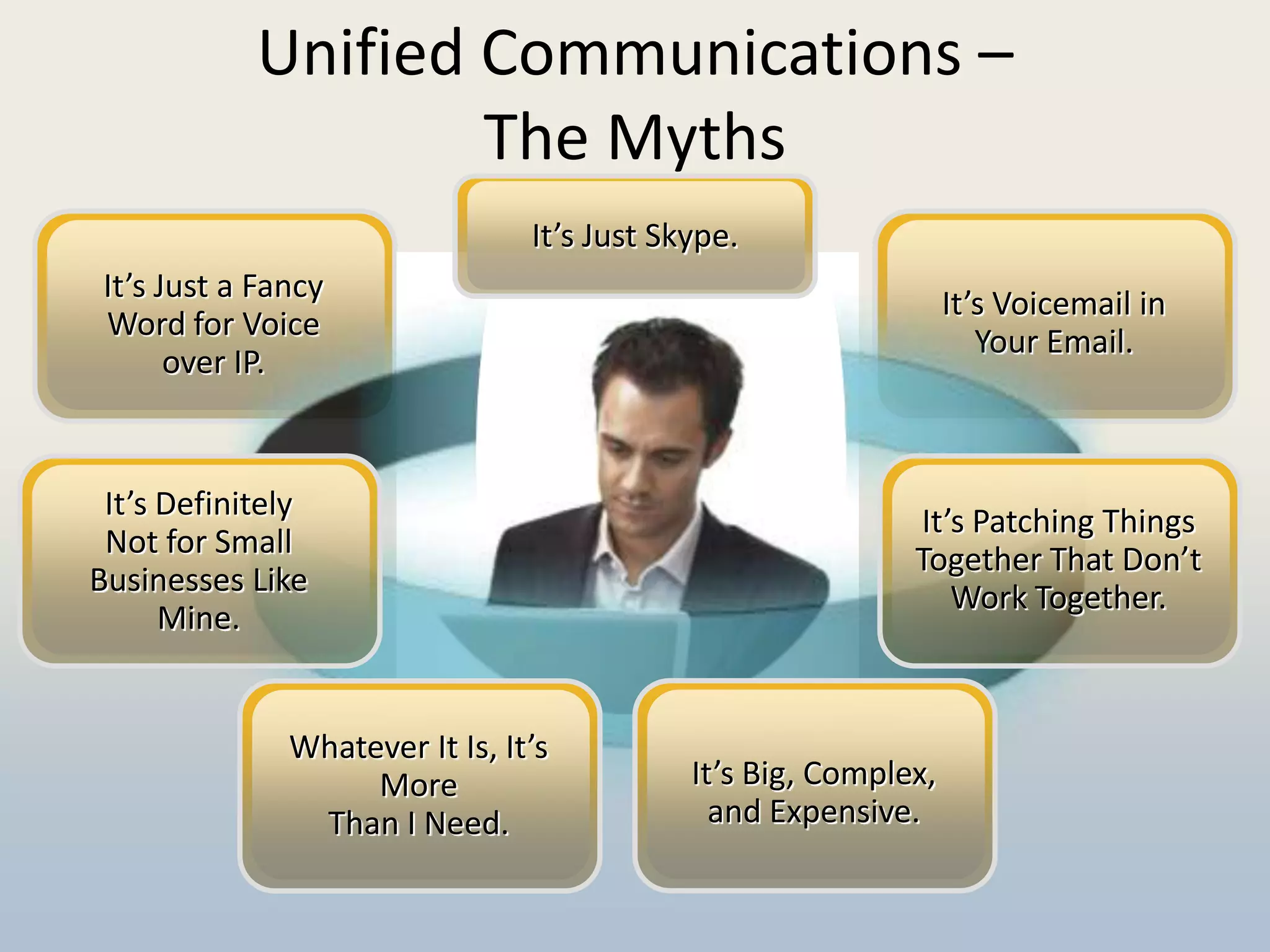
Unified Communications –
                    The Myths
                                 It’s Just Skype.
 It’s Just a Fancy                                                It’s Voicemail in
 Word for Voice                                                      Your Email.
       over IP.


 It’s Definitely                                             It’s Patching Things
 Not for Small                                               Together That Don’t
Businesses Like                                                 Work Together.
      Mine.


               Whatever It Is, It’s
                    More                     It’s Big, Complex,
                Than I Need.                   and Expensive.
DEFINE UC
UC is the integration of real-time communication services
such as instant messaging (chat), presence information,
telephony (including IP telephony), video conferencing,
data sharing (including web connected electronic
whiteboards aka IWB's or Interactive White Boards), call
control and speech recognition with non-real-time
communication services such as unified
messaging (integrated voicemail, e-mail, SMS and fax).
UC is not necessarily a single product, but a set of
products that provides a consistent unified user interface
and user experience across multiple devices and media
types.
Components of UC
• Communications: Voice, data, and video
• Messaging: Voice, email, video, and IM
• Conferencing: Online, audio, and video
• Application integration: Microsoft Office and
  CRM
• Presence: IP phone, desktop clients, and call
  connectors
• Common user experience: Desktop, phone,
  and mobility
Model of UC
Unified messaging focuses on allowing users to access voice, e-mail, fax and other
mixed media from a single mailbox independent of the access device.

Multimedia services include messages of mixed media types such as video, sound
clips, and pictures, and include communication via short message services (SMS).

Collaboration and interaction systems focus on applications such as calendaring,
scheduling, workflow, integrated voice response (IVR), and other enterprise
applications that help individuals and workgroups communicate efficiently.

Real-time and near real-time communications systems focus on fundamental
communication between individuals using applications or systems such as
conferencing, instant messaging, traditional and next-generation private branch
exchanges (PBX), and paging.

Transactional and informational systems focus on providing access to m-commerce, e-
commerce, voice Web-browsing, weather, stock-information, and other enterprise
applications.
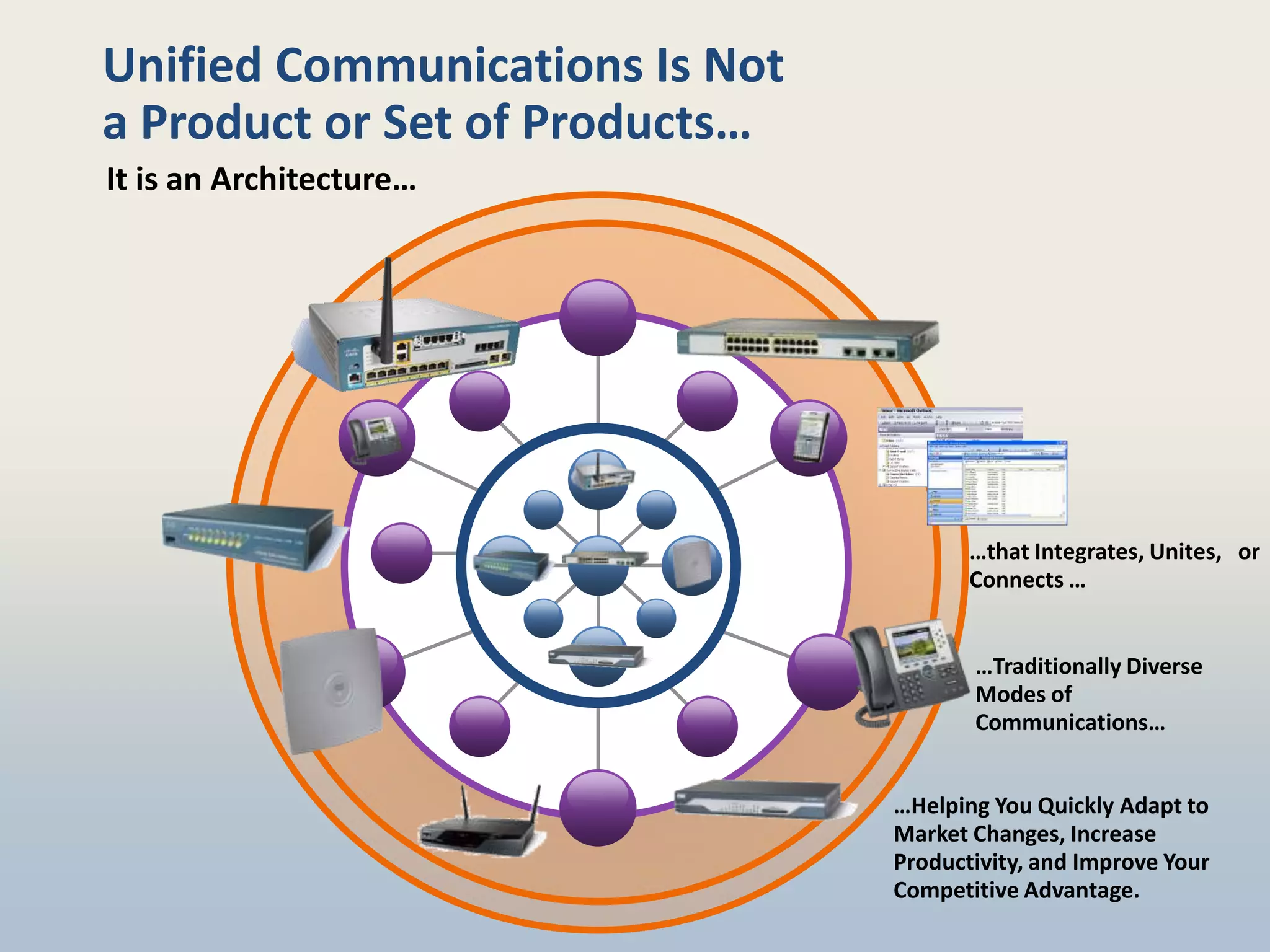
Unified Communications Is Not
a Product or Set of Products…
It is an Architecture…


                                       …that Integrates, Unites, or
                                       Connects …


                                       …Traditionally Diverse
                                       Modes of
                                       Communications…


                                …Helping You Quickly Adapt to
                                Market Changes, Increase
                                Productivity, and Improve Your
                                Competitive Advantage.
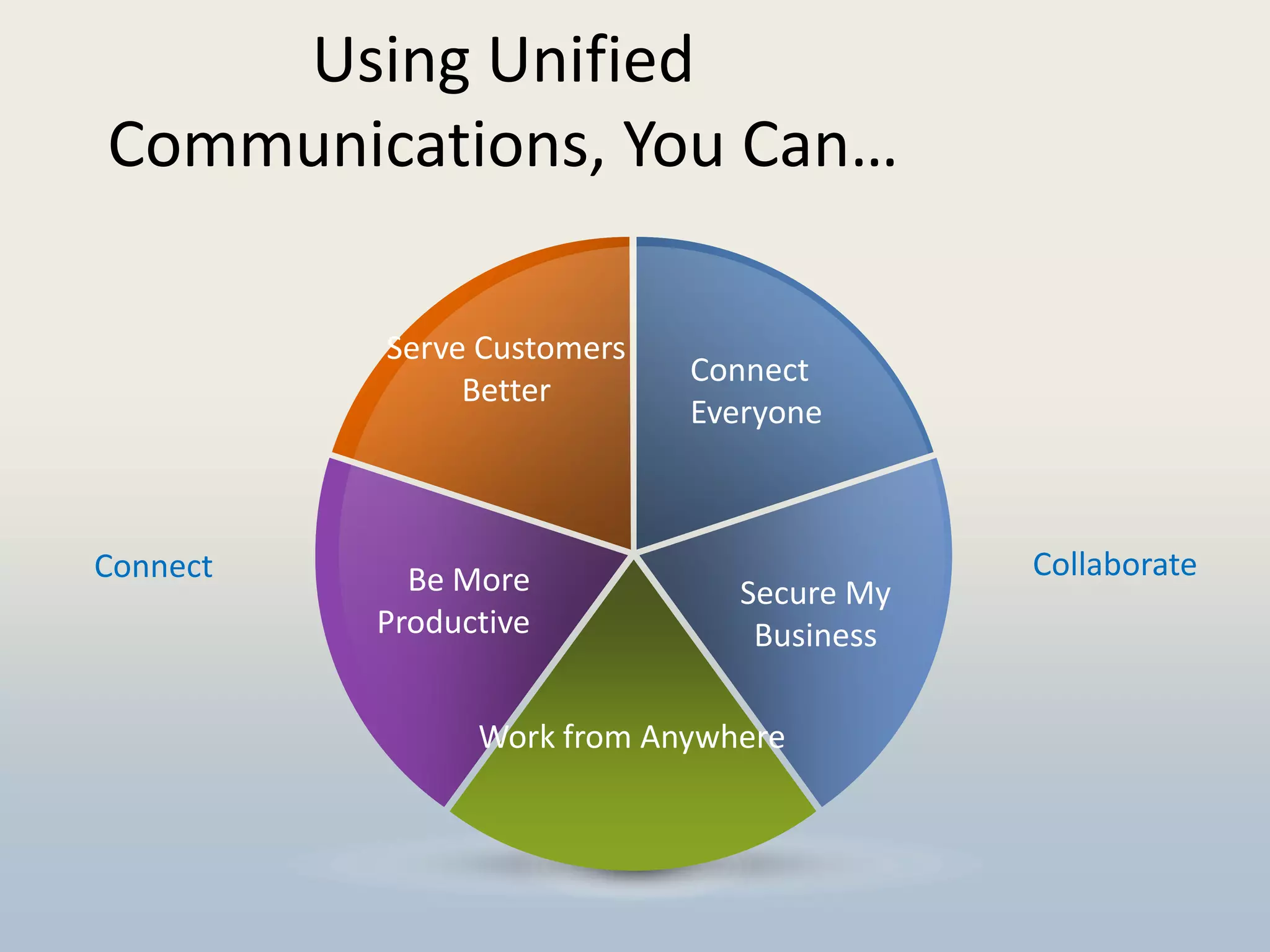
Using Unified
Communications, You Can…

          Serve Customers
                            Connect
               Better
                            Everyone


Connect     Be More                        Collaborate
                               Secure My
          Productive            Business

                Work from Anywhere
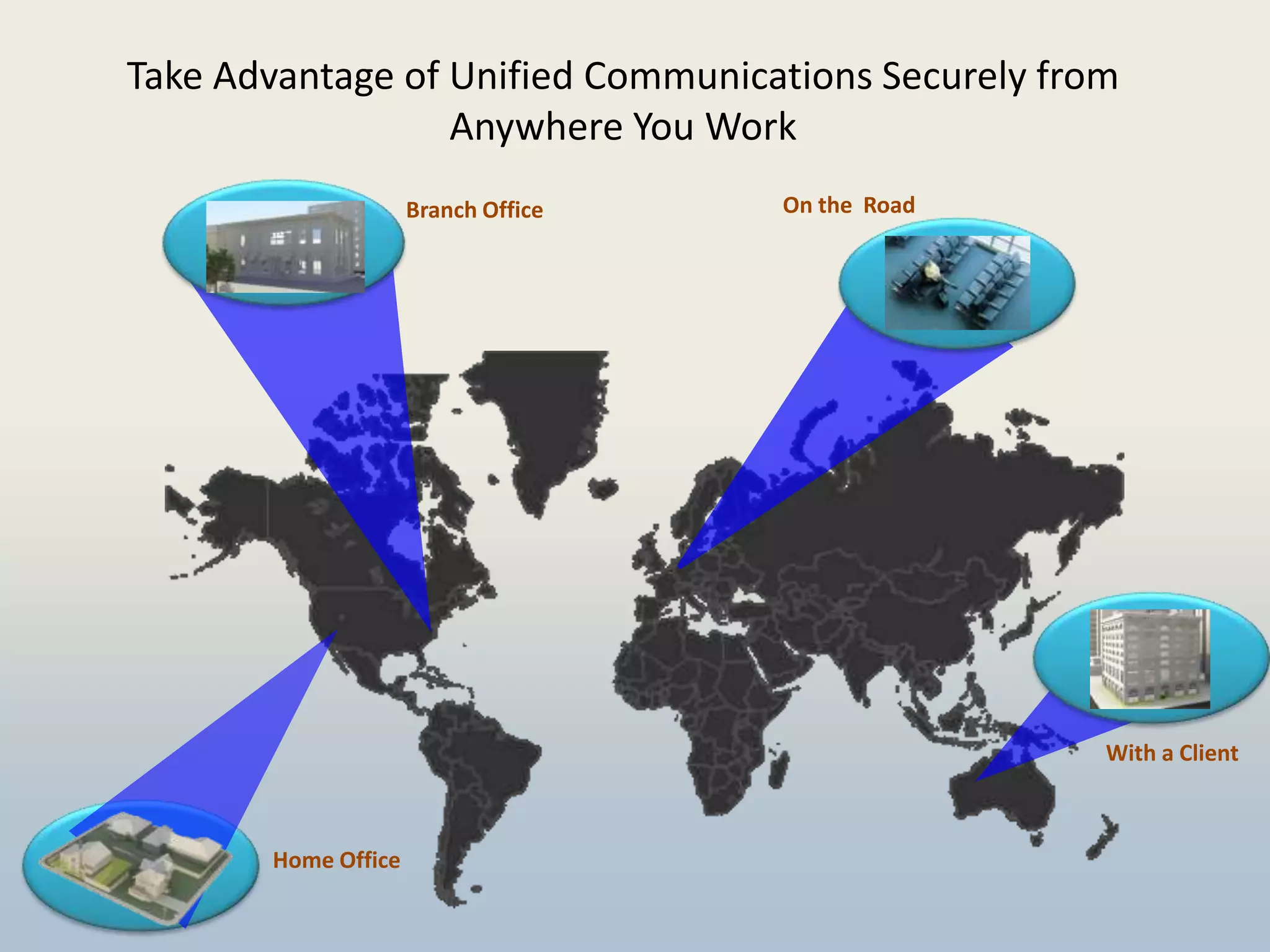
Take Advantage of Unified Communications Securely from
                  Anywhere You Work
                     Branch Office   On the Road


                                                     With a Client


       Home Office
Market Scenario
Future of UC
- Movement toward Software Approaches
- Distance from hardware-centric products
- Service Oriented Architecture
- Increasing Web Services
- Demanding Mobility
- Always Connected
- Faster and Quick Response
- Increased Competition
BE UNIFIED . BE CONNECTED

Unified Communication Presentation

  • 2.
    AGENDA • NEED • WHAT IS UC • COMPONENTS OF UC • ARCHITECTURE • CHALLENGES & BENEFITS • MARKET & MAJOR PLAYERS – OVERVIEW • FUTURE OF UC
  • 3.
    Businesses Struggle toKeep Pace Technology Employee Preference Advancements Users Taking Matters Lack of Integration Into Their Own Hands Business Employee
  • 4.
    CHANGING WORKFORCE ANDWORK PATTERN Call My Phone Find Me, Follow See Me, Me Contact Me, Meet Me Online Different Users, Different Styles, Different Workspaces
  • 5.
    The Way WeWork Is Changing and Technology Can Help  Operations across time zones  Continuous connectivity  The evolving workspace  Real-time information Business Technology UC Legal Competition Society  New and changing regulations  Empowered employees  Social networks and Web 2.0  Policies  Customer intimacy  Mobile workforce  Security  Larger businesses  Green initiatives
  • 6.
    Unified Communications – The Myths It’s Just Skype. It’s Just a Fancy It’s Voicemail in Word for Voice Your Email. over IP. It’s Definitely It’s Patching Things Not for Small Together That Don’t Businesses Like Work Together. Mine. Whatever It Is, It’s More It’s Big, Complex, Than I Need. and Expensive.
  • 7.
    DEFINE UC UC isthe integration of real-time communication services such as instant messaging (chat), presence information, telephony (including IP telephony), video conferencing, data sharing (including web connected electronic whiteboards aka IWB's or Interactive White Boards), call control and speech recognition with non-real-time communication services such as unified messaging (integrated voicemail, e-mail, SMS and fax). UC is not necessarily a single product, but a set of products that provides a consistent unified user interface and user experience across multiple devices and media types.
  • 8.
    Components of UC •Communications: Voice, data, and video • Messaging: Voice, email, video, and IM • Conferencing: Online, audio, and video • Application integration: Microsoft Office and CRM • Presence: IP phone, desktop clients, and call connectors • Common user experience: Desktop, phone, and mobility
  • 9.
    Model of UC Unifiedmessaging focuses on allowing users to access voice, e-mail, fax and other mixed media from a single mailbox independent of the access device. Multimedia services include messages of mixed media types such as video, sound clips, and pictures, and include communication via short message services (SMS). Collaboration and interaction systems focus on applications such as calendaring, scheduling, workflow, integrated voice response (IVR), and other enterprise applications that help individuals and workgroups communicate efficiently. Real-time and near real-time communications systems focus on fundamental communication between individuals using applications or systems such as conferencing, instant messaging, traditional and next-generation private branch exchanges (PBX), and paging. Transactional and informational systems focus on providing access to m-commerce, e- commerce, voice Web-browsing, weather, stock-information, and other enterprise applications.
  • 10.
    Unified Communications IsNot a Product or Set of Products… It is an Architecture… …that Integrates, Unites, or Connects … …Traditionally Diverse Modes of Communications… …Helping You Quickly Adapt to Market Changes, Increase Productivity, and Improve Your Competitive Advantage.
  • 11.
    Using Unified Communications, YouCan… Serve Customers Connect Better Everyone Connect Be More Collaborate Secure My Productive Business Work from Anywhere
  • 12.
    Take Advantage ofUnified Communications Securely from Anywhere You Work Branch Office On the Road With a Client Home Office
  • 13.
  • 15.
    Future of UC -Movement toward Software Approaches - Distance from hardware-centric products - Service Oriented Architecture - Increasing Web Services - Demanding Mobility - Always Connected - Faster and Quick Response - Increased Competition
  • 16.
    BE UNIFIED .BE CONNECTED

Editor's Notes

  • #8 The goal of unified communications involves breaking down these barriers so that people using different modes of communication, different media, and different devices can still communicate to anyone, anywhere, at any time.