Supporting Student
Success With OER
Regina Gong, OER Project Manager
Lansing Community College @drgong
http://libguides.lcc.edu/oer
Student Success Summit
Western Michigan University, October 31, 2018
This work is licensed under the Creative Commons Attribution 4.0 International License.
Open Educational Resources
(OER)
“Open Educational Resources are teaching, learning and
research materials in any medium – digital or otherwise –
that reside in the public domain or have been released under
an open license that permits no-cost access, use, adaptation
and redistribution by others with no or limited restrictions."
~William & Flora Hewlett Foundation
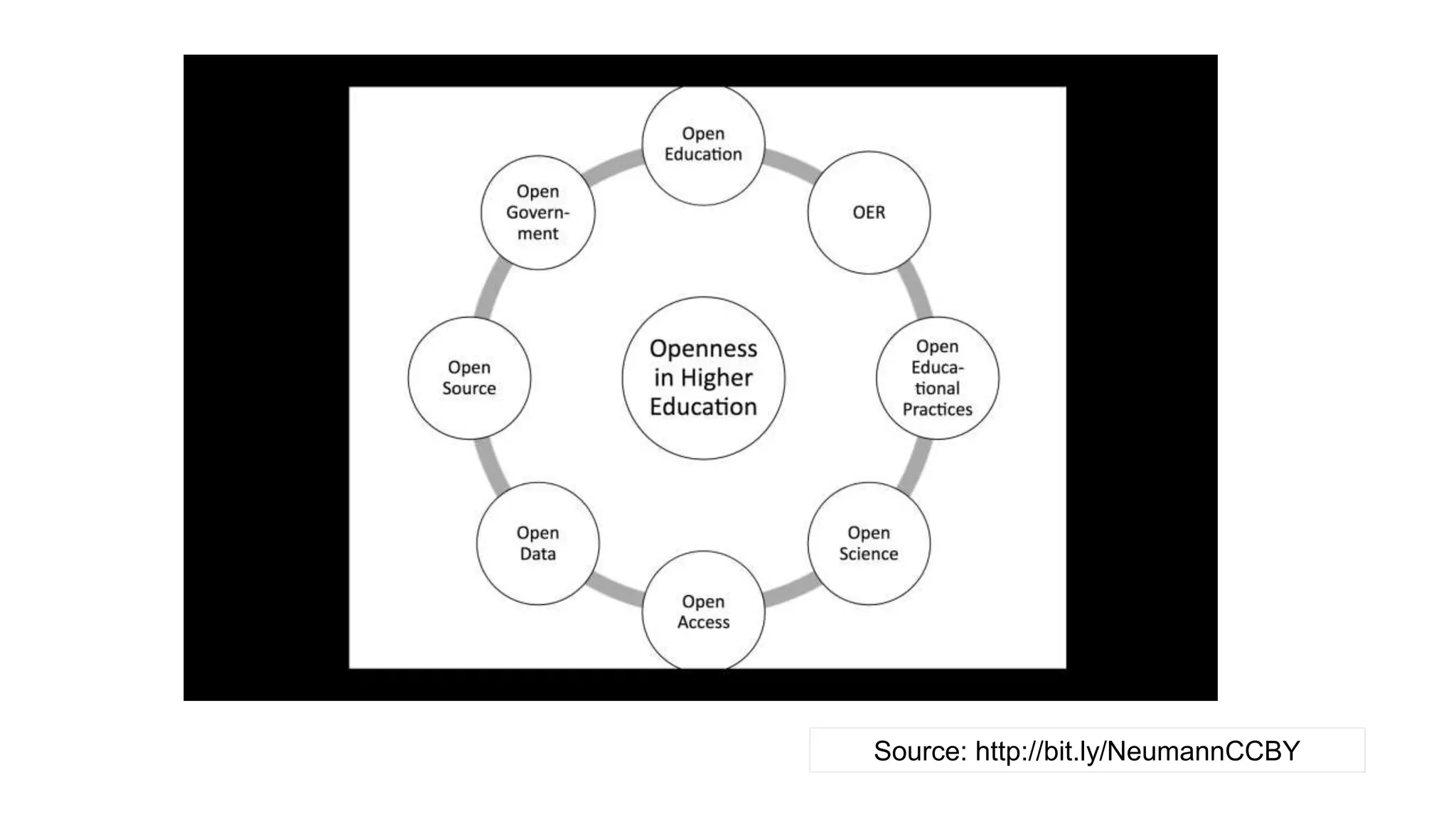
Source: http://bit.ly/NeumannCCBY
OER make it possible to:
•Have free and unfettered access to learning
materials on day one of class.
•Save money for students.
•Improve student success (retention,
completion, GPA).
•Increase opportunity for faculty creativity,
collaboration, and innovative teaching.
OER come in many forms:
• open textbooks
• full courses
• modules
• syllabi
• lectures
• homework assignments
• quizzes
• lab activities
• games
• simulations
education is sharing
Why use OER?
• Provides faculty with more choices for their courses.
• Allows for permission-free editing and adaptation.
• Prevents faculty from being locked into a particular
system or platform.
• Eliminate textbook cost as barrier to student success.
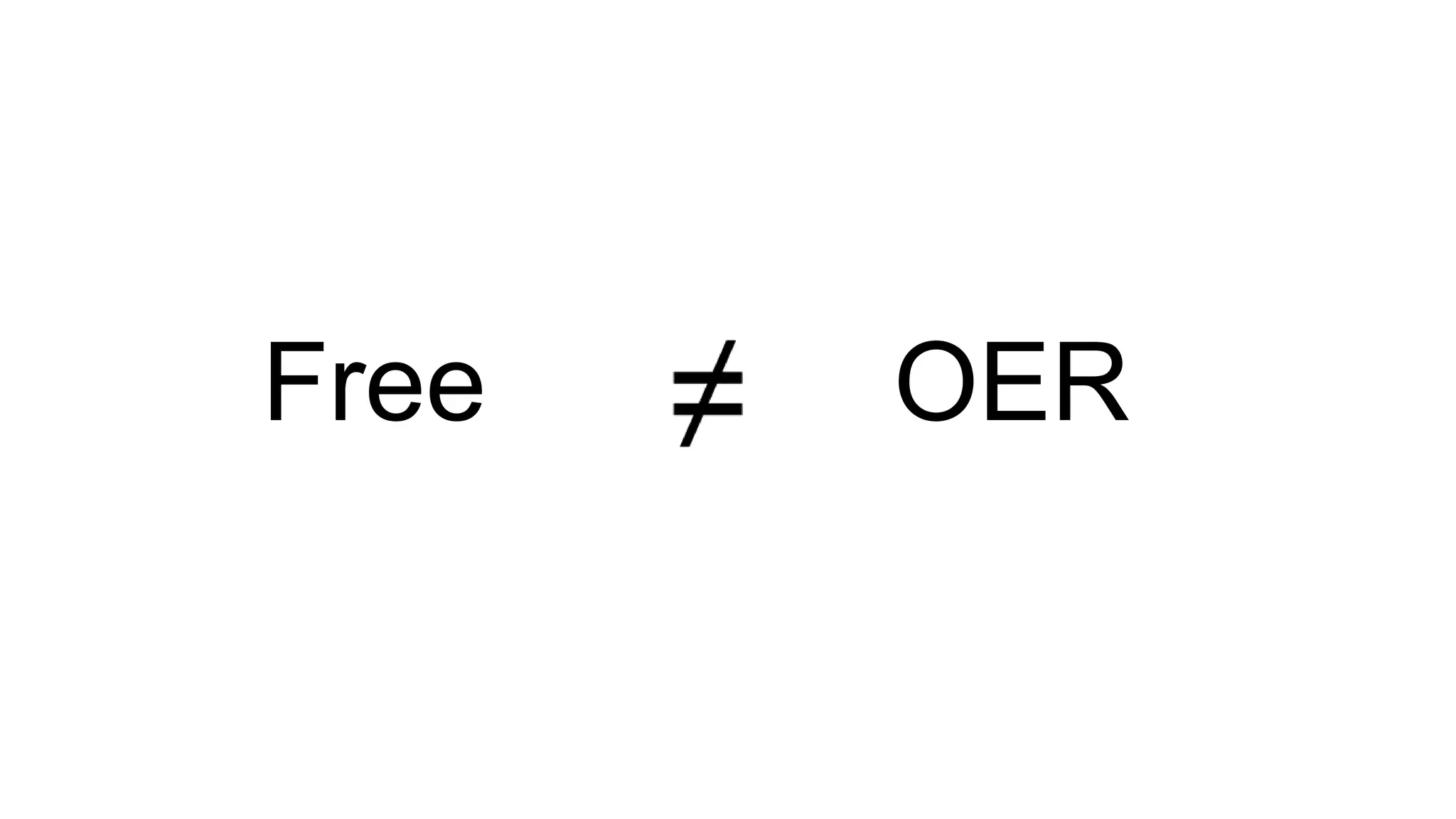
OER > Cost savings
Free OER
OER = Free + Freedom
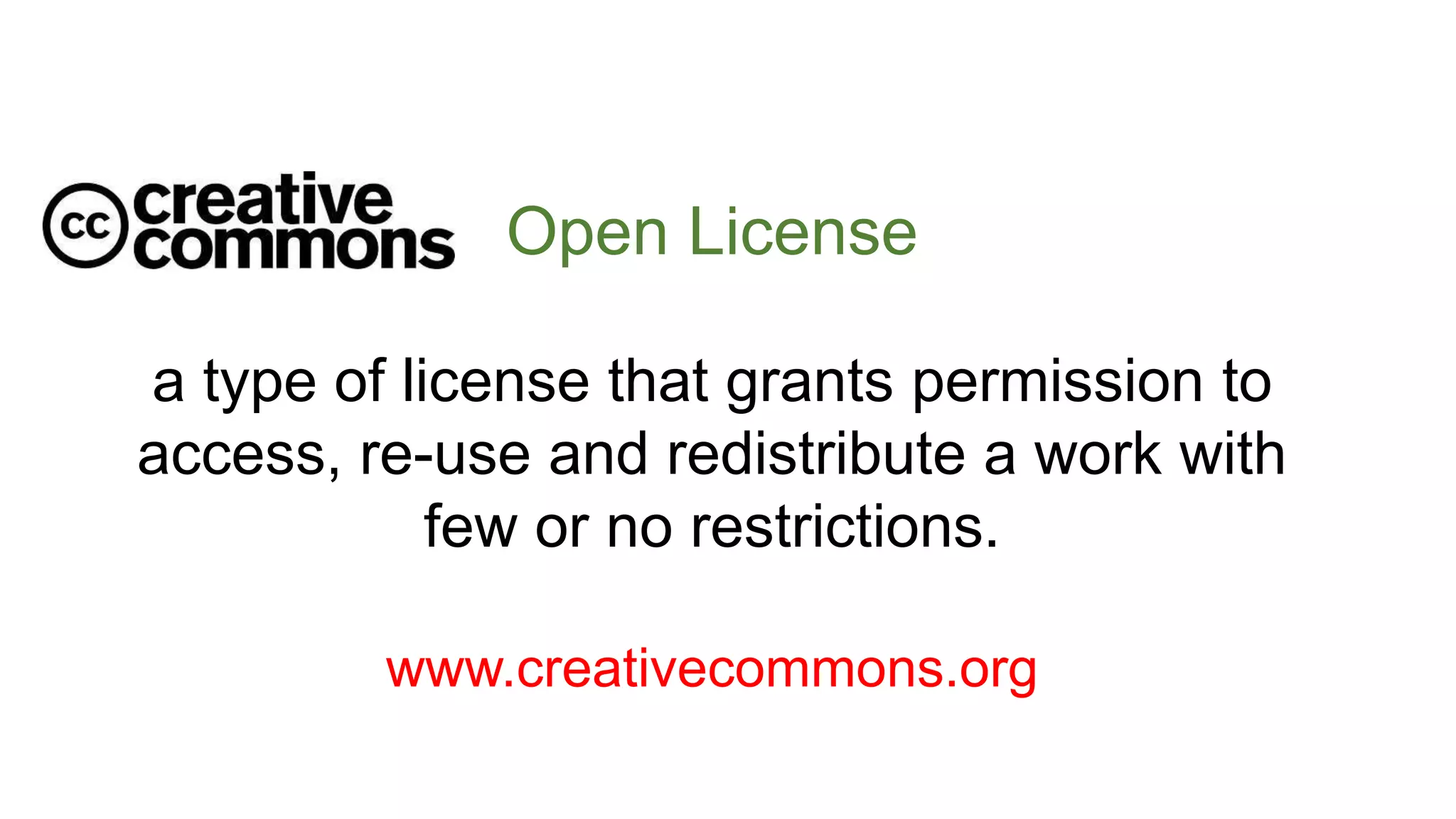
Open License
a type of license that grants permission to
access, re-use and redistribute a work with
few or no restrictions.
www.creativecommons.org
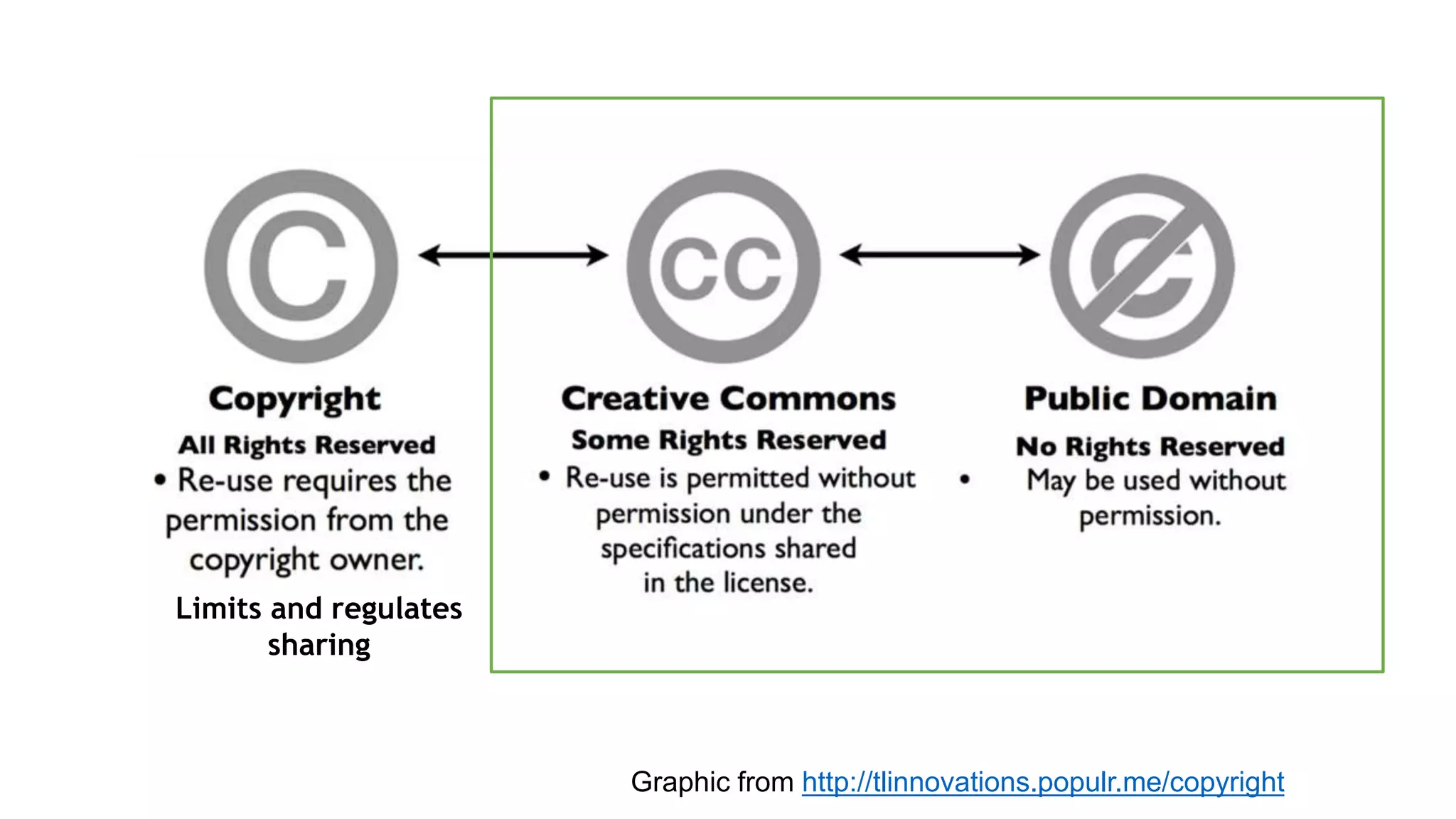
Graphic from http://tlinnovations.populr.me/copyright
Limits and regulates
sharing
• Copy
• Mix
• Share
• Keep
• Edit
• Use
The 5Rs:
1. Retain
2. Reuse
3. Revise
4. Remix
5. Redistribute
licenses
most
open
least
open
Source: CC license image from Copyright in Education & Internet in South African Law used under CC-BY 2.5 South Africa license
OER is about access and equity.
Source: Florida Virtual Campus: 2016 Student Textbook and Course Materials Survey
Source: Covering the Cost, 2016 t by the Student Public Interest Research Groups (Student PIRGs)
www.studentpirgs.org/textbooks
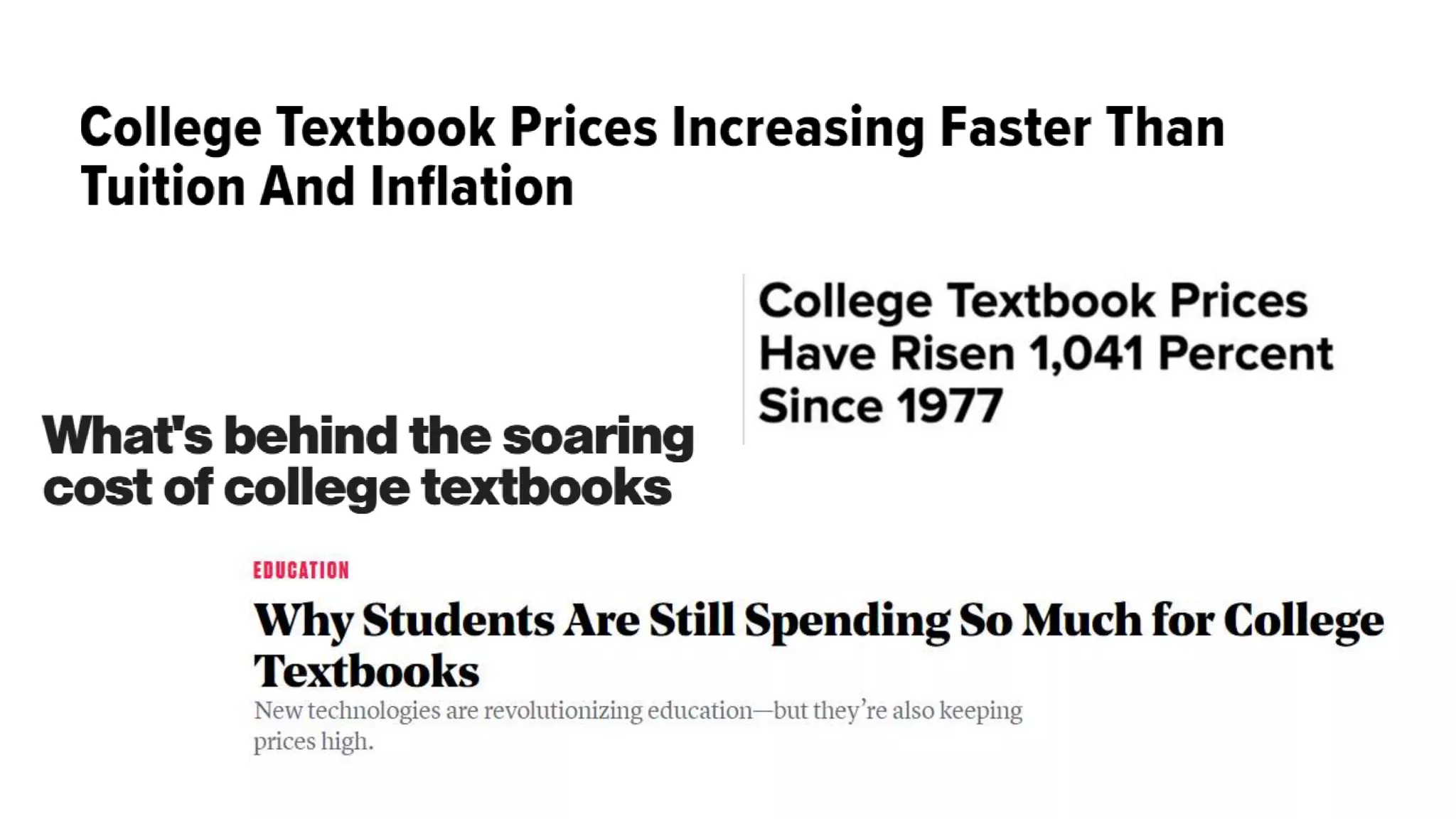
High textbook prices have a disproportionate
impact on students at community college
Florida Virtual Campus
Survey Results
22,000+ students in FL across
all higher education institutions
So what are we using here
at LCC?
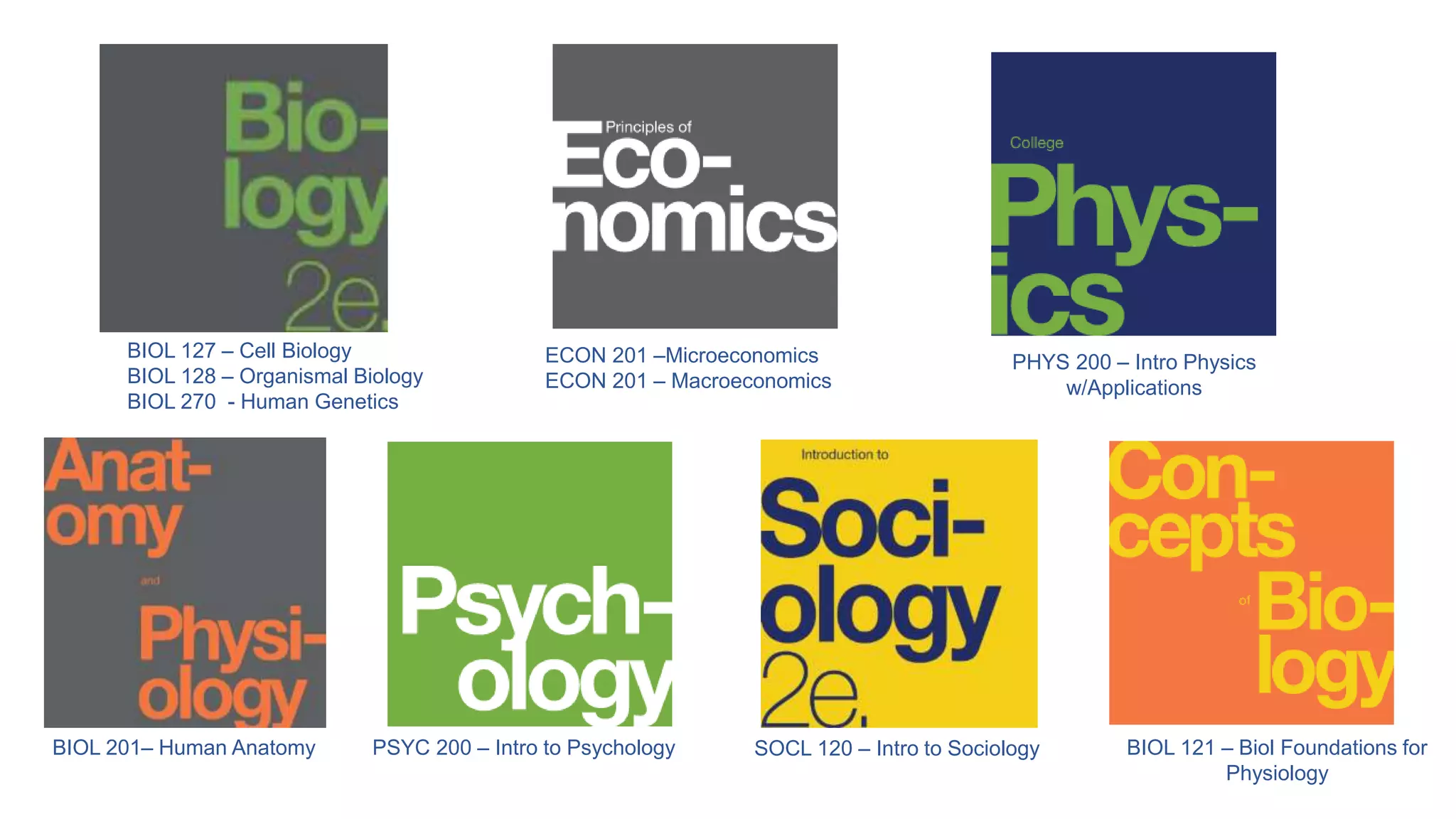
BIOL 127 – Cell Biology
BIOL 128 – Organismal Biology
BIOL 270 - Human Genetics
PSYC 200 – Intro to Psychology
ECON 201 –Microeconomics
ECON 201 – Macroeconomics
BIOL 201– Human Anatomy SOCL 120 – Intro to Sociology BIOL 121 – Biol Foundations for
Physiology
PHYS 200 – Intro Physics
w/Applications
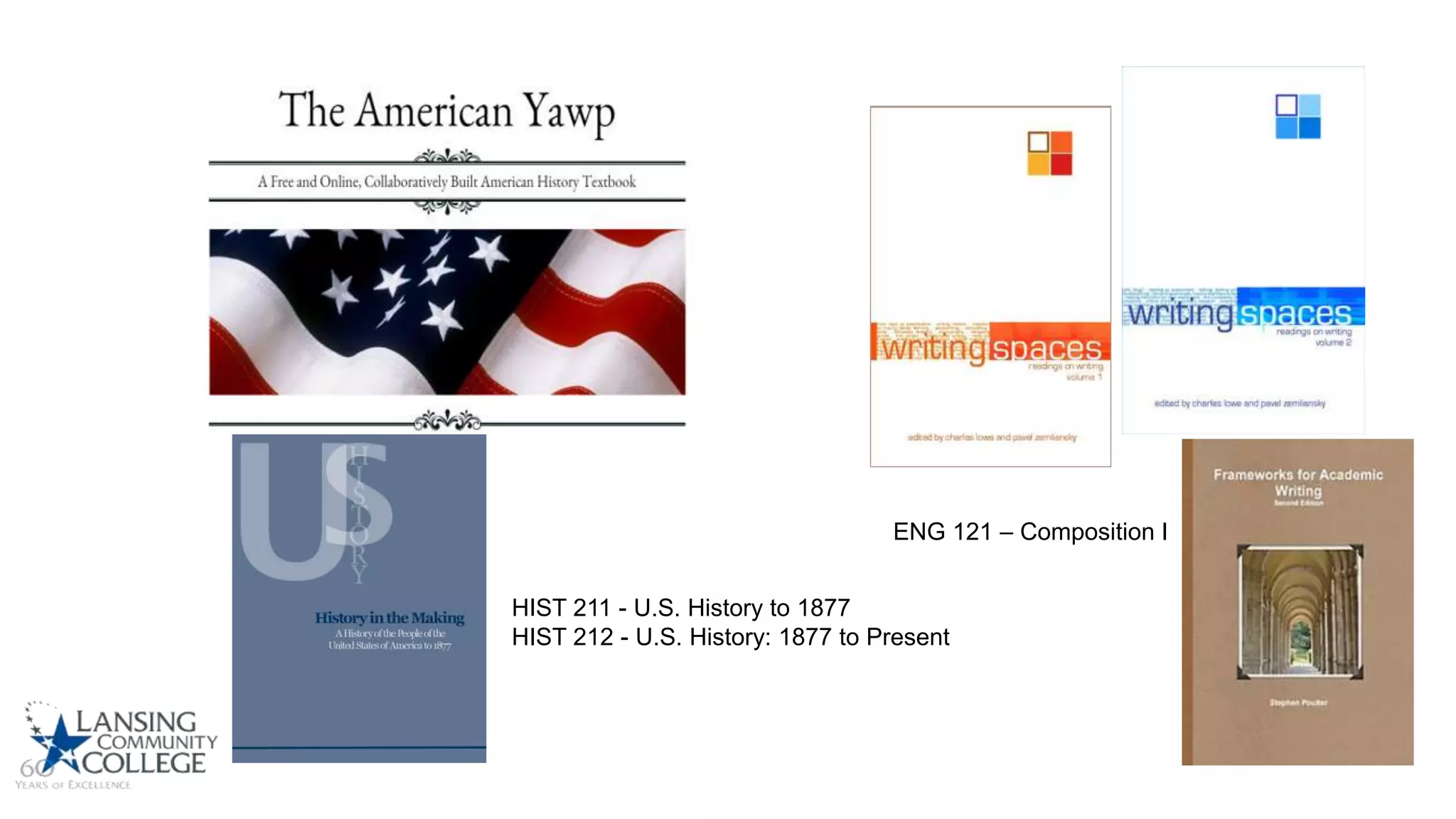
HIST 211 - U.S. History to 1877
HIST 212 - U.S. History: 1877 to Present
ENG 121 – Composition I
OER Authored by LCC Faculty
Dr. Matthew Van Cleave, Philosophy faculty
PHIL 151 - Introduction to Logic and Critical
Thinking
https://open.umn.edu/opentextbooks/BookDetail.as
px?bookId=457
Dr. Mark Kelland, Psychology faculty
Personality Theory: A Multicultural Perspective
https://www.oercommons.org/courses/personality-
theory-a-multicultural-perspective
PSYC 202 - Psychology of Personality
OER Authored by LCC Faculty
Tao of Positive Psychology
https://www.oercommons.org/authoring/19643-tao-
of-positive-psychology
PSYC 180 – Intro to Positive Psychology
Coming soon
OPEN ESL
textbooks
Foreign
Language OER
– German,
French, Spanish
Intro to
Philosophy
Public Speaking
Let’s look at our adoption
figures
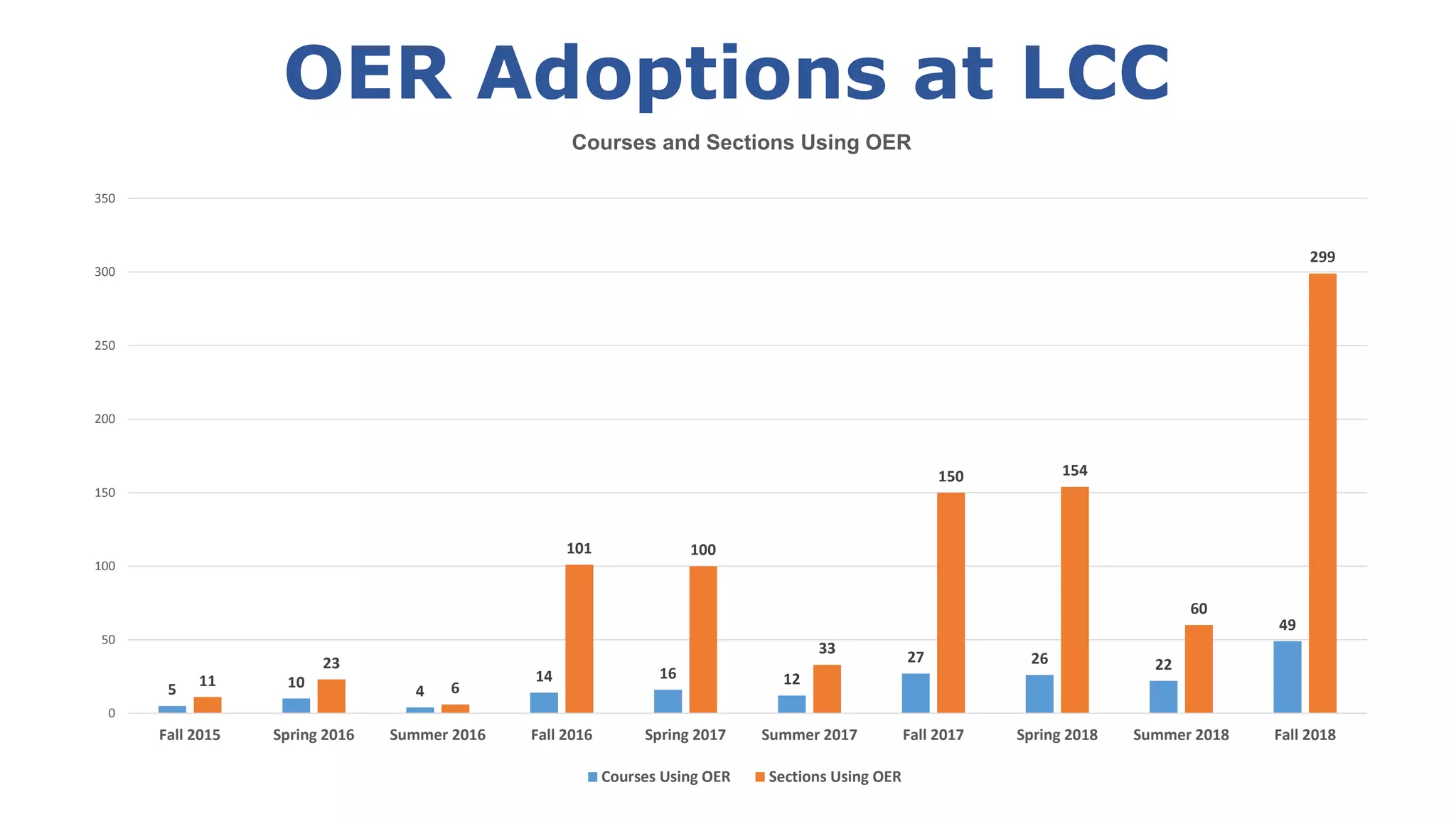
OER Adoptions at LCC
5 10
4
14 16 12
27 26 22
49
11
23
6
101 100
33
150 154
60
299
0
50
100
150
200
250
300
350
Fall 2015 Spring 2016 Summer 2016 Fall 2016 Spring 2017 Summer 2017 Fall 2017 Spring 2018 Summer 2018 Fall 2018
Courses and Sections Using OER
Courses Using OER Sections Using OER
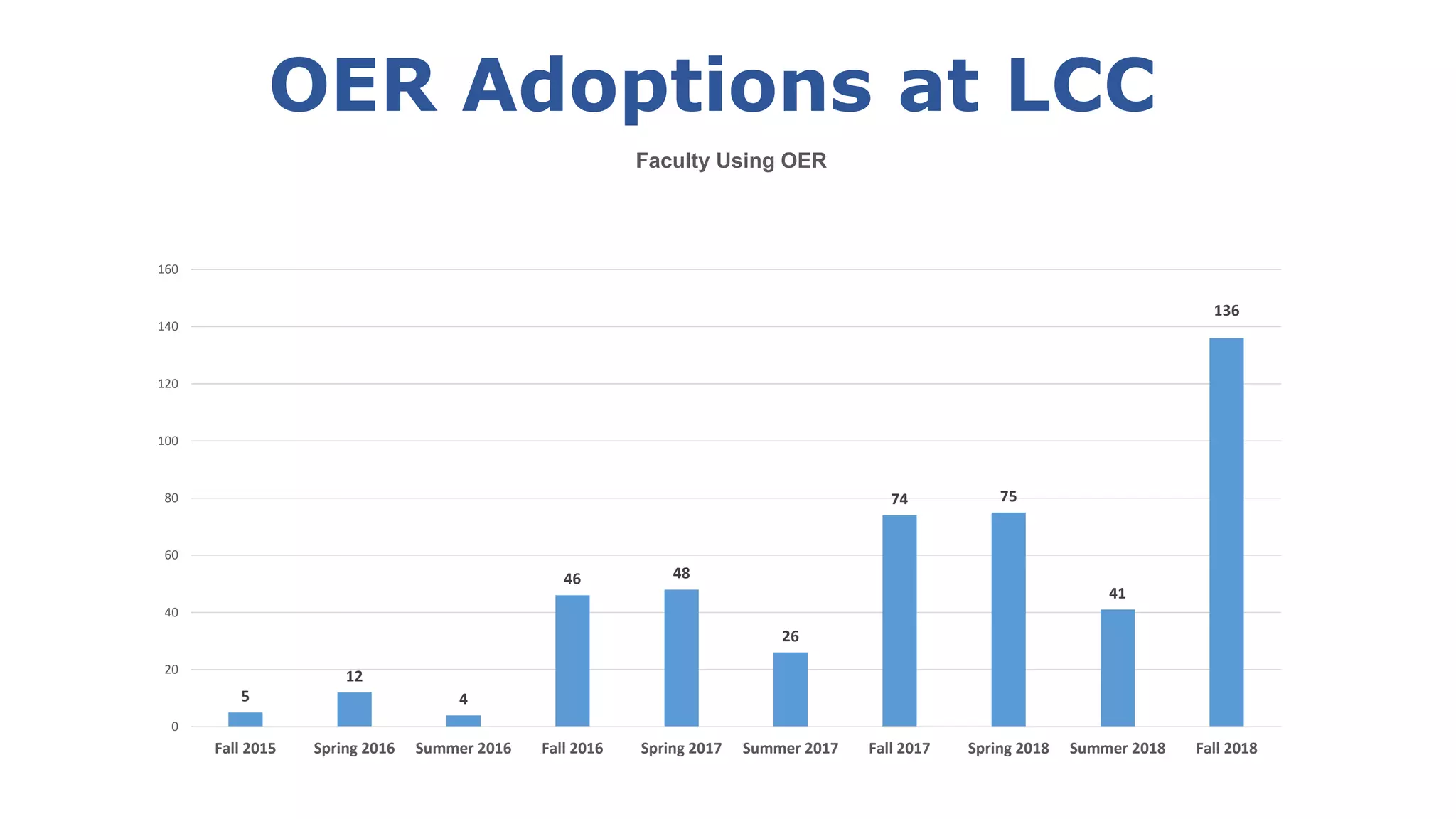
OER Adoptions at LCC
5
12
4
46 48
26
74 75
41
136
0
20
40
60
80
100
120
140
160
Fall 2015 Spring 2016 Summer 2016 Fall 2016 Spring 2017 Summer 2017 Fall 2017 Spring 2018 Summer 2018 Fall 2018
Faculty Using OER
Students Impacted by OER
317
540
129
2,825
2,558
724
3,724 3,711
1,177
5,989
-
1,000
2,000
3,000
4,000
5,000
6,000
7,000
Fall 2015 Spring 2016 Summer 2016 Fall 2016 Spring 2017 Summer 2017 Fall 2017 Spring 2018 Summer 2018 Fall 2018
Students Enrolled
Textbook Costs Savings
$31,700
$54,000
$12,900
$282,500
$255,800
$72,400
$293,200 $371,100
$117,700
$598,900
$-
$100,000
$200,000
$300,000
$400,000
$500,000
$600,000
$700,000
Fall 2015 Spring 2016 Summer 2016 Fall 2016 Spring 2017 Summer 2017 Fall 2017 Spring 2018 Summer 2018 Fall 2018
Total Textbook Savings ($100/student)
$2.2M
Photo by Fabian Blank on Unsplash
OER and student success
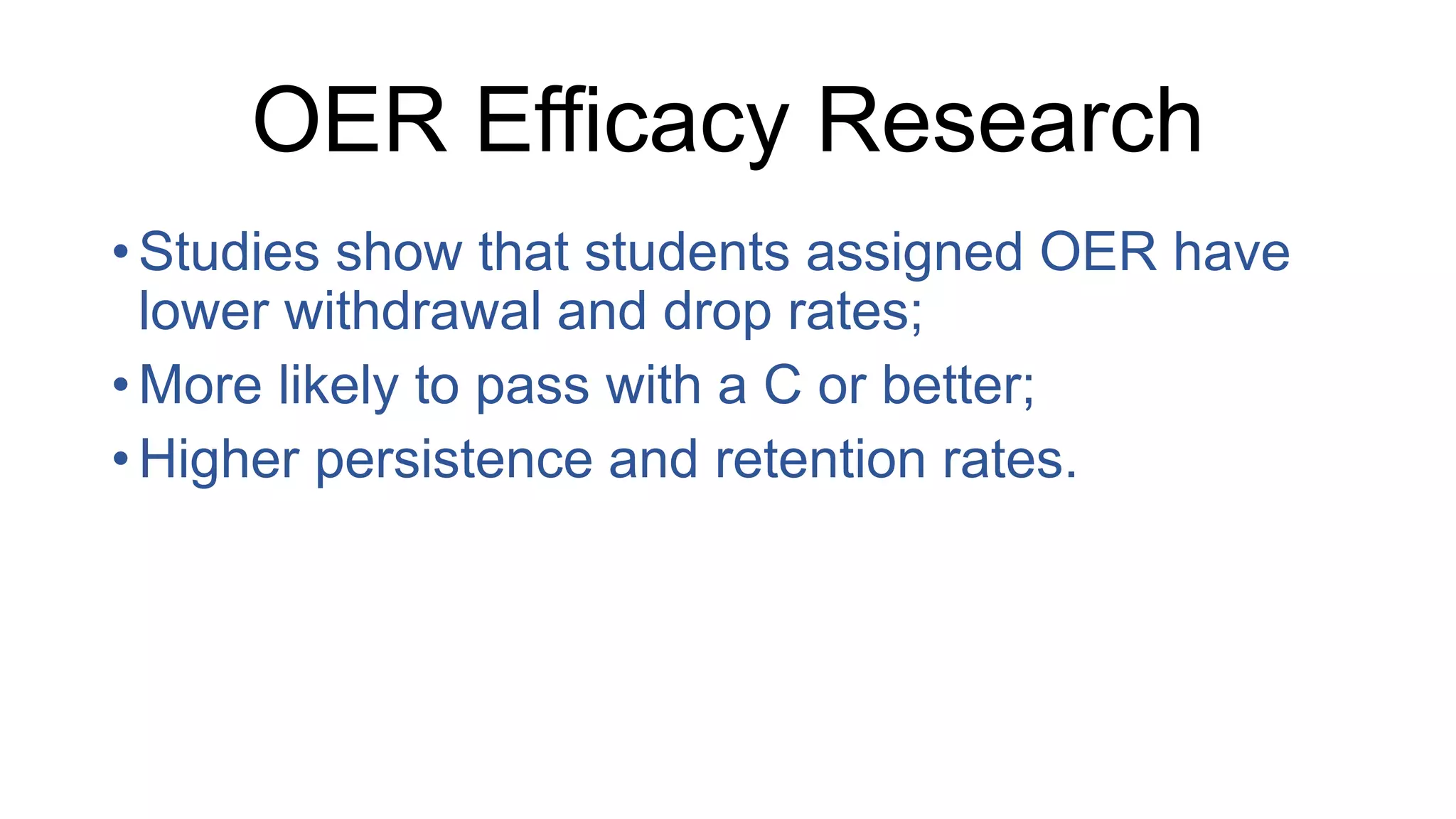
OER Efficacy Research
• Studies show that students assigned OER have
lower withdrawal and drop rates;
• More likely to pass with a C or better;
• Higher persistence and retention rates.
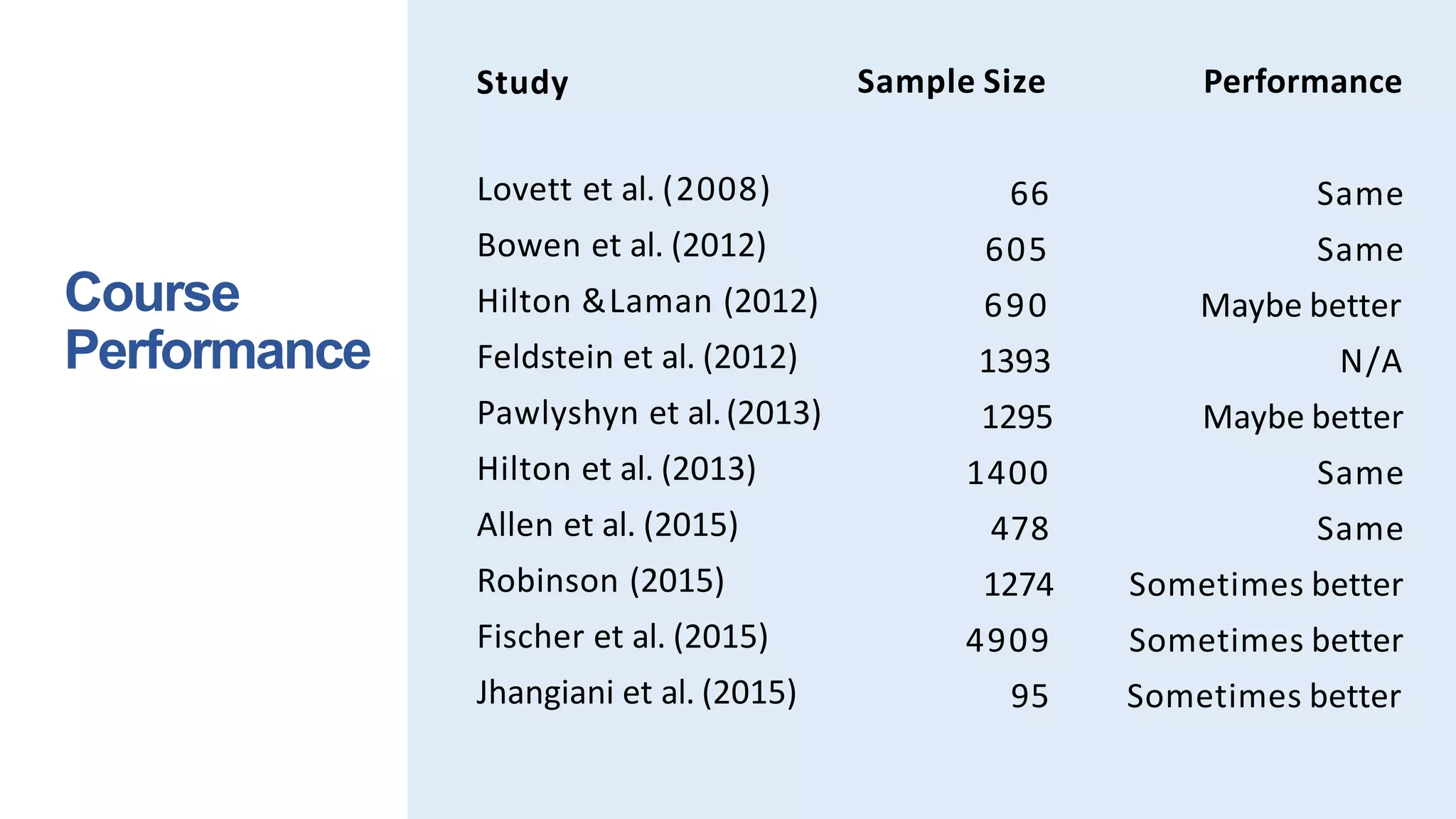
Course
Performance
PerformanceSample Size
66 Same
605 Same
690 Maybe better
1393 N/A
1295 Maybe better
1400 Same
478 Same
1274 Sometimes better
4909 Sometimes better
95 Sometimes better
Study
Lovett et al. (2008)
Bowen et al. (2012)
Hilton &Laman (2012)
Feldstein et al. (2012)
Pawlyshyn et al.(2013)
Hilton et al. (2013)
Allen et al. (2015)
Robinson (2015)
Fischer et al. (2015)
Jhangiani et al. (2015)
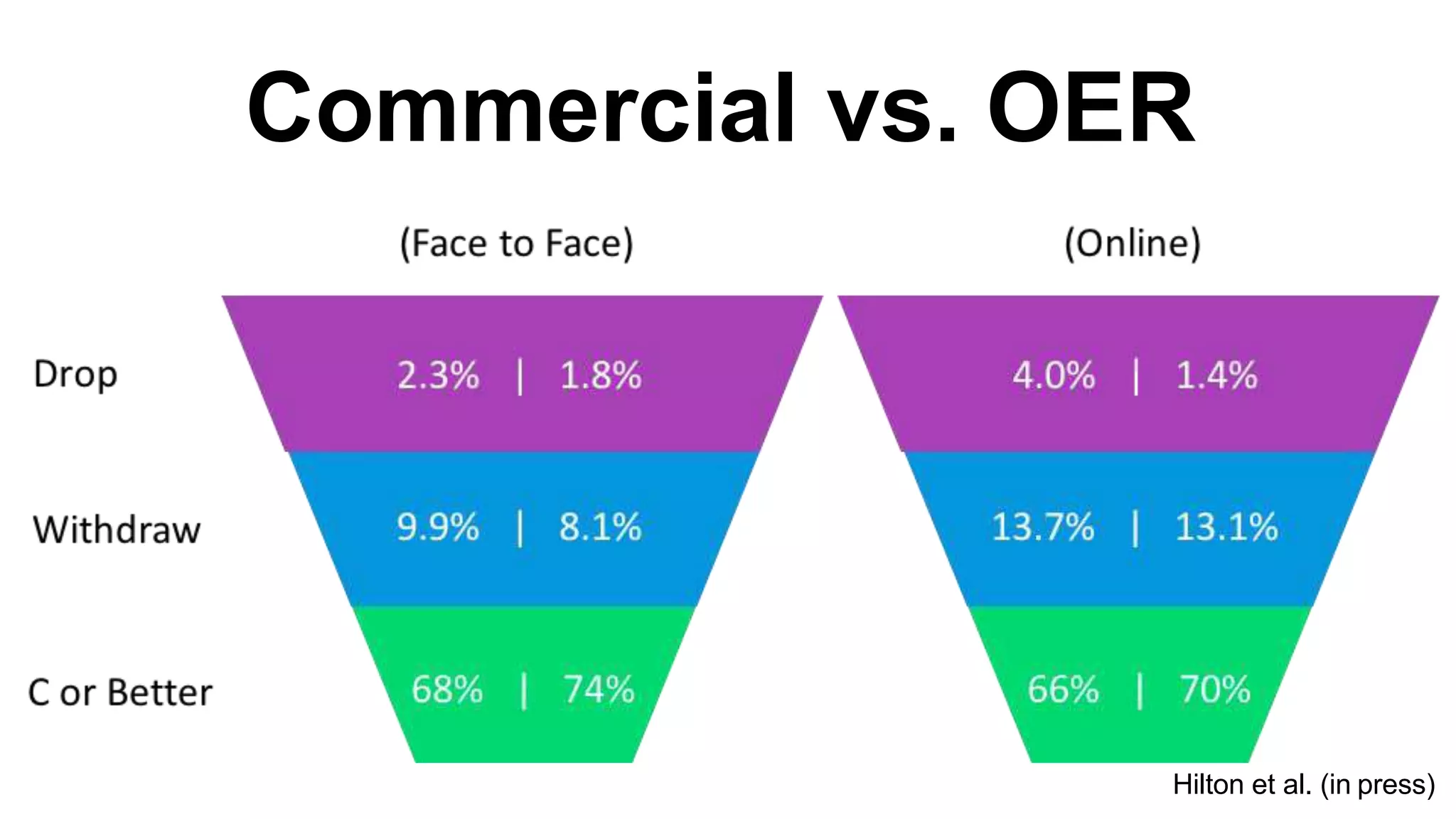
Hilton et al. (in press)
Commercial vs. OER
OER and the state of MI
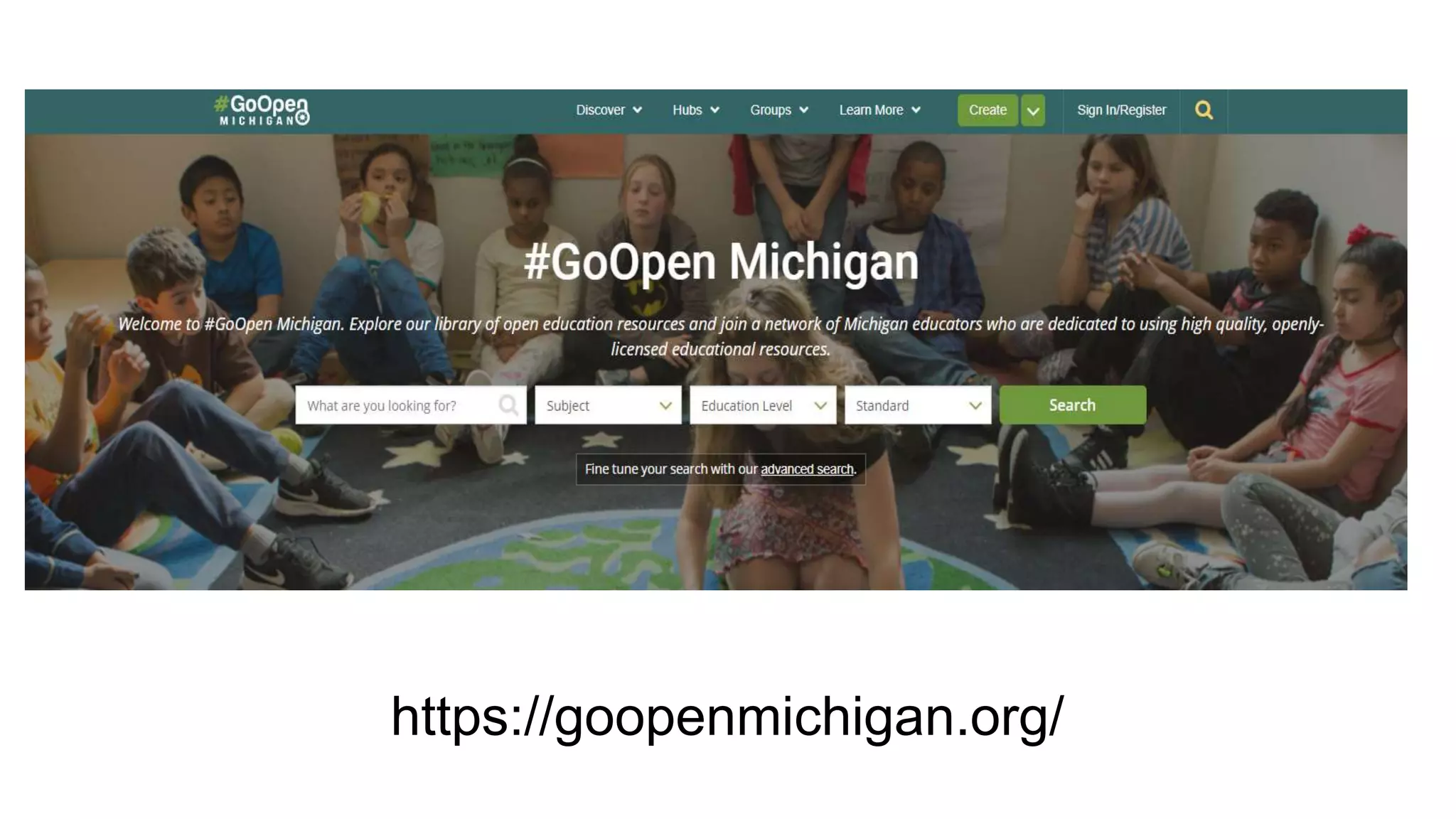
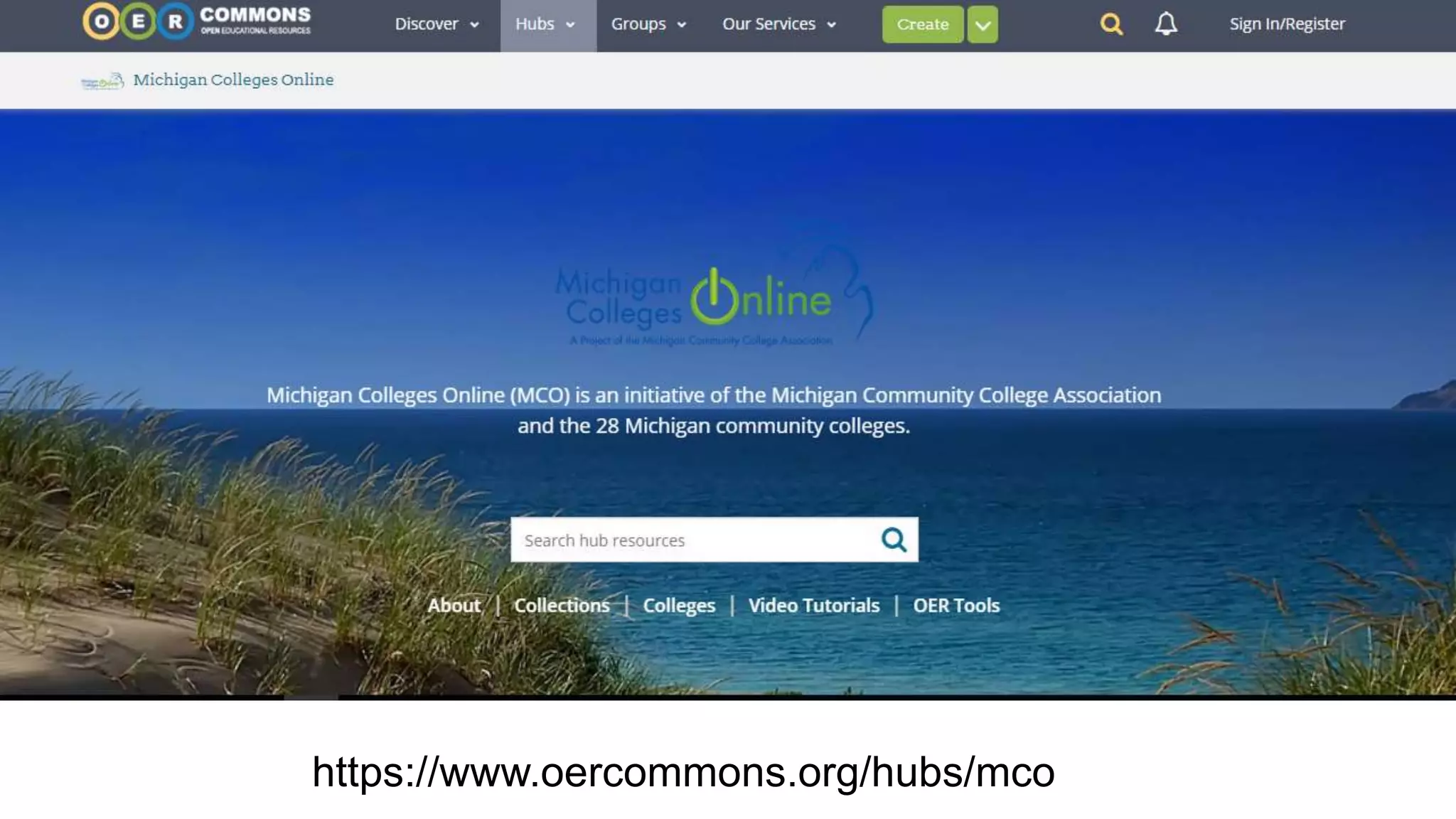
https://www.oercommons.org/hubs/mco
https://goopenmichigan.org/
Multi-state collaboration
• OER State Policy and Implementation Summit for Midwestern Higher
Education Compact (MHEC) states.
• MHEC is a legislatively-created agreement among the 12 Midwestern
states to work together to further higher education within the region. The
member states of the Compact are: Illinois, Indiana, Iowa, Kansas,
Michigan, Minnesota, Missouri, Nebraska, North Dakota, Ohio, South
Dakota, and Wisconsin.
• Attendees will form a state OER action team which will assess the current
scope and level of OER usage in their respective states and craft a plan to
coordinate OER efforts within their states.
Get involved
SPARC OER Forum
CCCOER Listserv
Twitter
Open Textbook Network
Open Education Conference
Open Education Week
OA Week
Image source: https://unsplash.com/collections/167234/questions?photo=i--IN3cvEjg
Regina Gong, gongr1@lcc.edu ; @drgong

Supporting Student Success With OER

  • 1.
    Supporting Student Success WithOER Regina Gong, OER Project Manager Lansing Community College @drgong http://libguides.lcc.edu/oer Student Success Summit Western Michigan University, October 31, 2018 This work is licensed under the Creative Commons Attribution 4.0 International License.
  • 2.
    Open Educational Resources (OER) “OpenEducational Resources are teaching, learning and research materials in any medium – digital or otherwise – that reside in the public domain or have been released under an open license that permits no-cost access, use, adaptation and redistribution by others with no or limited restrictions." ~William & Flora Hewlett Foundation
  • 3.
  • 4.
    OER make itpossible to: •Have free and unfettered access to learning materials on day one of class. •Save money for students. •Improve student success (retention, completion, GPA). •Increase opportunity for faculty creativity, collaboration, and innovative teaching.
  • 5.
    OER come inmany forms: • open textbooks • full courses • modules • syllabi • lectures • homework assignments • quizzes • lab activities • games • simulations
  • 6.
  • 7.
    Why use OER? •Provides faculty with more choices for their courses. • Allows for permission-free editing and adaptation. • Prevents faculty from being locked into a particular system or platform. • Eliminate textbook cost as barrier to student success.
  • 8.
    OER > Costsavings
  • 9.
  • 10.
    OER = Free+ Freedom
  • 11.
    Open License a typeof license that grants permission to access, re-use and redistribute a work with few or no restrictions. www.creativecommons.org
  • 12.
  • 13.
    • Copy • Mix •Share • Keep • Edit • Use The 5Rs: 1. Retain 2. Reuse 3. Revise 4. Remix 5. Redistribute
  • 15.
    licenses most open least open Source: CC licenseimage from Copyright in Education & Internet in South African Law used under CC-BY 2.5 South Africa license
  • 16.
    OER is aboutaccess and equity.
  • 19.
    Source: Florida VirtualCampus: 2016 Student Textbook and Course Materials Survey
  • 20.
    Source: Covering theCost, 2016 t by the Student Public Interest Research Groups (Student PIRGs) www.studentpirgs.org/textbooks High textbook prices have a disproportionate impact on students at community college
  • 21.
    Florida Virtual Campus SurveyResults 22,000+ students in FL across all higher education institutions
  • 22.
    So what arewe using here at LCC?
  • 23.
    BIOL 127 –Cell Biology BIOL 128 – Organismal Biology BIOL 270 - Human Genetics PSYC 200 – Intro to Psychology ECON 201 –Microeconomics ECON 201 – Macroeconomics BIOL 201– Human Anatomy SOCL 120 – Intro to Sociology BIOL 121 – Biol Foundations for Physiology PHYS 200 – Intro Physics w/Applications
  • 24.
    HIST 211 -U.S. History to 1877 HIST 212 - U.S. History: 1877 to Present ENG 121 – Composition I
  • 25.
    OER Authored byLCC Faculty Dr. Matthew Van Cleave, Philosophy faculty PHIL 151 - Introduction to Logic and Critical Thinking https://open.umn.edu/opentextbooks/BookDetail.as px?bookId=457
  • 26.
    Dr. Mark Kelland,Psychology faculty Personality Theory: A Multicultural Perspective https://www.oercommons.org/courses/personality- theory-a-multicultural-perspective PSYC 202 - Psychology of Personality OER Authored by LCC Faculty Tao of Positive Psychology https://www.oercommons.org/authoring/19643-tao- of-positive-psychology PSYC 180 – Intro to Positive Psychology
  • 27.
    Coming soon OPEN ESL textbooks Foreign LanguageOER – German, French, Spanish Intro to Philosophy Public Speaking
  • 28.
    Let’s look atour adoption figures
  • 29.
    OER Adoptions atLCC 5 10 4 14 16 12 27 26 22 49 11 23 6 101 100 33 150 154 60 299 0 50 100 150 200 250 300 350 Fall 2015 Spring 2016 Summer 2016 Fall 2016 Spring 2017 Summer 2017 Fall 2017 Spring 2018 Summer 2018 Fall 2018 Courses and Sections Using OER Courses Using OER Sections Using OER
  • 30.
    OER Adoptions atLCC 5 12 4 46 48 26 74 75 41 136 0 20 40 60 80 100 120 140 160 Fall 2015 Spring 2016 Summer 2016 Fall 2016 Spring 2017 Summer 2017 Fall 2017 Spring 2018 Summer 2018 Fall 2018 Faculty Using OER
  • 31.
    Students Impacted byOER 317 540 129 2,825 2,558 724 3,724 3,711 1,177 5,989 - 1,000 2,000 3,000 4,000 5,000 6,000 7,000 Fall 2015 Spring 2016 Summer 2016 Fall 2016 Spring 2017 Summer 2017 Fall 2017 Spring 2018 Summer 2018 Fall 2018 Students Enrolled
  • 32.
    Textbook Costs Savings $31,700 $54,000 $12,900 $282,500 $255,800 $72,400 $293,200$371,100 $117,700 $598,900 $- $100,000 $200,000 $300,000 $400,000 $500,000 $600,000 $700,000 Fall 2015 Spring 2016 Summer 2016 Fall 2016 Spring 2017 Summer 2017 Fall 2017 Spring 2018 Summer 2018 Fall 2018 Total Textbook Savings ($100/student)
  • 33.
    $2.2M Photo by FabianBlank on Unsplash
  • 34.
  • 35.
    OER Efficacy Research •Studies show that students assigned OER have lower withdrawal and drop rates; • More likely to pass with a C or better; • Higher persistence and retention rates.
  • 36.
    Course Performance PerformanceSample Size 66 Same 605Same 690 Maybe better 1393 N/A 1295 Maybe better 1400 Same 478 Same 1274 Sometimes better 4909 Sometimes better 95 Sometimes better Study Lovett et al. (2008) Bowen et al. (2012) Hilton &Laman (2012) Feldstein et al. (2012) Pawlyshyn et al.(2013) Hilton et al. (2013) Allen et al. (2015) Robinson (2015) Fischer et al. (2015) Jhangiani et al. (2015)
  • 37.
    Hilton et al.(in press) Commercial vs. OER
  • 38.
    OER and thestate of MI
  • 39.
  • 41.
  • 42.
    Multi-state collaboration • OERState Policy and Implementation Summit for Midwestern Higher Education Compact (MHEC) states. • MHEC is a legislatively-created agreement among the 12 Midwestern states to work together to further higher education within the region. The member states of the Compact are: Illinois, Indiana, Iowa, Kansas, Michigan, Minnesota, Missouri, Nebraska, North Dakota, Ohio, South Dakota, and Wisconsin. • Attendees will form a state OER action team which will assess the current scope and level of OER usage in their respective states and craft a plan to coordinate OER efforts within their states.
  • 44.
    Get involved SPARC OERForum CCCOER Listserv Twitter Open Textbook Network Open Education Conference Open Education Week OA Week
  • 45.