1
Superconductors for Power
Transmission and Distribution
2
Outline
 Background of Superconductivity
 Electric power grid
 Grid congestion and reliability
 Superconductors in the grid
3
Superconductivity
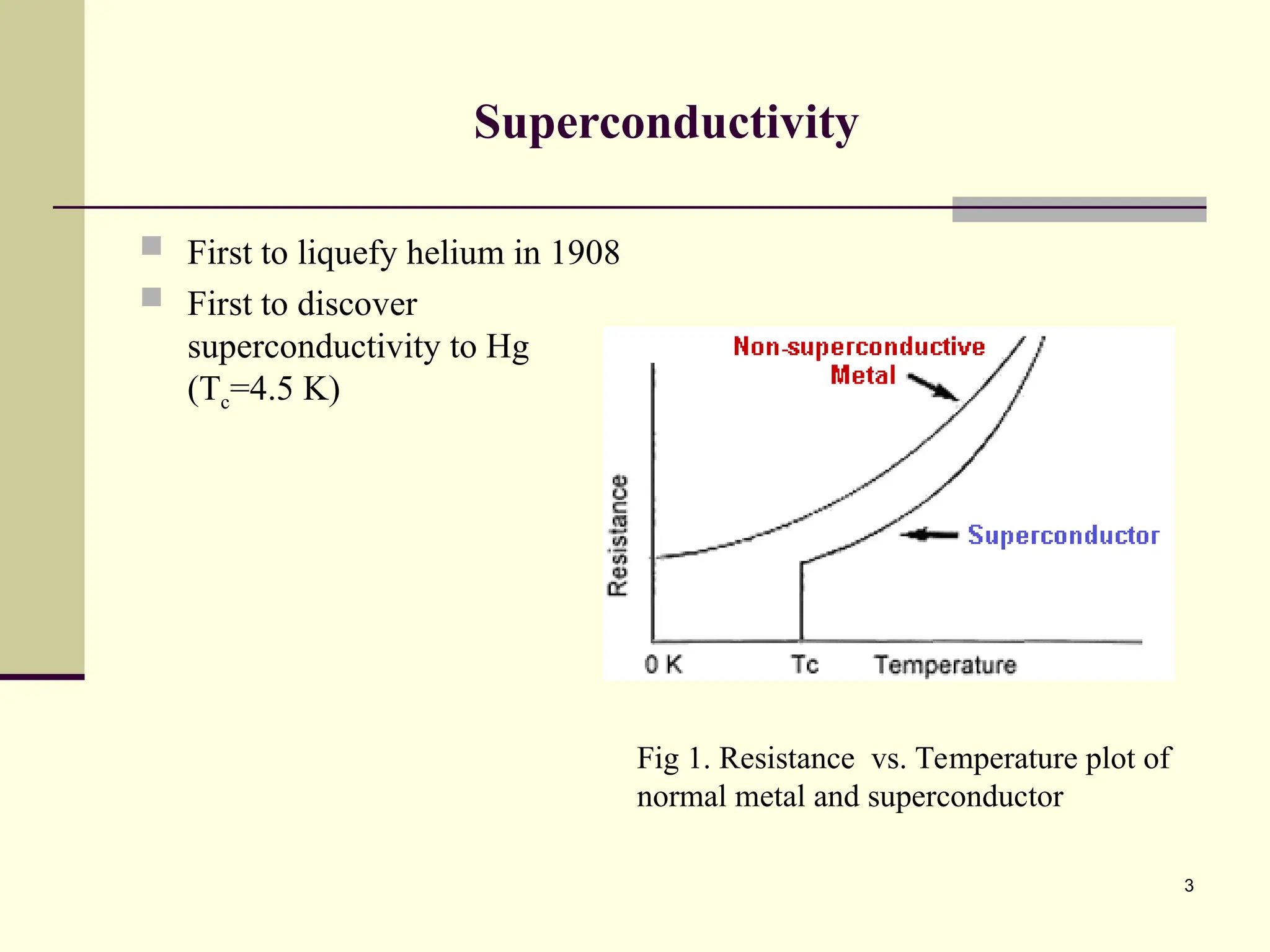
 First to liquefy helium in 1908
 First to discover
superconductivity to Hg
(Tc=4.5 K)
Fig 1. Resistance vs. Temperature plot of
normal metal and superconductor
4
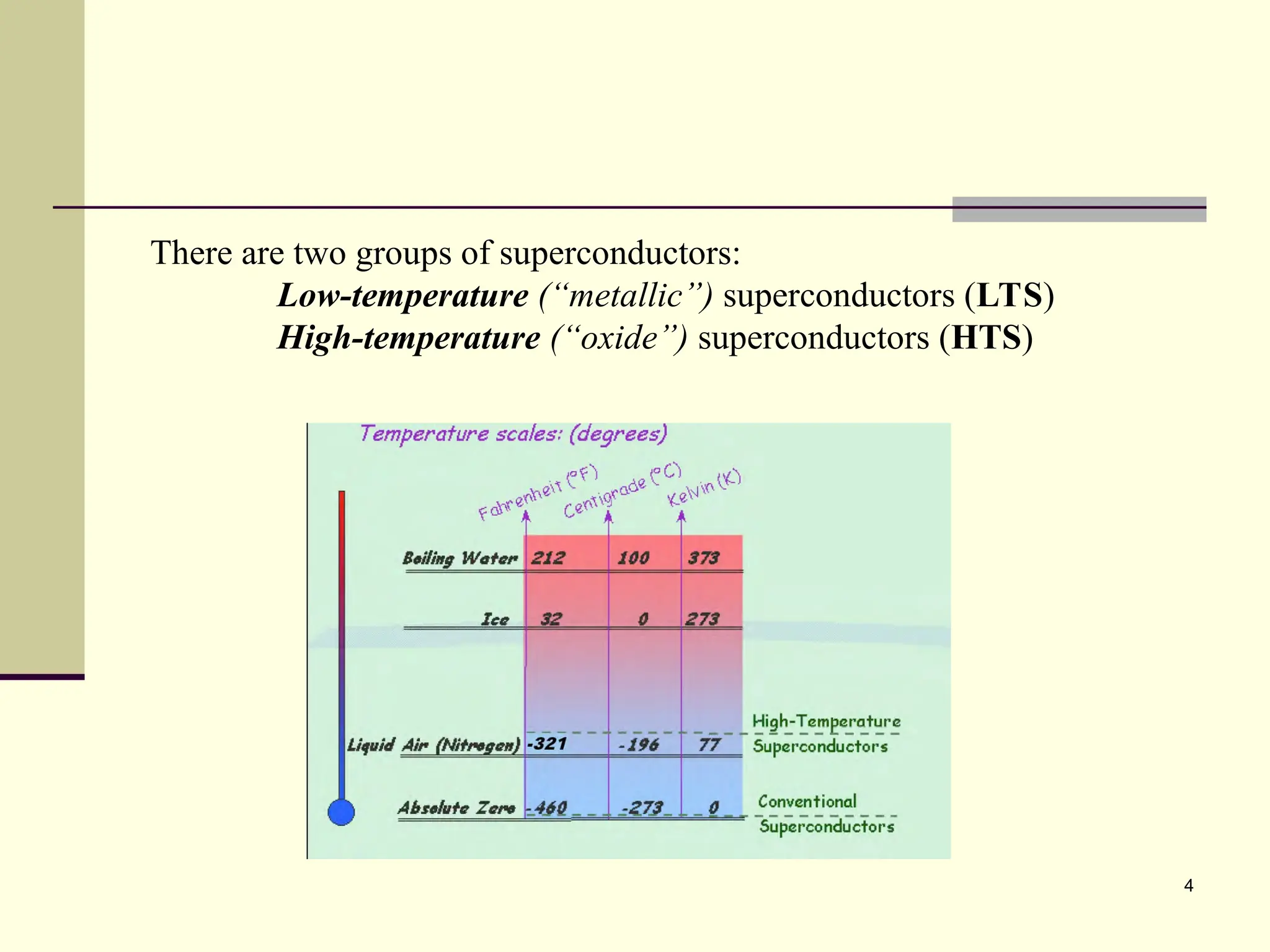
There are two groups of superconductors:
Low-temperature (“metallic”) superconductors (LTS)
High-temperature (“oxide”) superconductors (HTS)
5
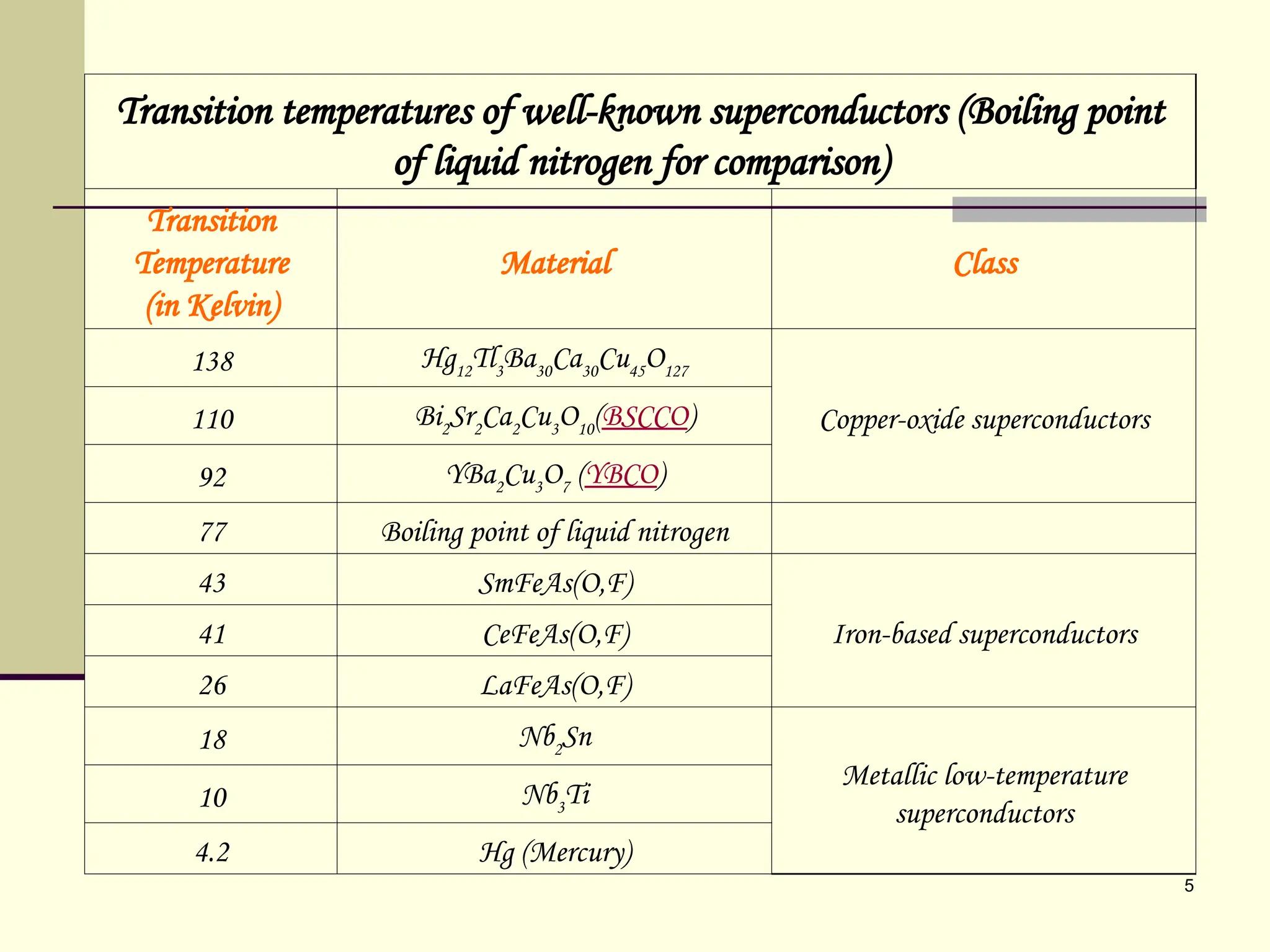
Transition temperatures of well-known superconductors (Boiling point
of liquid nitrogen for comparison)
Transition
Temperature
(in Kelvin)
Material Class
138 Hg12
Tl3
Ba30
Ca30
Cu45
O127
Copper-oxide superconductors
110 Bi2
Sr2
Ca2
Cu3
O10
(BSCCO)
92 YBa2
Cu3
O7
(YBCO)
77 Boiling point of liquid nitrogen
43 SmFeAs(O,F)
Iron-based superconductors
41 CeFeAs(O,F)
26 LaFeAs(O,F)
18 Nb2
Sn
Metallic low-temperature
superconductors
10 Nb3
Ti
4.2 Hg (Mercury)
June 25, 2009 6
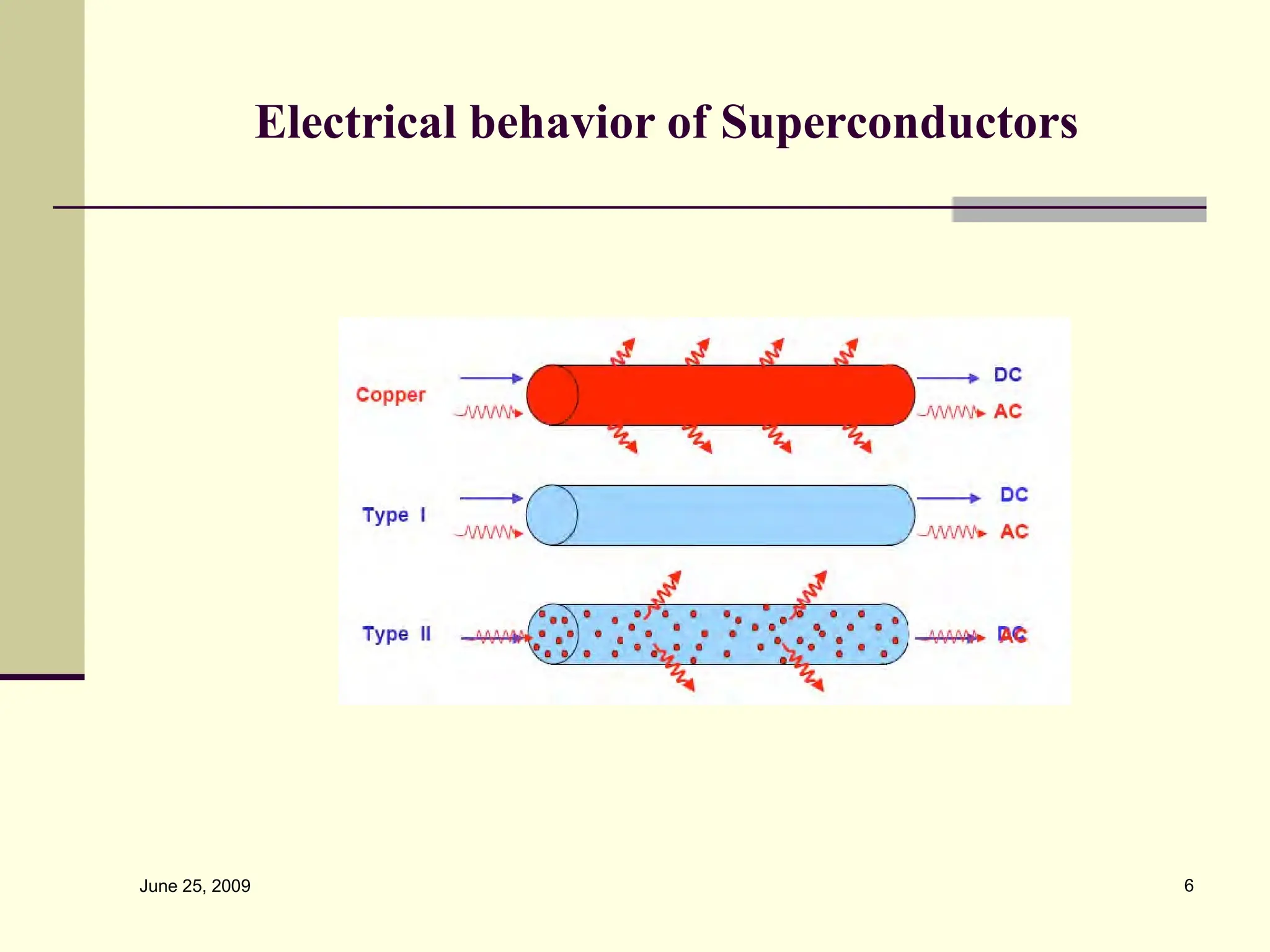
Electrical behavior of Superconductors
7
Conditions required for a material to exhibit
superconducting behavior
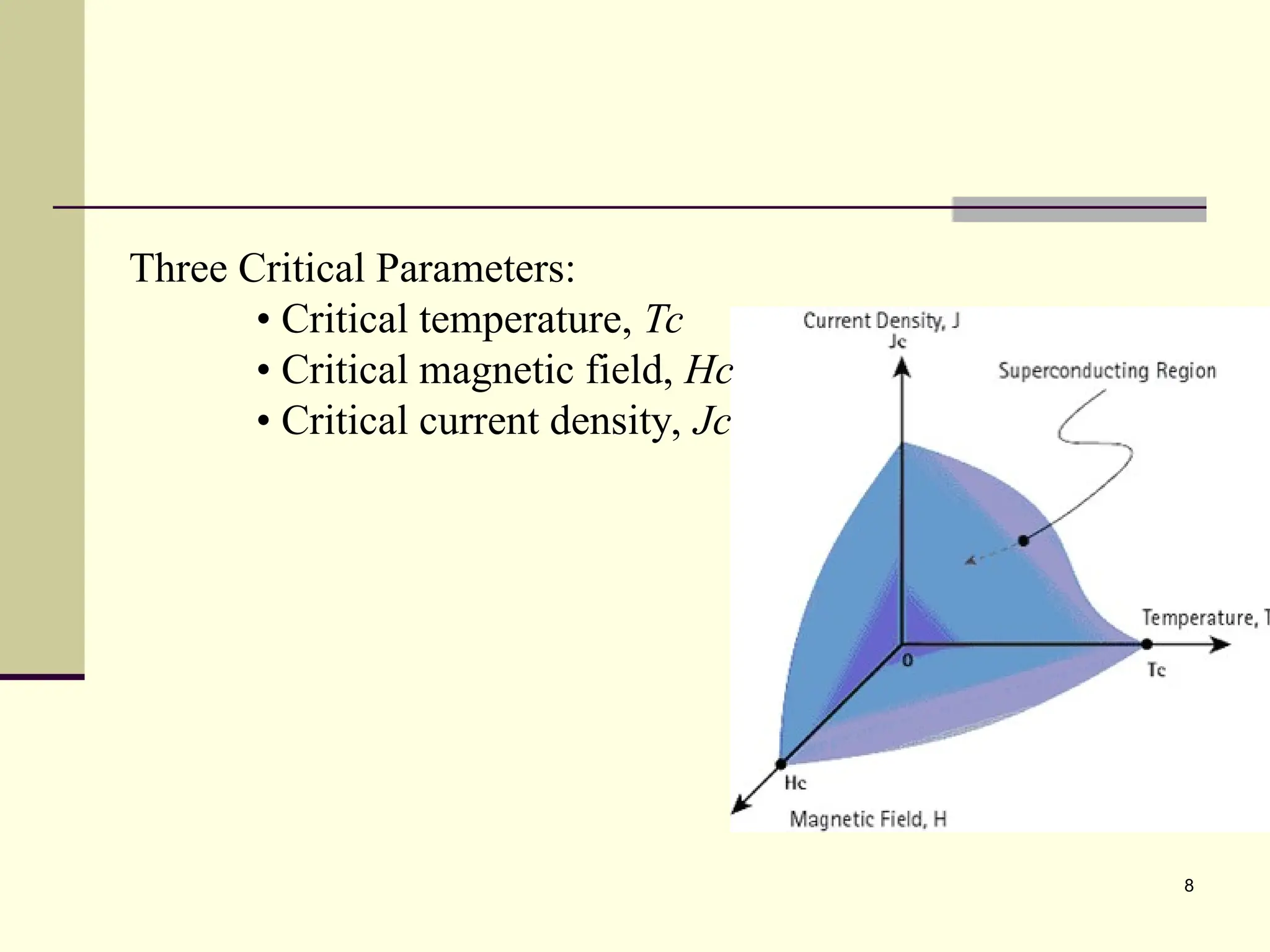
The material must be cooled below a characteristic temperature, known
as its superconducting transition or critical temperature (Tc).
The current passing through a given cross-section of the material must
be below a characteristic level known as the critical current density (Jc).
The magnetic field to which the material is exposed must be below a
characteristic value known as the critical magnetic field (Hc).
These conditions are interdependent, and define the environmental
operating conditions for the superconductor.
8
Three Critical Parameters:
• Critical temperature, Tc
• Critical magnetic field, Hc
• Critical current density, Jc
9
Electric Power Grid
 Electric power transmission refers to the 'bulk' transfer of electrical
power from one location to another. To satisfy various instantaneous
demands from consumers requires an uninterrupted flow of electricity.
A power transmission system which is also referred to as a "grid", is a
fully connected network of transmission lines.
 The Regional Power Grids are established for optimal utilization of
the power generated from the unevenly distributed power generating
stations, by having intra-regional and inter-regional power exchanges
depending upon day-to-day power availability and load conditions.
 The surplus power is transferred to the power deficit regions.
10
Grid congestion and reliability
• Due to the large amount of electric power involved, transmission
normally takes place at high voltage. Electric power is usually sent
over long distances through overhead power transmission lines.
Power is distributed underground in densely populated areas.
• As the demand for power increases, the installation of new power
lines becomes essential resulting grid congestion .Researchers
worldwide are working hard to find possible solutions to these
concerns.
• HTS cable technology enables the transmission and distribution of
power through much smaller cables than comparably rated
conventional cables. And, HTS technology is more environmentally
friendly. All of this is especially important in congested urban areas.
11
HTS VERSUS CONVENTIONAL
A comparison of HTS cable and conventional underground cross-
linked polyethylene (XLPE) cable and overhead wire yields
 the fact that HTS cable has an impedance that is 300 times less than
conventional XLPE cable and 800 times less than overhead wire.
 the inductance of the cold dielectric HTS cable is 6 times less than
conventional cable and 21 times less than overhead wire.
 the capacitance of the HTS is slightly less than conventional
underground cable, and
 the HTS cable has the ability to carry three to five times the capacity
of a conventional cable with the same overall diameter.
12
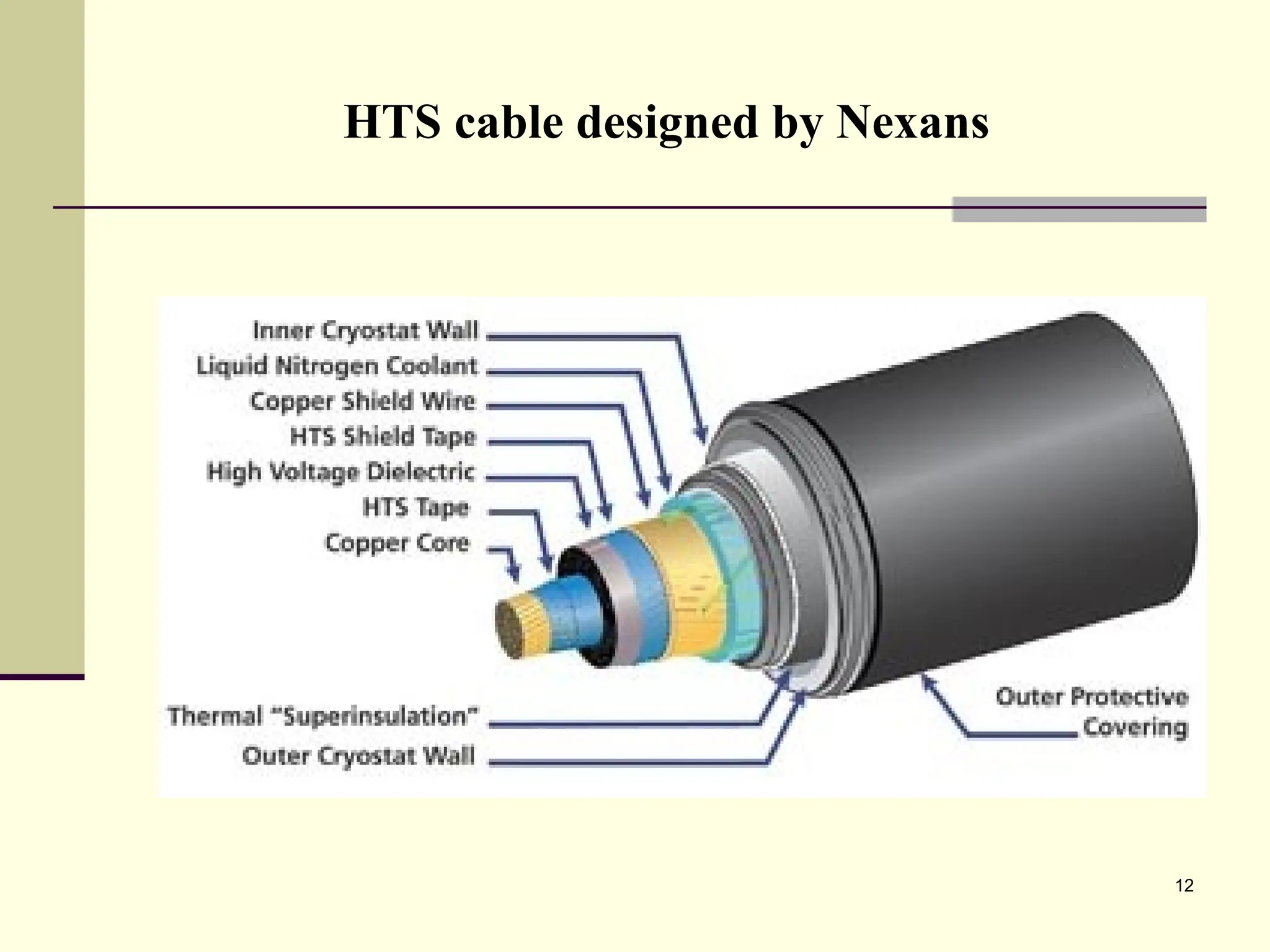
HTS cable designed by Nexans
13
Manufacturer of Superconducting Cables
 Sumitomo Electric Industries Ltd
 American Superconductor Corporation
 Nexan
 Super Power Incorporation
 BICC Cables, UK
14
Commercial uses of HTS cables
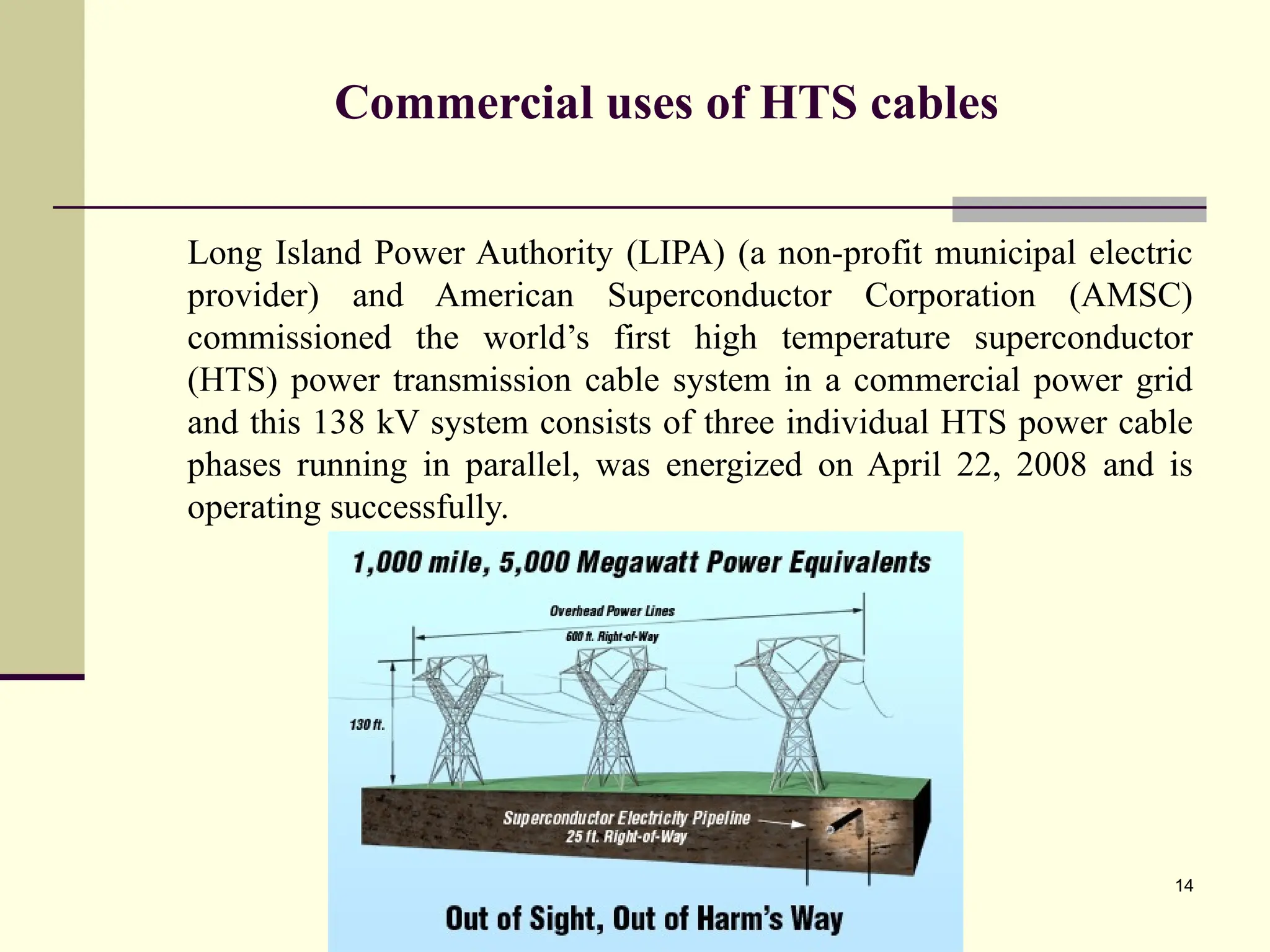
Long Island Power Authority (LIPA) (a non-profit municipal electric
provider) and American Superconductor Corporation (AMSC)
commissioned the world’s first high temperature superconductor
(HTS) power transmission cable system in a commercial power grid
and this 138 kV system consists of three individual HTS power cable
phases running in parallel, was energized on April 22, 2008 and is
operating successfully.
15
Summary
Superconducting technology can help in
 Conserving energy
 Reducing emissions of GHG
 Increasing system stability and reliability
 Tying together distributed power sources like solar and wind
Superconducting technology will include:
 AC and DC transmission and distribution lines
 Generators, motors, and synchronous condensers
 Transformers
 Superconducting Magnetic Energy Storage
 Superconducting Fault Current Limiter
June 25, 2009 16

Superconductors for Power Transmission and Distribution.ppt

  • 1.
  • 2.
    2 Outline  Background ofSuperconductivity  Electric power grid  Grid congestion and reliability  Superconductors in the grid
  • 3.
    3 Superconductivity  First toliquefy helium in 1908  First to discover superconductivity to Hg (Tc=4.5 K) Fig 1. Resistance vs. Temperature plot of normal metal and superconductor
  • 4.
    4 There are twogroups of superconductors: Low-temperature (“metallic”) superconductors (LTS) High-temperature (“oxide”) superconductors (HTS)
  • 5.
    5 Transition temperatures ofwell-known superconductors (Boiling point of liquid nitrogen for comparison) Transition Temperature (in Kelvin) Material Class 138 Hg12 Tl3 Ba30 Ca30 Cu45 O127 Copper-oxide superconductors 110 Bi2 Sr2 Ca2 Cu3 O10 (BSCCO) 92 YBa2 Cu3 O7 (YBCO) 77 Boiling point of liquid nitrogen 43 SmFeAs(O,F) Iron-based superconductors 41 CeFeAs(O,F) 26 LaFeAs(O,F) 18 Nb2 Sn Metallic low-temperature superconductors 10 Nb3 Ti 4.2 Hg (Mercury)
  • 6.
    June 25, 20096 Electrical behavior of Superconductors
  • 7.
    7 Conditions required fora material to exhibit superconducting behavior The material must be cooled below a characteristic temperature, known as its superconducting transition or critical temperature (Tc). The current passing through a given cross-section of the material must be below a characteristic level known as the critical current density (Jc). The magnetic field to which the material is exposed must be below a characteristic value known as the critical magnetic field (Hc). These conditions are interdependent, and define the environmental operating conditions for the superconductor.
  • 8.
    8 Three Critical Parameters: •Critical temperature, Tc • Critical magnetic field, Hc • Critical current density, Jc
  • 9.
    9 Electric Power Grid Electric power transmission refers to the 'bulk' transfer of electrical power from one location to another. To satisfy various instantaneous demands from consumers requires an uninterrupted flow of electricity. A power transmission system which is also referred to as a "grid", is a fully connected network of transmission lines.  The Regional Power Grids are established for optimal utilization of the power generated from the unevenly distributed power generating stations, by having intra-regional and inter-regional power exchanges depending upon day-to-day power availability and load conditions.  The surplus power is transferred to the power deficit regions.
  • 10.
    10 Grid congestion andreliability • Due to the large amount of electric power involved, transmission normally takes place at high voltage. Electric power is usually sent over long distances through overhead power transmission lines. Power is distributed underground in densely populated areas. • As the demand for power increases, the installation of new power lines becomes essential resulting grid congestion .Researchers worldwide are working hard to find possible solutions to these concerns. • HTS cable technology enables the transmission and distribution of power through much smaller cables than comparably rated conventional cables. And, HTS technology is more environmentally friendly. All of this is especially important in congested urban areas.
  • 11.
    11 HTS VERSUS CONVENTIONAL Acomparison of HTS cable and conventional underground cross- linked polyethylene (XLPE) cable and overhead wire yields  the fact that HTS cable has an impedance that is 300 times less than conventional XLPE cable and 800 times less than overhead wire.  the inductance of the cold dielectric HTS cable is 6 times less than conventional cable and 21 times less than overhead wire.  the capacitance of the HTS is slightly less than conventional underground cable, and  the HTS cable has the ability to carry three to five times the capacity of a conventional cable with the same overall diameter.
  • 12.
  • 13.
    13 Manufacturer of SuperconductingCables  Sumitomo Electric Industries Ltd  American Superconductor Corporation  Nexan  Super Power Incorporation  BICC Cables, UK
  • 14.
    14 Commercial uses ofHTS cables Long Island Power Authority (LIPA) (a non-profit municipal electric provider) and American Superconductor Corporation (AMSC) commissioned the world’s first high temperature superconductor (HTS) power transmission cable system in a commercial power grid and this 138 kV system consists of three individual HTS power cable phases running in parallel, was energized on April 22, 2008 and is operating successfully.
  • 15.
    15 Summary Superconducting technology canhelp in  Conserving energy  Reducing emissions of GHG  Increasing system stability and reliability  Tying together distributed power sources like solar and wind Superconducting technology will include:  AC and DC transmission and distribution lines  Generators, motors, and synchronous condensers  Transformers  Superconducting Magnetic Energy Storage  Superconducting Fault Current Limiter
  • 16.