Superconducting Cables in Grid: 
Implementation of Superconducting Cables 
i 
Source: Fat Know ledge [1] 
Prepared by Prajeshkumar Solanki and Aqpik Peter 
The Algonquin Centre for Construction Excellence, 
Algonquin College 
Ottawa, Ontario 
15 April 2014
Transmission Line Superconductors: 
Replacing Regular Conductors with Superconductors 
Prepared by Prajeshkumar Solanki and Aqpik Peter 
Prepared for Prof. Jordan Smith 
in partial fulfillment of the 
requirements of ENL2019T-410: 
Technical Communication for Engineering Technologies 
The Algonquin Centre for Construction Excellence, 
Algonquin College 
Ottawa, Ontario 
15 April 2014 
ii
Declaration of Sole Authorship 
We, Aqpik Peter and Prajeshkumar Solanki, confirm that the following work submitted 
for assessment in ENL2019T-410 (Technical Communication for Engineering 
Technologies) is expressed entirely in our own words, except where acknowledged 
otherwise. The use of work by other authors-be they words, ideas, numerical data, 
figures, tables, photographs, etc.—whether quoted, paraphrased, or reproduced, is 
properly cited at the point of use. The original sources of cited work may be located 
using the IEEE-style bibliographical entries in the References page at the back. 
i
Executive Summary 
In this report, we will compare regular transmission lines to superconducting 
transmission lines. To get superconductors into its superconducting state, you need to 
cool it to about -196 degrees Celsius which we would use liquid hydrogen mixed 
together in a conduit underground. Using superconductor is a major bonus because 
there would be zero resistance in the line that would be able to transfer extremely high 
wattage though the generation system. Our transmission system today are used with 
towers and power line poles that are exposed to weather which is another disadvantage 
because certain climates increases the resistance in the conductors and that would 
increase the power load and make the generation system less efficient. 
ii
Contents 
Declaration of Sole Authorship . . . . . . . . . . . . . . . . . . . . . . . . . . . . . . . . . . . . . . . . . . i 
Executive Summary . . . . . . . . . . . . . . . . . . . . . . . . . . . . . . . . . . . . . . . . . . . . . . . . . . ii 
Table of Contents . . . . . . . . . . . . . . . . . . . . . . . . . . . . . . . . . . . . . . . . . . . . . . . . . . . ii i 
Index of Figures and Tables . . . . . . . . . . . . . . . . . . . . . . . . . . . . . . . . . . . . . . . . . . . . iv 
1 Introduction . . . . . . . . . . . . . . . . . . . . . . . . . . . . . . . . . . . . . . . . . . . . . . . . . . . . . 1 
1.1 Purpose . . . . . . . . . . . . . . . . . . . . . . . . . . . . . . . . . . . . . . . . . . . . . . . . . . . 1 
1.2 Background . . . . . . . . . . . . . . . . . . . . . . . . . . . . . . . . . . . . . . . . . . . . . . . . 1 
1.2.1Problem Background . . . . . . . . . . . . . . . . . . . . . . . . . . . . . . . . . . . . . . . . . 2 
1.2.2Solution Background . . . . . . . . . . . . . . . . . . . . . . . . . . . . . . . . . . . . . . . . . 2 
1.3 Exclusion Elaboration . . . . . . . . . . . . . . . . . . . . . . . . . . . . . . . . . . . . . . . . 3 
1.4 Content Summary . . . . . . . . . . . . . . . . . . . . . . . . . . . . . . . . . . . . . . . . . . . . 3 
1.5 Reader Benefit . . . . . . . . . . . . . . . . . . . . . . . . . . . . . . . . . . . . . . . . . . . . . . 3 
2 Problem Elaboration . . . . . . . . . . . . . . . . . . . . . . . . . . . . . . . . . . . . . . . . . . . . . . 3 
2.1 Losses due to Resistance . . . . . . . . . . . . . . . . . . . . . . . . . . . . . . . . . . . . . 4 
2.2 Stability . . . . . . . . . . . . . . . . . . . . . . . . . . . . . . . . . . . . . . . . . . . . . . . . . . . . 5 
2.3 Environmental and Safety Issues . . . . . . . . . . . . . . . . . . . . . . . . . . . . . . . . . 6 
3 Solution Elaboration . . . . . . . . . . . . . . . . . . . . . . . . . . . . . . . . . . . . . . . . . . . . . . 7 
3.1 Superconducting Cables . . . . . . . . . . . . . . . . . . . . . . . . . . . . . . . . . . . . . 8 
3.2 Production of the superconductors . . . . . . . . . . . . . . . . . . . . . . . . . . . . . . . . 9 
3.3 Lifespan . . . . . . . . . . . . . . . . . . . . . . . . . . . . . . . . . . . . . . . . . . . . . . . . . . . . 9 
4 Feasibility Study . . . . . . . . . . . . . . . . . . . . . . . . . . . . . . . . . . . . . . . . . . . . . . . . . 10 
4.1 Cost Benefit Analysis . . . . . . . . . . . . . . . . . . . . . . . . . . . . . . . . . . . . . . . . . 10 
4.2 Logistical Feasibility . . . . . . . . . . . . . . . . . . . . . . . . . . . . . . . . . . . . . . . . . . 10 
4.3 Scheduling Feasibility . . . . . . . . . . . . . . . . . .. . . . . . . . . . . . . . . . . . . . . . . 11 
5 Comparative Analysis . . . . . . . . . . . . . . . . . . . . . . . . . . . . . . . . . . . . . . . . . . . . . 11 
5.1 Alternative Solutions Description . . . . . . . . . . . . . . . . . . . . . . . . . . . . . . . . . 12 
5.2 Criteria Elaboration . . . . . . . . . . . . . . . . . . . . . . . . . . . . . . . . . . . . . . . . . . . 12 
5.3 Comparative Analysis Table . . . . . . . . . . . . . . . . . . . . . . . . . . . . . . . . . . . . 13 
5.4 Results . . . . . . . . . . . . . . . . . . . . . . . . . . . . . . . . . . . . . . . . . . . . . . . . . . . . . 13 
6 Conclusions and Recommendations . . . . . . . . . . . . . . . . . . . . . . . . . . . . . . . . . . 15 
6.1 Conclusions . . . . . . . . . . . . . . . . . . . . . . . . . . . . . . . . . . . . . . . . . . . . . . . . . 15 
6.2 Recommendations . . . . . . . . . . . . . . . . . . . . . . . . . . . . . . . . . . . . . . . . . . . . 15 
Glossary . . . . . . . . . . . . . . . . . . . . . . . . . . . . . . . . . . . . . . . . . . . . . . . . . . . . . . . . . . . 16 
References . . . . . . . . . . . . . . . . . . . . . . . . . . . . . . . . . . . . . . . . . . . . . . . . . . . . . . . . . . 20 
Appendices . . . . . . . . . . . . . . . . . . . . . . . . . . . . . . . . . . . . . . . . . . . . . . . . . . . . . . . . . . 21 
Superconducting cable Benefits . . . . . . . . . . . . . . . . . . . . . . . . . . . . . . . . . . 22 
iii
Index of Tables and Figures 
iv 
Figures 
1. Superconducting cable schematic . . . . . . . . . . . . . . . . . . . . . . . . . . . . . . . . . . . . . . . i 
2. Power loss over transmission line . . . . . . . . . . . . . . . . . . . . . . . . . . . . . . . . . . . . . . . 8 
3. Power loss. . . . . . . . . . . . . . . . . . . . . . . . . . . . . . . . . . . . . . . . . . . . . . . . . . . . . . . . . 8 
4. Hurricane Impacts. . . . . . . . . . . . . . . . . . . . . . . . . . . . . . . . . . . . . . . . . . . . . . . . . . . . 9 
5. Bird Deaths By High voltage lines. . . . . . . . . . . . . . . . . . . . . . . . . . . . . . . . . . . . . . 10 
Tables 
1. Superconductors vs Regular Conductors . . . . . . . . . . . . . . . . . . . . . . . . . . . . . . . 13 
2. Criteria for alternative to superconducting cables . . . . . . . . . . . . . . . . . . . . . . . . . . .16 
3. Superconducting cable benefits . . . . . . . . . . . . . . . . . . . . . . . . . . . . . . . . . . . . . . . 22
1 Introduction 
5 
1.1 Purpose 
In this report, we will be talking about the feasibility of replacing overhead 
transmission line with liquid hydrogen cooled superconductors placed 
underground in conduits as a means to minimize the resistance losses and 
make the transmission a lot more efficient and vastly increasing the lifespan of 
the system. By making operational grid with the superconductors, we will 
right away diminish the losses due to resistance and we could use the liquid 
hydrogen as fuel for the future cars. This report was prepared for Professor 
Jordan Smith in partial fulfillment of the requirements of ENL2019T-410: 
Technical Communication for Engineering Technologies. 
1.2 Background 
With the higher demand of electricity vastly increasing in North-America each 
year, we need a whole new power grid system that will be much more 
efficient, cost saving as well as environment friendly. As we all know that a lot 
of power is being wasted because of the less efficient power transmission 
lines, so a lot of work has to be done to minimize the losses by introducing the 
superconductors in the grid. With an increasing demand for an alternative to 
fossil fuels, we have to invest our interests in solar, wind, agricultural biomass 
and advance nuclear power technology [2]. 
1.2.1 Problem Background 
In the past, about 11 years ago North America saw a major power 
outage that pushed the region into the darkness of stone era. 
Around 120 million people in the area suffered huge losses due 
power failure. This was due to the outdated 20th century power grid 
system that lacks in the area of efficiency and interruption free 
operation. A conventional transmission line system consists of 
aluminum or other alloys as their conductors, which runs via 
overhead lines through towers. The main problem with this system 
is losses, either it’s due to resistance or weather or other means, it 
is not efficient and safe.
6 
1.2.2 Solution Background 
To overcome the modern era transmission system problems and 
losses, we must look for an alternative way to provide efficient and 
reliable solution. Our solution is to implement Superconducting 
transmission lines through conduits in which liquid hydrogen would 
flow as a coolant to get the conductor at its superconducting state. 
Superconductors are more efficient than regular conductor because 
there is no electrical resistance and would run on direct current 
(DC). 
1.3 Exclusion Elaboration 
This report doesn’t elaborate the materials used up to make the underground 
conduits in which the superconductor cables run. Also the report doesn’t 
consist of the cost of the maintenance which could be done while the grid is 
operational. The materials used in the superconducting cables may di ffer and 
in this case they are just in a testing phase, so the actual metal used as 
superconductor may be changed in the future. 
1.4 Content Summary 
In this report we will check the feasibility of implementing the superconducting 
cables in the grid and check the various aspects to totally change the 
conventional grid system so that we will prevent losses as well as we protect 
the environment. Chapter three will elaborate the solution to the implement 
the whole new system of superconducting cables. Chapter four will check 
about the feasibility and the cost analysis involved in this project. Fifth chapter 
will be on comparative analysis between the superconducting cables and the 
conventional wire systems. The following chapter will elaborate the conclusion 
for making this system operation and will include the recommendations to 
fulfill the demand of the project. 
1.5 Reader Benefit 
This study report is meant to provide brief knowledge about implementing 
superconducting cables in the grid over conventional cables. The institutions
which generate electricity like power stations will definitely get a clear idea of 
saving the losses and making their distribution safe and worthy. In this 
developed world, we never want to be left out without power, so we need a 
reliable solution to the modern era transmission problems. We came up with 
an idea of using the superconducting cables instead of the regular cables, so 
it will almost totally diminish the losses due to resistance and will be mostly 
maintenance free. This will solve the problems like unstable grid, black-outs, 
environmental issues like bird deaths due to overhead lines moreover it will be 
a lot safer for humans as it won’t be exposed in the open air. Another major 
benefit will be liquid hydrogen, which runs through the cables. We will be able 
to use the liquid hydrogen as our fuel so this will be totally futuristic idea. 
2 Problem Elaboration 
The modern era problem of transmission is losses and unreliability. In the recent 
times we have seen huge blackouts and millions of people left without power. The 
problem with the conventional system that we are using right now is that it is filled 
with lot of losses, unstable and not being the environmental friendly. As being 
exposed open in the air, it has several other issues too related to it. Being not safe, 
more space consuming and not at all efficient enough are the drawbacks of the 
conventional transmission line grid system. In order to overcome these problems we 
have to figure some way out to provide people a safer and more importantly cost 
saving solution of what we think this project will deliver. 
7 
2.1 Losses due to Resistance
We use special conductors in a conventional transmission lines with a really low 
resistivity but it is still not good enough to prevent losses [3]. 
Figure 2. Power Loss in a transmission lines over 1000kms 
Source: Stanford University [3]. 
8 
Figure 3. Various Power Loss 
Source: Stanford University [3]. 
2.2 Stability
The main issue of this regular or contemporary transmission system is the 
stability. As we all know the normal transmission lines are open to air and have 
to deal with the weather. When the storms, hurricanes, cyclones come it uproots 
the towers, leaving the grid broken. For example in 2008 Hurricane Gustav left 
huge population without power because it destroyed the whole towers in the 
transmission lines. 
9 
Figure 3. Hurricane Impacts 
Source: The Times-Picayunea [4]. 
2.3 Environmental and Safety Issues 
Every year millions of birds are being killed by the high voltage lines. This is a 
worldwide problem [5]. An estimated 174 million birds are killed in the USA only 
every year [5]. This will in turn raise serious environmental issues and will 
collapse the balance of nature and lot of endangered species will extinct. If we 
talk about safety this system is pretty unsafe to work on. For the technicians who 
work on the overhead transmission lines, a lot of care should be taken because 
of the high chances of electrocution.
Figure 5. Bird deaths by high voltage lines 
10 
Source: Reta [5] 
3 Solution Elaboration 
Our report is to figure out the effective way to minimize the losses as well as make 
the transmission lines environmental friendly. On top of that we will get the liquid 
hydrogen as fuel for the futuristic cars. The main logic to implement these lines was 
to save power and give the stability to the grid to prevent power outages. This 
system can be implemented in any type of topographies as it runs underground 
ducts which carry huge liquid hydrogen cooled superconducting cables. Setting up
the superconducting grid will in turn save millions of dollars in a long run and will be 
long lasting, maintenance free system. 
11 
3.1 Superconducting Cables 
The superconducting cables consist of superconductors. Superconductors are 
mix alloy of several metals or compound which below a certain temperature get 
the superconductivity and have zero resistance [6]. Figure 5 shows the structure 
of the superconducting cable. Superconducting cables can be used in any kind 
of topographies as it has thermal insulation so no matter if it’s hot or cold the 
cable can withstand everything. It can carry huge currents and cryogenic liquid 
hydrogen fuel in the conduits which will be delivered to the vehicle fueling 
stations. The superconductors are really thin layer of metal which can carry 
unusually high amount of current without any resistance. The cable consists of 
two superconducting wires at +/-50Kv and 50Kamps current without any 
significant losses [7]. This kind of cables can carry 5 GW of power hundreds of 
kilometers [7]. 
Figure 1. Super Conductor
12 
Source: Fat Knowledge [1] 
3.2 Production of the superconductors 
The production of the hydrogen cooled superconducting cables is in a testing 
phase right now. Scientist are coming up with the different types of metal alloys 
as superconductors and trying to make a less costly and more efficient cables. 
The Russian scientists have made a superconducting cable of 26mm diameter 
and 12mm cavity in it for the liquid hydrogen to flow. They are well in progress to 
make a bigger diameter cable which can carry liquid hydrogen 200-220 g/s and 
able to carry 25MW of power [8]. The USA made 100m flexible superconducting 
cable 3cm diameter pipe for 1m/s liquid hydrogen to flow with an overall 
diameter of 10cm which can carry 5000v, 2000amps and 10MW dc power with 
variable loads and current [9]. 
3.3 Lifespan 
Though superconducting cables is an impressive concept a lot of research to be 
done on it. Fairly new technology, so it promises the longer life span but no 
research is done yet on the longevity of the superconducting cables. 
Table 1. Superconductors vs. Regular conductors
Source : Randolf miller’s introduction to superconductors [10] 
4 Feasibility Study 
We are so much used to overhead transmission lines despite knowing the fact that 
there are lot of losses. Superconducting cables would save a lot of losses in the long 
run and payback the costs of implementation. A lot of research has proven that 
superconducting cables can play a big role in the power sector. Recent studies have 
shown us that it could carry huge currents. As being underground and not exposed 
to the open air, the cable is more environmental friendly and safe. 
13 
4.1 Cost Benefit Analysis 
The metals used to form the super conductors are easily available and are pure 
metal or metal alloys [10]. The American Superconductor figured out that the 
superconducting cable system would cost $8 million per mile for the single pipe 
carrying 5000Megawatts and $13 million for the double pipe carrying 10000MW
[11]. The conventional transmission towers and lines would cost roughly $7-10 
million per mile [11]. 
14 
4.2 Logistical Feasibility 
There are two basic types of superconductors, one is pure metals and another is 
metal alloys. These metals are easily available so they can be produced on large 
scales in the industries. The production of cryogenic hydrogen is little bit 
expensive at the moment. At present the hydrogen comes from the steam 
reforming of methane and consists of carbon. The scientists are working to 
produce hydrogen by separating it from the water [9]. Superconducting cables 
have no impact on environment as they are placed underground. There won’t be 
any corona effect due oxidation, the conductors are totally concealed in lot of 
layers. As being a new concept a lot of more development is to be done. People 
will appreciate this new development and because of its benefits. 
4.3 Scheduling Feasibility 
There are lot of technical choices and challenges ahead like in cryogenic fuels 
and vacuums, dielectric materials being held under lot colder condition and cable 
designs. We could still in around 10 years of time frame, will be able to operate 
10-20km line to solve the transmission problems [9]. By 2050 we will be able to 
set up around 40 sections each 100kms long [9].
5 Comparative Analysis 
In the following chapter we will discuss about the alternatives to the hydrogen cooled 
superconducting cables. Unfortunately at this moment no other alternative is 
available to the superconducting cables. There are other types of superconductors 
which could be used in the cables but not the whole new technology that replaces 
this idea. We could use different coolants to make material superconductive like 
Liquid Nitrogen and Helium. 
15 
5.1 Alternative Solutions Description 
Liquid nitrogen has a little bit higher boiling point at about 77Kelvins or -196C. 
When insulated from the heat, the liquid nitrogen could be transported and 
stored. The Liquid Nitrogen is also an explosive gas, when handled carelessly, it 
could create a disaster. Another alternative is liquid helium which has a boiling 
point of 4.2K also acts as coolant in the various applications. 
5.2 Criteria Elaboration 
Following subsections will briefly elaborate the criteria. 
5.2.1 Stable System 
The main concern of the modern era transmission is the stability. Nobody wants 
to be left out without power. People need the stable system that will not be 
affected by weather or any other factors. Our idea of superconducting cable 
system will fulfill all the demands of the modern era, providing stability and 
won’t be affected by rain, snow, heat and storms as it is situated underground. 
5.2.2 Minimal Losses
The losses caused by the resistance in the conductor are the main concern in 
the transmission lines. Our solution for this problem is superconducting cables, 
which has almost no resistance hence being cost saving. 
16 
5.2.3 Safety and Eco-friendly 
If we consider the criteria there’s a clear choice, underground cables are not 
exposed in the open air. As being covered in concealed pipes, there are no 
chances are getting electrocuted. 
5.3 Comparative Analysis Table 
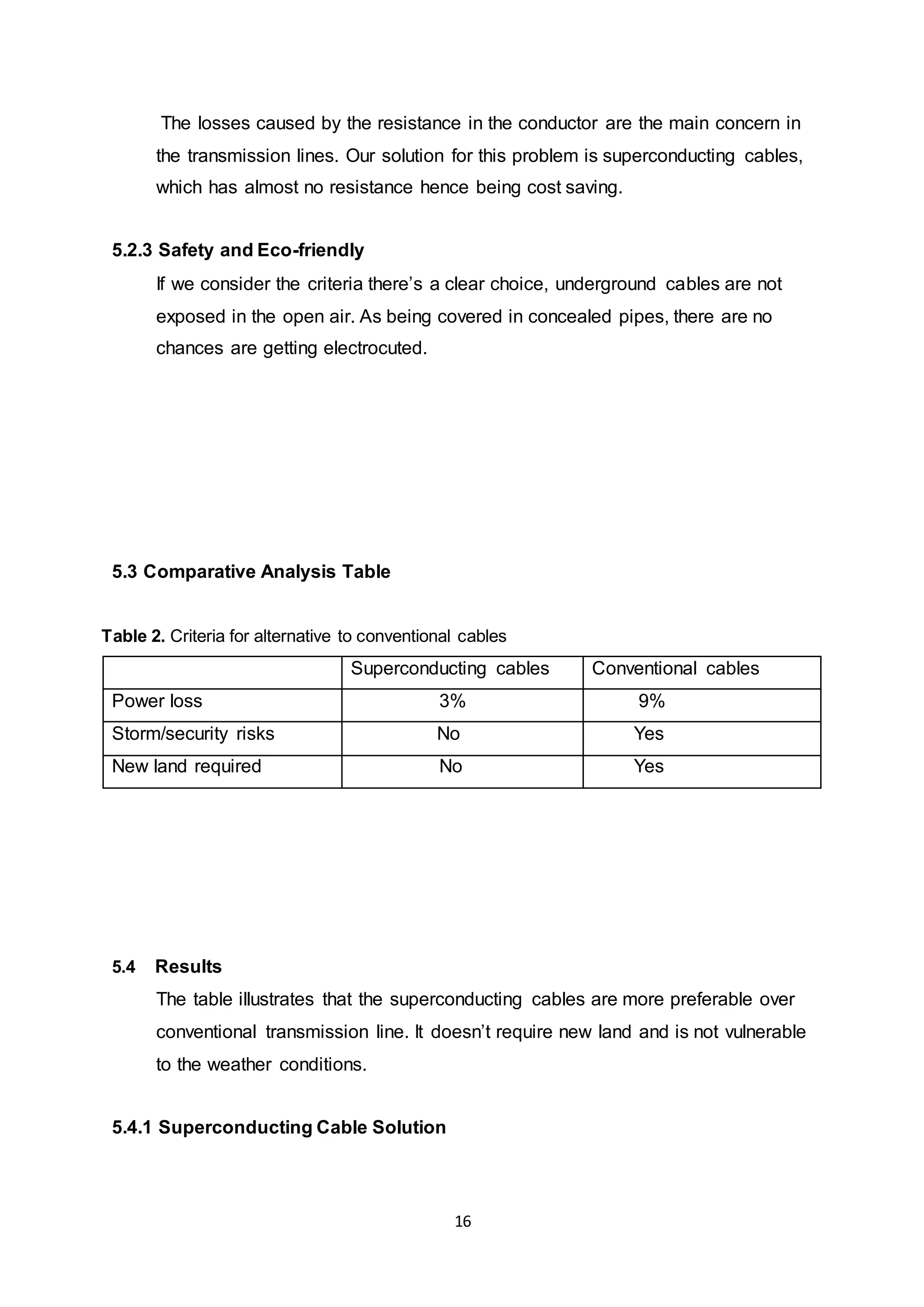
Table 2. Criteria for alternative to conventional cables 
Superconducting cables Conventional cables 
Power loss 3% 9% 
Storm/security risks No Yes 
New land required No Yes 
5.4 Results 
The table illustrates that the superconducting cables are more preferable over 
conventional transmission line. It doesn’t require new land and is not vulnerable 
to the weather conditions. 
5.4.1 Superconducting Cable Solution
Superconducting cables consists of superconductors which are cooled by 
cryogenic hydrogen which could be used as a fuel in cars. It will diminish the 
losses and create a safer transmission system as well as eco-friendly too. 
17
6 Conclusions and Recommendations 
18 
6.1 Conclusions 
The superconducting cables in grid system run through underground path as 
they are not open to the air so there are no corona losses. There is no 
electromagnetic field around the cable itself. Because it can carry huge amount 
of currents while using really small diameter conductors, it is economically viable 
solution. There will be close to zero maintenance costs associated with this 
system. So we could conclude that we get a better solution of losses affiliated 
with regular transmission lines and more over we get liquid hydrogen which is a 
coolant in this case as a fuel for cars. 
6.2 Recommendations 
This report recommends that the implementation of this superconducting cable in 
a grid will definitely bring the stability to the current grid system. This is highly 
recommended for the power stations which generate electricity as they can 
transmit large current over long distances in AC as well as DC. It is cost saving 
and said to be a reliable and safe solution. It is specially recommended for the 
regions where a lot of storms and hurricanes occur.
Glossary 
Superconductor: An element or compound or metal alloy, which at a certain 
temperature gains the zero resistivity are called superconductors [6]. 
MW: Megawatts, the unit in which power is measured. 
KA: Kilo-amps, the unit in which current is being measured 
Resistance: The opposition force in the substance to block the current flow is called 
19 
resistance.
References 
[1] Fat Knowledge, "A Power Grid for the Hydrogen Economy," Fat Knowledge, 11 July 2006. 
[Online]. Available: http://fatknowledge.blogspot.ca/2006/07/power-grid-for-hydrogen-economy. 
20 
html. [Accessed 14 April 2014]. 
[2] By Paul M. Grant, Chauncey Starr and Thomas J. Overbye, "www.scientificamerican.com," 26 
June 2006. [Online]. Available: http://phe.rockefeller.edu/docs/SA_Supergrid.pdf. [Accessed 28 
March 2014]. 
[3] C. Harting , "http://large.stanford.edu/," Stanford University, 24 October 2010. [Online]. 
Available: http://large.stanford.edu/courses/2010/ph240/harting1/. [Accessed 15 April 2014]. 
[4] Rebecca Mowbray, The Times-picayun, "www.nola.com," The Times-picayun, 05 September 
2008. [Online]. Available: 
http://www.nola.com/hurricane/index.ssf/2008/09/entergy_works_to_bring_plants.html. 
[Accessed 15 April 2014]. 
[5] Reta, "http://retasite.wordpress.com/2014/01/08/altalink-transmission-line-kills-birds/," 8 
January 2014. [Online]. Available: http://retasite.files.wordpress.com/2011/03/clarks-cartoon. 
jpg?w=497. [Accessed 15 April 2014]. 
[6] superconductors.org, "www.superconductors.org," 2 July 1999. [Online]. Available: 
http://superconductors.org/. [Accessed 15 April 2014]. 
[7] Bruno De Wachter, "www.leonardo-energy.org," 2 June 2007. [Online]. Available: 
http://www.leonardo-energy.org/superconducting-hydrogen-electricity-grid. [Accessed 15 April 
2014]. 
[8] Anton Evseev, "www.pravda.ru," 26 March 2012. [Online]. Available: 
http://english.pravda.ru/science/tech/26-03-2012/120888-hybrid_superconducting-0/. 
[Accessed 15 April 2014]. 
[9] Brian Wang, "www.nextbigfuture.com," 24 june 2006. [Online]. Available: 
http://nextbigfuture.com/2006/06/other-tech-continental-supergrid-and.html. [Accessed 15 
April 2014]. 
[10] Randolf joseph Muller, "www.wou.edu," 24 February 2011. [Online]. Available: 
http://www.wou.edu/~rmiller09/superconductivity/. [Accessed 15 April 2014]. 
[11] Rebecca Smith, "blogs.wsj.com," 13 May 2009. [Online]. Available: 
http://blogs.wsj.com/environmentalcapital/2009/05/13/moving-electricity-via-super-cold-cables- 
wins-influential-dc-ally/. [Accessed 15 April 2014]. 
[12] W.-H. Librarian, "www.wtech.org," September 1997. [Online]. Available:
http://www.wtec.org/loyola/scpa/02_03.htm. [Accessed 10 April 2014]. 
Appendix: Superconducting Cables as Compare to Conventional Wires 
21 
Table 3: Superconducting cable Benefits
22 
Source: wtech.org [12]

Supercoducting Cables in Grid

  • 1.
    Superconducting Cables inGrid: Implementation of Superconducting Cables i Source: Fat Know ledge [1] Prepared by Prajeshkumar Solanki and Aqpik Peter The Algonquin Centre for Construction Excellence, Algonquin College Ottawa, Ontario 15 April 2014
  • 2.
    Transmission Line Superconductors: Replacing Regular Conductors with Superconductors Prepared by Prajeshkumar Solanki and Aqpik Peter Prepared for Prof. Jordan Smith in partial fulfillment of the requirements of ENL2019T-410: Technical Communication for Engineering Technologies The Algonquin Centre for Construction Excellence, Algonquin College Ottawa, Ontario 15 April 2014 ii
  • 3.
    Declaration of SoleAuthorship We, Aqpik Peter and Prajeshkumar Solanki, confirm that the following work submitted for assessment in ENL2019T-410 (Technical Communication for Engineering Technologies) is expressed entirely in our own words, except where acknowledged otherwise. The use of work by other authors-be they words, ideas, numerical data, figures, tables, photographs, etc.—whether quoted, paraphrased, or reproduced, is properly cited at the point of use. The original sources of cited work may be located using the IEEE-style bibliographical entries in the References page at the back. i
  • 4.
    Executive Summary Inthis report, we will compare regular transmission lines to superconducting transmission lines. To get superconductors into its superconducting state, you need to cool it to about -196 degrees Celsius which we would use liquid hydrogen mixed together in a conduit underground. Using superconductor is a major bonus because there would be zero resistance in the line that would be able to transfer extremely high wattage though the generation system. Our transmission system today are used with towers and power line poles that are exposed to weather which is another disadvantage because certain climates increases the resistance in the conductors and that would increase the power load and make the generation system less efficient. ii
  • 5.
    Contents Declaration ofSole Authorship . . . . . . . . . . . . . . . . . . . . . . . . . . . . . . . . . . . . . . . . . . i Executive Summary . . . . . . . . . . . . . . . . . . . . . . . . . . . . . . . . . . . . . . . . . . . . . . . . . . ii Table of Contents . . . . . . . . . . . . . . . . . . . . . . . . . . . . . . . . . . . . . . . . . . . . . . . . . . . ii i Index of Figures and Tables . . . . . . . . . . . . . . . . . . . . . . . . . . . . . . . . . . . . . . . . . . . . iv 1 Introduction . . . . . . . . . . . . . . . . . . . . . . . . . . . . . . . . . . . . . . . . . . . . . . . . . . . . . 1 1.1 Purpose . . . . . . . . . . . . . . . . . . . . . . . . . . . . . . . . . . . . . . . . . . . . . . . . . . . 1 1.2 Background . . . . . . . . . . . . . . . . . . . . . . . . . . . . . . . . . . . . . . . . . . . . . . . . 1 1.2.1Problem Background . . . . . . . . . . . . . . . . . . . . . . . . . . . . . . . . . . . . . . . . . 2 1.2.2Solution Background . . . . . . . . . . . . . . . . . . . . . . . . . . . . . . . . . . . . . . . . . 2 1.3 Exclusion Elaboration . . . . . . . . . . . . . . . . . . . . . . . . . . . . . . . . . . . . . . . . 3 1.4 Content Summary . . . . . . . . . . . . . . . . . . . . . . . . . . . . . . . . . . . . . . . . . . . . 3 1.5 Reader Benefit . . . . . . . . . . . . . . . . . . . . . . . . . . . . . . . . . . . . . . . . . . . . . . 3 2 Problem Elaboration . . . . . . . . . . . . . . . . . . . . . . . . . . . . . . . . . . . . . . . . . . . . . . 3 2.1 Losses due to Resistance . . . . . . . . . . . . . . . . . . . . . . . . . . . . . . . . . . . . . 4 2.2 Stability . . . . . . . . . . . . . . . . . . . . . . . . . . . . . . . . . . . . . . . . . . . . . . . . . . . . 5 2.3 Environmental and Safety Issues . . . . . . . . . . . . . . . . . . . . . . . . . . . . . . . . . 6 3 Solution Elaboration . . . . . . . . . . . . . . . . . . . . . . . . . . . . . . . . . . . . . . . . . . . . . . 7 3.1 Superconducting Cables . . . . . . . . . . . . . . . . . . . . . . . . . . . . . . . . . . . . . 8 3.2 Production of the superconductors . . . . . . . . . . . . . . . . . . . . . . . . . . . . . . . . 9 3.3 Lifespan . . . . . . . . . . . . . . . . . . . . . . . . . . . . . . . . . . . . . . . . . . . . . . . . . . . . 9 4 Feasibility Study . . . . . . . . . . . . . . . . . . . . . . . . . . . . . . . . . . . . . . . . . . . . . . . . . 10 4.1 Cost Benefit Analysis . . . . . . . . . . . . . . . . . . . . . . . . . . . . . . . . . . . . . . . . . 10 4.2 Logistical Feasibility . . . . . . . . . . . . . . . . . . . . . . . . . . . . . . . . . . . . . . . . . . 10 4.3 Scheduling Feasibility . . . . . . . . . . . . . . . . . .. . . . . . . . . . . . . . . . . . . . . . . 11 5 Comparative Analysis . . . . . . . . . . . . . . . . . . . . . . . . . . . . . . . . . . . . . . . . . . . . . 11 5.1 Alternative Solutions Description . . . . . . . . . . . . . . . . . . . . . . . . . . . . . . . . . 12 5.2 Criteria Elaboration . . . . . . . . . . . . . . . . . . . . . . . . . . . . . . . . . . . . . . . . . . . 12 5.3 Comparative Analysis Table . . . . . . . . . . . . . . . . . . . . . . . . . . . . . . . . . . . . 13 5.4 Results . . . . . . . . . . . . . . . . . . . . . . . . . . . . . . . . . . . . . . . . . . . . . . . . . . . . . 13 6 Conclusions and Recommendations . . . . . . . . . . . . . . . . . . . . . . . . . . . . . . . . . . 15 6.1 Conclusions . . . . . . . . . . . . . . . . . . . . . . . . . . . . . . . . . . . . . . . . . . . . . . . . . 15 6.2 Recommendations . . . . . . . . . . . . . . . . . . . . . . . . . . . . . . . . . . . . . . . . . . . . 15 Glossary . . . . . . . . . . . . . . . . . . . . . . . . . . . . . . . . . . . . . . . . . . . . . . . . . . . . . . . . . . . 16 References . . . . . . . . . . . . . . . . . . . . . . . . . . . . . . . . . . . . . . . . . . . . . . . . . . . . . . . . . . 20 Appendices . . . . . . . . . . . . . . . . . . . . . . . . . . . . . . . . . . . . . . . . . . . . . . . . . . . . . . . . . . 21 Superconducting cable Benefits . . . . . . . . . . . . . . . . . . . . . . . . . . . . . . . . . . 22 iii
  • 6.
    Index of Tablesand Figures iv Figures 1. Superconducting cable schematic . . . . . . . . . . . . . . . . . . . . . . . . . . . . . . . . . . . . . . . i 2. Power loss over transmission line . . . . . . . . . . . . . . . . . . . . . . . . . . . . . . . . . . . . . . . 8 3. Power loss. . . . . . . . . . . . . . . . . . . . . . . . . . . . . . . . . . . . . . . . . . . . . . . . . . . . . . . . . 8 4. Hurricane Impacts. . . . . . . . . . . . . . . . . . . . . . . . . . . . . . . . . . . . . . . . . . . . . . . . . . . . 9 5. Bird Deaths By High voltage lines. . . . . . . . . . . . . . . . . . . . . . . . . . . . . . . . . . . . . . 10 Tables 1. Superconductors vs Regular Conductors . . . . . . . . . . . . . . . . . . . . . . . . . . . . . . . 13 2. Criteria for alternative to superconducting cables . . . . . . . . . . . . . . . . . . . . . . . . . . .16 3. Superconducting cable benefits . . . . . . . . . . . . . . . . . . . . . . . . . . . . . . . . . . . . . . . 22
  • 7.
    1 Introduction 5 1.1 Purpose In this report, we will be talking about the feasibility of replacing overhead transmission line with liquid hydrogen cooled superconductors placed underground in conduits as a means to minimize the resistance losses and make the transmission a lot more efficient and vastly increasing the lifespan of the system. By making operational grid with the superconductors, we will right away diminish the losses due to resistance and we could use the liquid hydrogen as fuel for the future cars. This report was prepared for Professor Jordan Smith in partial fulfillment of the requirements of ENL2019T-410: Technical Communication for Engineering Technologies. 1.2 Background With the higher demand of electricity vastly increasing in North-America each year, we need a whole new power grid system that will be much more efficient, cost saving as well as environment friendly. As we all know that a lot of power is being wasted because of the less efficient power transmission lines, so a lot of work has to be done to minimize the losses by introducing the superconductors in the grid. With an increasing demand for an alternative to fossil fuels, we have to invest our interests in solar, wind, agricultural biomass and advance nuclear power technology [2]. 1.2.1 Problem Background In the past, about 11 years ago North America saw a major power outage that pushed the region into the darkness of stone era. Around 120 million people in the area suffered huge losses due power failure. This was due to the outdated 20th century power grid system that lacks in the area of efficiency and interruption free operation. A conventional transmission line system consists of aluminum or other alloys as their conductors, which runs via overhead lines through towers. The main problem with this system is losses, either it’s due to resistance or weather or other means, it is not efficient and safe.
  • 8.
    6 1.2.2 SolutionBackground To overcome the modern era transmission system problems and losses, we must look for an alternative way to provide efficient and reliable solution. Our solution is to implement Superconducting transmission lines through conduits in which liquid hydrogen would flow as a coolant to get the conductor at its superconducting state. Superconductors are more efficient than regular conductor because there is no electrical resistance and would run on direct current (DC). 1.3 Exclusion Elaboration This report doesn’t elaborate the materials used up to make the underground conduits in which the superconductor cables run. Also the report doesn’t consist of the cost of the maintenance which could be done while the grid is operational. The materials used in the superconducting cables may di ffer and in this case they are just in a testing phase, so the actual metal used as superconductor may be changed in the future. 1.4 Content Summary In this report we will check the feasibility of implementing the superconducting cables in the grid and check the various aspects to totally change the conventional grid system so that we will prevent losses as well as we protect the environment. Chapter three will elaborate the solution to the implement the whole new system of superconducting cables. Chapter four will check about the feasibility and the cost analysis involved in this project. Fifth chapter will be on comparative analysis between the superconducting cables and the conventional wire systems. The following chapter will elaborate the conclusion for making this system operation and will include the recommendations to fulfill the demand of the project. 1.5 Reader Benefit This study report is meant to provide brief knowledge about implementing superconducting cables in the grid over conventional cables. The institutions
  • 9.
    which generate electricitylike power stations will definitely get a clear idea of saving the losses and making their distribution safe and worthy. In this developed world, we never want to be left out without power, so we need a reliable solution to the modern era transmission problems. We came up with an idea of using the superconducting cables instead of the regular cables, so it will almost totally diminish the losses due to resistance and will be mostly maintenance free. This will solve the problems like unstable grid, black-outs, environmental issues like bird deaths due to overhead lines moreover it will be a lot safer for humans as it won’t be exposed in the open air. Another major benefit will be liquid hydrogen, which runs through the cables. We will be able to use the liquid hydrogen as our fuel so this will be totally futuristic idea. 2 Problem Elaboration The modern era problem of transmission is losses and unreliability. In the recent times we have seen huge blackouts and millions of people left without power. The problem with the conventional system that we are using right now is that it is filled with lot of losses, unstable and not being the environmental friendly. As being exposed open in the air, it has several other issues too related to it. Being not safe, more space consuming and not at all efficient enough are the drawbacks of the conventional transmission line grid system. In order to overcome these problems we have to figure some way out to provide people a safer and more importantly cost saving solution of what we think this project will deliver. 7 2.1 Losses due to Resistance
  • 10.
    We use specialconductors in a conventional transmission lines with a really low resistivity but it is still not good enough to prevent losses [3]. Figure 2. Power Loss in a transmission lines over 1000kms Source: Stanford University [3]. 8 Figure 3. Various Power Loss Source: Stanford University [3]. 2.2 Stability
  • 11.
    The main issueof this regular or contemporary transmission system is the stability. As we all know the normal transmission lines are open to air and have to deal with the weather. When the storms, hurricanes, cyclones come it uproots the towers, leaving the grid broken. For example in 2008 Hurricane Gustav left huge population without power because it destroyed the whole towers in the transmission lines. 9 Figure 3. Hurricane Impacts Source: The Times-Picayunea [4]. 2.3 Environmental and Safety Issues Every year millions of birds are being killed by the high voltage lines. This is a worldwide problem [5]. An estimated 174 million birds are killed in the USA only every year [5]. This will in turn raise serious environmental issues and will collapse the balance of nature and lot of endangered species will extinct. If we talk about safety this system is pretty unsafe to work on. For the technicians who work on the overhead transmission lines, a lot of care should be taken because of the high chances of electrocution.
  • 12.
    Figure 5. Birddeaths by high voltage lines 10 Source: Reta [5] 3 Solution Elaboration Our report is to figure out the effective way to minimize the losses as well as make the transmission lines environmental friendly. On top of that we will get the liquid hydrogen as fuel for the futuristic cars. The main logic to implement these lines was to save power and give the stability to the grid to prevent power outages. This system can be implemented in any type of topographies as it runs underground ducts which carry huge liquid hydrogen cooled superconducting cables. Setting up
  • 13.
    the superconducting gridwill in turn save millions of dollars in a long run and will be long lasting, maintenance free system. 11 3.1 Superconducting Cables The superconducting cables consist of superconductors. Superconductors are mix alloy of several metals or compound which below a certain temperature get the superconductivity and have zero resistance [6]. Figure 5 shows the structure of the superconducting cable. Superconducting cables can be used in any kind of topographies as it has thermal insulation so no matter if it’s hot or cold the cable can withstand everything. It can carry huge currents and cryogenic liquid hydrogen fuel in the conduits which will be delivered to the vehicle fueling stations. The superconductors are really thin layer of metal which can carry unusually high amount of current without any resistance. The cable consists of two superconducting wires at +/-50Kv and 50Kamps current without any significant losses [7]. This kind of cables can carry 5 GW of power hundreds of kilometers [7]. Figure 1. Super Conductor
  • 14.
    12 Source: FatKnowledge [1] 3.2 Production of the superconductors The production of the hydrogen cooled superconducting cables is in a testing phase right now. Scientist are coming up with the different types of metal alloys as superconductors and trying to make a less costly and more efficient cables. The Russian scientists have made a superconducting cable of 26mm diameter and 12mm cavity in it for the liquid hydrogen to flow. They are well in progress to make a bigger diameter cable which can carry liquid hydrogen 200-220 g/s and able to carry 25MW of power [8]. The USA made 100m flexible superconducting cable 3cm diameter pipe for 1m/s liquid hydrogen to flow with an overall diameter of 10cm which can carry 5000v, 2000amps and 10MW dc power with variable loads and current [9]. 3.3 Lifespan Though superconducting cables is an impressive concept a lot of research to be done on it. Fairly new technology, so it promises the longer life span but no research is done yet on the longevity of the superconducting cables. Table 1. Superconductors vs. Regular conductors
  • 15.
    Source : Randolfmiller’s introduction to superconductors [10] 4 Feasibility Study We are so much used to overhead transmission lines despite knowing the fact that there are lot of losses. Superconducting cables would save a lot of losses in the long run and payback the costs of implementation. A lot of research has proven that superconducting cables can play a big role in the power sector. Recent studies have shown us that it could carry huge currents. As being underground and not exposed to the open air, the cable is more environmental friendly and safe. 13 4.1 Cost Benefit Analysis The metals used to form the super conductors are easily available and are pure metal or metal alloys [10]. The American Superconductor figured out that the superconducting cable system would cost $8 million per mile for the single pipe carrying 5000Megawatts and $13 million for the double pipe carrying 10000MW
  • 16.
    [11]. The conventionaltransmission towers and lines would cost roughly $7-10 million per mile [11]. 14 4.2 Logistical Feasibility There are two basic types of superconductors, one is pure metals and another is metal alloys. These metals are easily available so they can be produced on large scales in the industries. The production of cryogenic hydrogen is little bit expensive at the moment. At present the hydrogen comes from the steam reforming of methane and consists of carbon. The scientists are working to produce hydrogen by separating it from the water [9]. Superconducting cables have no impact on environment as they are placed underground. There won’t be any corona effect due oxidation, the conductors are totally concealed in lot of layers. As being a new concept a lot of more development is to be done. People will appreciate this new development and because of its benefits. 4.3 Scheduling Feasibility There are lot of technical choices and challenges ahead like in cryogenic fuels and vacuums, dielectric materials being held under lot colder condition and cable designs. We could still in around 10 years of time frame, will be able to operate 10-20km line to solve the transmission problems [9]. By 2050 we will be able to set up around 40 sections each 100kms long [9].
  • 17.
    5 Comparative Analysis In the following chapter we will discuss about the alternatives to the hydrogen cooled superconducting cables. Unfortunately at this moment no other alternative is available to the superconducting cables. There are other types of superconductors which could be used in the cables but not the whole new technology that replaces this idea. We could use different coolants to make material superconductive like Liquid Nitrogen and Helium. 15 5.1 Alternative Solutions Description Liquid nitrogen has a little bit higher boiling point at about 77Kelvins or -196C. When insulated from the heat, the liquid nitrogen could be transported and stored. The Liquid Nitrogen is also an explosive gas, when handled carelessly, it could create a disaster. Another alternative is liquid helium which has a boiling point of 4.2K also acts as coolant in the various applications. 5.2 Criteria Elaboration Following subsections will briefly elaborate the criteria. 5.2.1 Stable System The main concern of the modern era transmission is the stability. Nobody wants to be left out without power. People need the stable system that will not be affected by weather or any other factors. Our idea of superconducting cable system will fulfill all the demands of the modern era, providing stability and won’t be affected by rain, snow, heat and storms as it is situated underground. 5.2.2 Minimal Losses
  • 18.
    The losses causedby the resistance in the conductor are the main concern in the transmission lines. Our solution for this problem is superconducting cables, which has almost no resistance hence being cost saving. 16 5.2.3 Safety and Eco-friendly If we consider the criteria there’s a clear choice, underground cables are not exposed in the open air. As being covered in concealed pipes, there are no chances are getting electrocuted. 5.3 Comparative Analysis Table Table 2. Criteria for alternative to conventional cables Superconducting cables Conventional cables Power loss 3% 9% Storm/security risks No Yes New land required No Yes 5.4 Results The table illustrates that the superconducting cables are more preferable over conventional transmission line. It doesn’t require new land and is not vulnerable to the weather conditions. 5.4.1 Superconducting Cable Solution
  • 19.
    Superconducting cables consistsof superconductors which are cooled by cryogenic hydrogen which could be used as a fuel in cars. It will diminish the losses and create a safer transmission system as well as eco-friendly too. 17
  • 20.
    6 Conclusions andRecommendations 18 6.1 Conclusions The superconducting cables in grid system run through underground path as they are not open to the air so there are no corona losses. There is no electromagnetic field around the cable itself. Because it can carry huge amount of currents while using really small diameter conductors, it is economically viable solution. There will be close to zero maintenance costs associated with this system. So we could conclude that we get a better solution of losses affiliated with regular transmission lines and more over we get liquid hydrogen which is a coolant in this case as a fuel for cars. 6.2 Recommendations This report recommends that the implementation of this superconducting cable in a grid will definitely bring the stability to the current grid system. This is highly recommended for the power stations which generate electricity as they can transmit large current over long distances in AC as well as DC. It is cost saving and said to be a reliable and safe solution. It is specially recommended for the regions where a lot of storms and hurricanes occur.
  • 21.
    Glossary Superconductor: Anelement or compound or metal alloy, which at a certain temperature gains the zero resistivity are called superconductors [6]. MW: Megawatts, the unit in which power is measured. KA: Kilo-amps, the unit in which current is being measured Resistance: The opposition force in the substance to block the current flow is called 19 resistance.
  • 22.
    References [1] FatKnowledge, "A Power Grid for the Hydrogen Economy," Fat Knowledge, 11 July 2006. [Online]. Available: http://fatknowledge.blogspot.ca/2006/07/power-grid-for-hydrogen-economy. 20 html. [Accessed 14 April 2014]. [2] By Paul M. Grant, Chauncey Starr and Thomas J. Overbye, "www.scientificamerican.com," 26 June 2006. [Online]. Available: http://phe.rockefeller.edu/docs/SA_Supergrid.pdf. [Accessed 28 March 2014]. [3] C. Harting , "http://large.stanford.edu/," Stanford University, 24 October 2010. [Online]. Available: http://large.stanford.edu/courses/2010/ph240/harting1/. [Accessed 15 April 2014]. [4] Rebecca Mowbray, The Times-picayun, "www.nola.com," The Times-picayun, 05 September 2008. [Online]. Available: http://www.nola.com/hurricane/index.ssf/2008/09/entergy_works_to_bring_plants.html. [Accessed 15 April 2014]. [5] Reta, "http://retasite.wordpress.com/2014/01/08/altalink-transmission-line-kills-birds/," 8 January 2014. [Online]. Available: http://retasite.files.wordpress.com/2011/03/clarks-cartoon. jpg?w=497. [Accessed 15 April 2014]. [6] superconductors.org, "www.superconductors.org," 2 July 1999. [Online]. Available: http://superconductors.org/. [Accessed 15 April 2014]. [7] Bruno De Wachter, "www.leonardo-energy.org," 2 June 2007. [Online]. Available: http://www.leonardo-energy.org/superconducting-hydrogen-electricity-grid. [Accessed 15 April 2014]. [8] Anton Evseev, "www.pravda.ru," 26 March 2012. [Online]. Available: http://english.pravda.ru/science/tech/26-03-2012/120888-hybrid_superconducting-0/. [Accessed 15 April 2014]. [9] Brian Wang, "www.nextbigfuture.com," 24 june 2006. [Online]. Available: http://nextbigfuture.com/2006/06/other-tech-continental-supergrid-and.html. [Accessed 15 April 2014]. [10] Randolf joseph Muller, "www.wou.edu," 24 February 2011. [Online]. Available: http://www.wou.edu/~rmiller09/superconductivity/. [Accessed 15 April 2014]. [11] Rebecca Smith, "blogs.wsj.com," 13 May 2009. [Online]. Available: http://blogs.wsj.com/environmentalcapital/2009/05/13/moving-electricity-via-super-cold-cables- wins-influential-dc-ally/. [Accessed 15 April 2014]. [12] W.-H. Librarian, "www.wtech.org," September 1997. [Online]. Available:
  • 23.
    http://www.wtec.org/loyola/scpa/02_03.htm. [Accessed 10April 2014]. Appendix: Superconducting Cables as Compare to Conventional Wires 21 Table 3: Superconducting cable Benefits
  • 24.