Making Meetings  SUPER Effective Webinar with   Alyson Pellowe & Ian Crocker from People Vision
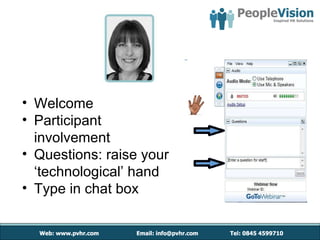
Welcome  Participant involvement Questions: raise your ‘technological’ hand Type in chat box
There will always be meetings They can take up a large slice of our time It’s worth stepping back to consider how to make them super effective
Objectives By the end of this Webinar you will be able to… Fully prepare for meetings  Lead and control meetings to get the best out of everyone present Focus on creating action and commitment Chair meetings to meet their aim Make your point effectively
What percentage of your working week do you spend in meetings?
Benefits Shorter and more cost-effective meetings, with an increased likelihood of achieving their aim.
What could we do in a world with fewer, better meetings?
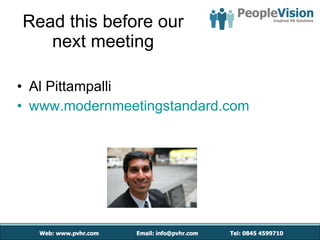
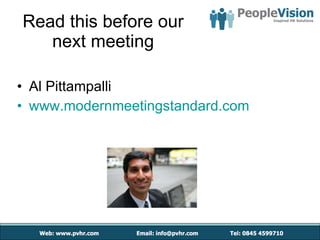
Read this before our next meeting Al Pittampalli www.modernmeetingstandard.com
What type of meetings  do you attend?
Your game plan Before the meeting During the meeting After the meeting Making your point effectively
Before the meeting Clarify the aim Put it at the top of the agenda Put things in a logical order Give timings for each item Don’t be too ambitious
Before the meeting Prepare ‘ Reject the unprepared’ Read all the papers Distil things down Write some notes
Anything else to do before the meeting?
During the meeting Roles and responsibilities Rotate the role of Chair Agree items for AOB at the start Make your point effectively Ensure full participation
During the meeting Keep an eye on the time Collect actions as you go along Keep the meeting on track Watch people’s behaviour End by agreeing the actions
Anything else to do during the meeting?
At the very end ask… Did we achieve our aim? Did we stick to the agenda? What went really well? What shall we do differently next time?
After the meeting Review your performance Circulate the actions list Do your actions
 
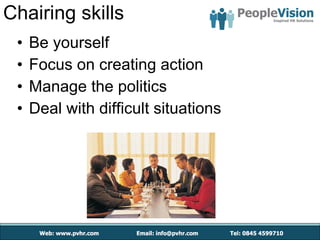
Chairing skills Be yourself Focus on creating action Manage the politics Deal with difficult situations
Making your point effectively
The six Ps to get your point across  Position Problem Possibilities Proof Proposal Plan
1.Position A brief overview of the journey to the present day A summary of the current situation Provide indisputable facts and figures Attribute all the data
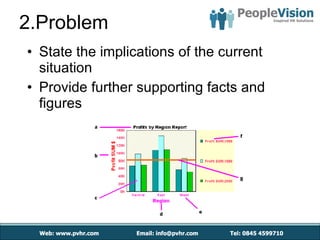
2.Problem State the implications of the current situation Provide further supporting facts and figures
3.Possibilities Identify some of the things that we could do No more than five Include a ‘do nothing’ option
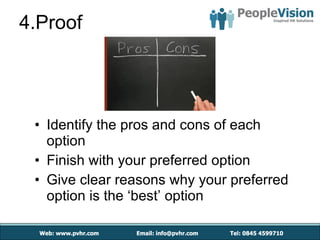
4.Proof Identify the pros and cons of each option Finish with your preferred option Give clear reasons why your preferred option is the ‘best’ option
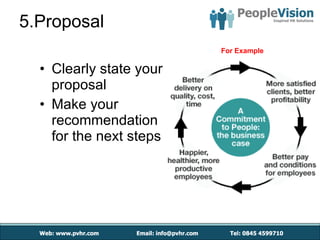
5.Proposal Clearly state your proposal  Make your recommendation for the next steps For Example
6.Plan If appropriate, give details of the next few steps State who needs to do what, by when Agree the actions
The six Ps Position Problem Possibilities Proof Proposal Plan
Read this before our next meeting Al Pittampalli www.modernmeetingstandard.com
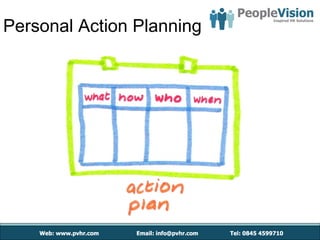
Personal Action Planning
So what will you do differently?
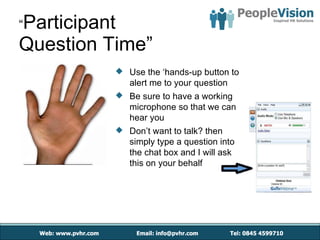
“ Participant  Question Time” Use the ‘hands-up button to alert me to your question Be sure to have a working microphone so that we can hear you Don’t want to talk? then simply type a question into the chat box and I will ask this on your behalf
Future PVHR  Webinars We now run webinars on a range of different subjects Write to me if you would like more details  [email_address]   Thank you for participating and ….
Thank you to our guest  speaker – Ian Crocker If you run webinars and want to learn how to create the most  effective ‘voice’ for this kind of online activity for yourself,  then perhaps some  vocal coaching   and guidance might be of use? Contact : [email_address] UListen2.TV
“Thank you for participating, we look forward to your feedback!”

Super Effective Meetings - People Vision

  • 1.
    Making Meetings SUPER Effective Webinar with Alyson Pellowe & Ian Crocker from People Vision
  • 2.
    Welcome Participantinvolvement Questions: raise your ‘technological’ hand Type in chat box
  • 3.
    There will alwaysbe meetings They can take up a large slice of our time It’s worth stepping back to consider how to make them super effective
  • 4.
    Objectives By theend of this Webinar you will be able to… Fully prepare for meetings Lead and control meetings to get the best out of everyone present Focus on creating action and commitment Chair meetings to meet their aim Make your point effectively
  • 5.
    What percentage ofyour working week do you spend in meetings?
  • 6.
    Benefits Shorter andmore cost-effective meetings, with an increased likelihood of achieving their aim.
  • 7.
    What could wedo in a world with fewer, better meetings?
  • 8.
    Read this beforeour next meeting Al Pittampalli www.modernmeetingstandard.com
  • 9.
    What type ofmeetings do you attend?
  • 10.
    Your game planBefore the meeting During the meeting After the meeting Making your point effectively
  • 11.
    Before the meetingClarify the aim Put it at the top of the agenda Put things in a logical order Give timings for each item Don’t be too ambitious
  • 12.
    Before the meetingPrepare ‘ Reject the unprepared’ Read all the papers Distil things down Write some notes
  • 13.
    Anything else todo before the meeting?
  • 14.
    During the meetingRoles and responsibilities Rotate the role of Chair Agree items for AOB at the start Make your point effectively Ensure full participation
  • 15.
    During the meetingKeep an eye on the time Collect actions as you go along Keep the meeting on track Watch people’s behaviour End by agreeing the actions
  • 16.
    Anything else todo during the meeting?
  • 17.
    At the veryend ask… Did we achieve our aim? Did we stick to the agenda? What went really well? What shall we do differently next time?
  • 18.
    After the meetingReview your performance Circulate the actions list Do your actions
  • 19.
  • 20.
    Chairing skills Beyourself Focus on creating action Manage the politics Deal with difficult situations
  • 21.
    Making your pointeffectively
  • 22.
    The six Psto get your point across Position Problem Possibilities Proof Proposal Plan
  • 23.
    1.Position A briefoverview of the journey to the present day A summary of the current situation Provide indisputable facts and figures Attribute all the data
  • 24.
    2.Problem State theimplications of the current situation Provide further supporting facts and figures
  • 25.
    3.Possibilities Identify someof the things that we could do No more than five Include a ‘do nothing’ option
  • 26.
    4.Proof Identify thepros and cons of each option Finish with your preferred option Give clear reasons why your preferred option is the ‘best’ option
  • 27.
    5.Proposal Clearly stateyour proposal Make your recommendation for the next steps For Example
  • 28.
    6.Plan If appropriate,give details of the next few steps State who needs to do what, by when Agree the actions
  • 29.
    The six PsPosition Problem Possibilities Proof Proposal Plan
  • 30.
    Read this beforeour next meeting Al Pittampalli www.modernmeetingstandard.com
  • 31.
  • 32.
    So what willyou do differently?
  • 33.
    “ Participant Question Time” Use the ‘hands-up button to alert me to your question Be sure to have a working microphone so that we can hear you Don’t want to talk? then simply type a question into the chat box and I will ask this on your behalf
  • 34.
    Future PVHR Webinars We now run webinars on a range of different subjects Write to me if you would like more details [email_address] Thank you for participating and ….
  • 35.
    Thank you toour guest speaker – Ian Crocker If you run webinars and want to learn how to create the most effective ‘voice’ for this kind of online activity for yourself, then perhaps some vocal coaching and guidance might be of use? Contact : [email_address] UListen2.TV
  • 36.
    “Thank you forparticipating, we look forward to your feedback!”