QUEST Nawabshah
Allahyar ( Shahzaib ) Shar
16CH26
Benzenesulfonic Acid
• Benzene is an aromatic compound with hexagonal planer structure.
There are six carbon atoms in benzene with sp2sp2 hybridization
and planer geometry. The pi-bonds are arranged in alternate
manner in benzene ring which delocalized the pi-electrons all over
six carbons. The delocalization of pi-electrons in benzene ring
makes it more stable compare to simple alkenes.
•
This characteristic of benzene that provides extra stability to
molecule is called as aromaticity. We know that alkenes readily give
addition reactions because of un-saturation in the molecules. Some
common examples of addition reactions of alkenes are
hydrogenation, hydration, ozonolysis etc. Unlike alkenes, benzene
cannot undergo addition reactions readily but exhibit electrophilic
substitution reactions. The extra stability of benzene is due to
resonance in molecule.
Benzenesulfonic Acid
• Due to presence of high electron density in the
molecule, an electrophile can easily attack over
benzene ring. The electrophile (E+) contains
positive charge and attacks on benzene ring to
form an arenium ion which is stabilized by
resonance. An electrophilic substitution reaction
involves the substitution of one of the hydrogen
atom of aromatic ring with an electrophile. Last
step involves the loss of proton to form the
substituted product.
Benzenesulfonic Acid
• Halogenation, nitration, sulfonation, Friedel craft
alkylation and Friedel craft acylation
reactions are some common examples of
electrophilic substitution reactions of benzene
molecule. All these types of electrophilic
substitution reactions of benzene involve three
steps. First step is formation of electrophile in the
presence of some Lewis base. Second step
involves the attack of electrophile over aromatic
ring to form an intermediate which is stabilized
by resonance. This intermediate is called as
arenium ion or sigma complex.
Benzenesulfonic Acid
• Last step is the formation of product in the presence
of base with elimination of hydrogen ion. Since
benzene is a stable aromatic compound, the
substitution of hydrogen atom from aromatic ring
requires a strong electrophile and also some favorable
reaction conditions. Nitration of benzene occurs in the
presence of concentrated nitric acid and concentrated
sulfuric acid. It results the formation of nitrobenzene.
Here concentrated nitric acid provides nitronium ions
with the help concentrated sulfuric acid. Nitronium ion
reacts with benzene ring to form an intermediate. This
intermediate further reacts with base to form final
product.
Benzenesulfonic Acid
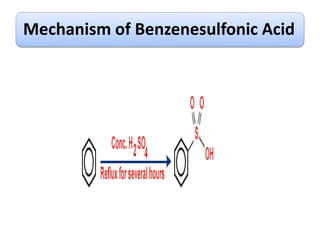
The sulfonation reaction of benzene occurs in
the presence of concentrated sulfuric acid.
Overall reaction can be shown as given below.
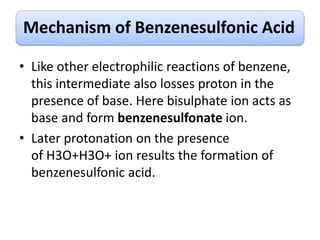
Mechanism of Benzenesulfonic Acid
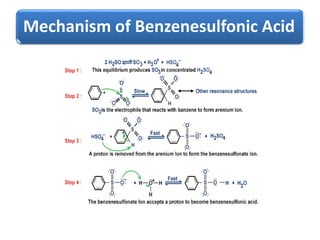
• The mechanism of sulfonation completes in four
steps. First step involves the formation of
electrophile that is sulfur trioxide molecule which
is formed by the reaction of two molecules of
sulfuric acid. Other two products of first step are
hydronium ion and bisulphate ion which involve
in last two steps. Next step is the reaction of
sulfur trioxide molecule with benzene ring to
form an intermediate. It is a slow and reversible
step. Here intermediate is overall neutral in
nature.
Mechanism of Benzenesulfonic Acid
• Like other electrophilic reactions of benzene,
this intermediate also losses proton in the
presence of base. Here bisulphate ion acts as
base and form benzenesulfonate ion.
• Later protonation on the presence
of H3O+H3O+ ion results the formation of
benzenesulfonic acid.
Benzenesulfonic Acid to Phenol
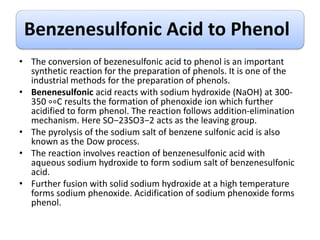
• The conversion of bezenesulfonic acid to phenol is an important
synthetic reaction for the preparation of phenols. It is one of the
industrial methods for the preparation of phenols.
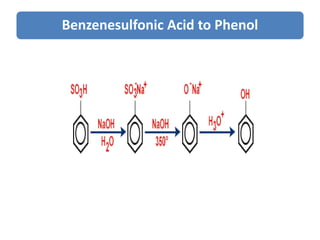
• Benenesulfonic acid reacts with sodium hydroxide (NaOH) at 300-
350 ∘∘C results the formation of phenoxide ion which further
acidified to form phenol. The reaction follows addition-elimination
mechanism. Here SO−23SO3−2 acts as the leaving group.
• The pyrolysis of the sodium salt of benzene sulfonic acid is also
known as the Dow process.
• The reaction involves reaction of benzenesulfonic acid with
aqueous sodium hydroxide to form sodium salt of benzenesulfonic
acid.
• Further fusion with solid sodium hydroxide at a high temperature
forms sodium phenoxide. Acidification of sodium phenoxide forms
phenol.
Benzenesulfonic Acid Uses
• Benzenesulfonic acid is mainly used for the
preparation of different aromatic compounds
such as phenol.
• Several pharmaceutical drugs are prepared
with the help of benzenesulfonate salts like
besilates or besylates.
• Aryl sulfonic acid is a key ingredient of
synthetic detergents.
Benzenesulfonic Acid to Phenol
Sulfonation of aromatic compounds

Sulfonation of aromatic compounds

  • 1.
    QUEST Nawabshah Allahyar (Shahzaib ) Shar 16CH26
  • 2.
    Benzenesulfonic Acid • Benzeneis an aromatic compound with hexagonal planer structure. There are six carbon atoms in benzene with sp2sp2 hybridization and planer geometry. The pi-bonds are arranged in alternate manner in benzene ring which delocalized the pi-electrons all over six carbons. The delocalization of pi-electrons in benzene ring makes it more stable compare to simple alkenes. • This characteristic of benzene that provides extra stability to molecule is called as aromaticity. We know that alkenes readily give addition reactions because of un-saturation in the molecules. Some common examples of addition reactions of alkenes are hydrogenation, hydration, ozonolysis etc. Unlike alkenes, benzene cannot undergo addition reactions readily but exhibit electrophilic substitution reactions. The extra stability of benzene is due to resonance in molecule.
  • 3.
    Benzenesulfonic Acid • Dueto presence of high electron density in the molecule, an electrophile can easily attack over benzene ring. The electrophile (E+) contains positive charge and attacks on benzene ring to form an arenium ion which is stabilized by resonance. An electrophilic substitution reaction involves the substitution of one of the hydrogen atom of aromatic ring with an electrophile. Last step involves the loss of proton to form the substituted product.
  • 4.
    Benzenesulfonic Acid • Halogenation,nitration, sulfonation, Friedel craft alkylation and Friedel craft acylation reactions are some common examples of electrophilic substitution reactions of benzene molecule. All these types of electrophilic substitution reactions of benzene involve three steps. First step is formation of electrophile in the presence of some Lewis base. Second step involves the attack of electrophile over aromatic ring to form an intermediate which is stabilized by resonance. This intermediate is called as arenium ion or sigma complex.
  • 5.
    Benzenesulfonic Acid • Laststep is the formation of product in the presence of base with elimination of hydrogen ion. Since benzene is a stable aromatic compound, the substitution of hydrogen atom from aromatic ring requires a strong electrophile and also some favorable reaction conditions. Nitration of benzene occurs in the presence of concentrated nitric acid and concentrated sulfuric acid. It results the formation of nitrobenzene. Here concentrated nitric acid provides nitronium ions with the help concentrated sulfuric acid. Nitronium ion reacts with benzene ring to form an intermediate. This intermediate further reacts with base to form final product.
  • 6.
    Benzenesulfonic Acid The sulfonationreaction of benzene occurs in the presence of concentrated sulfuric acid. Overall reaction can be shown as given below.
  • 7.
  • 8.
  • 9.
    Mechanism of BenzenesulfonicAcid • The mechanism of sulfonation completes in four steps. First step involves the formation of electrophile that is sulfur trioxide molecule which is formed by the reaction of two molecules of sulfuric acid. Other two products of first step are hydronium ion and bisulphate ion which involve in last two steps. Next step is the reaction of sulfur trioxide molecule with benzene ring to form an intermediate. It is a slow and reversible step. Here intermediate is overall neutral in nature.
  • 10.
    Mechanism of BenzenesulfonicAcid • Like other electrophilic reactions of benzene, this intermediate also losses proton in the presence of base. Here bisulphate ion acts as base and form benzenesulfonate ion. • Later protonation on the presence of H3O+H3O+ ion results the formation of benzenesulfonic acid.
  • 11.
    Benzenesulfonic Acid toPhenol • The conversion of bezenesulfonic acid to phenol is an important synthetic reaction for the preparation of phenols. It is one of the industrial methods for the preparation of phenols. • Benenesulfonic acid reacts with sodium hydroxide (NaOH) at 300- 350 ∘∘C results the formation of phenoxide ion which further acidified to form phenol. The reaction follows addition-elimination mechanism. Here SO−23SO3−2 acts as the leaving group. • The pyrolysis of the sodium salt of benzene sulfonic acid is also known as the Dow process. • The reaction involves reaction of benzenesulfonic acid with aqueous sodium hydroxide to form sodium salt of benzenesulfonic acid. • Further fusion with solid sodium hydroxide at a high temperature forms sodium phenoxide. Acidification of sodium phenoxide forms phenol.
  • 12.
    Benzenesulfonic Acid Uses •Benzenesulfonic acid is mainly used for the preparation of different aromatic compounds such as phenol. • Several pharmaceutical drugs are prepared with the help of benzenesulfonate salts like besilates or besylates. • Aryl sulfonic acid is a key ingredient of synthetic detergents.
  • 13.