‫الرحیم‬ ‫الرحمن‬ ‫هللا‬ ‫بسم‬
Sudden Cardiac Death
(SCD)
 Sudden cardiac death (SCD) is defined as an unexpected, non-traumatic death due
to cardiac causes occurring in a short time period (generally within 1 hour of
symptom onset) in a person with known or unknown cardiac disease in whom no
previously diagnosed fatal condition is apparent.
 Nearly 85% of SCDs occur due to ventricular arrhythmias (either primary VF or brief
ventricular tachycardia degenerating to VF).
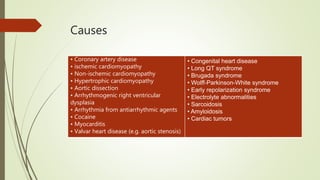
Causes
• Coronary artery disease
• ischemic cardiomyopathy
• Non-ischemic cardiomyopathy
• Hypertrophic cardiomyopathy
• Aortic dissection
• Arrhythmogenic right ventricular
dysplasia
• Arrhythmia from antiarrhythmic agents
• Cocaine
• Myocarditis
• Valvar heart disease (e.g. aortic stenosis)
• Congenital heart disease
• Long QT syndrome
• Brugada syndrome
• Wolff-Parkinson-White syndrome
• Early repolarization syndrome
• Electrolyte abnormalities
• Sarcoidosis
• Amyloidosis
• Cardiac tumors
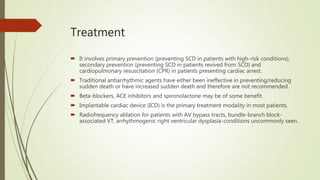
Treatment
 It involves primary prevention (preventing SCD in patients with high-risk conditions),
secondary prevention (preventing SCD in patients revived from SCD) and
cardiopulmonary resuscitation (CPR) in patients presenting cardiac arrest.
 Traditional antiarrhythmic agents have either been ineffective in preventing/reducing
sudden death or have increased sudden death and therefore are not recommended.
 Beta-blockers, ACE inhibitors and spironolactone may be of some benefit.
 Implantable cardiac device (ICD) is the primary treatment modality in most patients.
 Radiofrequency ablation for patients with AV bypass tracts, bundle-branch block-
associated VT, arrhythmogenic right ventricular dysplasia-conditions uncommonly seen.

Sudden Cardiac Death

  • 1.
  • 2.
  • 3.
     Sudden cardiacdeath (SCD) is defined as an unexpected, non-traumatic death due to cardiac causes occurring in a short time period (generally within 1 hour of symptom onset) in a person with known or unknown cardiac disease in whom no previously diagnosed fatal condition is apparent.  Nearly 85% of SCDs occur due to ventricular arrhythmias (either primary VF or brief ventricular tachycardia degenerating to VF).
  • 4.
    Causes • Coronary arterydisease • ischemic cardiomyopathy • Non-ischemic cardiomyopathy • Hypertrophic cardiomyopathy • Aortic dissection • Arrhythmogenic right ventricular dysplasia • Arrhythmia from antiarrhythmic agents • Cocaine • Myocarditis • Valvar heart disease (e.g. aortic stenosis) • Congenital heart disease • Long QT syndrome • Brugada syndrome • Wolff-Parkinson-White syndrome • Early repolarization syndrome • Electrolyte abnormalities • Sarcoidosis • Amyloidosis • Cardiac tumors
  • 5.
    Treatment  It involvesprimary prevention (preventing SCD in patients with high-risk conditions), secondary prevention (preventing SCD in patients revived from SCD) and cardiopulmonary resuscitation (CPR) in patients presenting cardiac arrest.  Traditional antiarrhythmic agents have either been ineffective in preventing/reducing sudden death or have increased sudden death and therefore are not recommended.  Beta-blockers, ACE inhibitors and spironolactone may be of some benefit.  Implantable cardiac device (ICD) is the primary treatment modality in most patients.  Radiofrequency ablation for patients with AV bypass tracts, bundle-branch block- associated VT, arrhythmogenic right ventricular dysplasia-conditions uncommonly seen.