PRESENTATION
of
Botany
Success Stories of Developed Resistant
Varieties
 Definition of success
success is defined as an “outcome” or
“result”,“a degree or measure of succeeding”
or desired outcome.”
What is a success story?
A success story is the successful,favorable or
desired result or outcome of a program.
Ever since people have domesticated plants,
they have noticed differences among varieties
in their response to various stresses. One of the
main stress comes from attack by plant
pathogens.
About 300 BC the Greek philosopher
Theophrastus was one of the first to record
observations about plant diseases.
Introduction
However, one of the first demonstrations of the
possible genetic manipulation of plant disease
resistance didn’t occur until 1905, when Biffen
showed that resistance in wheat cultivars to stripe rust
was simply inherited.
 Since then, there have been countless cultivars of
plants bred for resistance to numerous pathogens. As a
result, host resistance has become one of the primary
control methods for reducing losses from plant
diseases.
Success Story of
Transgenic crops
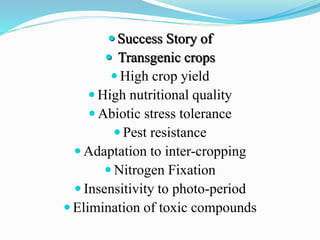
 Success Story of
 Transgenic crops
 High crop yield
 High nutritional quality
 Abiotic stress tolerance
 Pest resistance
 Adaptation to inter-cropping
 Nitrogen Fixation
 Insensitivity to photo-period
 Elimination of toxic compounds
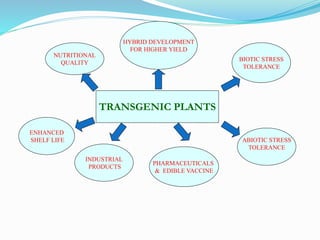
TRANSGENIC PLANTS
NUTRITIONAL
QUALITY
BIOTIC STRESS
TOLERANCE
ABIOTIC STRESS
TOLERANCE
PHARMACEUTICALS
& EDIBLE VACCINE
HYBRID DEVELOPMENT
FOR HIGHER YIELD
ENHANCED
SHELF LIFE
INDUSTRIAL
PRODUCTS
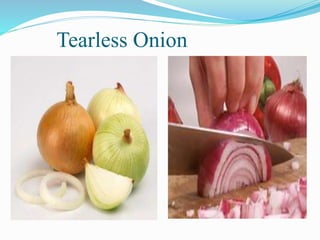
Tearless Onion
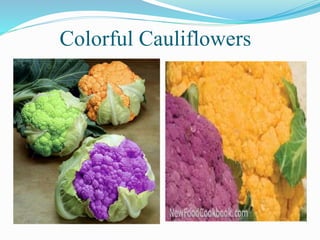
Colorful Cauliflowers
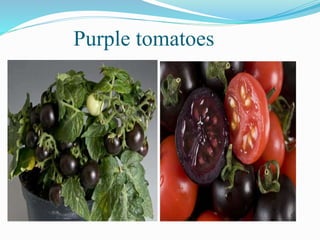
Purple tomatoes
Blue Roses
The big five successful traits
 Delayed Fruit Ripening
 Nutritional Enhancing
 Herbicide Resistance
 Virus Resistance
 Insect Resistance
Insect Resistance
Various insect resistant crops have
been produced. Most of these make
use of the Cry gene in the bacteria
Bacillus thuringiensis (Bt); this gene
directs the production of a protein
that causes paralysis and death to
many insects.
Virus resistance
a) Plants may be engineered with genes for
resistance to viruses, bacteria, and fungi.
b) Virus-resistant plants have a viral protein coat
gene that is overproduced, preventing the virus
from reproducing in the host cell, because the
plant shuts off the virus’ protein coat gene in
response to the overproduction.
c) Coat protein genes are involved in resistance to
diseases such as cucumber mosaic virus, tobacco
rattle virus, and potato virus X.
Delayed Fruit Ripening
a)Allow for crops, such as tomatoes, to have a
higher shelf life.
b)Tomatoes generally ripen and become soft
during shipment to a store.
c)Tomatoes are usually picked and sprayed
with the plant hormone ethylene to induce
ripening, although this does not improve taste
d)Tomatoes have been engineered to produce
less ethylene so they can develop more taste
before ripening, and shipment to markets
Nutritionally Enhanced Plants
1.More than one third of the world’s population
relies on rice as a food staple, so rice is an
attractive target for enhancement.
2.Golden Rice was genetically engineered to
produce high levels of beta-carotene, which is
a precursor to vitamin A. Vitamin A is needed
for proper eyesight.
3.Other enhanced crops include iron-enriched
rice and tomatoes with three times the normal
amount of beta-carotene
Arid Zone Research Centre, D.I. Khan in Pakistan
InqalabMung: A high yielding, bold seeded, logging &
disease resistant variety of mungbean:
Mungbean is one of the best alternatives
to meet the food needs of the large
population of the developing countries on
account of its short duration, nutritional
superiority and nitrogen fixing character.
In KPK, so far, a few mungbean varieties have
been released for general cultivation during
Kharif season only while for spring season
none of the variety has been released.
Keeping in view the dire need to develop a
high yielding, disease resistant and well
adapted variety which could perform better in
spring and Kharif seasons, hybridization work
was started by AZRC (PARC) scientists at Dera
Ismail Khan.
Success stories of Date crop
Agriculture Development;Protecting Date Crops in
Pakistan
Pakistan is rated as among top five date producing
conturies in the world with 84.695 thousands
hecters under dates production.
There are number of date palm varities in the
contury with an average production of 0.5 million
tons per annum.
Pakistan also export dates to
India,Bangladesh,Canada,USA,UK and other
conturies.
The harvesting season of dates in Pakistan
starts from month of july and continous upto
September.However moonsoon rain clashes
with harvesting season of dates which can
destroy upto 80% of the crops.
Use of centuries old un-hygienic practices and
hesitation in using modern techniques further
deteriorates the product quality and badly
affects the grower’s income.The post harvest
lossese are also reported as high as 40%.
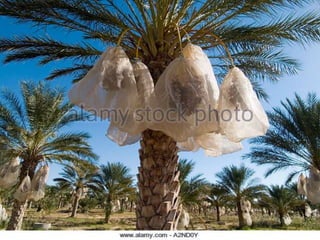
Specific bags were distributed to the date-palm
grower’s.Theses bags are water resistant and
are being used in developed conturies for
protecting agriculture produce from rain,birbs
and extreme sunlight etc.
Result
The project was successful since the crop not
only survived heavy monsoon rain but also the
quality and taste was improved.
Thank You
Thank You

Success stories.

  • 1.
  • 2.
    Success Stories ofDeveloped Resistant Varieties  Definition of success success is defined as an “outcome” or “result”,“a degree or measure of succeeding” or desired outcome.” What is a success story? A success story is the successful,favorable or desired result or outcome of a program.
  • 3.
    Ever since peoplehave domesticated plants, they have noticed differences among varieties in their response to various stresses. One of the main stress comes from attack by plant pathogens. About 300 BC the Greek philosopher Theophrastus was one of the first to record observations about plant diseases. Introduction
  • 4.
    However, one ofthe first demonstrations of the possible genetic manipulation of plant disease resistance didn’t occur until 1905, when Biffen showed that resistance in wheat cultivars to stripe rust was simply inherited.  Since then, there have been countless cultivars of plants bred for resistance to numerous pathogens. As a result, host resistance has become one of the primary control methods for reducing losses from plant diseases.
  • 5.
  • 6.
     Success Storyof  Transgenic crops  High crop yield  High nutritional quality  Abiotic stress tolerance  Pest resistance  Adaptation to inter-cropping  Nitrogen Fixation  Insensitivity to photo-period  Elimination of toxic compounds
  • 7.
    TRANSGENIC PLANTS NUTRITIONAL QUALITY BIOTIC STRESS TOLERANCE ABIOTICSTRESS TOLERANCE PHARMACEUTICALS & EDIBLE VACCINE HYBRID DEVELOPMENT FOR HIGHER YIELD ENHANCED SHELF LIFE INDUSTRIAL PRODUCTS
  • 8.
  • 9.
  • 10.
  • 11.
  • 12.
    The big fivesuccessful traits  Delayed Fruit Ripening  Nutritional Enhancing  Herbicide Resistance  Virus Resistance  Insect Resistance
  • 13.
    Insect Resistance Various insectresistant crops have been produced. Most of these make use of the Cry gene in the bacteria Bacillus thuringiensis (Bt); this gene directs the production of a protein that causes paralysis and death to many insects.
  • 14.
    Virus resistance a) Plantsmay be engineered with genes for resistance to viruses, bacteria, and fungi. b) Virus-resistant plants have a viral protein coat gene that is overproduced, preventing the virus from reproducing in the host cell, because the plant shuts off the virus’ protein coat gene in response to the overproduction. c) Coat protein genes are involved in resistance to diseases such as cucumber mosaic virus, tobacco rattle virus, and potato virus X.
  • 15.
    Delayed Fruit Ripening a)Allowfor crops, such as tomatoes, to have a higher shelf life. b)Tomatoes generally ripen and become soft during shipment to a store. c)Tomatoes are usually picked and sprayed with the plant hormone ethylene to induce ripening, although this does not improve taste d)Tomatoes have been engineered to produce less ethylene so they can develop more taste before ripening, and shipment to markets
  • 16.
    Nutritionally Enhanced Plants 1.Morethan one third of the world’s population relies on rice as a food staple, so rice is an attractive target for enhancement. 2.Golden Rice was genetically engineered to produce high levels of beta-carotene, which is a precursor to vitamin A. Vitamin A is needed for proper eyesight. 3.Other enhanced crops include iron-enriched rice and tomatoes with three times the normal amount of beta-carotene
  • 17.
    Arid Zone ResearchCentre, D.I. Khan in Pakistan InqalabMung: A high yielding, bold seeded, logging & disease resistant variety of mungbean: Mungbean is one of the best alternatives to meet the food needs of the large population of the developing countries on account of its short duration, nutritional superiority and nitrogen fixing character.
  • 18.
    In KPK, sofar, a few mungbean varieties have been released for general cultivation during Kharif season only while for spring season none of the variety has been released. Keeping in view the dire need to develop a high yielding, disease resistant and well adapted variety which could perform better in spring and Kharif seasons, hybridization work was started by AZRC (PARC) scientists at Dera Ismail Khan.
  • 19.
    Success stories ofDate crop Agriculture Development;Protecting Date Crops in Pakistan Pakistan is rated as among top five date producing conturies in the world with 84.695 thousands hecters under dates production. There are number of date palm varities in the contury with an average production of 0.5 million tons per annum. Pakistan also export dates to India,Bangladesh,Canada,USA,UK and other conturies.
  • 20.
    The harvesting seasonof dates in Pakistan starts from month of july and continous upto September.However moonsoon rain clashes with harvesting season of dates which can destroy upto 80% of the crops. Use of centuries old un-hygienic practices and hesitation in using modern techniques further deteriorates the product quality and badly affects the grower’s income.The post harvest lossese are also reported as high as 40%.
  • 21.
    Specific bags weredistributed to the date-palm grower’s.Theses bags are water resistant and are being used in developed conturies for protecting agriculture produce from rain,birbs and extreme sunlight etc. Result The project was successful since the crop not only survived heavy monsoon rain but also the quality and taste was improved.
  • 22.
  • 23.