succeeding in the
workplace
a.k.a.
6 ways to make yourself the most
valuable employee at your workplace
2
if you only had one shot,
one opportunity, would
you take it?
What would you say if you were alone
in an elevator with a CEO for 2
minutes?
3
How do you define
success?
• Characteristics of Successful Survivors
• We learned this when we were powerless
to do otherwise
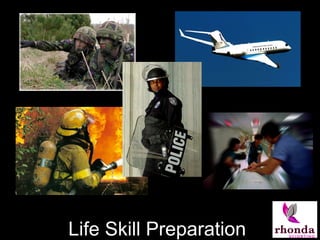
Life Skill Preparation
THIS IS PROVEN TO WORK
• These keys cost nothing to implement
• You have nothing to lose and everything to gain
• Lots of people are watching
– Co-workers
– Supervisors
– Customers
– Vendors
You never know where your next opportunity
will come from!
Either your current OR YOUR FUTURE employer WILL notice
6
#1: Sell your time to your
employer
• Why is this skill important?
Selling Your Time:
• ADD VALUE—otherwise, why should they pay you?
• Do whatever your employer asks you to do (that’s not
illegal, immoral, or unethical), with a smile on your face,
and as well as you possibly can.
• Do NOT steal time back by being late, taking long breaks
and lunch, playing on the internet, personal phone calls,
and texting. Ask yourself if what you’re doing benefits your
employer. If not, STOP.
• If you’re done with your work, ask others if they need help,
clean, organize, learn about the industry---ANYTHING that
will make you more valuable to your employer.
8
#2: Positively influence
your environment
• Why is this skill important?
Being A Positive Influence:
• No one wants to be around a negative complainer or
whiner.
• Rather than allowing the negativity of others to influence
you, try being the one who creates the “breath of fresh air”
in your workplace. How?
– Be kind, patient, and helpful
– Encourage others
– Compliment what others do well
– Rather than criticize others’ faults or failings, considering helping
educate them so they’ll do better
• Keep a good attitude - SMILE. If this is a challenge, when
a negative thought comes to mind, instead of allowing it to
fall out of your mouth, intentionally think about something
else.
– You DO NOT have to allow everything that pops into your head to
fall out of your mouth.
• Model the behavior you’d like to see around you
10
#3: No drama
• Why is this skill important?
Avoiding Drama:
• Help resolve problems, do not contribute to them
• Adopt a ZERO TOLERANCE POLICY for drama
–Do not share your personal information with co-workers.
Leave it at the door. (fear SN)
–Do not listen on company time to the personal issues of
others
• NEVER speak ill of your employer, boss, or co-
workers; and refuse to listen to others do it
12
#4: Learn all you can
about your employer and
industry
• Why is this skill important?
Building Your Knowledge Base:
• Invest your time in learning rather than
“spending or killing” your time with TV, etc.
• If you’re knowledgeable about the products
and services of your company AND those of
the competition, you’ll stand out regardless
of what position you happen to hold.
–Read websites
–Set up Google alerts
14
#5: Expect only a
paycheck
• Why is this skill important?
Manage your expectations:
Do not go to work seeking a social life, a
social worker (someone to listen to your
problems), positive affirmation, or anything
other than a paycheck.
There are many more keys
that are proven to help make you more
successful at everything you do!
• In my book: From Foster Care to Millionaire
• On my website: www.rhondasciortino.com
• On my facebook page:
facebook/rhondasciortino.com
• I want to hear from you!
–email me
–message me on facebook
–comment at www.rhondasciortino.com/blog
17
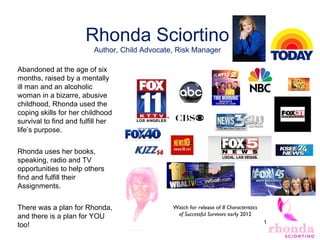
Rhonda Sciortino
Author, Child Advocate, Risk Manager
Abandoned at the age of six
months, raised by a mentally
ill man and an alcoholic
woman in a bizarre, abusive
childhood, Rhonda used the
coping skills for her childhood
survival to find and fulfill her
life’s purpose.
Rhonda uses her books,
speaking, radio and TV
opportunities to help others
find and fulfill their
Assignments.
There was a plan for Rhonda,
and there is a plan for YOU
too!
Watch for release of 8 Characteristics
of Successful Survivors early 2012

Succeeding in the Workplace

  • 1.
    succeeding in the workplace a.k.a. 6ways to make yourself the most valuable employee at your workplace
  • 2.
    2 if you onlyhad one shot, one opportunity, would you take it? What would you say if you were alone in an elevator with a CEO for 2 minutes?
  • 3.
    3 How do youdefine success? • Characteristics of Successful Survivors • We learned this when we were powerless to do otherwise
  • 4.
  • 5.
    THIS IS PROVENTO WORK • These keys cost nothing to implement • You have nothing to lose and everything to gain • Lots of people are watching – Co-workers – Supervisors – Customers – Vendors You never know where your next opportunity will come from! Either your current OR YOUR FUTURE employer WILL notice
  • 6.
    6 #1: Sell yourtime to your employer • Why is this skill important?
  • 7.
    Selling Your Time: •ADD VALUE—otherwise, why should they pay you? • Do whatever your employer asks you to do (that’s not illegal, immoral, or unethical), with a smile on your face, and as well as you possibly can. • Do NOT steal time back by being late, taking long breaks and lunch, playing on the internet, personal phone calls, and texting. Ask yourself if what you’re doing benefits your employer. If not, STOP. • If you’re done with your work, ask others if they need help, clean, organize, learn about the industry---ANYTHING that will make you more valuable to your employer.
  • 8.
    8 #2: Positively influence yourenvironment • Why is this skill important?
  • 9.
    Being A PositiveInfluence: • No one wants to be around a negative complainer or whiner. • Rather than allowing the negativity of others to influence you, try being the one who creates the “breath of fresh air” in your workplace. How? – Be kind, patient, and helpful – Encourage others – Compliment what others do well – Rather than criticize others’ faults or failings, considering helping educate them so they’ll do better • Keep a good attitude - SMILE. If this is a challenge, when a negative thought comes to mind, instead of allowing it to fall out of your mouth, intentionally think about something else. – You DO NOT have to allow everything that pops into your head to fall out of your mouth. • Model the behavior you’d like to see around you
  • 10.
    10 #3: No drama •Why is this skill important?
  • 11.
    Avoiding Drama: • Helpresolve problems, do not contribute to them • Adopt a ZERO TOLERANCE POLICY for drama –Do not share your personal information with co-workers. Leave it at the door. (fear SN) –Do not listen on company time to the personal issues of others • NEVER speak ill of your employer, boss, or co- workers; and refuse to listen to others do it
  • 12.
    12 #4: Learn allyou can about your employer and industry • Why is this skill important?
  • 13.
    Building Your KnowledgeBase: • Invest your time in learning rather than “spending or killing” your time with TV, etc. • If you’re knowledgeable about the products and services of your company AND those of the competition, you’ll stand out regardless of what position you happen to hold. –Read websites –Set up Google alerts
  • 14.
    14 #5: Expect onlya paycheck • Why is this skill important?
  • 15.
    Manage your expectations: Donot go to work seeking a social life, a social worker (someone to listen to your problems), positive affirmation, or anything other than a paycheck.
  • 16.
    There are manymore keys that are proven to help make you more successful at everything you do! • In my book: From Foster Care to Millionaire • On my website: www.rhondasciortino.com • On my facebook page: facebook/rhondasciortino.com • I want to hear from you! –email me –message me on facebook –comment at www.rhondasciortino.com/blog
  • 17.
    17 Rhonda Sciortino Author, ChildAdvocate, Risk Manager Abandoned at the age of six months, raised by a mentally ill man and an alcoholic woman in a bizarre, abusive childhood, Rhonda used the coping skills for her childhood survival to find and fulfill her life’s purpose. Rhonda uses her books, speaking, radio and TV opportunities to help others find and fulfill their Assignments. There was a plan for Rhonda, and there is a plan for YOU too! Watch for release of 8 Characteristics of Successful Survivors early 2012

Editor's Notes

  • #5 The military trains “mental toughness” The FAA trains pilots to handle crisis Police and fire academies train emergency response ER staff are trained to ACT