Subsurface 3D GIS
Simple Reservoir Depletion Modeling
Using RMOTC Public Petroleum Data
blog.zolnai.ca
The Premise
• Users have tools at their fingertips they can use as-is:
  •    Esri not meant to replace full Geoscience apps
  •   Spatial Analyst extension: grid, contour, faults
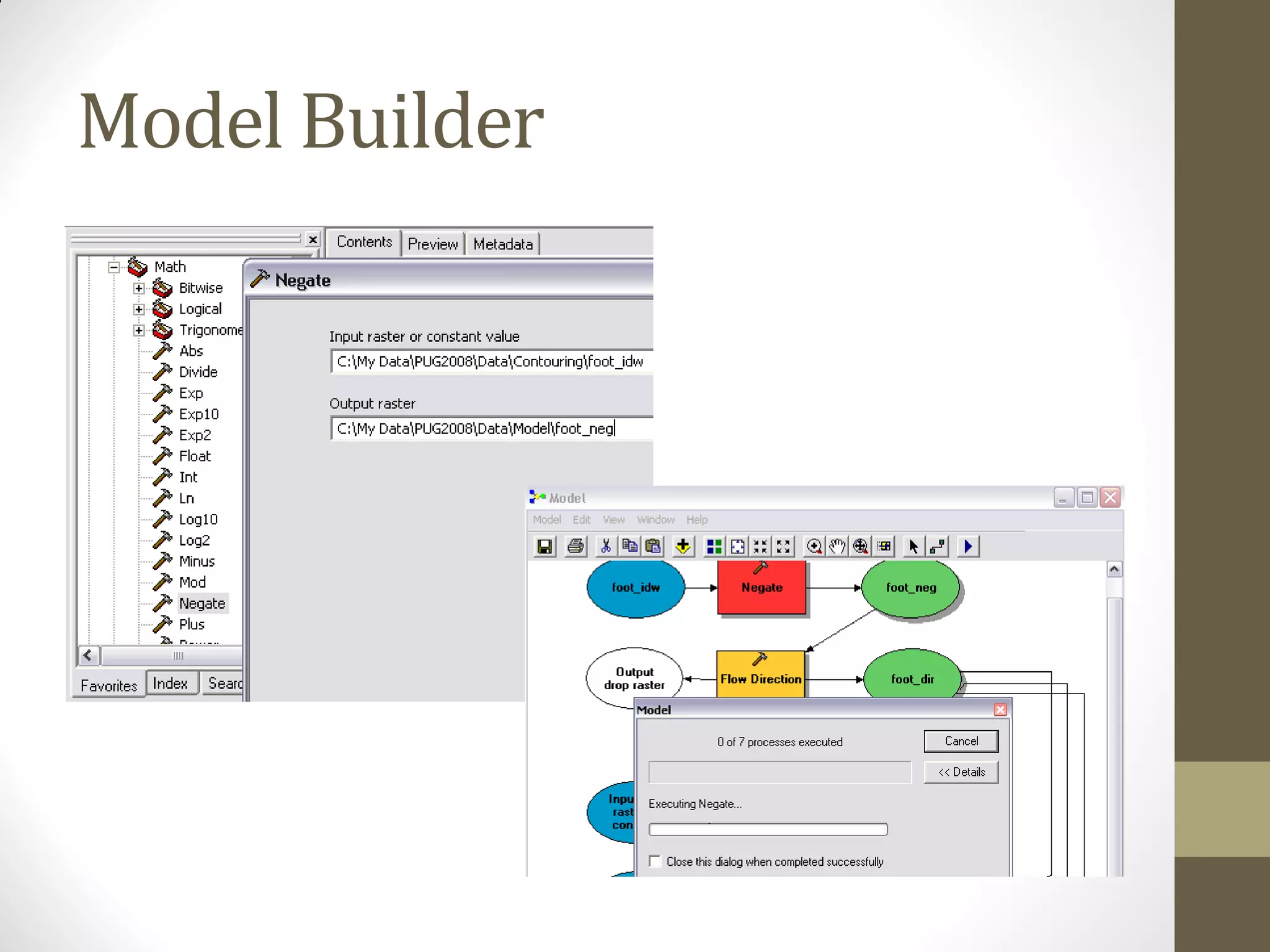
  •   Includes Model Builder to concatenate processes
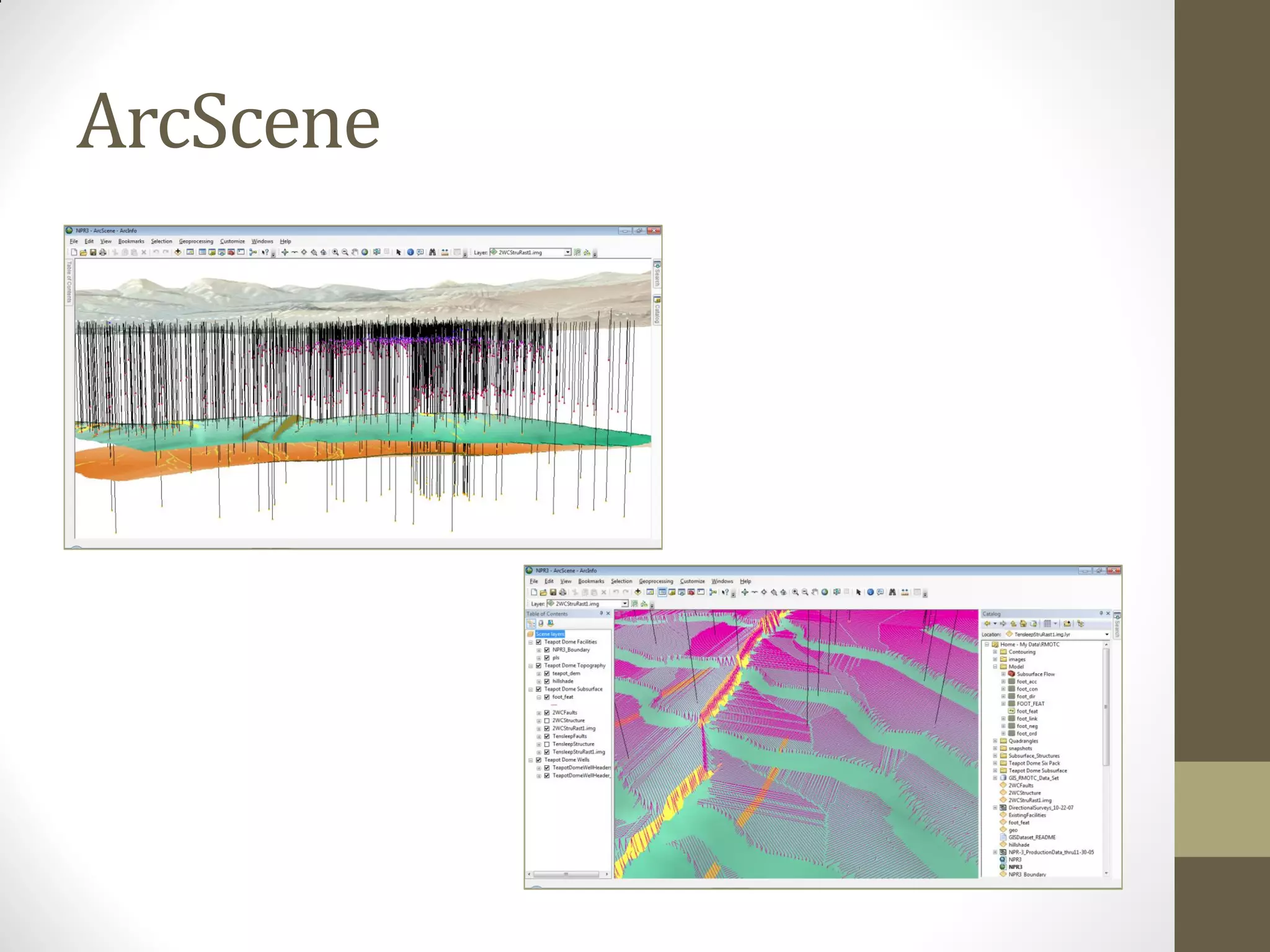
  •   3D Analyst Extension to display subsurface data
  •   ArcGIS Explorer to distribute to wider audience


• There are other tools to link to Geosciences applications:
  •   Esri interoperability extension (Z-Map etc. files)
  •   OpenSpirit program interface (Scan Utility etc.)
  •   Data models (PPDM, PPDM Lite etc.)
  •   Others like Schlumberger Ocean etc.
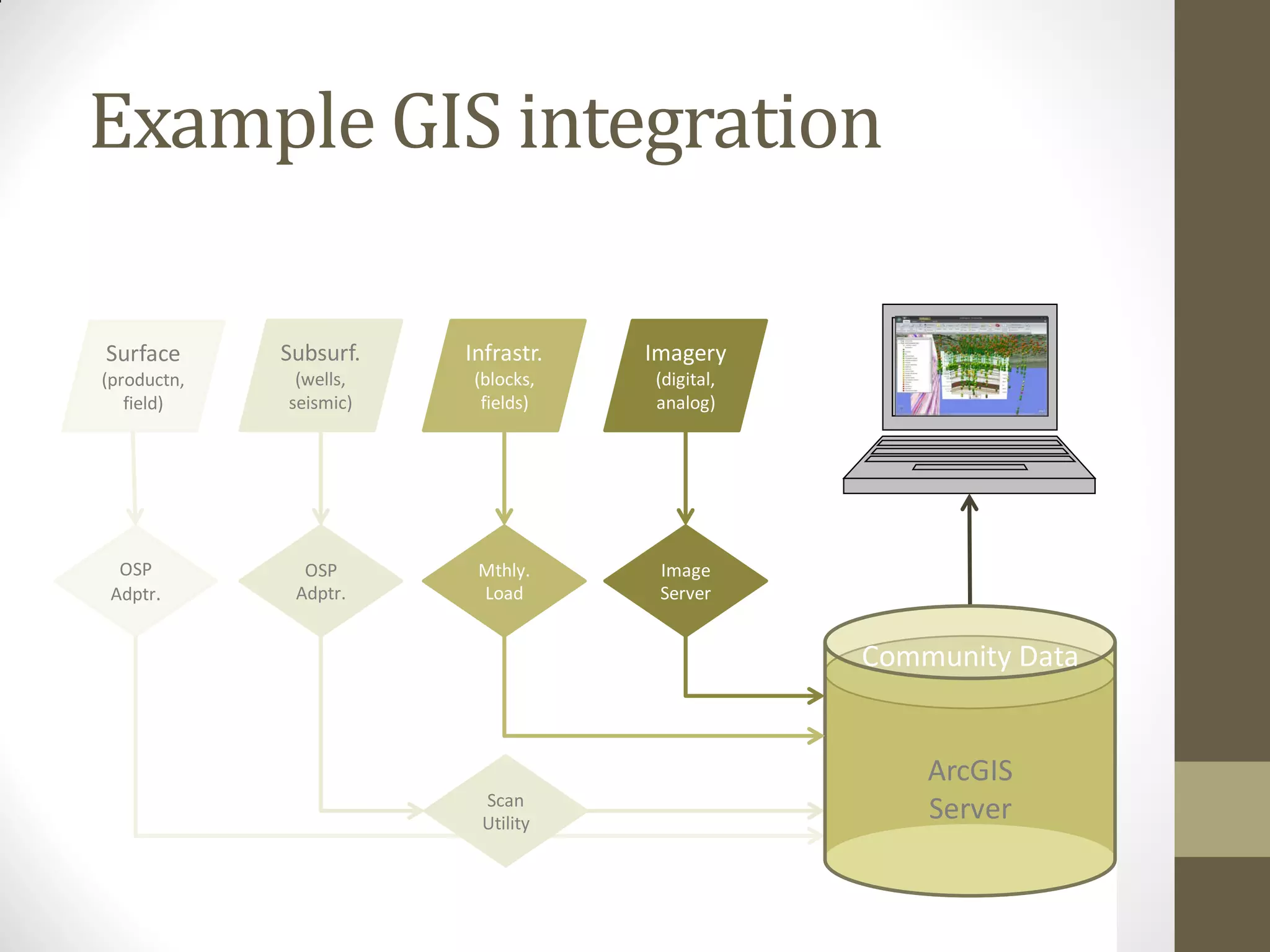
Example GIS integration

Surface      Subsurf.   Infrastr.   Imagery
(productn,    (wells,    (blocks,   (digital,
   field)    seismic)     fields)   analog)


  OSP          OSP       Mthly.      Image
 Adptr.       Adptr.     Load        Server


                                                Community Data


                                                    ArcGIS
                          Scan
                          Utility
                                                    Server
The data
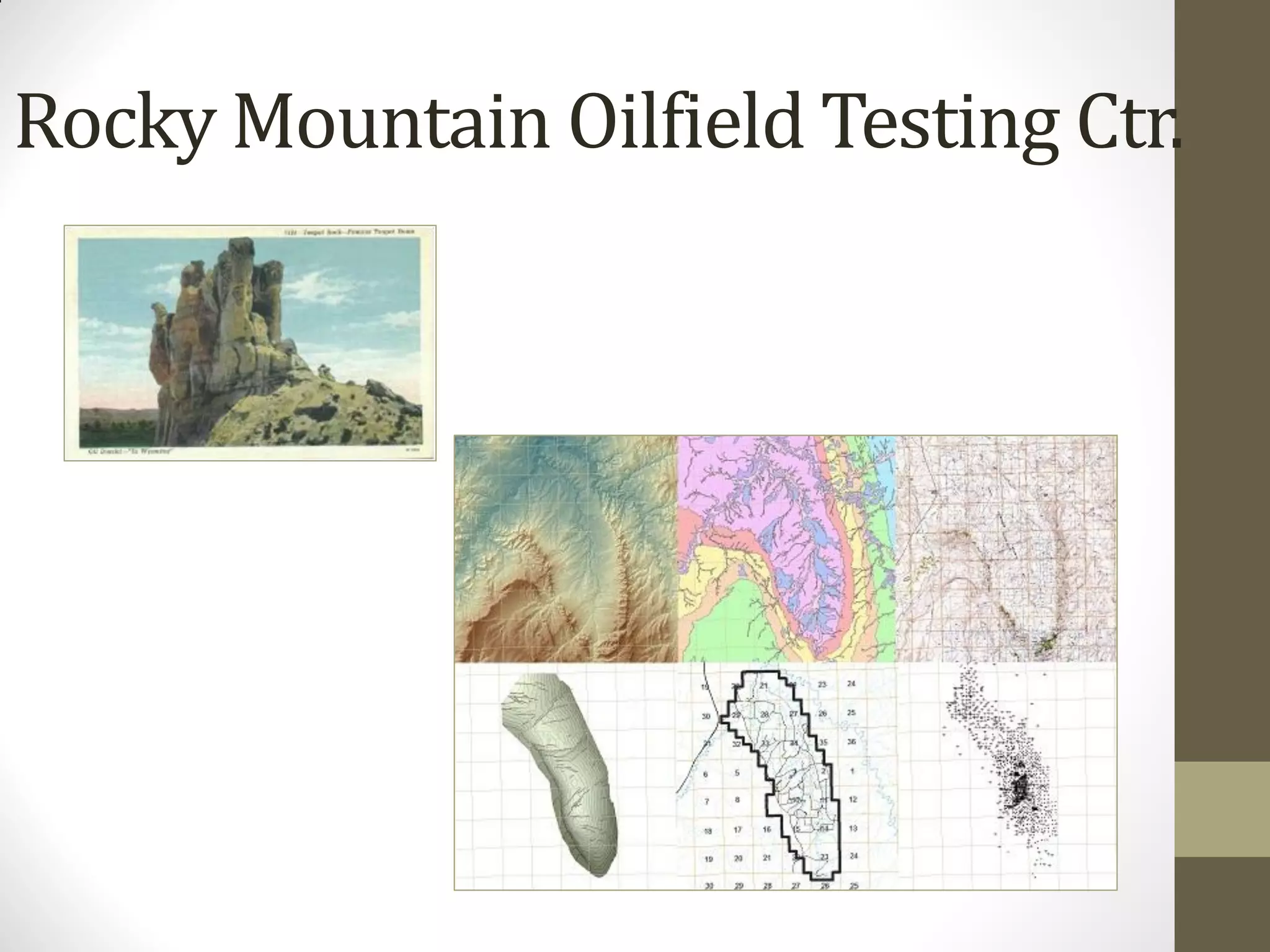
• RMOTC
  •   Rocky Mountain Oilfield Testing Center
  •   NPR-3, Wyoming, Teapot Dome
  •   GIS, well and seismic data
  •   Released in 2005 at PNEC
• ArcGIS Online
  •   Posted same data on Esri community website
  •   Actual GIS dataset as-is and same terms as RMOTC
  •   3D subsurface in ArcMap, ArcScene, ArcGlobe and ArcGIS Explorer
  •   Model Builder using a 15 year old idea from Statoil in Arc/Info
  •   Simple reservoir depletion model using current Esri tools
Rocky Mountain Oilfield Testing Ctr.
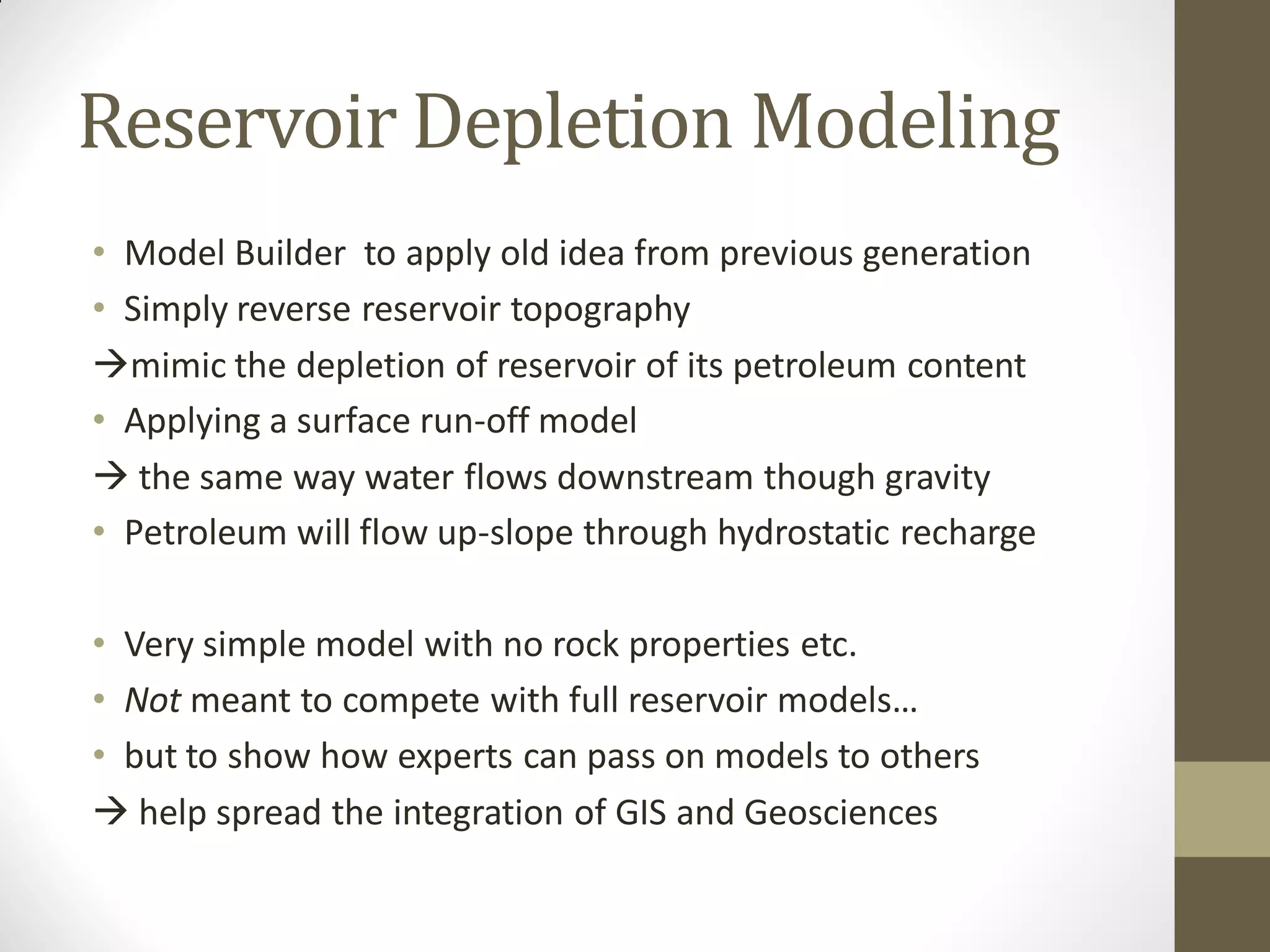
Reservoir Depletion Modeling
• Model Builder to apply old idea from previous generation
• Simply reverse reservoir topography
mimic the depletion of reservoir of its petroleum content
• Applying a surface run-off model
 the same way water flows downstream though gravity
• Petroleum will flow up-slope through hydrostatic recharge

• Very simple model with no rock properties etc.
• Not meant to compete with full reservoir models…
• but to show how experts can pass on models to others
 help spread the integration of GIS and Geosciences
Model Builder
ArcScene
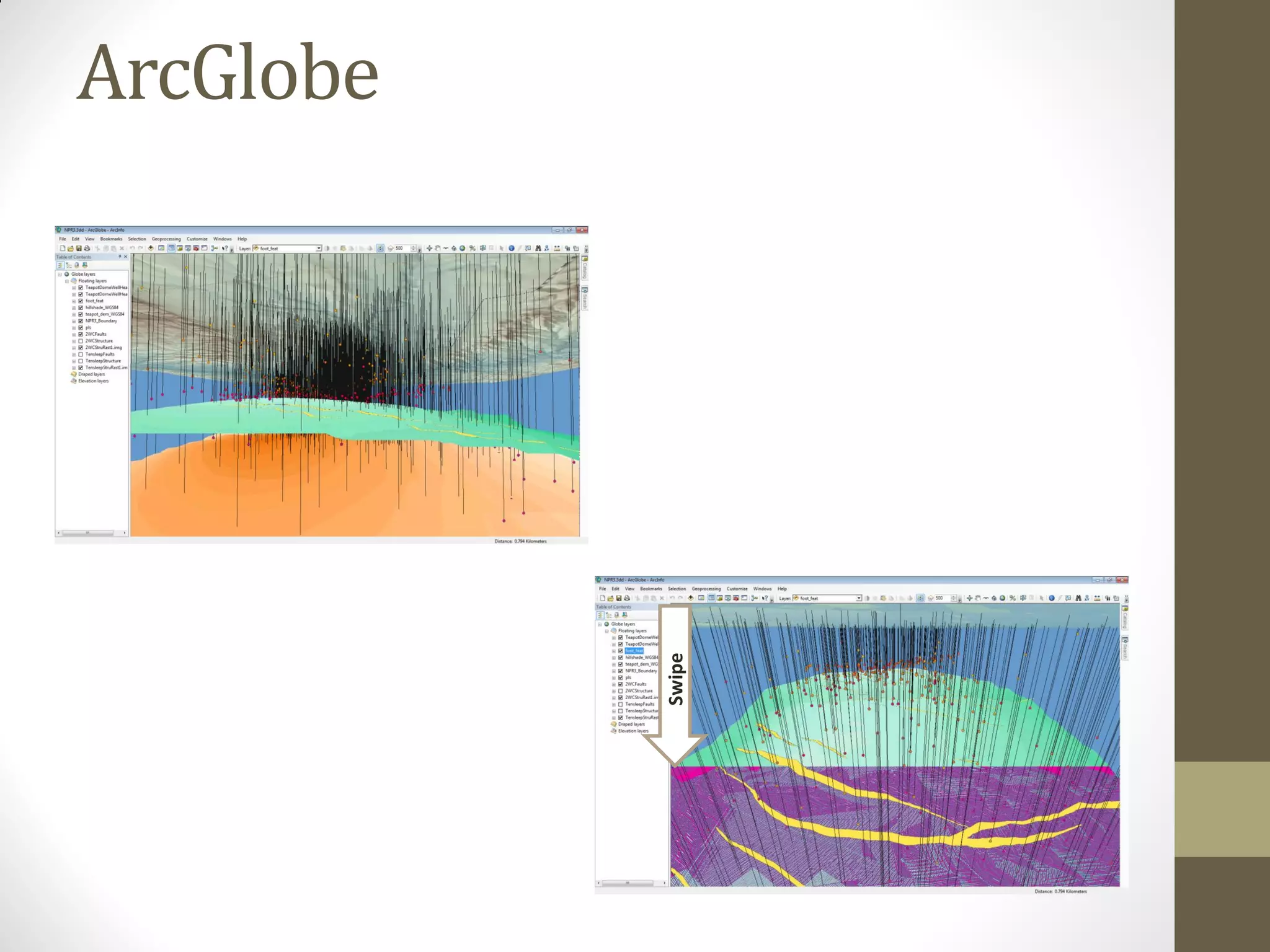
ArcGlobe


           Swipe
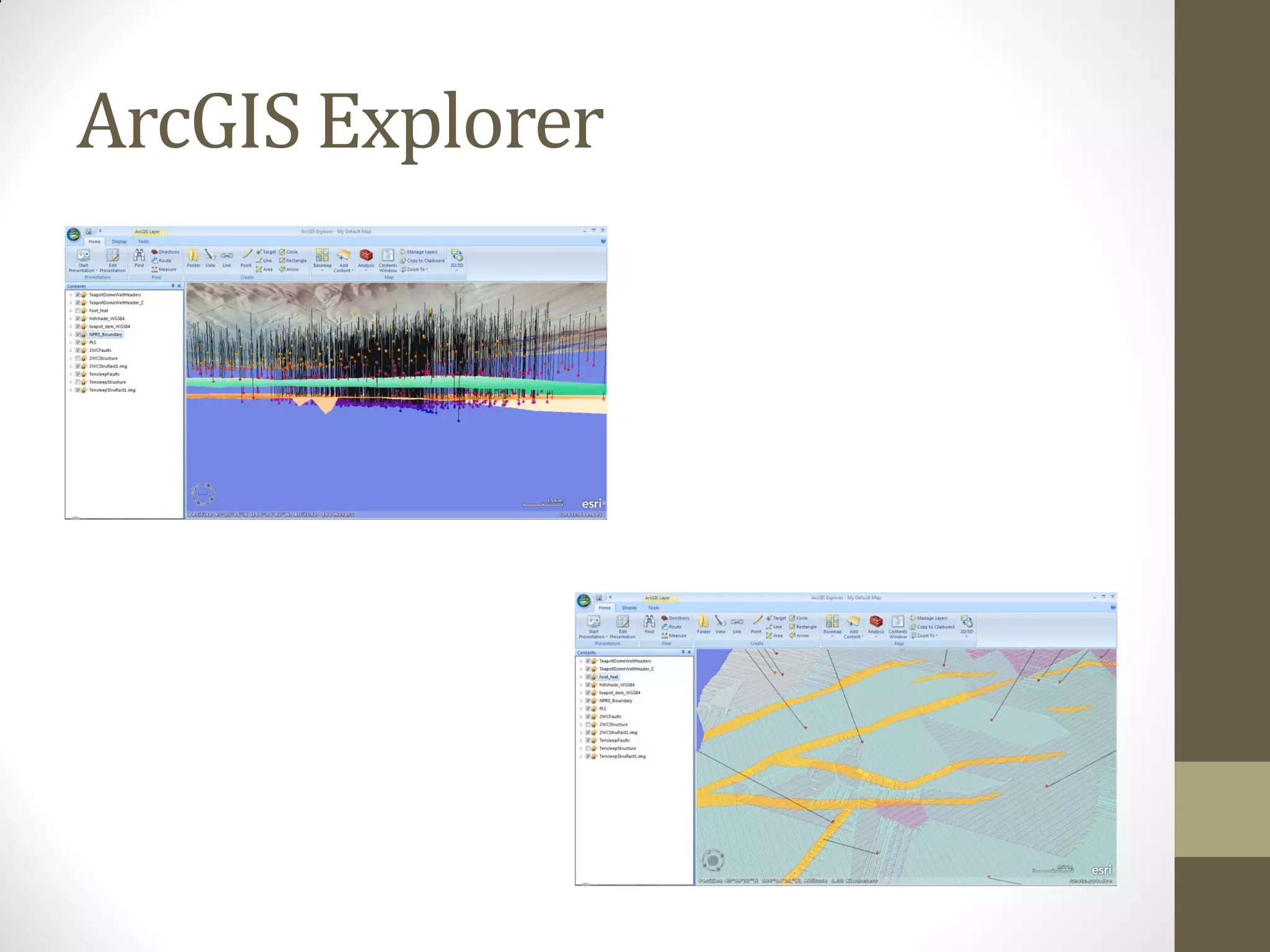
ArcGIS Explorer

Subsurface 3D GIS 05nov2011

  • 1.
    Subsurface 3D GIS SimpleReservoir Depletion Modeling Using RMOTC Public Petroleum Data blog.zolnai.ca
  • 2.
    The Premise • Usershave tools at their fingertips they can use as-is: • Esri not meant to replace full Geoscience apps • Spatial Analyst extension: grid, contour, faults • Includes Model Builder to concatenate processes • 3D Analyst Extension to display subsurface data • ArcGIS Explorer to distribute to wider audience • There are other tools to link to Geosciences applications: • Esri interoperability extension (Z-Map etc. files) • OpenSpirit program interface (Scan Utility etc.) • Data models (PPDM, PPDM Lite etc.) • Others like Schlumberger Ocean etc.
  • 3.
    Example GIS integration Surface Subsurf. Infrastr. Imagery (productn, (wells, (blocks, (digital, field) seismic) fields) analog) OSP OSP Mthly. Image Adptr. Adptr. Load Server Community Data ArcGIS Scan Utility Server
  • 4.
    The data • RMOTC • Rocky Mountain Oilfield Testing Center • NPR-3, Wyoming, Teapot Dome • GIS, well and seismic data • Released in 2005 at PNEC • ArcGIS Online • Posted same data on Esri community website • Actual GIS dataset as-is and same terms as RMOTC • 3D subsurface in ArcMap, ArcScene, ArcGlobe and ArcGIS Explorer • Model Builder using a 15 year old idea from Statoil in Arc/Info • Simple reservoir depletion model using current Esri tools
  • 5.
  • 6.
    Reservoir Depletion Modeling •Model Builder to apply old idea from previous generation • Simply reverse reservoir topography mimic the depletion of reservoir of its petroleum content • Applying a surface run-off model  the same way water flows downstream though gravity • Petroleum will flow up-slope through hydrostatic recharge • Very simple model with no rock properties etc. • Not meant to compete with full reservoir models… • but to show how experts can pass on models to others  help spread the integration of GIS and Geosciences
  • 7.
  • 8.
  • 9.
    ArcGlobe Swipe
  • 10.