SUBSIDENCE CONTROL IN
COAL MINES
By B.SUNIL FROM JNTUHCEM
INTRODUCTION
 Any deformation occurred above the surface
due to underground excavations is called
SUBSIDENCE.
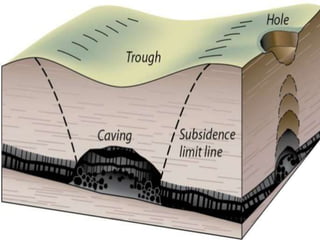
 SUBSIDENCE due to underground coal mines
mainly categorized into two forms
 Pothole subsidence
 Trough subsidence
INTRODUCTION
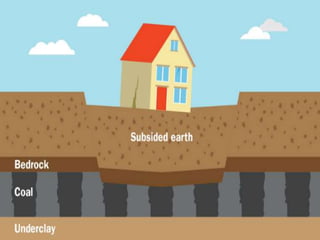
 POTHOLE SUBSIDENCE is caused due to
the sudden collapse of overburden into the
underground voids.
 It is very hazardous to life as it occurs without
any prior indications.
 TROUGH SUBSIDENCE is occurred over a
larger area which is mainly depend on the
depth of the extraction.
INTRODUCTION
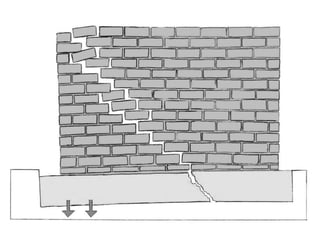
 Due to subsidence surface structures are
greatly disturbed and damaged.
 So it is necessary to take control measures
while working in underground to minimize the
subsidence.
 The main objective of this presentation to
show what are the control measures to be
taken while working.
SUBSIDENCE CONTROL
MEASURES
 PLANE FITTING METHOD
 TRENCHING
 TENSION CABLE METHOD
 HYDRAULIC SAND STOWING
 PARTIAL EXTRACTION METHODS
PLANE FITTING METHOD
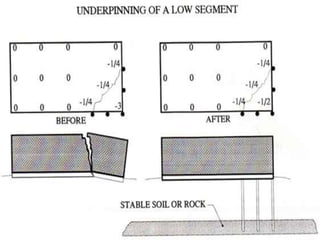
 Surface structures undergo curvature and
twisting due to subsidence. so to minimize
strain due to twisting force, plane is
considered on which structure is held .
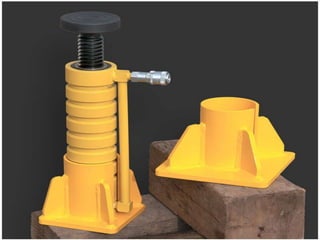
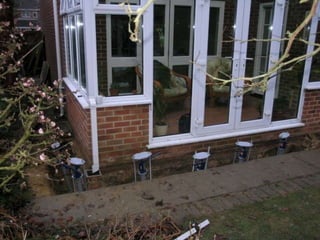
 Under this plane height adjustment devices
are placed which maintain inclination with time
dependant along the line of subsidence.
 No of device are necessary given by formula
PLANE FITTING METHOD
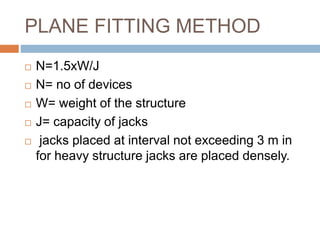
 N=1.5xW/J
 N= no of devices
 W= weight of the structure
 J= capacity of jacks
 jacks placed at interval not exceeding 3 m in
for heavy structure jacks are placed densely.
TRENCHING
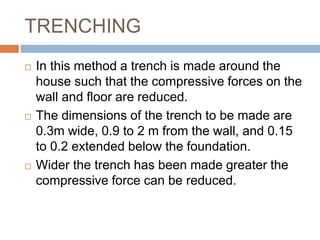
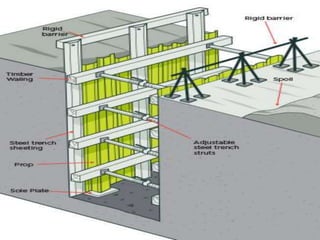
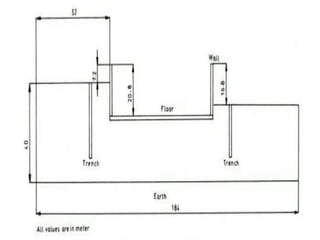
 In this method a trench is made around the
house such that the compressive forces on the
wall and floor are reduced.
 The dimensions of the trench to be made are
0.3m wide, 0.9 to 2 m from the wall, and 0.15
to 0.2 extended below the foundation.
 Wider the trench has been made greater the
compressive force can be reduced.
TRENCHING
TENSION CABLE
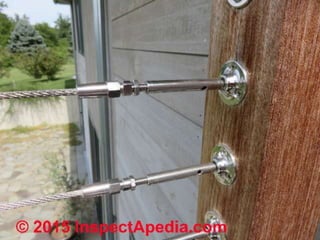
 Tension cable is used to reduce damage due
to the twisting force.
 In this cable is used having high compressive
strength and low tensile strength.
 For proper design tension in the cable must be
checked before.
HYDRAULIC SAND STOWING
 Hydraulic stowing is the best method for
controlling the subsidence.
 In India HSS play vital role in subsidence
control.
 Subsidence of the stowed panel is below 5%
in Indian coal mines.
 Subsidence may be increased by delay of
stowing.
HYDRAULIC SAND STOWING
 As the stowing takes much time the immediate
rock should have minimum strength to hold the
load for a span of time.
 In India mostly the roof is sand stone so it is
efficient to go with sand stowing.
 But in foreign countries the roof is easily caved
so the subsidence in stowed panel ranges
from 5% to 35%.
PARTIAL EXTRACTION
 Partial extraction is done to minimize both the
subsidence and strain such that surface
structures are fully protected from the damage.
 These are again classified into
 Non effective width extraction
 Chess board method
 Wide and stall method
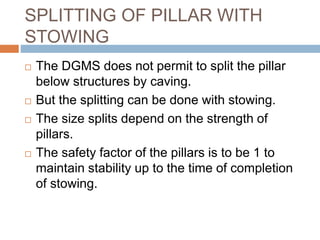
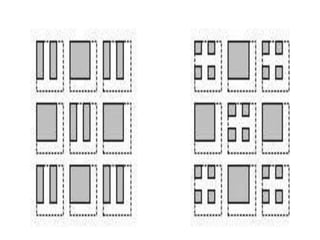
 Splitting of pillar with stowing
 Harmonic mining
NON EFFECTIVE WIDTH
EXTRACTION
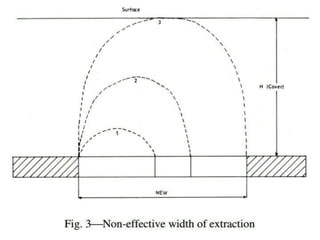
 Non effective width of extraction is
underground width of extraction which does
not cause any subsidence above ground.
 As opening made in the seam stress are
redistributed and pressure arch is formed,
the height of the dome is depend up on the
width of opening.
 As the width of extraction increases the
dome touches the surface and the movement
of surface starts.
NON EFFECTIVE WIDTH
EXTRACTION
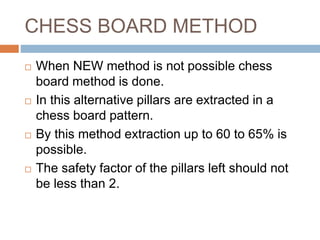
 The maximum width of extraction in a seam
without any movement above the surface is
called NON EFFECTIVE WIDTH.
 This expressed in depth of cover, in Indian
mines NEW is 0.3 to 1.17 times of cover.
 The pillars are to be extracted in such a way
that at any time width does not exceed NEW.
 Pillars in rows are left alternatively maintaining
factor of safety 2.
CHESS BOARD METHOD
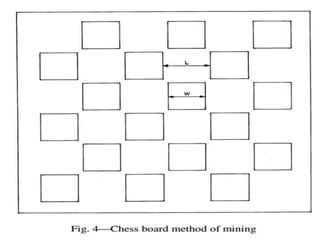
 When NEW method is not possible chess
board method is done.
 In this alternative pillars are extracted in a
chess board pattern.
 By this method extraction up to 60 to 65% is
possible.
 The safety factor of the pillars left should not
be less than 2.
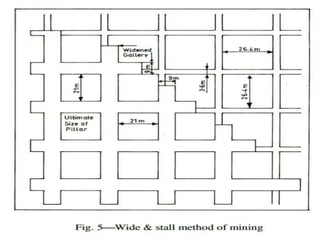
WIDE AND STALL METHOD
 When the depth of cover is moderate, the
recovery of coal is very low because more coal
has to be left to minimize the subsidence.
 So to get more recovery compared to the
conventional method wide and stall method is
used.
 In this method gallery size is maintained to
match the strength of rock and width and
height ratio of pillar increased to stabilize the
condition
 The galleries are widened up to which the
pillar can bear the load to improve the
SPLITTING OF PILLAR WITH
STOWING
 The DGMS does not permit to split the pillar
below structures by caving.
 But the splitting can be done with stowing.
 The size splits depend on the strength of
pillars.
 The safety factor of the pillars is to be 1 to
maintain stability up to the time of completion
of stowing.
HARMONIC MINING
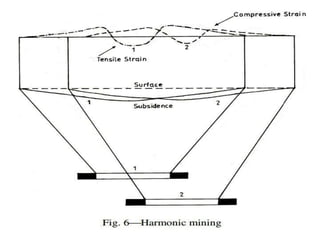
 Extraction of panel causes tensional and
compressive strain above the surface.
 To overcome the strain counter strain to be
acted so this can achieved by extraction of two
seams simultaneously in particular manner.
 Strain due first working is balanced by the
strain induced in the another working.
 This method of mining is known as
HARMONIC MINING.
PROUD TO BE
A
MINING
ENGINEER

Subsidence control in coal mines

  • 1.
    SUBSIDENCE CONTROL IN COALMINES By B.SUNIL FROM JNTUHCEM
  • 2.
    INTRODUCTION  Any deformationoccurred above the surface due to underground excavations is called SUBSIDENCE.  SUBSIDENCE due to underground coal mines mainly categorized into two forms  Pothole subsidence  Trough subsidence
  • 4.
    INTRODUCTION  POTHOLE SUBSIDENCEis caused due to the sudden collapse of overburden into the underground voids.  It is very hazardous to life as it occurs without any prior indications.  TROUGH SUBSIDENCE is occurred over a larger area which is mainly depend on the depth of the extraction.
  • 5.
    INTRODUCTION  Due tosubsidence surface structures are greatly disturbed and damaged.  So it is necessary to take control measures while working in underground to minimize the subsidence.  The main objective of this presentation to show what are the control measures to be taken while working.
  • 7.
    SUBSIDENCE CONTROL MEASURES  PLANEFITTING METHOD  TRENCHING  TENSION CABLE METHOD  HYDRAULIC SAND STOWING  PARTIAL EXTRACTION METHODS
  • 8.
    PLANE FITTING METHOD Surface structures undergo curvature and twisting due to subsidence. so to minimize strain due to twisting force, plane is considered on which structure is held .  Under this plane height adjustment devices are placed which maintain inclination with time dependant along the line of subsidence.  No of device are necessary given by formula
  • 13.
    PLANE FITTING METHOD N=1.5xW/J  N= no of devices  W= weight of the structure  J= capacity of jacks  jacks placed at interval not exceeding 3 m in for heavy structure jacks are placed densely.
  • 14.
    TRENCHING  In thismethod a trench is made around the house such that the compressive forces on the wall and floor are reduced.  The dimensions of the trench to be made are 0.3m wide, 0.9 to 2 m from the wall, and 0.15 to 0.2 extended below the foundation.  Wider the trench has been made greater the compressive force can be reduced.
  • 16.
  • 17.
    TENSION CABLE  Tensioncable is used to reduce damage due to the twisting force.  In this cable is used having high compressive strength and low tensile strength.  For proper design tension in the cable must be checked before.
  • 20.
    HYDRAULIC SAND STOWING Hydraulic stowing is the best method for controlling the subsidence.  In India HSS play vital role in subsidence control.  Subsidence of the stowed panel is below 5% in Indian coal mines.  Subsidence may be increased by delay of stowing.
  • 21.
    HYDRAULIC SAND STOWING As the stowing takes much time the immediate rock should have minimum strength to hold the load for a span of time.  In India mostly the roof is sand stone so it is efficient to go with sand stowing.  But in foreign countries the roof is easily caved so the subsidence in stowed panel ranges from 5% to 35%.
  • 22.
    PARTIAL EXTRACTION  Partialextraction is done to minimize both the subsidence and strain such that surface structures are fully protected from the damage.  These are again classified into  Non effective width extraction  Chess board method  Wide and stall method  Splitting of pillar with stowing  Harmonic mining
  • 23.
    NON EFFECTIVE WIDTH EXTRACTION Non effective width of extraction is underground width of extraction which does not cause any subsidence above ground.  As opening made in the seam stress are redistributed and pressure arch is formed, the height of the dome is depend up on the width of opening.  As the width of extraction increases the dome touches the surface and the movement of surface starts.
  • 25.
    NON EFFECTIVE WIDTH EXTRACTION The maximum width of extraction in a seam without any movement above the surface is called NON EFFECTIVE WIDTH.  This expressed in depth of cover, in Indian mines NEW is 0.3 to 1.17 times of cover.  The pillars are to be extracted in such a way that at any time width does not exceed NEW.  Pillars in rows are left alternatively maintaining factor of safety 2.
  • 26.
    CHESS BOARD METHOD When NEW method is not possible chess board method is done.  In this alternative pillars are extracted in a chess board pattern.  By this method extraction up to 60 to 65% is possible.  The safety factor of the pillars left should not be less than 2.
  • 28.
    WIDE AND STALLMETHOD  When the depth of cover is moderate, the recovery of coal is very low because more coal has to be left to minimize the subsidence.  So to get more recovery compared to the conventional method wide and stall method is used.  In this method gallery size is maintained to match the strength of rock and width and height ratio of pillar increased to stabilize the condition  The galleries are widened up to which the pillar can bear the load to improve the
  • 30.
    SPLITTING OF PILLARWITH STOWING  The DGMS does not permit to split the pillar below structures by caving.  But the splitting can be done with stowing.  The size splits depend on the strength of pillars.  The safety factor of the pillars is to be 1 to maintain stability up to the time of completion of stowing.
  • 32.
    HARMONIC MINING  Extractionof panel causes tensional and compressive strain above the surface.  To overcome the strain counter strain to be acted so this can achieved by extraction of two seams simultaneously in particular manner.  Strain due first working is balanced by the strain induced in the another working.  This method of mining is known as HARMONIC MINING.
  • 34.