Subphylum Hexapoda
Presented By Kanwal Nisa
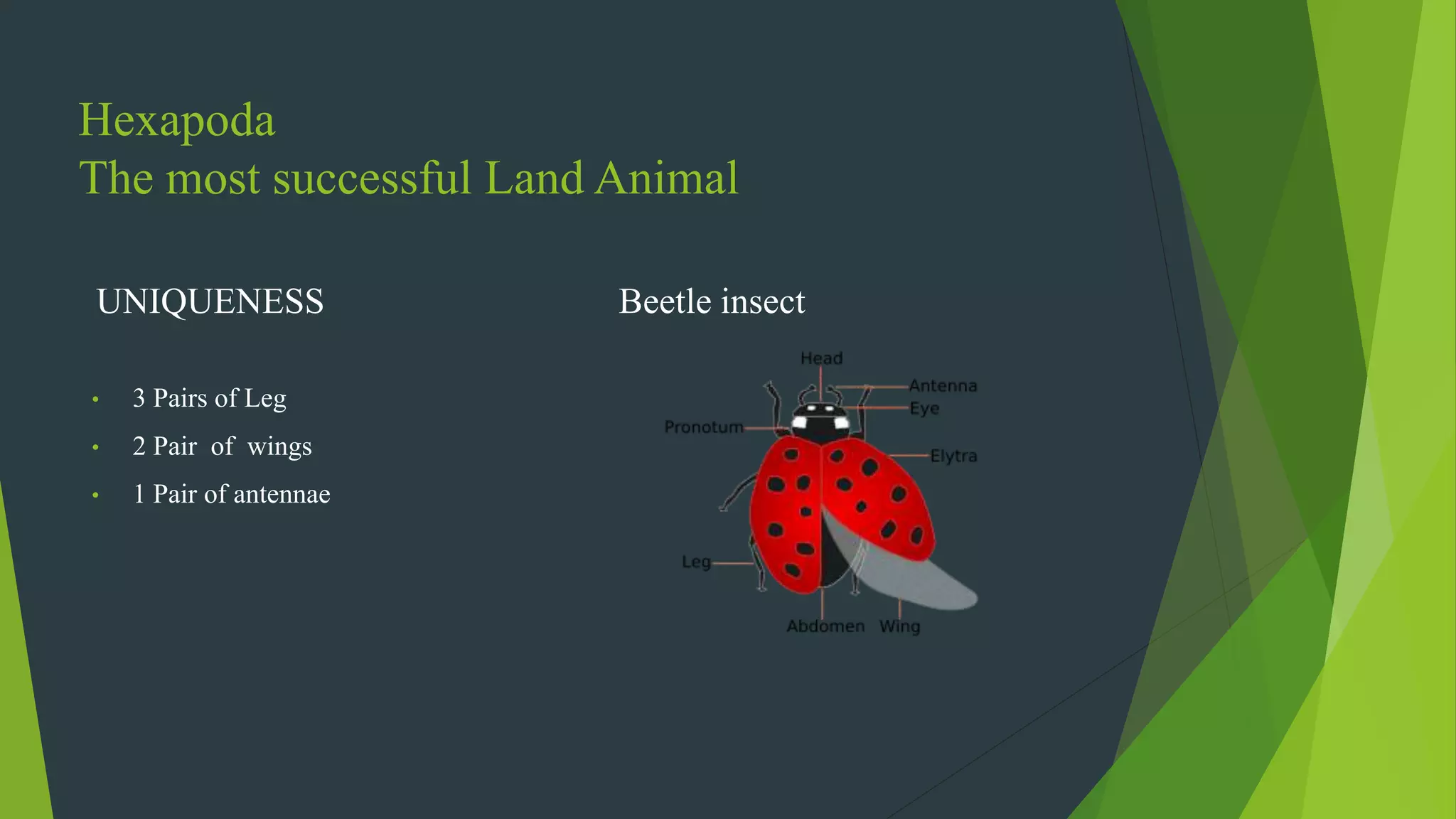
Hexapoda
The most successful Land Animal
UNIQUENESS
• 3 Pairs of Leg
• 2 Pair of wings
• 1 Pair of antennae
Beetle insect
Three Tagmata
• Head
• Thorax
• Abdomen
Head are not divided but thorax are
divided into different parts
Division of thorax
• Prothorax
• Mesothorax
• Metathorax
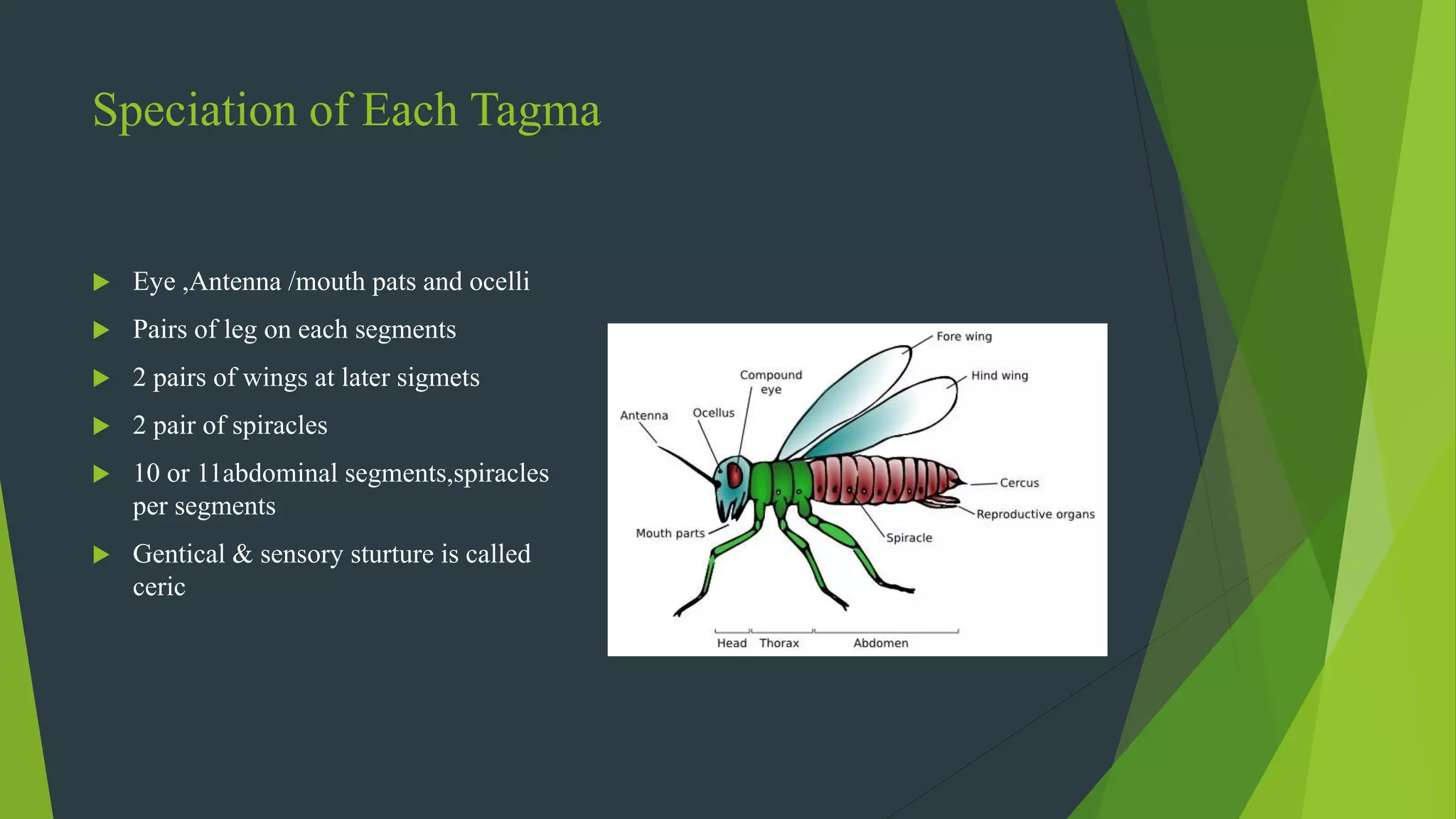
Speciation of Each Tagma
 Eye ,Antenna /mouth pats and ocelli
 Pairs of leg on each segments
 2 pairs of wings at later sigmets
 2 pair of spiracles
 10 or 11abdominal segments,spiracles
per segments
 Gentical & sensory sturture is called
ceric
INSECTS FLIGHTS
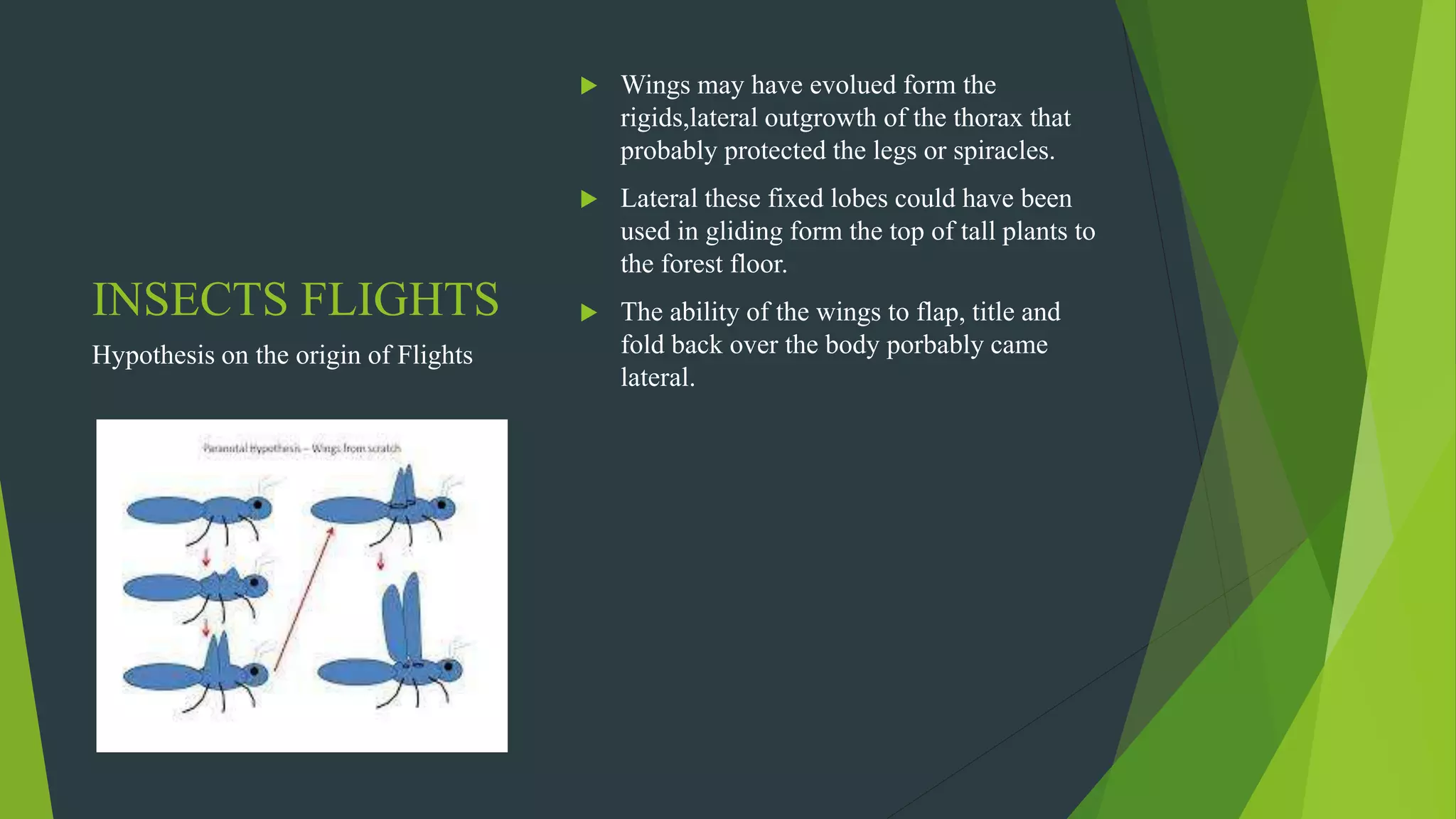
 Wings may have evolued form the
rigids,lateral outgrowth of the thorax that
probably protected the legs or spiracles.
 Lateral these fixed lobes could have been
used in gliding form the top of tall plants to
the forest floor.
 The ability of the wings to flap, title and
fold back over the body porbably came
lateral.
Hypothesis on the origin of Flights
Requirements of flights
 Thermoregulation abilities
 Relatively high body temperature
 25C or greater,are needed for flights muscles to
contract raplidly enough for flights.
Direct /synshronous flights
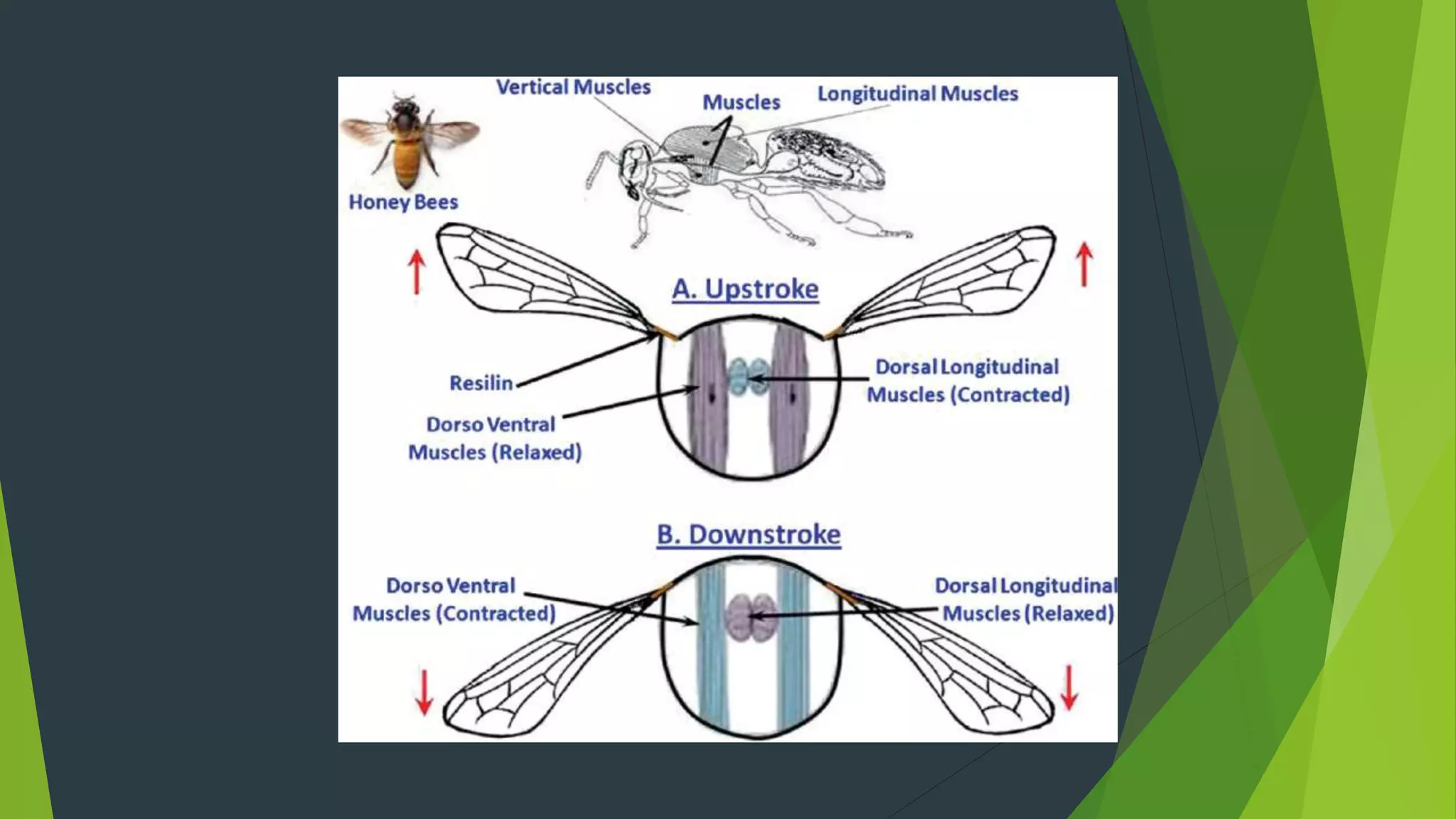
 Direct flight muscles are found in all insects and are used to control the wing during
flight.
 However, in insects such as dragonflies and cockroaches, direct flight muscles are used
to power flight too.
 The wings pivot up and down around a single pivot point.
 The wings are raised by a contraction of muscles attached to the base of the The wings
are then brought down by a contraction of muscles that attach to the wing outside of the
pivot point.
Indirect flight muscles
 Indirect flight muscles are found in more advanced insects such as true flies.
 indirect flight muscles are connected to the upper (tergum) and lower (sternum)
surfaces of the insect thorax.
 A second set of muscles attach to the front and back of the thorax.
 The wings are raised by the muscles attached to the upper and lower surface of the
thorax contracting.
 This brings the top surface of the thorax down and, along with it, the base of the wings.
 The wings are then lowered by a contraction of the muscles attached to the front and
rear of the thorax
 This forces the upper surface of the thorax to raise and the wings pivot downwards.

Subphylum Hexapoda.pptx

  • 1.
  • 2.
    Hexapoda The most successfulLand Animal UNIQUENESS • 3 Pairs of Leg • 2 Pair of wings • 1 Pair of antennae Beetle insect
  • 3.
    Three Tagmata • Head •Thorax • Abdomen Head are not divided but thorax are divided into different parts Division of thorax • Prothorax • Mesothorax • Metathorax
  • 4.
    Speciation of EachTagma  Eye ,Antenna /mouth pats and ocelli  Pairs of leg on each segments  2 pairs of wings at later sigmets  2 pair of spiracles  10 or 11abdominal segments,spiracles per segments  Gentical & sensory sturture is called ceric
  • 5.
    INSECTS FLIGHTS  Wingsmay have evolued form the rigids,lateral outgrowth of the thorax that probably protected the legs or spiracles.  Lateral these fixed lobes could have been used in gliding form the top of tall plants to the forest floor.  The ability of the wings to flap, title and fold back over the body porbably came lateral. Hypothesis on the origin of Flights
  • 6.
    Requirements of flights Thermoregulation abilities  Relatively high body temperature  25C or greater,are needed for flights muscles to contract raplidly enough for flights.
  • 7.
    Direct /synshronous flights Direct flight muscles are found in all insects and are used to control the wing during flight.  However, in insects such as dragonflies and cockroaches, direct flight muscles are used to power flight too.  The wings pivot up and down around a single pivot point.  The wings are raised by a contraction of muscles attached to the base of the The wings are then brought down by a contraction of muscles that attach to the wing outside of the pivot point.
  • 9.
    Indirect flight muscles Indirect flight muscles are found in more advanced insects such as true flies.  indirect flight muscles are connected to the upper (tergum) and lower (sternum) surfaces of the insect thorax.  A second set of muscles attach to the front and back of the thorax.  The wings are raised by the muscles attached to the upper and lower surface of the thorax contracting.  This brings the top surface of the thorax down and, along with it, the base of the wings.  The wings are then lowered by a contraction of the muscles attached to the front and rear of the thorax  This forces the upper surface of the thorax to raise and the wings pivot downwards.