Subject and
Predicate
Learning outcomes
Students will able to list the two
important element of a complete
sentence.
Students will come to identify the
Subject (naming part) and Predicate
(action part) in the sentences.
Previous Knowledge
We use complete sentences everyday
when we
Read Write Speak
Complete sentences help us
communicate in a way that enable us to
understand each thoughts and ideas.
For example:
• The kitten drinks milk from a bowl.
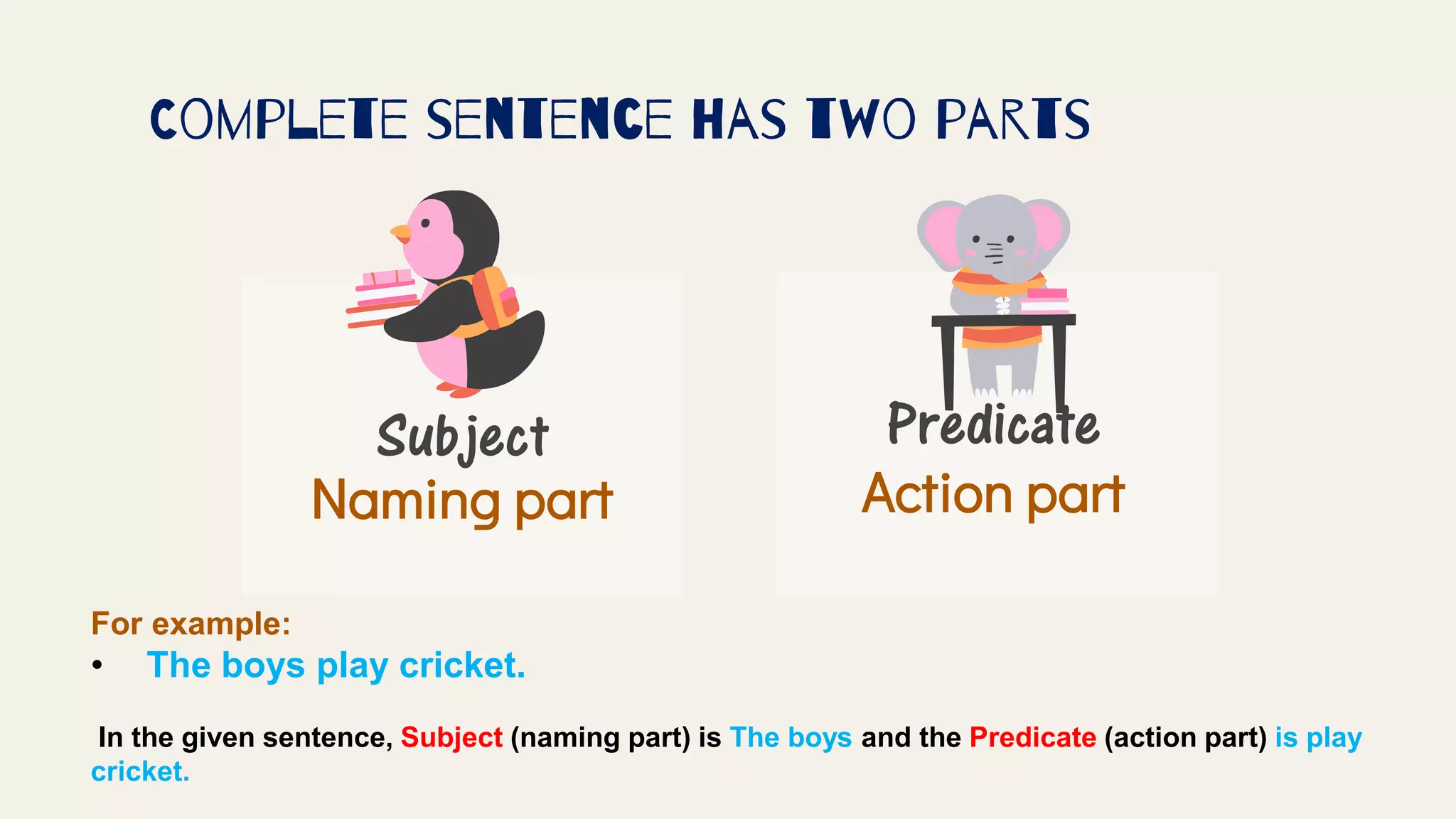
Complete sentence has two parts
Subject
Naming part
Predicate
Action part
For example:
• The boys play cricket.
In the given sentence, Subject (naming part) is The boys and the Predicate (action part) is play
cricket.
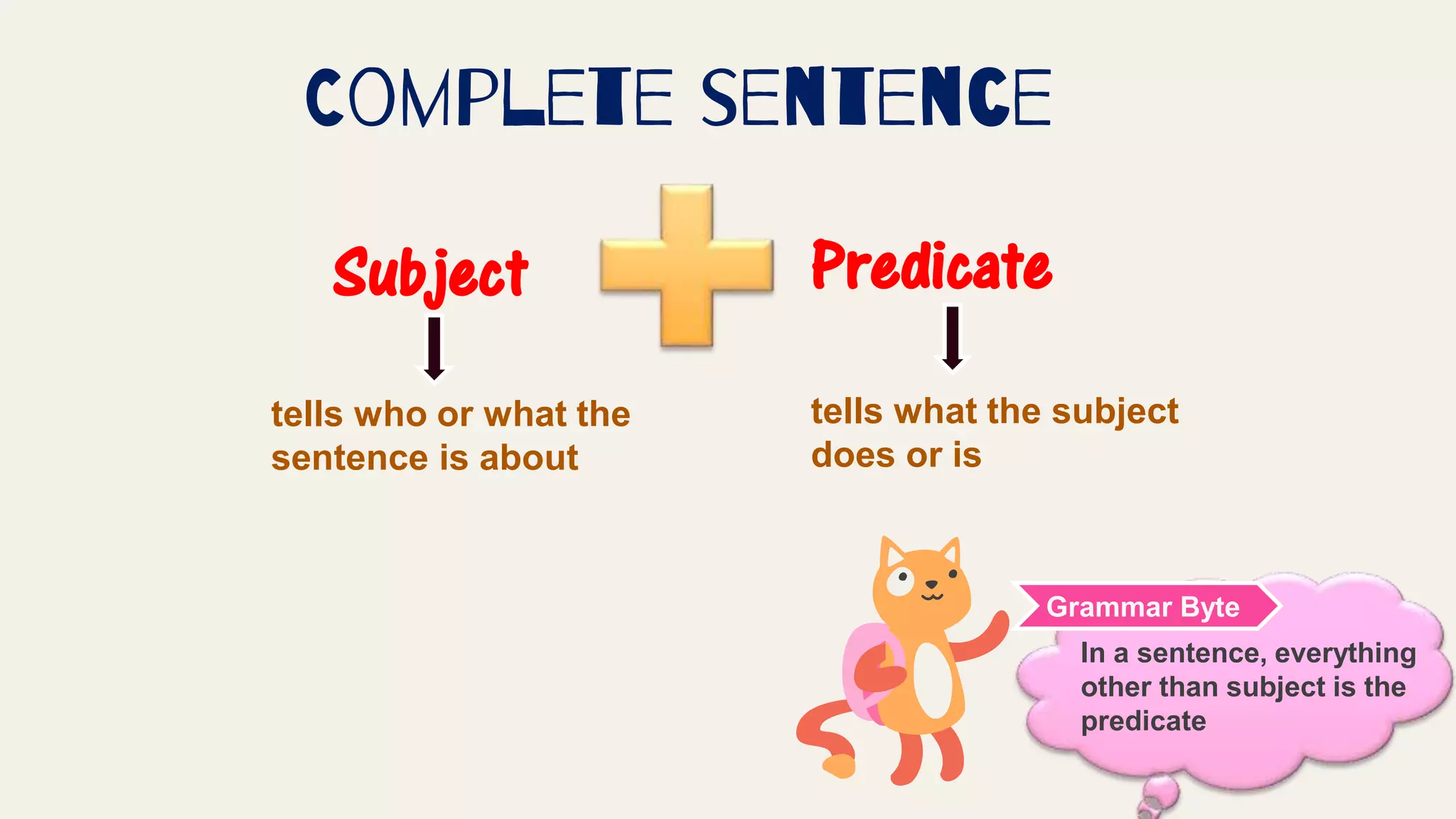
Complete sentence
Subject Predicate
tells who or what the
sentence is about
tells what the subject
does or is
In a sentence, everything
other than subject is the
predicate
Grammar Byte
LETS MAKE IT
MORE CLEAR
examples
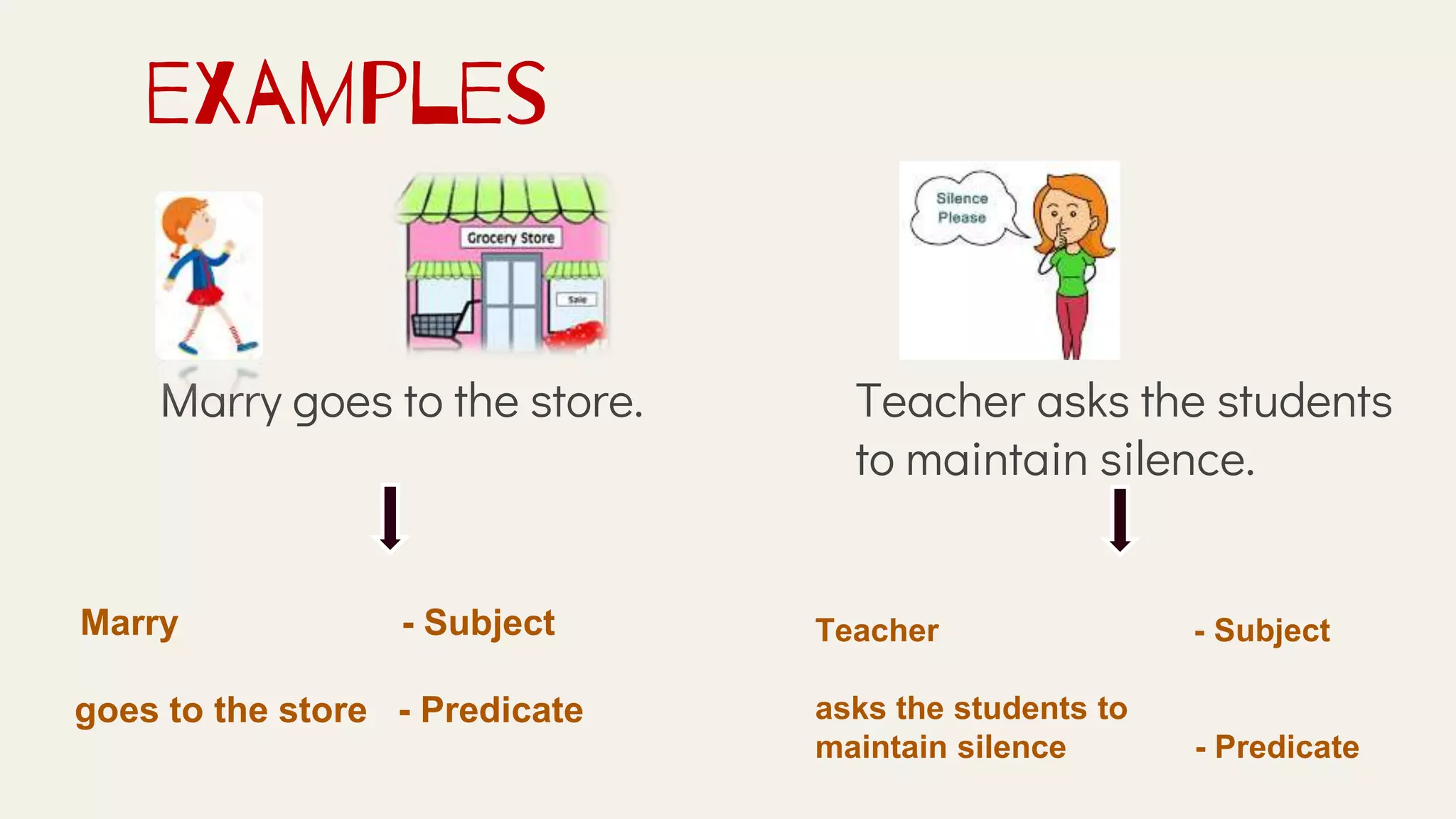
Marry goes to the store. Teacher asks the students
to maintain silence.
Marry - Subject
goes to the store - Predicate
Teacher - Subject
asks the students to
maintain silence - Predicate
examples
The little bunny eats the
orange carrot.
The burger and french
fries are delicious.
The little bunny - Subject
eats the orange carrot - Predicate
The burger and french - Subject
fries are delicious - Predicate
Lets
sing
a
song
A subject, a predicate-
These are quite important!
Combine the two, and you will see
That you have formed a sentence.
The subject, the subject
Is a proper or common noun.
Who or what it usually tells,
And that is how you’ll find it.
The predicate, the predicate
It tells about the subject,
What it is or what it does,
An action and all its helpers.
The subject, the predicate
Together form a sentence.
Write them both then punctuate
VOILA! You have a sentence.
recapitulate
Subject is known to be the naming part of the
sentence.
Predicate is known to be the action part of the
sentence.
01
02
03
Complete sentence has two part: Subject and Predicate.
Let’s begin with the doubt
session

Subject predicate

  • 2.
  • 3.
    Learning outcomes Students willable to list the two important element of a complete sentence. Students will come to identify the Subject (naming part) and Predicate (action part) in the sentences.
  • 4.
  • 5.
    We use completesentences everyday when we Read Write Speak
  • 6.
    Complete sentences helpus communicate in a way that enable us to understand each thoughts and ideas. For example: • The kitten drinks milk from a bowl.
  • 7.
    Complete sentence hastwo parts Subject Naming part Predicate Action part For example: • The boys play cricket. In the given sentence, Subject (naming part) is The boys and the Predicate (action part) is play cricket.
  • 8.
    Complete sentence Subject Predicate tellswho or what the sentence is about tells what the subject does or is In a sentence, everything other than subject is the predicate Grammar Byte
  • 9.
  • 10.
    examples Marry goes tothe store. Teacher asks the students to maintain silence. Marry - Subject goes to the store - Predicate Teacher - Subject asks the students to maintain silence - Predicate
  • 11.
    examples The little bunnyeats the orange carrot. The burger and french fries are delicious. The little bunny - Subject eats the orange carrot - Predicate The burger and french - Subject fries are delicious - Predicate
  • 12.
    Lets sing a song A subject, apredicate- These are quite important! Combine the two, and you will see That you have formed a sentence. The subject, the subject Is a proper or common noun. Who or what it usually tells, And that is how you’ll find it. The predicate, the predicate It tells about the subject, What it is or what it does, An action and all its helpers. The subject, the predicate Together form a sentence. Write them both then punctuate VOILA! You have a sentence.
  • 13.
    recapitulate Subject is knownto be the naming part of the sentence. Predicate is known to be the action part of the sentence. 01 02 03 Complete sentence has two part: Subject and Predicate.
  • 14.
    Let’s begin withthe doubt session