SUBCLINICAL
HYPOTHYROIDISM
INTRODUCTION
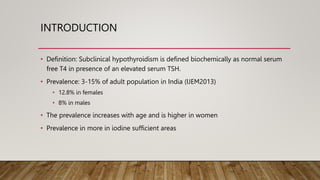
• Definition: Subclinical hypothyroidism is defined biochemically as normal serum
free T4 in presence of an elevated serum TSH.
• Prevalence: 3-15% of adult population in India (IJEM2013)
• 12.8% in females
• 8% in males
• The prevalence increases with age and is higher in women
• Prevalence in more in iodine sufficient areas
RISK FACTORS
• Family history of thyroid disease
• Personal history of thyroid disease
• Presence of antithyroid antibodies
• Autoimmune disease
• Medications: lithium , amiodarone , Iodine
• Old age
CAUSES
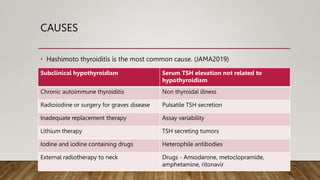
• Hashimoto thyroiditis is the most common cause. (JAMA2019)
Subclinical hypothyroidism Serum TSH elevation not related to
hypothyroidism
Chronic autoimmune thyroiditis Non thyroidal illness
Radioiodine or surgery for graves disease Pulsatile TSH secretion
Inadequate replacement therapy Assay variability
Lithium therapy TSH secreting tumors
Iodine and iodine containing drugs Heterophile antibodies
External radiotherapy to neck Drugs - Amiodarone, metoclopramide,
amphetamine, ritonavir
DIAGNOSIS
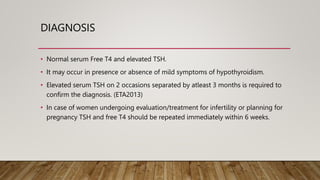
• Normal serum Free T4 and elevated TSH.
• It may occur in presence or absence of mild symptoms of hypothyroidism.
• Elevated serum TSH on 2 occasions separated by atleast 3 months is required to
confirm the diagnosis. (ETA2013)
• In case of women undergoing evaluation/treatment for infertility or planning for
pregnancy TSH and free T4 should be repeated immediately within 6 weeks.
OTHER INVESTIGATIONS
• Anti-thyroperoxidase antibodies
• USG neck for thyroid growth/swelling
• Thyroid scan with radioactive iodine
• Lipid profile
• FBS,PPBS
DIFFERENTIAL DIAGNOSIS
• Recovery from non-thyroid illness
• Following hyperthyroid phase of subacute,painless or postpartum thyroiditis.
• Autoantibodies to TSH
• Untreated adrenal insufficiency
• Central hypothyroidism
• Obesity
CONSEQUENCES
• Overt hypothyroidism - 5-8% of patients with subclinical hypothyroidism are at risk of
developing overt hypothyroidism (ETA2013,EnM2021)
• Congestive heart disease - cardiac dysfunction due to slow LV relaxation time , LV
systolic dysfunction and impaired endothelial function leading to IHD ,
cadiomyopathies.
• Stroke
• Infertility
• Non alcoholic fatty liver disease
• Neuro-pyschiatric symptoms – depression , bipolar disorder
SHOULD WE TREAT ?
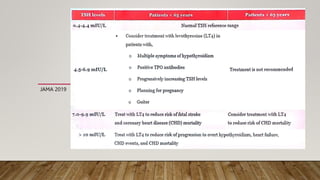
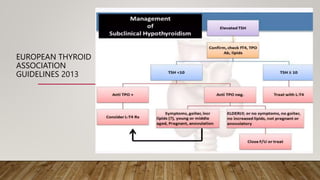
• TSH >10mIU/L should be treated with Levothyroxine (JCEM2001)
• Studies have shown Levothyroxine therapy results in 8mg reduction in LDL levels
(JCEM2000)
• Levothyroxine therapy has also shown reduction in neuromuscular dysfunction ,
psychiatric and cognitive dysfunction
FACTORS FAVORING INITIATION OF TREATMENT
• Clinical symptoms
• Degree of TSH raised
• Progressive TSH increase
• Diabetes
• Age of patient
• Pregnancy or intention of pregnancy
• Goiter
• Antithyroid antibodies
• Cardiovascular risk
• Dyslipidemia
• infertility
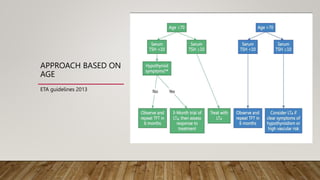
APPROACH BASED ON
AGE
ETA guidelines 2013
JAMA 2019
EUROPEAN THYROID
ASSOCIATION
GUIDELINES 2013
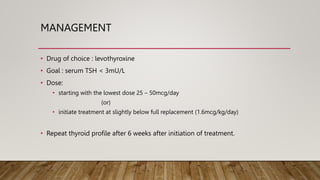
MANAGEMENT
• Drug of choice : levothyroxine
• Goal : serum TSH < 3mU/L
• Dose:
• starting with the lowest dose 25 – 50mcg/day
(or)
• initiate treatment at slightly below full replacement (1.6mcg/kg/day)
• Repeat thyroid profile after 6 weeks after initiation of treatment.
FOLLOW UP
• For Untreated patients : repeat TFT initially at 6 months , if stable yearly thereafter
• For patients on treatment : repeat TFT every 6 weeks and then alter the dosing
accordingly by decreasing or increasing 12.5 -25mcg at once
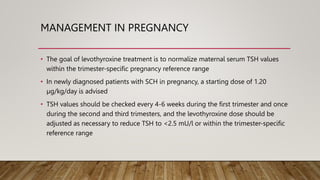
MANAGEMENT IN PREGNANCY
• The goal of levothyroxine treatment is to normalize maternal serum TSH values
within the trimester-specific pregnancy reference range
• In newly diagnosed patients with SCH in pregnancy, a starting dose of 1.20
µg/kg/day is advised
• TSH values should be checked every 4-6 weeks during the first trimester and once
during the second and third trimesters, and the levothyroxine dose should be
adjusted as necessary to reduce TSH to <2.5 mU/l or within the trimester-specific
reference range
• Women diagnosed with Subclinical Hypothyroidisim during pregnancy with TSH
less than 5 mIU/L and negative TPOAb could stop levothyroxine after delivery and
have thyroid function checked 6 weeks after delivery
• Women diagnosed with Subclinical hypothyroidism during pregnancy should be
re-evaluated 6 months and 1 year after delivery to ascertain the continuing
requirement for levothyroxine

subclinical hypothyroidism.pptx

  • 1.
  • 2.
    INTRODUCTION • Definition: Subclinicalhypothyroidism is defined biochemically as normal serum free T4 in presence of an elevated serum TSH. • Prevalence: 3-15% of adult population in India (IJEM2013) • 12.8% in females • 8% in males • The prevalence increases with age and is higher in women • Prevalence in more in iodine sufficient areas
  • 3.
    RISK FACTORS • Familyhistory of thyroid disease • Personal history of thyroid disease • Presence of antithyroid antibodies • Autoimmune disease • Medications: lithium , amiodarone , Iodine • Old age
  • 4.
    CAUSES • Hashimoto thyroiditisis the most common cause. (JAMA2019) Subclinical hypothyroidism Serum TSH elevation not related to hypothyroidism Chronic autoimmune thyroiditis Non thyroidal illness Radioiodine or surgery for graves disease Pulsatile TSH secretion Inadequate replacement therapy Assay variability Lithium therapy TSH secreting tumors Iodine and iodine containing drugs Heterophile antibodies External radiotherapy to neck Drugs - Amiodarone, metoclopramide, amphetamine, ritonavir
  • 5.
    DIAGNOSIS • Normal serumFree T4 and elevated TSH. • It may occur in presence or absence of mild symptoms of hypothyroidism. • Elevated serum TSH on 2 occasions separated by atleast 3 months is required to confirm the diagnosis. (ETA2013) • In case of women undergoing evaluation/treatment for infertility or planning for pregnancy TSH and free T4 should be repeated immediately within 6 weeks.
  • 6.
    OTHER INVESTIGATIONS • Anti-thyroperoxidaseantibodies • USG neck for thyroid growth/swelling • Thyroid scan with radioactive iodine • Lipid profile • FBS,PPBS
  • 7.
    DIFFERENTIAL DIAGNOSIS • Recoveryfrom non-thyroid illness • Following hyperthyroid phase of subacute,painless or postpartum thyroiditis. • Autoantibodies to TSH • Untreated adrenal insufficiency • Central hypothyroidism • Obesity
  • 8.
    CONSEQUENCES • Overt hypothyroidism- 5-8% of patients with subclinical hypothyroidism are at risk of developing overt hypothyroidism (ETA2013,EnM2021) • Congestive heart disease - cardiac dysfunction due to slow LV relaxation time , LV systolic dysfunction and impaired endothelial function leading to IHD , cadiomyopathies. • Stroke • Infertility • Non alcoholic fatty liver disease • Neuro-pyschiatric symptoms – depression , bipolar disorder
  • 9.
    SHOULD WE TREAT? • TSH >10mIU/L should be treated with Levothyroxine (JCEM2001) • Studies have shown Levothyroxine therapy results in 8mg reduction in LDL levels (JCEM2000) • Levothyroxine therapy has also shown reduction in neuromuscular dysfunction , psychiatric and cognitive dysfunction
  • 10.
    FACTORS FAVORING INITIATIONOF TREATMENT • Clinical symptoms • Degree of TSH raised • Progressive TSH increase • Diabetes • Age of patient • Pregnancy or intention of pregnancy • Goiter • Antithyroid antibodies • Cardiovascular risk • Dyslipidemia • infertility
  • 11.
  • 12.
  • 13.
  • 14.
    MANAGEMENT • Drug ofchoice : levothyroxine • Goal : serum TSH < 3mU/L • Dose: • starting with the lowest dose 25 – 50mcg/day (or) • initiate treatment at slightly below full replacement (1.6mcg/kg/day) • Repeat thyroid profile after 6 weeks after initiation of treatment.
  • 15.
    FOLLOW UP • ForUntreated patients : repeat TFT initially at 6 months , if stable yearly thereafter • For patients on treatment : repeat TFT every 6 weeks and then alter the dosing accordingly by decreasing or increasing 12.5 -25mcg at once
  • 16.
    MANAGEMENT IN PREGNANCY •The goal of levothyroxine treatment is to normalize maternal serum TSH values within the trimester-specific pregnancy reference range • In newly diagnosed patients with SCH in pregnancy, a starting dose of 1.20 µg/kg/day is advised • TSH values should be checked every 4-6 weeks during the first trimester and once during the second and third trimesters, and the levothyroxine dose should be adjusted as necessary to reduce TSH to <2.5 mU/l or within the trimester-specific reference range
  • 17.
    • Women diagnosedwith Subclinical Hypothyroidisim during pregnancy with TSH less than 5 mIU/L and negative TPOAb could stop levothyroxine after delivery and have thyroid function checked 6 weeks after delivery • Women diagnosed with Subclinical hypothyroidism during pregnancy should be re-evaluated 6 months and 1 year after delivery to ascertain the continuing requirement for levothyroxine