STUDENT INFORMATION SYSTEM
Sheikh Muzammil 12-Arid-2014
Muhammad Farhan 12-Arid-2005
M. Attiq 12-Arid-1949
BSCS- 3A (Evening)
INTRODUCTION:
PROBLEM STATEMENT:
 In many institution this Is very difficult to maintain
student data. Due to this reason this is very difficult
to check information about any student.
Solution:
 Due to many reasons, we want to create a system
which can handled student information so that
these difficulties can be decrease. So we can called
this system Student Information System.
TASKS:
 Student Information System performs the following
tasks:
 Record Entry Section:
 In this section the data of the student has been entered
and saved.
 Searching record Section:
 In this section we can search any student data through
their name or Roll number.
 Display Section:
 In this section we can display all students data at once
glance.
 Modify Section:
 In this section we can modify the data of any
student.
 Delete Section:
 In this section we can delete any student data.
PROCESS MODEL:
 Problem Statement:
 User/customer has no clear idea what they want or
about their product.
 Process Model:
We can choose Prototyping Model for student
information system because user/customer has no
clear idea about their product so we use
prototyping.
In this model firstly we can develop a
temporary model or use as customer requirements
techniques if user accept it or satisfy then we can
discard this model and create final model.
SOFTWARE REQUIREMENTS
SPECIFICATION (SRS):
1) Background:
 A student information system (SIS) is a software
application for education establishments to manage
student data. The aim of the project is to implement a
Student Information system suitable for a world class
University, providing flexibility to adapt to new and
changing requirements.
2) Objectives:
 The student information system will meet the following
objectives:
• Integrate and support new learning and teaching opportunities and
technologies for students.
 Support open interfaces and integration with other campus applications and
database systems
3) Scope:
 The student information system performs the following:
 To add the student data in database.
 To search the student data from the database.
 To modify the student data in database.
 To delete the student data from database.
4) Used terms Definition:
 MS SQL Microsoft Structured Query Language
 GUI Graphical User Interface
 Coding
REQUIREMENTS
 5) Hardware Requirement:
 RAM 256 Mb or higher
 Hard Disk (of any space)
 Operating System
 Window XP, Window vista,
 Window 7 or any other
6) Functional Requirements:
 6.1) Add Student Data:
 In this section we add the student data like student name,
class, fee status, and their registration number using
student_id, student_name, student_class, student age, student
department name using SQL queries to store data in database.
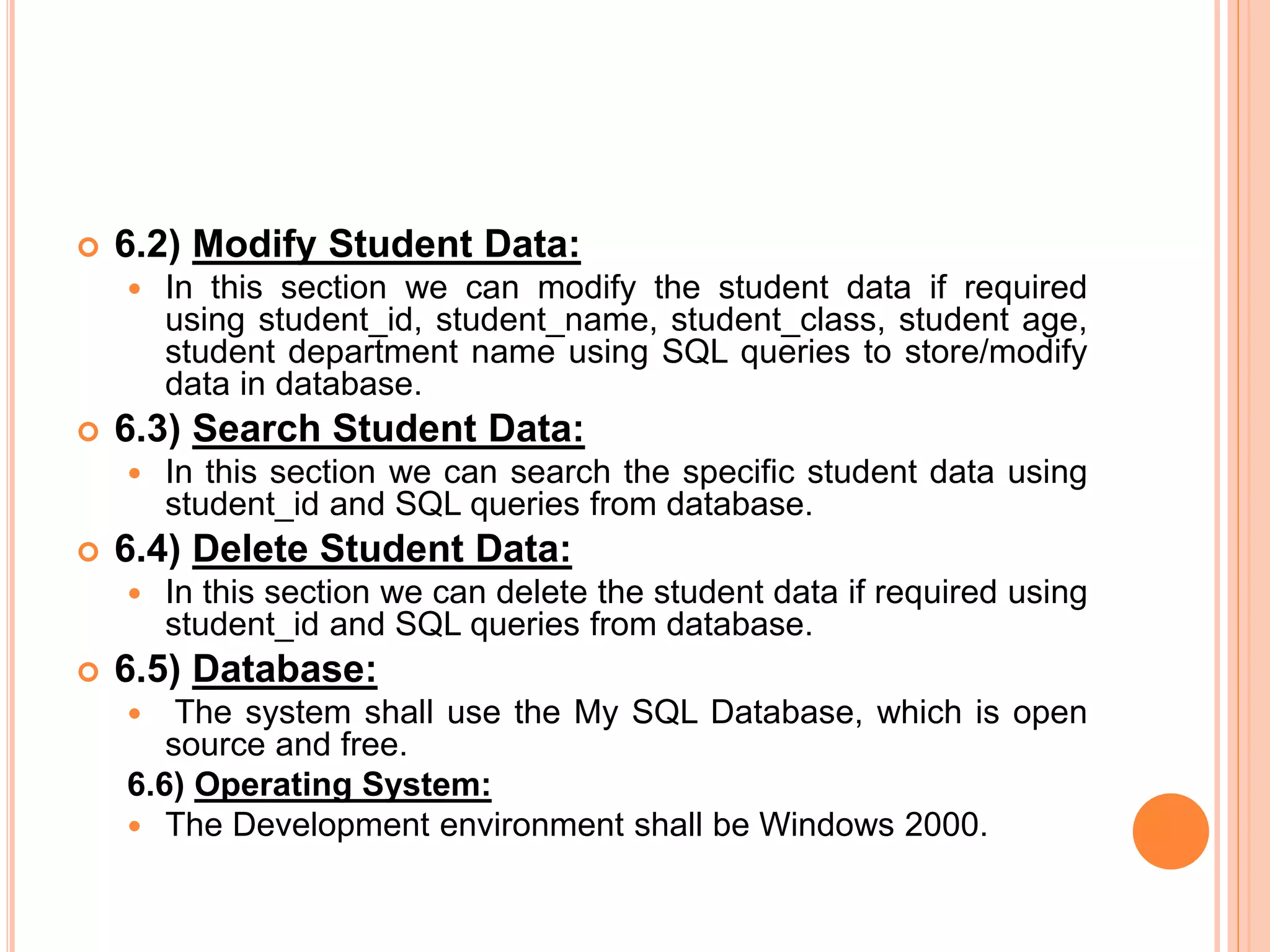
 6.2) Modify Student Data:
 In this section we can modify the student data if required
using student_id, student_name, student_class, student age,
student department name using SQL queries to store/modify
data in database.
 6.3) Search Student Data:
 In this section we can search the specific student data using
student_id and SQL queries from database.
 6.4) Delete Student Data:
 In this section we can delete the student data if required using
student_id and SQL queries from database.
 6.5) Database:
 The system shall use the My SQL Database, which is open
source and free.
6.6) Operating System:
 The Development environment shall be Windows 2000.
7) Non- Function Requirements:
 7.1) Security:
 We shall secure all the data.
 7.2) Cost:
 Cost will also be expected on this project.
 7.3)Time:
 We required time to develop this project.
8) SOFTWARE DEVELOPMENT
PROCESS MODEL:
 Software development process is use to built any
software it depends on user idea about software So we
can use Prototyping Model because our user or client
has no clear idea about their product so we can built
firstly temporary layout or design for user if user
satisfied our layout then we can discard this and built
actual project for our client.
9) ELICITATION
TECHNIQUES
 Requirements elicitation or elicitation technique is the
practice of collecting the requirements of a system from
users, customers and other stakeholders.
 9.1) Questionnaires:
 Through questionnaires we can collect information
about project from user. For this we can give
questionnaire Performa to the users and user fill out it
and return these to us so by using this questionnaire
Performa we can collect our requirements more easily.
 9.2) Observation:
 Through observation we can collect information about
project from user. For this we can observe user’s
manual system or environment and collect our
requirements.
 9.3) Stakeholders:
 In this project we have two types of stakeholders
working staff from user side and students from user
side. We can collect information from staff as well as
from students what they want or what their needs.
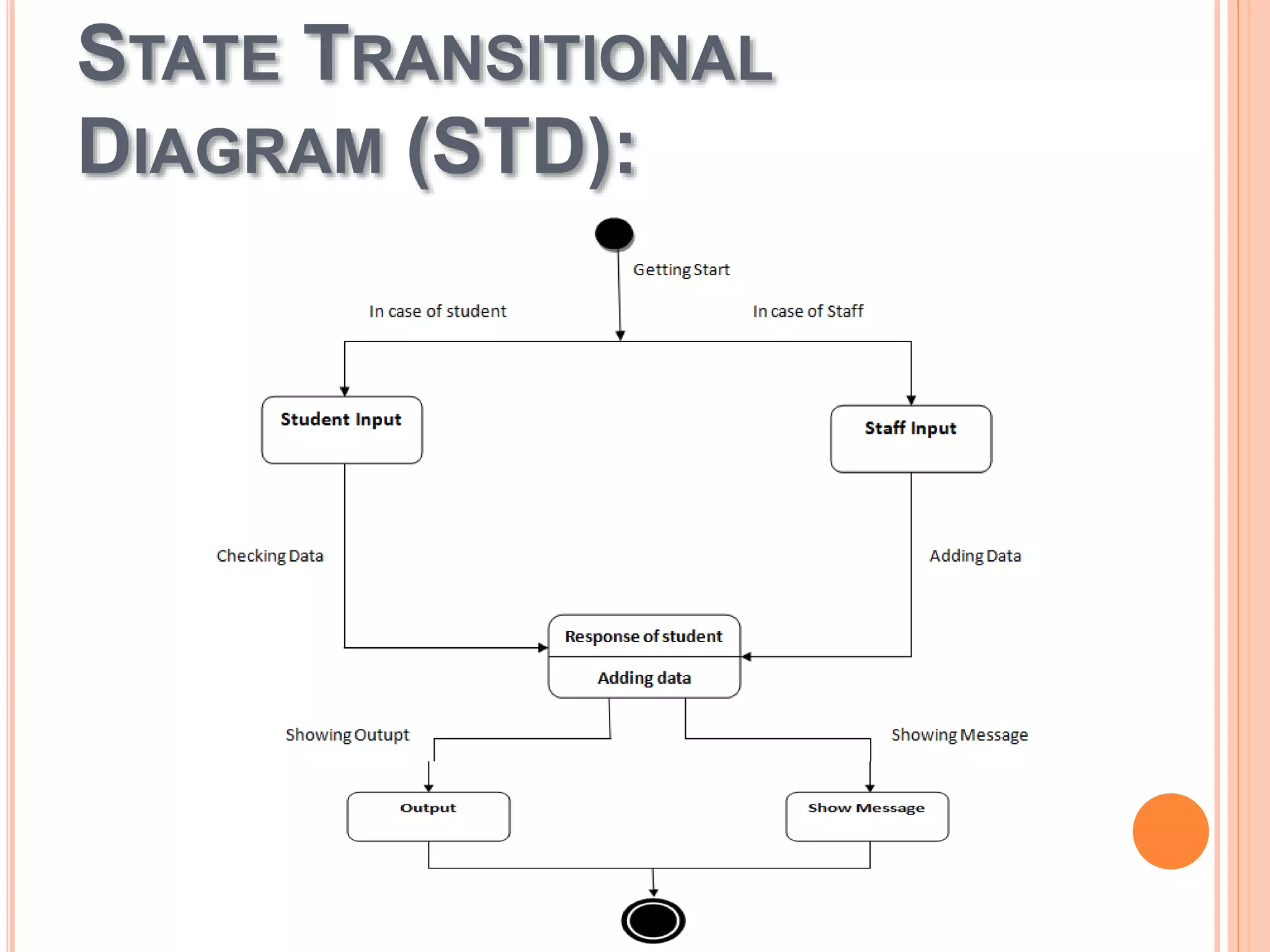
STATE TRANSITIONAL
DIAGRAM (STD):
DATA FLOW DIAGRAM (DFD):
LEVEL 0:
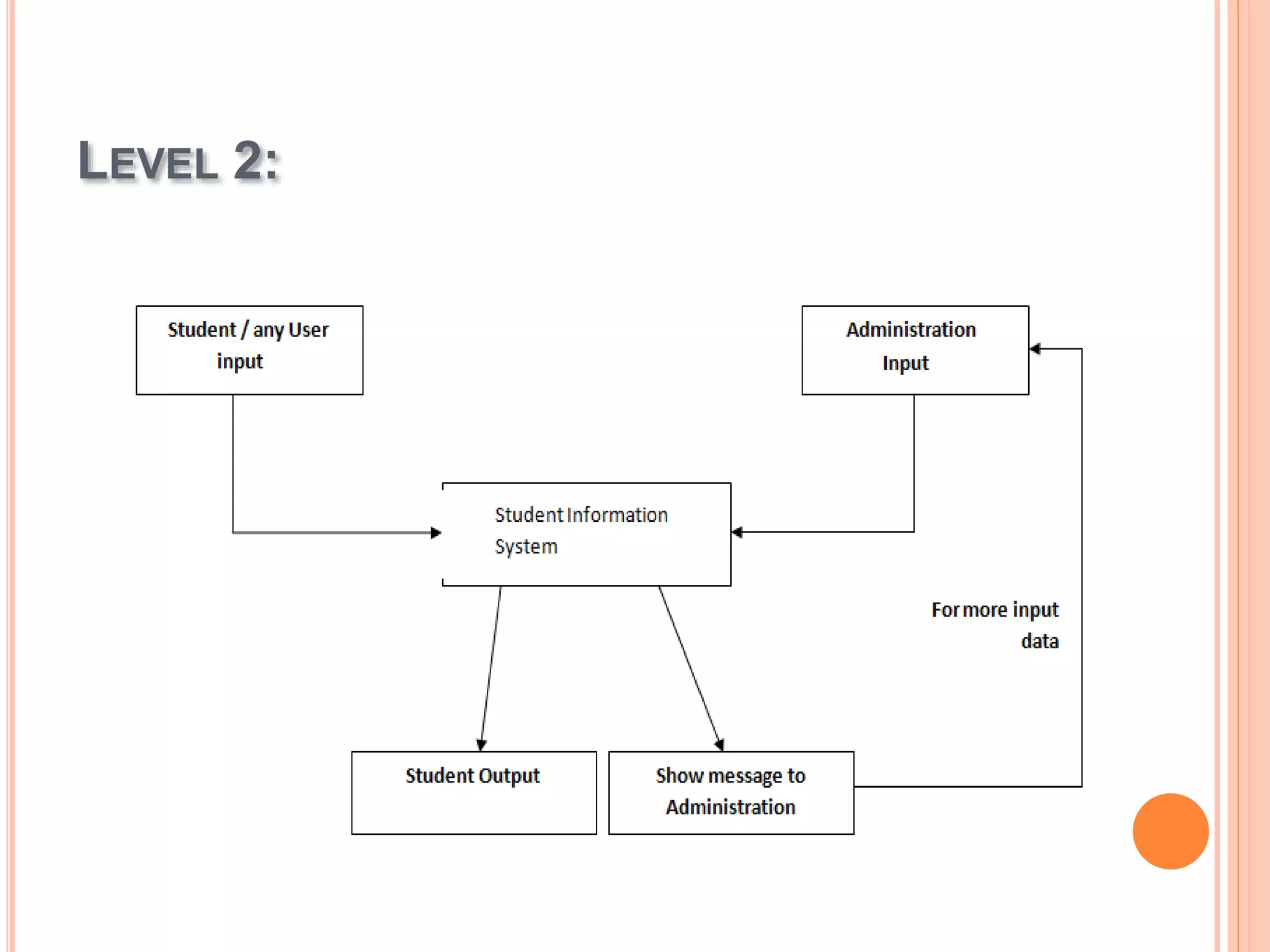
LEVEL 2:
ENTITY RELATIONSHIP DIAGRAM:
Work Breakdown
Structure
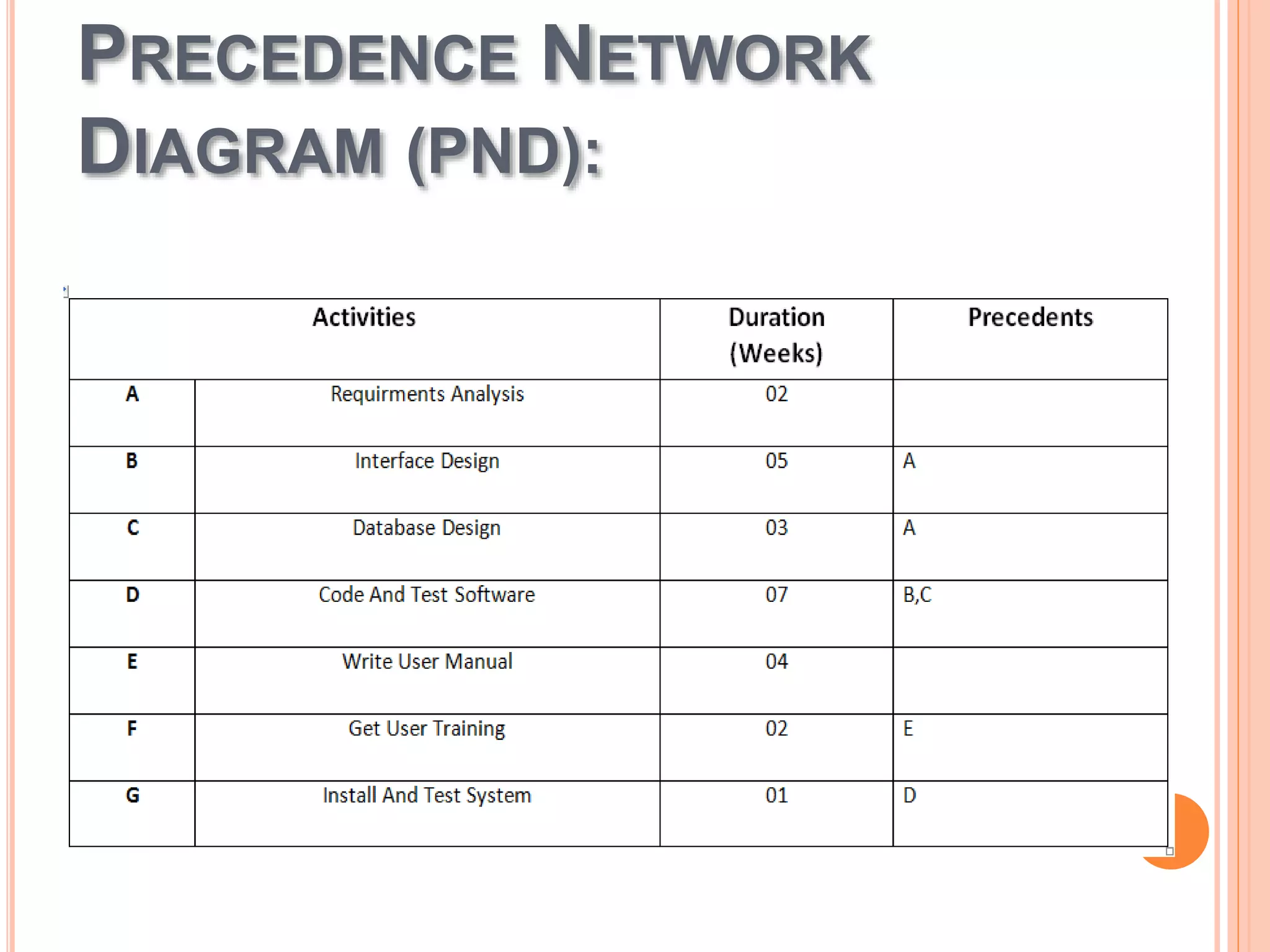
PRECEDENCE NETWORK
DIAGRAM (PND):
FORWARD AND BACKWARD PASS:
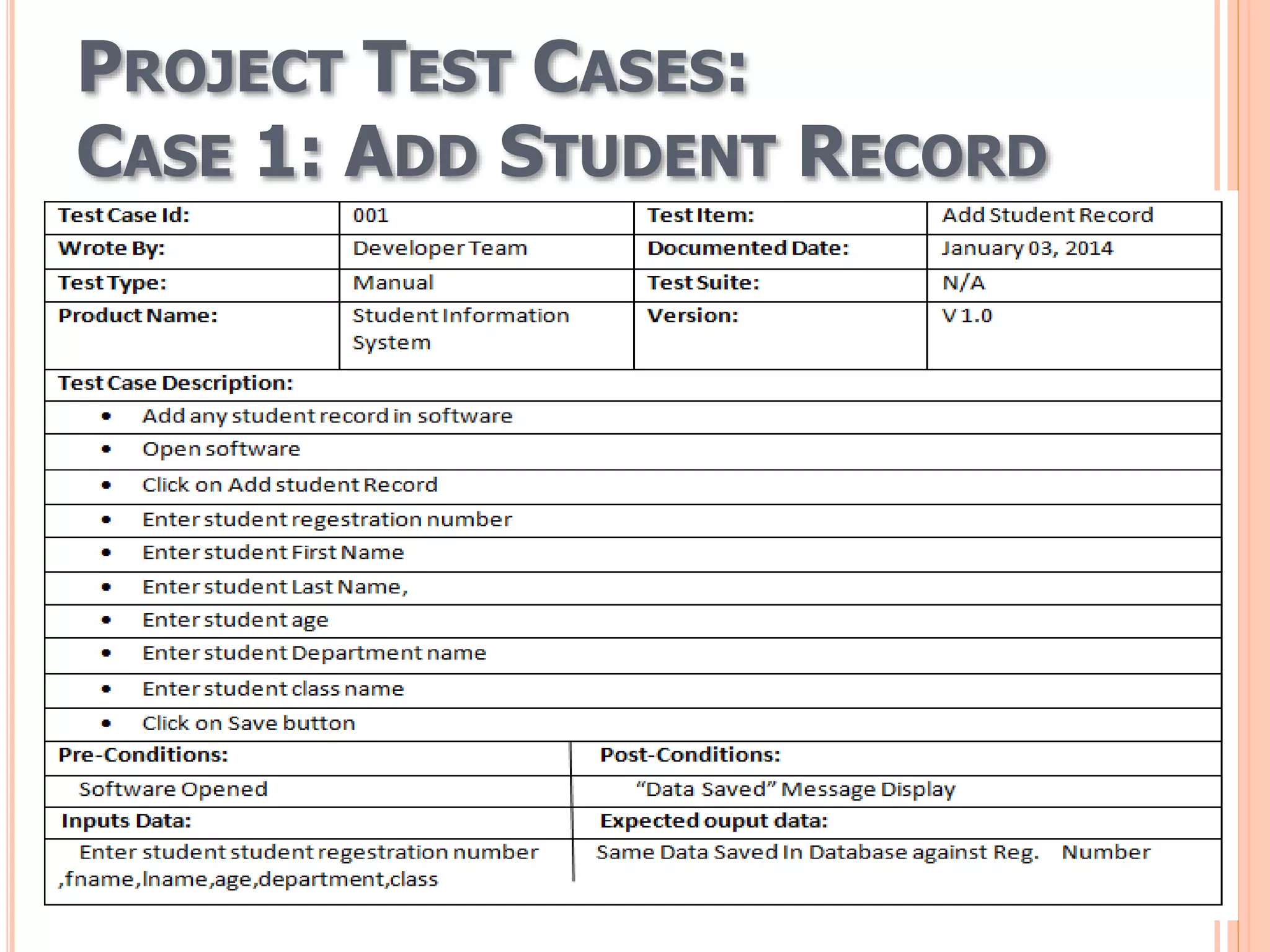
PROJECT TEST CASES:
CASE 1: ADD STUDENT RECORD
CASE 2: SEARCH STUDENT RECORD
CASE 3: DELETE STUDENT
RECORD
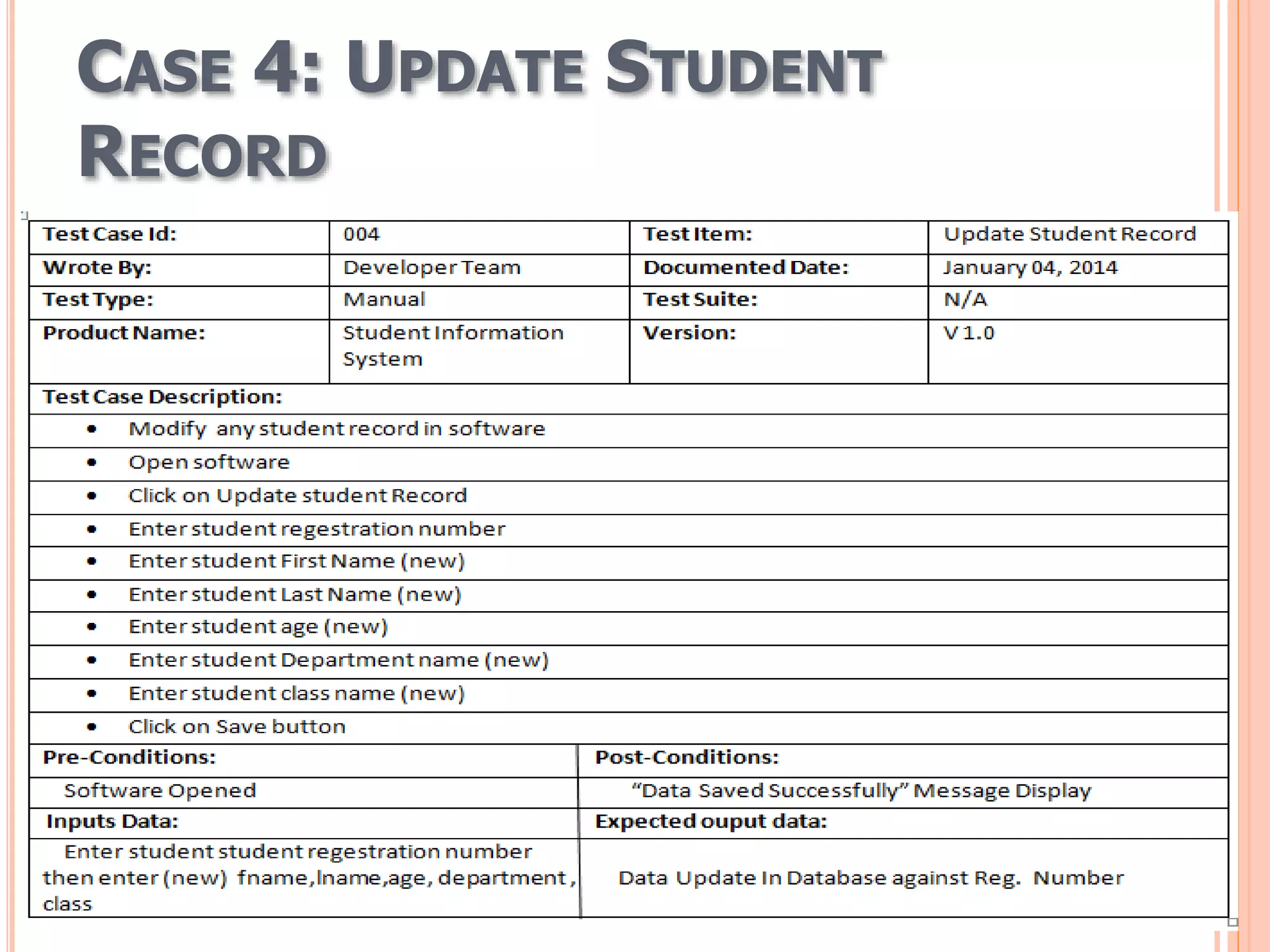
CASE 4: UPDATE STUDENT
RECORD
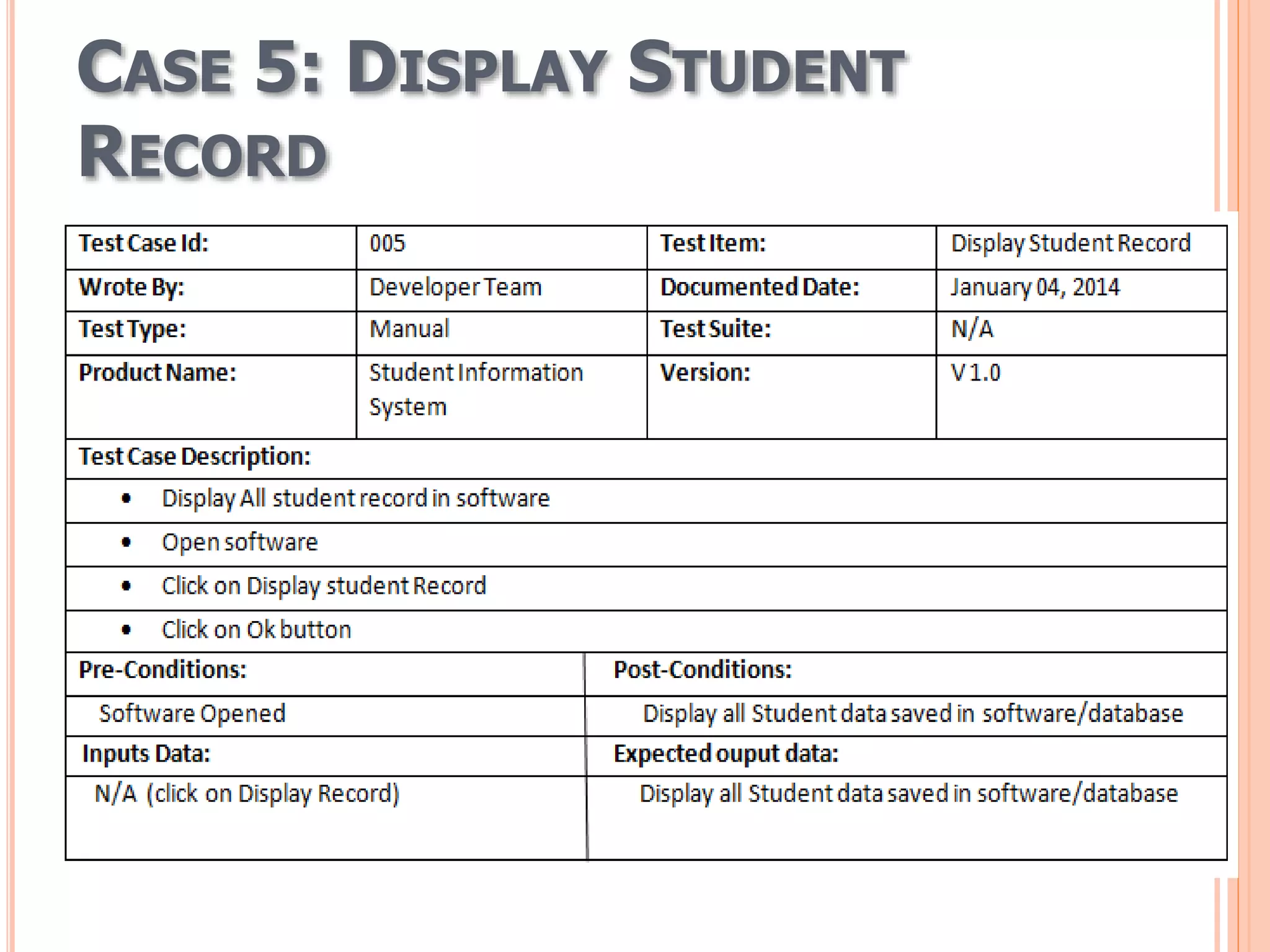
CASE 5: DISPLAY STUDENT
RECORD
BUG REPORT:

Student information system

  • 1.
    STUDENT INFORMATION SYSTEM SheikhMuzammil 12-Arid-2014 Muhammad Farhan 12-Arid-2005 M. Attiq 12-Arid-1949 BSCS- 3A (Evening)
  • 3.
    INTRODUCTION: PROBLEM STATEMENT:  Inmany institution this Is very difficult to maintain student data. Due to this reason this is very difficult to check information about any student. Solution:  Due to many reasons, we want to create a system which can handled student information so that these difficulties can be decrease. So we can called this system Student Information System.
  • 4.
    TASKS:  Student InformationSystem performs the following tasks:  Record Entry Section:  In this section the data of the student has been entered and saved.  Searching record Section:  In this section we can search any student data through their name or Roll number.  Display Section:  In this section we can display all students data at once glance.
  • 5.
     Modify Section: In this section we can modify the data of any student.  Delete Section:  In this section we can delete any student data.
  • 6.
    PROCESS MODEL:  ProblemStatement:  User/customer has no clear idea what they want or about their product.  Process Model: We can choose Prototyping Model for student information system because user/customer has no clear idea about their product so we use prototyping. In this model firstly we can develop a temporary model or use as customer requirements techniques if user accept it or satisfy then we can discard this model and create final model.
  • 7.
    SOFTWARE REQUIREMENTS SPECIFICATION (SRS): 1)Background:  A student information system (SIS) is a software application for education establishments to manage student data. The aim of the project is to implement a Student Information system suitable for a world class University, providing flexibility to adapt to new and changing requirements. 2) Objectives:  The student information system will meet the following objectives: • Integrate and support new learning and teaching opportunities and technologies for students.  Support open interfaces and integration with other campus applications and database systems
  • 8.
    3) Scope:  Thestudent information system performs the following:  To add the student data in database.  To search the student data from the database.  To modify the student data in database.  To delete the student data from database. 4) Used terms Definition:  MS SQL Microsoft Structured Query Language  GUI Graphical User Interface  Coding
  • 9.
    REQUIREMENTS  5) HardwareRequirement:  RAM 256 Mb or higher  Hard Disk (of any space)  Operating System  Window XP, Window vista,  Window 7 or any other 6) Functional Requirements:  6.1) Add Student Data:  In this section we add the student data like student name, class, fee status, and their registration number using student_id, student_name, student_class, student age, student department name using SQL queries to store data in database.
  • 10.
     6.2) ModifyStudent Data:  In this section we can modify the student data if required using student_id, student_name, student_class, student age, student department name using SQL queries to store/modify data in database.  6.3) Search Student Data:  In this section we can search the specific student data using student_id and SQL queries from database.  6.4) Delete Student Data:  In this section we can delete the student data if required using student_id and SQL queries from database.  6.5) Database:  The system shall use the My SQL Database, which is open source and free. 6.6) Operating System:  The Development environment shall be Windows 2000.
  • 11.
    7) Non- FunctionRequirements:  7.1) Security:  We shall secure all the data.  7.2) Cost:  Cost will also be expected on this project.  7.3)Time:  We required time to develop this project.
  • 12.
    8) SOFTWARE DEVELOPMENT PROCESSMODEL:  Software development process is use to built any software it depends on user idea about software So we can use Prototyping Model because our user or client has no clear idea about their product so we can built firstly temporary layout or design for user if user satisfied our layout then we can discard this and built actual project for our client.
  • 13.
    9) ELICITATION TECHNIQUES  Requirementselicitation or elicitation technique is the practice of collecting the requirements of a system from users, customers and other stakeholders.  9.1) Questionnaires:  Through questionnaires we can collect information about project from user. For this we can give questionnaire Performa to the users and user fill out it and return these to us so by using this questionnaire Performa we can collect our requirements more easily.
  • 14.
     9.2) Observation: Through observation we can collect information about project from user. For this we can observe user’s manual system or environment and collect our requirements.  9.3) Stakeholders:  In this project we have two types of stakeholders working staff from user side and students from user side. We can collect information from staff as well as from students what they want or what their needs.
  • 15.
  • 16.
    DATA FLOW DIAGRAM(DFD): LEVEL 0:
  • 17.
  • 18.
  • 19.
  • 21.
  • 23.
  • 24.
    PROJECT TEST CASES: CASE1: ADD STUDENT RECORD
  • 25.
    CASE 2: SEARCHSTUDENT RECORD
  • 26.
    CASE 3: DELETESTUDENT RECORD
  • 27.
    CASE 4: UPDATESTUDENT RECORD
  • 28.
    CASE 5: DISPLAYSTUDENT RECORD
  • 29.