PREVIEW OF
STRUCTURAL COLLAPSE
RESCUE
AWARENESS
BRAVE TRAINING SOLUTIONS
WWW.BRAVETRAINING.COM
Copyright 2019
R11 V1
CLASS OBJECTIVES
Student will become familiar with
Introduction to structural collapse response
Building systems & redundancy
Building types & characteristics
Causes of collapse
Collapse patterns
Collapse hazards
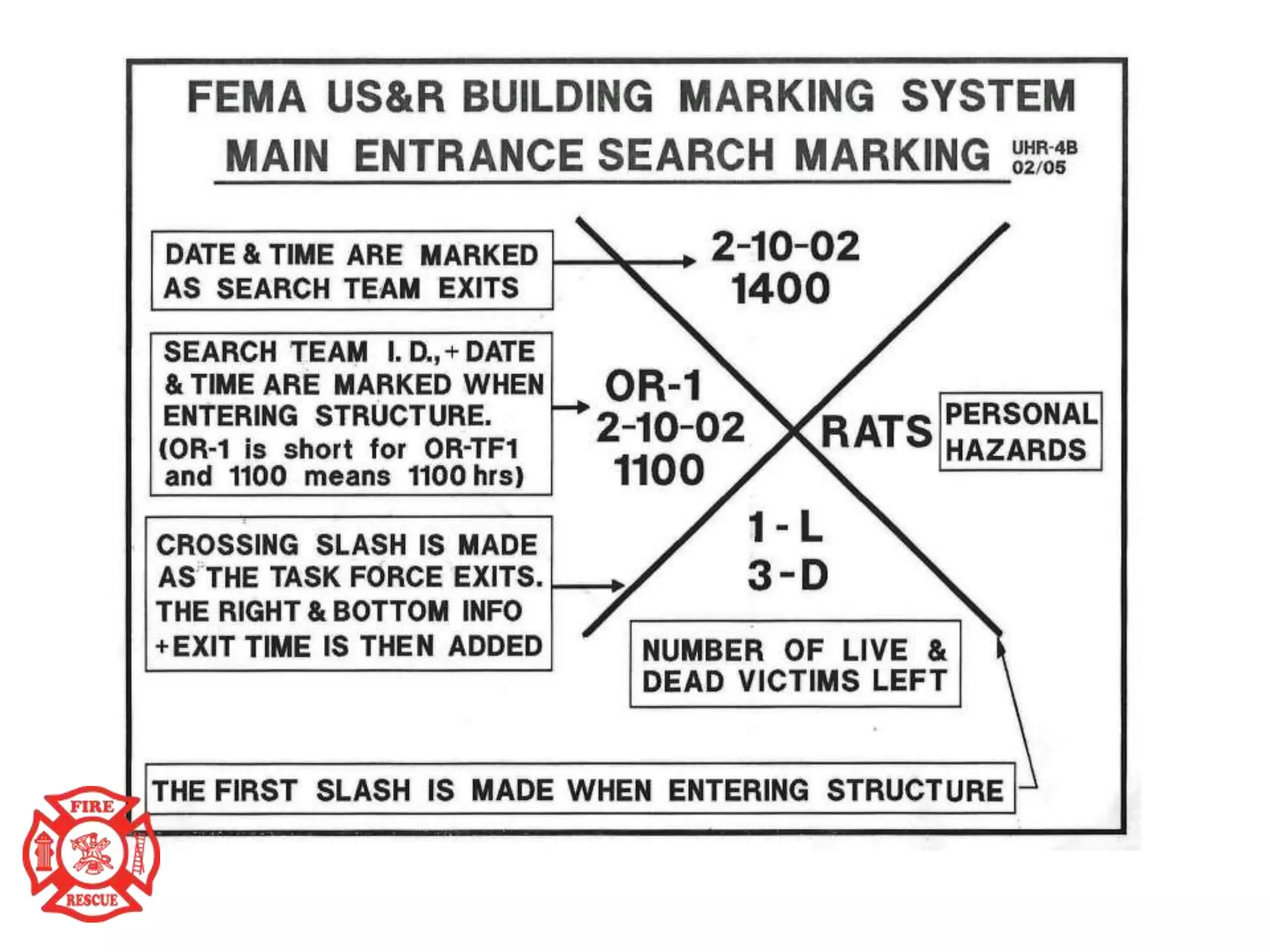
FEMA US&R Marking System
NFPA 1670
Standard on Operations & Training for Technical
Rescue Incidents
Includes Urban Search & Rescue
Operations
Identify & establish levels of operational
capability for safe & effective operations at
technical rescue incidents
NFPA 1670
The purpose is to specify minimum job
performance requirements for service as a
rescuer in an emergency response agency
NFPA 1670 LEVELS OF CAPABILITY
Awareness
Size-up, Site control, Scene management,
Hazard identification, Basic search &
removal of readily accessible victims
THEME OF US&R
To save trapped victims while minimizing the risk to
victim as well as the US&R Forces
Survival vs Time of Extrication
1 hour 95%
1 day 82%
2 days 37%
3 days 34%
4 days 19%
5 days 7%
With explosions times may be shorter
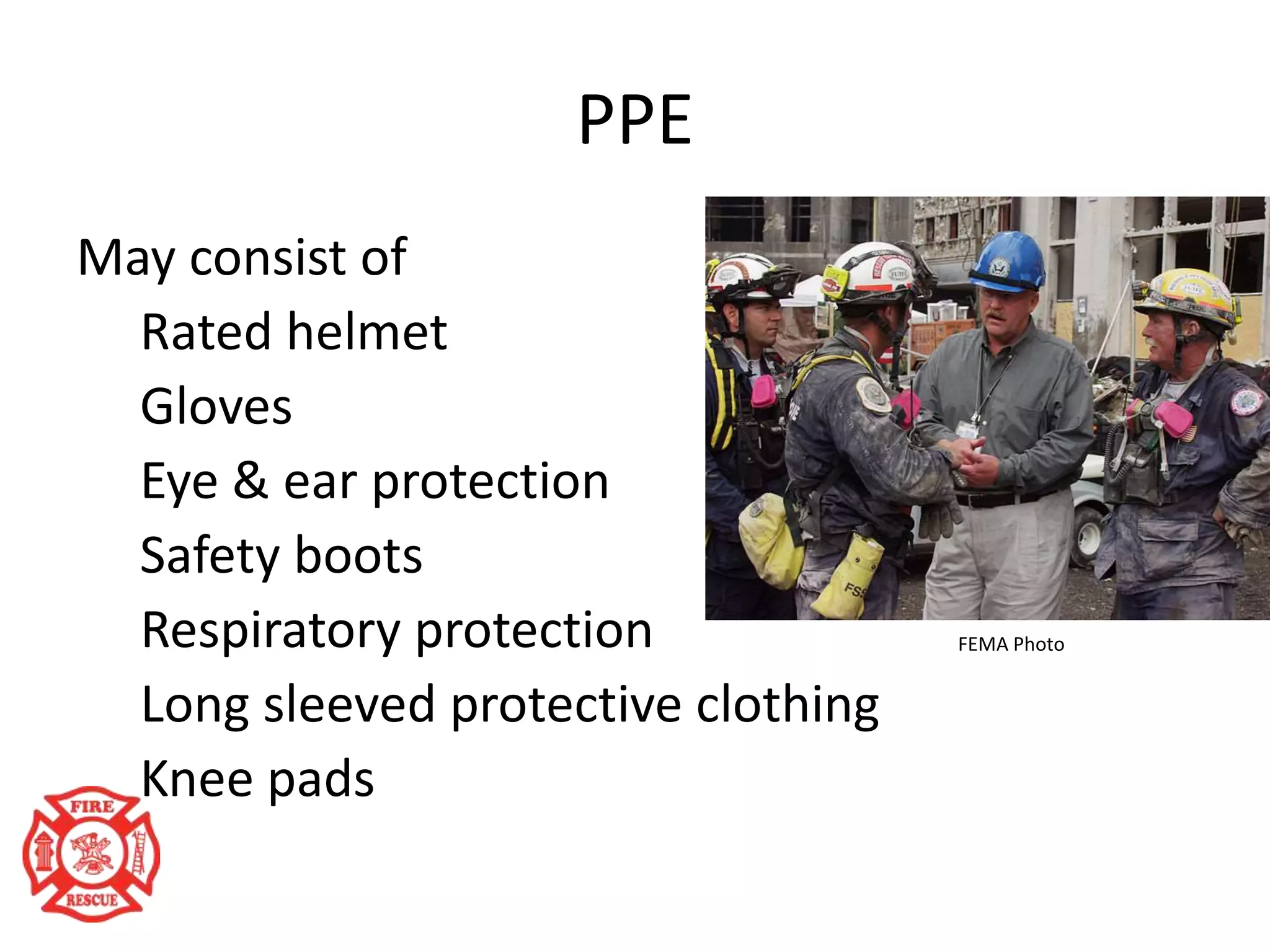
PPE
May consist of
Rated helmet
Gloves
Eye & ear protection
Safety boots
Respiratory protection
Long sleeved protective clothing
Knee pads
FEMA Photo
COLLAPSE WARNING SIGNS
Smoke or water coming through joints
Racked or twisting structure
Missing, damaged, or strained connection points
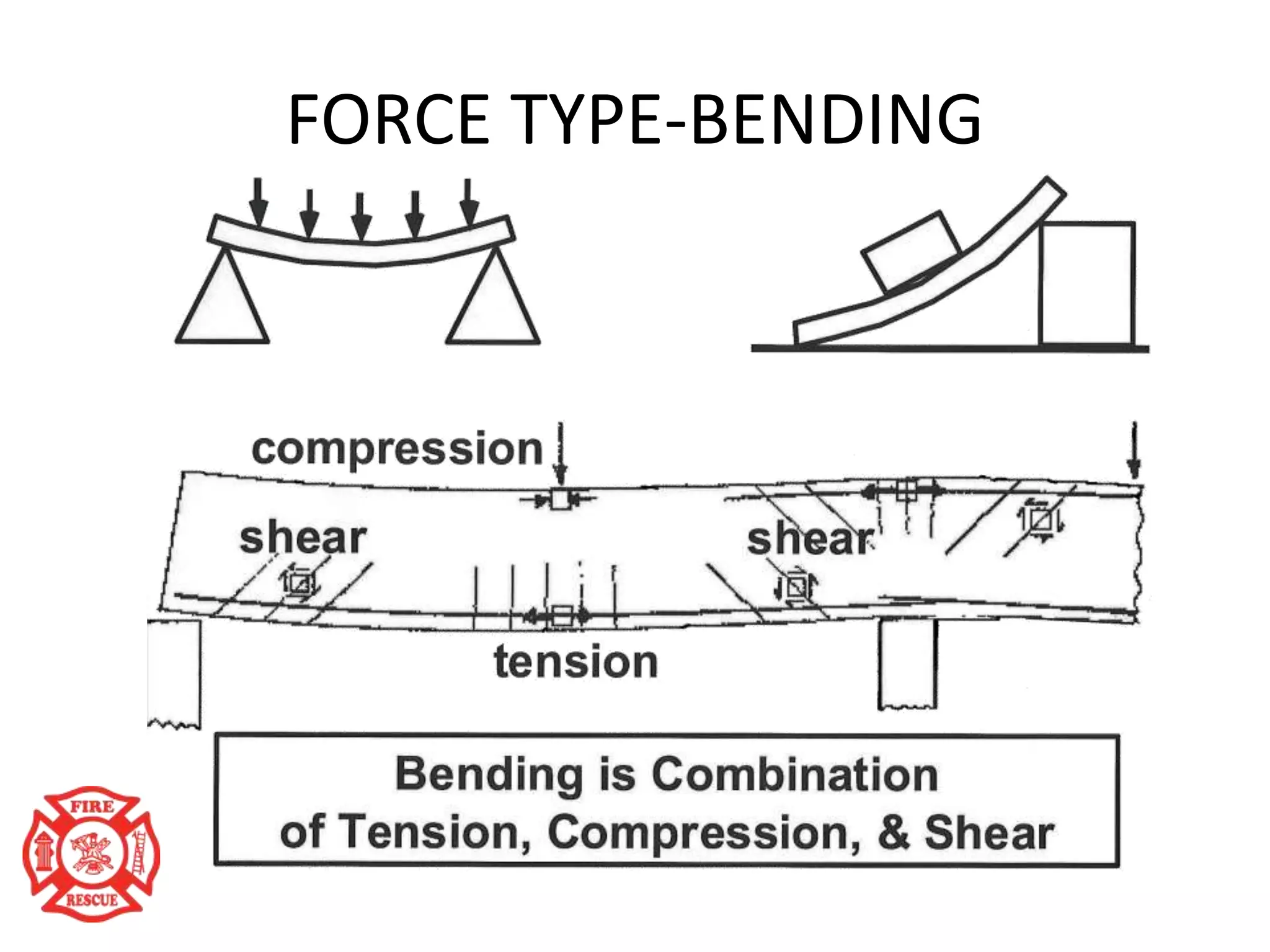
FORCE TYPE-BENDING
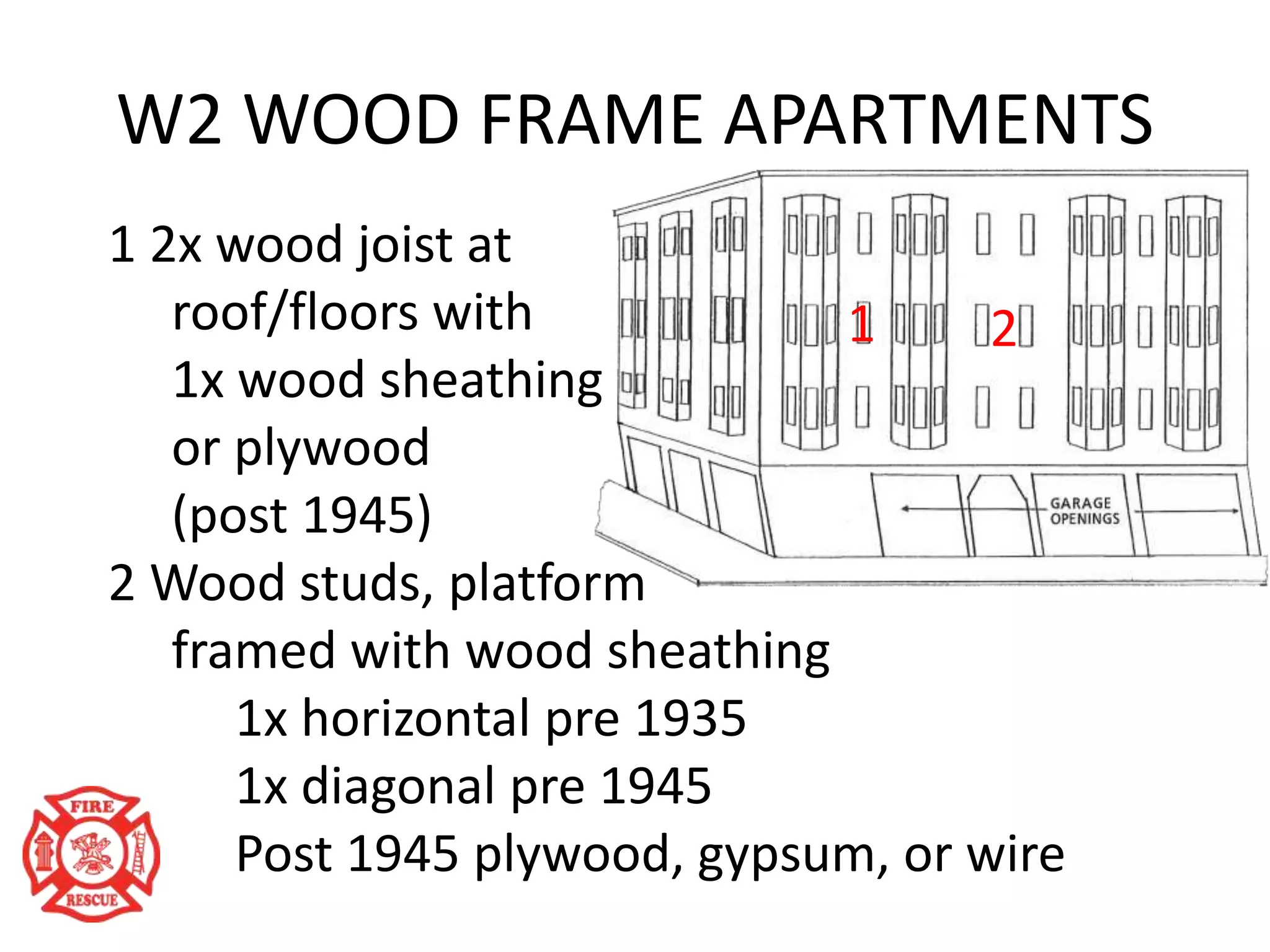
W2 WOOD FRAME APARTMENTS
1 2
1 2x wood joist at
roof/floors with
1x wood sheathing
or plywood
(post 1945)
2 Wood studs, platform
framed with wood sheathing
1x horizontal pre 1935
1x diagonal pre 1945
Post 1945 plywood, gypsum, or wire
URM TYPE CHARACTERISTICS
Typical occupancies
Residential, commercial, & industrial
Key performance aspects
Brittle with little capacity to resist
unanticipated loads
Numerous interior walls may prevent floor
collapse
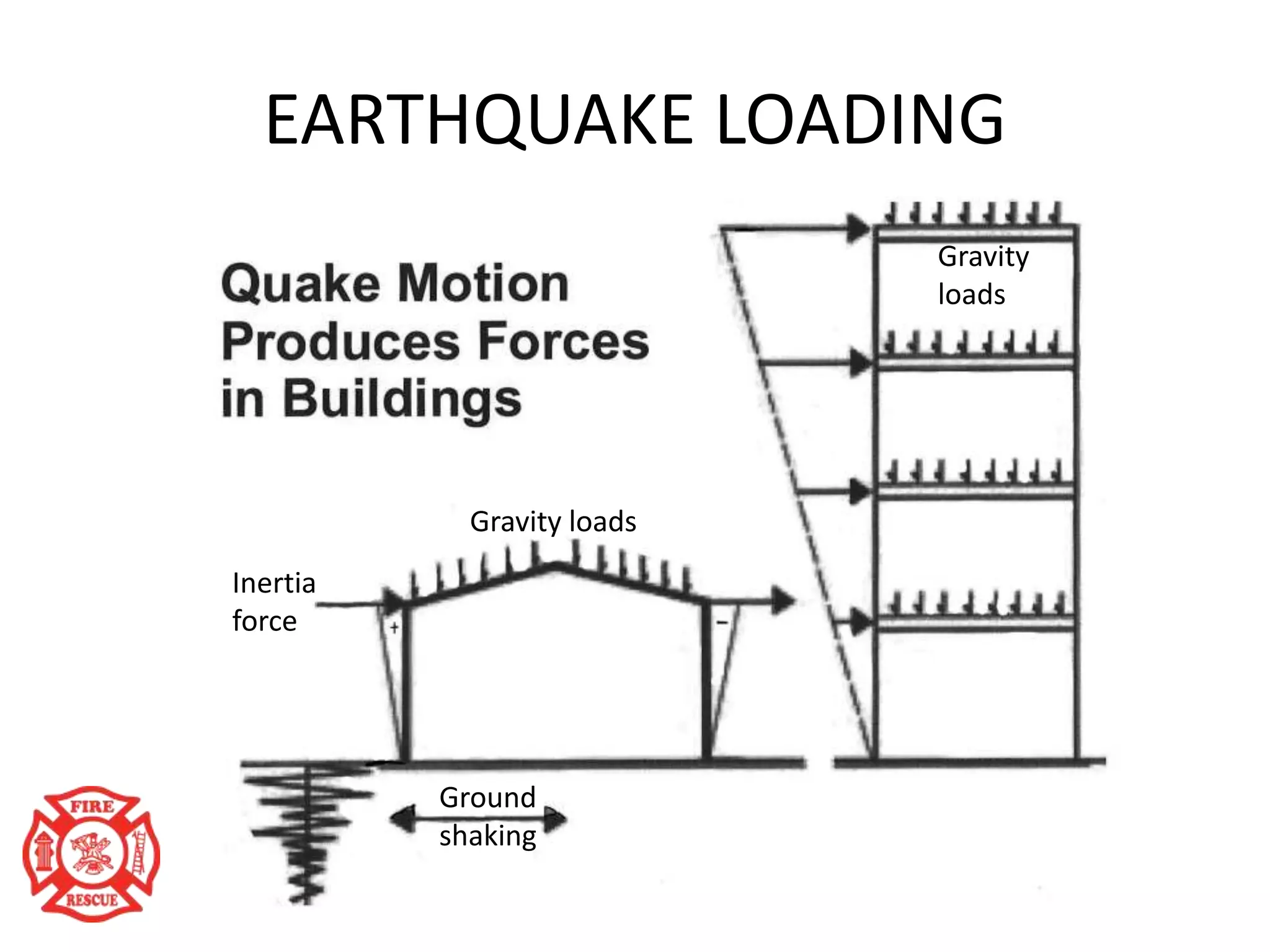
EARTHQUAKE LOADING
Gravity
loads
Gravity loads
Inertia
force
Ground
shaking
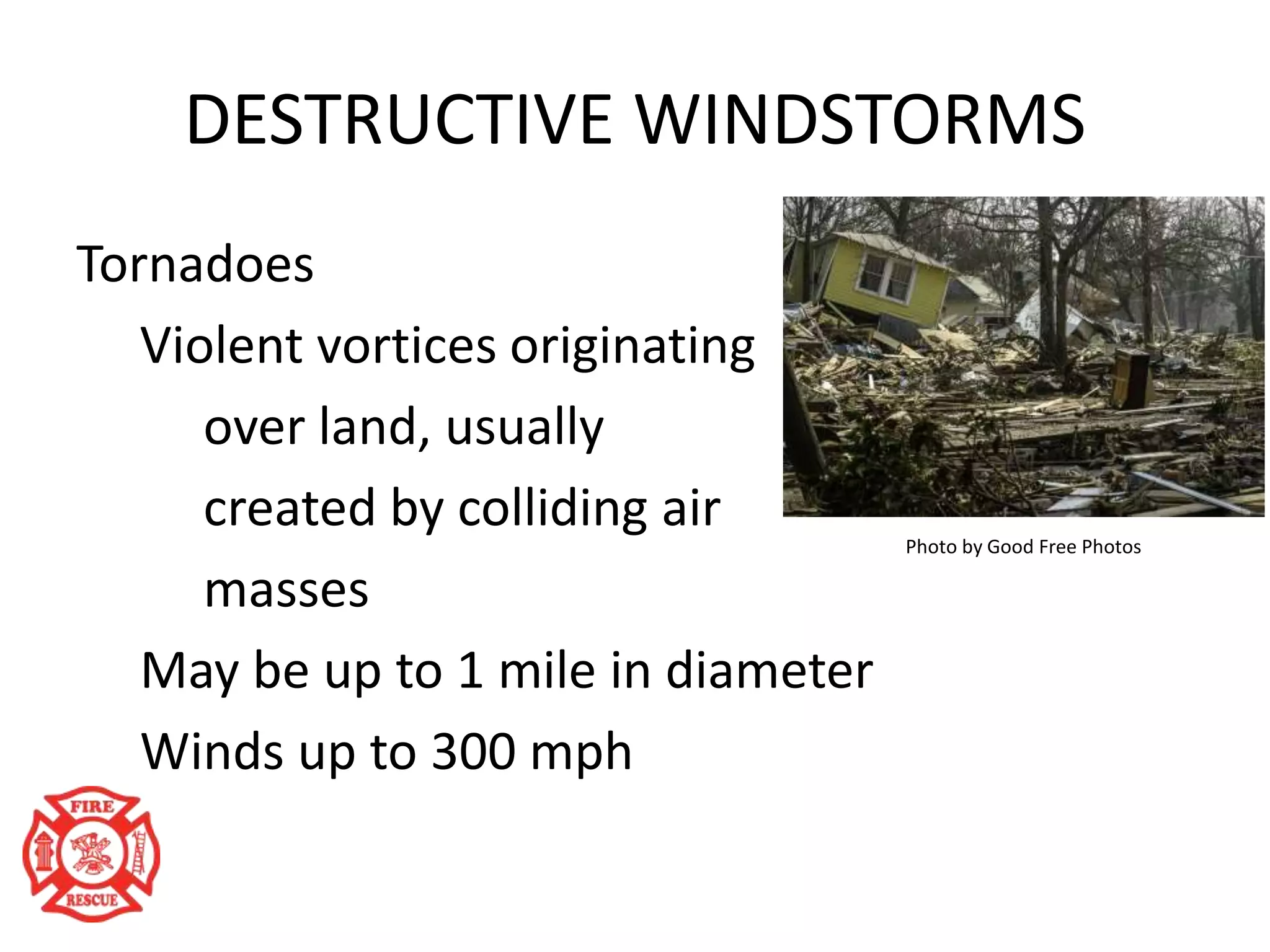
DESTRUCTIVE WINDSTORMS
Tornadoes
Violent vortices originating
over land, usually
created by colliding air
masses
May be up to 1 mile in diameter
Winds up to 300 mph
Photo by Good Free Photos
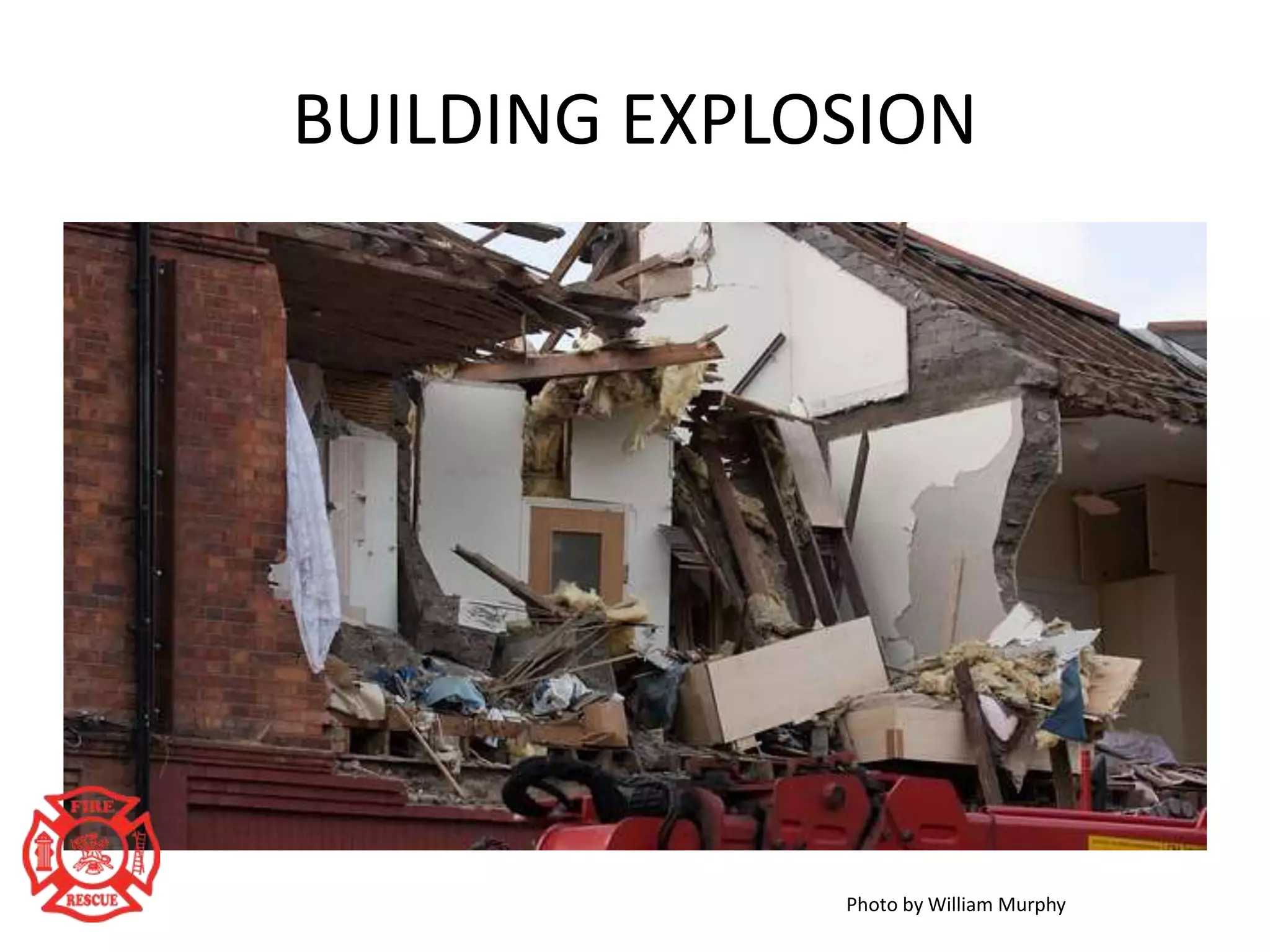
BUILDING EXPLOSION
Photo by William Murphy
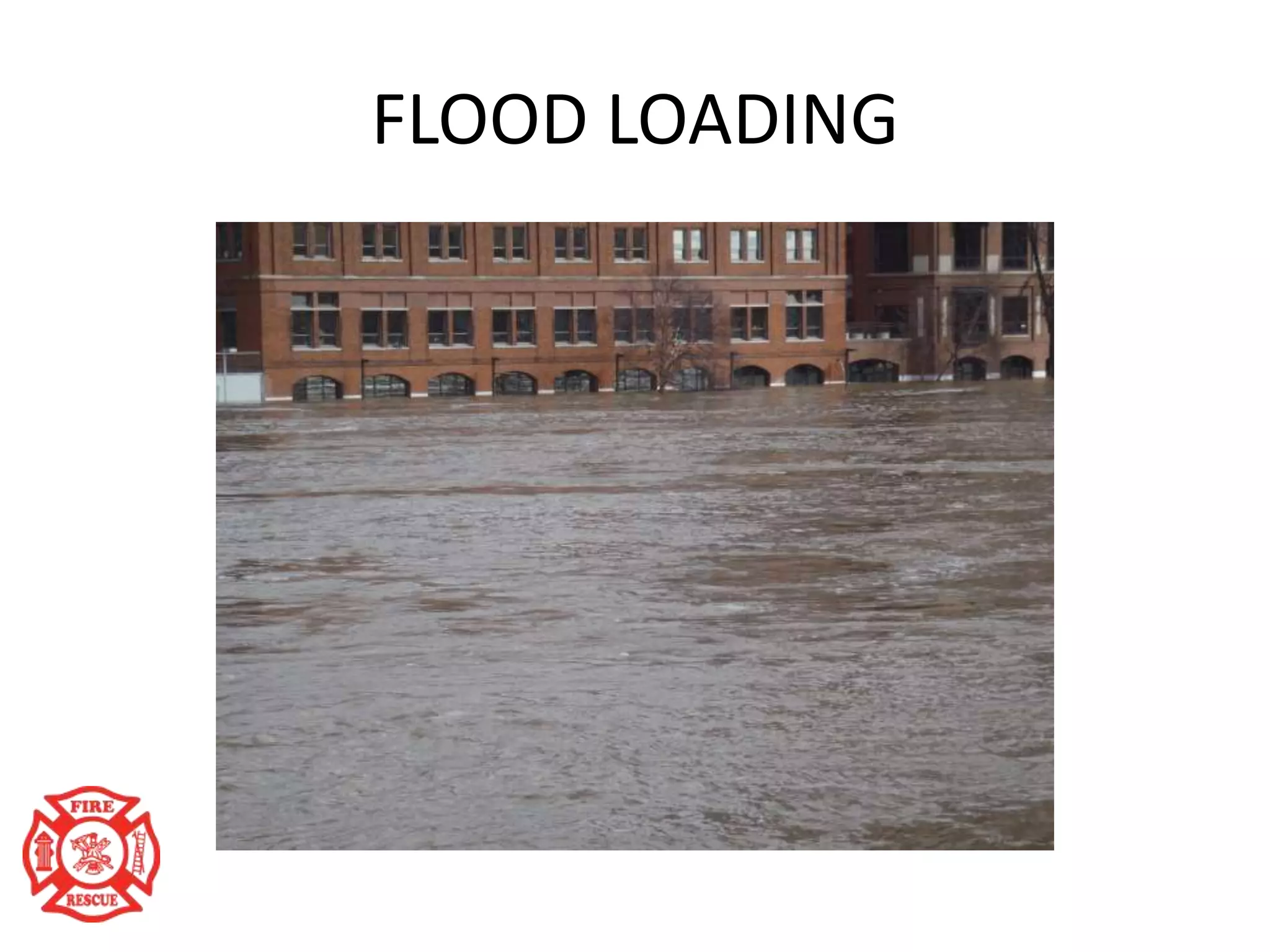
FLOOD LOADING
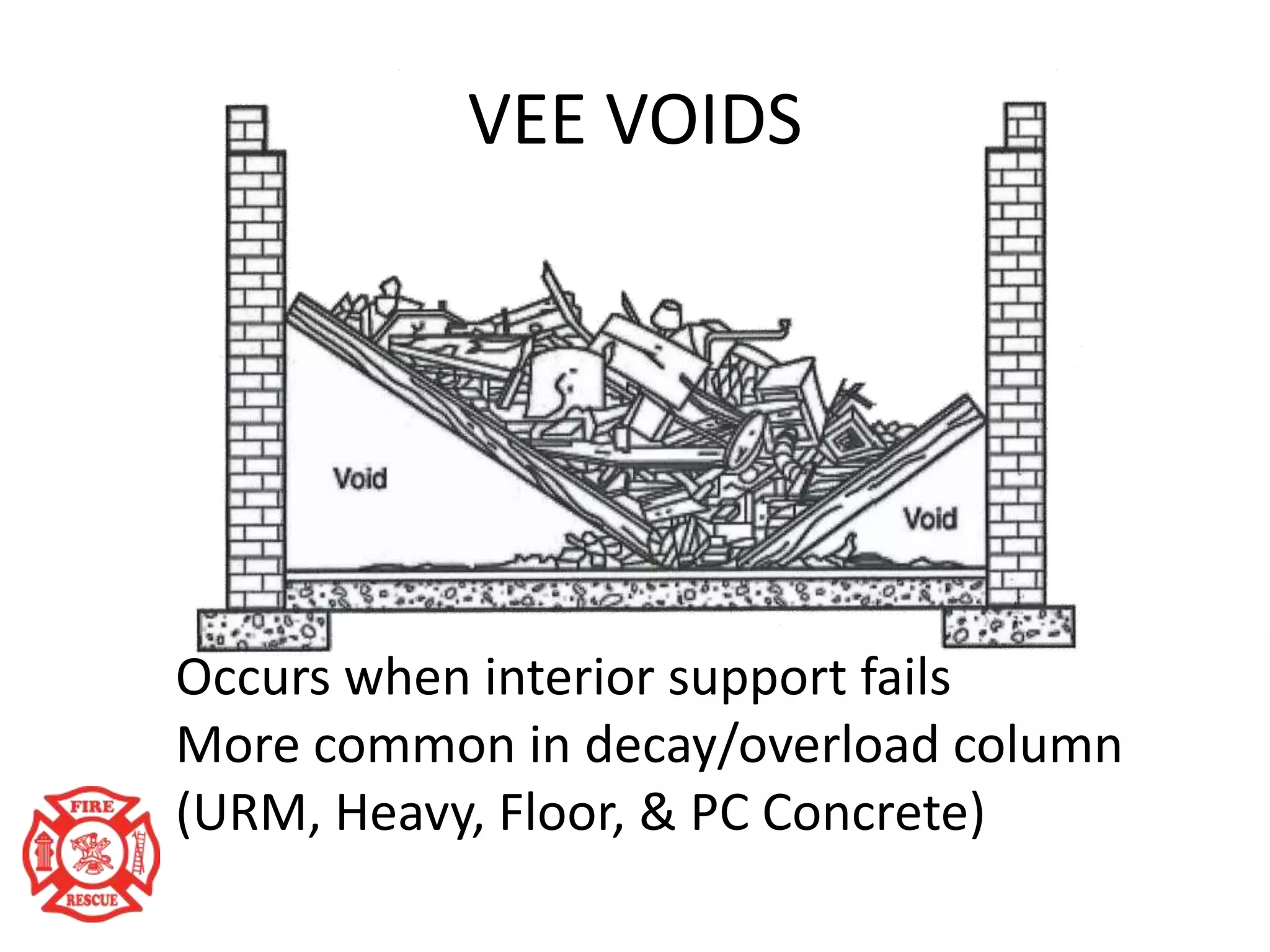
VEE VOIDS
Occurs when interior support fails
More common in decay/overload column
(URM, Heavy, Floor, & PC Concrete)
IDENTIFICATION PROBLEMS
Judgments can not be precise
Partially collapsed structures difficult
Collapsed structure has come to rest, but it is
now weaker & more disorganized than
original structure
Earthquake may have caused partial collapse,
but building remainder may be weakened &
ready to collapse in aftershock
Structures can collapse in aftershocks
KEY LEARNING POINTS
Cracks in reinforced concrete & URM create an
opportunity to monitor structures
Potential hazards have been summarized for
each of the five main types of buildings
Light frame, heavy wall, heavy floor,
precast concrete, & steel frame
Become familiar with these summaries in
the StS FOG
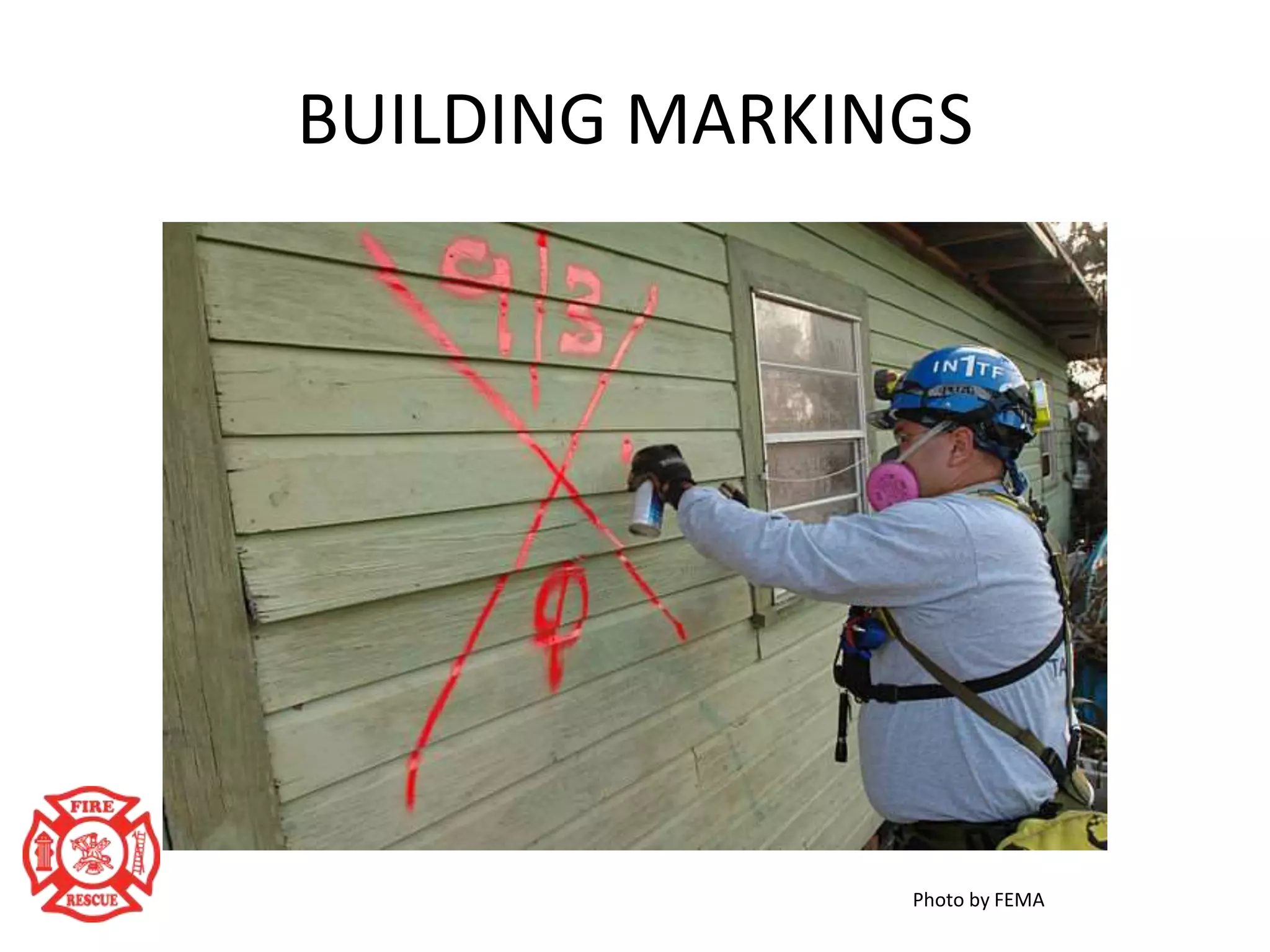
BUILDING MARKINGS
Photo by FEMA
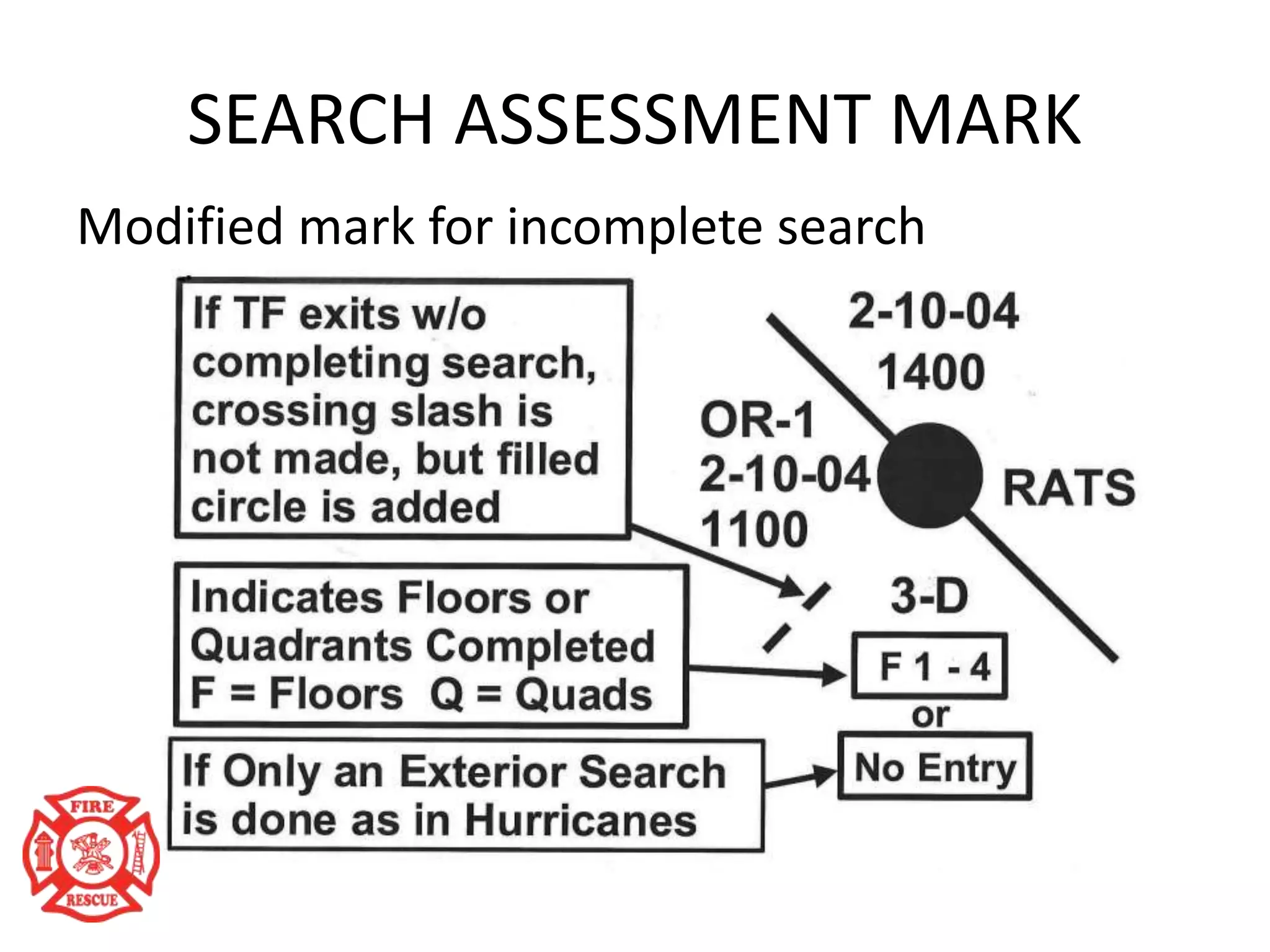
SEARCH ASSESSMENT MARK
Modified mark for incomplete search
FOR FURTHER INFORMATION
GO TO LINK BELOW
STRUCTURAL COLLAPSE
AWARENESS

STRUCTURAL COLLAPSE AWARENESS FEMA COMPLIANT

  • 1.
    PREVIEW OF STRUCTURAL COLLAPSE RESCUE AWARENESS BRAVETRAINING SOLUTIONS WWW.BRAVETRAINING.COM Copyright 2019 R11 V1
  • 2.
    CLASS OBJECTIVES Student willbecome familiar with Introduction to structural collapse response Building systems & redundancy Building types & characteristics Causes of collapse Collapse patterns Collapse hazards FEMA US&R Marking System
  • 3.
    NFPA 1670 Standard onOperations & Training for Technical Rescue Incidents Includes Urban Search & Rescue Operations Identify & establish levels of operational capability for safe & effective operations at technical rescue incidents
  • 4.
    NFPA 1670 The purposeis to specify minimum job performance requirements for service as a rescuer in an emergency response agency
  • 5.
    NFPA 1670 LEVELSOF CAPABILITY Awareness Size-up, Site control, Scene management, Hazard identification, Basic search & removal of readily accessible victims
  • 6.
    THEME OF US&R Tosave trapped victims while minimizing the risk to victim as well as the US&R Forces Survival vs Time of Extrication 1 hour 95% 1 day 82% 2 days 37% 3 days 34% 4 days 19% 5 days 7% With explosions times may be shorter
  • 7.
    PPE May consist of Ratedhelmet Gloves Eye & ear protection Safety boots Respiratory protection Long sleeved protective clothing Knee pads FEMA Photo
  • 8.
    COLLAPSE WARNING SIGNS Smokeor water coming through joints Racked or twisting structure Missing, damaged, or strained connection points
  • 9.
  • 10.
    W2 WOOD FRAMEAPARTMENTS 1 2 1 2x wood joist at roof/floors with 1x wood sheathing or plywood (post 1945) 2 Wood studs, platform framed with wood sheathing 1x horizontal pre 1935 1x diagonal pre 1945 Post 1945 plywood, gypsum, or wire
  • 11.
    URM TYPE CHARACTERISTICS Typicaloccupancies Residential, commercial, & industrial Key performance aspects Brittle with little capacity to resist unanticipated loads Numerous interior walls may prevent floor collapse
  • 12.
  • 13.
    DESTRUCTIVE WINDSTORMS Tornadoes Violent vorticesoriginating over land, usually created by colliding air masses May be up to 1 mile in diameter Winds up to 300 mph Photo by Good Free Photos
  • 14.
  • 15.
  • 16.
    VEE VOIDS Occurs wheninterior support fails More common in decay/overload column (URM, Heavy, Floor, & PC Concrete)
  • 17.
    IDENTIFICATION PROBLEMS Judgments cannot be precise Partially collapsed structures difficult Collapsed structure has come to rest, but it is now weaker & more disorganized than original structure Earthquake may have caused partial collapse, but building remainder may be weakened & ready to collapse in aftershock Structures can collapse in aftershocks
  • 18.
    KEY LEARNING POINTS Cracksin reinforced concrete & URM create an opportunity to monitor structures Potential hazards have been summarized for each of the five main types of buildings Light frame, heavy wall, heavy floor, precast concrete, & steel frame Become familiar with these summaries in the StS FOG
  • 19.
  • 21.
    SEARCH ASSESSMENT MARK Modifiedmark for incomplete search
  • 22.
    FOR FURTHER INFORMATION GOTO LINK BELOW STRUCTURAL COLLAPSE AWARENESS

Editor's Notes