
Technological Environment
Strategic importance of technology The key relationship to consider is that between  technology and strategic success Technology may not be a source of competitive advantage – if competitors exploit it too Rapid technological change can challenge all competitors in a market
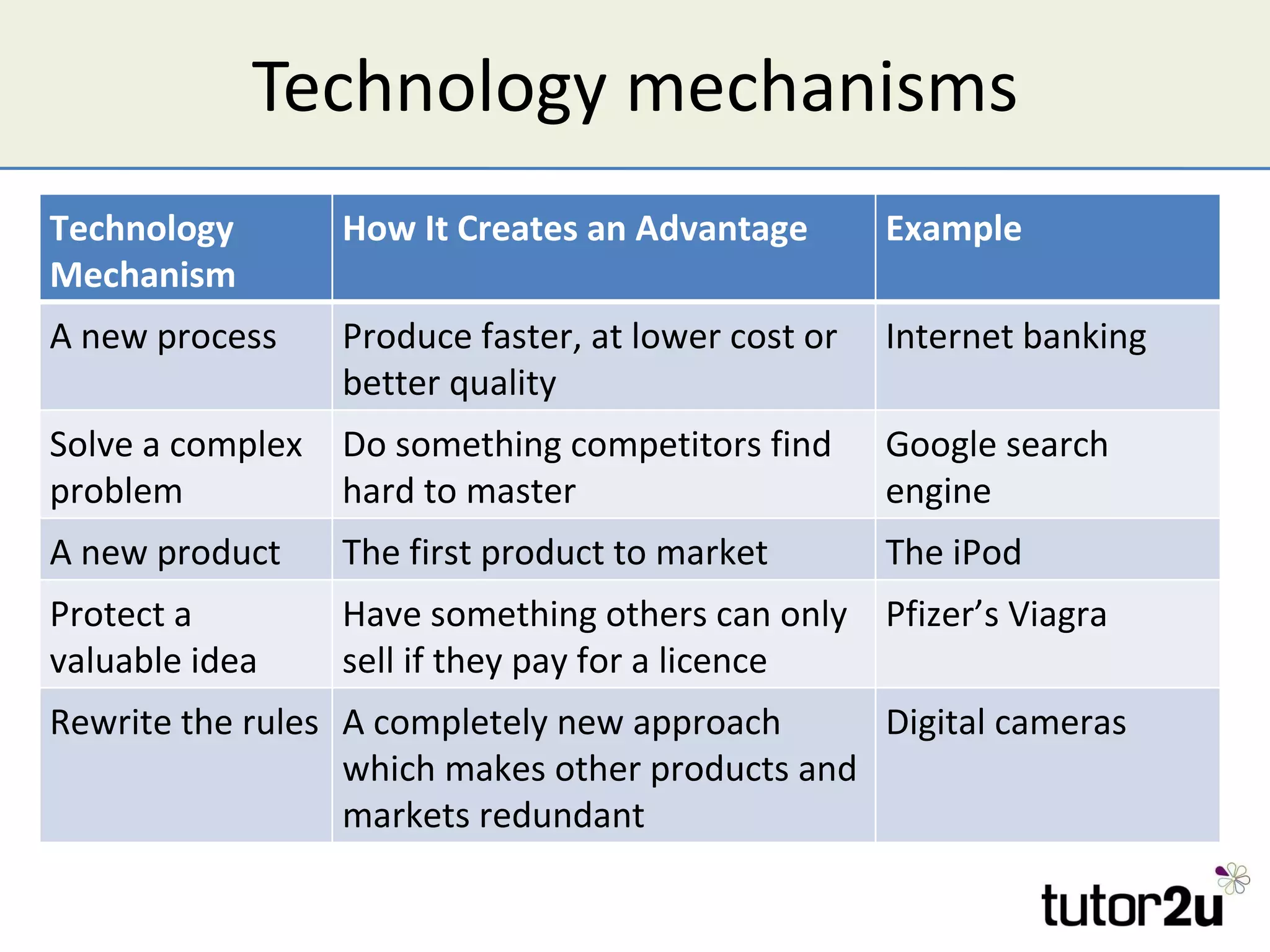
Technology mechanisms Technology Mechanism How It Creates an Advantage Example A new process Produce faster, at lower cost or better quality Internet banking Solve a complex problem Do something competitors find hard to master Google search engine A new product The first product to market The iPod Protect a valuable idea Have something others can only sell if they pay for a licence Pfizer’s Viagra Rewrite the rules A completely new approach which makes other products and markets redundant Digital cameras
Technology and Porters Five Forces (1) Technology can have a significant effect on the five forces
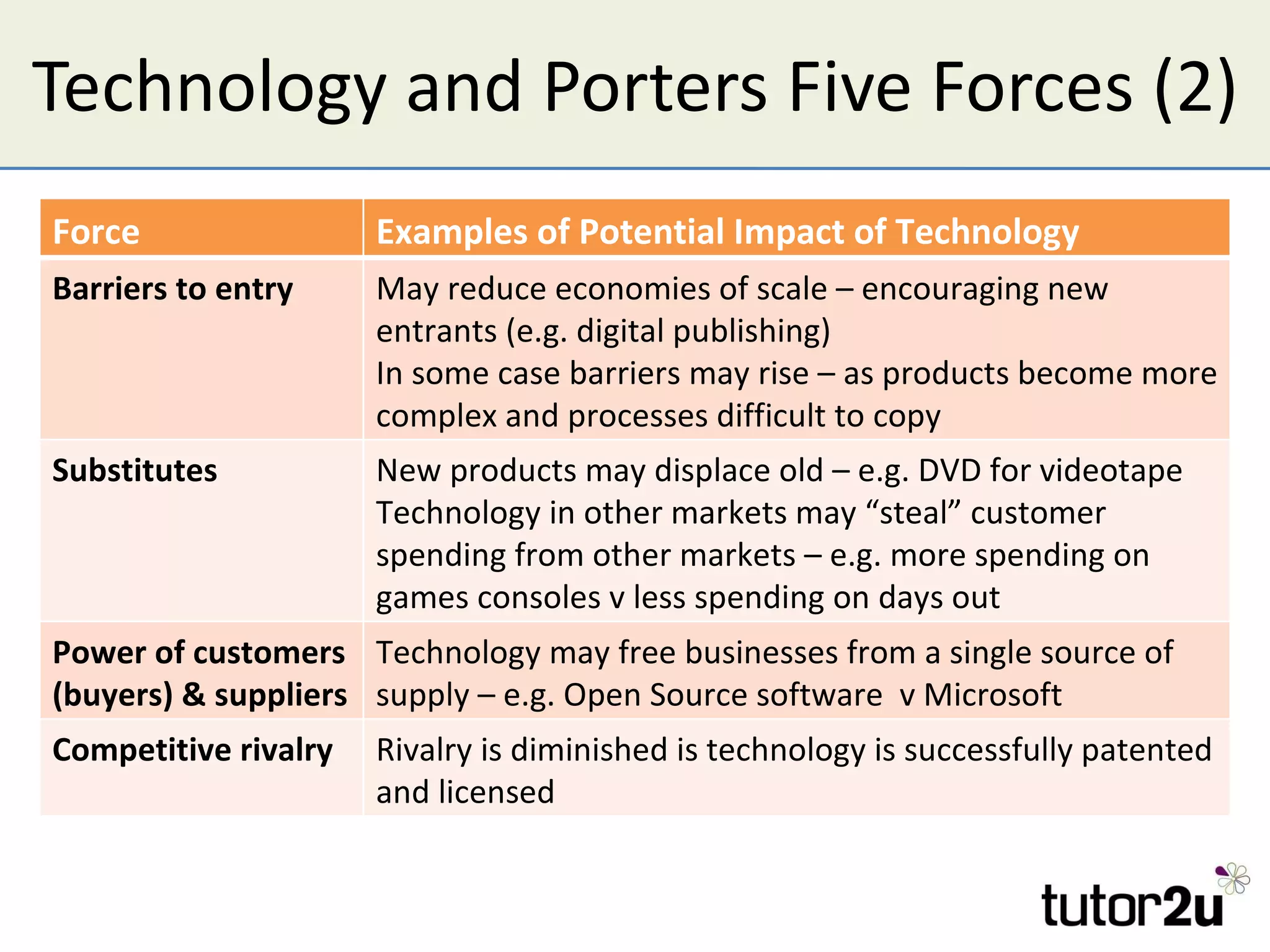
Technology and Porters Five Forces (2) Force Examples of Potential Impact of Technology Barriers to entry May reduce economies of scale – encouraging new entrants (e.g. digital publishing) In some case barriers may rise – as products become more complex and processes difficult to copy Substitutes New products may displace old – e.g. DVD for videotape Technology in other markets may “steal” customer spending from other markets – e.g. more spending on games consoles v less spending on days out Power of customers (buyers) & suppliers Technology may free businesses from a single source of supply – e.g. Open Source software  v Microsoft Competitive rivalry Rivalry is diminished is technology is successfully patented and licensed
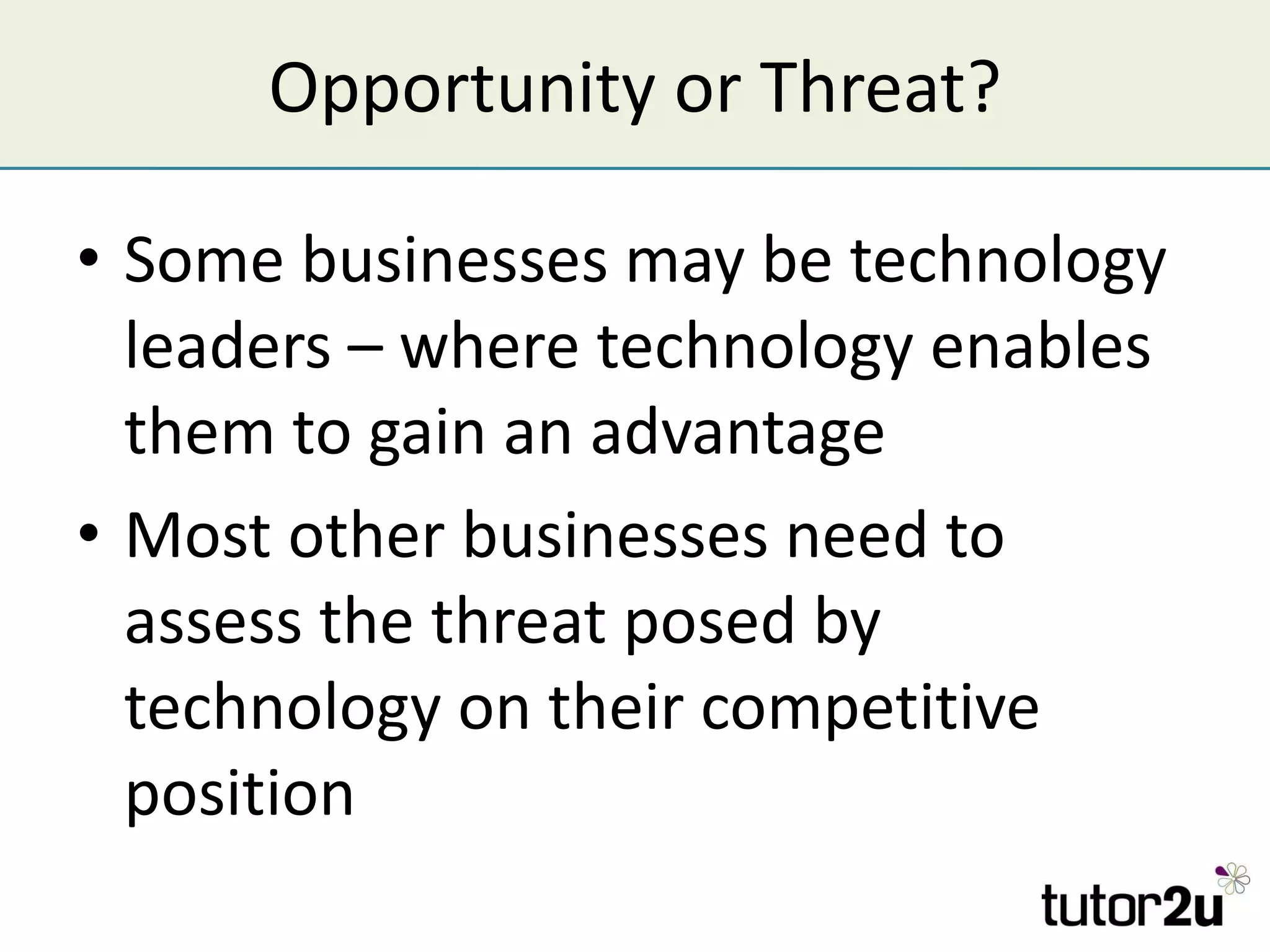
Opportunity or Threat? Some businesses may be technology leaders – where technology enables them to gain an advantage Most other businesses need to assess the threat posed by technology on their competitive position
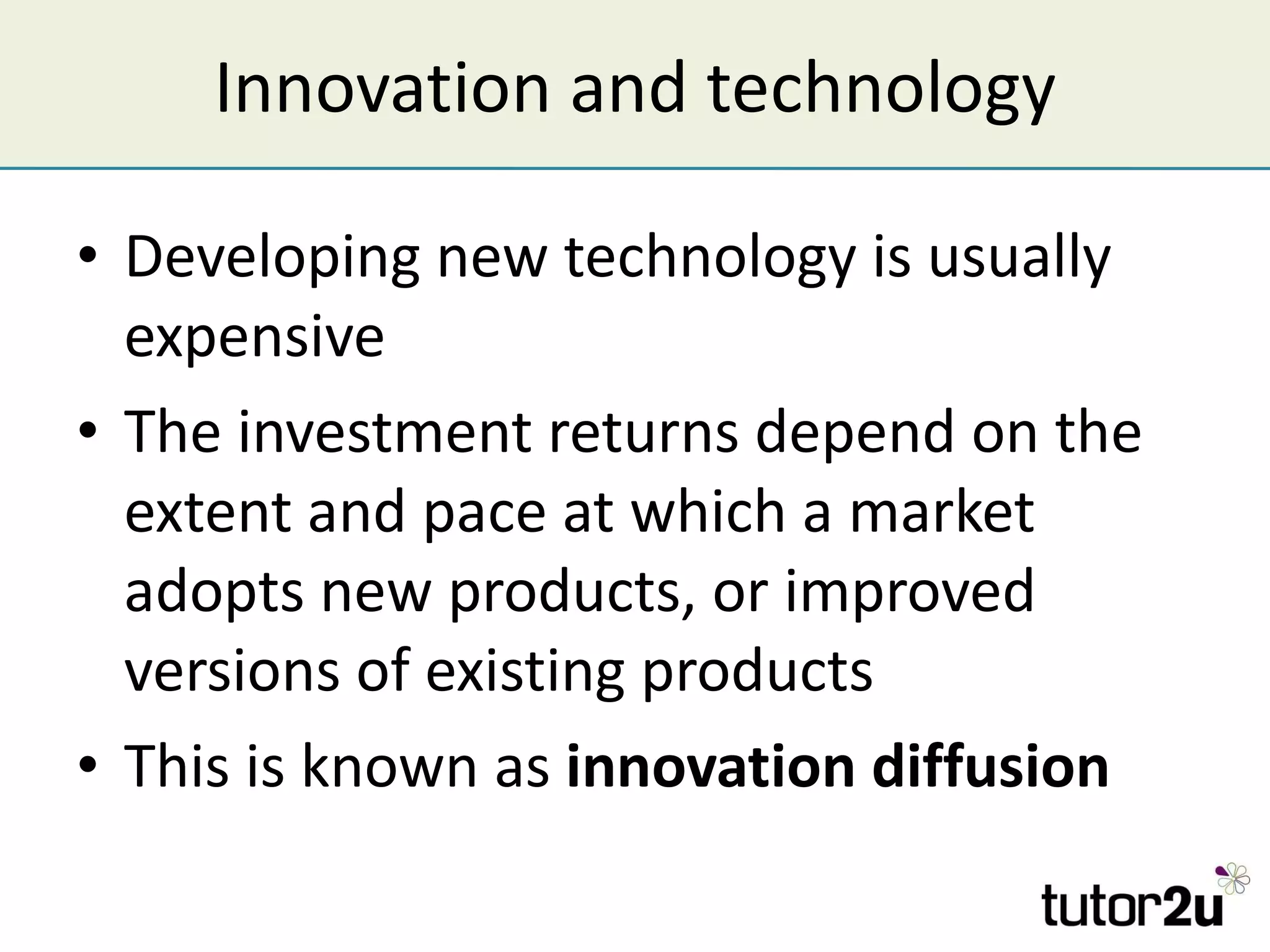
Innovation and technology Developing new technology is usually expensive The investment returns depend on the extent and pace at which a market adopts new products, or improved versions of existing products This is known as  innovation diffusion
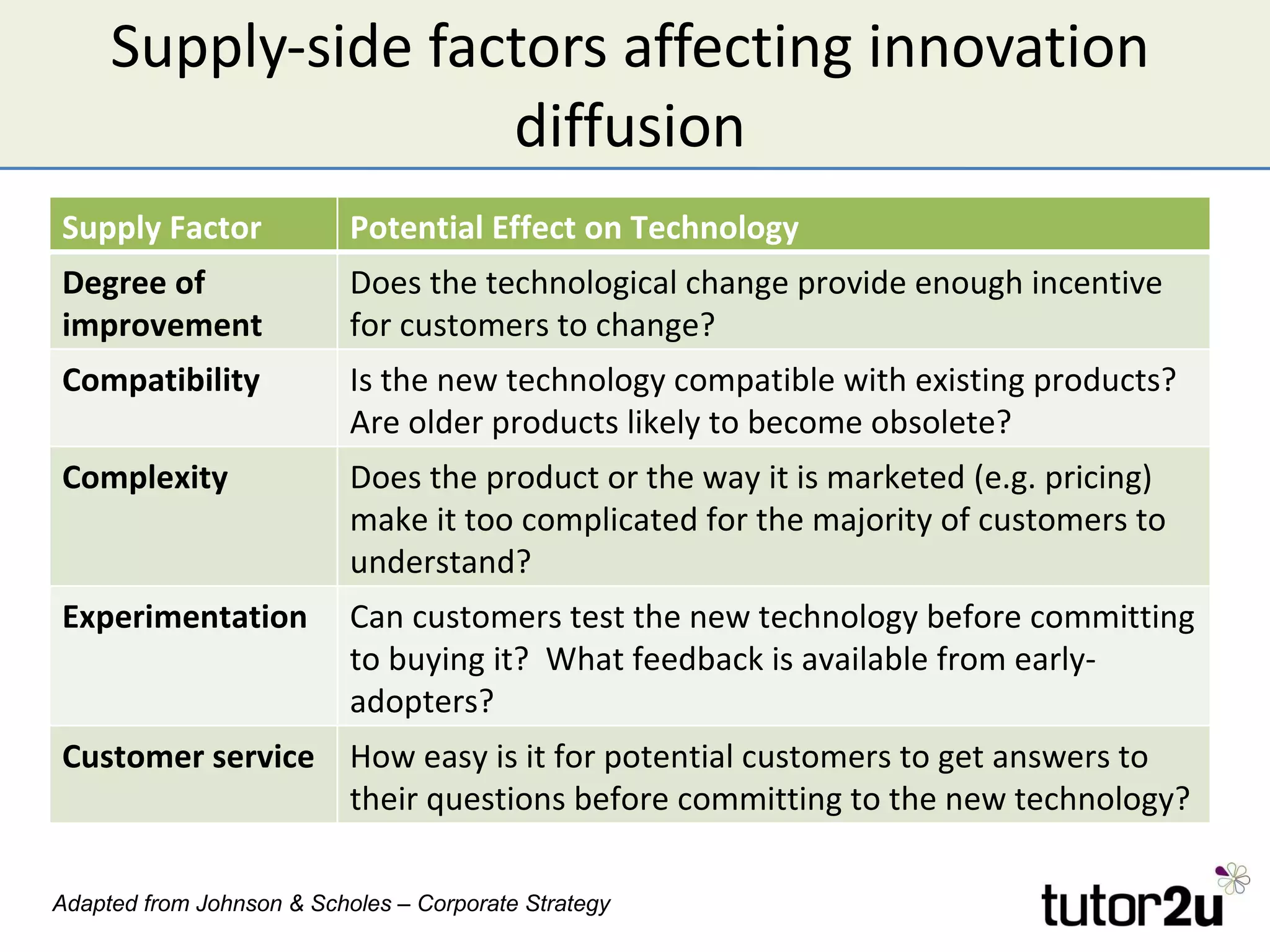
Supply-side factors affecting innovation diffusion Adapted from Johnson & Scholes – Corporate Strategy Supply Factor Potential Effect on Technology Degree of improvement Does the technological change provide enough incentive for customers to change? Compatibility Is the new technology compatible with existing products? Are older products likely to become obsolete? Complexity Does the product or the way it is marketed (e.g. pricing) make it too complicated for the majority of customers to understand? Experimentation Can customers test the new technology before committing to buying it?  What feedback is available from early-adopters? Customer service How easy is it for potential customers to get answers to their questions before committing to the new technology?
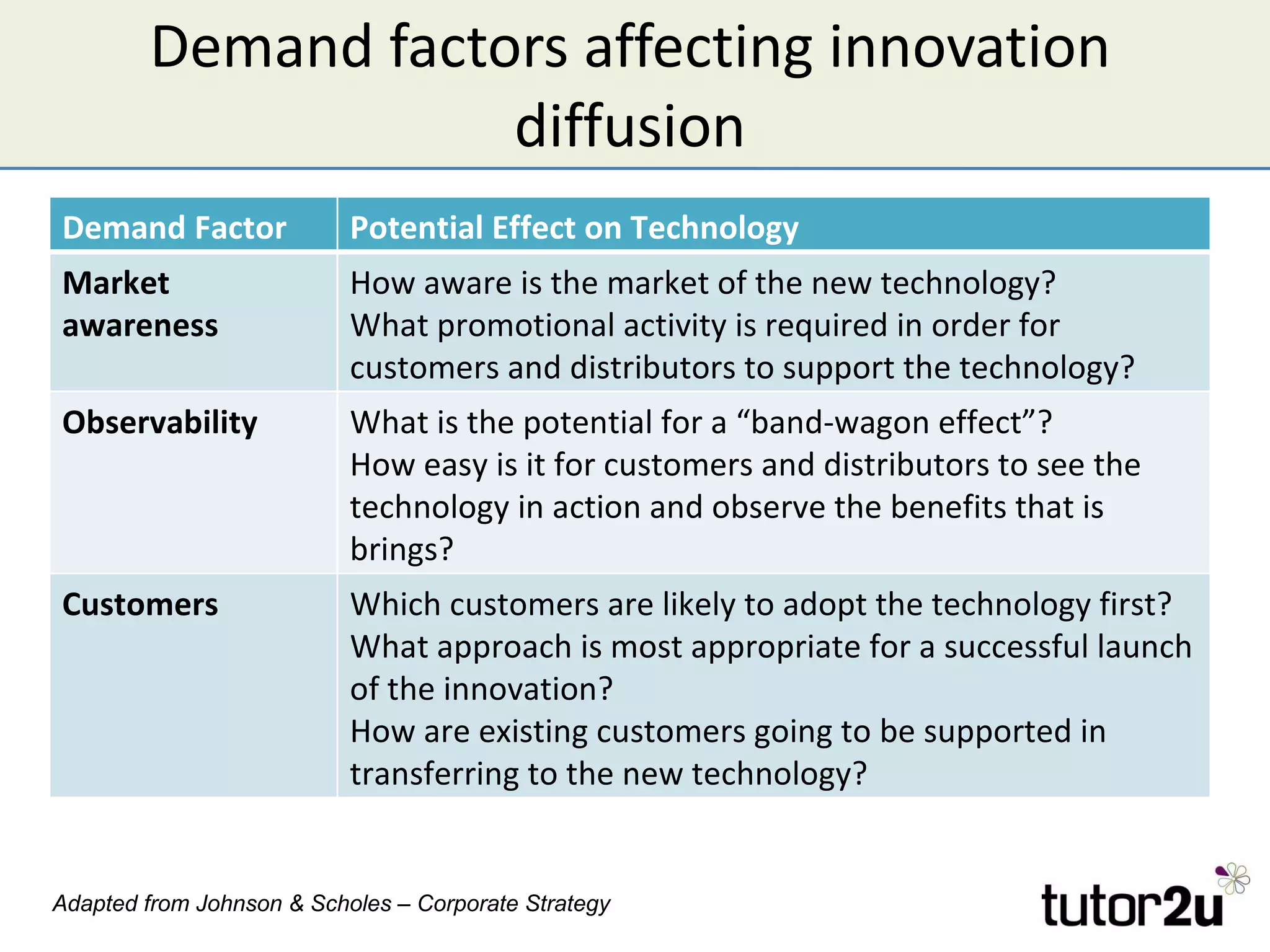
Demand factors affecting innovation diffusion Adapted from Johnson & Scholes – Corporate Strategy Demand Factor Potential Effect on Technology Market awareness How aware is the market of the new technology? What promotional activity is required in order for customers and distributors to support the technology? Observability What is the potential for a “band-wagon effect”? How easy is it for customers and distributors to see the technology in action and observe the benefits that is brings? Customers Which customers are likely to adopt the technology first? What approach is most appropriate for a successful launch of the innovation? How are existing customers going to be supported in transferring to the new technology?
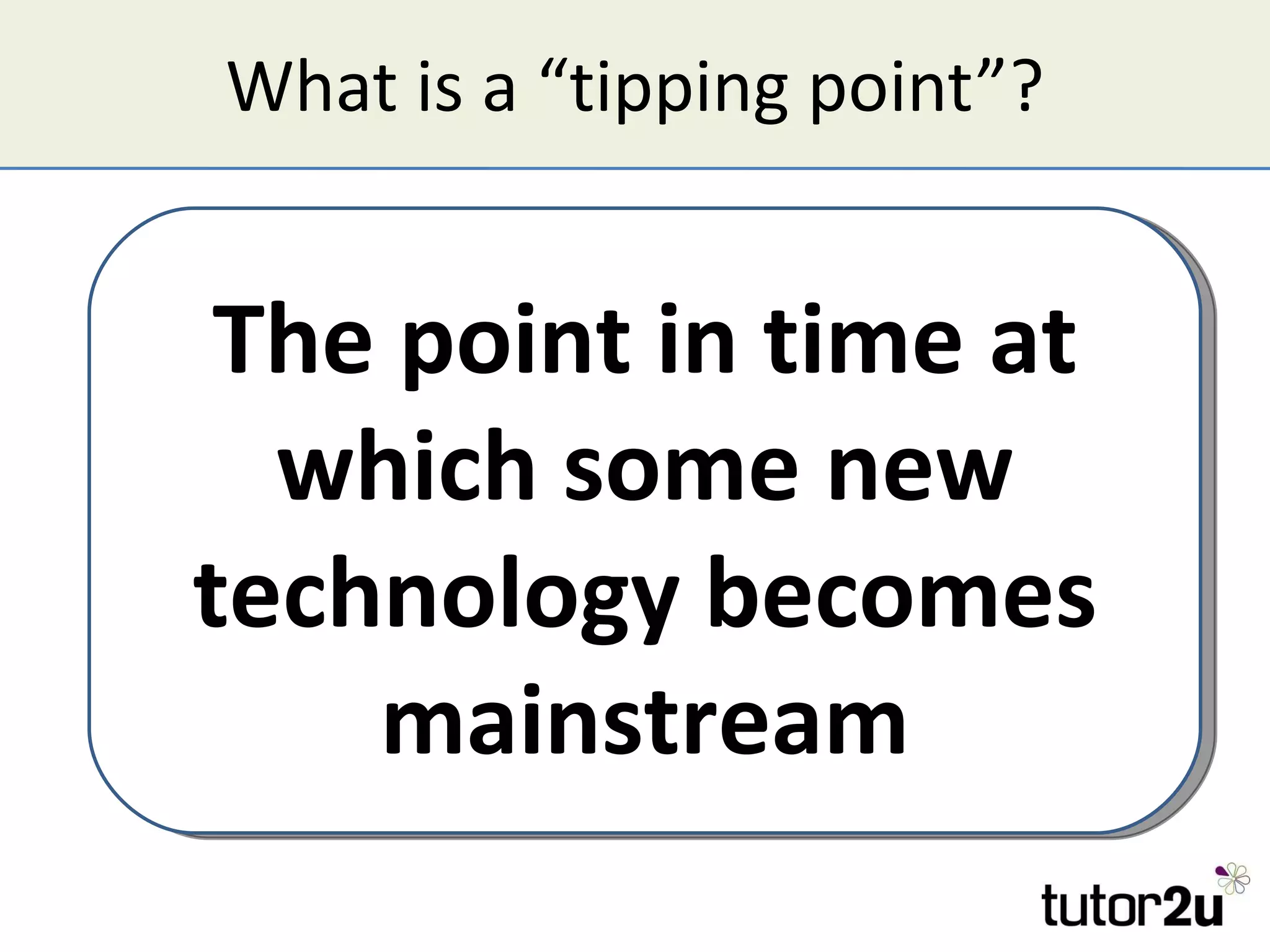
What is a “tipping point”? The point in time at which some new technology becomes mainstream
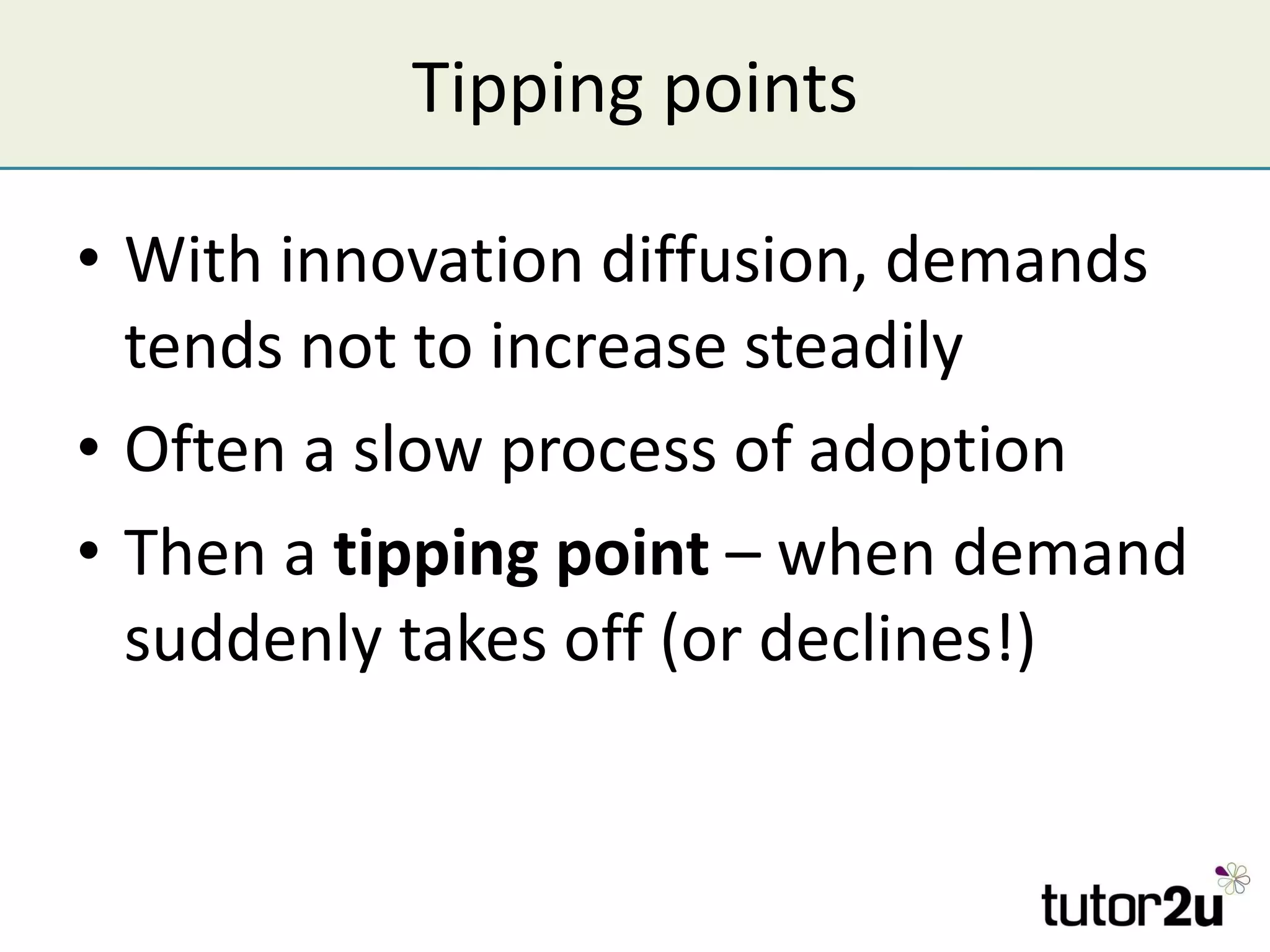
Tipping points With innovation diffusion, demands tends not to increase steadily Often a slow process of adoption Then a  tipping point  – when demand suddenly takes off (or declines!)
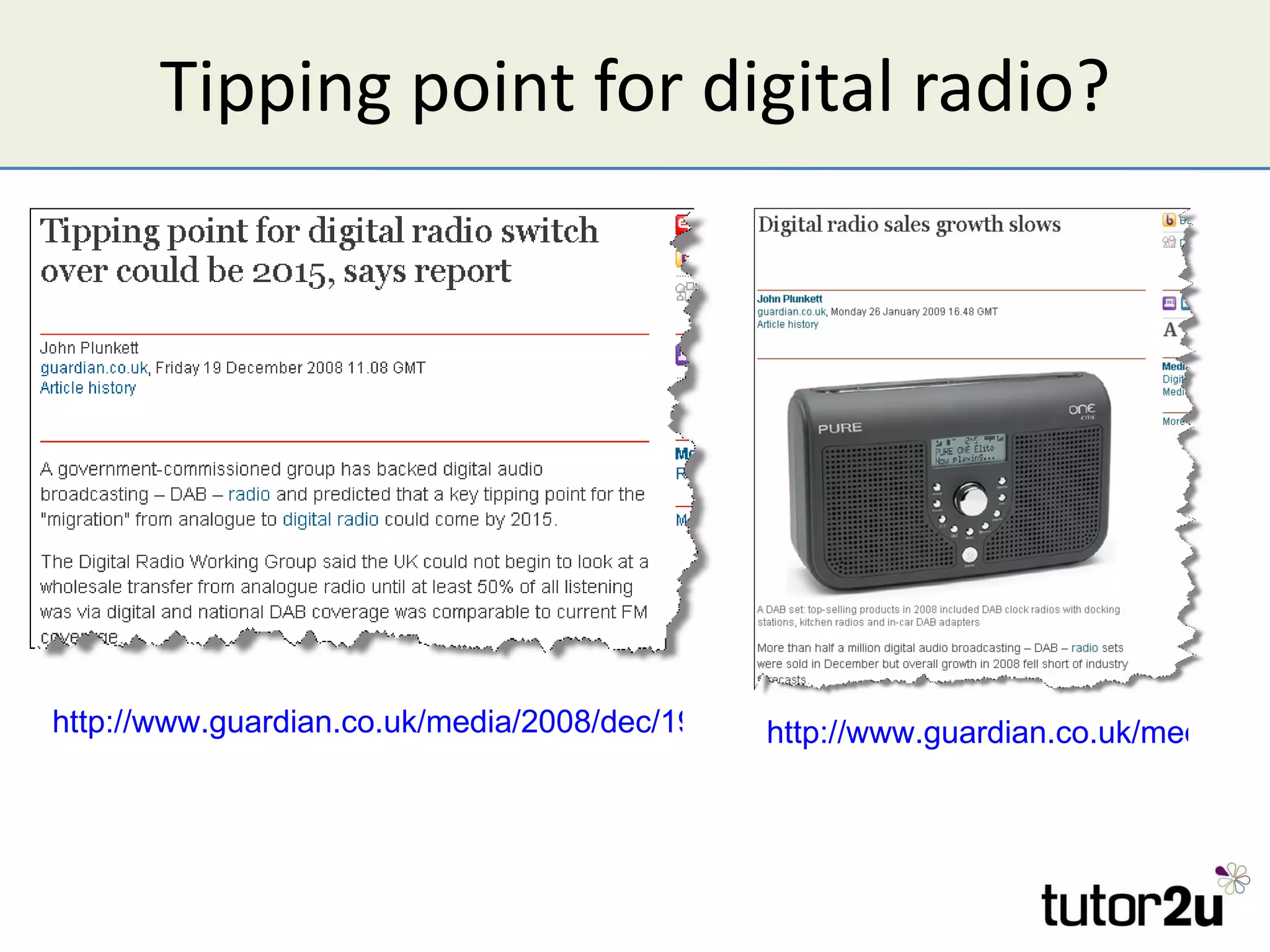
Tipping point for digital radio? http://www.guardian.co.uk/media/2008/dec/19/digital-radio-switchover   http://www.guardian.co.uk/media/2009/jan/26/digital-radio-sales-soar-in-december
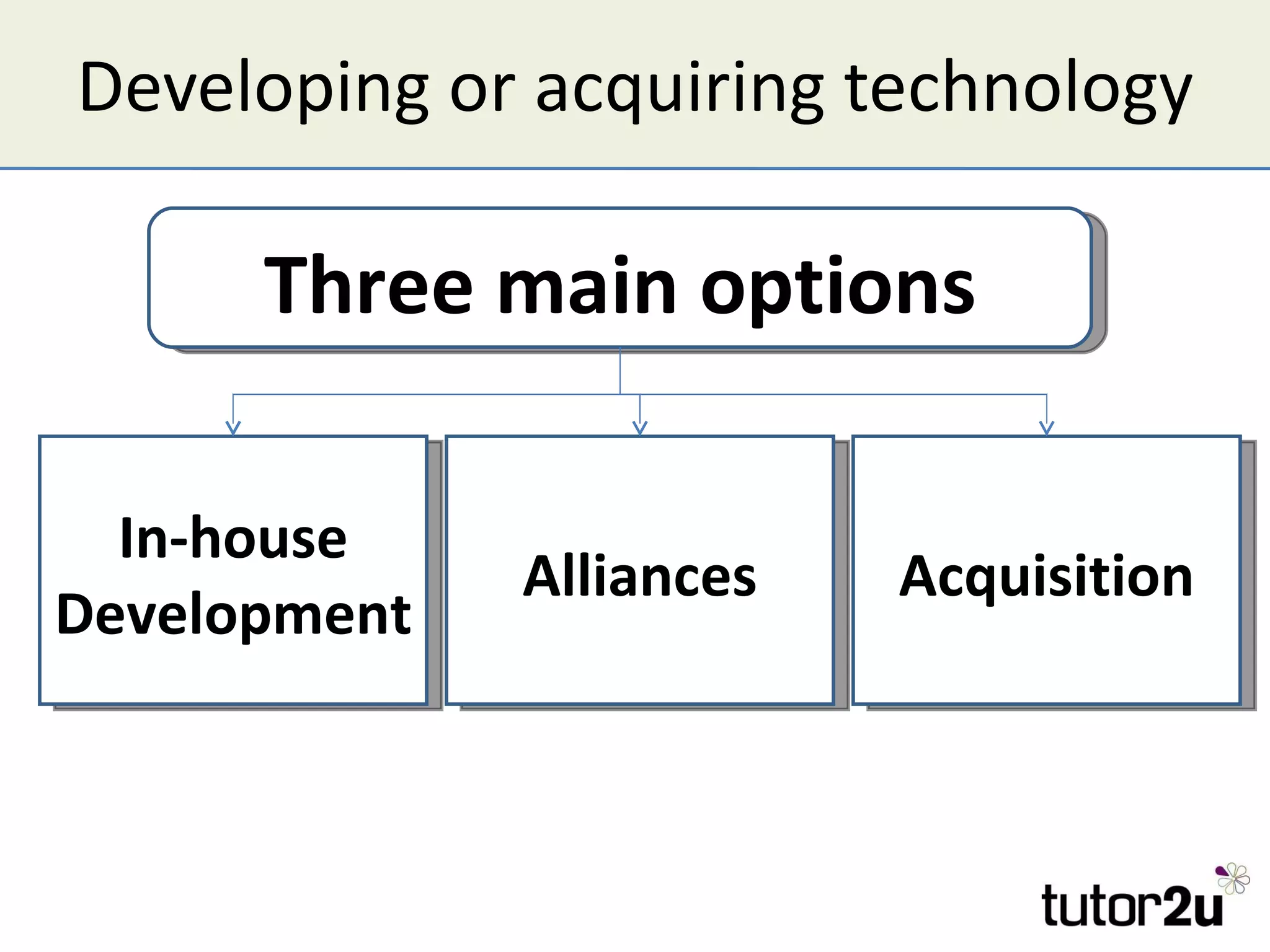
Developing or acquiring technology Three main options In-house Development Alliances Acquisition
In-house development Favoured if technology is a key competitive advantage Business may have experience of achieving first-mover advantage Requires strong insights into technology and market needs Business must also be willing to take commercial and financial risks
Alliances Appropriate for technologies which are important, but which do not confer competitive advantage (e.g. packaging) Business may want to “follow & imitate” rather than be a market innovator New technology may be well beyond the skills and experience of the business Helps limit commercial and financial risk A good link with “outsourcing”
Acquisition Often important if speed is important – i.e. no time for learning May be essential if the technology is complex or if it is providing competitors with an advantage Acquisitions are high risk – have to be sure that the right technology is being bought
Keep up-to-date with business stories, resources, quizzes and worksheets for your business course.  Click the logo!

Strategy and Technological Change

  • 1.
  • 2.
    Strategic importance oftechnology The key relationship to consider is that between technology and strategic success Technology may not be a source of competitive advantage – if competitors exploit it too Rapid technological change can challenge all competitors in a market
  • 3.
    Technology mechanisms TechnologyMechanism How It Creates an Advantage Example A new process Produce faster, at lower cost or better quality Internet banking Solve a complex problem Do something competitors find hard to master Google search engine A new product The first product to market The iPod Protect a valuable idea Have something others can only sell if they pay for a licence Pfizer’s Viagra Rewrite the rules A completely new approach which makes other products and markets redundant Digital cameras
  • 4.
    Technology and PortersFive Forces (1) Technology can have a significant effect on the five forces
  • 5.
    Technology and PortersFive Forces (2) Force Examples of Potential Impact of Technology Barriers to entry May reduce economies of scale – encouraging new entrants (e.g. digital publishing) In some case barriers may rise – as products become more complex and processes difficult to copy Substitutes New products may displace old – e.g. DVD for videotape Technology in other markets may “steal” customer spending from other markets – e.g. more spending on games consoles v less spending on days out Power of customers (buyers) & suppliers Technology may free businesses from a single source of supply – e.g. Open Source software v Microsoft Competitive rivalry Rivalry is diminished is technology is successfully patented and licensed
  • 6.
    Opportunity or Threat?Some businesses may be technology leaders – where technology enables them to gain an advantage Most other businesses need to assess the threat posed by technology on their competitive position
  • 7.
    Innovation and technologyDeveloping new technology is usually expensive The investment returns depend on the extent and pace at which a market adopts new products, or improved versions of existing products This is known as innovation diffusion
  • 8.
    Supply-side factors affectinginnovation diffusion Adapted from Johnson & Scholes – Corporate Strategy Supply Factor Potential Effect on Technology Degree of improvement Does the technological change provide enough incentive for customers to change? Compatibility Is the new technology compatible with existing products? Are older products likely to become obsolete? Complexity Does the product or the way it is marketed (e.g. pricing) make it too complicated for the majority of customers to understand? Experimentation Can customers test the new technology before committing to buying it? What feedback is available from early-adopters? Customer service How easy is it for potential customers to get answers to their questions before committing to the new technology?
  • 9.
    Demand factors affectinginnovation diffusion Adapted from Johnson & Scholes – Corporate Strategy Demand Factor Potential Effect on Technology Market awareness How aware is the market of the new technology? What promotional activity is required in order for customers and distributors to support the technology? Observability What is the potential for a “band-wagon effect”? How easy is it for customers and distributors to see the technology in action and observe the benefits that is brings? Customers Which customers are likely to adopt the technology first? What approach is most appropriate for a successful launch of the innovation? How are existing customers going to be supported in transferring to the new technology?
  • 10.
    What is a“tipping point”? The point in time at which some new technology becomes mainstream
  • 11.
    Tipping points Withinnovation diffusion, demands tends not to increase steadily Often a slow process of adoption Then a tipping point – when demand suddenly takes off (or declines!)
  • 12.
    Tipping point fordigital radio? http://www.guardian.co.uk/media/2008/dec/19/digital-radio-switchover http://www.guardian.co.uk/media/2009/jan/26/digital-radio-sales-soar-in-december
  • 13.
    Developing or acquiringtechnology Three main options In-house Development Alliances Acquisition
  • 14.
    In-house development Favouredif technology is a key competitive advantage Business may have experience of achieving first-mover advantage Requires strong insights into technology and market needs Business must also be willing to take commercial and financial risks
  • 15.
    Alliances Appropriate fortechnologies which are important, but which do not confer competitive advantage (e.g. packaging) Business may want to “follow & imitate” rather than be a market innovator New technology may be well beyond the skills and experience of the business Helps limit commercial and financial risk A good link with “outsourcing”
  • 16.
    Acquisition Often importantif speed is important – i.e. no time for learning May be essential if the technology is complex or if it is providing competitors with an advantage Acquisitions are high risk – have to be sure that the right technology is being bought
  • 17.
    Keep up-to-date withbusiness stories, resources, quizzes and worksheets for your business course. Click the logo!