Ahmed Haider
Ms. Nanotechnology and material
science
• Science courses may require more study time
than non-science courses
• You must think and reason about the concepts in
a science course
• You should expect to spend at least 2 hours
studying for these courses per day.
1) Time Management & Study Skills
2) Test Taking Strategies
3) Managing Anxiety and Stress
‫ل‬‫سو‬‫ر‬ ‫عن‬ ‫عباس‬ ‫ابن‬‫عن‬‫هللا‬‫ﷺ‬:
‫فيهما‬ ‫ن‬‫مغبو‬ ‫نعمتان‬‫الصحة‬ ‫الناس‬‫من‬‫كثير‬‫اغ‬‫ر‬‫والف‬.
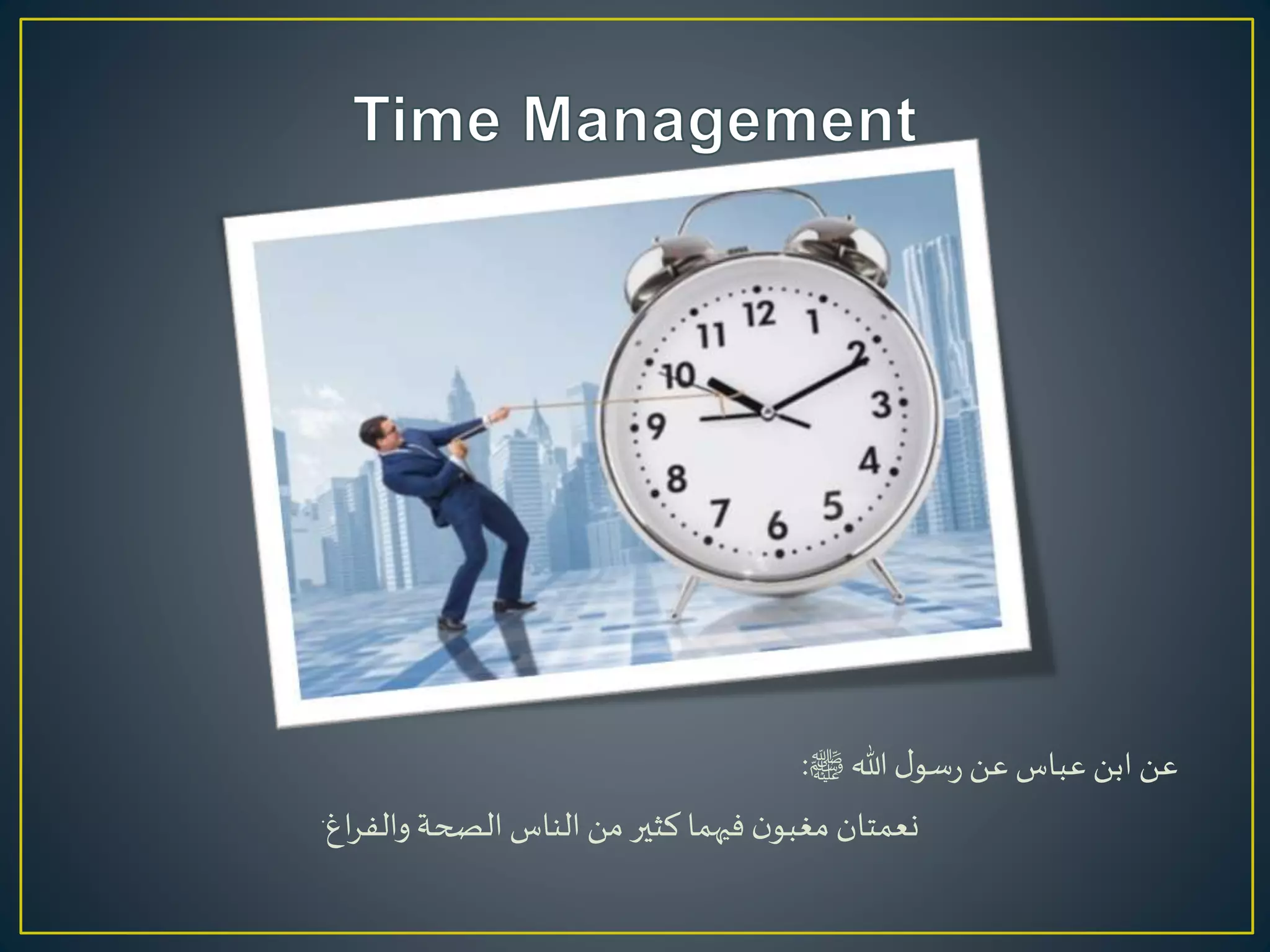
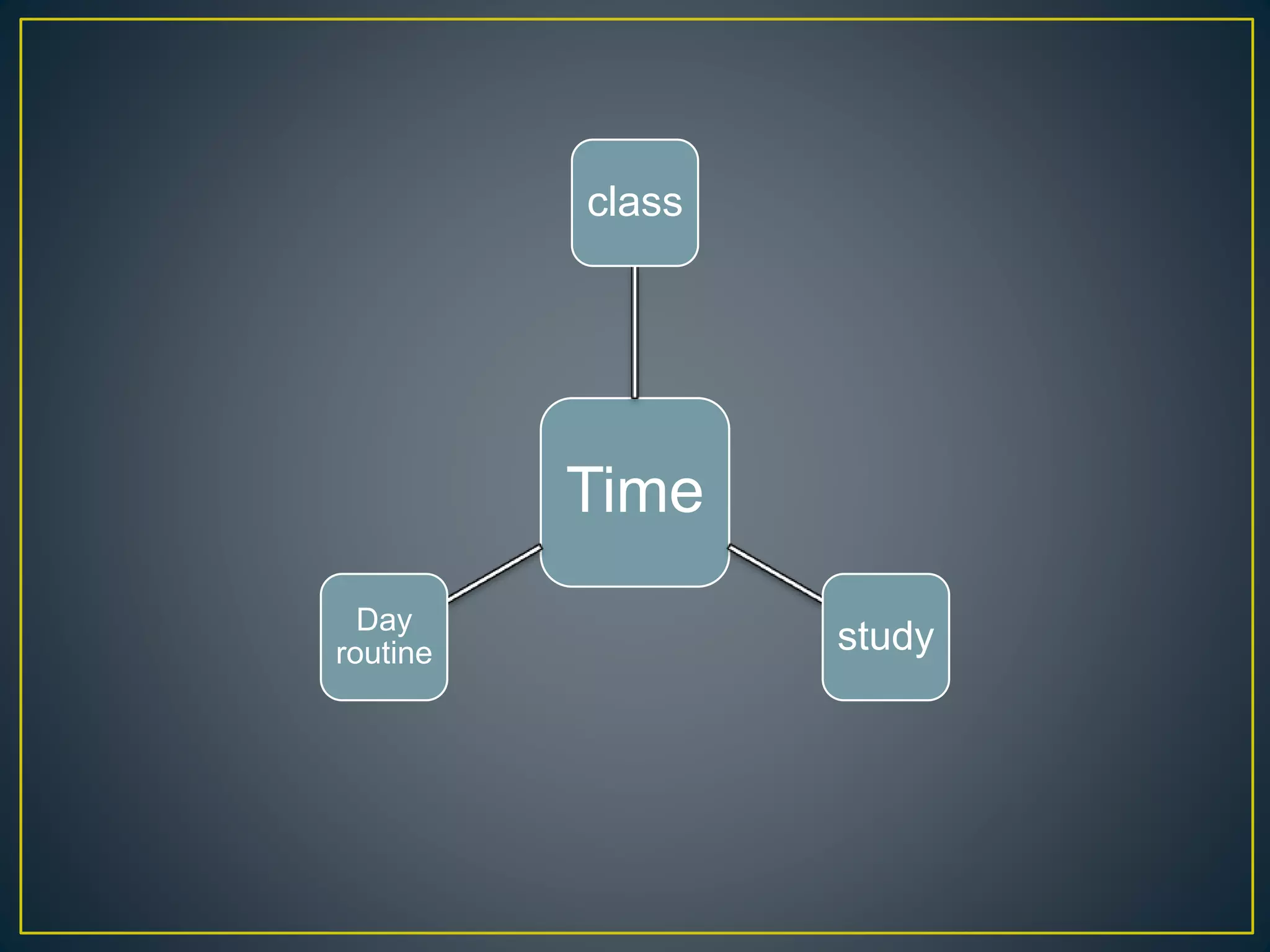
Time
class
studyDay
routine
Read next topic before the
class
Review the main points
covered in the last class
Review your Homework
Prepare for every subject in
this manner.
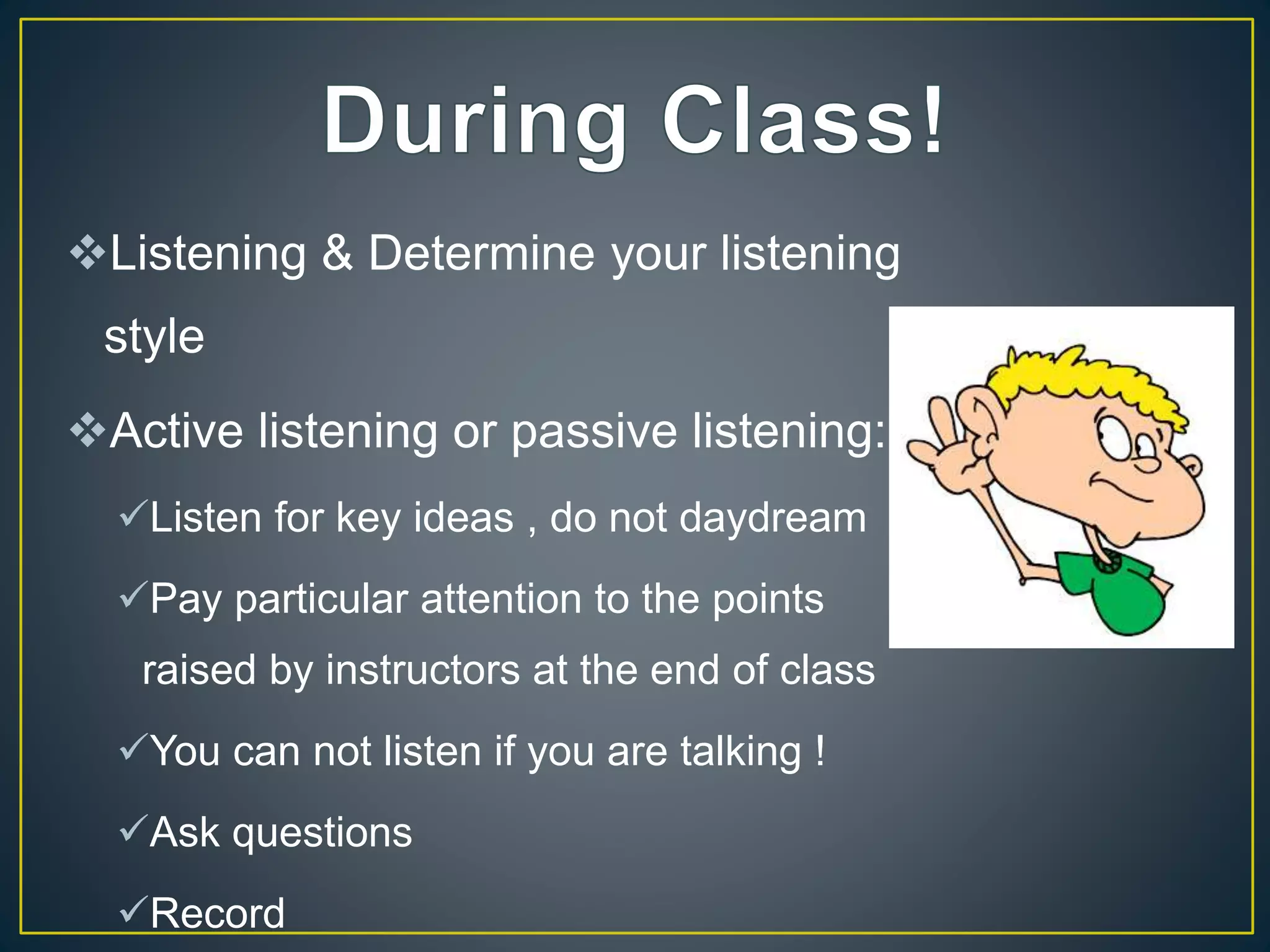
Listening & Determine your listening
style
Active listening or passive listening:
Listen for key ideas , do not daydream
Pay particular attention to the points
raised by instructors at the end of class
You can not listen if you are talking !
Ask questions
Record
Pay attention in class Take good notes
Hear what is said, not what you want to hear.
• What is the main points ?
• Think “around” the topic and “between
the lines” . Relate it to what you already
know.
• Be more Concentrated when teacher
say “ This is important…”
• Ask questions in class
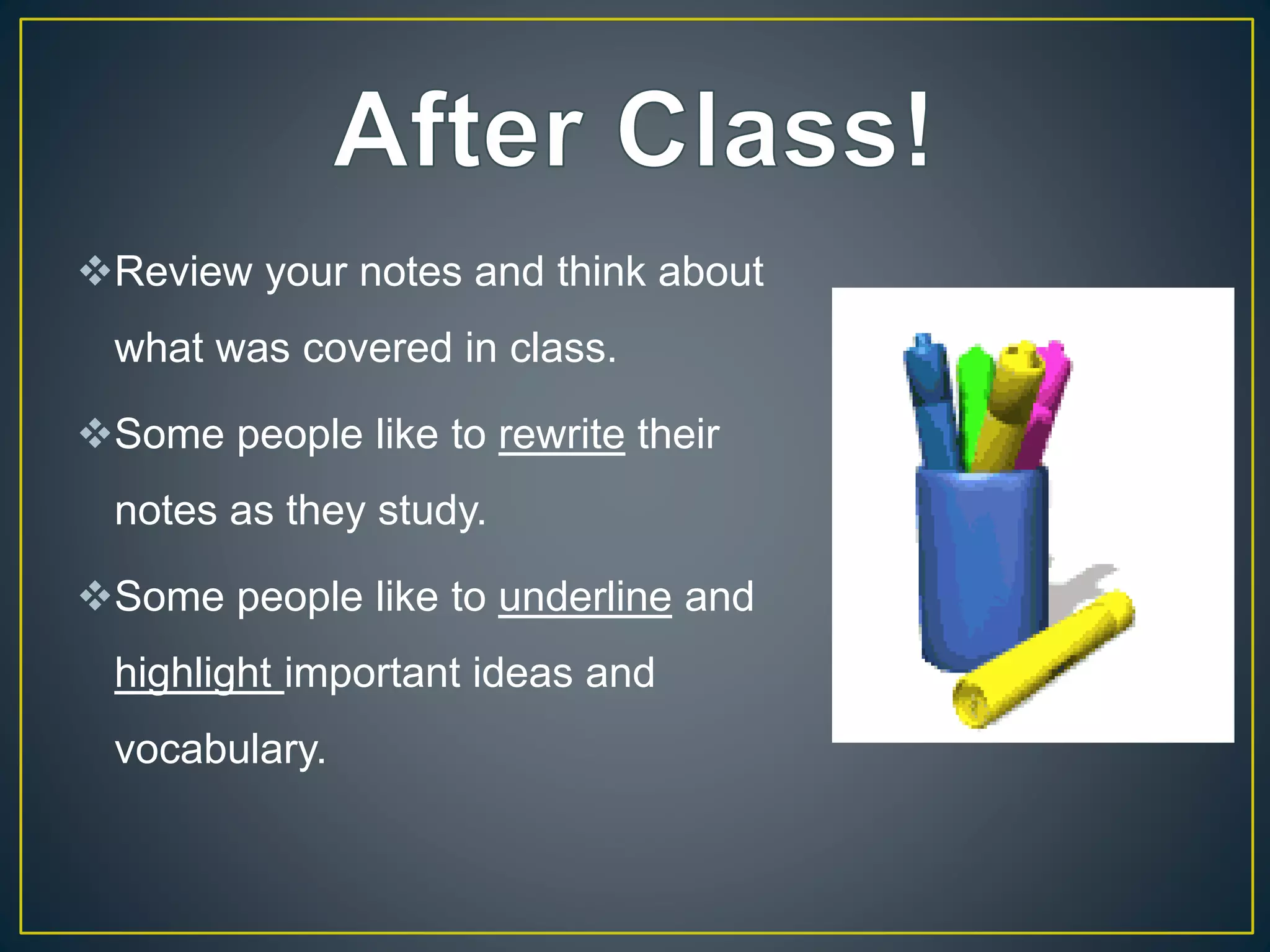
Review your notes and think about
what was covered in class.
Some people like to rewrite their
notes as they study.
Some people like to underline and
highlight important ideas and
vocabulary.
• You are responsible for your
own learning
• Ideas are funny things, they
don’t work unless you do’
• Study sessions just don’t
happen when you feel like
doing them.
• This means a desk with
nothing on it except what
you need for the task
you’re on: STUDYING!
• Have a regular time and
place for studying.
• Clock
• Eliminate all distractions
• Calculator and Computer
• Wear your glasses
• Good Health
• Something to drink (if needed)
•‫صالتك‬ ‫اضبط‬:‫بحياتك‬ ‫تنعم‬ ‫صالتك‬ ‫أقم‬
•‫على‬ ‫الوقت‬ ‫قسم‬‫االولويات‬‫اعاة‬‫ر‬‫م‬ ‫مع‬ ‫املواد‬ ‫جميع‬
•‫علمية‬ ‫ملادة‬ ‫وثابت‬‫محدد‬ ‫وقت‬ ‫يوم‬ ‫كل‬ ‫اجعل‬
•‫س‬‫و‬‫الدر‬ ‫من‬ ‫خالين‬‫يومين‬‫لك‬ ‫اجعل‬
•‫ن‬‫مر‬ ‫ل‬‫جدو‬ ‫اعمل‬–‫تتغير‬ ‫االشياء‬
•‫ل‬‫بالجدو‬ ‫سك‬‫ر‬‫مد‬ ‫أو‬ ‫والديك‬ ‫اخبر‬
•‫مذاكرة‬ ‫فترة‬ ‫كل‬ ‫بعد‬ ‫بريك‬ ‫خدلك‬
•‫ساعتين‬ ‫عن‬ ‫تزيد‬ ‫ال‬ ‫املذاكرة‬‫فترة‬
“Well done is better than well said”
‫ي‬ ‫فاض‬ ‫والثالثاء‬ ‫السبت‬
‫فيزياء‬–‫عربي‬–‫ي‬‫انجليز‬-‫ي‬‫فرنساو‬
1-8
‫بعاء‬‫ر‬‫واال‬‫االحد‬
‫كيمياء‬–‫احياء‬-‫جيولوجيا‬(‫ياضيات‬‫ر‬)
1-6
‫والخميس‬‫االثنين‬
‫ياضيات‬‫ر‬ ‫الجمعة‬
6-10
‫فيزياء‬
4–5
‫نحو‬
1-3
‫ياضيات‬‫ر‬
‫السبت‬
9-11
‫كيمياء‬
‫االحد‬
9-11
‫انجلش‬
7-9
‫ياضيات‬‫ر‬
‫االثنين‬
8-11
‫كيمياء‬
6-7
‫ي‬‫فرنساو‬
4-6
‫نصوص‬
1-3
‫فيزياء‬
‫الثالثاء‬
9-11
‫ياضيات‬‫ر‬
‫بعاء‬‫ر‬‫اال‬
9-11
‫انجلش‬
7-9
‫فيزياء‬
‫الخميس‬
‫ياضيات‬‫ر‬+‫الباقي‬ ‫الجمعة‬
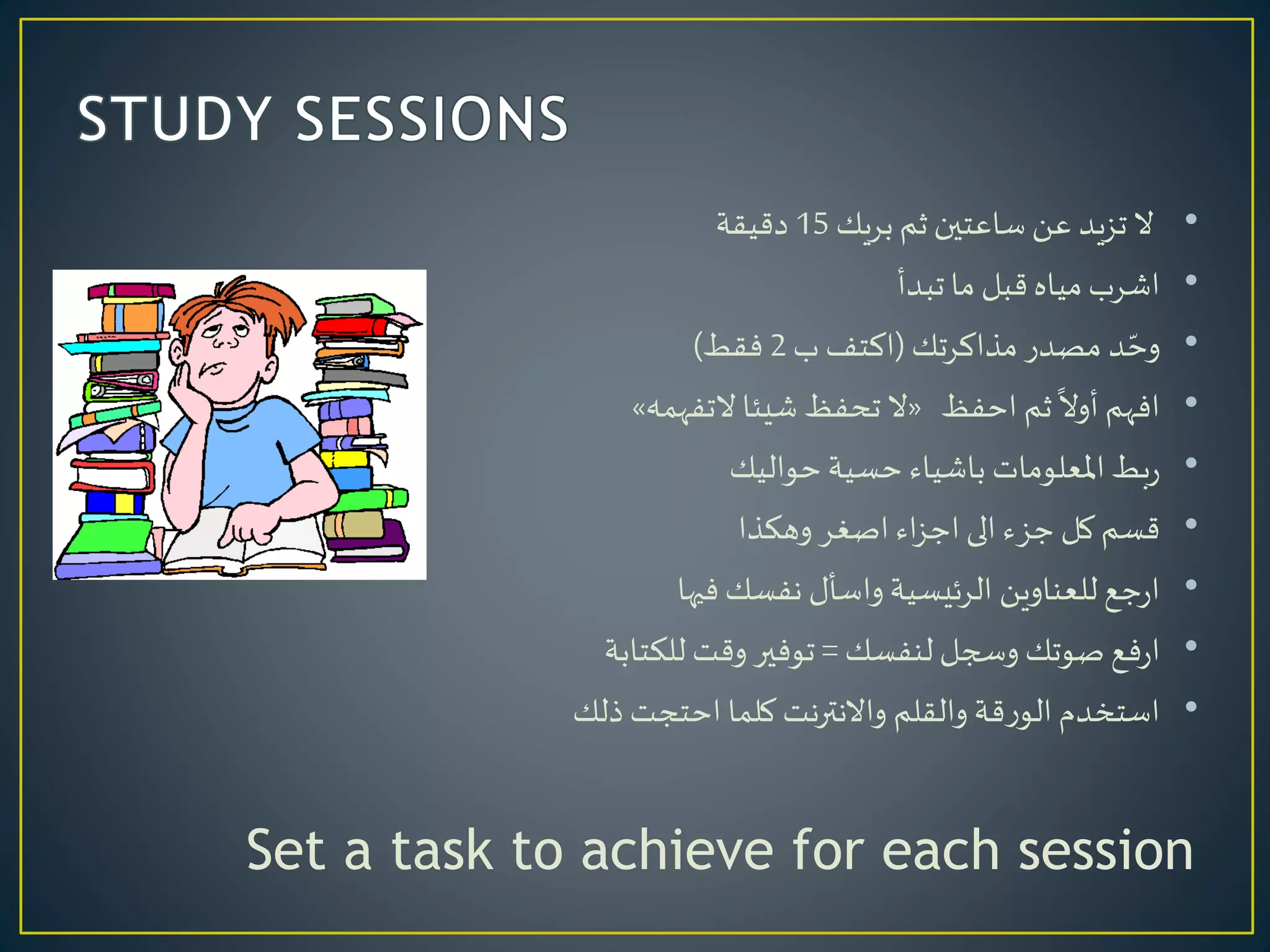
•‫بريك‬‫ثم‬‫ساعتين‬‫عن‬ ‫تزيد‬‫ال‬15‫دقيقة‬
•‫تبدأ‬‫ما‬ ‫قبل‬‫مياه‬‫اشرب‬
•‫مذاكرتك‬ ‫مصدر‬ ‫د‬ ّ‫وح‬(‫ب‬ ‫اكتف‬2‫فقط‬)
•‫احفظ‬ ‫ثم‬
ً
‫أوال‬‫افهم‬«‫التفهمه‬‫شيئا‬ ‫تحفظ‬ ‫ال‬»
•‫حواليك‬‫حسية‬ ‫باشياء‬ ‫املعلومات‬‫بط‬‫ر‬
•‫وهكذا‬‫اصغر‬ ‫اء‬‫ز‬‫اج‬‫الى‬ ‫جزء‬ ‫كل‬‫قسم‬
•‫فيها‬‫نفسك‬ ‫واسأل‬‫الرئيسية‬ ‫للعناوين‬‫جع‬‫ر‬‫ا‬
•‫لنفسك‬‫وسجل‬ ‫صوتك‬ ‫فع‬‫ر‬‫ا‬=‫للكتابة‬‫وقت‬ ‫توفير‬
•‫ذلك‬ ‫احتجت‬ ‫كلما‬ ‫واالنترنت‬ ‫والقلم‬ ‫قة‬‫ر‬‫الو‬ ‫استخدم‬
Set a task to achieve for each session
• To achieve your goals, sacrifices have to be made
• Avoid time wasters – make a list of the main ones
• Procrastination is the thief of time.
• Reward yourself for working well and achieving short
term goals
• You are responsible for the organisation of your time
and lifestyle
• Make your own world and own zone
‘The first step is the most difficult part of the journey’
You can also use travel time to and from school for
• Planning
• Listening to recorded summaries or points on your
phone
Then when you arrive home, it is much easier to get down
to study
• You are enthusiastic to study
• Your purpose and task are set
• You can apply yourself immediately
‫ك‬‫ر‬‫اختيا‬ ‫أولويات‬
• 3 hours per week to learn new skill
• Sep to Feb. = 6 months = 24 weeks
• 3 hours x 24 weeks = 72 hours
• Most Courses time not exceed 60
hours
Yes , you can do it
Strategies of success in science courses

Strategies of success in science courses

  • 1.
    Ahmed Haider Ms. Nanotechnologyand material science
  • 2.
    • Science coursesmay require more study time than non-science courses • You must think and reason about the concepts in a science course • You should expect to spend at least 2 hours studying for these courses per day.
  • 3.
    1) Time Management& Study Skills 2) Test Taking Strategies 3) Managing Anxiety and Stress
  • 4.
    ‫ل‬‫سو‬‫ر‬ ‫عن‬ ‫عباس‬‫ابن‬‫عن‬‫هللا‬‫ﷺ‬: ‫فيهما‬ ‫ن‬‫مغبو‬ ‫نعمتان‬‫الصحة‬ ‫الناس‬‫من‬‫كثير‬‫اغ‬‫ر‬‫والف‬.
  • 5.
  • 6.
    Read next topicbefore the class Review the main points covered in the last class Review your Homework Prepare for every subject in this manner.
  • 7.
    Listening & Determineyour listening style Active listening or passive listening: Listen for key ideas , do not daydream Pay particular attention to the points raised by instructors at the end of class You can not listen if you are talking ! Ask questions Record
  • 8.
    Pay attention inclass Take good notes Hear what is said, not what you want to hear.
  • 9.
    • What isthe main points ? • Think “around” the topic and “between the lines” . Relate it to what you already know. • Be more Concentrated when teacher say “ This is important…” • Ask questions in class
  • 10.
    Review your notesand think about what was covered in class. Some people like to rewrite their notes as they study. Some people like to underline and highlight important ideas and vocabulary.
  • 11.
    • You areresponsible for your own learning • Ideas are funny things, they don’t work unless you do’ • Study sessions just don’t happen when you feel like doing them.
  • 13.
    • This meansa desk with nothing on it except what you need for the task you’re on: STUDYING! • Have a regular time and place for studying.
  • 14.
    • Clock • Eliminateall distractions • Calculator and Computer • Wear your glasses • Good Health • Something to drink (if needed)
  • 15.
    •‫صالتك‬ ‫اضبط‬:‫بحياتك‬ ‫تنعم‬‫صالتك‬ ‫أقم‬ •‫على‬ ‫الوقت‬ ‫قسم‬‫االولويات‬‫اعاة‬‫ر‬‫م‬ ‫مع‬ ‫املواد‬ ‫جميع‬ •‫علمية‬ ‫ملادة‬ ‫وثابت‬‫محدد‬ ‫وقت‬ ‫يوم‬ ‫كل‬ ‫اجعل‬ •‫س‬‫و‬‫الدر‬ ‫من‬ ‫خالين‬‫يومين‬‫لك‬ ‫اجعل‬ •‫ن‬‫مر‬ ‫ل‬‫جدو‬ ‫اعمل‬–‫تتغير‬ ‫االشياء‬ •‫ل‬‫بالجدو‬ ‫سك‬‫ر‬‫مد‬ ‫أو‬ ‫والديك‬ ‫اخبر‬ •‫مذاكرة‬ ‫فترة‬ ‫كل‬ ‫بعد‬ ‫بريك‬ ‫خدلك‬ •‫ساعتين‬ ‫عن‬ ‫تزيد‬ ‫ال‬ ‫املذاكرة‬‫فترة‬ “Well done is better than well said”
  • 16.
    ‫ي‬ ‫فاض‬ ‫والثالثاء‬‫السبت‬ ‫فيزياء‬–‫عربي‬–‫ي‬‫انجليز‬-‫ي‬‫فرنساو‬ 1-8 ‫بعاء‬‫ر‬‫واال‬‫االحد‬ ‫كيمياء‬–‫احياء‬-‫جيولوجيا‬(‫ياضيات‬‫ر‬) 1-6 ‫والخميس‬‫االثنين‬ ‫ياضيات‬‫ر‬ ‫الجمعة‬
  • 17.
  • 18.
    •‫بريك‬‫ثم‬‫ساعتين‬‫عن‬ ‫تزيد‬‫ال‬15‫دقيقة‬ •‫تبدأ‬‫ما‬ ‫قبل‬‫مياه‬‫اشرب‬ •‫مذاكرتك‬‫مصدر‬ ‫د‬ ّ‫وح‬(‫ب‬ ‫اكتف‬2‫فقط‬) •‫احفظ‬ ‫ثم‬ ً ‫أوال‬‫افهم‬«‫التفهمه‬‫شيئا‬ ‫تحفظ‬ ‫ال‬» •‫حواليك‬‫حسية‬ ‫باشياء‬ ‫املعلومات‬‫بط‬‫ر‬ •‫وهكذا‬‫اصغر‬ ‫اء‬‫ز‬‫اج‬‫الى‬ ‫جزء‬ ‫كل‬‫قسم‬ •‫فيها‬‫نفسك‬ ‫واسأل‬‫الرئيسية‬ ‫للعناوين‬‫جع‬‫ر‬‫ا‬ •‫لنفسك‬‫وسجل‬ ‫صوتك‬ ‫فع‬‫ر‬‫ا‬=‫للكتابة‬‫وقت‬ ‫توفير‬ •‫ذلك‬ ‫احتجت‬ ‫كلما‬ ‫واالنترنت‬ ‫والقلم‬ ‫قة‬‫ر‬‫الو‬ ‫استخدم‬ Set a task to achieve for each session
  • 19.
    • To achieveyour goals, sacrifices have to be made • Avoid time wasters – make a list of the main ones • Procrastination is the thief of time. • Reward yourself for working well and achieving short term goals • You are responsible for the organisation of your time and lifestyle • Make your own world and own zone ‘The first step is the most difficult part of the journey’
  • 20.
    You can alsouse travel time to and from school for • Planning • Listening to recorded summaries or points on your phone Then when you arrive home, it is much easier to get down to study • You are enthusiastic to study • Your purpose and task are set • You can apply yourself immediately ‫ك‬‫ر‬‫اختيا‬ ‫أولويات‬
  • 21.
    • 3 hoursper week to learn new skill • Sep to Feb. = 6 months = 24 weeks • 3 hours x 24 weeks = 72 hours • Most Courses time not exceed 60 hours Yes , you can do it