SCHOOL RULES
SCHOOL RULES FOR
LEARNERS
 Dress Code: Most schools have a dress code that outlines
acceptable attire. This includes guidelines on the length of
skirts, appropriate tops, and restrictions on clothing with
offensive images or slogans.
 Attendance: Schools typically have attendance requirements.
Students may be required to attend a certain percentage of
classes to pass the course.
 Punctuality: Being on time for classes, exams, and school
events is usually emphasized.
SCHOOL RULES FOR
LEARNERS
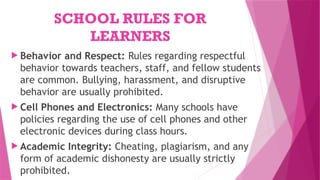
 Behavior and Respect: Rules regarding respectful
behavior towards teachers, staff, and fellow students
are common. Bullying, harassment, and disruptive
behavior are usually prohibited.
 Cell Phones and Electronics: Many schools have
policies regarding the use of cell phones and other
electronic devices during class hours.
 Academic Integrity: Cheating, plagiarism, and any
form of academic dishonesty are usually strictly
prohibited.
SCHOOL RULES FOR
LEARNERS
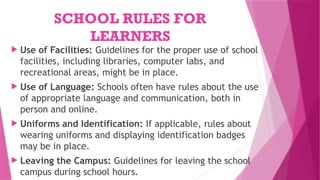
 Use of Facilities: Guidelines for the proper use of school
facilities, including libraries, computer labs, and
recreational areas, might be in place.
 Use of Language: Schools often have rules about the use
of appropriate language and communication, both in
person and online.
 Uniforms and Identification: If applicable, rules about
wearing uniforms and displaying identification badges
may be in place.
 Leaving the Campus: Guidelines for leaving the school
campus during school hours.
SCHOOL RULES FOR
LEARNERS
 Prohibited Items: Rules about bringing items like weapons,
drugs, alcohol, and other prohibited substances to school are
standard.
 Parking and Transportation: If students are allowed to drive to
school, there might be rules about parking and transportation.
 Personal Belongings: Rules about the security and responsibility
of personal belongings, including bags, books, and other items,
may be outlined.
 Social Media and Online Behavior: Guidelines on appropriate
online behavior and the use of social media platforms,
especially when it pertains to the school community, could be in
place.
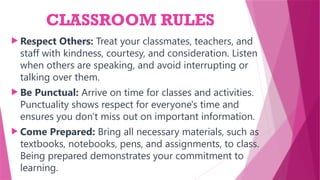
CLASSROOM RULES
 Respect Others: Treat your classmates, teachers, and
staff with kindness, courtesy, and consideration. Listen
when others are speaking, and avoid interrupting or
talking over them.
 Be Punctual: Arrive on time for classes and activities.
Punctuality shows respect for everyone's time and
ensures you don't miss out on important information.
 Come Prepared: Bring all necessary materials, such as
textbooks, notebooks, pens, and assignments, to class.
Being prepared demonstrates your commitment to
learning.
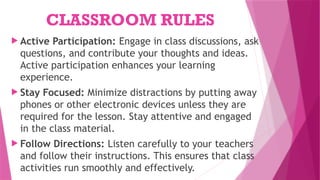
CLASSROOM RULES
 Active Participation: Engage in class discussions, ask
questions, and contribute your thoughts and ideas.
Active participation enhances your learning
experience.
 Stay Focused: Minimize distractions by putting away
phones or other electronic devices unless they are
required for the lesson. Stay attentive and engaged
in the class material.
 Follow Directions: Listen carefully to your teachers
and follow their instructions. This ensures that class
activities run smoothly and effectively.
CLASSROOM RULES
 Respect the Classroom Environment: Keep the
classroom tidy and clean. Dispose of trash properly
and avoid damaging school property.
 Raise Your Hand: When you have a question or want
to contribute, raise your hand and wait to be
recognized by the teacher. This helps maintain an
orderly classroom discussion.
 No Disruptive Behavior: Avoid behaviors that disrupt
the class, such as talking loudly, making
inappropriate noises, or engaging in side
conversations during instruction.
CLASSROOM RULES
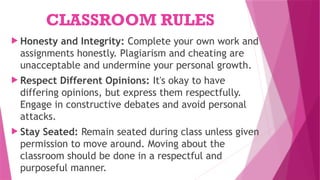
 Honesty and Integrity: Complete your own work and
assignments honestly. Plagiarism and cheating are
unacceptable and undermine your personal growth.
 Respect Different Opinions: It's okay to have
differing opinions, but express them respectfully.
Engage in constructive debates and avoid personal
attacks.
 Stay Seated: Remain seated during class unless given
permission to move around. Moving about the
classroom should be done in a respectful and
purposeful manner.
CLASSROOM RULES
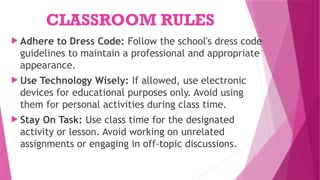
 Adhere to Dress Code: Follow the school's dress code
guidelines to maintain a professional and appropriate
appearance.
 Use Technology Wisely: If allowed, use electronic
devices for educational purposes only. Avoid using
them for personal activities during class time.
 Stay On Task: Use class time for the designated
activity or lesson. Avoid working on unrelated
assignments or engaging in off-topic discussions.
CLASSROOM RULES
 Respect Confidentiality: Keep personal information
shared by others in the classroom confidential.
Respect your classmates' privacy.
 Be Open to Learning: Approach each lesson with a
positive attitude and a willingness to learn. Embrace
challenges as opportunities for growth.
 Seek Help When Needed: If you're struggling with
the material, ask questions or seek help from your
teacher or peers. Don't hesitate to clarify your
doubts.
These rules are designed to foster
a respectful and productive
learning environment. They
contribute to a positive
atmosphere that benefits both you
and your classmates.
Do’s
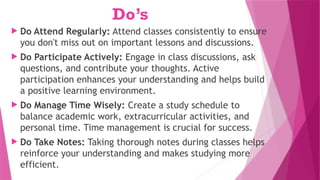
 Do Attend Regularly: Attend classes consistently to ensure
you don't miss out on important lessons and discussions.
 Do Participate Actively: Engage in class discussions, ask
questions, and contribute your thoughts. Active
participation enhances your understanding and helps build
a positive learning environment.
 Do Manage Time Wisely: Create a study schedule to
balance academic work, extracurricular activities, and
personal time. Time management is crucial for success.
 Do Take Notes: Taking thorough notes during classes helps
reinforce your understanding and makes studying more
efficient.
Do’s
 Do Complete Assignments: Finish your assignments on time
and put effort into them. They are valuable for learning
and your overall grade.
 Do Seek Help: If you're struggling with a subject or
concept, don't hesitate to ask for help from teachers,
peers, or tutors.
 Do Stay Organized: Keep your materials, notes, and
assignments organized. This reduces stress and helps you
find what you need quickly.
 Do Respect Others: Treat your teachers and peers with
respect and kindness. A positive classroom atmosphere
makes learning more enjoyable for everyone.
Do’s
 Do Set Goals: Set both short-term and long-term goals
for your academic and personal development. Having
goals gives you a sense of purpose.
 Do Take Care of Yourself: Get enough sleep, eat
healthily, and engage in physical activities to maintain
your well-being.
Don’ts
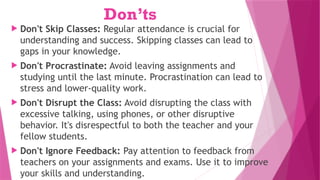
 Don't Skip Classes: Regular attendance is crucial for
understanding and success. Skipping classes can lead to
gaps in your knowledge.
 Don't Procrastinate: Avoid leaving assignments and
studying until the last minute. Procrastination can lead to
stress and lower-quality work.
 Don't Disrupt the Class: Avoid disrupting the class with
excessive talking, using phones, or other disruptive
behavior. It's disrespectful to both the teacher and your
fellow students.
 Don't Ignore Feedback: Pay attention to feedback from
teachers on your assignments and exams. Use it to improve
your skills and understanding.
Don’ts
 Don't Compare Excessively: Comparing yourself constantly
to others can lead to unnecessary stress. Focus on your own
progress and growth.
 Don't Fear Mistakes: Mistakes are a part of the learning
process. Embrace them as opportunities to learn and
improve.
 Don't Multitask During Class: Trying to multitask by using
your phone or doing unrelated tasks during class can
negatively impact your learning.
 Don't Be Afraid to Ask Questions: If you don't understand
something, don't hesitate to ask questions. It's better to
seek clarification than to remain confused.
Don’ts
 Don't Overload Yourself: While extracurricular
activities are important, avoid overloading your
schedule to the point where it affects your academics
and well-being.
 Don't Engage in Negative Behavior: Avoid engaging in
bullying, cheating, or any other negative behavior that
harms others or yourself.
Remember that these are general
guidelines, and each individual's
situation may vary. The key is to
approach this school year with a
positive attitude, a willingness to
learn, and a commitment to your
own growth and development.
THANK YOU!

CLASSROOM-RULES. during school orientation pptx

  • 4.
  • 5.
    SCHOOL RULES FOR LEARNERS Dress Code: Most schools have a dress code that outlines acceptable attire. This includes guidelines on the length of skirts, appropriate tops, and restrictions on clothing with offensive images or slogans.  Attendance: Schools typically have attendance requirements. Students may be required to attend a certain percentage of classes to pass the course.  Punctuality: Being on time for classes, exams, and school events is usually emphasized.
  • 6.
    SCHOOL RULES FOR LEARNERS Behavior and Respect: Rules regarding respectful behavior towards teachers, staff, and fellow students are common. Bullying, harassment, and disruptive behavior are usually prohibited.  Cell Phones and Electronics: Many schools have policies regarding the use of cell phones and other electronic devices during class hours.  Academic Integrity: Cheating, plagiarism, and any form of academic dishonesty are usually strictly prohibited.
  • 7.
    SCHOOL RULES FOR LEARNERS Use of Facilities: Guidelines for the proper use of school facilities, including libraries, computer labs, and recreational areas, might be in place.  Use of Language: Schools often have rules about the use of appropriate language and communication, both in person and online.  Uniforms and Identification: If applicable, rules about wearing uniforms and displaying identification badges may be in place.  Leaving the Campus: Guidelines for leaving the school campus during school hours.
  • 8.
    SCHOOL RULES FOR LEARNERS Prohibited Items: Rules about bringing items like weapons, drugs, alcohol, and other prohibited substances to school are standard.  Parking and Transportation: If students are allowed to drive to school, there might be rules about parking and transportation.  Personal Belongings: Rules about the security and responsibility of personal belongings, including bags, books, and other items, may be outlined.  Social Media and Online Behavior: Guidelines on appropriate online behavior and the use of social media platforms, especially when it pertains to the school community, could be in place.
  • 10.
    CLASSROOM RULES  RespectOthers: Treat your classmates, teachers, and staff with kindness, courtesy, and consideration. Listen when others are speaking, and avoid interrupting or talking over them.  Be Punctual: Arrive on time for classes and activities. Punctuality shows respect for everyone's time and ensures you don't miss out on important information.  Come Prepared: Bring all necessary materials, such as textbooks, notebooks, pens, and assignments, to class. Being prepared demonstrates your commitment to learning.
  • 11.
    CLASSROOM RULES  ActiveParticipation: Engage in class discussions, ask questions, and contribute your thoughts and ideas. Active participation enhances your learning experience.  Stay Focused: Minimize distractions by putting away phones or other electronic devices unless they are required for the lesson. Stay attentive and engaged in the class material.  Follow Directions: Listen carefully to your teachers and follow their instructions. This ensures that class activities run smoothly and effectively.
  • 12.
    CLASSROOM RULES  Respectthe Classroom Environment: Keep the classroom tidy and clean. Dispose of trash properly and avoid damaging school property.  Raise Your Hand: When you have a question or want to contribute, raise your hand and wait to be recognized by the teacher. This helps maintain an orderly classroom discussion.  No Disruptive Behavior: Avoid behaviors that disrupt the class, such as talking loudly, making inappropriate noises, or engaging in side conversations during instruction.
  • 13.
    CLASSROOM RULES  Honestyand Integrity: Complete your own work and assignments honestly. Plagiarism and cheating are unacceptable and undermine your personal growth.  Respect Different Opinions: It's okay to have differing opinions, but express them respectfully. Engage in constructive debates and avoid personal attacks.  Stay Seated: Remain seated during class unless given permission to move around. Moving about the classroom should be done in a respectful and purposeful manner.
  • 14.
    CLASSROOM RULES  Adhereto Dress Code: Follow the school's dress code guidelines to maintain a professional and appropriate appearance.  Use Technology Wisely: If allowed, use electronic devices for educational purposes only. Avoid using them for personal activities during class time.  Stay On Task: Use class time for the designated activity or lesson. Avoid working on unrelated assignments or engaging in off-topic discussions.
  • 15.
    CLASSROOM RULES  RespectConfidentiality: Keep personal information shared by others in the classroom confidential. Respect your classmates' privacy.  Be Open to Learning: Approach each lesson with a positive attitude and a willingness to learn. Embrace challenges as opportunities for growth.  Seek Help When Needed: If you're struggling with the material, ask questions or seek help from your teacher or peers. Don't hesitate to clarify your doubts.
  • 16.
    These rules aredesigned to foster a respectful and productive learning environment. They contribute to a positive atmosphere that benefits both you and your classmates.
  • 18.
    Do’s  Do AttendRegularly: Attend classes consistently to ensure you don't miss out on important lessons and discussions.  Do Participate Actively: Engage in class discussions, ask questions, and contribute your thoughts. Active participation enhances your understanding and helps build a positive learning environment.  Do Manage Time Wisely: Create a study schedule to balance academic work, extracurricular activities, and personal time. Time management is crucial for success.  Do Take Notes: Taking thorough notes during classes helps reinforce your understanding and makes studying more efficient.
  • 19.
    Do’s  Do CompleteAssignments: Finish your assignments on time and put effort into them. They are valuable for learning and your overall grade.  Do Seek Help: If you're struggling with a subject or concept, don't hesitate to ask for help from teachers, peers, or tutors.  Do Stay Organized: Keep your materials, notes, and assignments organized. This reduces stress and helps you find what you need quickly.  Do Respect Others: Treat your teachers and peers with respect and kindness. A positive classroom atmosphere makes learning more enjoyable for everyone.
  • 20.
    Do’s  Do SetGoals: Set both short-term and long-term goals for your academic and personal development. Having goals gives you a sense of purpose.  Do Take Care of Yourself: Get enough sleep, eat healthily, and engage in physical activities to maintain your well-being.
  • 21.
    Don’ts  Don't SkipClasses: Regular attendance is crucial for understanding and success. Skipping classes can lead to gaps in your knowledge.  Don't Procrastinate: Avoid leaving assignments and studying until the last minute. Procrastination can lead to stress and lower-quality work.  Don't Disrupt the Class: Avoid disrupting the class with excessive talking, using phones, or other disruptive behavior. It's disrespectful to both the teacher and your fellow students.  Don't Ignore Feedback: Pay attention to feedback from teachers on your assignments and exams. Use it to improve your skills and understanding.
  • 22.
    Don’ts  Don't CompareExcessively: Comparing yourself constantly to others can lead to unnecessary stress. Focus on your own progress and growth.  Don't Fear Mistakes: Mistakes are a part of the learning process. Embrace them as opportunities to learn and improve.  Don't Multitask During Class: Trying to multitask by using your phone or doing unrelated tasks during class can negatively impact your learning.  Don't Be Afraid to Ask Questions: If you don't understand something, don't hesitate to ask questions. It's better to seek clarification than to remain confused.
  • 23.
    Don’ts  Don't OverloadYourself: While extracurricular activities are important, avoid overloading your schedule to the point where it affects your academics and well-being.  Don't Engage in Negative Behavior: Avoid engaging in bullying, cheating, or any other negative behavior that harms others or yourself.
  • 24.
    Remember that theseare general guidelines, and each individual's situation may vary. The key is to approach this school year with a positive attitude, a willingness to learn, and a commitment to your own growth and development.
  • 25.