



Greg Githens – defined strategic
thinking as the individual’s
capacity for thinking conceptually,
imaginatively, systematically, and
opportunistically with regard to
the attainment of success in the
future.
Strategic thinking employs mental
processes that are:
Conceptual (abstractions using analogy
to translate across contexts)
Systematic (composed of different
components with interfaces that
interact to produce intended or
emergent behaviors, pattern finding,
and connecting situations that are not
obviously related)
Strategic thinking employs mental
processes that are:
Imaginative (creative and visual)
Opportunistic (searching for
and grasping new information
and value propositions)
The strategic thinker
applies all of these
cognitive processes in
the orientation toward
future success.
“quick and ready insight” (Webster’s
New Collegiate Dictionary).
Intuitive decision-making is far more
than using common sense because it
involves additional sensors to perceive
and get aware of the information from
outside.
Sometimes, it is referred to as:
Gut feeling
Sixth sense
Inner sense
Instinct
Inner voice
Spiritual guide, etc.
The following are some well-known people of
intuition (Timeforchange.org)
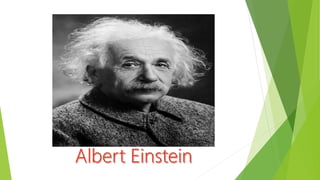
1. Albert Einstein(Theoretical physicist
who is widely considered one of the
greatest physicists of all time; best
known for the theory of relativity, Nobel
Prize in Physics for his explanation of the
photoelectric effect and “for his services
to Theoretical Physics”)
“The only real valuable thing is
intuition”
“There is no logical way to the
discovery of these elemental laws.
There is only the way of intuition,
which is helped by a feeling for the
order lying behind the appearance”.
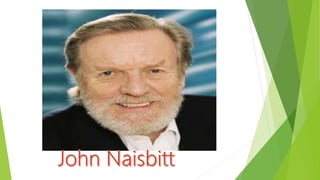
2. John Naisbitt (Former
Executive of IBM and Eastman
Kodak; American Writer in the
area of futures studies; author of
several international best sellers
like Megatrends and Reinventing
the Corporation)
“Intuition becomes
increasingly valuable in the
new information society
precisely because there is
so much data”.
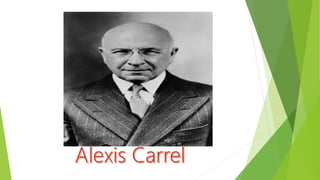
3. Alexis Carrel (French surgeon,
biologist, and eugenicist, Nobel Prize
in Physiology or Medicine).
“All great men are gifted with
intuition. They know without
reasoning or analysis what they
need to know”.
“Intuition comes very close
to clairvoyance; it appears
to be the extrasensory
perception of reality”.
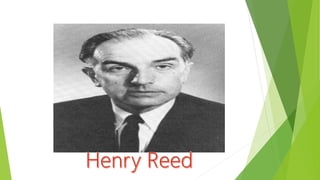
4. Henry Reed (British poet)
“Intuition is the very force or activity of
the soul in its experience through what
ever has been the experience of the
itself”.
“It is as if the intuitive sense acting
through the soul is what makes the raw
events into food for the soul”.
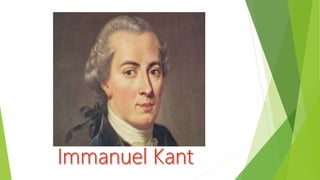
5. Immanuel Kant (German Philosopher)
“Intuition and concepts constitute…
elements of all our knowledge, so that
neither concepts without an intuition
some way corresponding to them, nor
intuition without concepts, can yield
knowledge”.
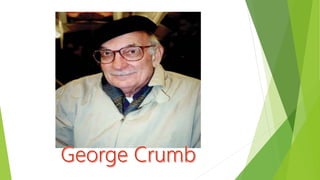
6. George Crumb ( American composer
of modern and avant garde music)
“In general, I feel that the more
rationalistic approaches to pitch –
organization, including specifically
technique, have given way, largely, to
more intuitive approach”.
7. Robert Graves (English poet,
scholar, and novelist)
“Intuition is the supra-logic that
out all the routine processes of
thought and leaps straight from
problem to the answer”.
8. Lao Tzu (ancient Chinese
Philosopher)
“The power of intuitive
understanding will protect you
from harm until the end of
days”.
9. Anne Wilson Schaef (writer
and lecturer)
“Trusting our own intuition
saves us from disaster”.
The question is not whether
rational reasoning or intuitive
decision-making is generally
better. The question is rather
how both approaches can be
best combined for best results
and to avoid mistakes and
prejudices.
1. Uncritical persons
 are those who have not developed
intellectual skills; persons who are naïve
conformist, easily manipulated, often
inflexible, easily confused, typically unclear,
narrow-minded, and consistently ineffective
in their use of language.
 They may have a good heart but they are not
able to skilfully analyze the problems they
face so as to effectively protect their own
interest.
2. Selfish critical persons
are skilled thinkers who do not
genuinely accept the values of
critical thinking: persons who use
the intellectual skills of critical
thinking selectively and self-
deceptively to foster and serve
their vested interest (at the
expense of truth)
2. Selfish critical persons
they are typically able to identify flaws
in the reasoning of others and refute
them and to back up their own claims
with plausible reasons; by doing so
they have not learned how to reason
emphatically within points of view with
which they disagree.
3. Fair-minded critical persons
 are skilled thinkers who do accept and
honor the values of critical thinking; persons
who use the intellectual skills of critical
thinking to accurately reconstruct the
strongest version of points of view in
conflict with their own and to question
deeply their own framework of thought.
They try to find and correct flaws to their
own reasoning and to be scrupulously fair
to those with whom they disagree.
“I don’t need to think! I understand
everything without thinking. I just do whatever
occurs to me to do. I believe most of what I
hear. I believe most of what I see on TV. I don’t
see why I should question either. And I don’t
need to waste a lot of time trying to figure
things out. Why should I, when someone will
figure things out for me if I wait long enough?
It’s a lot easier to say “I can’t” than to do a lot
work.
My parents and my teachers take care of me
when I can’t take care of myself. The other day
I was having trouble with my Math homework
and started to cry, so my father did it for me.
My parents give me a lot of help. It’s easier
that way, I do what I’m told, keep my mouth
shut, and go along with whatever my friends
decide. I don’t like to make waves. Thinking
gets you into trouble.”
“I think a lot! It helps me trick people and
get what I want. I believe whatever I want to
believe, whatever gets me what I want. I
question anyone who asks me to do what I
don’t want to do. I figure out how to get
around my parents. I figure out how to get
other kids to do what I want them to do. I even
figure out how to avoid thinking if I want.
Sometimes I say “I can’t” when I know I could
but don’t want to.
You can get what you want from people if
you know how to manipulate them. Just the
other night, I got to stay up till 11:00 p.m. by
arguing with my mother about bedtime! It
helps me to tell people what they want to hear.
Of course, sometimes what they want to hear
isn’t true, but that doesn’t matter because you
only get into trouble when you tell people what
they don’t want to hear. You can always trick
people if you know how. Guess what, you can
even trick yourself if you know how.”
“I think a lot! It helps me to learn. It helps me to
figure out. I want to understand my parents and my
playmates. In fact, I even want to understand
myself and why I do things. Sometimes I do things
that I don’t understand . It’s not easy trying to
understand everyone and everything. Lots of
people say one thing and do another. You can’t
always believe what people say. You can’t believe a
lot of what you see on TV. People often say things
not because they mean them but because they
want things and are trying to please you.
I would like to make the world a better place.
I want to make it better for everyone, not just
for me and my friends. To understand other
people you have to look at things as they do.
You have to understand their situation and what
you would feel like you were them.
You have to put yourself on their shoes. The
other night, I got mad at my sister because she
wanted to watch a TV program that was at the
same time my favourite show was on.
I didn’t want to let her until I realized that she
needed to watch her program to do some
homework for school. I knew then that it wouldn’t
be fair of me to insist on my show, since she did
have to do her homework for school. It isn’t easy
to be fair. It’s a lot easier to be selfish and just
think about yourself.
But if I don’t think about others, why should
they think about me? I want to be fair to others
because I expect everyone to be fair to me”.
The distinction between uncritical
thinking and critical thinking, on the
one hand, and between selfish and fair-
minded critical thinking on the other
hand, underlies our whole approach to
critical thinking. It highlights the danger
of focusing on critical thinking skills
alone, independent of critical thinking
values.
Strategic thinking
Strategic thinking

Strategic thinking

  • 2.
    Greg Githens –defined strategic thinking as the individual’s capacity for thinking conceptually, imaginatively, systematically, and opportunistically with regard to the attainment of success in the future.
  • 3.
    Strategic thinking employsmental processes that are: Conceptual (abstractions using analogy to translate across contexts) Systematic (composed of different components with interfaces that interact to produce intended or emergent behaviors, pattern finding, and connecting situations that are not obviously related)
  • 4.
    Strategic thinking employsmental processes that are: Imaginative (creative and visual) Opportunistic (searching for and grasping new information and value propositions)
  • 5.
    The strategic thinker appliesall of these cognitive processes in the orientation toward future success.
  • 6.
    “quick and readyinsight” (Webster’s New Collegiate Dictionary). Intuitive decision-making is far more than using common sense because it involves additional sensors to perceive and get aware of the information from outside.
  • 7.
    Sometimes, it isreferred to as: Gut feeling Sixth sense Inner sense Instinct Inner voice Spiritual guide, etc.
  • 8.
    The following aresome well-known people of intuition (Timeforchange.org) 1. Albert Einstein(Theoretical physicist who is widely considered one of the greatest physicists of all time; best known for the theory of relativity, Nobel Prize in Physics for his explanation of the photoelectric effect and “for his services to Theoretical Physics”)
  • 10.
    “The only realvaluable thing is intuition” “There is no logical way to the discovery of these elemental laws. There is only the way of intuition, which is helped by a feeling for the order lying behind the appearance”.
  • 11.
    2. John Naisbitt(Former Executive of IBM and Eastman Kodak; American Writer in the area of futures studies; author of several international best sellers like Megatrends and Reinventing the Corporation)
  • 13.
    “Intuition becomes increasingly valuablein the new information society precisely because there is so much data”.
  • 14.
    3. Alexis Carrel(French surgeon, biologist, and eugenicist, Nobel Prize in Physiology or Medicine). “All great men are gifted with intuition. They know without reasoning or analysis what they need to know”.
  • 16.
    “Intuition comes veryclose to clairvoyance; it appears to be the extrasensory perception of reality”.
  • 17.
    4. Henry Reed(British poet) “Intuition is the very force or activity of the soul in its experience through what ever has been the experience of the itself”. “It is as if the intuitive sense acting through the soul is what makes the raw events into food for the soul”.
  • 19.
    5. Immanuel Kant(German Philosopher) “Intuition and concepts constitute… elements of all our knowledge, so that neither concepts without an intuition some way corresponding to them, nor intuition without concepts, can yield knowledge”.
  • 21.
    6. George Crumb( American composer of modern and avant garde music) “In general, I feel that the more rationalistic approaches to pitch – organization, including specifically technique, have given way, largely, to more intuitive approach”.
  • 23.
    7. Robert Graves(English poet, scholar, and novelist) “Intuition is the supra-logic that out all the routine processes of thought and leaps straight from problem to the answer”.
  • 25.
    8. Lao Tzu(ancient Chinese Philosopher) “The power of intuitive understanding will protect you from harm until the end of days”.
  • 27.
    9. Anne WilsonSchaef (writer and lecturer) “Trusting our own intuition saves us from disaster”.
  • 29.
    The question isnot whether rational reasoning or intuitive decision-making is generally better. The question is rather how both approaches can be best combined for best results and to avoid mistakes and prejudices.
  • 31.
    1. Uncritical persons are those who have not developed intellectual skills; persons who are naïve conformist, easily manipulated, often inflexible, easily confused, typically unclear, narrow-minded, and consistently ineffective in their use of language.  They may have a good heart but they are not able to skilfully analyze the problems they face so as to effectively protect their own interest.
  • 32.
    2. Selfish criticalpersons are skilled thinkers who do not genuinely accept the values of critical thinking: persons who use the intellectual skills of critical thinking selectively and self- deceptively to foster and serve their vested interest (at the expense of truth)
  • 33.
    2. Selfish criticalpersons they are typically able to identify flaws in the reasoning of others and refute them and to back up their own claims with plausible reasons; by doing so they have not learned how to reason emphatically within points of view with which they disagree.
  • 34.
    3. Fair-minded criticalpersons  are skilled thinkers who do accept and honor the values of critical thinking; persons who use the intellectual skills of critical thinking to accurately reconstruct the strongest version of points of view in conflict with their own and to question deeply their own framework of thought. They try to find and correct flaws to their own reasoning and to be scrupulously fair to those with whom they disagree.
  • 35.
    “I don’t needto think! I understand everything without thinking. I just do whatever occurs to me to do. I believe most of what I hear. I believe most of what I see on TV. I don’t see why I should question either. And I don’t need to waste a lot of time trying to figure things out. Why should I, when someone will figure things out for me if I wait long enough? It’s a lot easier to say “I can’t” than to do a lot work.
  • 36.
    My parents andmy teachers take care of me when I can’t take care of myself. The other day I was having trouble with my Math homework and started to cry, so my father did it for me. My parents give me a lot of help. It’s easier that way, I do what I’m told, keep my mouth shut, and go along with whatever my friends decide. I don’t like to make waves. Thinking gets you into trouble.”
  • 37.
    “I think alot! It helps me trick people and get what I want. I believe whatever I want to believe, whatever gets me what I want. I question anyone who asks me to do what I don’t want to do. I figure out how to get around my parents. I figure out how to get other kids to do what I want them to do. I even figure out how to avoid thinking if I want. Sometimes I say “I can’t” when I know I could but don’t want to.
  • 38.
    You can getwhat you want from people if you know how to manipulate them. Just the other night, I got to stay up till 11:00 p.m. by arguing with my mother about bedtime! It helps me to tell people what they want to hear. Of course, sometimes what they want to hear isn’t true, but that doesn’t matter because you only get into trouble when you tell people what they don’t want to hear. You can always trick people if you know how. Guess what, you can even trick yourself if you know how.”
  • 39.
    “I think alot! It helps me to learn. It helps me to figure out. I want to understand my parents and my playmates. In fact, I even want to understand myself and why I do things. Sometimes I do things that I don’t understand . It’s not easy trying to understand everyone and everything. Lots of people say one thing and do another. You can’t always believe what people say. You can’t believe a lot of what you see on TV. People often say things not because they mean them but because they want things and are trying to please you.
  • 40.
    I would liketo make the world a better place. I want to make it better for everyone, not just for me and my friends. To understand other people you have to look at things as they do. You have to understand their situation and what you would feel like you were them. You have to put yourself on their shoes. The other night, I got mad at my sister because she wanted to watch a TV program that was at the same time my favourite show was on.
  • 41.
    I didn’t wantto let her until I realized that she needed to watch her program to do some homework for school. I knew then that it wouldn’t be fair of me to insist on my show, since she did have to do her homework for school. It isn’t easy to be fair. It’s a lot easier to be selfish and just think about yourself. But if I don’t think about others, why should they think about me? I want to be fair to others because I expect everyone to be fair to me”.
  • 42.
    The distinction betweenuncritical thinking and critical thinking, on the one hand, and between selfish and fair- minded critical thinking on the other hand, underlies our whole approach to critical thinking. It highlights the danger of focusing on critical thinking skills alone, independent of critical thinking values.