Learning Objectives:
• Learn a variety of theories on
  representation.

• Understand how to answer question 1b on
  representation.

• Decide which of your productions you
  would write about for a question on
  representation.
Laura Mulvey
           “The Male Gaze”
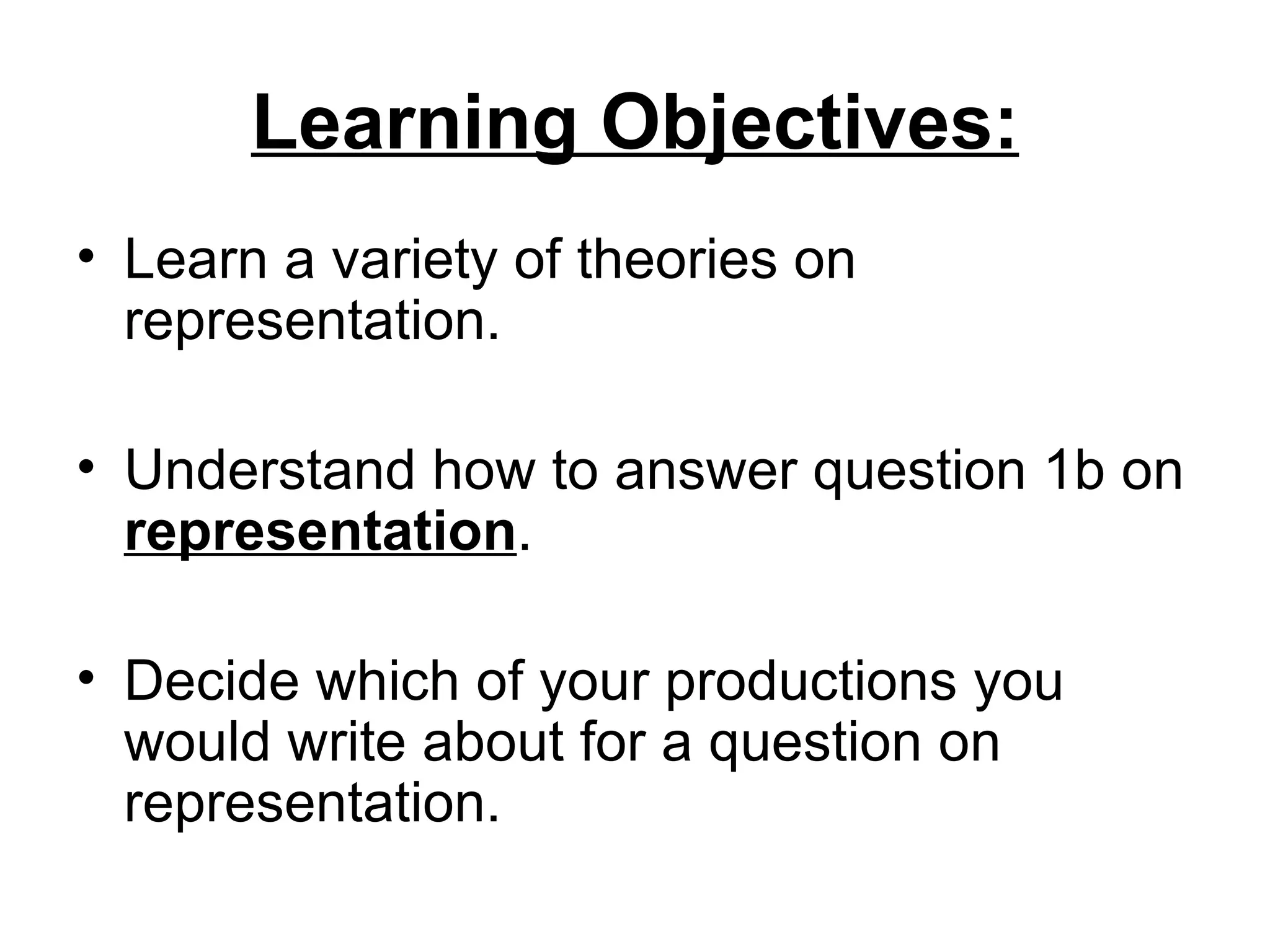
Mainstream Hollywood adopts the position of the
male’s gaze – the camera lingers on legs, lips and
breasts. Men are not objectified in the same way:
they are active. Women are presented as passive.
Laura Mulvey
            “The Male Gaze”
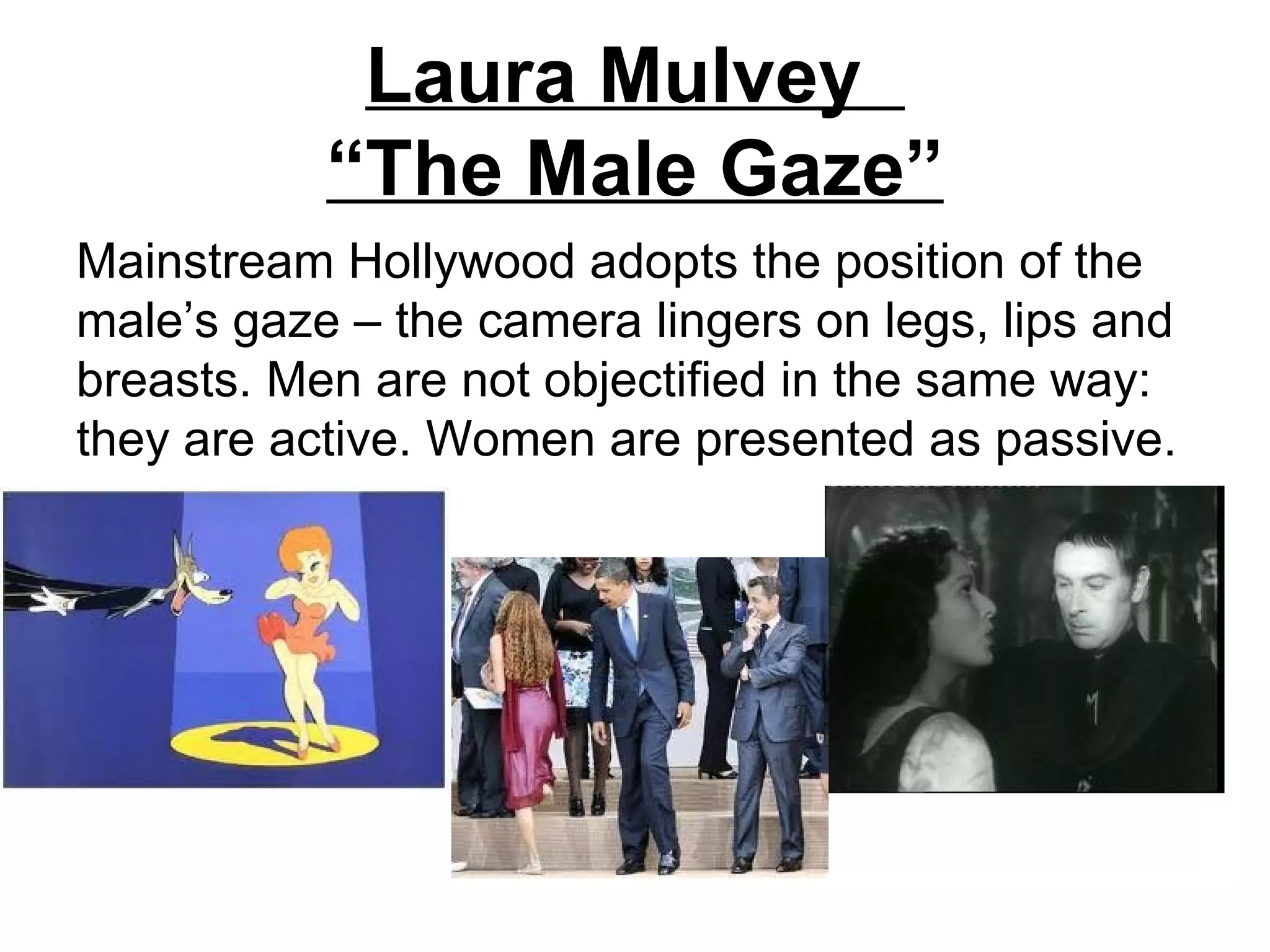
Critics point out that most women don’t seem to have
a problem with such patriarchal texts.

Also, women can gaze at each other for comparison,
not for sexual reasons.
Laura Mulvey
           “The Male Gaze”
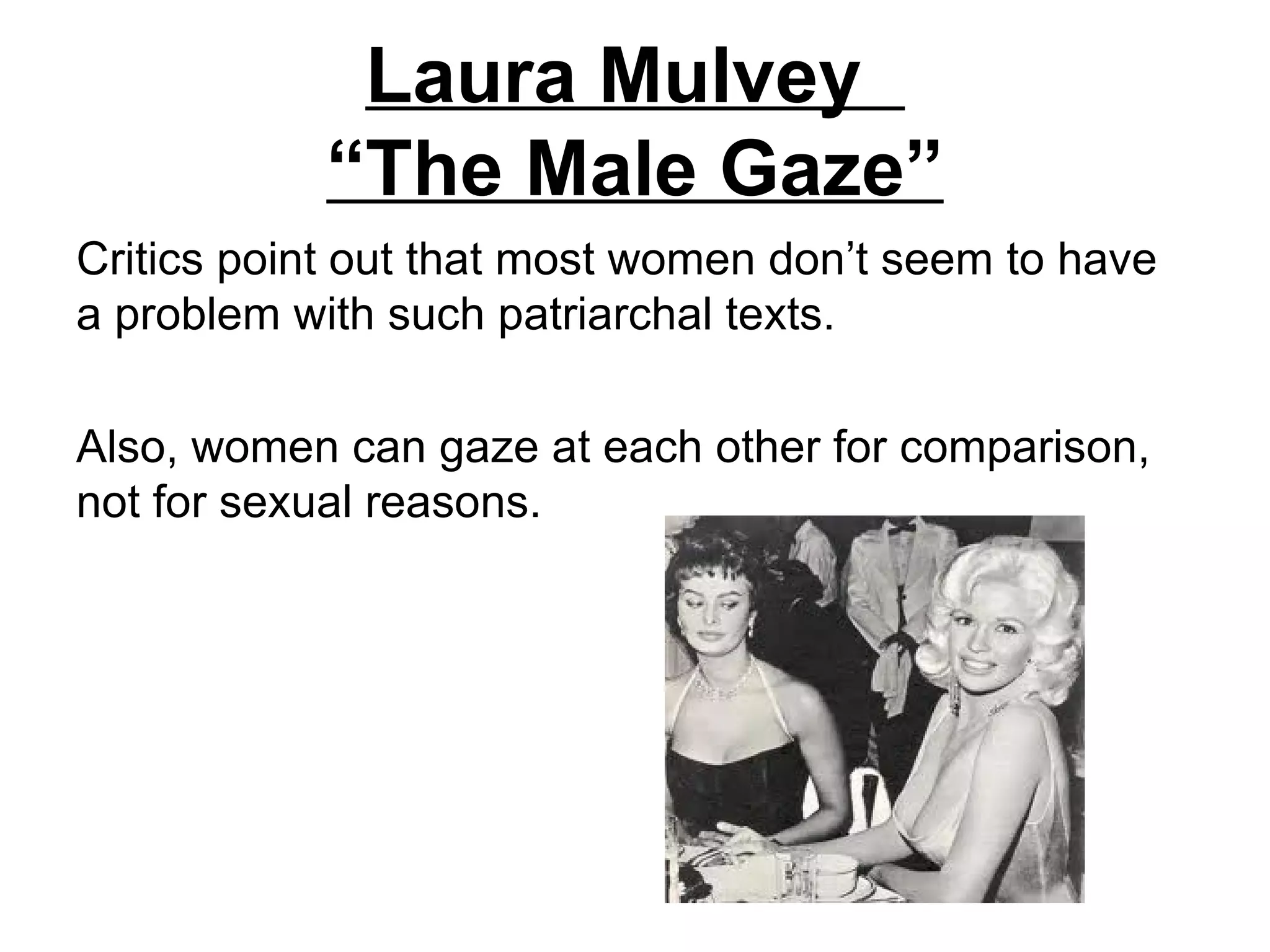
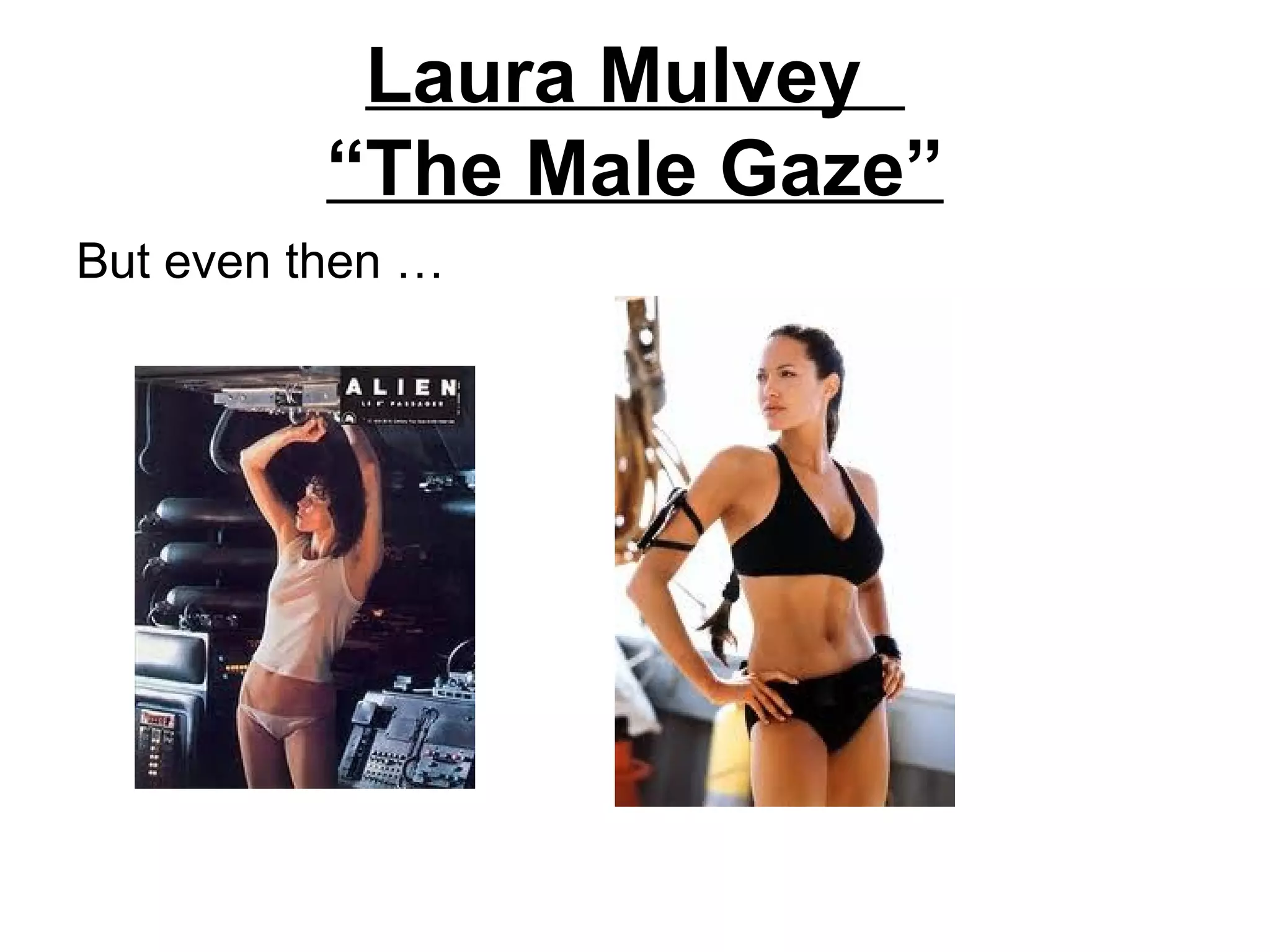
Critics also give examples of mainstream texts
where women are active and not objectified – e.g.
the ‘Aliens’ films.
Laura Mulvey
          “The Male Gaze”
But even then …
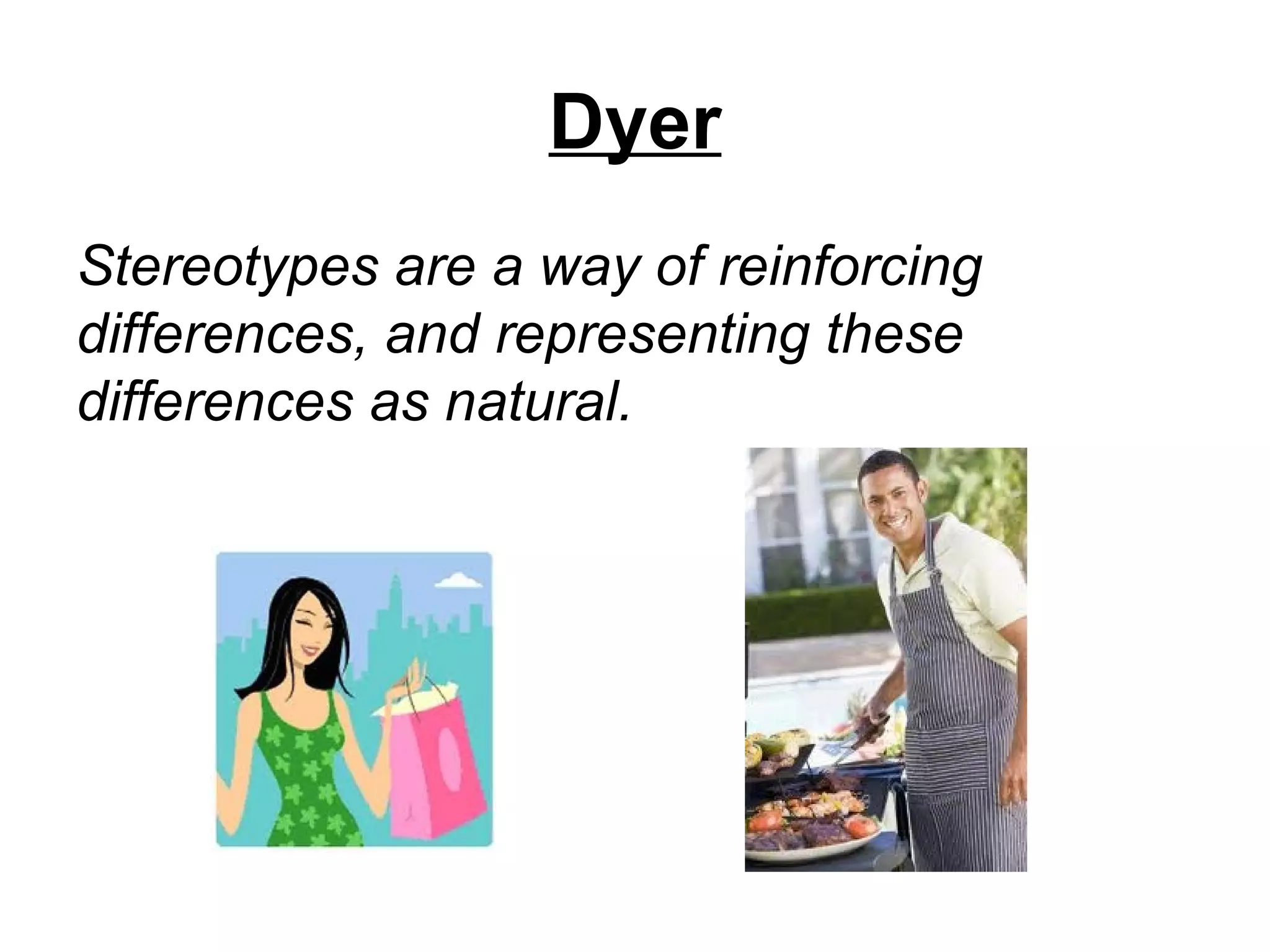
Dyer
Stereotypes are a way of reinforcing
differences, and representing these
differences as natural.
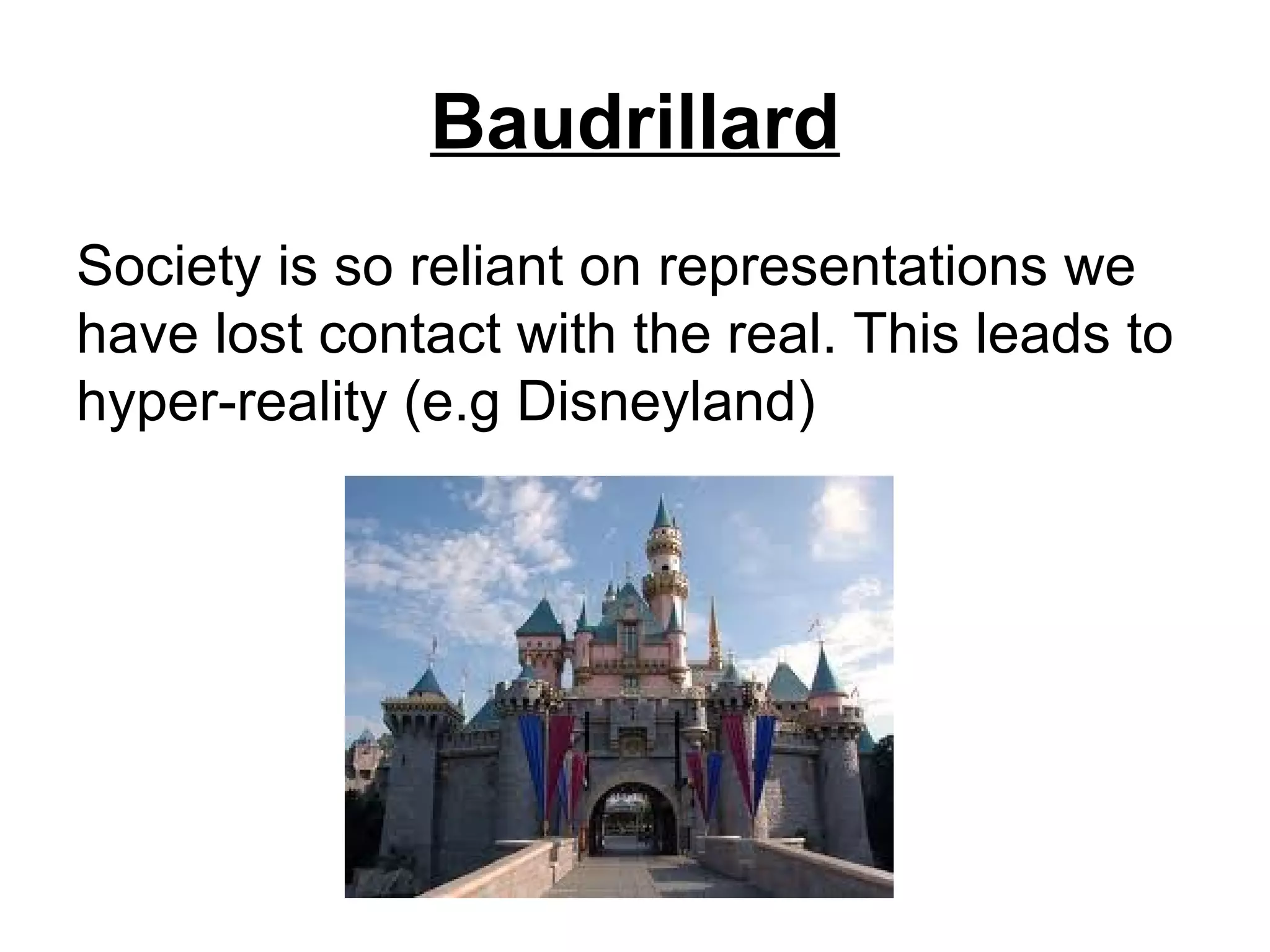
Baudrillard
Society is so reliant on representations we
have lost contact with the real. This leads to
hyper-reality (e.g Disneyland)
Representation
• Identify characters, events or issues within the
  production to discuss.
• How does your video represent different social groups/
  people/ places/ lifestyles? What values/ ideologies are
  you representing/ promoting?
• Discuss the specific elements of character
  representation, i.e. modes of address, facial
  expression, costume, behaviour etc.
• Have any stereotypical representations been
  generated?
• Does the production conform to, or subvert, any
  dominant ideologies?
• What would Laura Mulvey say about your production?
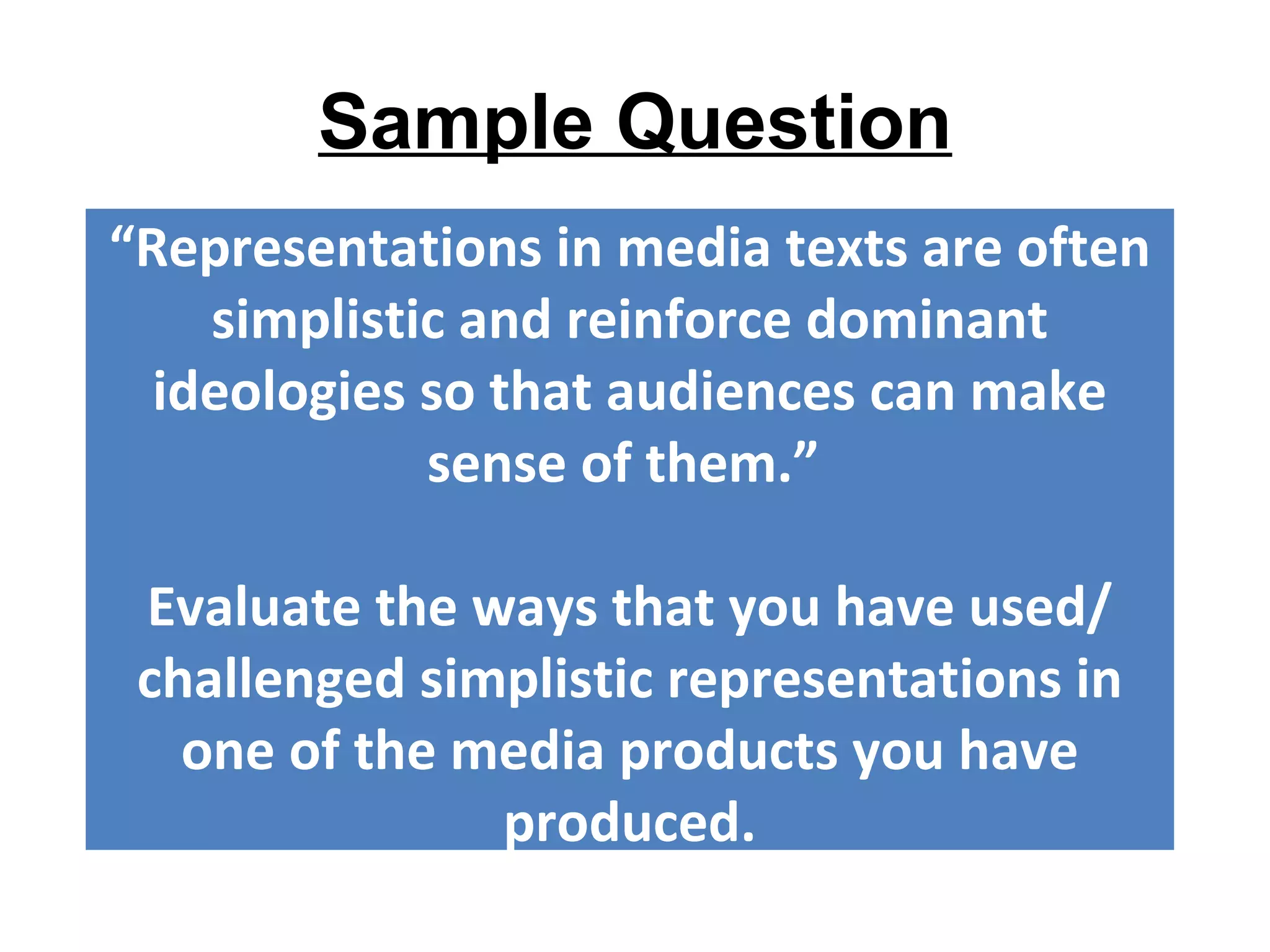
Sample Question
“Representations in media texts are often
    simplistic and reinforce dominant
  ideologies so that audiences can make
             sense of them.”

 Evaluate the ways that you have used/
 challenged simplistic representations in
   one of the media products you have
               produced.

Exam 1 b representation

  • 1.
    Learning Objectives: • Learna variety of theories on representation. • Understand how to answer question 1b on representation. • Decide which of your productions you would write about for a question on representation.
  • 2.
    Laura Mulvey “The Male Gaze” Mainstream Hollywood adopts the position of the male’s gaze – the camera lingers on legs, lips and breasts. Men are not objectified in the same way: they are active. Women are presented as passive.
  • 3.
    Laura Mulvey “The Male Gaze” Critics point out that most women don’t seem to have a problem with such patriarchal texts. Also, women can gaze at each other for comparison, not for sexual reasons.
  • 4.
    Laura Mulvey “The Male Gaze” Critics also give examples of mainstream texts where women are active and not objectified – e.g. the ‘Aliens’ films.
  • 5.
    Laura Mulvey “The Male Gaze” But even then …
  • 6.
    Dyer Stereotypes are away of reinforcing differences, and representing these differences as natural.
  • 7.
    Baudrillard Society is soreliant on representations we have lost contact with the real. This leads to hyper-reality (e.g Disneyland)
  • 8.
    Representation • Identify characters,events or issues within the production to discuss. • How does your video represent different social groups/ people/ places/ lifestyles? What values/ ideologies are you representing/ promoting? • Discuss the specific elements of character representation, i.e. modes of address, facial expression, costume, behaviour etc. • Have any stereotypical representations been generated? • Does the production conform to, or subvert, any dominant ideologies? • What would Laura Mulvey say about your production?
  • 9.
    Sample Question “Representations inmedia texts are often simplistic and reinforce dominant ideologies so that audiences can make sense of them.” Evaluate the ways that you have used/ challenged simplistic representations in one of the media products you have produced.