IRON AGE

In archaeology, the Iron Age is the prehistoric period in any area during which cutting
tools and weapons were mainly made of iron or steel.
The Iron Age is the last principal period in the three-age system for classifying
prehistoric societies, preceded by the Bronze Age and the Stone Age

Classically, the Iron Age is taken to begin in the 12th century BC in the ancient Near East,
ancient India (with the post-Rigvedic Vedic civilization), ancient Iran, and ancient Greece
(with the Greek Dark Ages). In other regions of Europe, it started much later. The Iron
Age began in the 8th century BC in Central Europe and the 6th century BC in Northern
Europe. Iron use, in smelting and forging for tools, appears in West Africa by 1200 BC,
making it one of the first places for the birth of the Iron Age.


                                  The Iron Age

                              (c.500 B.C - 400 A.D )

                                 The Celtic Age
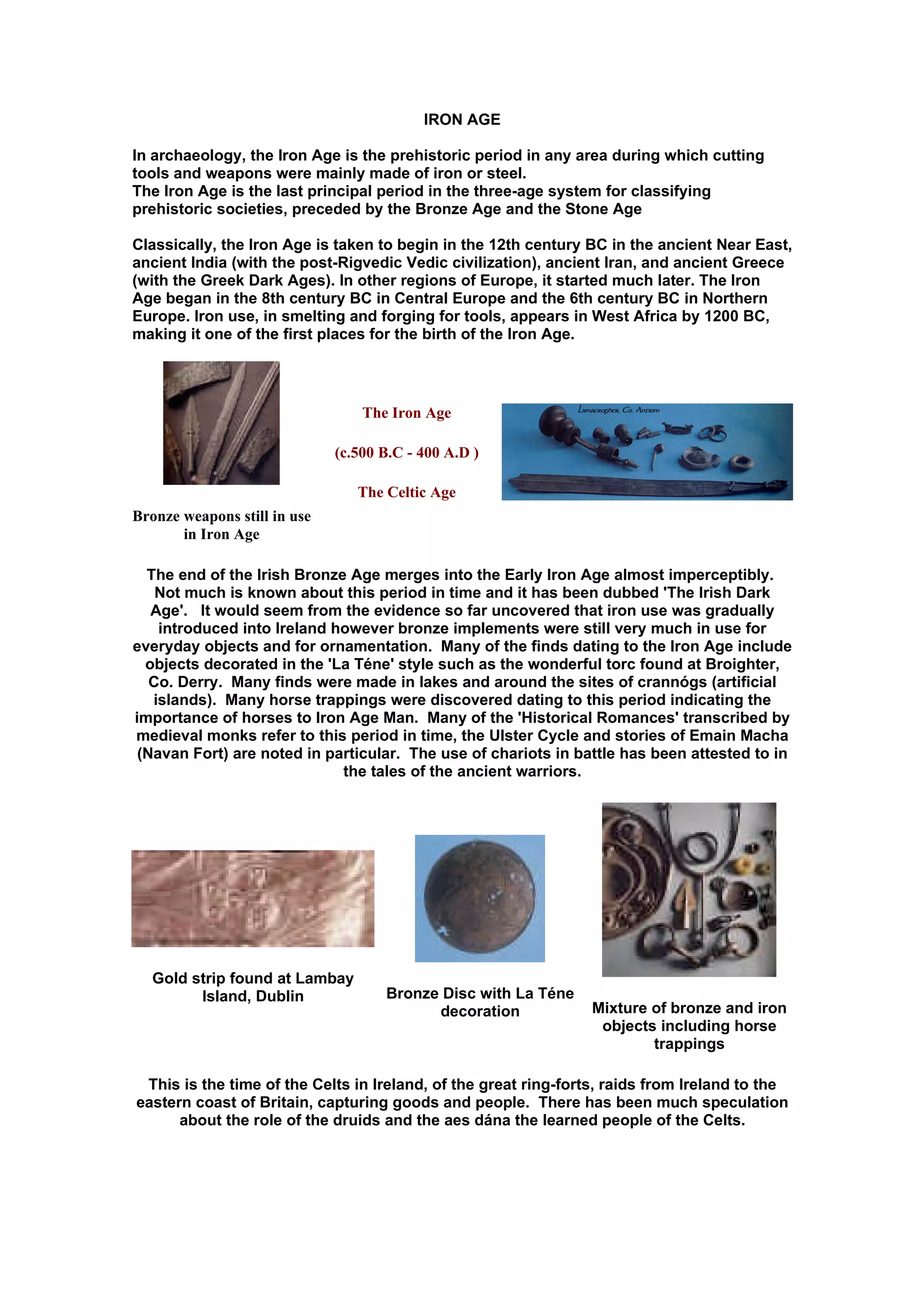
Bronze weapons still in use
       in Iron Age

  The end of the Irish Bronze Age merges into the Early Iron Age almost imperceptibly.
    Not much is known about this period in time and it has been dubbed 'The Irish Dark
   Age'. It would seem from the evidence so far uncovered that iron use was gradually
    introduced into Ireland however bronze implements were still very much in use for
everyday objects and for ornamentation. Many of the finds dating to the Iron Age include
  objects decorated in the 'La Téne' style such as the wonderful torc found at Broighter,
   Co. Derry. Many finds were made in lakes and around the sites of crannógs (artificial
   islands). Many horse trappings were discovered dating to this period indicating the
importance of horses to Iron Age Man. Many of the 'Historical Romances' transcribed by
medieval monks refer to this period in time, the Ulster Cycle and stories of Emain Macha
 (Navan Fort) are noted in particular. The use of chariots in battle has been attested to in
                             the tales of the ancient warriors.


   Gold strip found at Lambay
         Island, Dublin              Bronze Disc with La Téne
                                           decoration           Mixture of bronze and iron
                                                                 objects including horse
                                                                        trappings

 This is the time of the Celts in Ireland, of the great ring-forts, raids from Ireland to the
eastern coast of Britain, capturing goods and people. There has been much speculation
      about the role of the druids and the aes dána the learned people of the Celts.
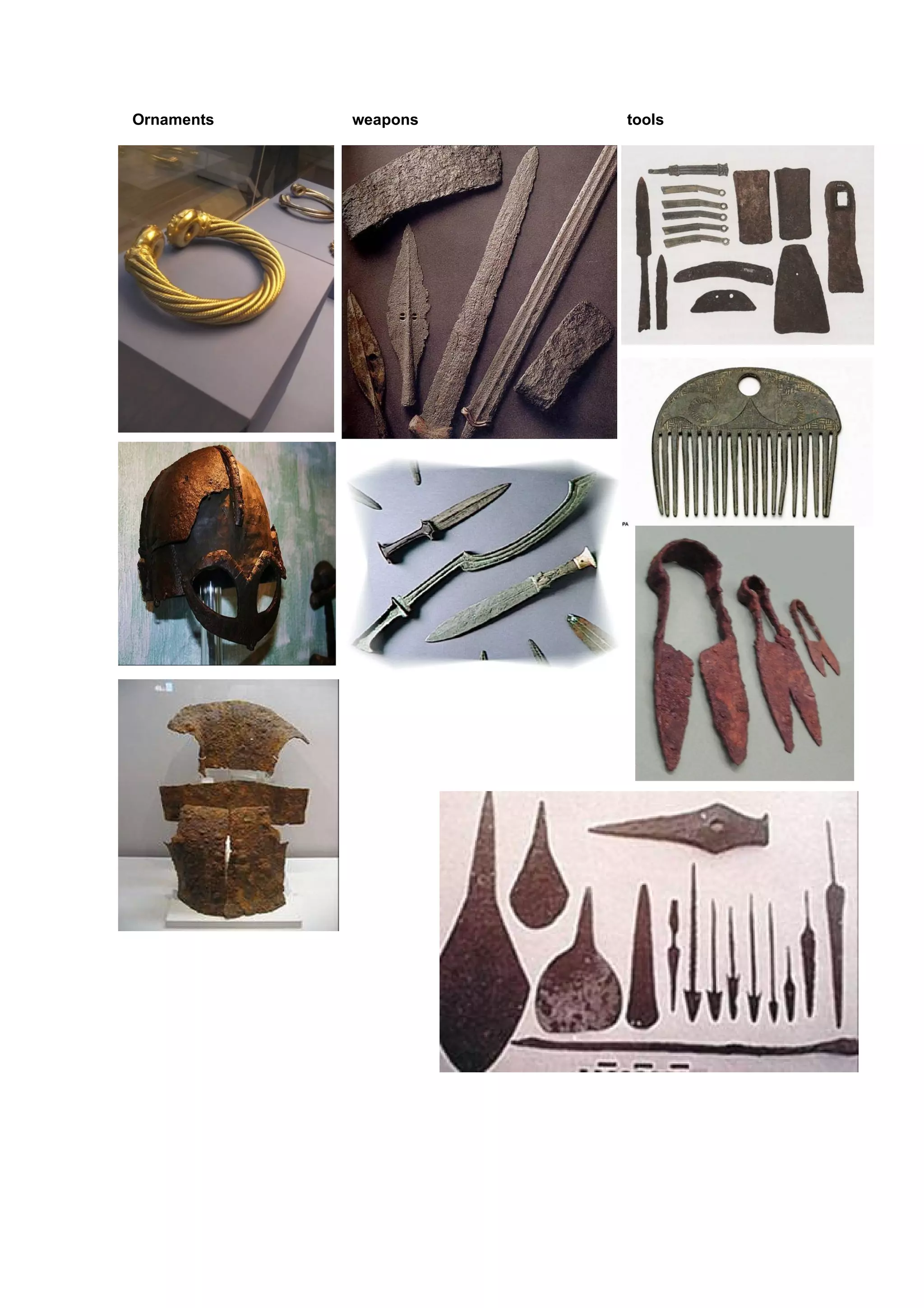
Ornaments   weapons   tools

Iron age

  • 1.
    IRON AGE In archaeology,the Iron Age is the prehistoric period in any area during which cutting tools and weapons were mainly made of iron or steel. The Iron Age is the last principal period in the three-age system for classifying prehistoric societies, preceded by the Bronze Age and the Stone Age Classically, the Iron Age is taken to begin in the 12th century BC in the ancient Near East, ancient India (with the post-Rigvedic Vedic civilization), ancient Iran, and ancient Greece (with the Greek Dark Ages). In other regions of Europe, it started much later. The Iron Age began in the 8th century BC in Central Europe and the 6th century BC in Northern Europe. Iron use, in smelting and forging for tools, appears in West Africa by 1200 BC, making it one of the first places for the birth of the Iron Age. The Iron Age (c.500 B.C - 400 A.D ) The Celtic Age Bronze weapons still in use in Iron Age The end of the Irish Bronze Age merges into the Early Iron Age almost imperceptibly. Not much is known about this period in time and it has been dubbed 'The Irish Dark Age'. It would seem from the evidence so far uncovered that iron use was gradually introduced into Ireland however bronze implements were still very much in use for everyday objects and for ornamentation. Many of the finds dating to the Iron Age include objects decorated in the 'La Téne' style such as the wonderful torc found at Broighter, Co. Derry. Many finds were made in lakes and around the sites of crannógs (artificial islands). Many horse trappings were discovered dating to this period indicating the importance of horses to Iron Age Man. Many of the 'Historical Romances' transcribed by medieval monks refer to this period in time, the Ulster Cycle and stories of Emain Macha (Navan Fort) are noted in particular. The use of chariots in battle has been attested to in the tales of the ancient warriors. Gold strip found at Lambay Island, Dublin Bronze Disc with La Téne decoration Mixture of bronze and iron objects including horse trappings This is the time of the Celts in Ireland, of the great ring-forts, raids from Ireland to the eastern coast of Britain, capturing goods and people. There has been much speculation about the role of the druids and the aes dána the learned people of the Celts.
  • 2.
    Ornaments weapons tools