

Steve Jobs & Development of
personal computers at Apple Inc


     BY ASIF ALI KAZI
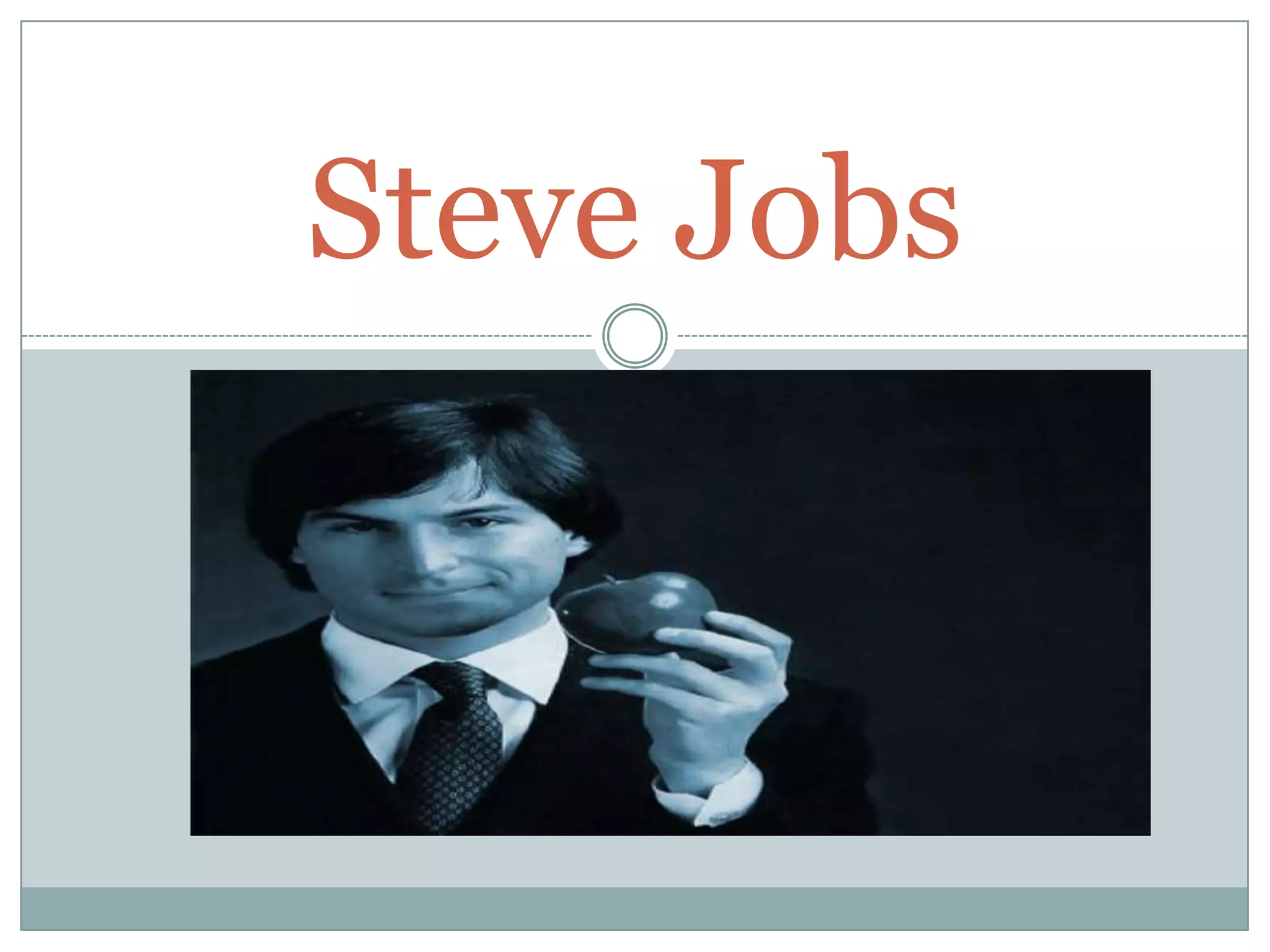
Steve Jobs
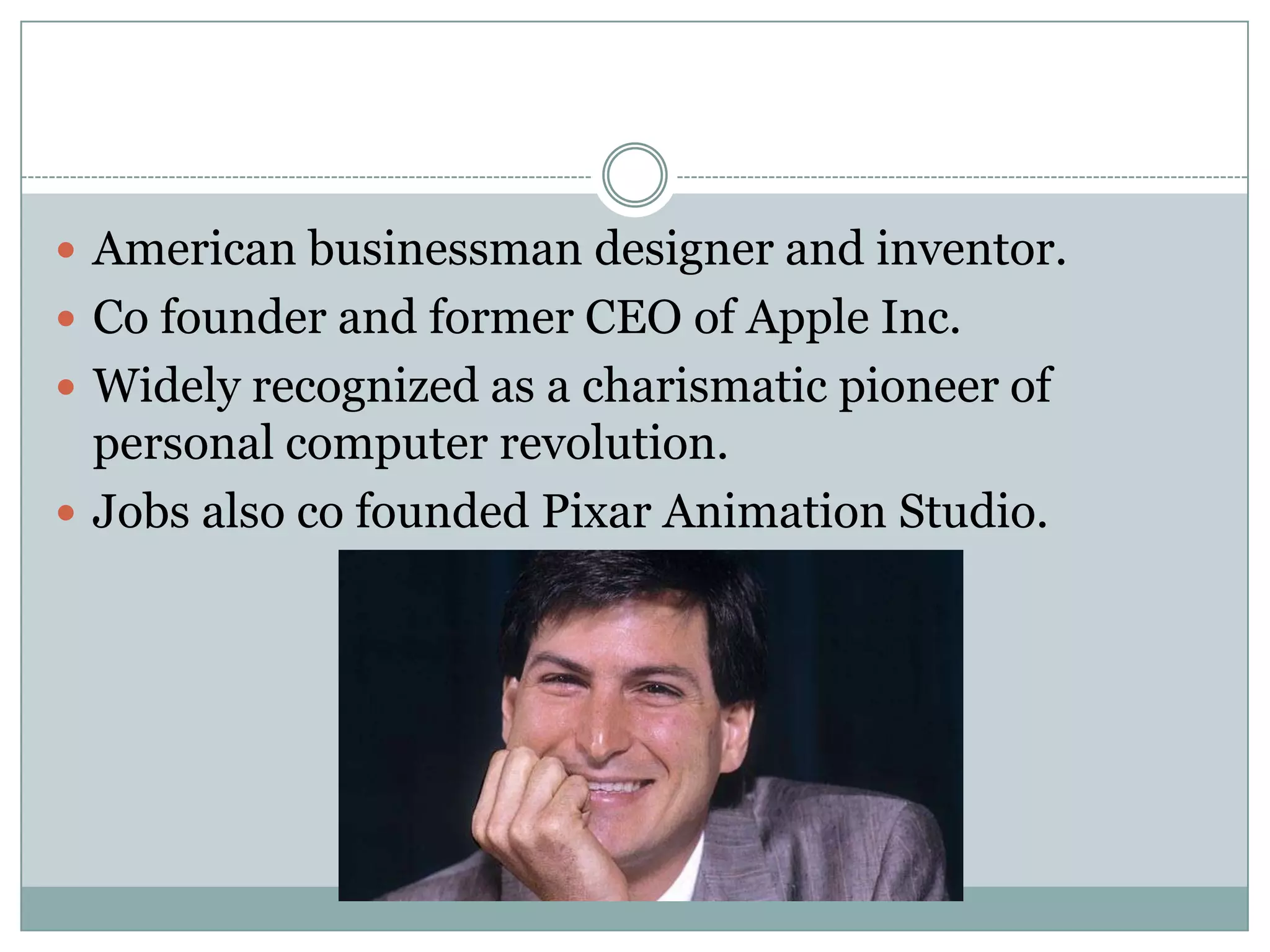
 American businessman designer and inventor.
 Co founder and former CEO of Apple Inc.
 Widely recognized as a charismatic pioneer of
  personal computer revolution.
 Jobs also co founded Pixar Animation Studio.
Beginning of Apple Computers

 Steve Jobs Co founded Apple with his friend Steve
    Wozniak on April 1,1976.
   Jobs and Wozniak were members of Homebrew
    Computer club.
   Jobs met with Wozniak there.
   Steve jobs once said in interview that initially he had
    not the setting up of company in mind.
   Initially both started to make computers for
    themselves and for their friends.
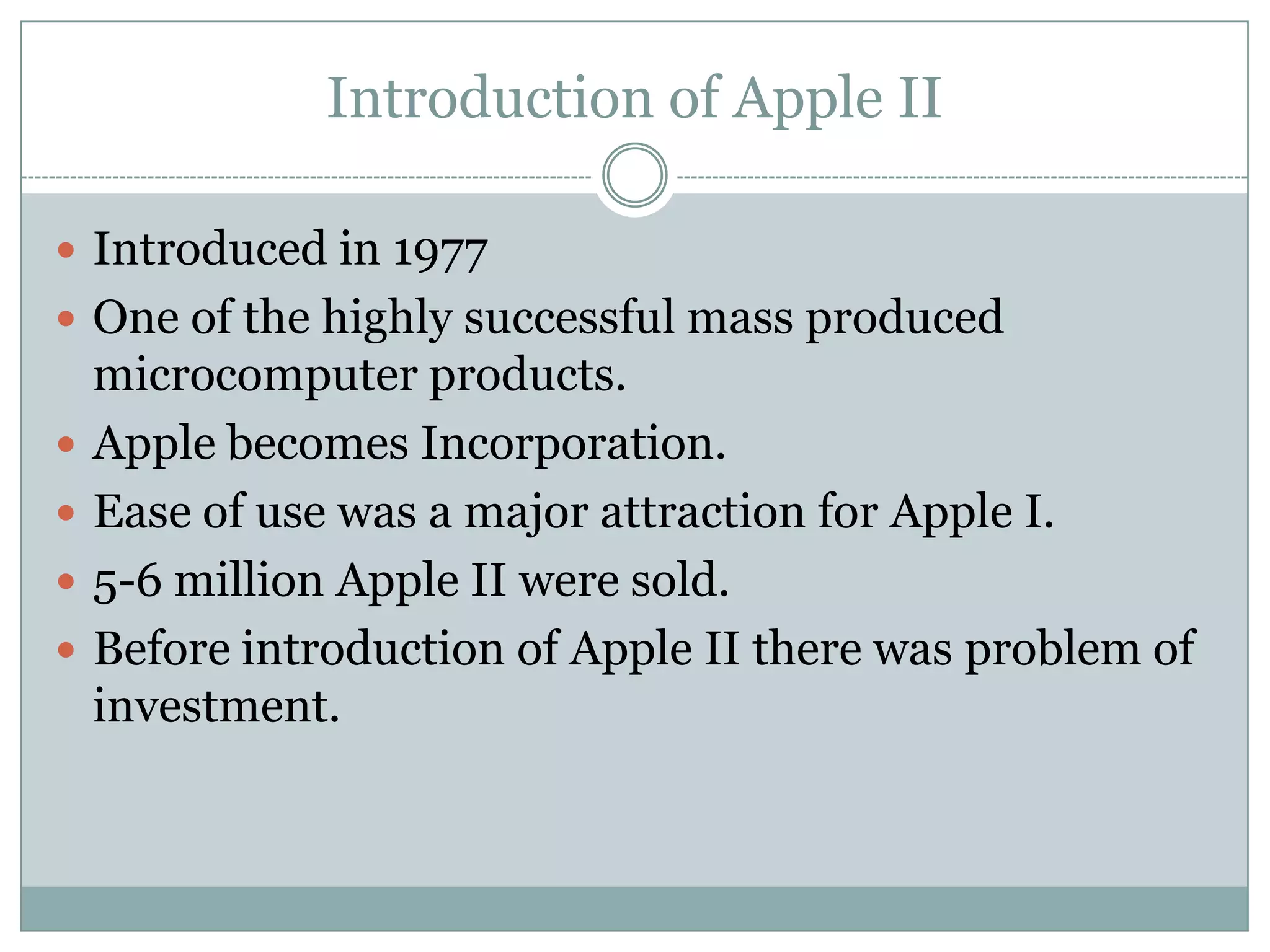
Firs Apple computer

 Apple I was the firs product of the Apple company which was designed
  and hand built by Wozniak
 Jobs sold his sole means of transport a van to finance company’s cost of
  manufacturing.
 Technology used in this computer was not more than that of modern
  day pocket culculator.
 About 200 number of Apple I sold.
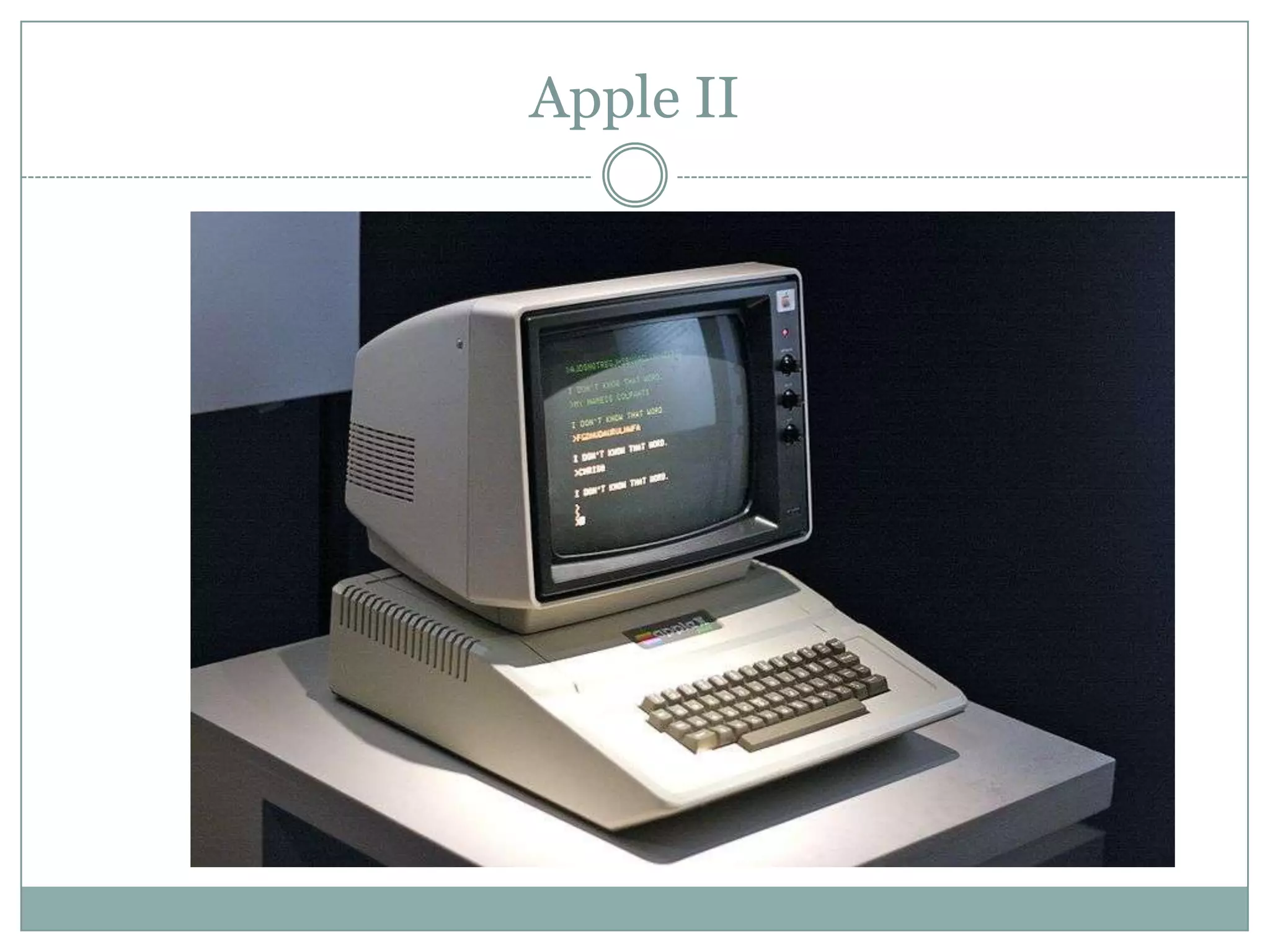
Introduction of Apple II

 Introduced in 1977
 One of the highly successful mass produced
    microcomputer products.
   Apple becomes Incorporation.
   Ease of use was a major attraction for Apple I.
   5-6 million Apple II were sold.
   Before introduction of Apple II there was problem of
    investment.
Apple II
Here comes Mike Markkula

 Mike was American Entrepreneur and Angel Investor.
 He Provided Earlier critical funding and managerial
  support.
 With his support and skill apple was transformed form a
  partnership business to an incorporation.
 Markkula invested $250,000 of which $80,000 was an
  equity investment and $170,000 was as a loan.
Introduction of VisiCalc

 Apple II introduced first Killer Application of
  VisiCalc for business.
 VisiCalc was first spreadsheet program available on
  Personal Computers.
 VisiCalc created a business market for the Apple II
Tense years and Failures

 Apple introduced Apple III by the end 1970s.
 But it became a huge market failure.
 Jobs was in search of some innovation which may turn
  around the state of Apple company and personal
  computers.
 Jobs with Apple employee Jef Raskin visited PARC of
  Xerox Corporation.
 There jobs saw GUI based PC which attracted the jobs.
 Apple Lisa computer was the first personal computer to
  offer graphical user interface.
Apple Went Public…….

 In 1980 apple went public and generating huge
 capital instantly creating more millionaires (about
 300) than any company in history.
Period of Differences

 Jobs was youngster of 23 years and not much
  experienced people started to defy his authority at
  Apple Inc.
 Jobs ditched Apple Lisa project and wanted to work
  on Low cost Macintosh computers.
 Apple Management favored Lisa and introduced Lisa
  which became technological success but market
  failure.
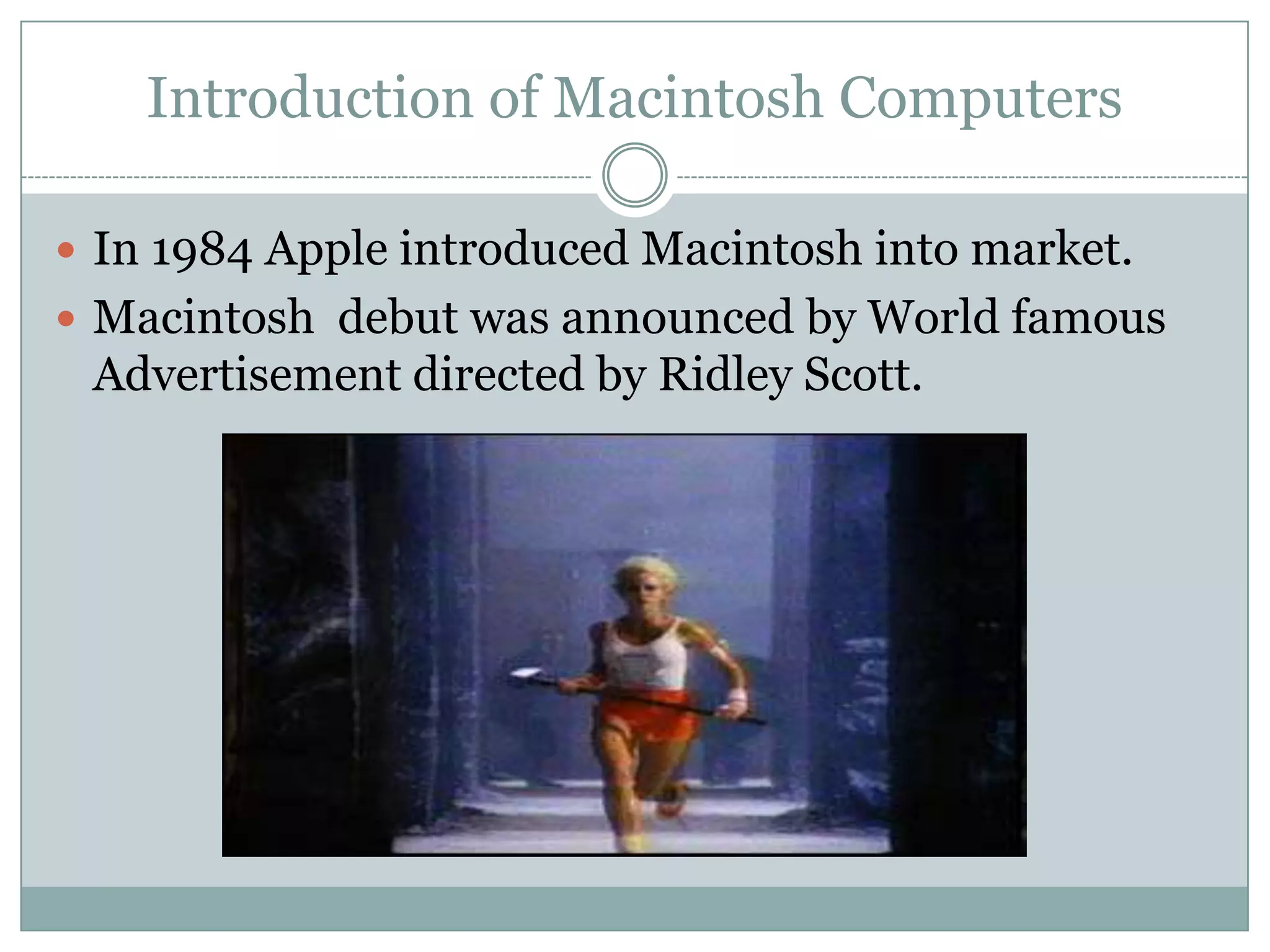
Introduction of Macintosh Computers

 In 1984 Apple introduced Macintosh into market.
 Macintosh debut was announced by World famous
 Advertisement directed by Ridley Scott.
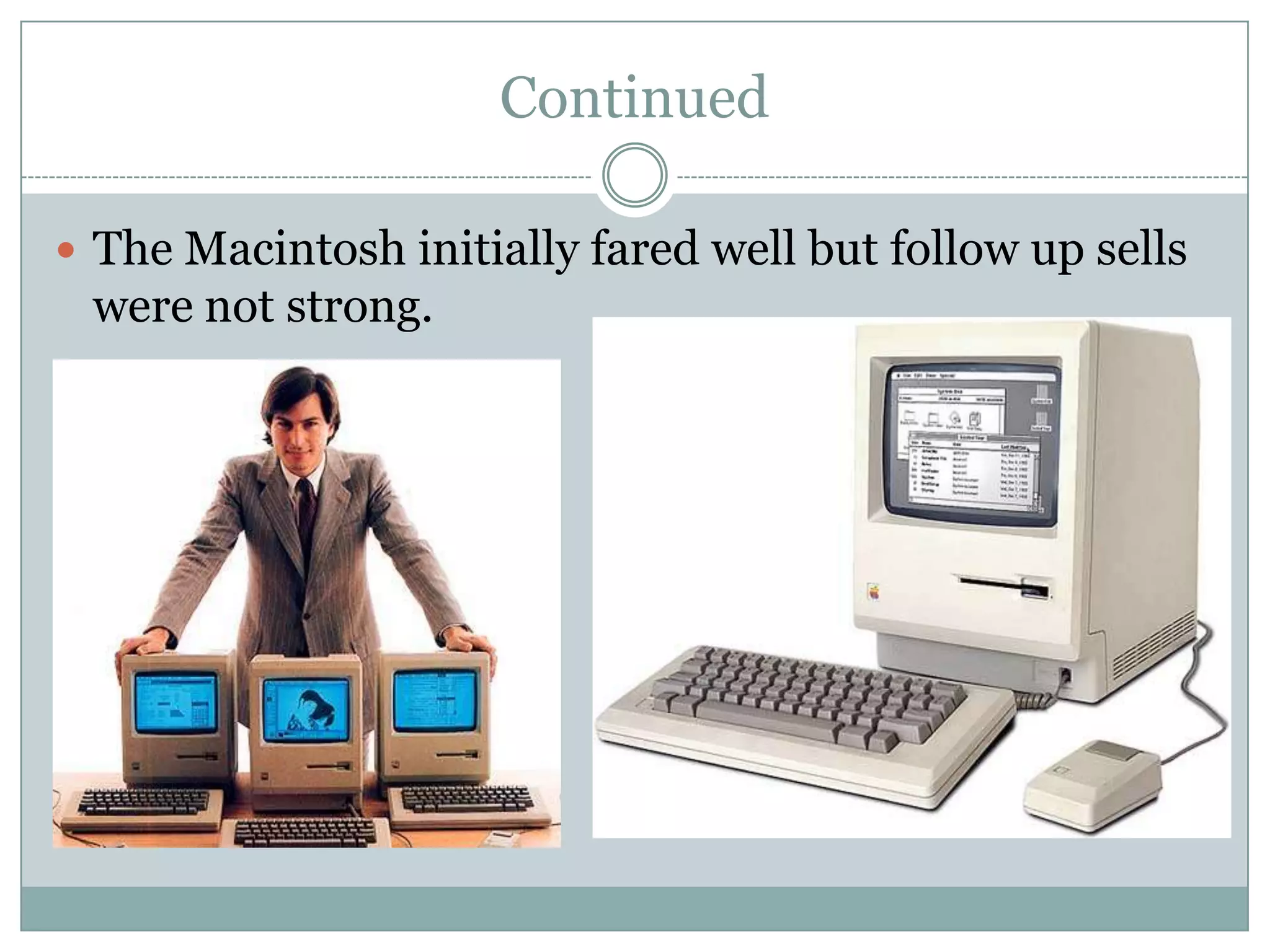
Continued

 The Macintosh initially fared well but follow up sells
 were not strong.
Jobs

 Jobs was heading Macintosh division of Apple Inc.
 Jobs Lured PepsCo CEO John Sculley to work for his
  company.
 Jobs was persuasive and charismatic director of
  Apple but many people at Apple considered him
  temperamental manager.
 A power struggle between Jobs and Sculley started to
  rise.
 Jobs was compelled to resign after he was removed
  as head of Macintosh division.
NextComputers

 In a speech jobs gave in Stanford University he said
  “being fired from Apple was the best thing that could
  have happened to him”
 Jobs found Next Computers with $7 million capital.
 Jobs bought The Graphics Group(Later Named as
  Pixar Animation Studio).
 Jobs introduced the animation movies like Toy Story
  franchise, Cars franchise and The Incredibles etc.
Doom of Apple and return of Jobs to Apple.

 Apple CEO John Scully apparently failed to
  effectively manage its product line and ultimately
  Apple’s Board kicked him out.
 After the failure of apple CEOs Michael Spindler
  and Gel Amelio.
 During the time of Gel Amelio the stock market of
  Apple tumbled and crippled financial position of
  Apple Inc.
 Apple contacted its former founding CEO Steve jobs
  to run the affairs of company.
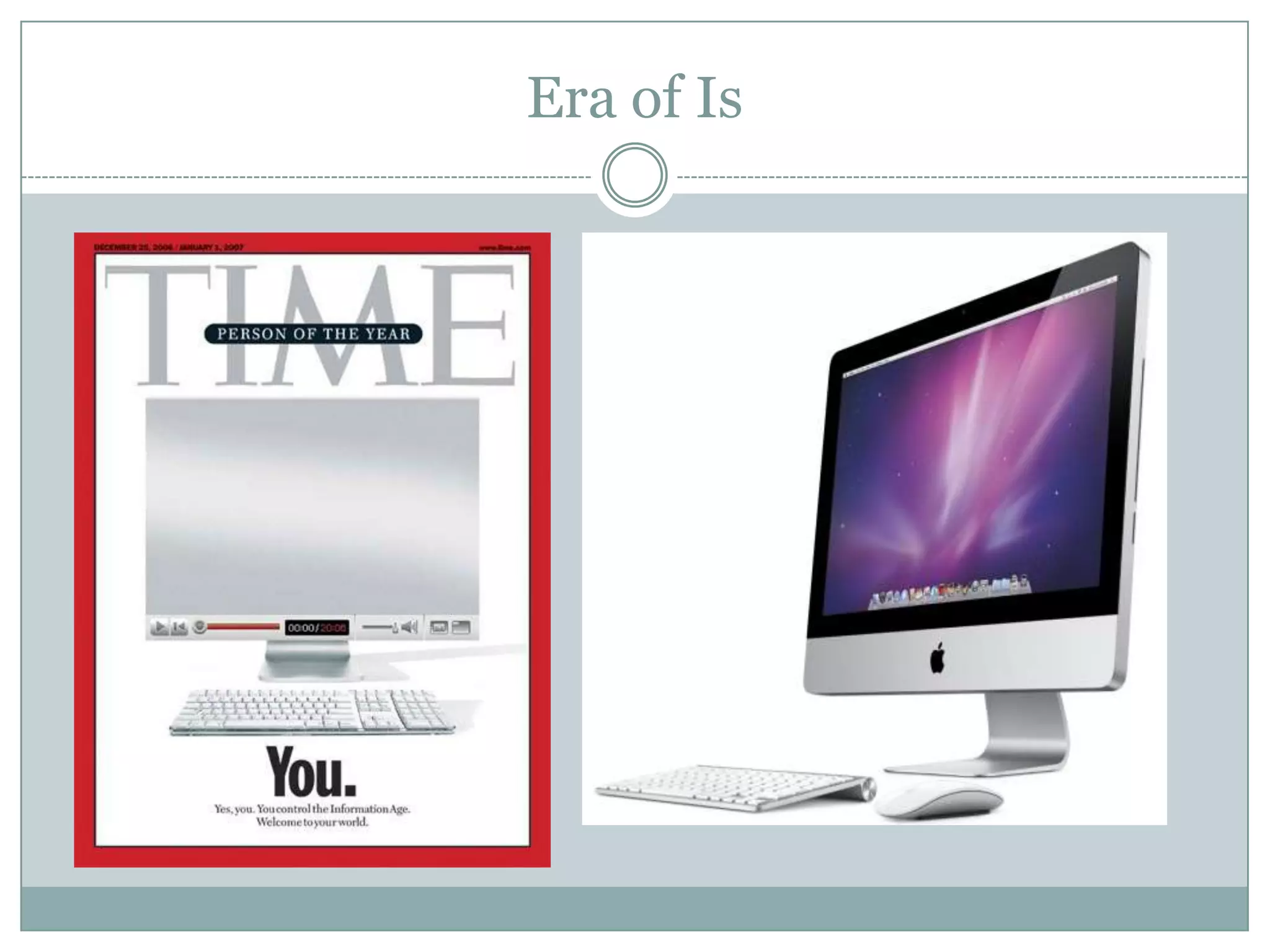
Era of Is
iMac

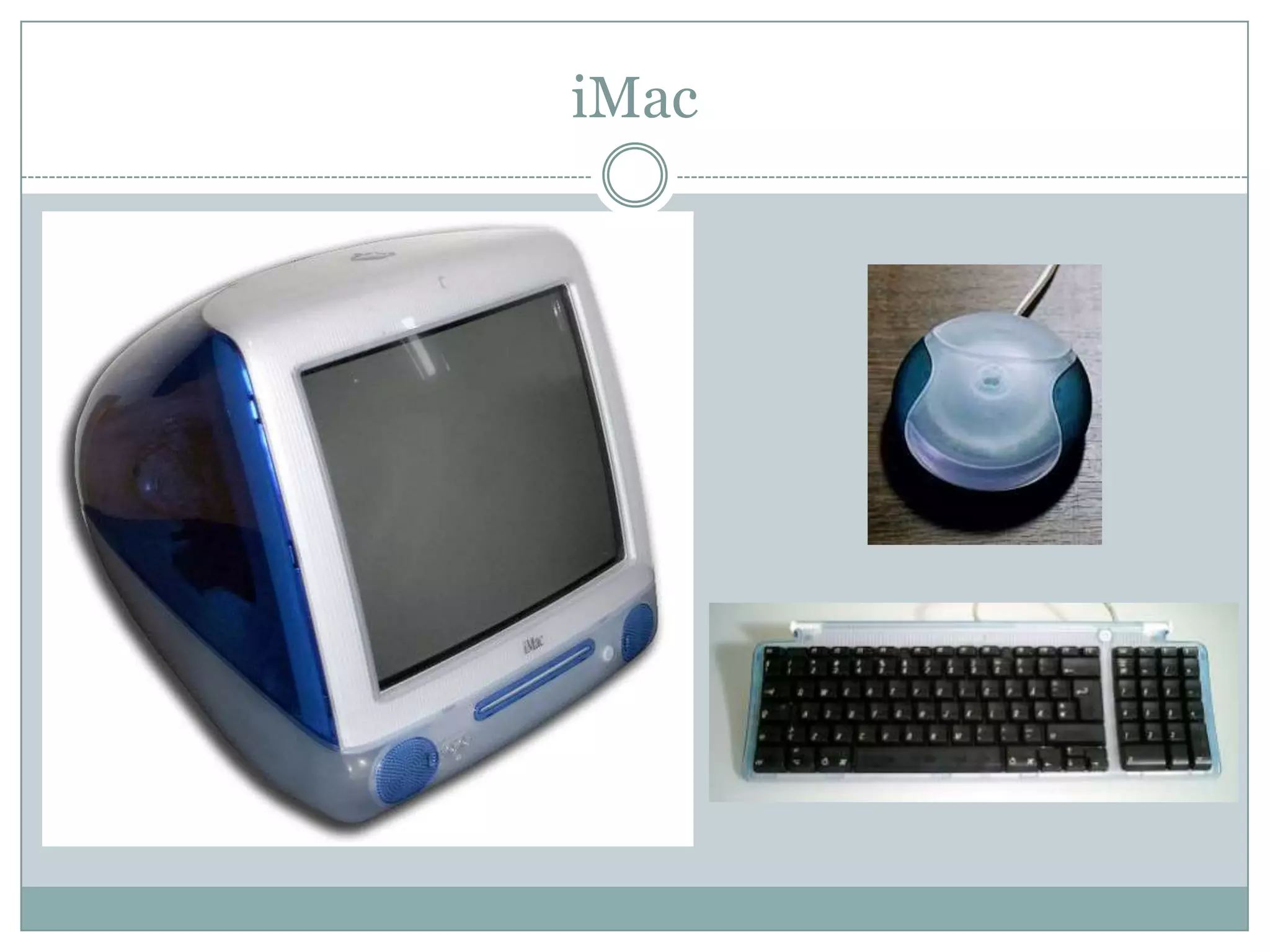
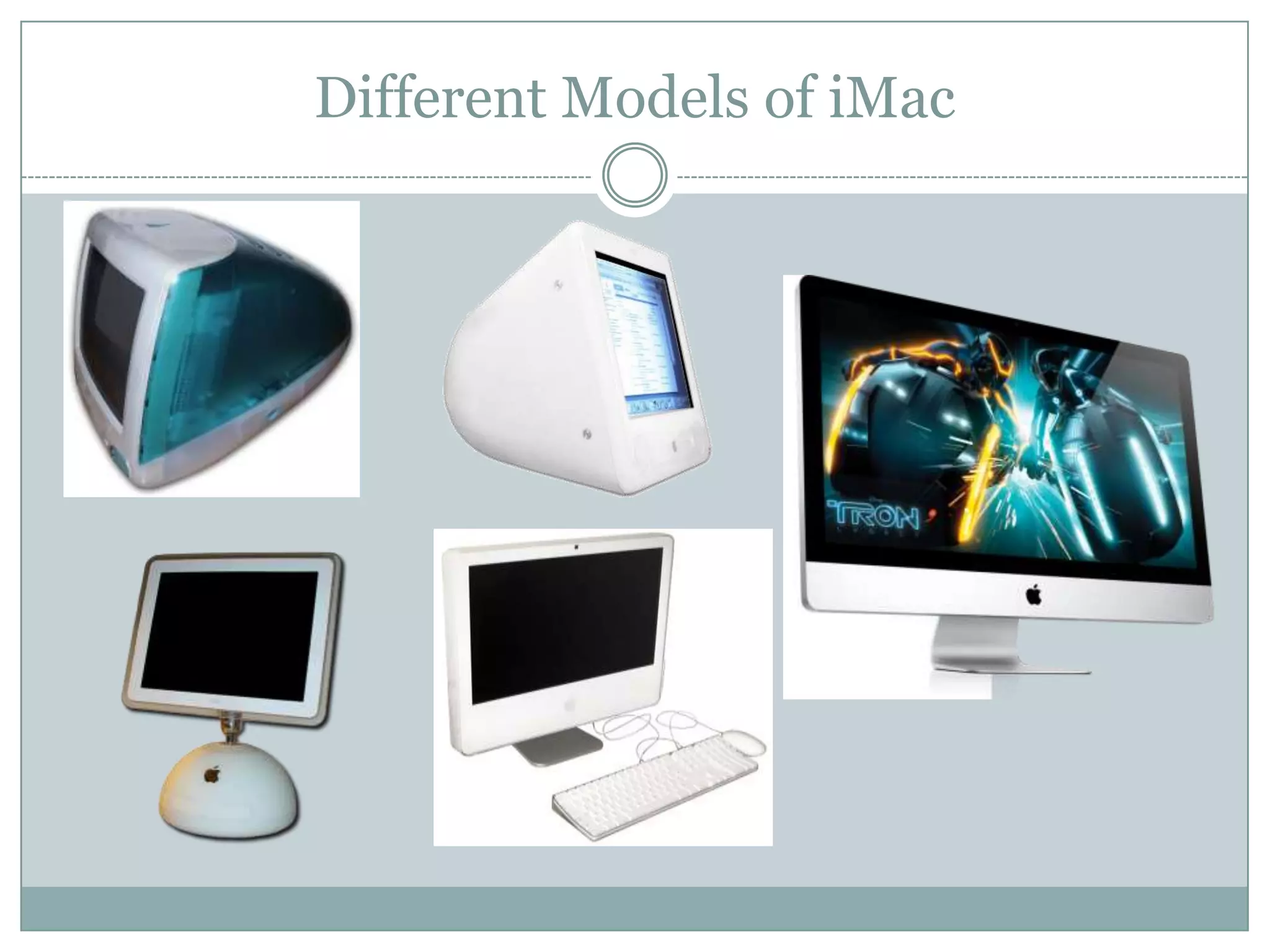
 iMac is all in one desktop Macintosh computers
    evolved through 5 different forms.
   iMac were introduced near the end of 20th century
    in 1998.
   iMac G3 was the first iMac computer introduced in
    market.
   Its uniqueness was that it contained Monitor and
    system unit both in one case.
   Jobs said "It looks so good you want to lick it"
iMac
Different Models of iMac
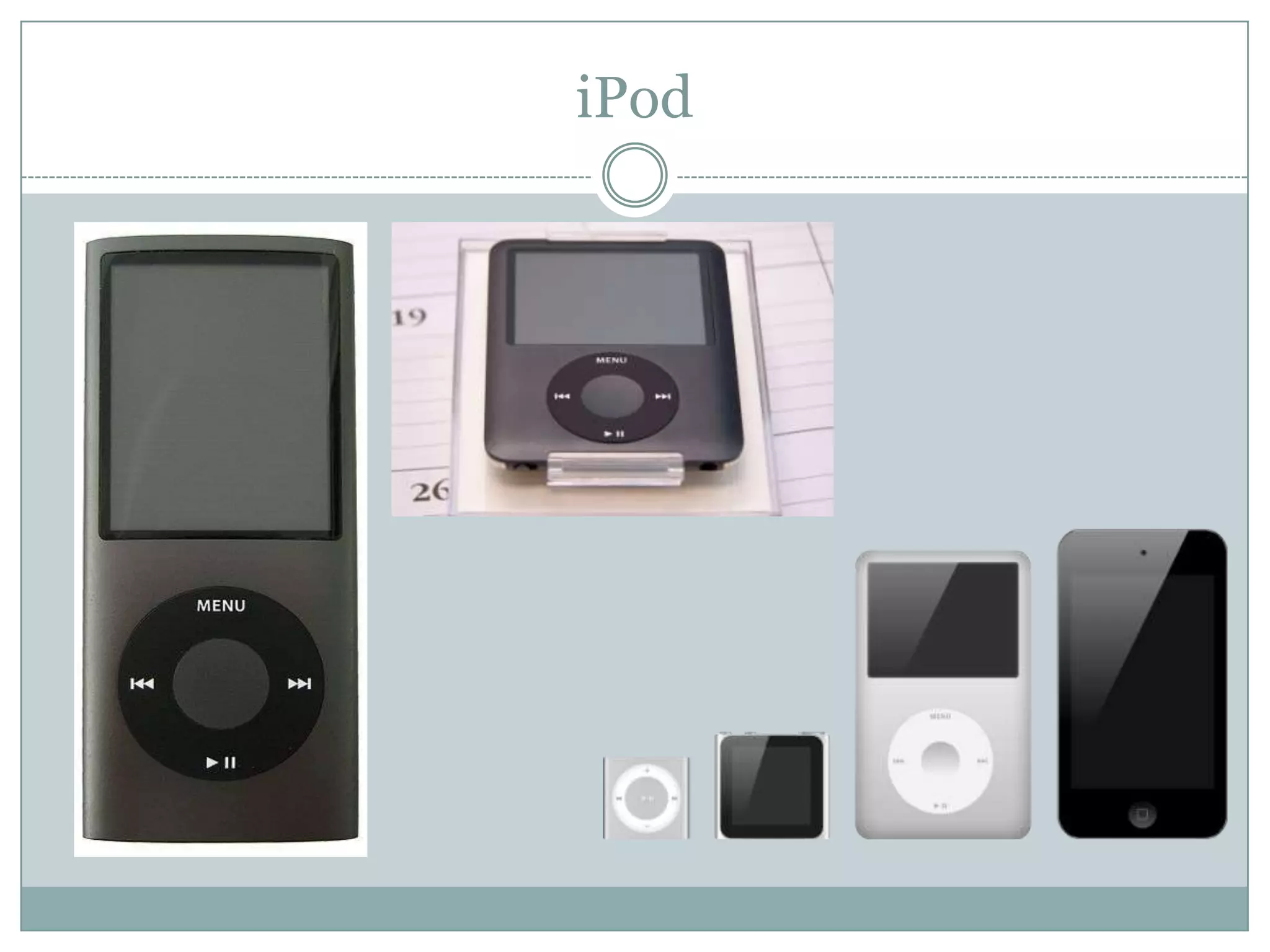
iPod

 iPod is a line of portable media players created and
  marketed by Apple Inc.
 iPod classic is hard drive based and all other models
  like Shuffle ,Nano etc. are flash memory based.
 Storage capacity varies from 2GB for iPod Shuffle to
  160 GB for iPod Classic.
 Supporting software is iTunes which revolutionized
  digital music market.
iPod
Era of Portability

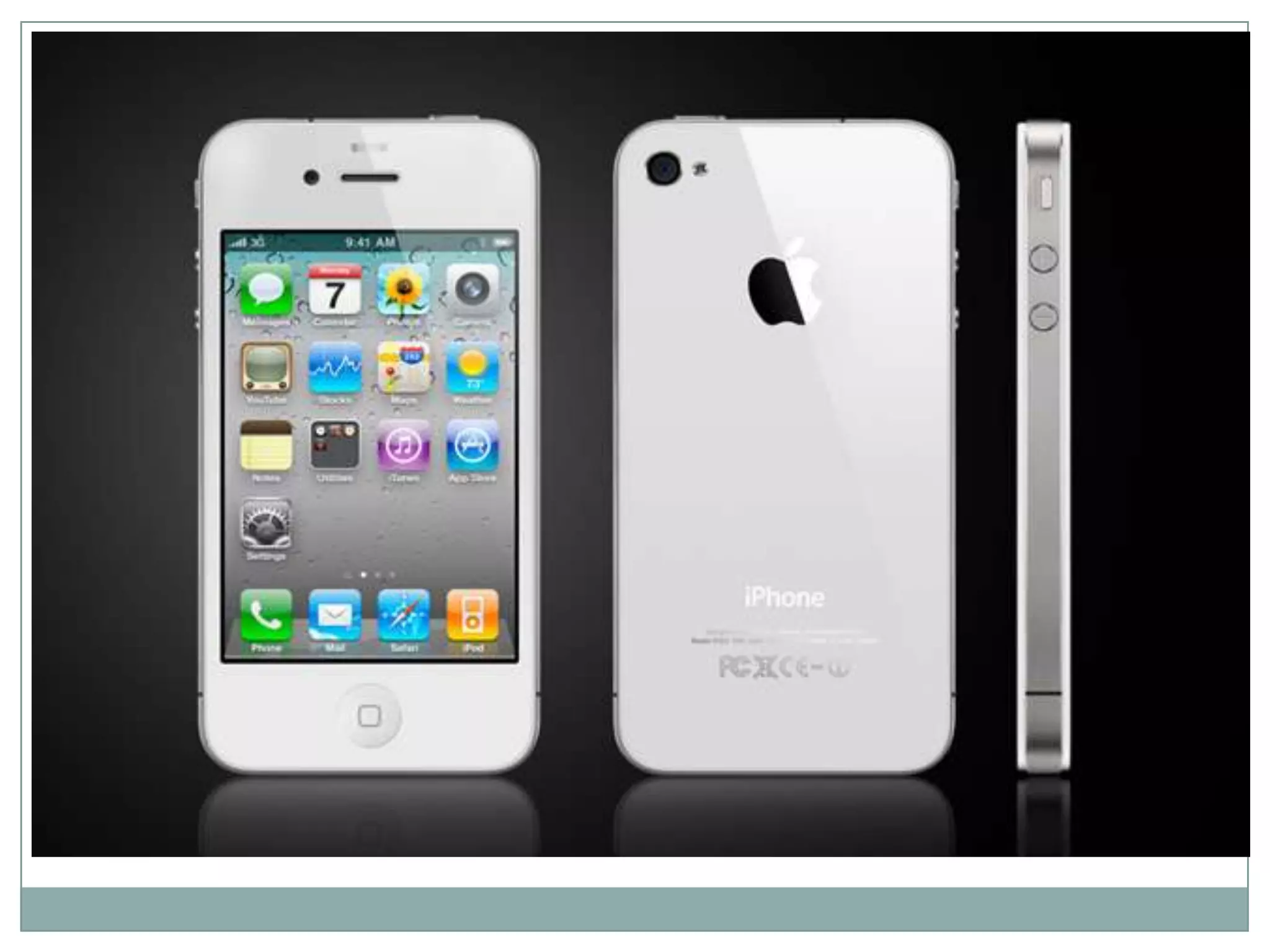
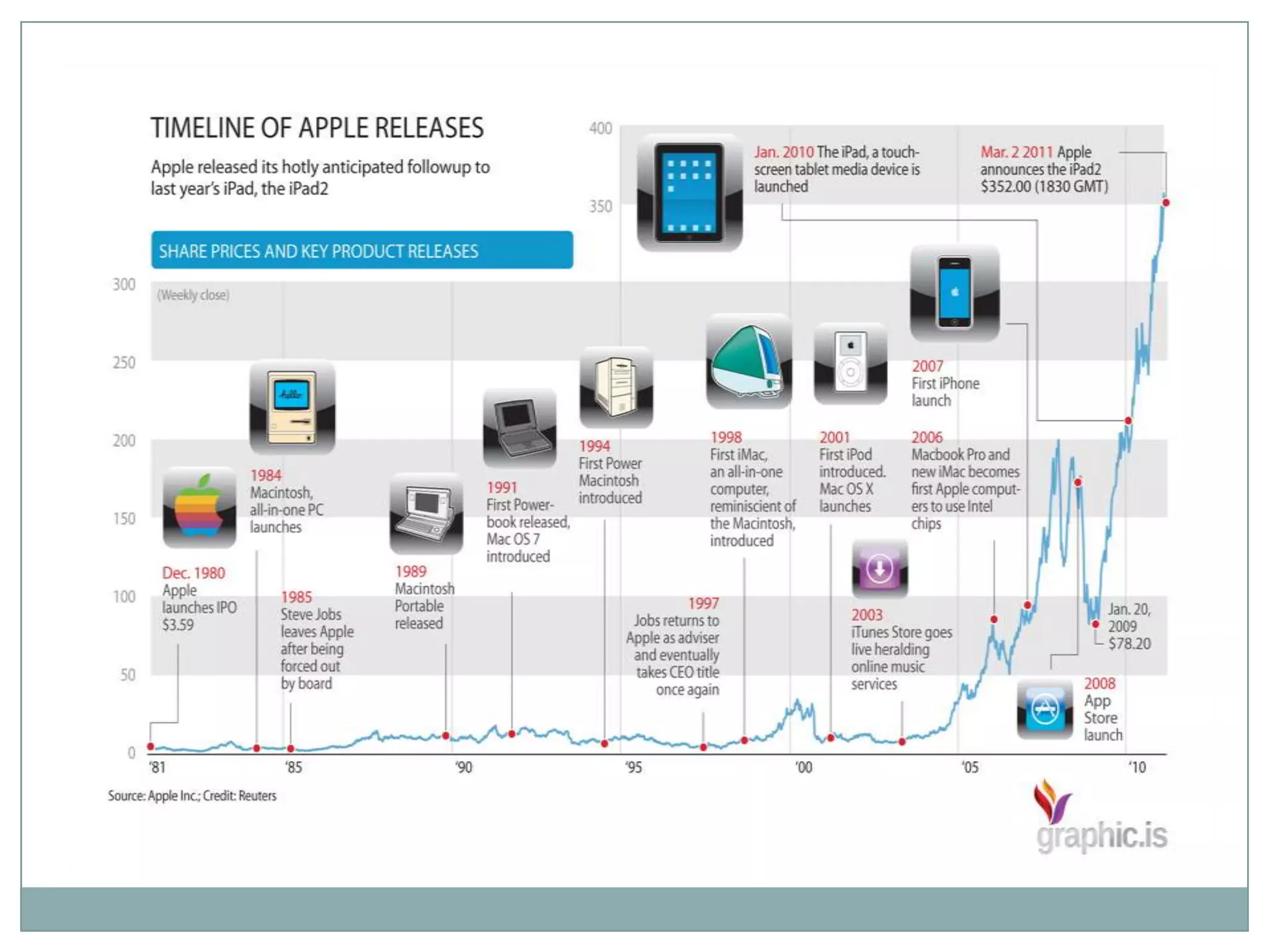
 Apple introduced iPhone in 2007 and followed by iPad in
    2010.
   iPhone is a line of smart phones designed and marketed by
    Apple Inc.
   There are five geneartions of iPhone models.
   The iPhone 4S added a higher resolution camera (8
    megapixel) with 1080p video recording.
   iPhone 4s is the first smart phone which used SIRI(Speech
    Interpretation and Recognition Interface).
 This application uses human voice to answer
    questions, make recommendations, and perform
    actions.
Steve Becomes Celebrity

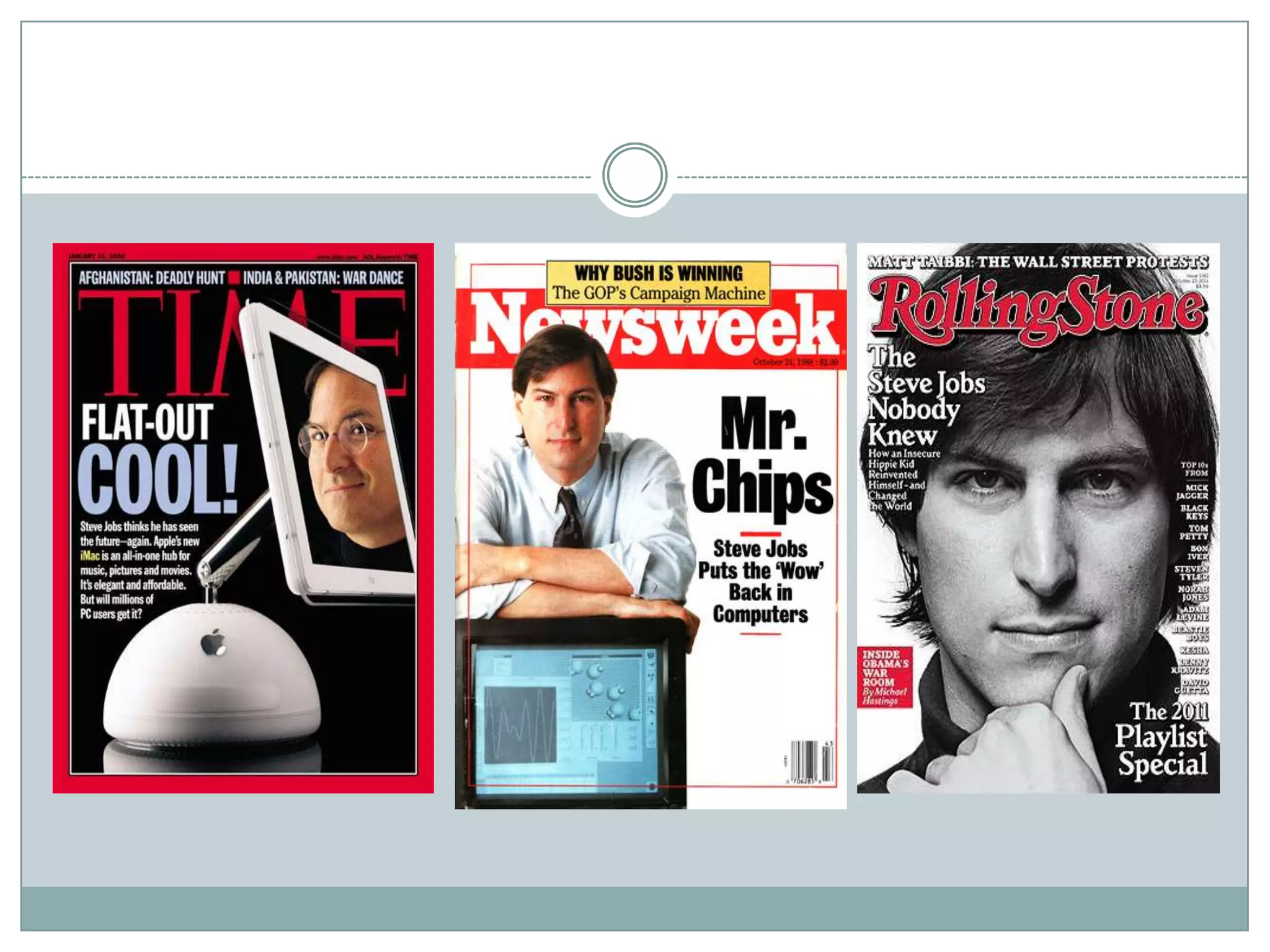
 Steve returned apple as an interim CEO often
  ironically termed by him as iCEO.
 Under his leadership apple from brink of bankruptcy
  became profitable by 1998.
 Over the next decade, Jobs oversaw the development
  of the iMac, iTunes, iPod, iPhone, and iPad, and on
  the services side, the company's Apple Retail Stores,
  iTunes Store and the App Store.
 Apple became world’s most valuable publicly traded
  company in 2011.
 Steve jobs has widely been termed as visionary,
  legendary perfectionist etc.
 He has been described as "Father of the Digital
  Revolution” , "master of innovation“, "design
  perfectionist”.
“One last thing…”

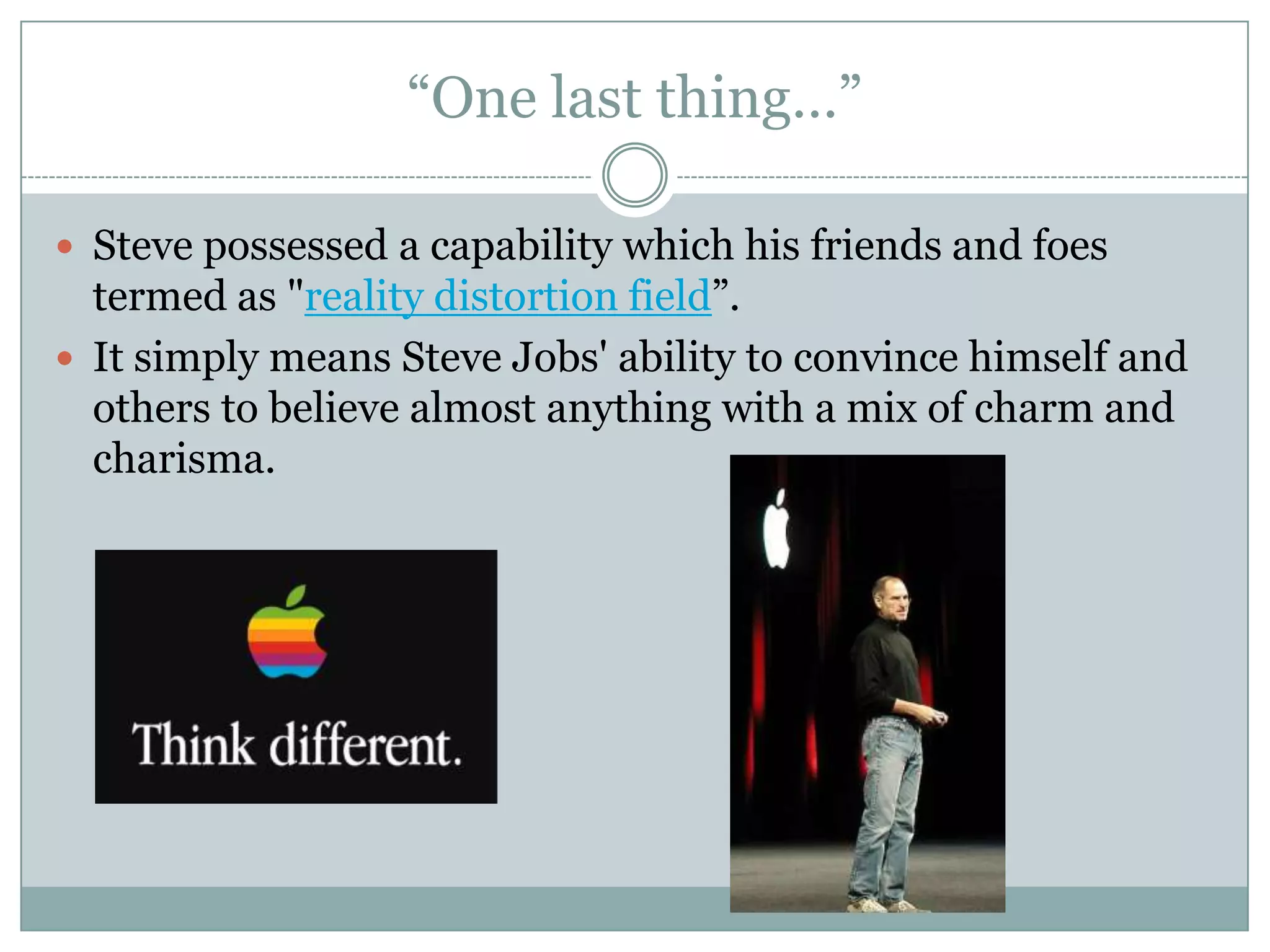
 Steve possessed a capability which his friends and foes
  termed as "reality distortion field”.
 It simply means Steve Jobs' ability to convince himself and
  others to believe almost anything with a mix of charm and
  charisma.
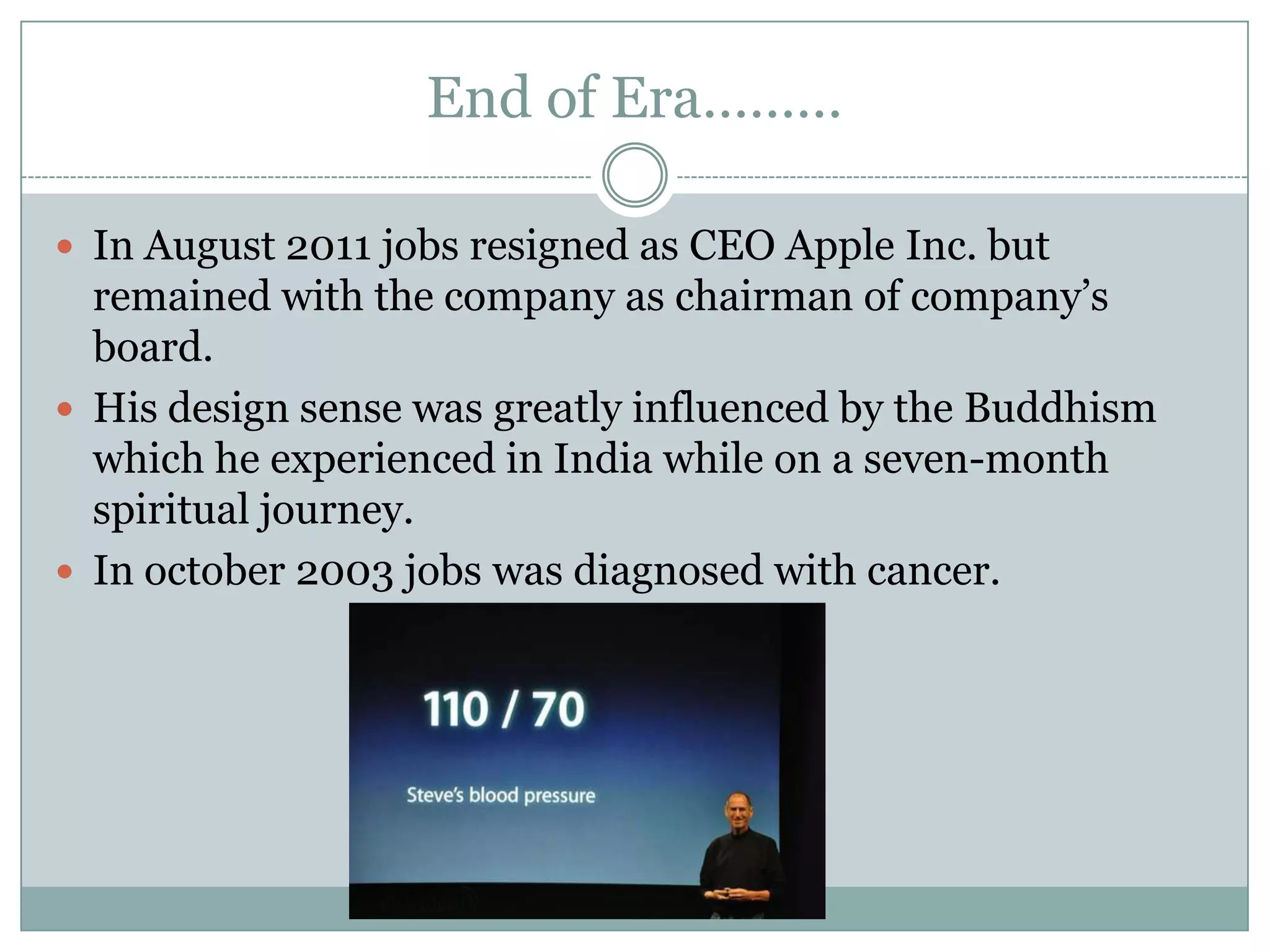
End of Era………

 In August 2011 jobs resigned as CEO Apple Inc. but
  remained with the company as chairman of company’s
  board.
 His design sense was greatly influenced by the Buddhism
  which he experienced in India while on a seven-month
  spiritual journey.
 In october 2003 jobs was diagnosed with cancer.
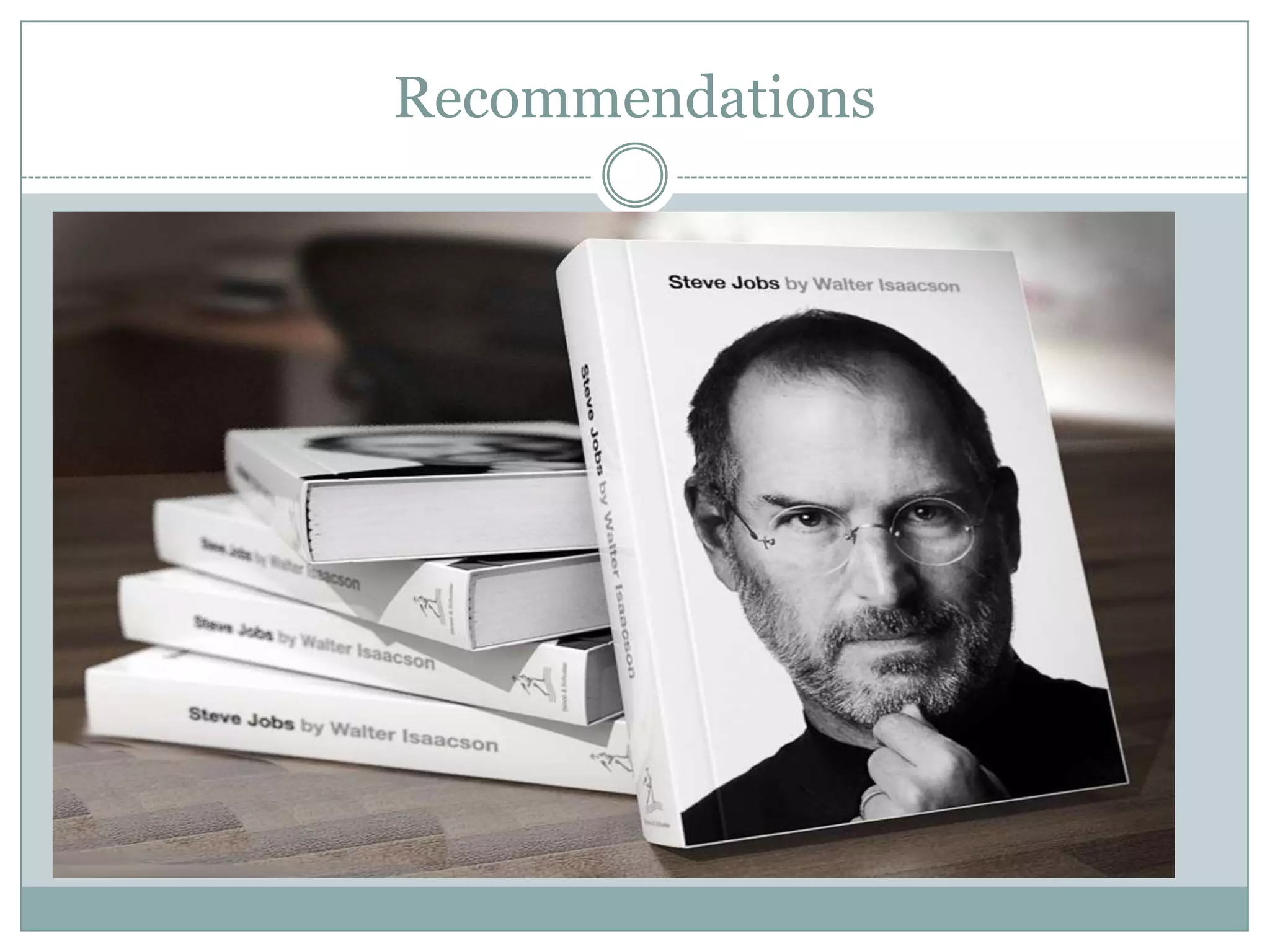
Recommendations
“We don’t get a chance to do
that many things, and every one
should be really excellent.
Because this is our life. Life is
brief, and then you die, you
know? And we’ve all chosen to
do this with our lives. So it
better be damn good. It better
be worth it.”
iThanks

Steve jobs & develepement of personal computers at

  • 1.
    Steve Jobs &Development of personal computers at Apple Inc BY ASIF ALI KAZI
  • 2.
  • 3.
     American businessmandesigner and inventor.  Co founder and former CEO of Apple Inc.  Widely recognized as a charismatic pioneer of personal computer revolution.  Jobs also co founded Pixar Animation Studio.
  • 4.
    Beginning of AppleComputers  Steve Jobs Co founded Apple with his friend Steve Wozniak on April 1,1976.  Jobs and Wozniak were members of Homebrew Computer club.  Jobs met with Wozniak there.  Steve jobs once said in interview that initially he had not the setting up of company in mind.  Initially both started to make computers for themselves and for their friends.
  • 5.
    Firs Apple computer Apple I was the firs product of the Apple company which was designed and hand built by Wozniak  Jobs sold his sole means of transport a van to finance company’s cost of manufacturing.  Technology used in this computer was not more than that of modern day pocket culculator.  About 200 number of Apple I sold.
  • 6.
    Introduction of AppleII  Introduced in 1977  One of the highly successful mass produced microcomputer products.  Apple becomes Incorporation.  Ease of use was a major attraction for Apple I.  5-6 million Apple II were sold.  Before introduction of Apple II there was problem of investment.
  • 7.
  • 8.
    Here comes MikeMarkkula  Mike was American Entrepreneur and Angel Investor.  He Provided Earlier critical funding and managerial support.  With his support and skill apple was transformed form a partnership business to an incorporation.  Markkula invested $250,000 of which $80,000 was an equity investment and $170,000 was as a loan.
  • 9.
    Introduction of VisiCalc Apple II introduced first Killer Application of VisiCalc for business.  VisiCalc was first spreadsheet program available on Personal Computers.  VisiCalc created a business market for the Apple II
  • 10.
    Tense years andFailures  Apple introduced Apple III by the end 1970s.  But it became a huge market failure.  Jobs was in search of some innovation which may turn around the state of Apple company and personal computers.  Jobs with Apple employee Jef Raskin visited PARC of Xerox Corporation.  There jobs saw GUI based PC which attracted the jobs.  Apple Lisa computer was the first personal computer to offer graphical user interface.
  • 11.
    Apple Went Public……. In 1980 apple went public and generating huge capital instantly creating more millionaires (about 300) than any company in history.
  • 12.
    Period of Differences Jobs was youngster of 23 years and not much experienced people started to defy his authority at Apple Inc.  Jobs ditched Apple Lisa project and wanted to work on Low cost Macintosh computers.  Apple Management favored Lisa and introduced Lisa which became technological success but market failure.
  • 13.
    Introduction of MacintoshComputers  In 1984 Apple introduced Macintosh into market.  Macintosh debut was announced by World famous Advertisement directed by Ridley Scott.
  • 14.
    Continued  The Macintoshinitially fared well but follow up sells were not strong.
  • 15.
    Jobs  Jobs washeading Macintosh division of Apple Inc.  Jobs Lured PepsCo CEO John Sculley to work for his company.  Jobs was persuasive and charismatic director of Apple but many people at Apple considered him temperamental manager.  A power struggle between Jobs and Sculley started to rise.  Jobs was compelled to resign after he was removed as head of Macintosh division.
  • 16.
    NextComputers  In aspeech jobs gave in Stanford University he said “being fired from Apple was the best thing that could have happened to him”  Jobs found Next Computers with $7 million capital.  Jobs bought The Graphics Group(Later Named as Pixar Animation Studio).  Jobs introduced the animation movies like Toy Story franchise, Cars franchise and The Incredibles etc.
  • 17.
    Doom of Appleand return of Jobs to Apple.  Apple CEO John Scully apparently failed to effectively manage its product line and ultimately Apple’s Board kicked him out.  After the failure of apple CEOs Michael Spindler and Gel Amelio.  During the time of Gel Amelio the stock market of Apple tumbled and crippled financial position of Apple Inc.  Apple contacted its former founding CEO Steve jobs to run the affairs of company.
  • 18.
  • 19.
    iMac  iMac isall in one desktop Macintosh computers evolved through 5 different forms.  iMac were introduced near the end of 20th century in 1998.  iMac G3 was the first iMac computer introduced in market.  Its uniqueness was that it contained Monitor and system unit both in one case.  Jobs said "It looks so good you want to lick it"
  • 20.
  • 21.
  • 22.
    iPod  iPod isa line of portable media players created and marketed by Apple Inc.  iPod classic is hard drive based and all other models like Shuffle ,Nano etc. are flash memory based.  Storage capacity varies from 2GB for iPod Shuffle to 160 GB for iPod Classic.  Supporting software is iTunes which revolutionized digital music market.
  • 23.
  • 24.
    Era of Portability Apple introduced iPhone in 2007 and followed by iPad in 2010.  iPhone is a line of smart phones designed and marketed by Apple Inc.  There are five geneartions of iPhone models.  The iPhone 4S added a higher resolution camera (8 megapixel) with 1080p video recording.  iPhone 4s is the first smart phone which used SIRI(Speech Interpretation and Recognition Interface).  This application uses human voice to answer questions, make recommendations, and perform actions.
  • 27.
    Steve Becomes Celebrity Steve returned apple as an interim CEO often ironically termed by him as iCEO.  Under his leadership apple from brink of bankruptcy became profitable by 1998.  Over the next decade, Jobs oversaw the development of the iMac, iTunes, iPod, iPhone, and iPad, and on the services side, the company's Apple Retail Stores, iTunes Store and the App Store.  Apple became world’s most valuable publicly traded company in 2011.
  • 28.
     Steve jobshas widely been termed as visionary, legendary perfectionist etc.  He has been described as "Father of the Digital Revolution” , "master of innovation“, "design perfectionist”.
  • 30.
    “One last thing…” Steve possessed a capability which his friends and foes termed as "reality distortion field”.  It simply means Steve Jobs' ability to convince himself and others to believe almost anything with a mix of charm and charisma.
  • 31.
    End of Era……… In August 2011 jobs resigned as CEO Apple Inc. but remained with the company as chairman of company’s board.  His design sense was greatly influenced by the Buddhism which he experienced in India while on a seven-month spiritual journey.  In october 2003 jobs was diagnosed with cancer.
  • 32.
  • 33.
    “We don’t geta chance to do that many things, and every one should be really excellent. Because this is our life. Life is brief, and then you die, you know? And we’ve all chosen to do this with our lives. So it better be damn good. It better be worth it.”
  • 34.