Steve Jobs 
Wes Hines 
FYSE 1060
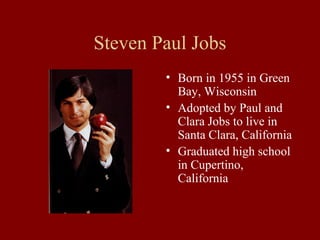
Steven Paul Jobs 
• Born in 1955 in Green 
Bay, Wisconsin 
• Adopted by Paul and 
Clara Jobs to live in 
Santa Clara, California 
• Graduated high school 
in Cupertino, 
California
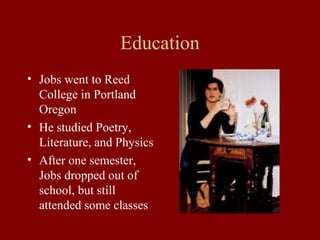
Education 
• Jobs went to Reed 
College in Portland 
Oregon 
• He studied Poetry, 
Literature, and Physics 
• After one semester, 
Jobs dropped out of 
school, but still 
attended some classes
Steves 
• Jobs met Steve Wozniak shortly after they 
both left school while working for Hewlett- 
Packard 
• “Woz” was an incredibly talented engineer, 
especially in electronic gadgets 
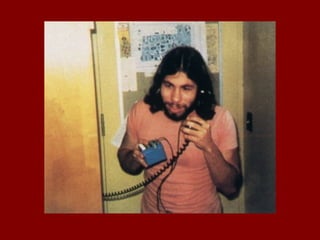
• While developing a “blue box” device, Jobs 
convinced Woz to sell it to Berkeley 
students.
The Beginnings of Apple 
• After spending time in 
India in 1974, Jobs 
returned to America 
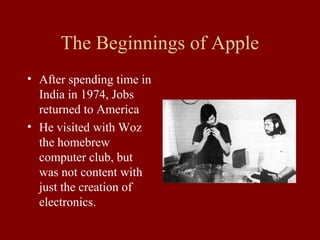
• He visited with Woz 
the homebrew 
computer club, but 
was not content with 
just the creation of 
electronics.
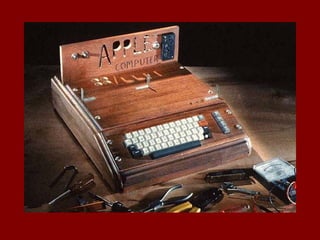
• Jobs convinced Woz to help him create a 
personal computer, the Apple I 
• Jobs, with marketing help from a friend, 
had the vision of creating a computer 
company that would make and sell pc’s. 
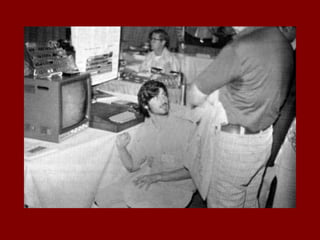
• After showing the Apple I to in town 
computer stores, Jobs was able to sell 25. 
• After selling his Volkswagon mini-bus, and 
asking Woz to sell his scientific calculator, 
the two raised enough money to create 
Apple Computers.
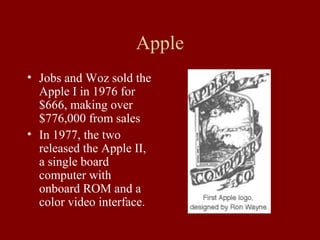
Apple 
• Jobs and Woz sold the 
Apple I in 1976 for 
$666, making over 
$776,000 from sales 
• In 1977, the two 
released the Apple II, 
a single board 
computer with 
onboard ROM and a 
color video interface.
Positive Growth 
• From 1977 to 1983, Apple continued to 
grow exponentially. 
• In 1981, IBM finally entered the personal 
computer market, and in just two years 
began to outsell Apple. 
• After the failure of the Apple III and Lisa, 
Jobs needed a new computer that could 
compete with the IBM PC.
The Macintosh 
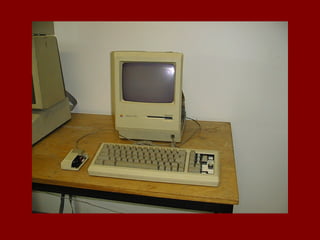
• In 1984, Apple released the Macintosh, the 
first personal computer with a graphical 
user interface. 
• It had 128K of memory, and was 
expandable. 
• Along with the mouse, the Macintosh was 
the most revolutionary computer made up to 
that point.
QuickTime™ and a 
Video decompressor 
are needed to see this picture.
Microsoft and John Sculley 
• In 1985, Bill Gates convinced Jobs to 
license the graphical user interface in the 
Macintosh to create Windows, which could 
run on IBM PC’s. 
• As sales of the Macintosh took off, CEO 
John Sculley thought that Jobs was hurting 
Apple’s success, and gradually forced Jobs 
to leave.
NeXT 
• Jobs project in the late 1980’s to mid 90’s was 
NextStep 
• A new computer company based on an object 
oriented software platform, NeXT failed first as a 
hardware company, then as a software company 
• Apple similarly did very poorly in the early and 
mid 90’s, brought on by poor leadership and 
stagnating computer design
The Second Coming of Jobs 
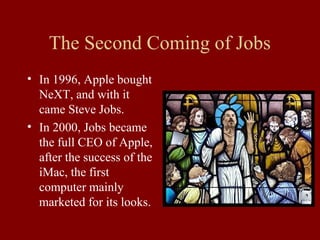
• In 1996, Apple bought 
NeXT, and with it 
came Steve Jobs. 
• In 2000, Jobs became 
the full CEO of Apple, 
after the success of the 
iMac, the first 
computer mainly 
marketed for its looks.
Return to Profitability and 
Innovation 
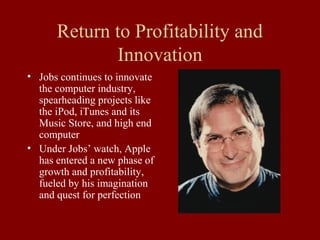
• Jobs continues to innovate 
the computer industry, 
spearheading projects like 
the iPod, iTunes and its 
Music Store, and high end 
computer 
• Under Jobs’ watch, Apple 
has entered a new phase of 
growth and profitability, 
fueled by his imagination 
and quest for perfection
Sources 
• http://en.wikipedia.org/wiki/Steve_Jobs 
• http://www.esm.psu.edu/Faculty/Gray/movies.html 
• http://ei.cs.vt.edu/~history/Jobs.html 
• Apple.com 
• http://applemuseum.bott.org/sections/ads.html 
• Butcher, Lee. “Accidental millionaire : the rise 
and fall of Steve Jobs at Apple Computer” New 
York, Paragon House 1988.

Steve Jobs

  • 1.
    Steve Jobs WesHines FYSE 1060
  • 2.
    Steven Paul Jobs • Born in 1955 in Green Bay, Wisconsin • Adopted by Paul and Clara Jobs to live in Santa Clara, California • Graduated high school in Cupertino, California
  • 3.
    Education • Jobswent to Reed College in Portland Oregon • He studied Poetry, Literature, and Physics • After one semester, Jobs dropped out of school, but still attended some classes
  • 4.
    Steves • Jobsmet Steve Wozniak shortly after they both left school while working for Hewlett- Packard • “Woz” was an incredibly talented engineer, especially in electronic gadgets • While developing a “blue box” device, Jobs convinced Woz to sell it to Berkeley students.
  • 6.
    The Beginnings ofApple • After spending time in India in 1974, Jobs returned to America • He visited with Woz the homebrew computer club, but was not content with just the creation of electronics.
  • 7.
    • Jobs convincedWoz to help him create a personal computer, the Apple I • Jobs, with marketing help from a friend, had the vision of creating a computer company that would make and sell pc’s. • After showing the Apple I to in town computer stores, Jobs was able to sell 25. • After selling his Volkswagon mini-bus, and asking Woz to sell his scientific calculator, the two raised enough money to create Apple Computers.
  • 10.
    Apple • Jobsand Woz sold the Apple I in 1976 for $666, making over $776,000 from sales • In 1977, the two released the Apple II, a single board computer with onboard ROM and a color video interface.
  • 11.
    Positive Growth •From 1977 to 1983, Apple continued to grow exponentially. • In 1981, IBM finally entered the personal computer market, and in just two years began to outsell Apple. • After the failure of the Apple III and Lisa, Jobs needed a new computer that could compete with the IBM PC.
  • 12.
    The Macintosh •In 1984, Apple released the Macintosh, the first personal computer with a graphical user interface. • It had 128K of memory, and was expandable. • Along with the mouse, the Macintosh was the most revolutionary computer made up to that point.
  • 14.
    QuickTime™ and a Video decompressor are needed to see this picture.
  • 15.
    Microsoft and JohnSculley • In 1985, Bill Gates convinced Jobs to license the graphical user interface in the Macintosh to create Windows, which could run on IBM PC’s. • As sales of the Macintosh took off, CEO John Sculley thought that Jobs was hurting Apple’s success, and gradually forced Jobs to leave.
  • 16.
    NeXT • Jobsproject in the late 1980’s to mid 90’s was NextStep • A new computer company based on an object oriented software platform, NeXT failed first as a hardware company, then as a software company • Apple similarly did very poorly in the early and mid 90’s, brought on by poor leadership and stagnating computer design
  • 17.
    The Second Comingof Jobs • In 1996, Apple bought NeXT, and with it came Steve Jobs. • In 2000, Jobs became the full CEO of Apple, after the success of the iMac, the first computer mainly marketed for its looks.
  • 18.
    Return to Profitabilityand Innovation • Jobs continues to innovate the computer industry, spearheading projects like the iPod, iTunes and its Music Store, and high end computer • Under Jobs’ watch, Apple has entered a new phase of growth and profitability, fueled by his imagination and quest for perfection
  • 19.
    Sources • http://en.wikipedia.org/wiki/Steve_Jobs • http://www.esm.psu.edu/Faculty/Gray/movies.html • http://ei.cs.vt.edu/~history/Jobs.html • Apple.com • http://applemuseum.bott.org/sections/ads.html • Butcher, Lee. “Accidental millionaire : the rise and fall of Steve Jobs at Apple Computer” New York, Paragon House 1988.