WHAT I AM AND
WHAT I CAN BE
   Think LOCAL before
          Global;
Stereotyping
Stereotype
 Stereotypes are generalizations about
  a group of people whereby we
  attribute a defined set of
  characteristics to this group.
 A stereotype is a popular belief about

  specific types of individuals. 
Stereotypes are standardized


and simplified conceptions of
groups based on some prior
assumptions. Another name for
stereotyping is bias.
The term stereotype derives
         stereotype
from the Greek words
         Greek
στερεός (stereos), "firm,
          stereos
solid“ and τύπος (typos),
                   typos
"impression," hence "solid
impression".
These classifications can be


positive or negative, such as
when various nationalities are
stereotyped as friendly or
unfriendly.
Dynamics
 In one perspective of the stereotyping
  process, there are the concepts of
  ingroups and outgroups.
 A second perspective is that of

  automatic and explicit or subconscious
  and conscious. 
 A third method to categorizing

  stereotypes is general types and sub-
  types.
   Where Do Stereotypes
        Come From?
 Stereotypes are often used in books
  to project the characters on television
  shows.
 It is also used in advertising to sell

  products.
 Stereotypes are also passed on from

  adults to their children through
  comments made about people and
  places.
   What Problems are
       caused by
     Stereotyping?
 Stereotypes are often accepted as
  truths.
 Stereotypes leads to mistaken belief

  about oneself.
 Stereotyping can affect your

  judgments of people or individuals.
 It can lead to discrimination.

 It damages self-image and self-

  steem.
1.   Can stereotyping causes
     demoralization to workers in
     a global village? Why or
     why not?
2.   How can our personal
     morality helps defeat the
     negative impacts of
     stereotyping?
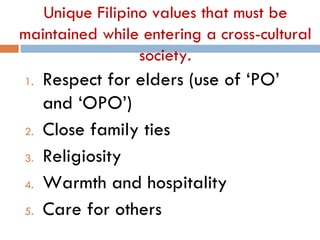
Unique Filipino values that must be
maintained while entering a cross-cultural
                 society.
1.   Respect for elders (use of ‘PO’
     and ‘OPO’)
2.   Close family ties
3.   Religiosity
4.   Warmth and hospitality
5.   Care for others
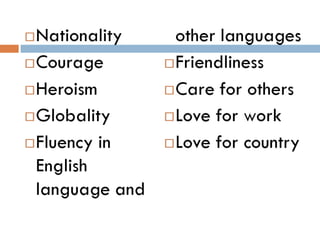
What are the values


common to most Filipino that
make our race highly
sought for in some lines of
work?
Stereotype

Stereotype

  • 1.
    WHAT I AMAND WHAT I CAN BE
  • 2.
    Think LOCAL before Global; Stereotyping
  • 3.
    Stereotype  Stereotypes aregeneralizations about a group of people whereby we attribute a defined set of characteristics to this group.  A stereotype is a popular belief about specific types of individuals. 
  • 4.
    Stereotypes are standardized  andsimplified conceptions of groups based on some prior assumptions. Another name for stereotyping is bias.
  • 5.
    The term stereotype derives  stereotype from the Greek words Greek στερεός (stereos), "firm, stereos solid“ and τύπος (typos), typos "impression," hence "solid impression".
  • 6.
    These classifications canbe  positive or negative, such as when various nationalities are stereotyped as friendly or unfriendly.
  • 7.
    Dynamics  In oneperspective of the stereotyping process, there are the concepts of ingroups and outgroups.  A second perspective is that of automatic and explicit or subconscious and conscious.   A third method to categorizing stereotypes is general types and sub- types.
  • 8.
    Where Do Stereotypes Come From?
  • 9.
     Stereotypes areoften used in books to project the characters on television shows.  It is also used in advertising to sell products.  Stereotypes are also passed on from adults to their children through comments made about people and places.
  • 10.
    What Problems are caused by Stereotyping?
  • 11.
     Stereotypes areoften accepted as truths.  Stereotypes leads to mistaken belief about oneself.  Stereotyping can affect your judgments of people or individuals.  It can lead to discrimination.  It damages self-image and self- steem.
  • 12.
    1. Can stereotyping causes demoralization to workers in a global village? Why or why not? 2. How can our personal morality helps defeat the negative impacts of stereotyping?
  • 13.
    Unique Filipino valuesthat must be maintained while entering a cross-cultural society. 1. Respect for elders (use of ‘PO’ and ‘OPO’) 2. Close family ties 3. Religiosity 4. Warmth and hospitality 5. Care for others
  • 14.
    What are thevalues  common to most Filipino that make our race highly sought for in some lines of work?