Stephen Krashen
The natural approach
to teaching & learning L2
A map of Australia before Cook
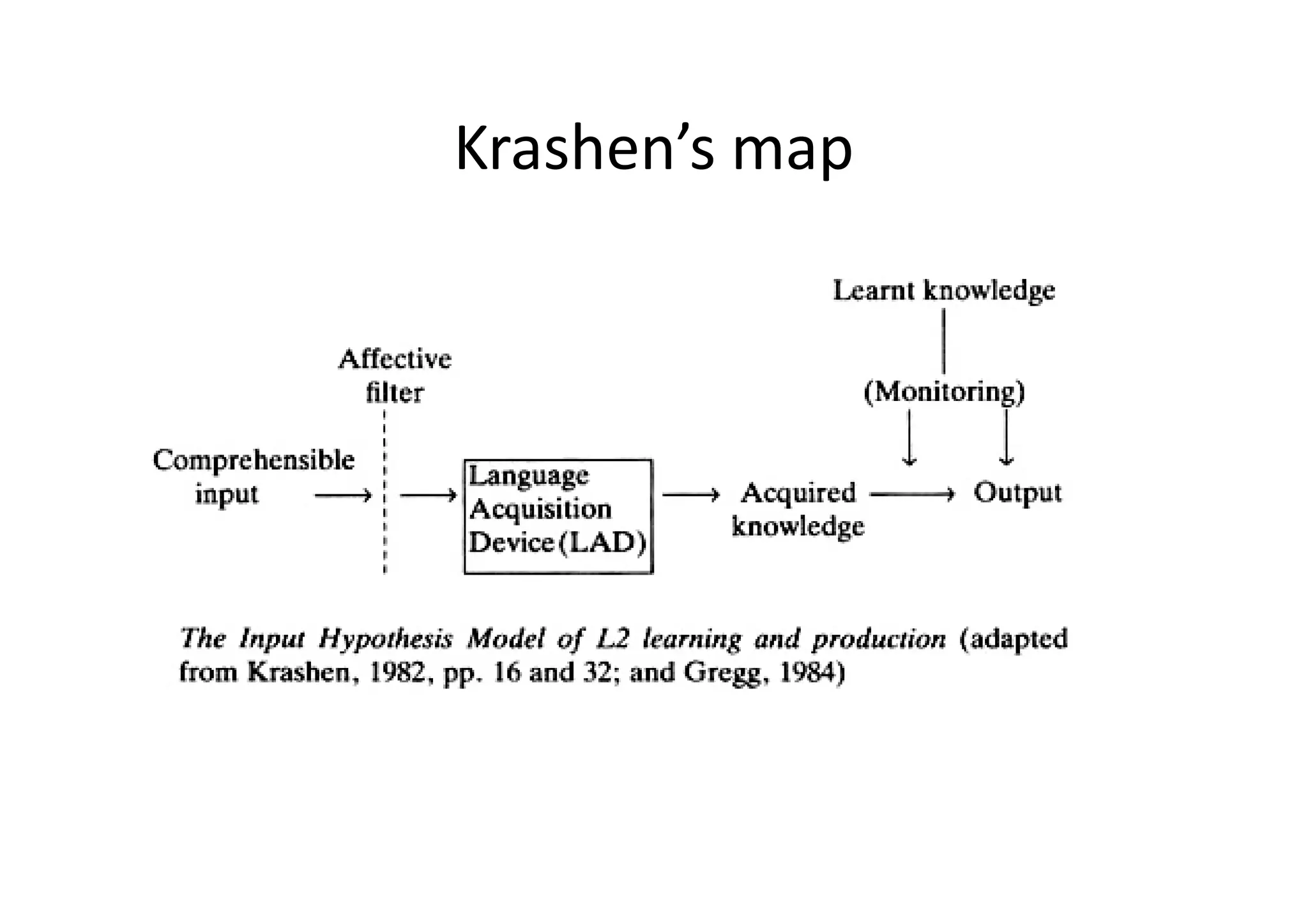
Krashen mapped a very educated guess
Krashen’s map
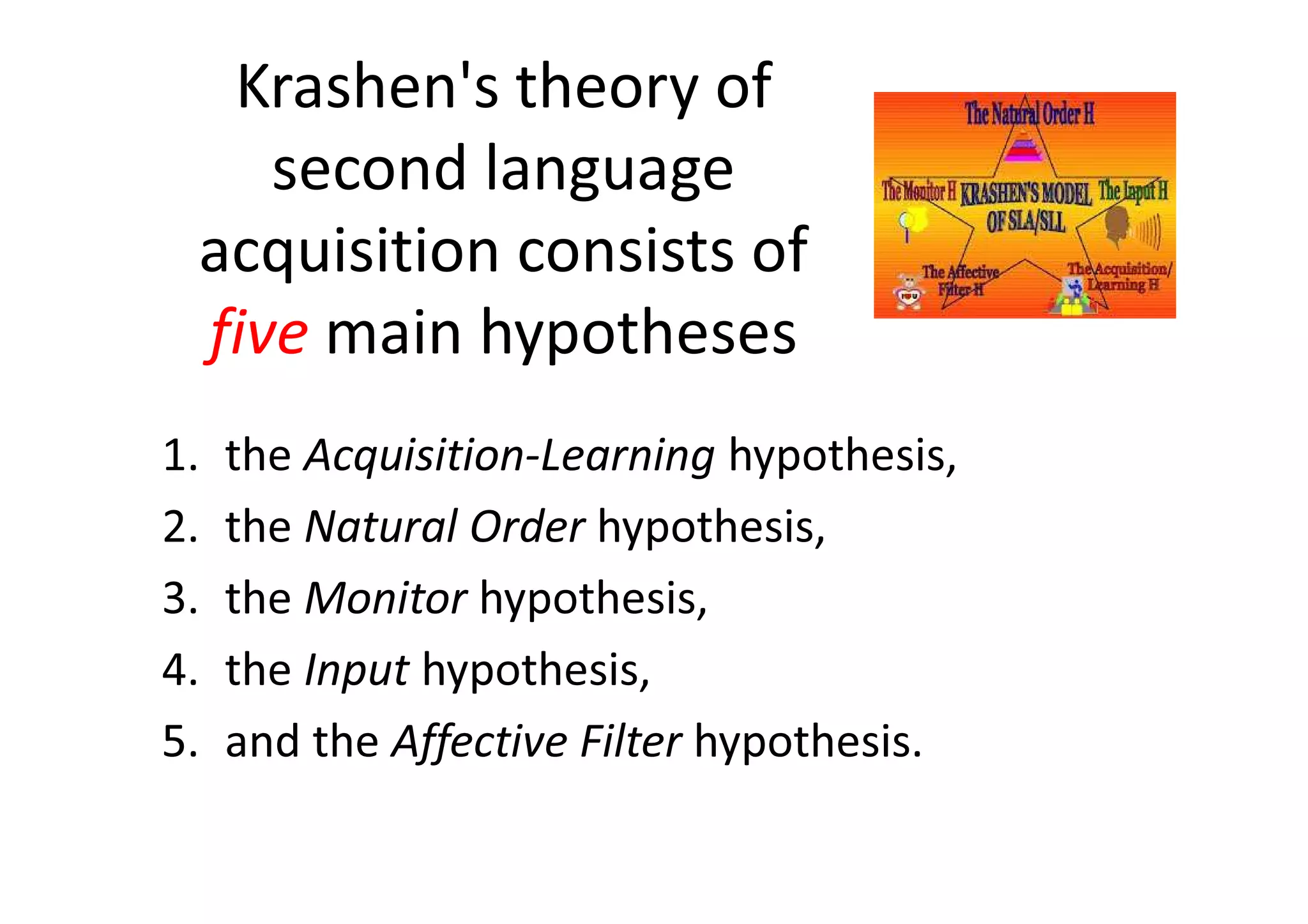
Krashen's theory of
second language
acquisition consists of
five main hypotheses
1. the Acquisition-Learning hypothesis,
2. the Natural Order hypothesis,
3. the Monitor hypothesis,
4. the Input hypothesis,
5. and the Affective Filter hypothesis.
Map idea 1 – we need to acquire
language
What’s the difference?
Acquisition Learning
implicit, subconscious explicit, conscious
informal situations formal situations
uses grammatical 'feel' uses grammatical rules
depends on attitude depends on aptitude
stable order of acquisition simple to complex order of
learning
Map idea 2 – Natural order
“we acquire the rules of language in a
predictable order”
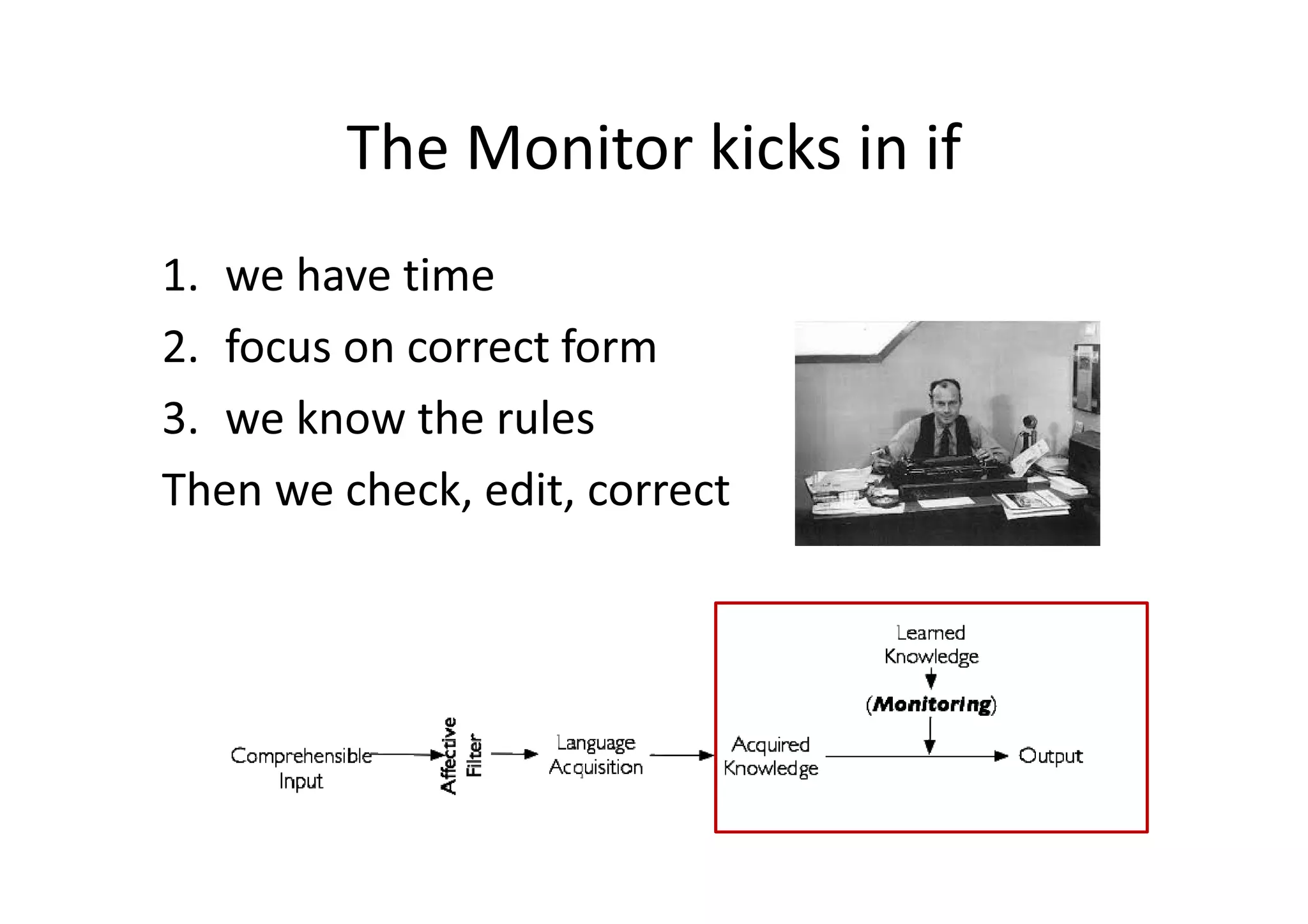
Map idea 3 – The Monitor
we check, edit & correct according to
what we have learned
The Monitor kicks in if
1. we have time
2. focus on correct form
3. we know the rules
Then we check, edit, correct
Input
Comprehensible input
i =
current
level
i+1
i + ….
Acquires
a second
language
Input
Input too difficult
i =
current
level
i + 1
i+5
Map idea 4
- THE INPUT HYPOTHESIS
Give me something I can understand
Well actually, a little bit more than I
understand (I + 1)
Some similarities to Vygotsky’s
Zone of Proximal Development
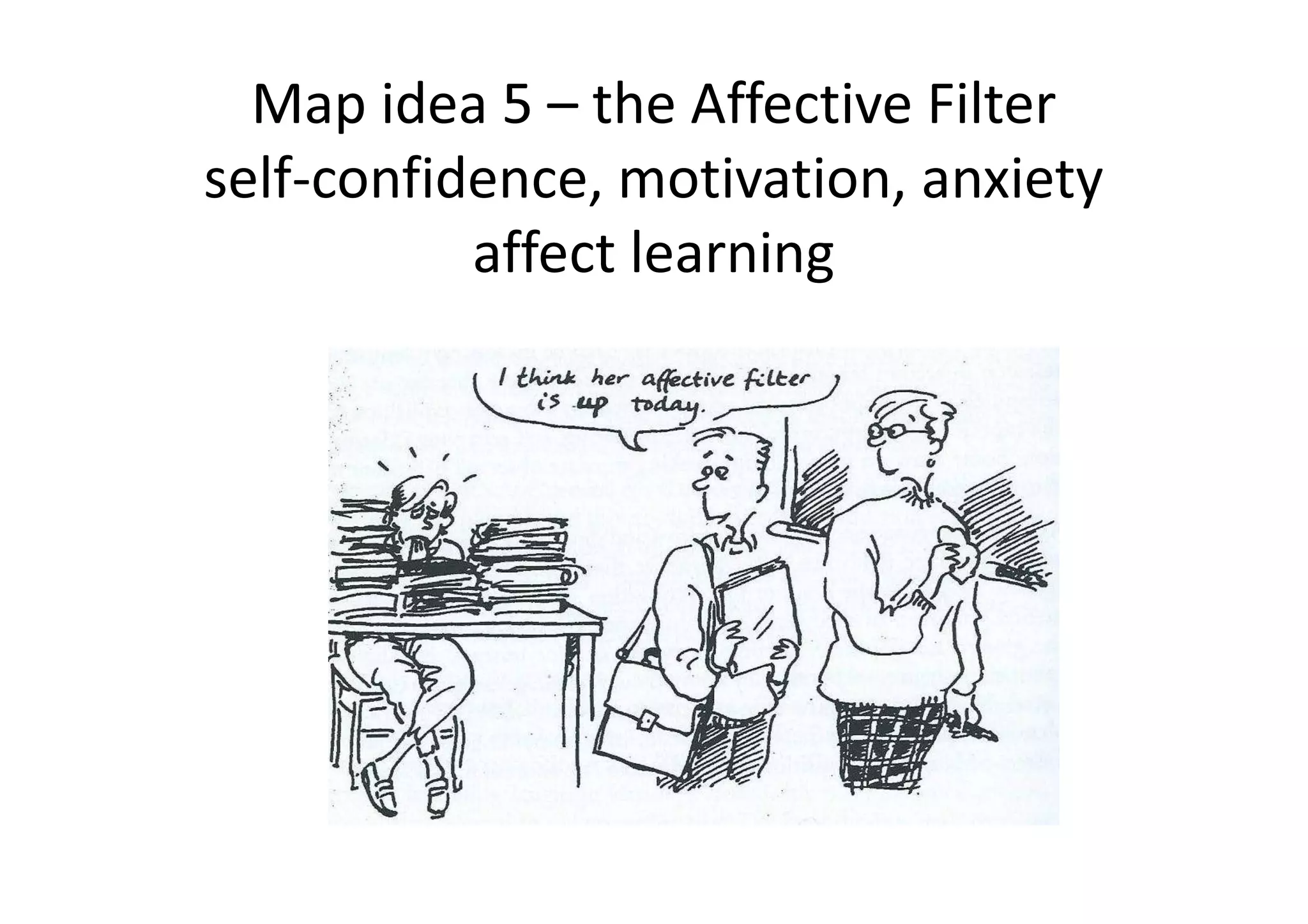
Map idea 5 – the Affective Filter
self-confidence, motivation, anxiety
affect learning
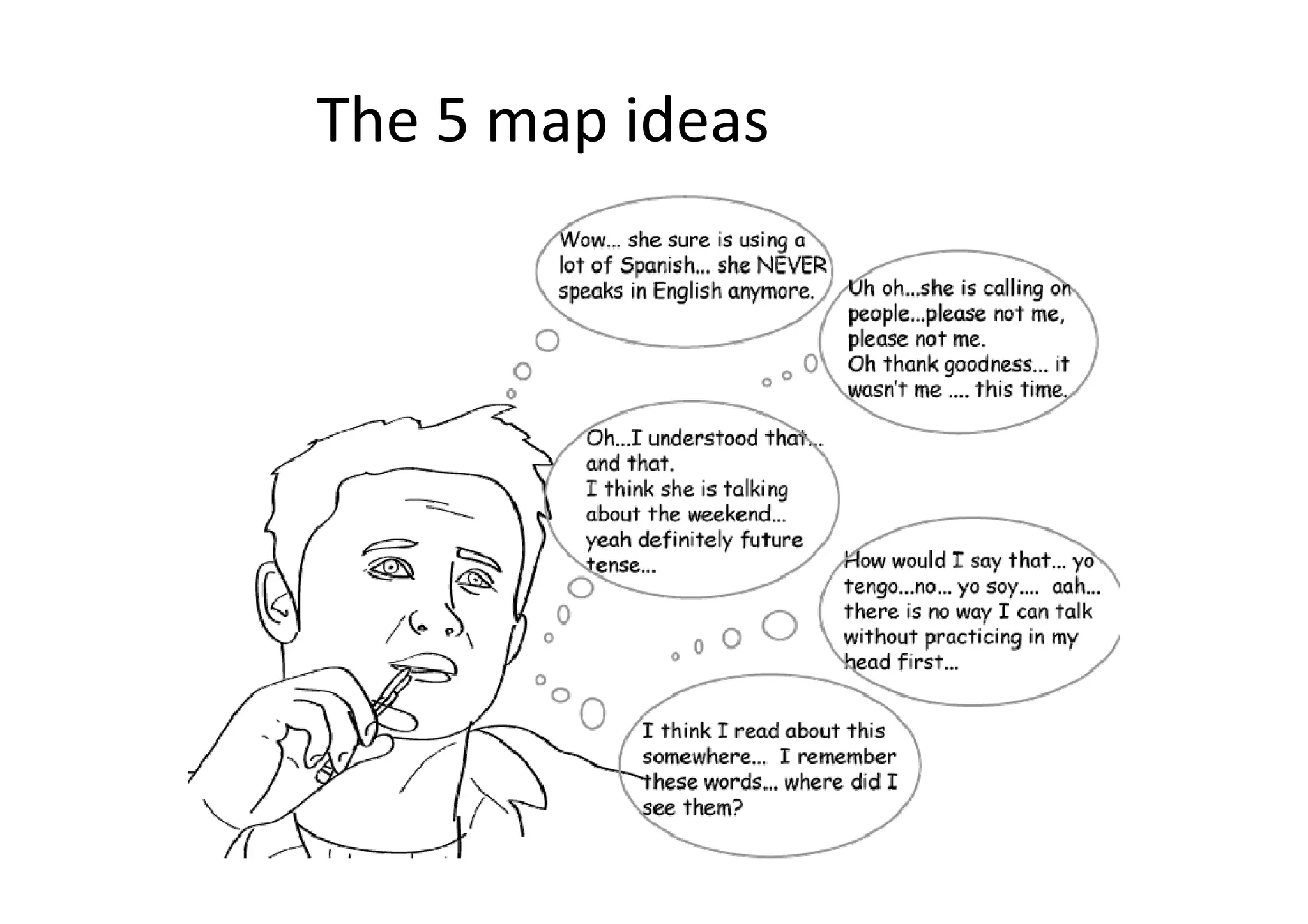
The 5 map ideas
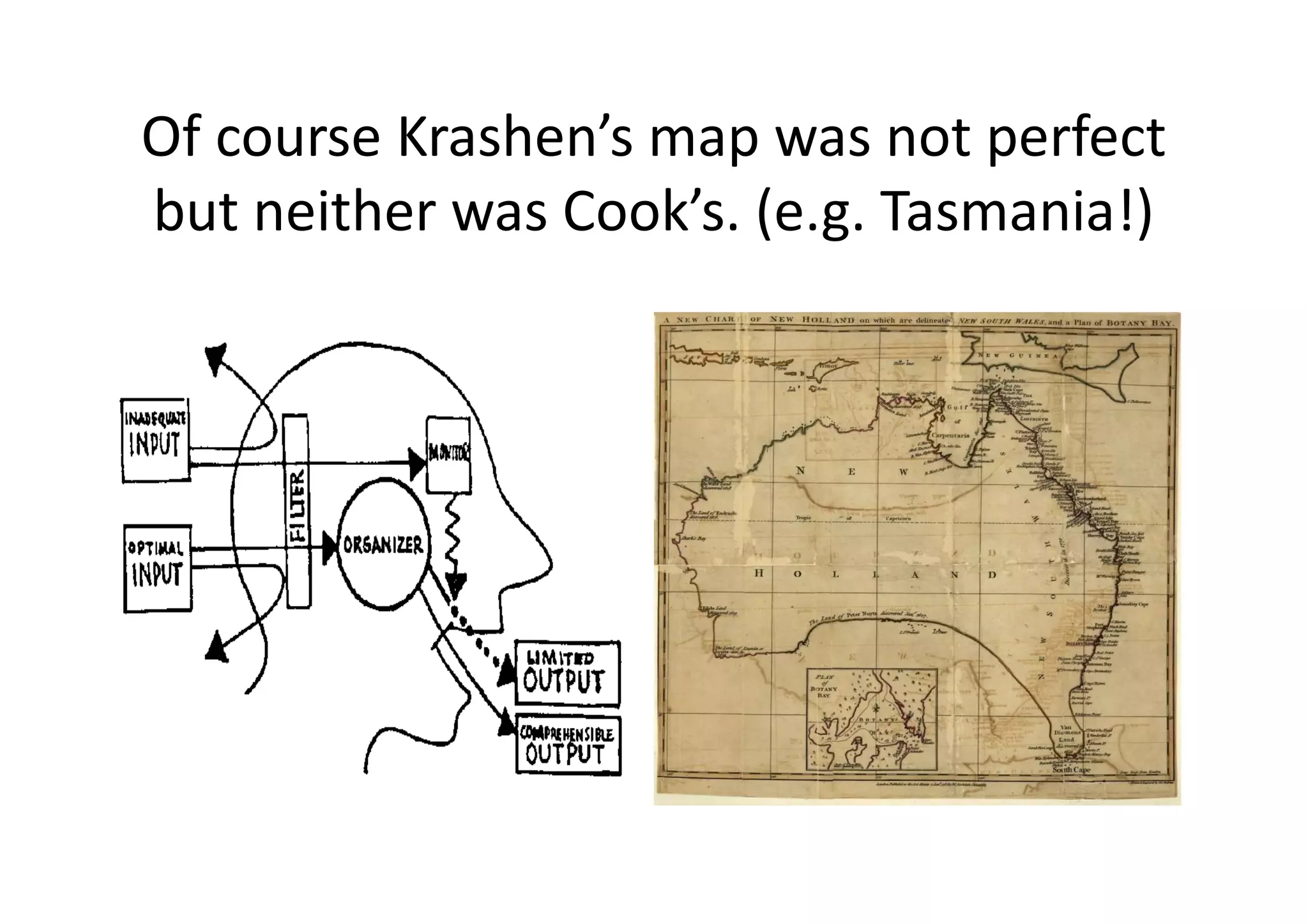
Of course Krashen’s map was not perfect
but neither was Cook’s. (e.g. Tasmania!)
Krashen drew a new map for
English teaching – the natural
approach

Stephen krashen

  • 1.
    Stephen Krashen The naturalapproach to teaching & learning L2
  • 2.
    A map ofAustralia before Cook
  • 3.
    Krashen mapped avery educated guess
  • 4.
  • 5.
    Krashen's theory of secondlanguage acquisition consists of five main hypotheses 1. the Acquisition-Learning hypothesis, 2. the Natural Order hypothesis, 3. the Monitor hypothesis, 4. the Input hypothesis, 5. and the Affective Filter hypothesis.
  • 6.
    Map idea 1– we need to acquire language
  • 7.
    What’s the difference? AcquisitionLearning implicit, subconscious explicit, conscious informal situations formal situations uses grammatical 'feel' uses grammatical rules depends on attitude depends on aptitude stable order of acquisition simple to complex order of learning
  • 8.
    Map idea 2– Natural order “we acquire the rules of language in a predictable order”
  • 9.
    Map idea 3– The Monitor we check, edit & correct according to what we have learned
  • 10.
    The Monitor kicksin if 1. we have time 2. focus on correct form 3. we know the rules Then we check, edit, correct
  • 11.
    Input Comprehensible input i = current level i+1 i+ …. Acquires a second language Input Input too difficult i = current level i + 1 i+5 Map idea 4 - THE INPUT HYPOTHESIS Give me something I can understand Well actually, a little bit more than I understand (I + 1)
  • 12.
    Some similarities toVygotsky’s Zone of Proximal Development
  • 13.
    Map idea 5– the Affective Filter self-confidence, motivation, anxiety affect learning
  • 15.
    The 5 mapideas
  • 16.
    Of course Krashen’smap was not perfect but neither was Cook’s. (e.g. Tasmania!)
  • 17.
    Krashen drew anew map for English teaching – the natural approach