STEM CELLS
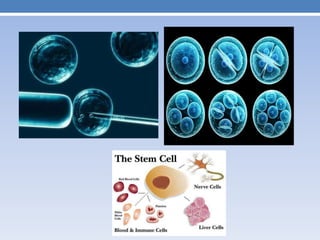
What is a Stem Cell ?
• A cell that has the ability to continuously divide and
differentiate (develop) into various other kind(s) of
cells/tissues
• Stem cells are different from other cells of the body
in that they have the ability to differentiate into other
cell/tissue types.
• This ability allows them to replace cells that have
died. With this ability, they have been used to
replace defective cells/tissues in patients who have
certain diseases or defects.
What are the key questions about adult stem cells?
1.How many kinds of adult stem cells exist,and in which
tissues do they exist?
2. Do adult stem cells have the capacity to
transdifferentiate ,and is it possible to control this
process to improve its reliability and efficiency?
3. What are the factors that control adult stem cell
proliferation and differentiation?
4. What are the factors that stimulate stem cells to
relocate to sites of injury or damage, and how can this
process been enhanced for better healing?
Differences between embryonic stem cells and adult stem cells :
1. They have different self-renewal capabilities
• Embryonic stem cells: near indefinite self-renewal.
• Adult stem cells: limited self-renewal.
2. They have different differentiation potentials
• Embryonic stem cells: differentiate into all cell types in an
organism.
• Adult stem cells: differentiate into restricted cells types.
3.They differ in how they respond to external stimuli
• Embryonic stem cells are readily to change upon stimulation
• Adult cells emphasize on stability and need to be activated by
cues, e.g. injuries.
Kinds of Stem Cells
Stem cell
type Description Examples
Totipotent
Each cell can develop
into a new individual
Cells from early
(1-3 days)
embryos
Pluripotent
Cells can form any (over
200) cell types
Some cells of
blastocyst (5 to 14
days)
Multipotent
Cells differentiated, but
can form a number of
other tissues
Fetal tissue, cord
blood, and adult
stem cells
Embryonic Stem cells are obtained from In-Vitro Fertilization embryos that were
not used .
STEM CELLS HAVE ALSO BEEN
FOUND IN “MATURE” ORGANS
Umbilical Cord Stem Cells
• Also Known as Wharton’s Jelly
• Adult stem cells of infant origin
• Less invasive than bone marrow
• Greater compatibility
• Less expensive
• Skin
• Fat Cells
• Bone marrow
• Brain
• Many other organs
& tissues
Adult Stem Cells
An undifferentiated cells found among specialized or
differentiated cells in a tissue or organ after birth.
Stem Cell Applications
• Tissue repair :
 nerve, heart, muscle, organ, skin
 Regenerate spinal cord, heart tissue or any
other major tissue in the body.
• Cancers :
 Studies show leukemia patients treated with
stem cells emerge free of disease
 Injections of stem cells have also reduces
pancreatic cancers in some patients.
• Autoimmune diseases :
 diabetes, rheumatoid arthritis, MS
•To summarize, stem cells offer exciting
promise for future therapies, but significant
technical hurdles remain that will only be
overcome through years of intensive
research.
Thank you

Stem cells

  • 1.
  • 3.
    What is aStem Cell ? • A cell that has the ability to continuously divide and differentiate (develop) into various other kind(s) of cells/tissues • Stem cells are different from other cells of the body in that they have the ability to differentiate into other cell/tissue types. • This ability allows them to replace cells that have died. With this ability, they have been used to replace defective cells/tissues in patients who have certain diseases or defects.
  • 4.
    What are thekey questions about adult stem cells? 1.How many kinds of adult stem cells exist,and in which tissues do they exist? 2. Do adult stem cells have the capacity to transdifferentiate ,and is it possible to control this process to improve its reliability and efficiency? 3. What are the factors that control adult stem cell proliferation and differentiation? 4. What are the factors that stimulate stem cells to relocate to sites of injury or damage, and how can this process been enhanced for better healing?
  • 5.
    Differences between embryonicstem cells and adult stem cells : 1. They have different self-renewal capabilities • Embryonic stem cells: near indefinite self-renewal. • Adult stem cells: limited self-renewal. 2. They have different differentiation potentials • Embryonic stem cells: differentiate into all cell types in an organism. • Adult stem cells: differentiate into restricted cells types. 3.They differ in how they respond to external stimuli • Embryonic stem cells are readily to change upon stimulation • Adult cells emphasize on stability and need to be activated by cues, e.g. injuries.
  • 6.
    Kinds of StemCells Stem cell type Description Examples Totipotent Each cell can develop into a new individual Cells from early (1-3 days) embryos Pluripotent Cells can form any (over 200) cell types Some cells of blastocyst (5 to 14 days) Multipotent Cells differentiated, but can form a number of other tissues Fetal tissue, cord blood, and adult stem cells
  • 7.
    Embryonic Stem cellsare obtained from In-Vitro Fertilization embryos that were not used .
  • 8.
    STEM CELLS HAVEALSO BEEN FOUND IN “MATURE” ORGANS
  • 9.
    Umbilical Cord StemCells • Also Known as Wharton’s Jelly • Adult stem cells of infant origin • Less invasive than bone marrow • Greater compatibility • Less expensive
  • 10.
    • Skin • FatCells • Bone marrow • Brain • Many other organs & tissues Adult Stem Cells An undifferentiated cells found among specialized or differentiated cells in a tissue or organ after birth.
  • 11.
    Stem Cell Applications •Tissue repair :  nerve, heart, muscle, organ, skin  Regenerate spinal cord, heart tissue or any other major tissue in the body. • Cancers :  Studies show leukemia patients treated with stem cells emerge free of disease  Injections of stem cells have also reduces pancreatic cancers in some patients. • Autoimmune diseases :  diabetes, rheumatoid arthritis, MS
  • 12.
    •To summarize, stemcells offer exciting promise for future therapies, but significant technical hurdles remain that will only be overcome through years of intensive research.
  • 13.