Stem Cell Research


     BERNADETTE ROBERSON, RN, BSN
       KIMBERLIN SALAS, RN, BSN
        DANNY VASQUEZ, RN, BSN

HCS/578 SANDRA HUPPENBAUER, RN, BSN, MSN
Agenda


 What are the ethical dilemmas posed by Stem Cell
  Research?- Bernie
 How does the Stem Cell Issue affect global health? -
  Bernie
 How does U.S. health policy currently treat the issue?-
  Kimmy
 How does U.S. policy differ from international policy? -
  Kimmy
 What course of action would you advocate for your
  audience? –Danny
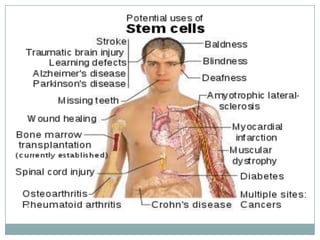
What are Stem Cells?

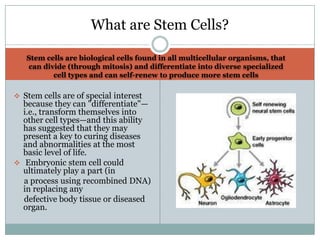
   Stem cells are biological cells found in all multicellular organisms, that
   can divide (through mitosis) and differentiate into diverse specialized
          cell types and can self-renew to produce more stem cells

 Stem cells are of special interest
  because they can "differentiate"—
  i.e., transform themselves into
  other cell types—and this ability
  has suggested that they may
  present a key to curing diseases
  and abnormalities at the most
  basic level of life.
 Embryonic stem cell could
  ultimately play a part (in
  a process using recombined DNA)
  in replacing any
  defective body tissue or diseased
  organ.
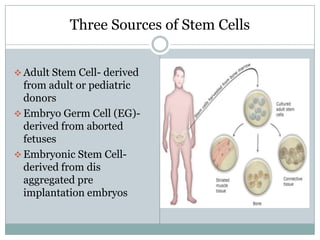
Three Sources of Stem Cells


 Adult Stem Cell- derived
  from adult or pediatric
  donors
 Embryo Germ Cell (EG)-
  derived from aborted
  fetuses
 Embryonic Stem Cell-
  derived from dis
  aggregated pre
  implantation embryos
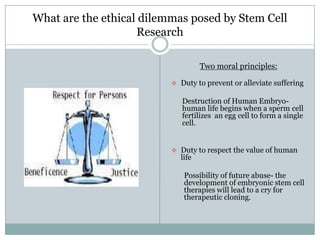
What are the ethical dilemmas posed by Stem Cell
                    Research

                                   Two moral principles:

                           Duty to prevent or alleviate suffering

                             Destruction of Human Embryo-
                             human life begins when a sperm cell
                             fertilizes an egg cell to form a single
                             cell.


                           Duty to respect the value of human
                            life

                             Possibility of future abuse- the
                             development of embryonic stem cell
                             therapies will lead to a cry for
                             therapeutic cloning.
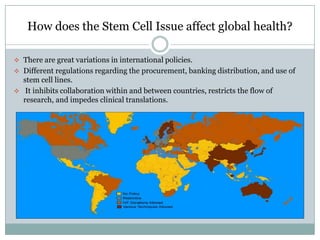
How does the Stem Cell Issue affect global health?

 There are great variations in international policies.
 Different regulations regarding the procurement, banking distribution, and use of
  stem cell lines.
 It inhibits collaboration within and between countries, restricts the flow of
  research, and impedes clinical translations.
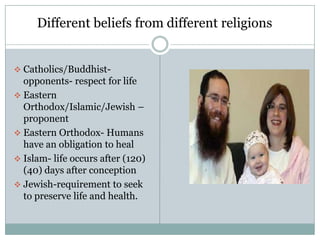
Different beliefs from different religions


 Catholics/Buddhist-
  opponents- respect for life
 Eastern
  Orthodox/Islamic/Jewish –
  proponent
 Eastern Orthodox- Humans
  have an obligation to heal
 Islam- life occurs after (120)
  (40) days after conception
 Jewish-requirement to seek
  to preserve life and health.
How does U.S. health policy currently treat Stem Cell
                    Research?

                             March 9, 2009 – President
                              Barack Obama issued Executive
                              Order (EO) 13505 (Removing
                              Barriers to Responsible Scientific
                              Research Involving Human Stem
                              Cells)


                             July 7, 2009 – National
                              Institutes of Health Guidelines
                              on Human Stem Cell Research

                             EO Revokes 2 items:
                              The Presidential statement of
                              August 9, 2001
                              EO 13435
How does U.S. policy differ from International Policy


              U.S. Policy

 Also known as public policy


 Deals with policies that affect the
   country, or within all of 50 states.

 Covers wide range of areas e.g.
   business, energy, law
   enforcement, social
   welfare, money/taxes.
How does U.S. policy differ from International Policy

            Foreign Policy
 Any policy of the government that
  interacts with foreign nations and
  sets standards of interactions for
  each organizations, corporations
  and individual

 Official goal is: "to create a more
  secure, democratic, and
  prosperous world for the benefit of
  the American people and the
  international community” (United
  States Department of State)
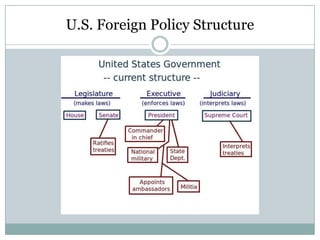
U.S. Foreign Policy Structure
http://www.youtube.com/watch?v=ujbLSt-7-9k
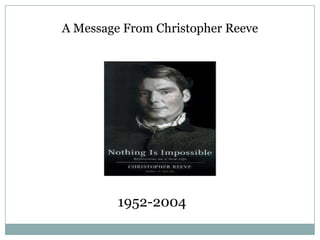
A Message From Christopher Reeve


         1952-2004
http://www.youtube.com/watch?v=KHfrC2a3ZwY
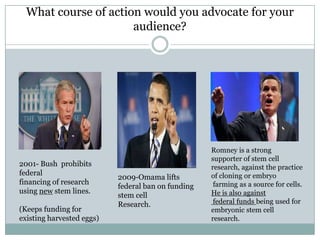
What course of action would you advocate for your
                      audience?


                                                    Romney is a strong
                                                    supporter of stem cell
2001- Bush prohibits                                research, against the practice
federal                                             of cloning or embryo
                           2009-Omama lifts
financing of research                                farming as a source for cells.
                           federal ban on funding
using new stem lines.                               He is also against
                           stem cell
                           Research.                 federal funds being used for
(Keeps funding for                                  embryonic stem cell
existing harvested eggs)                            research.
Closing/Questions?
References

Boyer, P. J. (2010). The Covenant. New Yorker, 86, 60-67.
Burkhardt, M. A., & Nathaniel, A. K. (2008). ETHICS & ISSUES
    In Contemporary Nursing (3rd ed.). Mason, OH: Delmar Centage Learning.
Davis, B., Riccio, P., Hashimoto, M., & Gilbert. S. (n.d.). Ethical and public policy issues
   concerning stem cell research. Retrieved September 2, 2012, from
    http://9e.devbio.com/article.php?ch=21&id=258
Ethical issues in human stem cell research. (1999). Retrieved September 2, 2012, from
    http://bioethics.georgetown.edu/nbac/stemcell.pdf
Jay P. Lefkowitz (2008). Stem Cells and the President-An Inside account (Jay P.
    Lefkowitz)
National Institute of Health (NIH) Stem cell. (n.d.). Retrieved September 2, 2012, from
    http://en.wikipedia.org/wiki/Stem_cell
Stem cell research: The impact on public health. (n.d.). Retrieved September
2, 2012, from http://www.cwru.edu/med/epidbio/mphp439/Stem_Cell_Research.htm
http://stemcells.nih.gov/policy
www.bingimages.com
www.googleimages.com
www.state.gov/documents/organization/59163.pdf
www.youtube.com

Stem cell research pp final v2

  • 1.
    Stem Cell Research BERNADETTE ROBERSON, RN, BSN KIMBERLIN SALAS, RN, BSN DANNY VASQUEZ, RN, BSN HCS/578 SANDRA HUPPENBAUER, RN, BSN, MSN
  • 2.
    Agenda  What arethe ethical dilemmas posed by Stem Cell Research?- Bernie  How does the Stem Cell Issue affect global health? - Bernie  How does U.S. health policy currently treat the issue?- Kimmy  How does U.S. policy differ from international policy? - Kimmy  What course of action would you advocate for your audience? –Danny
  • 3.
    What are StemCells? Stem cells are biological cells found in all multicellular organisms, that can divide (through mitosis) and differentiate into diverse specialized cell types and can self-renew to produce more stem cells  Stem cells are of special interest because they can "differentiate"— i.e., transform themselves into other cell types—and this ability has suggested that they may present a key to curing diseases and abnormalities at the most basic level of life.  Embryonic stem cell could ultimately play a part (in a process using recombined DNA) in replacing any defective body tissue or diseased organ.
  • 4.
    Three Sources ofStem Cells  Adult Stem Cell- derived from adult or pediatric donors  Embryo Germ Cell (EG)- derived from aborted fetuses  Embryonic Stem Cell- derived from dis aggregated pre implantation embryos
  • 5.
    What are theethical dilemmas posed by Stem Cell Research Two moral principles:  Duty to prevent or alleviate suffering Destruction of Human Embryo- human life begins when a sperm cell fertilizes an egg cell to form a single cell.  Duty to respect the value of human life Possibility of future abuse- the development of embryonic stem cell therapies will lead to a cry for therapeutic cloning.
  • 6.
    How does theStem Cell Issue affect global health?  There are great variations in international policies.  Different regulations regarding the procurement, banking distribution, and use of stem cell lines.  It inhibits collaboration within and between countries, restricts the flow of research, and impedes clinical translations.
  • 7.
    Different beliefs fromdifferent religions  Catholics/Buddhist- opponents- respect for life  Eastern Orthodox/Islamic/Jewish – proponent  Eastern Orthodox- Humans have an obligation to heal  Islam- life occurs after (120) (40) days after conception  Jewish-requirement to seek to preserve life and health.
  • 8.
    How does U.S.health policy currently treat Stem Cell Research?  March 9, 2009 – President Barack Obama issued Executive Order (EO) 13505 (Removing Barriers to Responsible Scientific Research Involving Human Stem Cells)  July 7, 2009 – National Institutes of Health Guidelines on Human Stem Cell Research  EO Revokes 2 items: The Presidential statement of August 9, 2001 EO 13435
  • 9.
    How does U.S.policy differ from International Policy U.S. Policy  Also known as public policy  Deals with policies that affect the country, or within all of 50 states.  Covers wide range of areas e.g. business, energy, law enforcement, social welfare, money/taxes.
  • 10.
    How does U.S.policy differ from International Policy Foreign Policy  Any policy of the government that interacts with foreign nations and sets standards of interactions for each organizations, corporations and individual  Official goal is: "to create a more secure, democratic, and prosperous world for the benefit of the American people and the international community” (United States Department of State)
  • 11.
  • 13.
  • 14.
    A Message FromChristopher Reeve 1952-2004
  • 15.
  • 16.
    What course ofaction would you advocate for your audience? Romney is a strong supporter of stem cell 2001- Bush prohibits research, against the practice federal of cloning or embryo 2009-Omama lifts financing of research farming as a source for cells. federal ban on funding using new stem lines. He is also against stem cell Research. federal funds being used for (Keeps funding for embryonic stem cell existing harvested eggs) research.
  • 17.
  • 18.
    References Boyer, P. J.(2010). The Covenant. New Yorker, 86, 60-67. Burkhardt, M. A., & Nathaniel, A. K. (2008). ETHICS & ISSUES In Contemporary Nursing (3rd ed.). Mason, OH: Delmar Centage Learning. Davis, B., Riccio, P., Hashimoto, M., & Gilbert. S. (n.d.). Ethical and public policy issues concerning stem cell research. Retrieved September 2, 2012, from http://9e.devbio.com/article.php?ch=21&id=258 Ethical issues in human stem cell research. (1999). Retrieved September 2, 2012, from http://bioethics.georgetown.edu/nbac/stemcell.pdf Jay P. Lefkowitz (2008). Stem Cells and the President-An Inside account (Jay P. Lefkowitz) National Institute of Health (NIH) Stem cell. (n.d.). Retrieved September 2, 2012, from http://en.wikipedia.org/wiki/Stem_cell Stem cell research: The impact on public health. (n.d.). Retrieved September 2, 2012, from http://www.cwru.edu/med/epidbio/mphp439/Stem_Cell_Research.htm http://stemcells.nih.gov/policy www.bingimages.com www.googleimages.com www.state.gov/documents/organization/59163.pdf www.youtube.com

Editor's Notes

  • #2 www.googleimages.com
  • #4 There are all kinds of stem cells. Adults and i children have them, animals have them, and they exist in the placenta of pregnant women and in the umbilical cord of infants as well. Stem cells are of special interest because they can "differentiate"— i.e., transform themselves into other cell types—and this ability has suggested that they may present a key to curing diseases and abnormalities at the most basic level of life.embryonic stem cell could ultimately play a part (ina process using recombined DNA) in replacing anydefective body tissue or diseased organ.The political problem surrounding such research arose from the fact that in 1995 Congress prohibited federal money from being used in any research that destroys an embryo
  • #5 www.googleimages.comAdult Stem Cell- cells act as a repair system for the body and replenishing adult tissue. Adult stem cell treatments have been successfully used for many years to treat leukemia and related bone/blood cancers through bone marrow transplants.
  • #6  www.googleimages.comDestruction of Human Embryo-Embryos used in these studies were created for reproductive purposes through in vitro fertilization procedure. When they are no longer needed for that purpose, they are donated for research with the informed consent of the donors.Possibility of future abuse- cloning to obtain clinical embryonic stem cells is unnatural. It involves producing a viable embryo without fertilization.
  • #7 www.googleimages.comLaws in different countries: United Kingdom, Sweden, and Singapore- have the most liberal laws related to Stem cell research Australia- similar to United States Austria and Germany- have more restrictive laws Speaker notes- United Kingdom – researchers are allowed to use embryonic stem cells from discarded embryos to create embryos for research purposes.
  • #9 www.bingimages.comLink to the EO http://www.gpo.gov/fdsys/pkg/FR-2009-03-11/pdf/E9-5441.pdf“EO changes the way National Institutes of Health (NIH) can support and conduct human stem cell research. The HHS Secretary, through the NIH Director, is required to review existing NIH and other widely-recognized guidelines on human stem cell research and issue new NIH guidance within 120 days of the date of the EO.”National Institutes of Health Guidelines on Human Stem Cell Research link: http://stemcells.nih.gov/policy/2009guidelines.htmSummary:The National Institutes of Health (NIH) is hereby publishing final "National Institutes of Health Guidelines for Human Stem Cell Research" (Guidelines).On March 9, 2009, President Barack H. Obama issued Executive Order 13505: Removing Barriers to Responsible Scientific Research Involving Human Stem Cells. The Executive Order states that the Secretary of Health and Human Services, through the Director of NIH, may support and conduct responsible, scientifically worthy human stem cell research, including human embryonic stem cell (hESC) research, to the extent permitted by law. These Guidelines implement Executive Order 13505, as it pertains to extramural NIH-funded stem cell research, establish policy and procedures under which the NIH will fund such research, and helps ensure that NIH-funded research in this area is ethically responsible, scientifically worthy, and conducted in accordance with applicable law. Internal NIH policies and procedures, consistent with Executive Order 13505 and these Guidelines, will govern the conduct of intramural NIH stem cell research.Human Embryonic Stem Cell Policy Under Former President Bush - (Aug. 9, 2001–Mar. 9, 2009)Expanding Approved Stem Cell Lines in Ethically Responsible Ways (June 20, 2007) link: http://www.gpo.gov/fdsys/pkg/FR-2007-06-22/pdf/07-3112.pdf http://stemcells.nih.gov/policy
  • #10 www.bingimages.comUS policy example: taxes, healthcare, educational reforms, etc. Certain domestic policy issues are especially controversial among people of different cultures, religions, and personal beliefs. Examples of such issues include abortion rights, the rights of homosexuals, the role of religion in public life, and the place of cultural diversity in education and employment.
  • #11 www.bingimages.comForeign policy example: war on terror, nuclear proliferation, treaties and negotiations http://www.state.gov/documents/organization/59163.pdf
  • #12 Google imagesThe US Constitution gives much of the foreign policy decision-making to the presidency, but the Senate has a role in ratifying treaties, and the Supreme Court interprets treaties when cases are presented to it.
  • #13 www.googleimages.comIn 2004, voters in California approved $3 billion in taxpayer dollars to fund embryonic stem-cell research in theirown state. Last November, voters in New Jersey went in the opposite direction, rejecting a measuresimilar to California's that would have cost them $450 million. And then, only days after the New Jersey vote, came the announcement that it would no longer be necessary to use embryos to do embryonic stem-cell research.
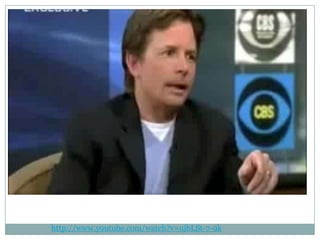
  • #14 www.youtube.comIn 2006, a close Senate race in Missouri tilted decisively toward the Democrats after the airing of an emotionallyaffecting television advertisement featuring the actor Michael J. Fox, who suffers from Parkinson's disease and who attacked the Republican candidate for his retrograde position on the matter.Bush refused to accept the notion that we must choose between medical research and the principle of the dignity of life at every stage. He sought both to advance biomedical science and at the same time to respect the sanctity of human life. In the end he came to a moderate, balanced decision that drew a prudent and principled line. The decision was both informed and reasoned, based on lengthy study and consultation with peopleof widely divergent viewpoints. It was consciously not guided by pubic-opinion polls.
  • #17 www.googleimages.comON AUGUST 9, 2001, President Bush announced a compromise decision on the contentiousquestion of whether the federal government should provide financial support for research into the curative properties of human stem cells extracted from embryos. Bush's compromise allowed funding for researchinto embryonic stem cells that had already been harvested. At the same time, he disallowed funding for procedures that would collect stem cells from frozen (but still living) embryos, since doing so would require their destruction.But that life-or death decision would not be made anew with taxpayer dollars.Dickey Amendment, a piece of legislation passed in 1995 that precluded federal funding of "research in which a human embryo or embryos are destroyed.“ We're tinkering with the boundaries of life here," Bush said when I finished. "We're on the edge of a cliff. And if we take a step off the cliff, there's no going back. Perhaps we should only take one step at a time."
  • #18 www.googleimages.com