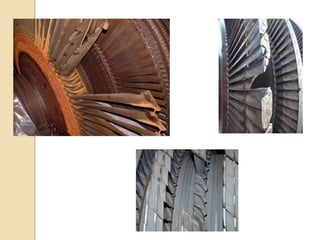
Steam turbine
summary
 What is the turbine?

 What is the principle of steam

turbine?
 Types of steam turbine.
 Component of steam turbine.
 Problems in steam turbine.
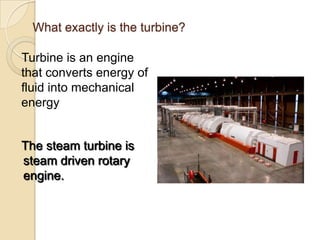
What exactly is the turbine?
Turbine is an engine
that converts energy of
fluid into mechanical
energy

The steam turbine is
steam driven rotary
engine.
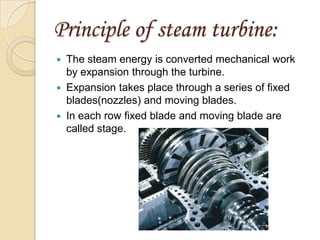
Principle of steam turbine:
The steam energy is converted mechanical work
by expansion through the turbine.
 Expansion takes place through a series of fixed
blades(nozzles) and moving blades.
 In each row fixed blade and moving blade are
called stage.

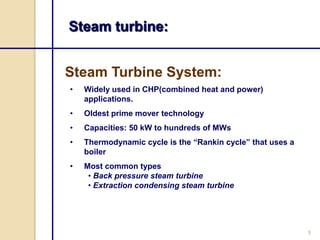
Steam turbine:
Steam Turbine System:
•

Widely used in CHP(combined heat and power)
applications.

•

Oldest prime mover technology

•

Capacities: 50 kW to hundreds of MWs

•

Thermodynamic cycle is the “Rankin cycle” that uses a
boiler

•

Most common types
• Back pressure steam turbine
• Extraction condensing steam turbine

5
Steam turbine:
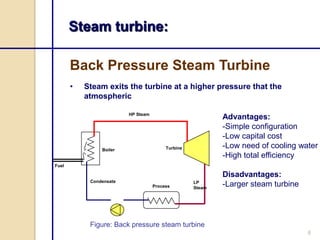
Back Pressure Steam Turbine
•

Steam exits the turbine at a higher pressure that the
atmospheric
HP Steam

Boiler

Advantages:
-Simple configuration
-Low capital cost
-Low need of cooling water
-High total efficiency

Turbine

Fuel

Condensate
Process

LP
Steam

Disadvantages:
-Larger steam turbine

Figure: Back pressure steam turbine
6
Steam turbine:
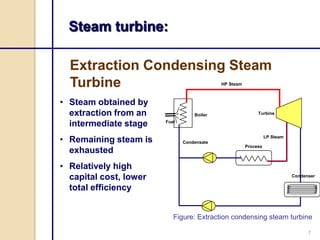
Extraction Condensing Steam
Turbine
HP Steam

• Steam obtained by
extraction from an
intermediate stage
• Remaining steam is
exhausted
• Relatively high
capital cost, lower
total efficiency

Boiler

Turbine

Fuel

LP Steam

Condensate
Process

Condenser

Figure: Extraction condensing steam turbine
7
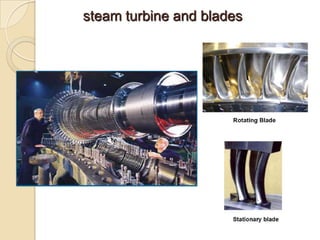
steam turbine and blades
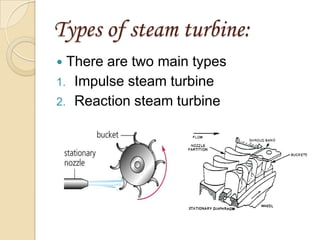
Types of steam turbine:
There are two main types
1. Impulse steam turbine
2. Reaction steam turbine

Impulse steam turbine:
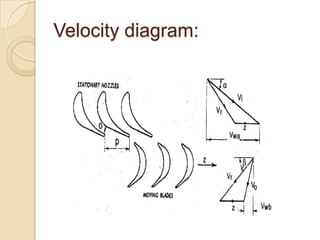
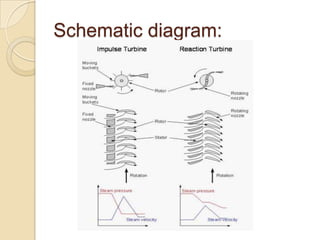
The basic idea of an impulse turbine is that
a jet of steam from a fixed nozzle pushes
against the rotor blades and impels them
forward.
 The velocity of steam is twice as fast as the
velocity of blade.
 Pressure drops take place in the fixed blade
(nozzle).

The single stage impulse turbine:
The turbine consists of a single rotor to
which impulse blades are attached.
 The steam is fed through one or several
convergent nozzles.
 If high velocity of steam is allowed to flow
through one row of moving blades.
 It produces a rotor speed of about 30000
rpm which is too high for practical use.

Velocity diagram:
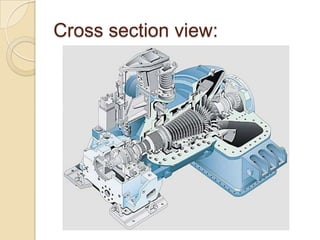
Cross section view:
Component of impulse steam turbine:
 Main components are
1. Casing
2. Rotor
3. Blades
4. Stop and control valve
5. Oil befell, steam befell
6. governor
7. Bearing(general and thrust bearing)
8. Gear box(epicyclic gear box)
9. Oil pumps
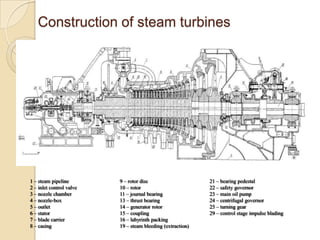
Construction of steam turbines

1 – steam pipeline
2 – inlet control valve
3 – nozzle chamber
4 – nozzle-box
5 – outlet
6 – stator
7 – blade carrier
8 – casing

9 – rotor disc
10 – rotor
11 – journal bearing
13 – thrust bearing
14 – generator rotor
15 – coupling
16 – labyrinth packing
19 – steam bleeding (extraction)

21 – bearing pedestal
22 – safety governor
23 – main oil pump
24 – centrifugal governor
25 – turning gear
29 – control stage impulse blading
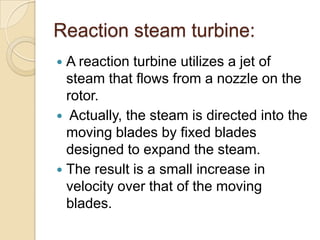
Reaction steam turbine:
A reaction turbine utilizes a jet of
steam that flows from a nozzle on the
rotor.
 Actually, the steam is directed into the
moving blades by fixed blades
designed to expand the steam.
 The result is a small increase in
velocity over that of the moving
blades.

Schematic diagram:
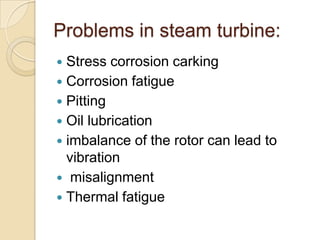
Problems in steam turbine:
Stress corrosion carking
 Corrosion fatigue
 Pitting
 Oil lubrication
 imbalance of the rotor can lead to
vibration
 misalignment
 Thermal fatigue

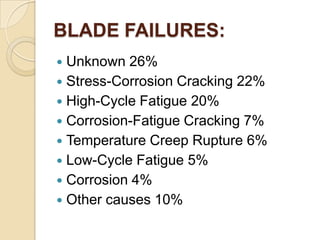
BLADE FAILURES:
Unknown 26%
 Stress-Corrosion Cracking 22%
 High-Cycle Fatigue 20%
 Corrosion-Fatigue Cracking 7%
 Temperature Creep Rupture 6%
 Low-Cycle Fatigue 5%
 Corrosion 4%
 Other causes 10%

Corrosion:
Resultant damage:
 Extensive pitting of
airfoils, shrouds, covers, blade root
surfaces.
 Causes of failure:
 Chemical attack from corrosive
elements in the steam provided to the
turbine.

Creep:
Resultant damage:
 Airfoils, shrouds, covers permanently
deformed.
 Causes of failure:
 Deformed parts subjected to steam
temperatures in excess of design
limits.

Fatigue:
Resultant damage:
 Cracks in airfoils, shrouds, covers,
blade roots.
 Causes of failure:
 Loosing of parts (cover, tie wire, etc.)
 Exceeded part fatigue life design limit

Stress Corrosion Cracking:
Resultant damage:
 Cracks in highly stressed areas of the
blading.
 Causes of failure:
 caused by the combined presence of
corrosive elements and high stresses
in highly loaded locations.

Thank you

Steamturbine

  • 1.
  • 2.
    summary  What isthe turbine?  What is the principle of steam turbine?  Types of steam turbine.  Component of steam turbine.  Problems in steam turbine.
  • 3.
    What exactly isthe turbine? Turbine is an engine that converts energy of fluid into mechanical energy The steam turbine is steam driven rotary engine.
  • 4.
    Principle of steamturbine: The steam energy is converted mechanical work by expansion through the turbine.  Expansion takes place through a series of fixed blades(nozzles) and moving blades.  In each row fixed blade and moving blade are called stage. 
  • 5.
    Steam turbine: Steam TurbineSystem: • Widely used in CHP(combined heat and power) applications. • Oldest prime mover technology • Capacities: 50 kW to hundreds of MWs • Thermodynamic cycle is the “Rankin cycle” that uses a boiler • Most common types • Back pressure steam turbine • Extraction condensing steam turbine 5
  • 6.
    Steam turbine: Back PressureSteam Turbine • Steam exits the turbine at a higher pressure that the atmospheric HP Steam Boiler Advantages: -Simple configuration -Low capital cost -Low need of cooling water -High total efficiency Turbine Fuel Condensate Process LP Steam Disadvantages: -Larger steam turbine Figure: Back pressure steam turbine 6
  • 7.
    Steam turbine: Extraction CondensingSteam Turbine HP Steam • Steam obtained by extraction from an intermediate stage • Remaining steam is exhausted • Relatively high capital cost, lower total efficiency Boiler Turbine Fuel LP Steam Condensate Process Condenser Figure: Extraction condensing steam turbine 7
  • 8.
  • 9.
    Types of steamturbine: There are two main types 1. Impulse steam turbine 2. Reaction steam turbine 
  • 10.
    Impulse steam turbine: Thebasic idea of an impulse turbine is that a jet of steam from a fixed nozzle pushes against the rotor blades and impels them forward.  The velocity of steam is twice as fast as the velocity of blade.  Pressure drops take place in the fixed blade (nozzle). 
  • 11.
    The single stageimpulse turbine: The turbine consists of a single rotor to which impulse blades are attached.  The steam is fed through one or several convergent nozzles.  If high velocity of steam is allowed to flow through one row of moving blades.  It produces a rotor speed of about 30000 rpm which is too high for practical use. 
  • 12.
  • 13.
  • 14.
    Component of impulsesteam turbine:  Main components are 1. Casing 2. Rotor 3. Blades 4. Stop and control valve 5. Oil befell, steam befell 6. governor 7. Bearing(general and thrust bearing) 8. Gear box(epicyclic gear box) 9. Oil pumps
  • 15.
    Construction of steamturbines 1 – steam pipeline 2 – inlet control valve 3 – nozzle chamber 4 – nozzle-box 5 – outlet 6 – stator 7 – blade carrier 8 – casing 9 – rotor disc 10 – rotor 11 – journal bearing 13 – thrust bearing 14 – generator rotor 15 – coupling 16 – labyrinth packing 19 – steam bleeding (extraction) 21 – bearing pedestal 22 – safety governor 23 – main oil pump 24 – centrifugal governor 25 – turning gear 29 – control stage impulse blading
  • 16.
    Reaction steam turbine: Areaction turbine utilizes a jet of steam that flows from a nozzle on the rotor.  Actually, the steam is directed into the moving blades by fixed blades designed to expand the steam.  The result is a small increase in velocity over that of the moving blades. 
  • 17.
  • 18.
    Problems in steamturbine: Stress corrosion carking  Corrosion fatigue  Pitting  Oil lubrication  imbalance of the rotor can lead to vibration  misalignment  Thermal fatigue 
  • 19.
    BLADE FAILURES: Unknown 26% Stress-Corrosion Cracking 22%  High-Cycle Fatigue 20%  Corrosion-Fatigue Cracking 7%  Temperature Creep Rupture 6%  Low-Cycle Fatigue 5%  Corrosion 4%  Other causes 10% 
  • 20.
    Corrosion: Resultant damage:  Extensivepitting of airfoils, shrouds, covers, blade root surfaces.  Causes of failure:  Chemical attack from corrosive elements in the steam provided to the turbine. 
  • 21.
    Creep: Resultant damage:  Airfoils,shrouds, covers permanently deformed.  Causes of failure:  Deformed parts subjected to steam temperatures in excess of design limits. 
  • 22.
    Fatigue: Resultant damage:  Cracksin airfoils, shrouds, covers, blade roots.  Causes of failure:  Loosing of parts (cover, tie wire, etc.)  Exceeded part fatigue life design limit 
  • 23.
    Stress Corrosion Cracking: Resultantdamage:  Cracks in highly stressed areas of the blading.  Causes of failure:  caused by the combined presence of corrosive elements and high stresses in highly loaded locations. 
  • 25.