Downloaded 15 times
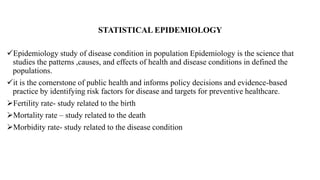
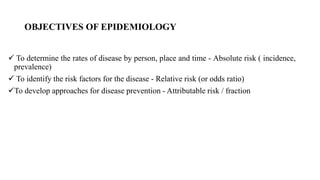
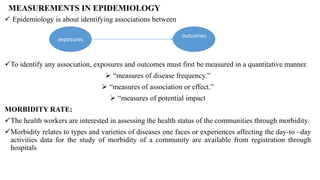
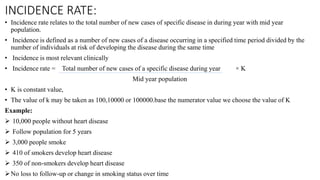
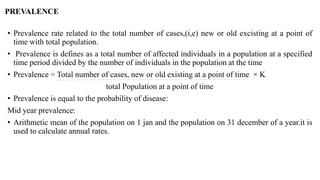
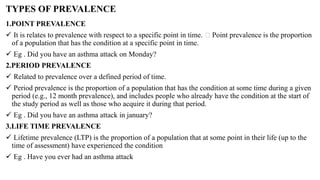
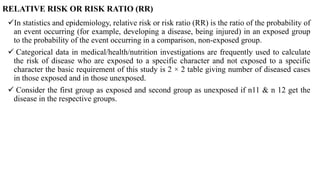
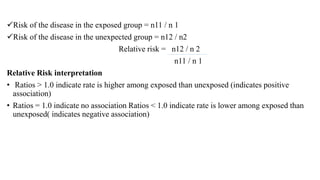
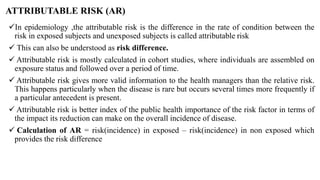
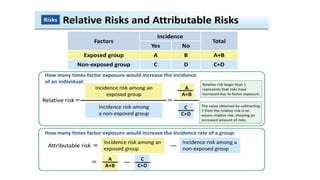


This document discusses key concepts and measurements used in statistical epidemiology. It defines epidemiology as the study of disease patterns in populations and notes its importance for public health. Some key measurements covered include incidence rate, prevalence, relative risk, attributable risk, and attributable fraction. Incidence rate measures new cases over time, while prevalence looks at total current cases. Relative risk compares risk between exposed and unexposed groups. Attributable risk is the difference in rates between groups, and attributable fraction shows the proportion of disease from an exposure.


