COMPUTER IN COMMUNITY
PHARMACY
 Automation of the dispensing process in community pharmacy is nothing new.
 Computer systems for pharmacy management have been on the market for many years, and almost all
community pharmacies now use computers to manage the processing of prescriptions.
 Although both piarmacists' use of computers and the capability of computer systems themselves have increased
dramatically during the past few years, most pharmacies have either failed to utilize their computers to their
fullest or have not kept up with the rapidly changing applications that are available.
 In the past, community pharmacy computer systems have been developed to support the transaction-processing
approach used in dispensing, wherein only information about the prescriptions being dispensed and limited
demographics about the patient were entered and retained in the computer system.
Usage of computers in the Community Pharmacy:
 Providing a receipt for the patient
 Record of transaction of money
 Ordering low quantity of products via electronic transitions
 Generation of multiple analysis for day, week,
 Month for number of prescription handles and amounts of cash.
 Estimation of profits and financial rational analysis
 Printing of billing and payment details
 •Inventory control purpose
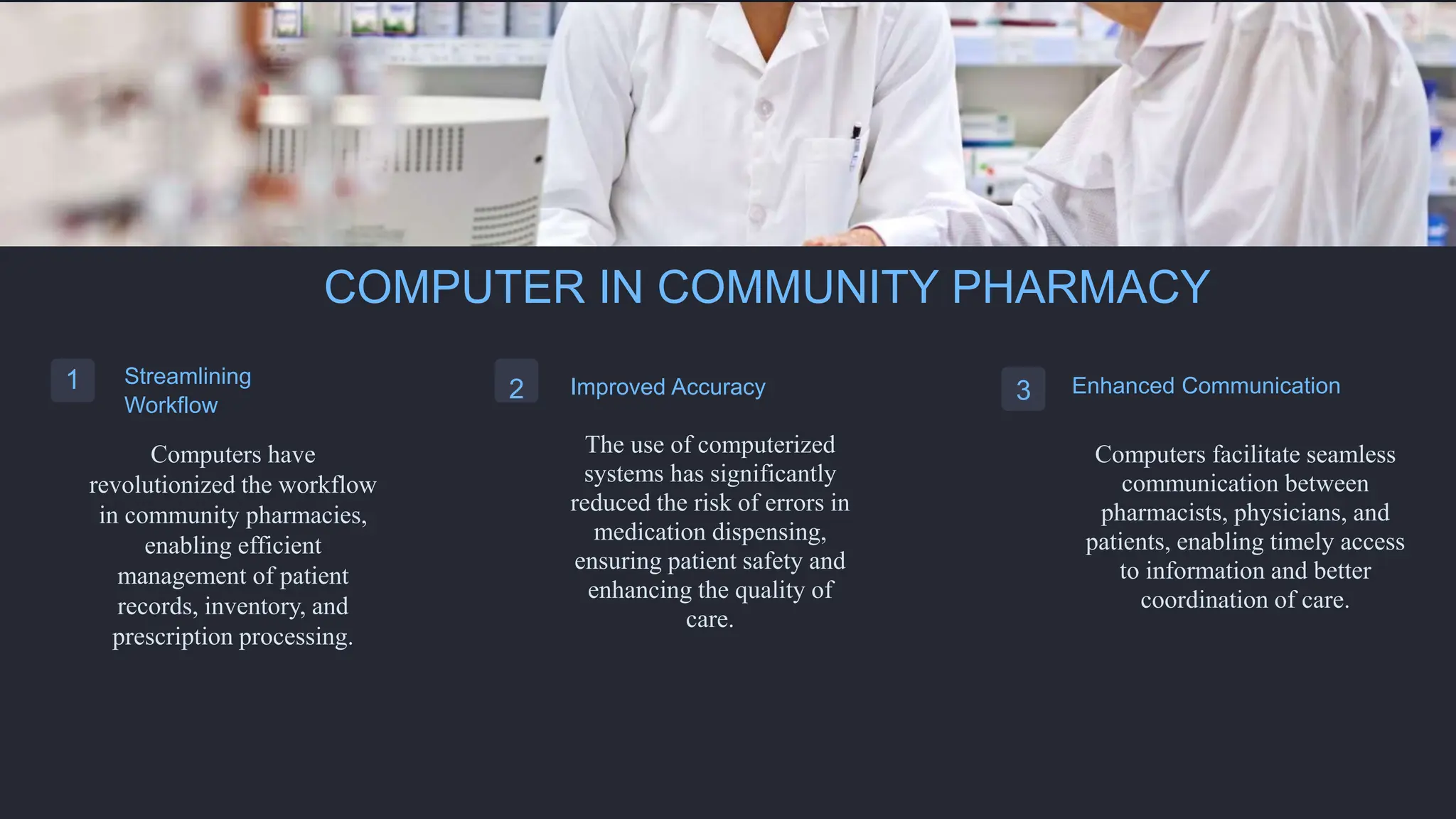
COMPUTER IN COMMUNITY PHARMACY
1 Streamlining
Workflow
Computers have
revolutionized the workflow
in community pharmacies,
enabling efficient
management of patient
records, inventory, and
prescription processing.
2 Improved Accuracy
The use of computerized
systems has significantly
reduced the risk of errors in
medication dispensing,
ensuring patient safety and
enhancing the quality of
care.
3 Enhanced Communication
Computers facilitate seamless
communication between
pharmacists, physicians, and
patients, enabling timely access
to information and better
coordination of care.
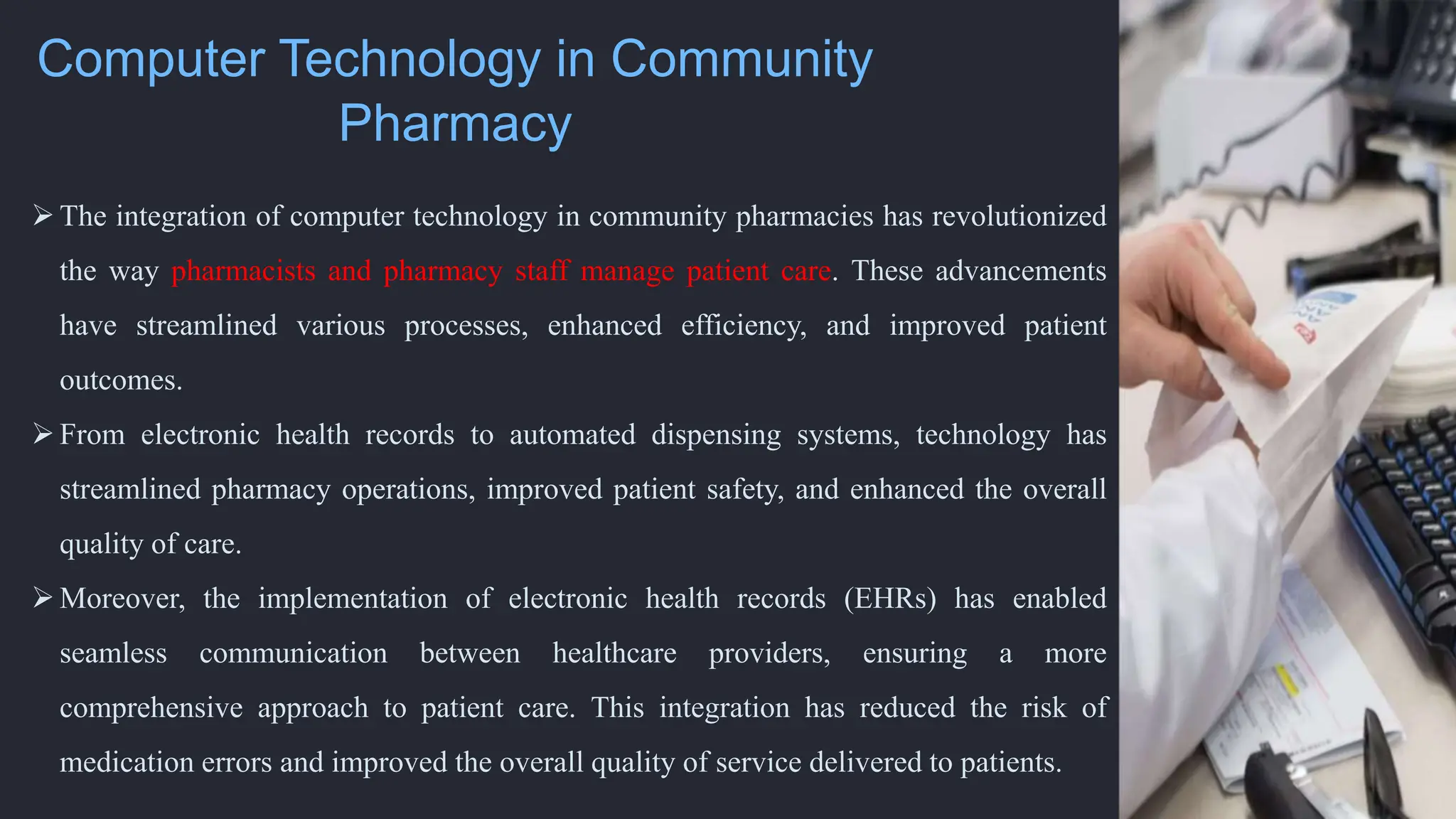
Computer Technology in Community
Pharmacy
The integration of computer technology in community pharmacies has revolutionized
the way pharmacists and pharmacy staff manage patient care. These advancements
have streamlined various processes, enhanced efficiency, and improved patient
outcomes.
From electronic health records to automated dispensing systems, technology has
streamlined pharmacy operations, improved patient safety, and enhanced the overall
quality of care.
Moreover, the implementation of electronic health records (EHRs) has enabled
seamless communication between healthcare providers, ensuring a more
comprehensive approach to patient care. This integration has reduced the risk of
medication errors and improved the overall quality of service delivered to patients.
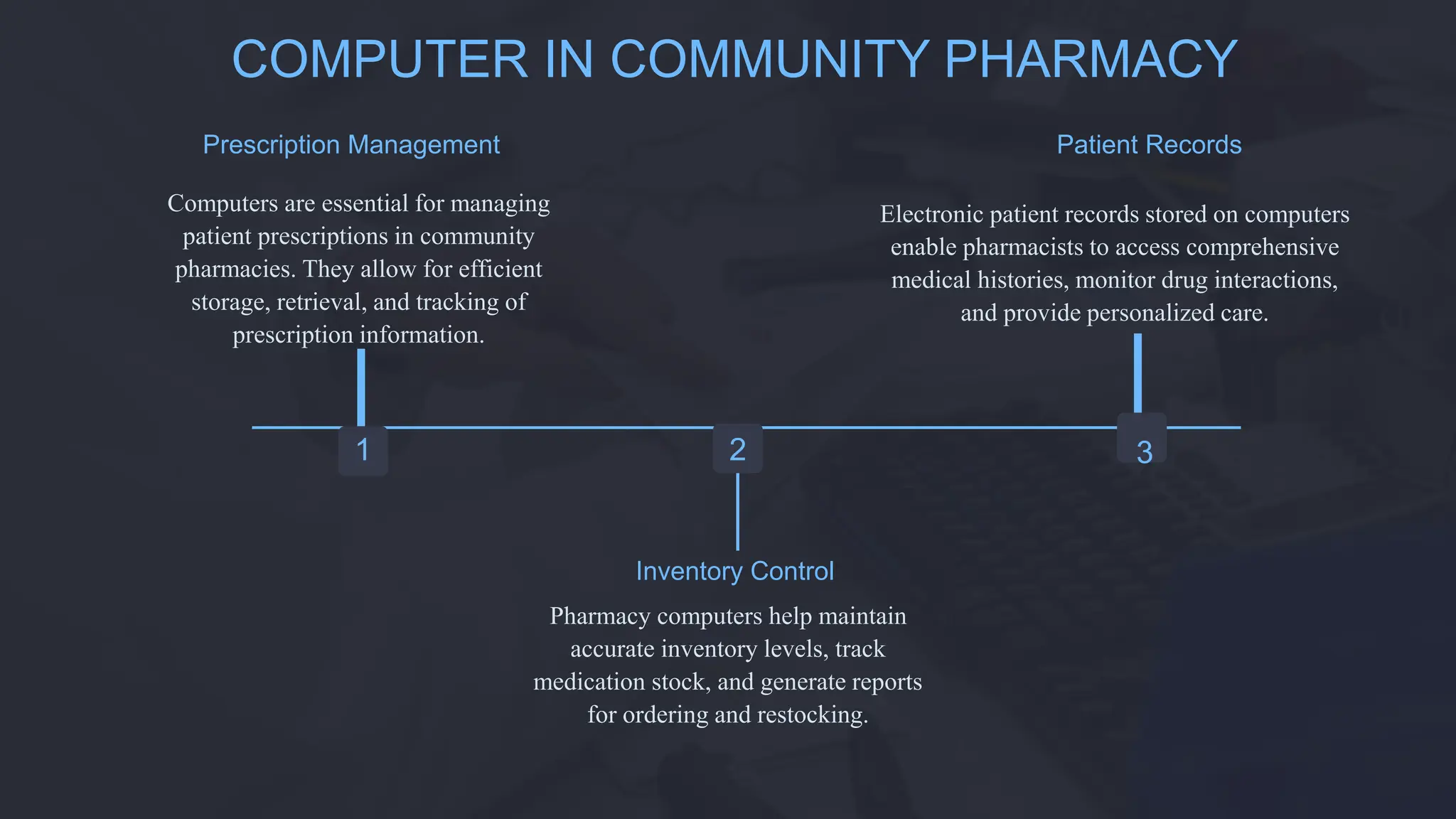
COMPUTER IN COMMUNITY PHARMACY
1
Prescription Management
Computers are essential for managing
patient prescriptions in community
pharmacies. They allow for efficient
storage, retrieval, and tracking of
prescription information.
2
Inventory Control
Pharmacy computers help maintain
accurate inventory levels, track
medication stock, and generate reports
for ordering and restocking.
3
Patient Records
Electronic patient records stored on computers
enable pharmacists to access comprehensive
medical histories, monitor drug interactions,
and provide personalized care.
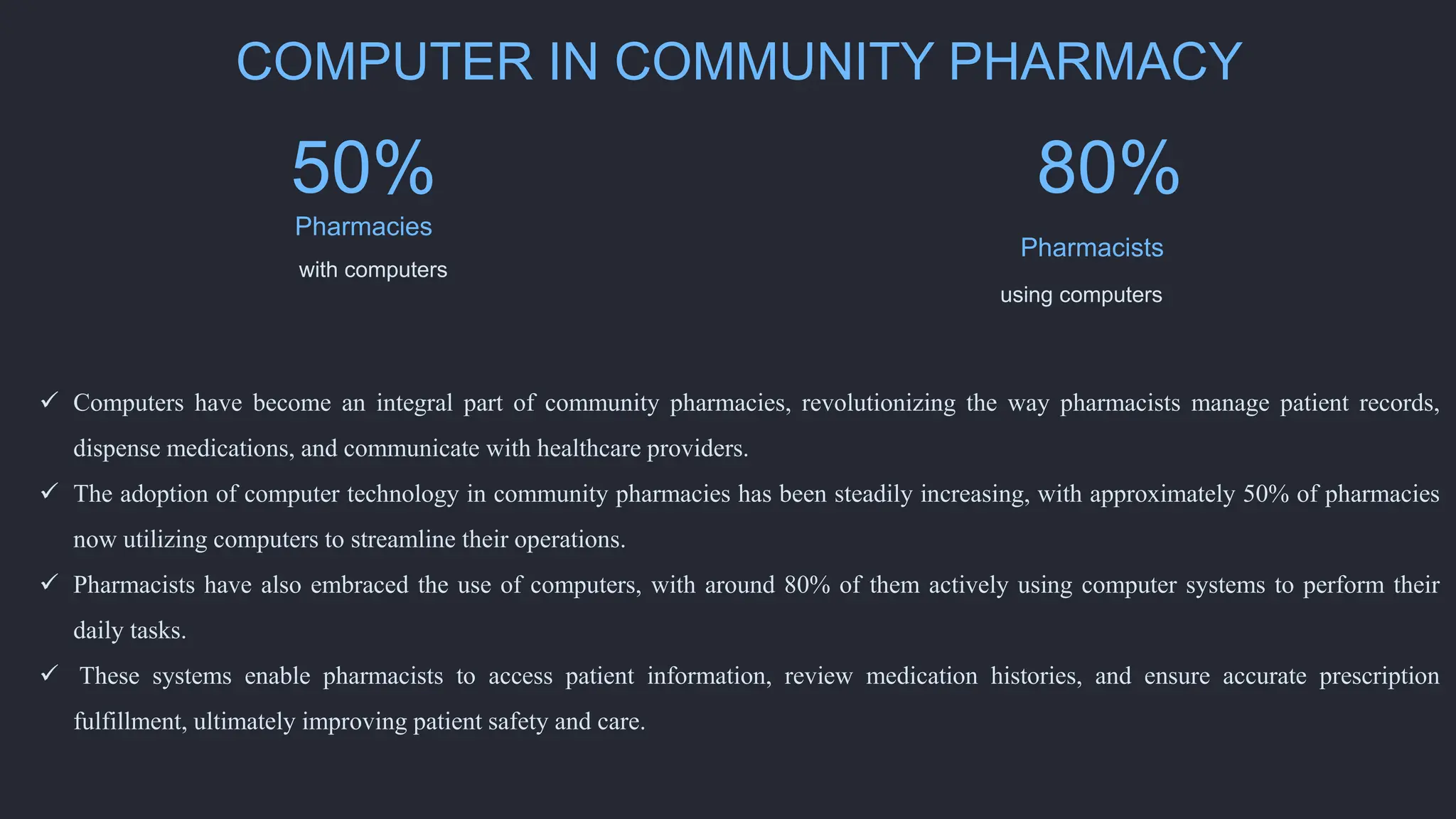
COMPUTER IN COMMUNITY PHARMACY
50%
Pharmacies
with computers
80%
Pharmacists
using computers
 Computers have become an integral part of community pharmacies, revolutionizing the way pharmacists manage patient records,
dispense medications, and communicate with healthcare providers.
 The adoption of computer technology in community pharmacies has been steadily increasing, with approximately 50% of pharmacies
now utilizing computers to streamline their operations.
 Pharmacists have also embraced the use of computers, with around 80% of them actively using computer systems to perform their
daily tasks.
 These systems enable pharmacists to access patient information, review medication histories, and ensure accurate prescription
fulfillment, ultimately improving patient safety and care.
Roles of Computers in Community Pharmacy
Prescription
Management
Computers are
essential for efficiently
managing patient
prescriptions. They
allow pharmacists to
quickly access and
update patient records,
process orders, and
monitor medication
interactions.
Inventory
Control
Pharmacy
computers track
inventory levels,
generate reports,
and automate
reordering to
ensure the right
medications are
always in stock.
Patient
Education
Computers provide
pharmacists with up-to-
date drug information
and allow them to print
out educational
materials for patients
about their medications
and health conditions.
Workflow
Optimization
Pharmacy
management software
streamlines daily
operations, automates
tasks, and improves
overall efficiency,
allowing pharmacists to
focus more on patient
care.
Improving Pharmacy Workflow with Computers
Streamlined Dispensing
Computers in the pharmacy
enable faster and more accurate
medication dispensing, reducing
errors and improving patient
safety.
Inventory Tracking
Pharmacy management
software helps track
medication inventory levels,
ensuring timely restocking and
preventing stockouts.
Secure Patient Records
Electronic health records allow
pharmacists to securely
access and update patient
information, improving care
coordination.
COMPUTER IN COMMUNITY PHARMACY
 The use of computers in community pharmacies has become increasingly prevalent in recent years. Pharmacists and pharmacy staff
rely on computer systems to manage patient records, process prescriptions, and access drug information.
 These systems have streamlined many of the administrative tasks associated with pharmacy operations, improving efficiency and
accuracy.
 Computerized pharmacy systems allow for the electronic storage and retrieval of patient medication histories, allergies, and other
relevant health information. This data can be accessed quickly and securely, enabling pharmacists to make informed decisions about
patient care.
 Additionally, these systems often include features such as automated medication dispensing, drug interaction checking, and
inventory management, further enhancing the pharmacy's ability to provide safe and effective patient care.
 The integration of computers in community pharmacies has also facilitated improved communication and collaboration between
healthcare providers. Pharmacists can electronically transmit prescription information to physicians, share patient updates, and
coordinate care more efficiently.
 This enhanced coordination can lead to better patient outcomes and reduced medication errors.
COMPUTER IN COMMUNITY
PHARMACY
Streamlined Workflow
Computers in community pharmacies
have revolutionized the way
pharmacists manage their workflow.
From efficient inventory tracking to
automated prescription processing,
technology has optimized daily
operations.
Improved Patient Care
By integrating computers, pharmacists
can access patient records, monitor
medication interactions, and provide
personalized counseling, leading to
enhanced patient safety and
satisfaction.
Data-Driven Decisions
Pharmacy management software collects valuable data that allows pharmacists to
make informed decisions, identify trends, and optimize their services to better serve
the community.

RESEARCH METHODOLOGY- COMPUTER-IN-COMMUNITY-PHARMACY.pptx

  • 1.
  • 2.
     Automation ofthe dispensing process in community pharmacy is nothing new.  Computer systems for pharmacy management have been on the market for many years, and almost all community pharmacies now use computers to manage the processing of prescriptions.  Although both piarmacists' use of computers and the capability of computer systems themselves have increased dramatically during the past few years, most pharmacies have either failed to utilize their computers to their fullest or have not kept up with the rapidly changing applications that are available.  In the past, community pharmacy computer systems have been developed to support the transaction-processing approach used in dispensing, wherein only information about the prescriptions being dispensed and limited demographics about the patient were entered and retained in the computer system.
  • 3.
    Usage of computersin the Community Pharmacy:  Providing a receipt for the patient  Record of transaction of money  Ordering low quantity of products via electronic transitions  Generation of multiple analysis for day, week,  Month for number of prescription handles and amounts of cash.  Estimation of profits and financial rational analysis  Printing of billing and payment details  •Inventory control purpose
  • 4.
    COMPUTER IN COMMUNITYPHARMACY 1 Streamlining Workflow Computers have revolutionized the workflow in community pharmacies, enabling efficient management of patient records, inventory, and prescription processing. 2 Improved Accuracy The use of computerized systems has significantly reduced the risk of errors in medication dispensing, ensuring patient safety and enhancing the quality of care. 3 Enhanced Communication Computers facilitate seamless communication between pharmacists, physicians, and patients, enabling timely access to information and better coordination of care.
  • 5.
    Computer Technology inCommunity Pharmacy The integration of computer technology in community pharmacies has revolutionized the way pharmacists and pharmacy staff manage patient care. These advancements have streamlined various processes, enhanced efficiency, and improved patient outcomes. From electronic health records to automated dispensing systems, technology has streamlined pharmacy operations, improved patient safety, and enhanced the overall quality of care. Moreover, the implementation of electronic health records (EHRs) has enabled seamless communication between healthcare providers, ensuring a more comprehensive approach to patient care. This integration has reduced the risk of medication errors and improved the overall quality of service delivered to patients.
  • 6.
    COMPUTER IN COMMUNITYPHARMACY 1 Prescription Management Computers are essential for managing patient prescriptions in community pharmacies. They allow for efficient storage, retrieval, and tracking of prescription information. 2 Inventory Control Pharmacy computers help maintain accurate inventory levels, track medication stock, and generate reports for ordering and restocking. 3 Patient Records Electronic patient records stored on computers enable pharmacists to access comprehensive medical histories, monitor drug interactions, and provide personalized care.
  • 7.
    COMPUTER IN COMMUNITYPHARMACY 50% Pharmacies with computers 80% Pharmacists using computers  Computers have become an integral part of community pharmacies, revolutionizing the way pharmacists manage patient records, dispense medications, and communicate with healthcare providers.  The adoption of computer technology in community pharmacies has been steadily increasing, with approximately 50% of pharmacies now utilizing computers to streamline their operations.  Pharmacists have also embraced the use of computers, with around 80% of them actively using computer systems to perform their daily tasks.  These systems enable pharmacists to access patient information, review medication histories, and ensure accurate prescription fulfillment, ultimately improving patient safety and care.
  • 8.
    Roles of Computersin Community Pharmacy Prescription Management Computers are essential for efficiently managing patient prescriptions. They allow pharmacists to quickly access and update patient records, process orders, and monitor medication interactions. Inventory Control Pharmacy computers track inventory levels, generate reports, and automate reordering to ensure the right medications are always in stock. Patient Education Computers provide pharmacists with up-to- date drug information and allow them to print out educational materials for patients about their medications and health conditions. Workflow Optimization Pharmacy management software streamlines daily operations, automates tasks, and improves overall efficiency, allowing pharmacists to focus more on patient care.
  • 9.
    Improving Pharmacy Workflowwith Computers Streamlined Dispensing Computers in the pharmacy enable faster and more accurate medication dispensing, reducing errors and improving patient safety. Inventory Tracking Pharmacy management software helps track medication inventory levels, ensuring timely restocking and preventing stockouts. Secure Patient Records Electronic health records allow pharmacists to securely access and update patient information, improving care coordination.
  • 10.
    COMPUTER IN COMMUNITYPHARMACY  The use of computers in community pharmacies has become increasingly prevalent in recent years. Pharmacists and pharmacy staff rely on computer systems to manage patient records, process prescriptions, and access drug information.  These systems have streamlined many of the administrative tasks associated with pharmacy operations, improving efficiency and accuracy.  Computerized pharmacy systems allow for the electronic storage and retrieval of patient medication histories, allergies, and other relevant health information. This data can be accessed quickly and securely, enabling pharmacists to make informed decisions about patient care.  Additionally, these systems often include features such as automated medication dispensing, drug interaction checking, and inventory management, further enhancing the pharmacy's ability to provide safe and effective patient care.  The integration of computers in community pharmacies has also facilitated improved communication and collaboration between healthcare providers. Pharmacists can electronically transmit prescription information to physicians, share patient updates, and coordinate care more efficiently.  This enhanced coordination can lead to better patient outcomes and reduced medication errors.
  • 11.
    COMPUTER IN COMMUNITY PHARMACY StreamlinedWorkflow Computers in community pharmacies have revolutionized the way pharmacists manage their workflow. From efficient inventory tracking to automated prescription processing, technology has optimized daily operations. Improved Patient Care By integrating computers, pharmacists can access patient records, monitor medication interactions, and provide personalized counseling, leading to enhanced patient safety and satisfaction. Data-Driven Decisions Pharmacy management software collects valuable data that allows pharmacists to make informed decisions, identify trends, and optimize their services to better serve the community.