ASHOKA’S
EMPATHY
INITIATIVE
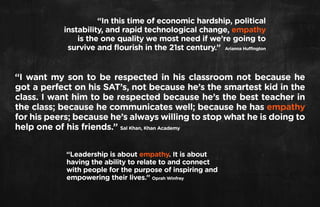
“In this time of economic hardship, political
           instability, and rapid technological change, empathy
               is the one quality we most need if we’re going to
            survive and flourish in the 21st century.” Arianna Huffington


“I want my son to be respected in his classroom not because he
got a perfect on his SAT’s, not because he’s the smartest kid in the
class. I want him to be respected because he’s the best teacher in
the class; because he communicates well; because he has empathy
for his peers; because he’s always willing to stop what he is doing to
help one of his friends.” Sal Khan, Khan Academy

            “Leadership is about empathy. It is about
            having the ability to relate to and connect
            with people for the purpose of inspiring and
            empowering their lives.” Oprah Winfrey
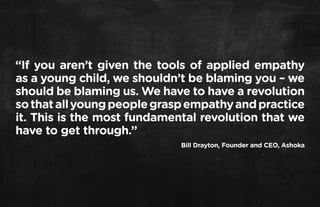
“If you aren’t given the tools of applied empathy
as a young child, we shouldn’t be blaming you – we
should be blaming us. We have to have a revolution
so that all young people grasp empathy and practice
it. This is the most fundamental revolution that we
have to get through.”
                             Bill Drayton, Founder and CEO, Ashoka
WHAT IS EMPATHY?
   The ability to understand the
   feelings and perspectives of others
   and to use that understanding to
   guide one’s actions.
imagine a
world where
every child
masters
empathy
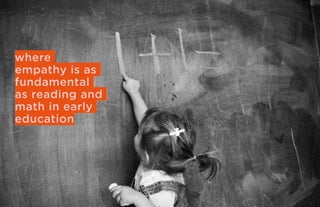
where
empathy is as
fundamental
as reading and
math in early
education
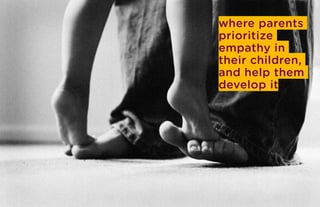
where parents
prioritize
empathy in
their children,
and help them
develop it
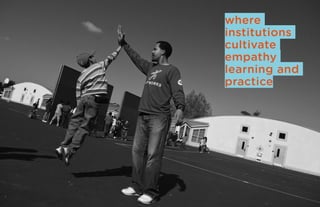
where
institutions
cultivate
empathy
learning and
practice
It’s time to
Start Empathy is a global
network of social entrepreneurs,
educators, thought leaders,
parents, young people, business
leaders, journalists, universities,
philanthropists and others who
are connecting, collaborating, and
aligning knowledge and resources
to make empathy learning a
norm, particularly in childhood.
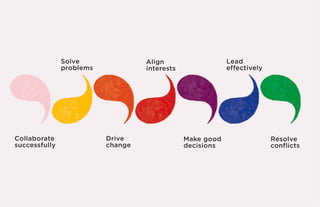
The world is changing—faster than ever
before—from a society run by elites to a
society in which everyone can drive change.
In this new world, empathy plays a crucial
role in innovation, changemaking, and solving
entrenched systemic problems. We need the
skill of applied empathy to :
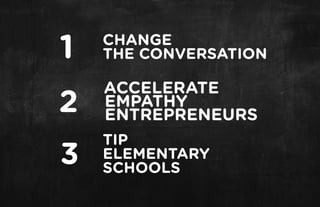
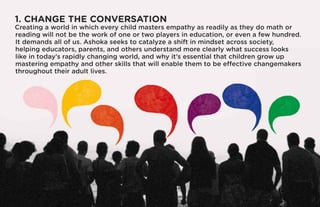
1. CHANGE THE CONVERSATION
Creating a world in which every child masters empathy as readily as they do math or
reading will not be the work of one or two players in education, or even a few hundred.
It demands all of us. Ashoka seeks to catalyze a shift in mindset across society,
helping educators, parents, and others understand more clearly what success looks
like in today’s rapidly changing world, and why it’s essential that children grow up
mastering empathy and other skills that will enable them to be effective changemakers
throughout their adult lives.
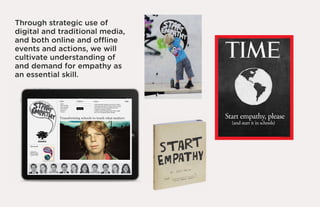
Through strategic use of
digital and traditional media,
and both online and offline
events and actions, we will
cultivate understanding of
and demand for empathy as
an essential skill.


                                 Start empathy, please
                                   (and start it in schools)
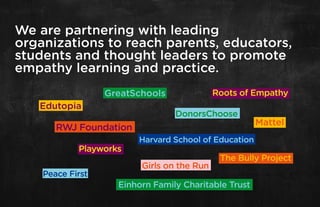
We are partnering with leading
organizations to reach parents, educators,
students and thought leaders to promote
empathy learning and practice.
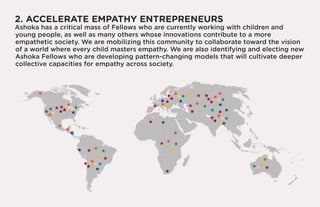
2. ACCELERATE EMPATHY ENTREPRENEURS
Ashoka has a critical mass of Fellows who are currently working with children and
young people, as well as many others whose innovations contribute to a more
empathetic society. We are mobilizing this community to collaborate toward the vision
of a world where every child masters empathy. We are also identifying and electing new
Ashoka Fellows who are developing pattern-changing models that will cultivate deeper
collective capacities for empathy across society.
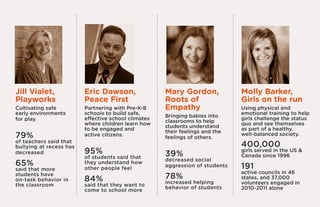
Jill Vialet,             Eric Dawson,                Mary Gordon,             Molly Barker,
Playworks                Peace First                 Roots of                 Girls on the run
Cultivating safe         Partnering with Pre-K-8     Empathy                  Using physical and
early environments       schools to build safe,                               emotional training to help
                                                     Bringing babies into     girls challenge the status
for play.                effective school climates   classrooms to help       quo and see themselves
                         where children learn how    students understand      as part of a healthy,
                         to be engaged and           their feelings and the
79%                      active citizens.            feelings of others.
                                                                              well-balanced society.
of teachers said that
bullying at recess has                                                        400,000
decreased                95%                         39%
                                                                              girls served in the US &
                                                                              Canada since 1996
                         of students said that       decreased social
65%                      they understand how
                                                     aggression of students   191
said that more           other people feel
                                                                              active councils in 46
students have
on-task behavior in      84%                         78%                      states, and 37,000
                                                     increased helping        volunteers engaged in
the classroom            said that they want to      behavior of students     2010-2011 alone
                         come to school more
3. TIP ELEMENTARY SCHOOLS
Ashoka is identifying influential elementary schools and school networks—public,
public charter, and private—that are ready to help lead this transformation in education.
We are collaborating with these schools to develop and showcase models of school
environments that integrate empathy as a core learning objective and strategy. With
these model schools and the Initiative’s other partners, we seek to inspire and enable
other schools to clearly identify, and then assess, the habits and skills young people
need to be effective, solution-oriented, empathetic citizens.
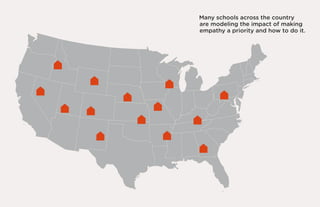
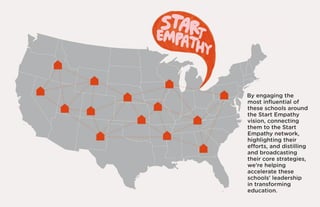
Many schools across the country
are modeling the impact of making
empathy a priority and how to do it.
By engaging the
most influential of
these schools around
the Start Empathy
vision, connecting
them to the Start
Empathy network,
highlighting their
efforts, and distilling
and broadcasting
their core strategies,
we’re helping
accelerate these
schools’ leadership
in transforming
education.
Contact:
empathy@ashoka.org
http://empathy.ashoka.org

Start Empathy

  • 1.
  • 2.
    “In this timeof economic hardship, political instability, and rapid technological change, empathy is the one quality we most need if we’re going to survive and flourish in the 21st century.” Arianna Huffington “I want my son to be respected in his classroom not because he got a perfect on his SAT’s, not because he’s the smartest kid in the class. I want him to be respected because he’s the best teacher in the class; because he communicates well; because he has empathy for his peers; because he’s always willing to stop what he is doing to help one of his friends.” Sal Khan, Khan Academy “Leadership is about empathy. It is about having the ability to relate to and connect with people for the purpose of inspiring and empowering their lives.” Oprah Winfrey
  • 3.
    “If you aren’tgiven the tools of applied empathy as a young child, we shouldn’t be blaming you – we should be blaming us. We have to have a revolution so that all young people grasp empathy and practice it. This is the most fundamental revolution that we have to get through.” Bill Drayton, Founder and CEO, Ashoka
  • 4.
    WHAT IS EMPATHY? The ability to understand the feelings and perspectives of others and to use that understanding to guide one’s actions.
  • 6.
    imagine a world where everychild masters empathy
  • 7.
    where empathy is as fundamental asreading and math in early education
  • 8.
    where parents prioritize empathy in theirchildren, and help them develop it
  • 9.
  • 10.
  • 11.
    Start Empathy isa global network of social entrepreneurs, educators, thought leaders, parents, young people, business leaders, journalists, universities, philanthropists and others who are connecting, collaborating, and aligning knowledge and resources to make empathy learning a norm, particularly in childhood.
  • 13.
    The world ischanging—faster than ever before—from a society run by elites to a society in which everyone can drive change. In this new world, empathy plays a crucial role in innovation, changemaking, and solving entrenched systemic problems. We need the skill of applied empathy to :
  • 17.
    1. CHANGE THECONVERSATION Creating a world in which every child masters empathy as readily as they do math or reading will not be the work of one or two players in education, or even a few hundred. It demands all of us. Ashoka seeks to catalyze a shift in mindset across society, helping educators, parents, and others understand more clearly what success looks like in today’s rapidly changing world, and why it’s essential that children grow up mastering empathy and other skills that will enable them to be effective changemakers throughout their adult lives.
  • 18.
    Through strategic useof digital and traditional media, and both online and offline events and actions, we will cultivate understanding of and demand for empathy as an essential skill. Start empathy, please (and start it in schools)
  • 19.
    We are partneringwith leading organizations to reach parents, educators, students and thought leaders to promote empathy learning and practice.
  • 20.
    2. ACCELERATE EMPATHYENTREPRENEURS Ashoka has a critical mass of Fellows who are currently working with children and young people, as well as many others whose innovations contribute to a more empathetic society. We are mobilizing this community to collaborate toward the vision of a world where every child masters empathy. We are also identifying and electing new Ashoka Fellows who are developing pattern-changing models that will cultivate deeper collective capacities for empathy across society.
  • 21.
    Jill Vialet, Eric Dawson, Mary Gordon, Molly Barker, Playworks Peace First Roots of Girls on the run Cultivating safe Partnering with Pre-K-8 Empathy Using physical and early environments schools to build safe, emotional training to help Bringing babies into girls challenge the status for play. effective school climates classrooms to help quo and see themselves where children learn how students understand as part of a healthy, to be engaged and their feelings and the 79% active citizens. feelings of others. well-balanced society. of teachers said that bullying at recess has 400,000 decreased 95% 39% girls served in the US & Canada since 1996 of students said that decreased social 65% they understand how aggression of students 191 said that more other people feel active councils in 46 students have on-task behavior in 84% 78% states, and 37,000 increased helping volunteers engaged in the classroom said that they want to behavior of students 2010-2011 alone come to school more
  • 22.
    3. TIP ELEMENTARYSCHOOLS Ashoka is identifying influential elementary schools and school networks—public, public charter, and private—that are ready to help lead this transformation in education. We are collaborating with these schools to develop and showcase models of school environments that integrate empathy as a core learning objective and strategy. With these model schools and the Initiative’s other partners, we seek to inspire and enable other schools to clearly identify, and then assess, the habits and skills young people need to be effective, solution-oriented, empathetic citizens.
  • 23.
    Many schools acrossthe country are modeling the impact of making empathy a priority and how to do it.
  • 24.
    By engaging the mostinfluential of these schools around the Start Empathy vision, connecting them to the Start Empathy network, highlighting their efforts, and distilling and broadcasting their core strategies, we’re helping accelerate these schools’ leadership in transforming education.
  • 25.