
Staple Line Reinforcement. Options and Does it Make Sense?Samer G. Mattar, MD, FRCS, FACSAssociate Professor of SurgeryIndiana University
Outline	Why use SLR?Options of SLR.Case for its use.Case against it.Conclusions
Why use SLR?Mechanical staplers are now standard devices and are widely used in all areas of the GI Tract.Even most experienced surgeons will over or under- estimate the thickness of tissue.The majority of staplers are reliable, but very rarely, some will fail.
Why use SLR?Staple line leaks, especially in Sleeve gastrectomy, can be devastating.There is concern for postoperative bleeding that may result in blood transfusions or return to the
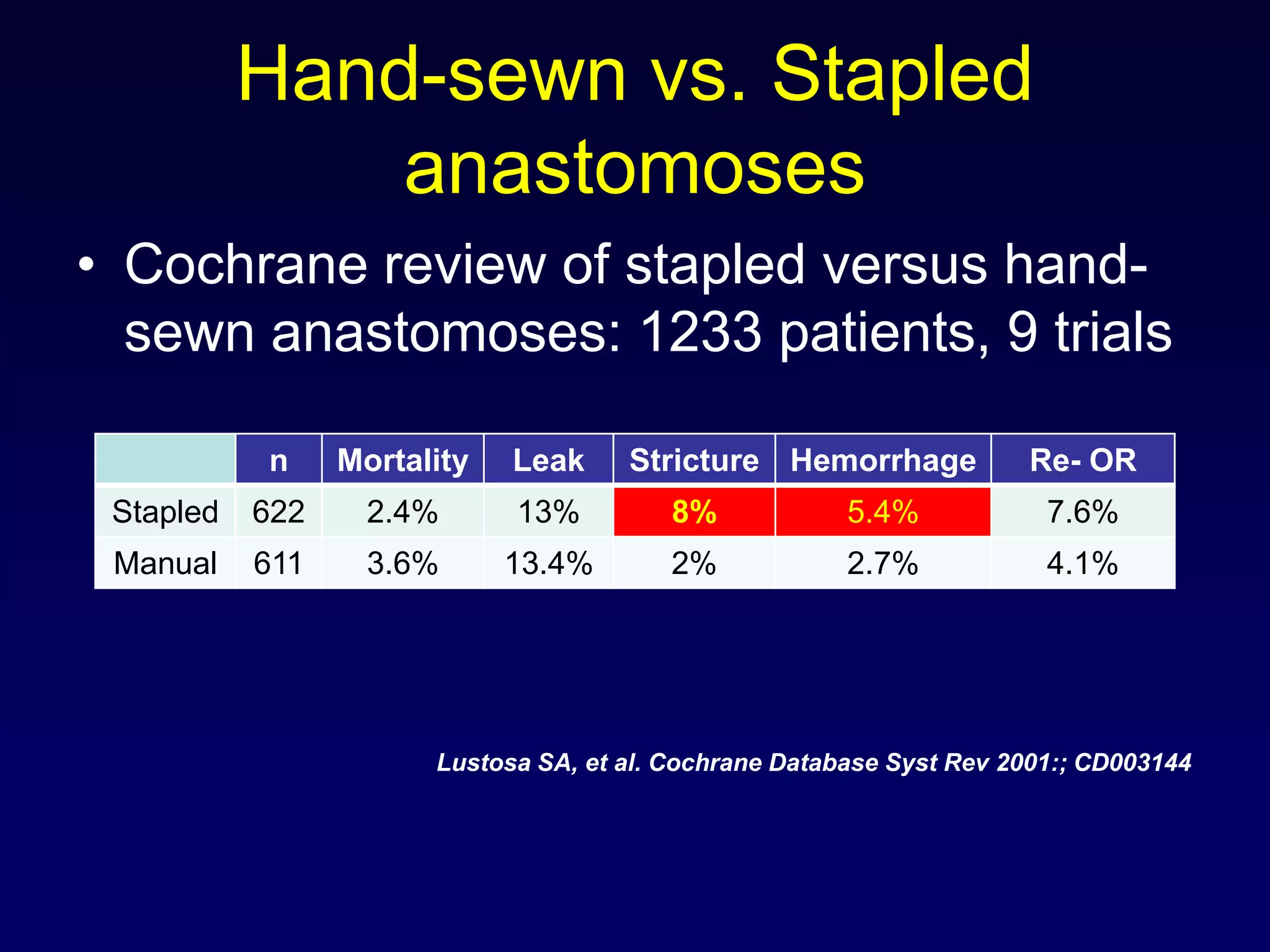
Hand-sewn vs. Stapled anastomosesCochrane review of stapled versus hand-sewn anastomoses: 1233 patients, 9 trialsLustosa SA, et al. Cochrane Database Syst Rev 2001:; CD003144
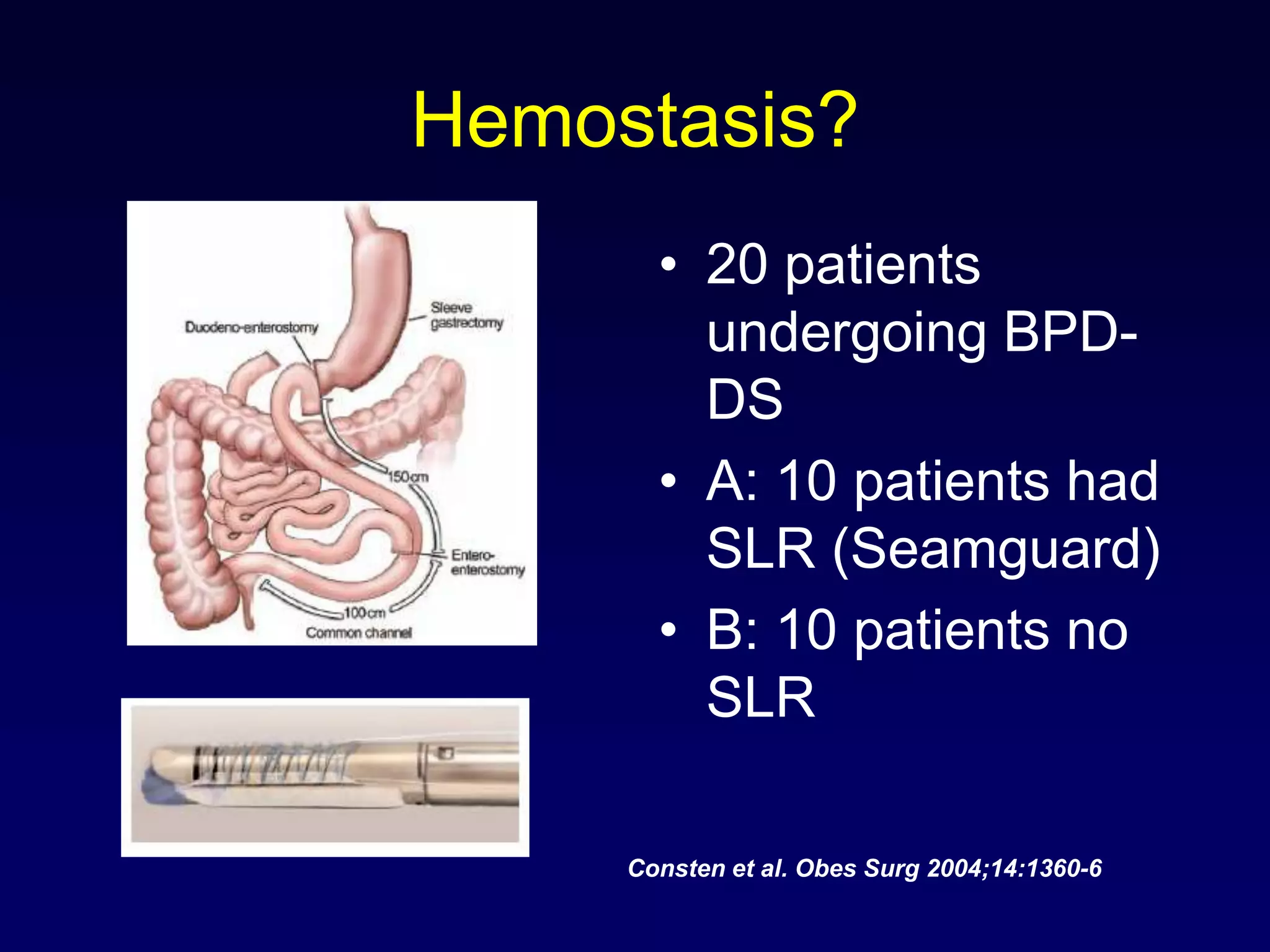
Hemostasis?20 patients undergoing BPD-DSA: 10 patients had SLR (Seamguard)B: 10 patients no SLRConsten et al. ObesSurg 2004;14:1360-6
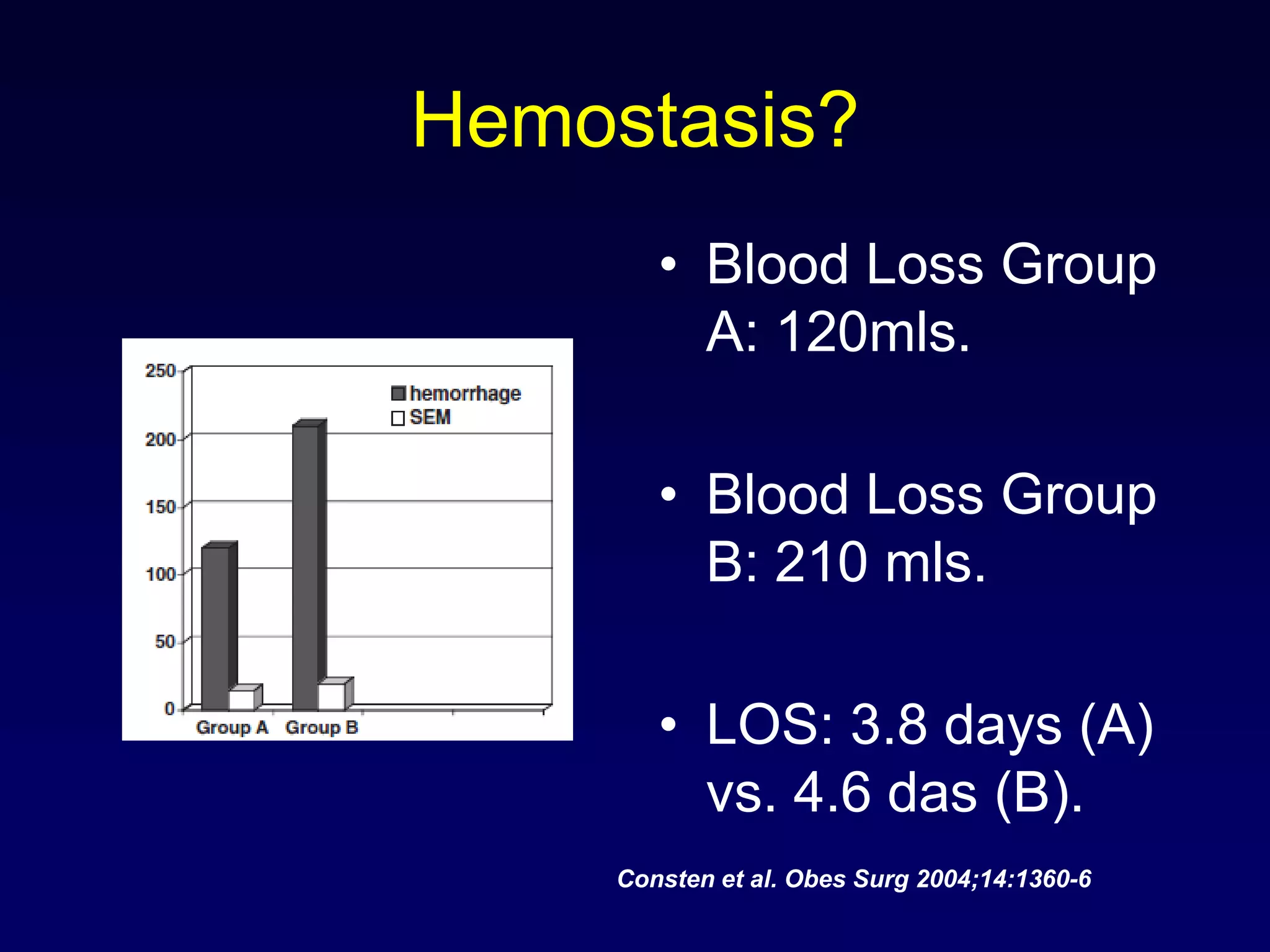
Hemostasis?Blood Loss Group A: 120mls.Blood Loss Group B: 210 mls.LOS: 3.8 days (A) vs. 4.6 das (B).Consten et al. ObesSurg 2004;14:1360-6
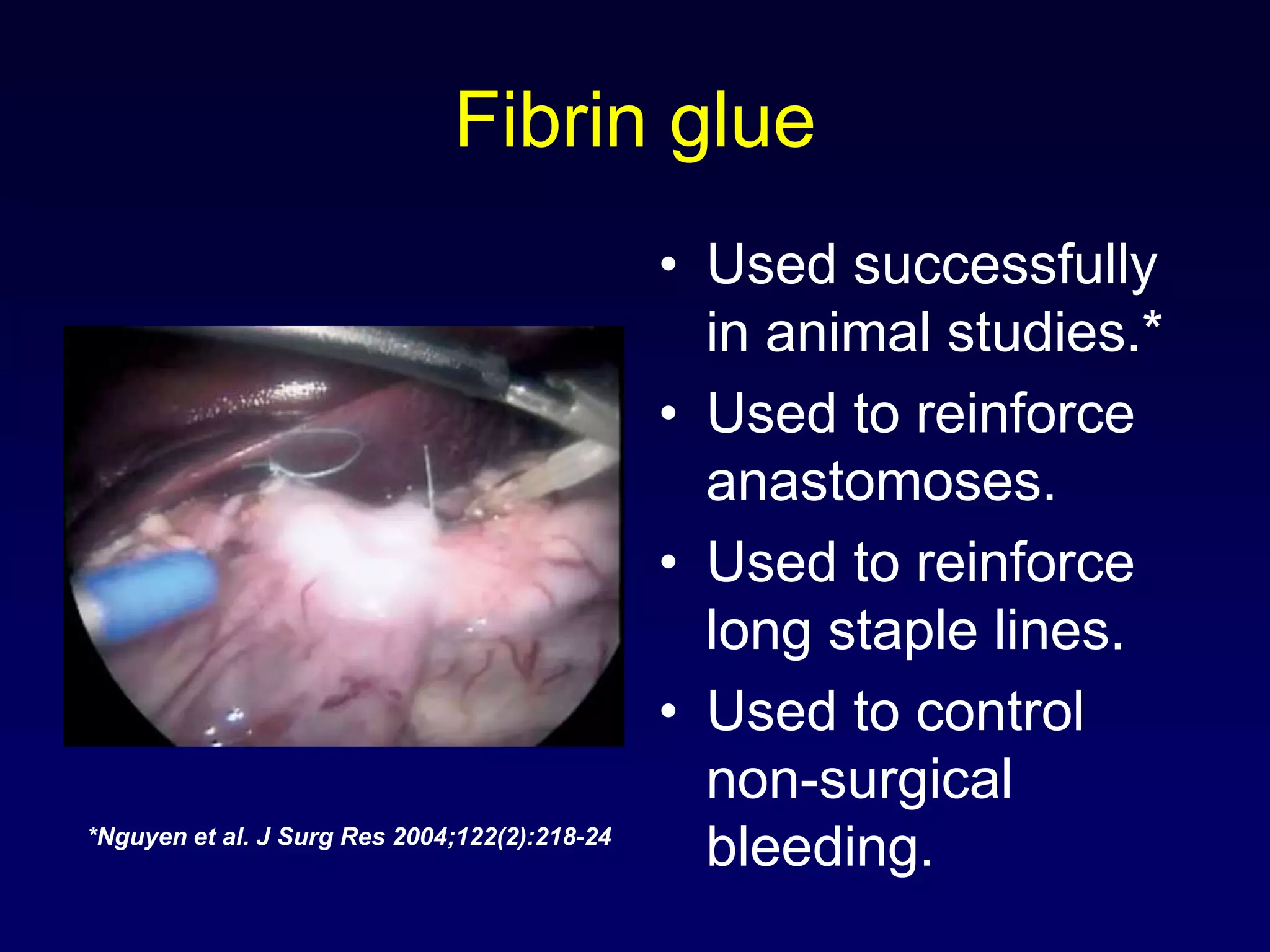
Fibrin glueUsed successfully in animal studies.*Used to reinforce anastomoses.Used to reinforce long staple lines.Used to control non-surgical bleeding.*Nguyen et al. J Surg Res 2004;122(2):218-24
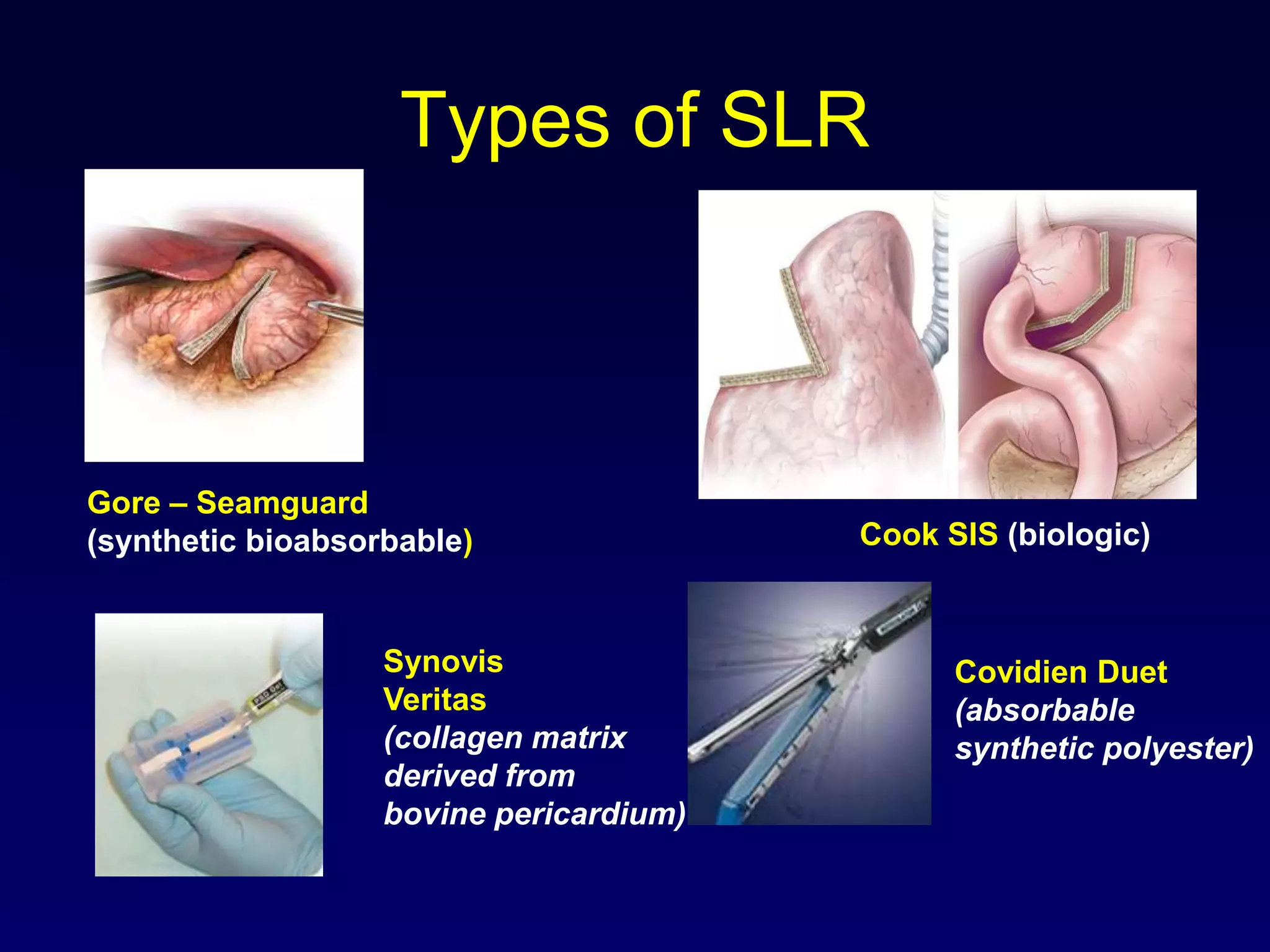
Types of SLRGore – Seamguard(synthetic bioabsorbable)Cook SIS (biologic)SynovisVeritas(collagen matrix derived frombovine pericardium)Covidien Duet(absorbablesynthetic polyester)
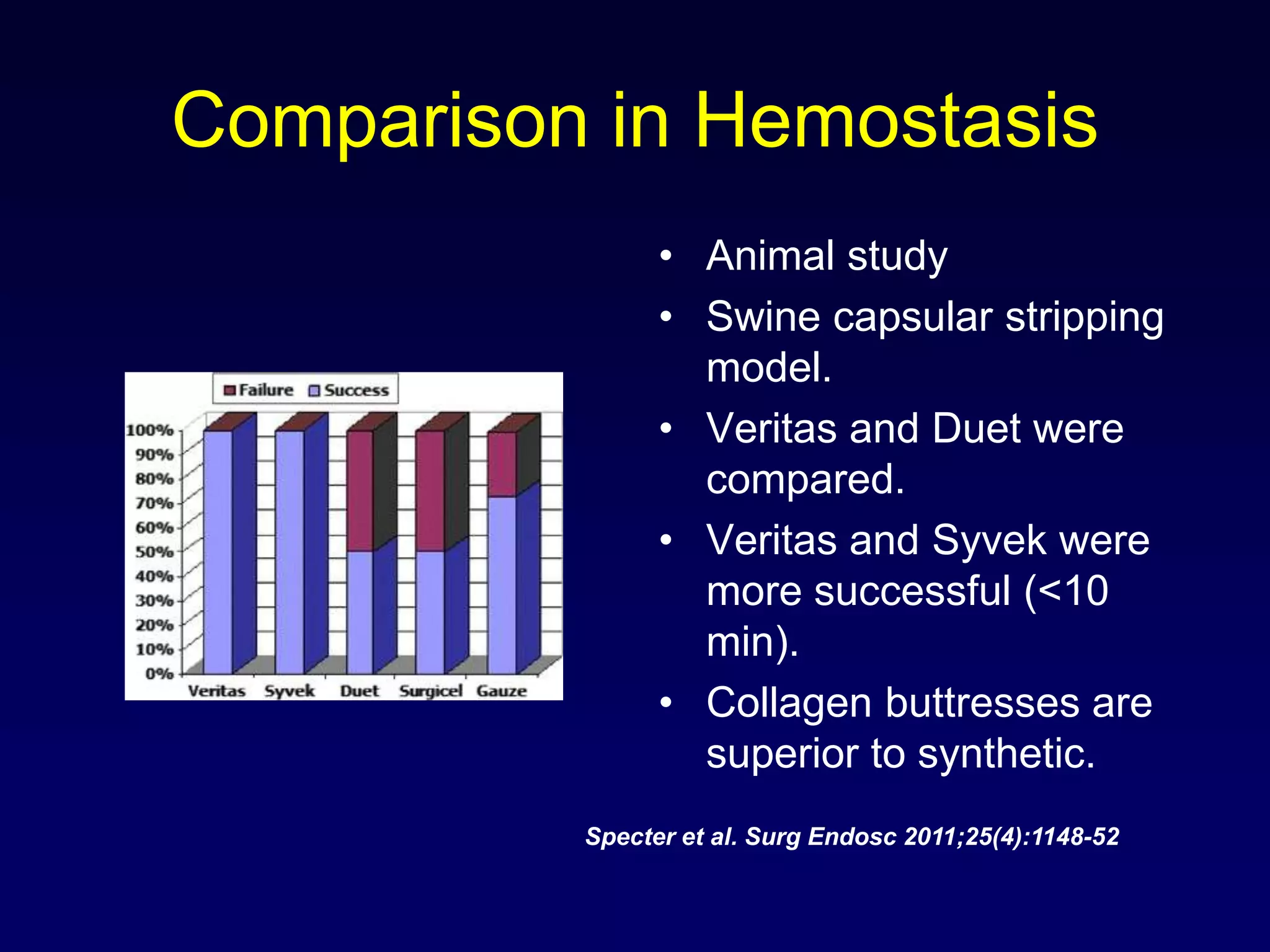
Comparison in HemostasisAnimal studySwine capsular stripping model.Veritas and Duet were compared.Veritas and Syvek were more successful (<10 min).Collagen buttresses are superior to synthetic.Specter et al. SurgEndosc 2011;25(4):1148-52
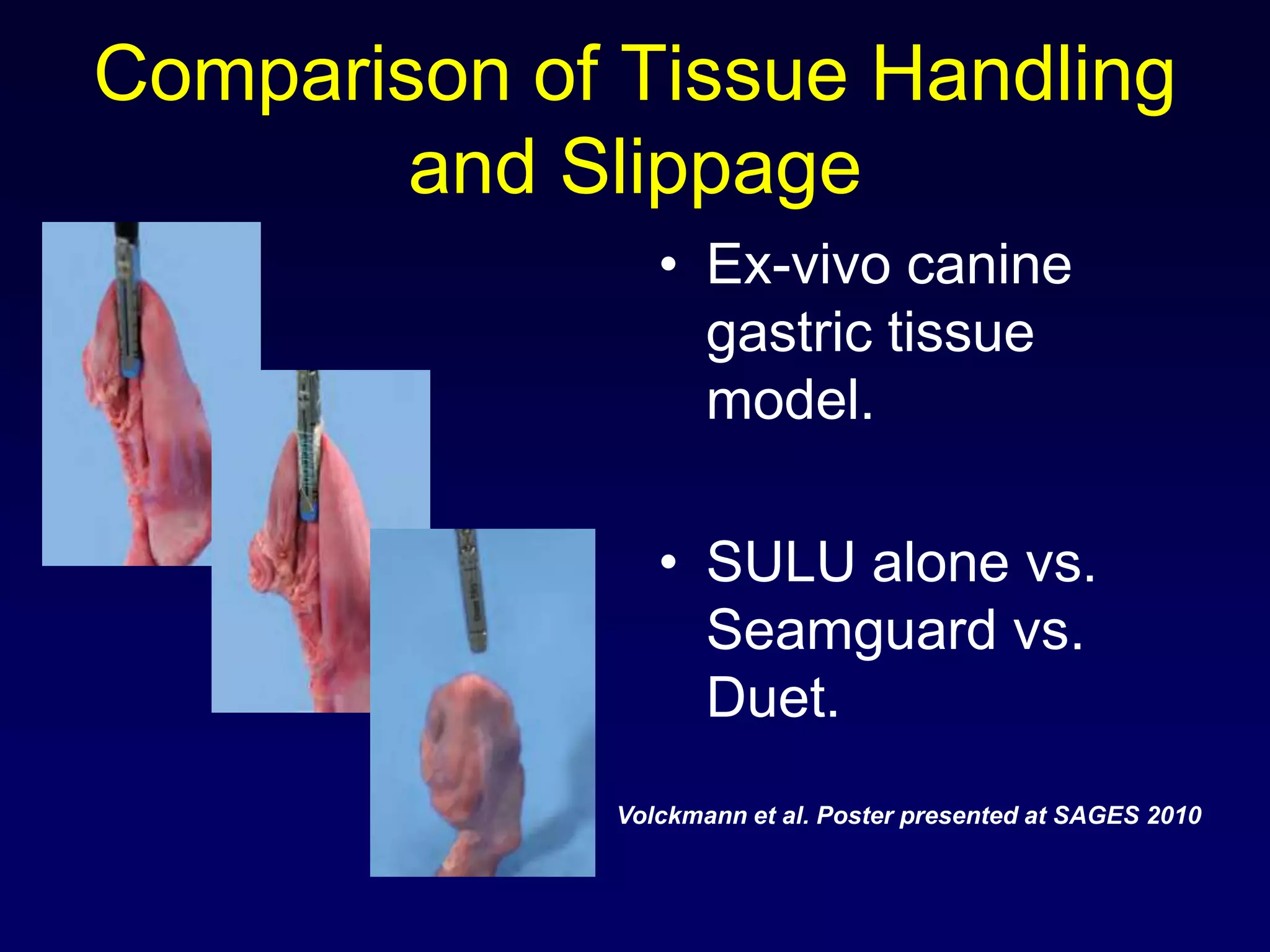
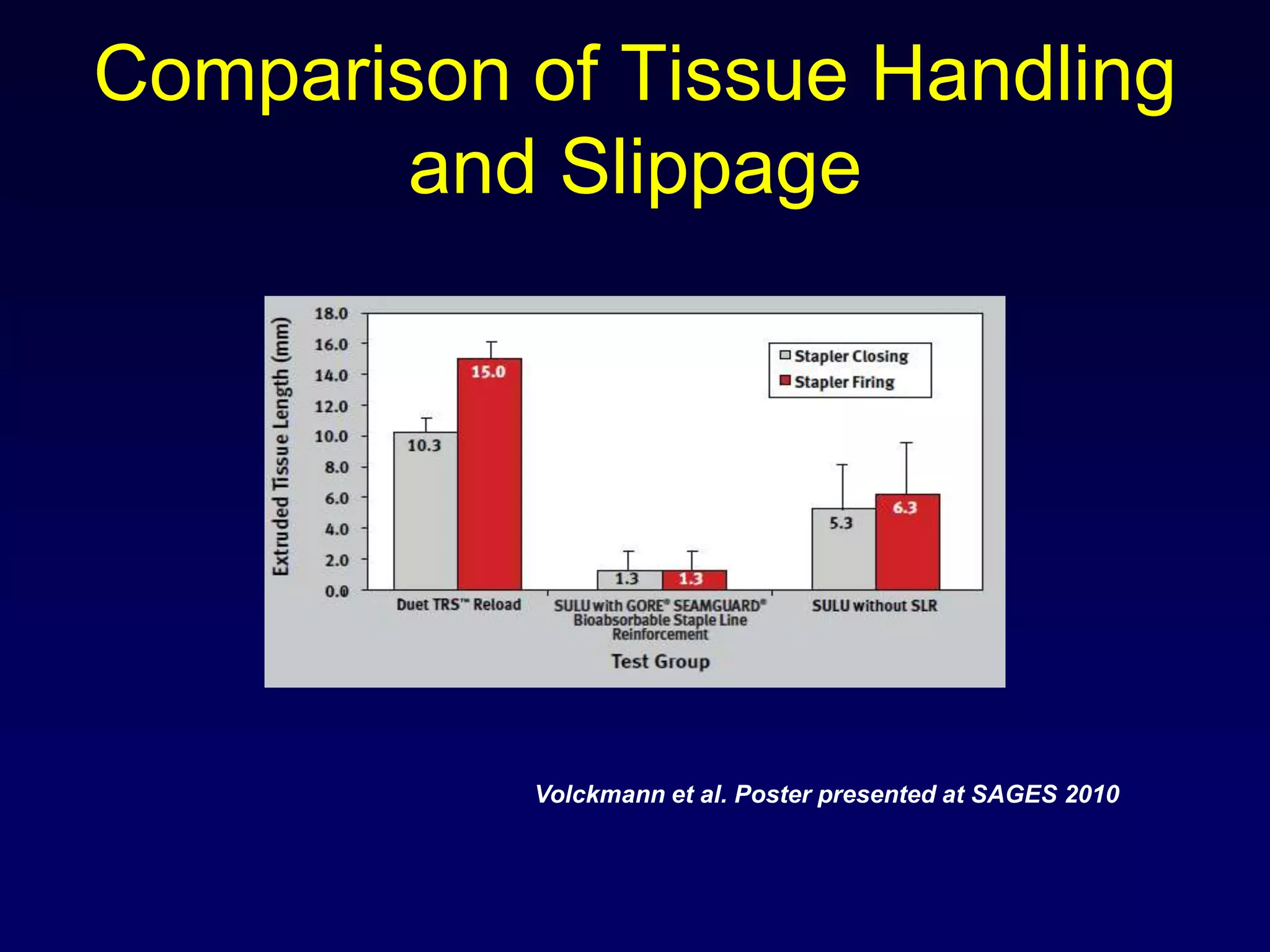
Comparison of Tissue Handling and SlippageEx-vivo canine gastric tissue model.SULU alone vs. Seamguard vs. Duet.Volckmann et al. Poster presented at SAGES 2010
Comparison of Tissue Handling and SlippageVolckmann et al. Poster presented at SAGES 2010
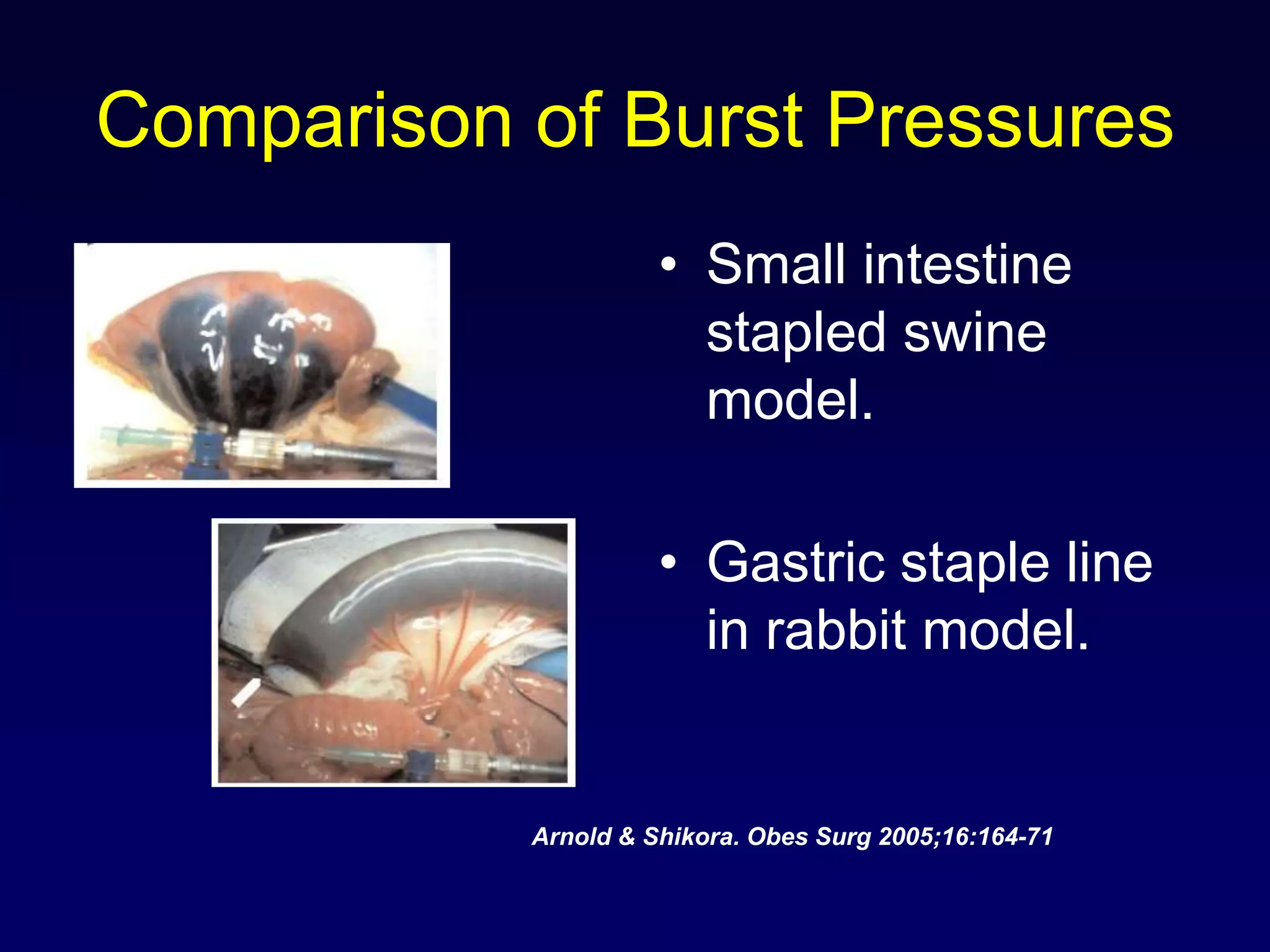
Comparison of Burst PressuresSmall intestine stapled swine model.Gastric staple line in rabbit model.Arnold & Shikora. ObesSurg 2005;16:164-71
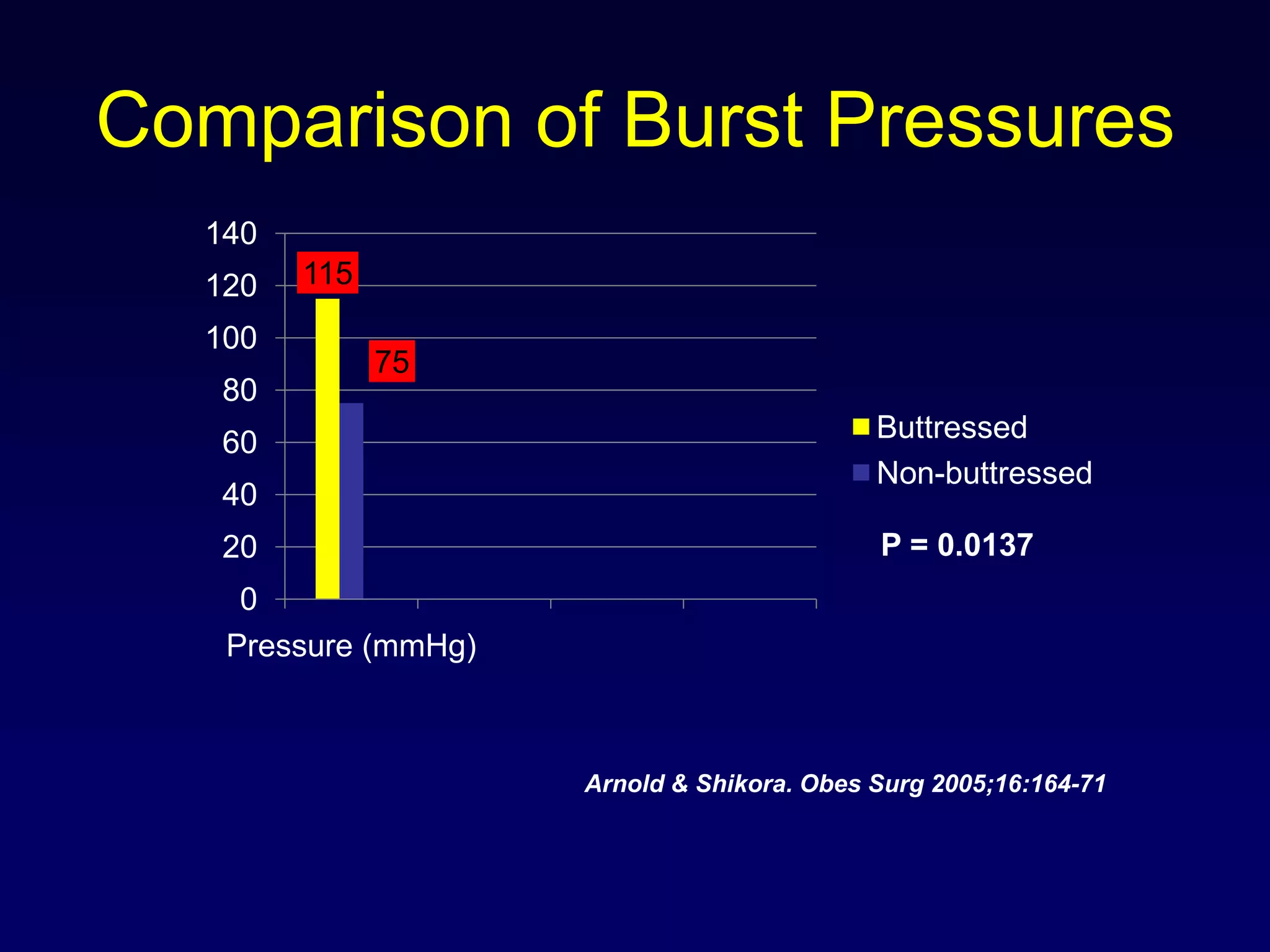
Comparison of Burst PressuresP = 0.0137Arnold & Shikora. ObesSurg 2005;16:164-71
Prospective Randomized TrialGroup 1: No SLRGroup 2: SeamguardGroup 3: Suture reinforcementDapri, Cadiere, Himpens. ObesSurg 2010(20) 462-7
Prospective Randomized TrialGroup 1 (no SLR) was associated with shortest OP duration.Seamguard reduced blood loss.No difference among all groups in incidence of postoperative leaks.Dapri, Cadiere, Himpens. ObesSurg 2010(20) 462-7
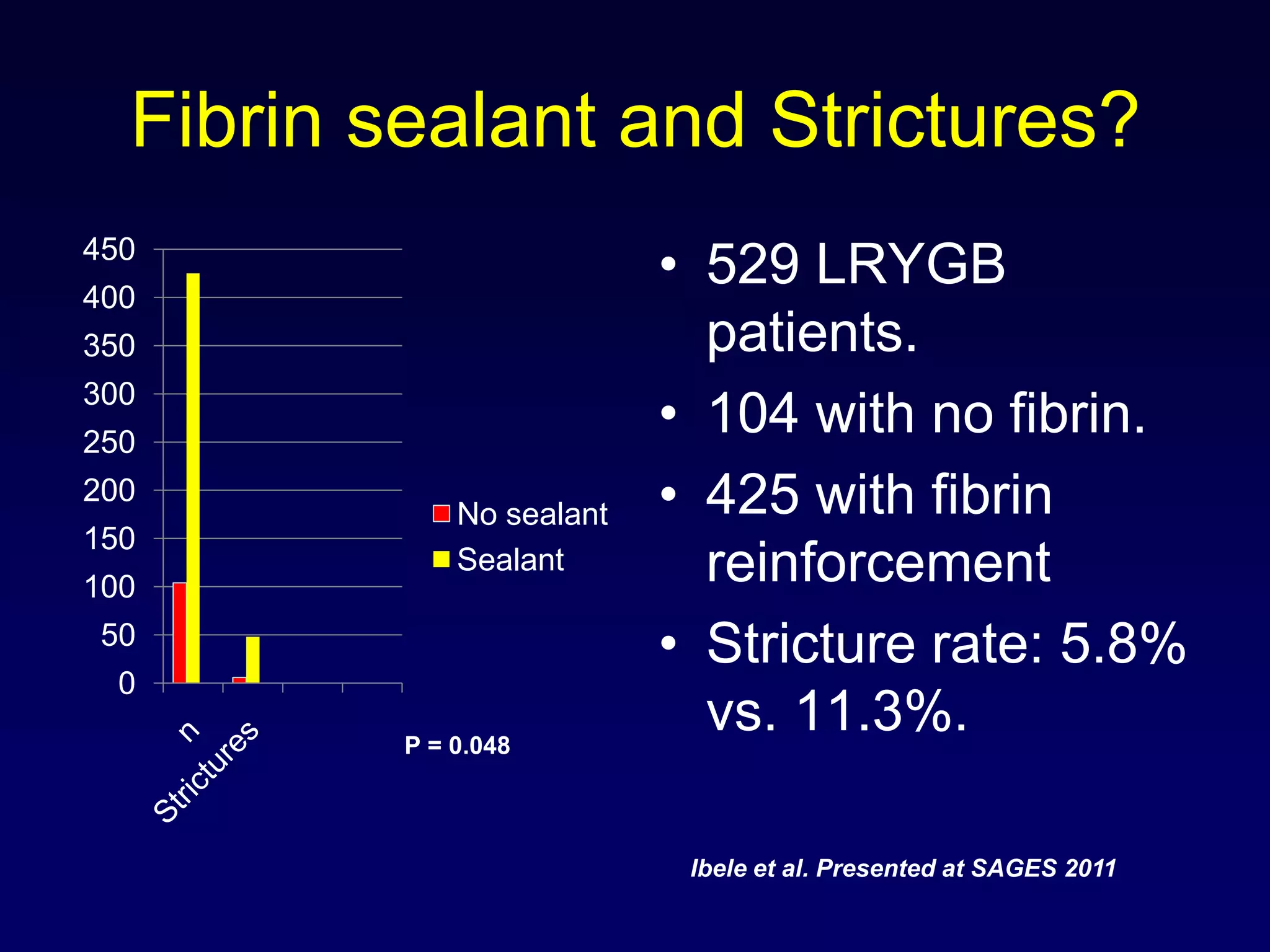
Fibrin sealant and Strictures?529 LRYGB patients.104 with no fibrin.425 with fibrin reinforcementStricture rate: 5.8% vs. 11.3%.Ibele et al. Presented at SAGES 2011
ConclusionTissue stapler technology is in evolution.There is no perfect tissue stapler.There are a variety of SLR products; absorbable versus permanent, synthetic versus biologic, and solid versus liquid.Generally, SLRs provide additional security from bleeding and maybe leaks.
ConclusionsComplications may include increased adhesions and strictures.More research is needed to assess cost-effectiveness of these products.
Thank you!

Staple line reinforcement

  • 1.
    Staple Line Reinforcement.Options and Does it Make Sense?Samer G. Mattar, MD, FRCS, FACSAssociate Professor of SurgeryIndiana University
  • 2.
    Outline Why use SLR?Optionsof SLR.Case for its use.Case against it.Conclusions
  • 3.
    Why use SLR?Mechanicalstaplers are now standard devices and are widely used in all areas of the GI Tract.Even most experienced surgeons will over or under- estimate the thickness of tissue.The majority of staplers are reliable, but very rarely, some will fail.
  • 4.
    Why use SLR?Stapleline leaks, especially in Sleeve gastrectomy, can be devastating.There is concern for postoperative bleeding that may result in blood transfusions or return to the
  • 5.
    Hand-sewn vs. StapledanastomosesCochrane review of stapled versus hand-sewn anastomoses: 1233 patients, 9 trialsLustosa SA, et al. Cochrane Database Syst Rev 2001:; CD003144
  • 6.
    Hemostasis?20 patients undergoingBPD-DSA: 10 patients had SLR (Seamguard)B: 10 patients no SLRConsten et al. ObesSurg 2004;14:1360-6
  • 7.
    Hemostasis?Blood Loss GroupA: 120mls.Blood Loss Group B: 210 mls.LOS: 3.8 days (A) vs. 4.6 das (B).Consten et al. ObesSurg 2004;14:1360-6
  • 8.
    Fibrin glueUsed successfullyin animal studies.*Used to reinforce anastomoses.Used to reinforce long staple lines.Used to control non-surgical bleeding.*Nguyen et al. J Surg Res 2004;122(2):218-24
  • 9.
    Types of SLRGore– Seamguard(synthetic bioabsorbable)Cook SIS (biologic)SynovisVeritas(collagen matrix derived frombovine pericardium)Covidien Duet(absorbablesynthetic polyester)
  • 10.
    Comparison in HemostasisAnimalstudySwine capsular stripping model.Veritas and Duet were compared.Veritas and Syvek were more successful (<10 min).Collagen buttresses are superior to synthetic.Specter et al. SurgEndosc 2011;25(4):1148-52
  • 11.
    Comparison of TissueHandling and SlippageEx-vivo canine gastric tissue model.SULU alone vs. Seamguard vs. Duet.Volckmann et al. Poster presented at SAGES 2010
  • 12.
    Comparison of TissueHandling and SlippageVolckmann et al. Poster presented at SAGES 2010
  • 13.
    Comparison of BurstPressuresSmall intestine stapled swine model.Gastric staple line in rabbit model.Arnold & Shikora. ObesSurg 2005;16:164-71
  • 14.
    Comparison of BurstPressuresP = 0.0137Arnold & Shikora. ObesSurg 2005;16:164-71
  • 15.
    Prospective Randomized TrialGroup1: No SLRGroup 2: SeamguardGroup 3: Suture reinforcementDapri, Cadiere, Himpens. ObesSurg 2010(20) 462-7
  • 16.
    Prospective Randomized TrialGroup1 (no SLR) was associated with shortest OP duration.Seamguard reduced blood loss.No difference among all groups in incidence of postoperative leaks.Dapri, Cadiere, Himpens. ObesSurg 2010(20) 462-7
  • 17.
    Fibrin sealant andStrictures?529 LRYGB patients.104 with no fibrin.425 with fibrin reinforcementStricture rate: 5.8% vs. 11.3%.Ibele et al. Presented at SAGES 2011
  • 18.
    ConclusionTissue stapler technologyis in evolution.There is no perfect tissue stapler.There are a variety of SLR products; absorbable versus permanent, synthetic versus biologic, and solid versus liquid.Generally, SLRs provide additional security from bleeding and maybe leaks.
  • 19.
    ConclusionsComplications may includeincreased adhesions and strictures.More research is needed to assess cost-effectiveness of these products.
  • 20.