




Protect Your Team From Lawsuits:
     Tips for Managing Your
      Risk of Claims
Overview
•   Patient Selection & Screening
•   Risks of Emerging Technologies
•   Patient Education & Informed Consent
•   Surgery & Post Operative Care
•   Dissatisfaction & Complaint Management
•   Angry, Non-Compliant Patients &
    Threats to Sue
Medical Screening
• Documentation of Actual Patient
  Screening (Medical & Psychological) often
  key to defending cases
• Take extra care to document your decision
  making process and consultations
  whenever you “push the envelop” beyond
  published guidelines
Psychosocial Screening
• Patient Screening – identify severe
  psychosocial problems that may disqualify
• Difficult Patients – Need triage, better to
  discharge before surgery. Psychosocial
  problems may interfere with post-op care;
  may disrupt support group
• Family & Support Systems – involve in
  assessment
It’s All About Aligning
     Expectations:
  Patient Education &
   Informed Consent
Education & Informed Consent
• Mismatched expectations often leads to
  lawsuits: 78% lawsuits, no bariatric
  specific consent forms
• Education begins with marketing materials
  & psychological screening
• Well documented, team based training
  reduces the risk of lawsuit
Education & Informed Consent
• Mismatched expectations often leads to
  lawsuits: 78% lawsuits, no bariatric
  specific consent forms
• Education begins with marketing materials
  & psychological screening
• Team based education that is well
  documented is effective risk management
  tool, basis for informed consent
Informed Consent
• Bariatric informed consent process
  follows mandatory patient education
  sessions
• Forms should have checkboxes that
  certain key points were reviewed
• Recommend spouse & family attend
  classes & sign education form
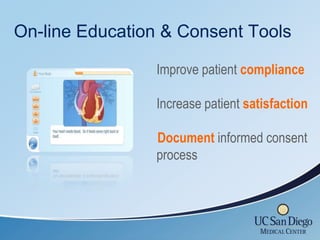
On-line Education & Consent Tools

                Improve patient compliance

                Increase patient satisfaction

                Document informed consent
                process
Disclosure of Financial Relationships
• The Patient’s Rights Issue: absence of bias in
  surgical decision making
• The Relationships:
        –Consulting
        –Research
        –Education support
        –Investment
• Organizations starting to require disclosure
• Lawyers starting to use as tactic
Evolving Standard on Patient
Disclosure
• If a physician has a material financial
  relationship with company that manufactures
  permanently implantable medical devices, the
  physician must disclose to his/her patients this
  financial relationship before obtaining the
  patient’s consent. Such disclosure shall be
  documented in the patient’s medical record.
Care Coordination
• Equal to Patient Education/Informed
  Consent as an Effective Risk Management
  Strategy
• Making Teams of Experts into
  Expert Teams
• Big Impact on Decreasing Dissatisfaction,
  Even When Outcome Less Than Expected
Managing Individual Patient
     Dissatisfaction & Complaints
• Individual dissatisfaction should be
  managed by team, recommend use of
  patient advocate, follow through is critical
• May include apology, written response and
  bill write offs when appropriate
Aggregate Complaint
           Tracking/Trending
• Patterns of patient complaints may be
  predictors of suit
• Facility should have a reliable complaint
  tracking system & regularly review
  aggregate complaint data to fix delivery
  systems
• Complaint review committee
Conversations & Interventions
with Angry, Non-Compliant or
      Disruptive Patients
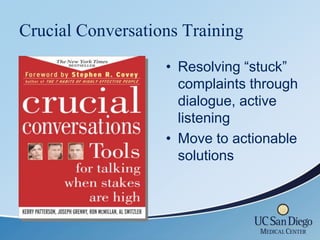
Crucial Conversations Training
                   • Resolving “stuck”
                     complaints through
                     dialogue, active
                     listening
                   • Move to actionable
                     solutions
Crucial Conversations
• Often, dissatisfied patients feel like they
  are not being heard, personal issues not
  being addressed
• Recommend selected team members
  receive conflict resolution or mediation
  training. Active listening (what does the
  patient/family really want)
Behavioral “Contracts”
• Not true contract, a tool for aligning
  expectations/behavior when conversation
  fails
• For disruptive or non-compliant patients
• Lay out surgeon’s and team’s behavioral
  expectations
• Sets up ground work for dismissal
Threats to Sue
• When interventions, crucial conversations,
  patient advocate have failed
• Damage physician/patient/team
  relationship enough that most programs
  will dismiss
• May need to comply with insurer’s rules on
  dismissal
• IF continue to treat, assure no
  disengagement
Dismissal From Practice
• To avoid charge of patient abandonment, notify
  patient, in writing when surgeon wishes to
  discontinue care
   – Last day surgical care will be available
   – Provide at 15-30 days of emergency
     treatment & prescriptions
   – How to get copies of medical records
• May need to comply with insurer’s rules on
  dismissal
Thank you
Questions?

Protect your team from lawsuits

  • 1.
    Protect Your TeamFrom Lawsuits: Tips for Managing Your Risk of Claims
  • 2.
    Overview • Patient Selection & Screening • Risks of Emerging Technologies • Patient Education & Informed Consent • Surgery & Post Operative Care • Dissatisfaction & Complaint Management • Angry, Non-Compliant Patients & Threats to Sue
  • 3.
    Medical Screening • Documentationof Actual Patient Screening (Medical & Psychological) often key to defending cases • Take extra care to document your decision making process and consultations whenever you “push the envelop” beyond published guidelines
  • 4.
    Psychosocial Screening • PatientScreening – identify severe psychosocial problems that may disqualify • Difficult Patients – Need triage, better to discharge before surgery. Psychosocial problems may interfere with post-op care; may disrupt support group • Family & Support Systems – involve in assessment
  • 5.
    It’s All AboutAligning Expectations: Patient Education & Informed Consent
  • 6.
    Education & InformedConsent • Mismatched expectations often leads to lawsuits: 78% lawsuits, no bariatric specific consent forms • Education begins with marketing materials & psychological screening • Well documented, team based training reduces the risk of lawsuit
  • 7.
    Education & InformedConsent • Mismatched expectations often leads to lawsuits: 78% lawsuits, no bariatric specific consent forms • Education begins with marketing materials & psychological screening • Team based education that is well documented is effective risk management tool, basis for informed consent
  • 8.
    Informed Consent • Bariatricinformed consent process follows mandatory patient education sessions • Forms should have checkboxes that certain key points were reviewed • Recommend spouse & family attend classes & sign education form
  • 9.
    On-line Education &Consent Tools Improve patient compliance Increase patient satisfaction Document informed consent process
  • 10.
    Disclosure of FinancialRelationships • The Patient’s Rights Issue: absence of bias in surgical decision making • The Relationships: –Consulting –Research –Education support –Investment • Organizations starting to require disclosure • Lawyers starting to use as tactic
  • 11.
    Evolving Standard onPatient Disclosure • If a physician has a material financial relationship with company that manufactures permanently implantable medical devices, the physician must disclose to his/her patients this financial relationship before obtaining the patient’s consent. Such disclosure shall be documented in the patient’s medical record.
  • 12.
    Care Coordination • Equalto Patient Education/Informed Consent as an Effective Risk Management Strategy • Making Teams of Experts into Expert Teams • Big Impact on Decreasing Dissatisfaction, Even When Outcome Less Than Expected
  • 13.
    Managing Individual Patient Dissatisfaction & Complaints • Individual dissatisfaction should be managed by team, recommend use of patient advocate, follow through is critical • May include apology, written response and bill write offs when appropriate
  • 14.
    Aggregate Complaint Tracking/Trending • Patterns of patient complaints may be predictors of suit • Facility should have a reliable complaint tracking system & regularly review aggregate complaint data to fix delivery systems • Complaint review committee
  • 15.
    Conversations & Interventions withAngry, Non-Compliant or Disruptive Patients
  • 16.
    Crucial Conversations Training • Resolving “stuck” complaints through dialogue, active listening • Move to actionable solutions
  • 17.
    Crucial Conversations • Often,dissatisfied patients feel like they are not being heard, personal issues not being addressed • Recommend selected team members receive conflict resolution or mediation training. Active listening (what does the patient/family really want)
  • 18.
    Behavioral “Contracts” • Nottrue contract, a tool for aligning expectations/behavior when conversation fails • For disruptive or non-compliant patients • Lay out surgeon’s and team’s behavioral expectations • Sets up ground work for dismissal
  • 19.
    Threats to Sue •When interventions, crucial conversations, patient advocate have failed • Damage physician/patient/team relationship enough that most programs will dismiss • May need to comply with insurer’s rules on dismissal • IF continue to treat, assure no disengagement
  • 20.
    Dismissal From Practice •To avoid charge of patient abandonment, notify patient, in writing when surgeon wishes to discontinue care – Last day surgical care will be available – Provide at 15-30 days of emergency treatment & prescriptions – How to get copies of medical records • May need to comply with insurer’s rules on dismissal
  • 21.