Different types of
Laparoscopic Hernia Repair
Advanced Laparoscopic in Robotic and Bariatric Surgery
King Saud University Medical City
3rd December, 2018
Ibrahim Abunohaiah
R1, Urology
Objectives
• To discuss the definition of a hernia.
• To discuss hernia types.
• To discuss laparoscopic repair options.
Definition of Hernia
• A hernia is an abnormal protrusion of an organ or
tissue through a defect in the fascia or muscles
that contain it.
Types of Hernias
• Inguinal (Indirect and Direct) & Femoral Hernias
• Ventral , Epigastric, and Incisional Hernias
• Umbilical and Para-Umbilical Hernias
• Hiatus and Paraesophageal Hernias
• Congenital Diaphragmatic Hernias
• Spigelian Hernia
• Others (Richter’s, Littre’s, Lumbar, Obturator
Hernias)
Risk Factors
• Smoking
• Obesity
• Steroid
• Diabetes mellitus
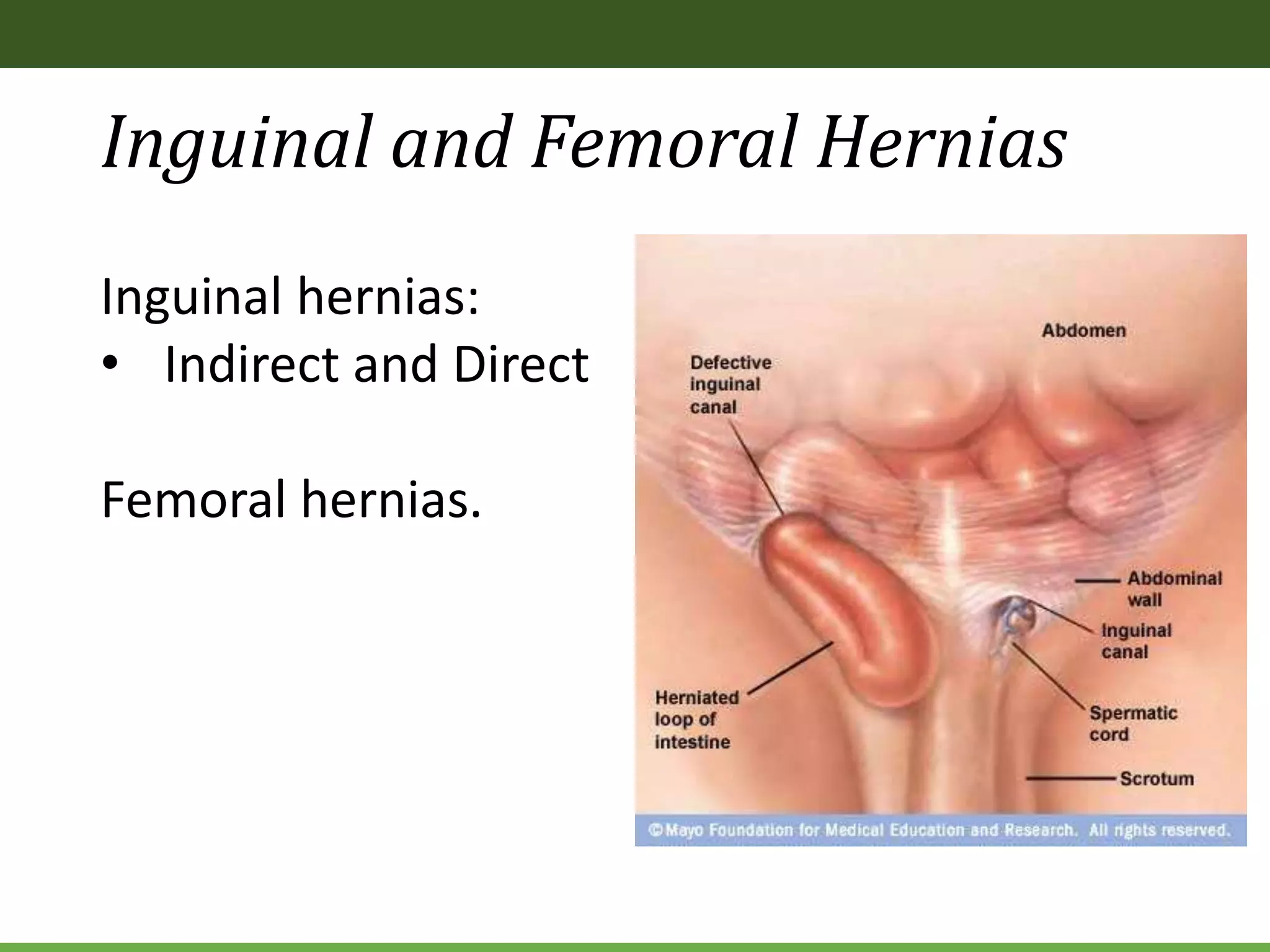
Inguinal and Femoral Hernias
Inguinal hernias:
• Indirect and Direct
Femoral hernias.
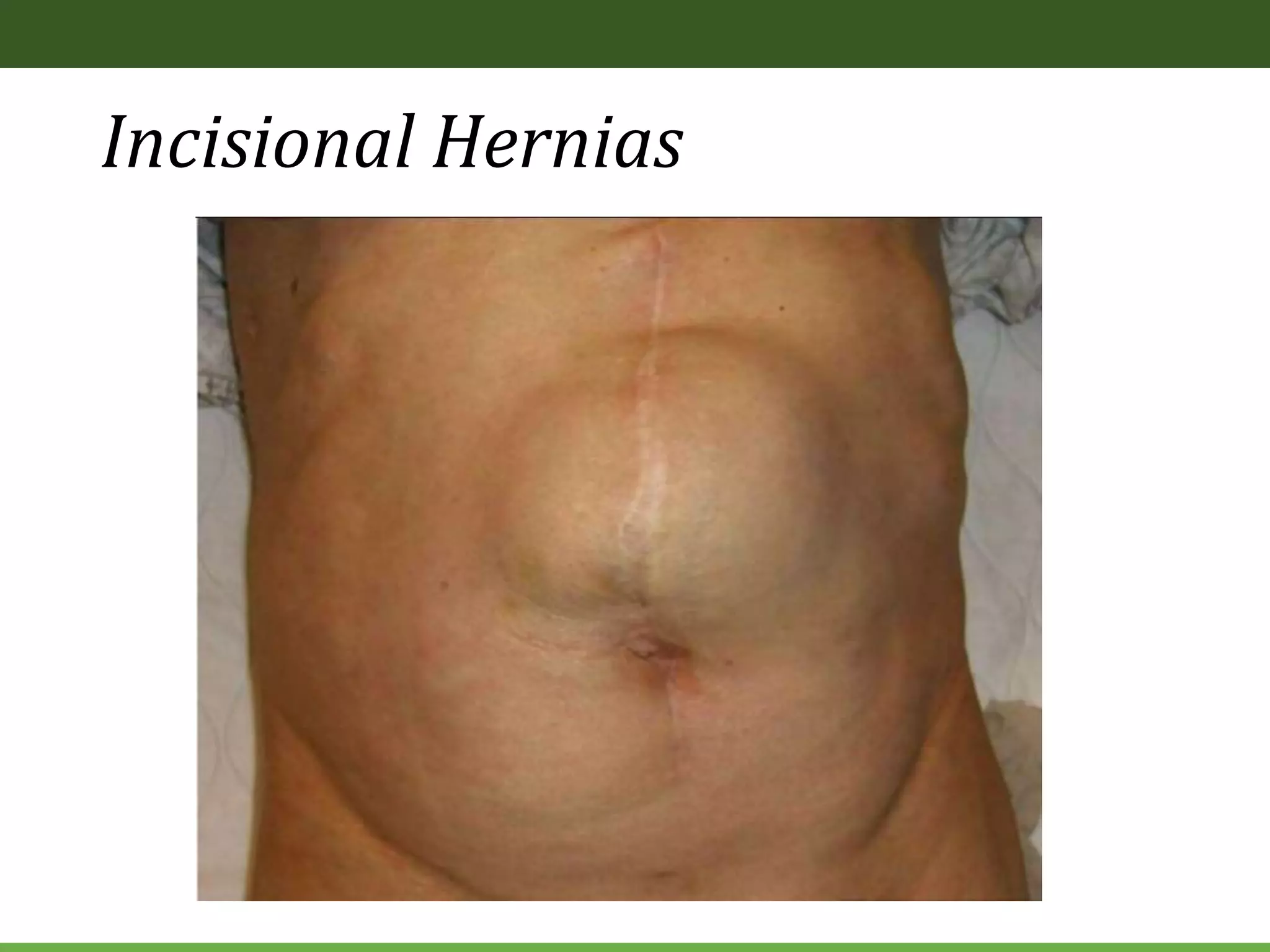
Incisional Hernias
Umbilical and Para-Umbilical
Hernias
Hiatal and Paraesophageal
Hernias
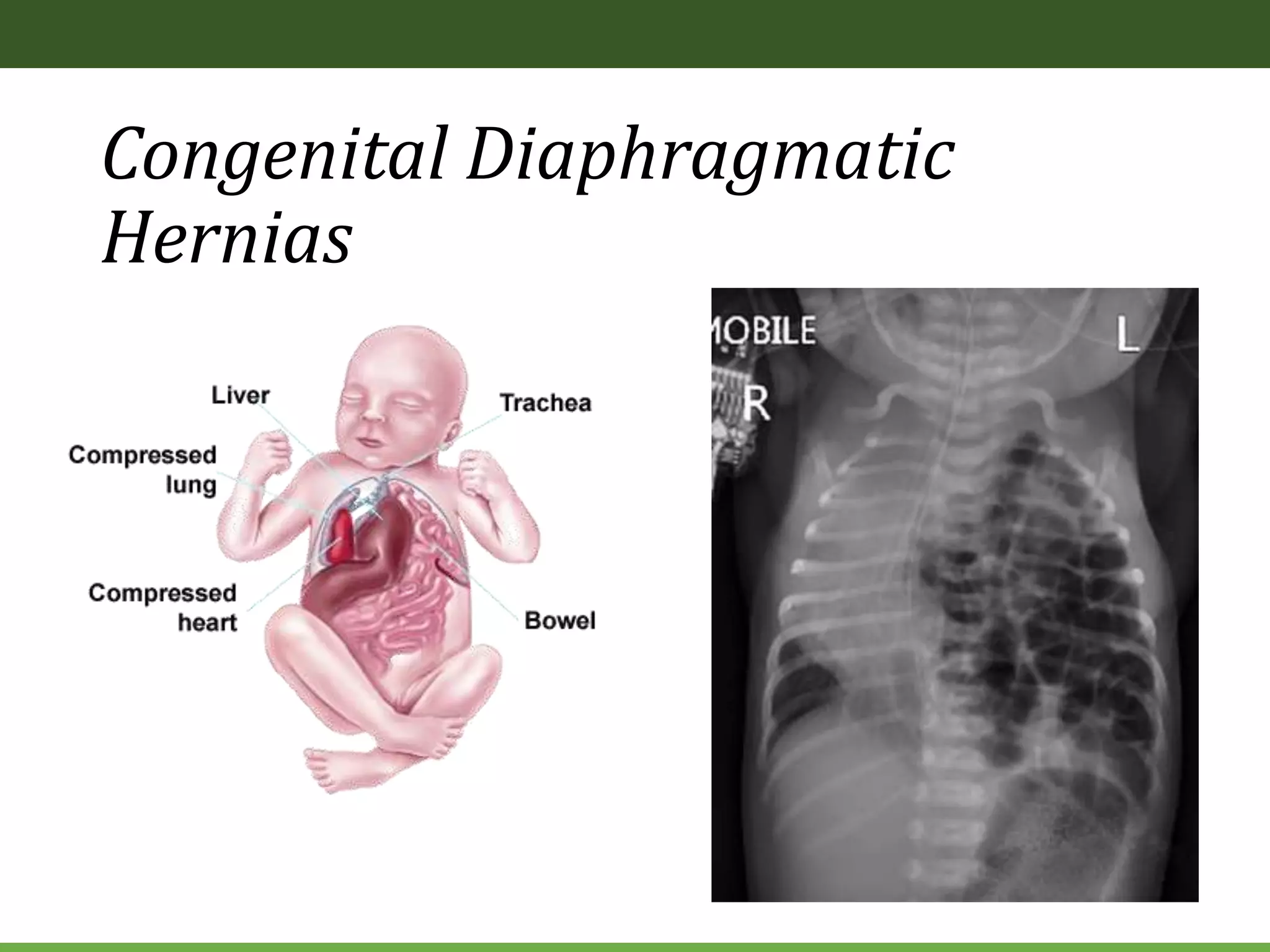
Congenital Diaphragmatic
Hernias
Spigelian Hernia
Surgical Anatomy
• It occurs through slit like defects in the anterior
abdominal wall adjacent to the semilunar line
Diagnosis
• Often Clinical
• Confirmed by CT or MRI imaging
Treatment
• As Ventral Hernias
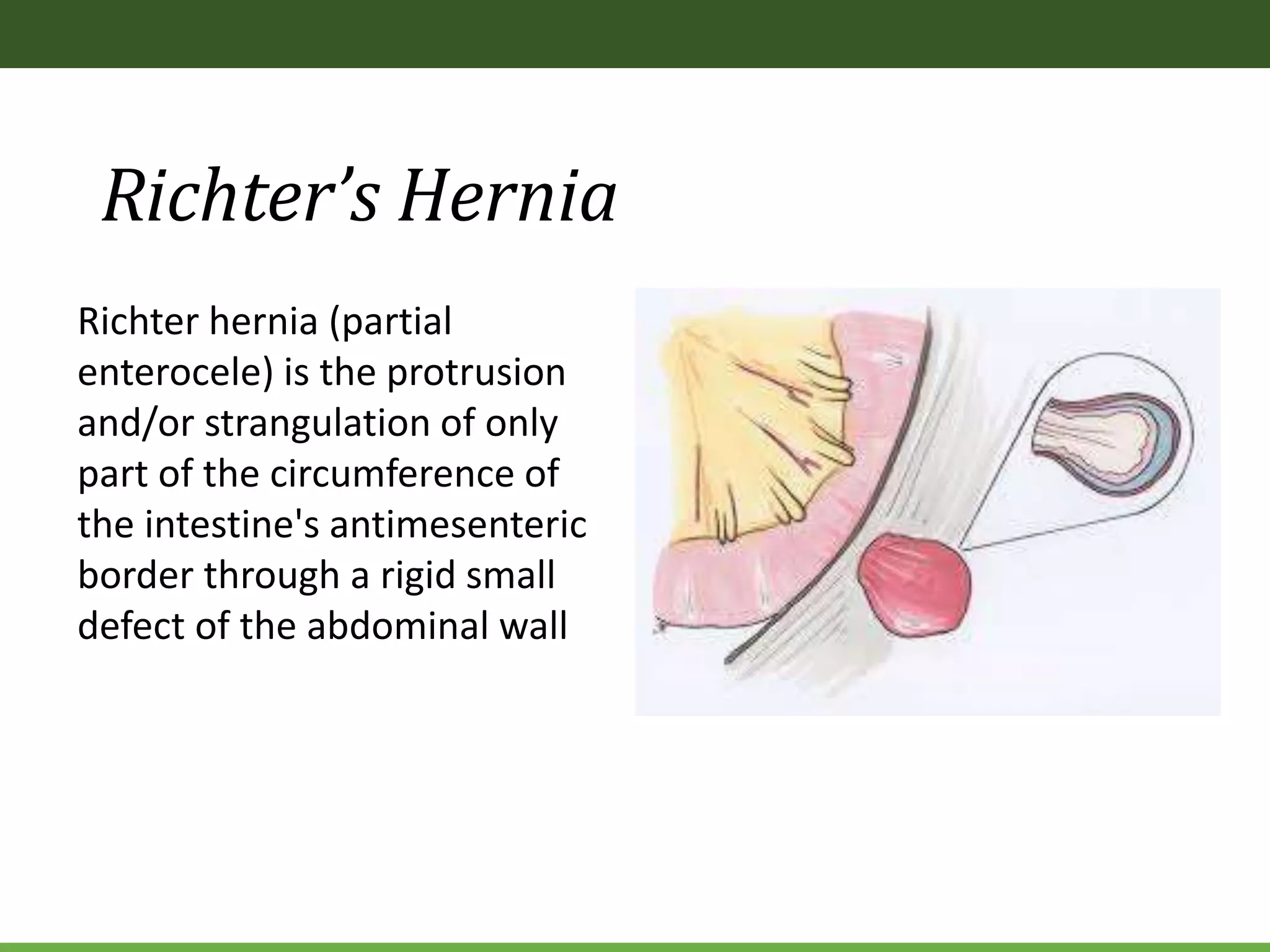
Richter’s Hernia
Richter hernia (partial
enterocele) is the protrusion
and/or strangulation of only
part of the circumference of
the intestine's antimesenteric
border through a rigid small
defect of the abdominal wall
Hernia Surgical Repair
• Laparoscopic
• Open
Laparoscopic Inguinal
Hernia Repair
Background
• Laparoscopic inguinal hernia repair originated in the early 1990s.
• Inguinal hernias account for 75% of all abdominal wall hernias,
and with a lifetime risk of 27% in men and 3% in women.
• Repair of these hernias is one of the most commonly performed
surgical procedures in the world.1
• In the United States, approximately 800,000 inguinal
herniorrhaphies are performed annually. 2
1. Jenkins JT, O'Dwyer PJ. Inguinal hernias. BMJ. 2008 Feb 2. 336(7638):269-72
2. Rutkow IM. Demographic and socioeconomic aspects of hernia repair in the United States in 2003. Surg Clin North Am. 2003 Oct. 83(5):1045-51, v-vi
Laparoscopic Options
• Totally extraperitoneal (TEP) repair
• Transabdominal preperitoneal (TAPP) repair
• Intraperitoneal onlay mesh (IPOM) repair
TAPP vs TEP
Laparoscopic repair
Preferred in:
• Bilateral Hernias
• Recurrent Hernias (Previous open)
• Female Hernias
• Combined with other procedure like Lap.
Cholecystectomy
Learning Curve:
Laparoscopy v/s Open = 250 v/s 25 cases
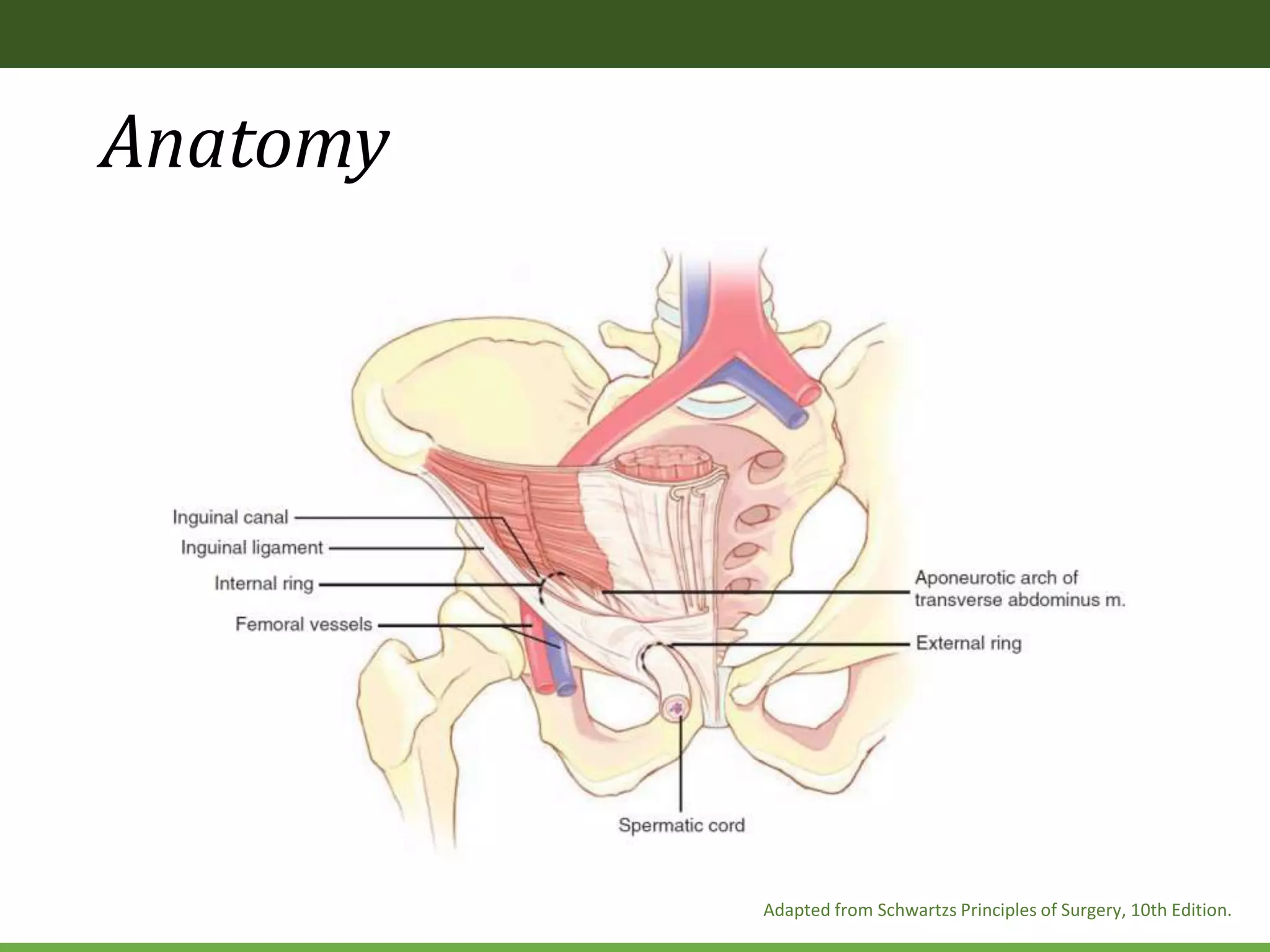
Anatomy
Adapted from Schwartzs Principles of Surgery, 10th Edition.
Anatomy, cont.
Adapted from Schwartzs Principles of Surgery, 10th Edition.
Posterior view of
intraperitoneal folds and associated fossa
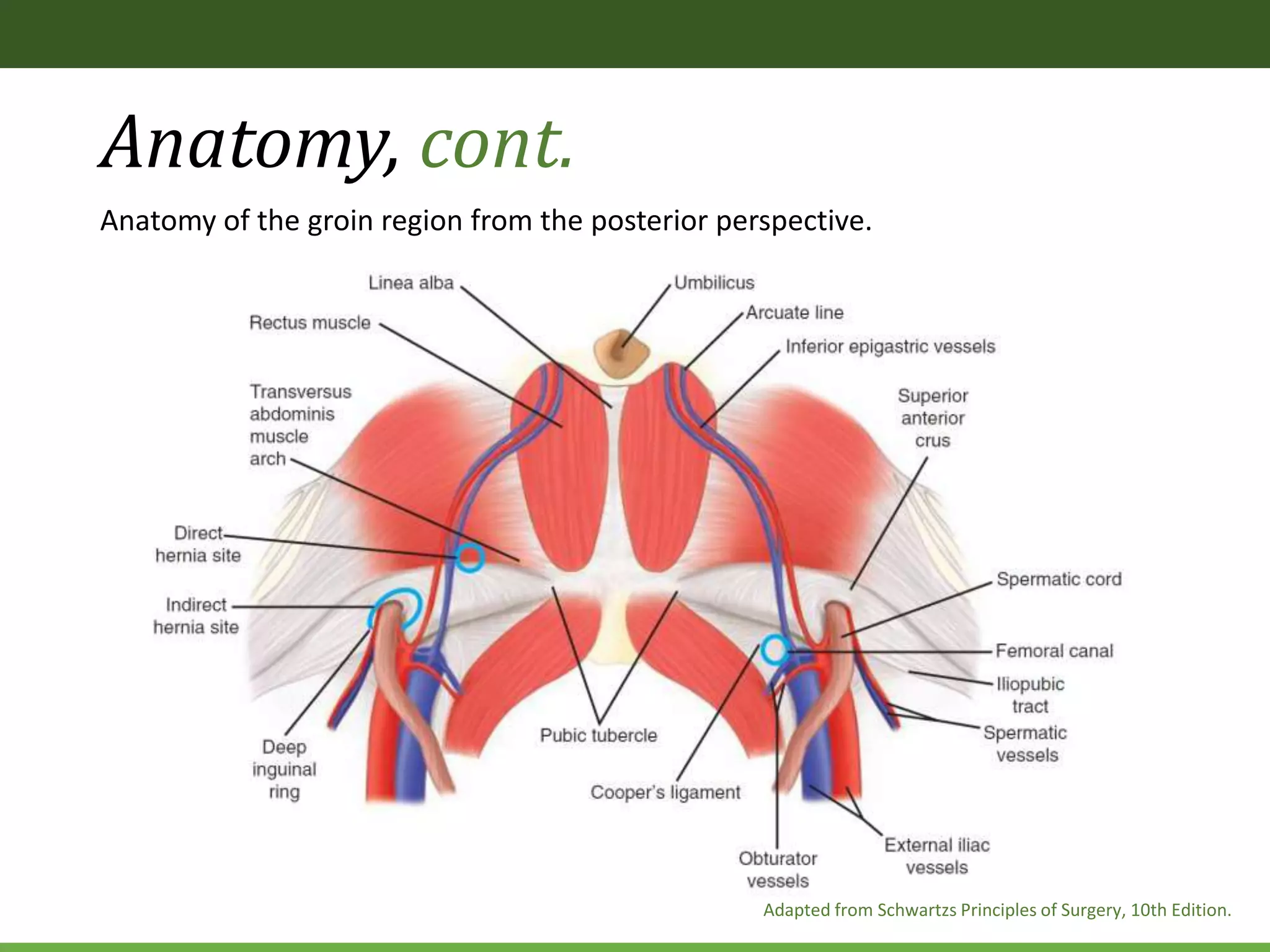
Anatomy, cont.
Adapted from Schwartzs Principles of Surgery, 10th Edition.
Anatomy of the groin region from the posterior perspective.
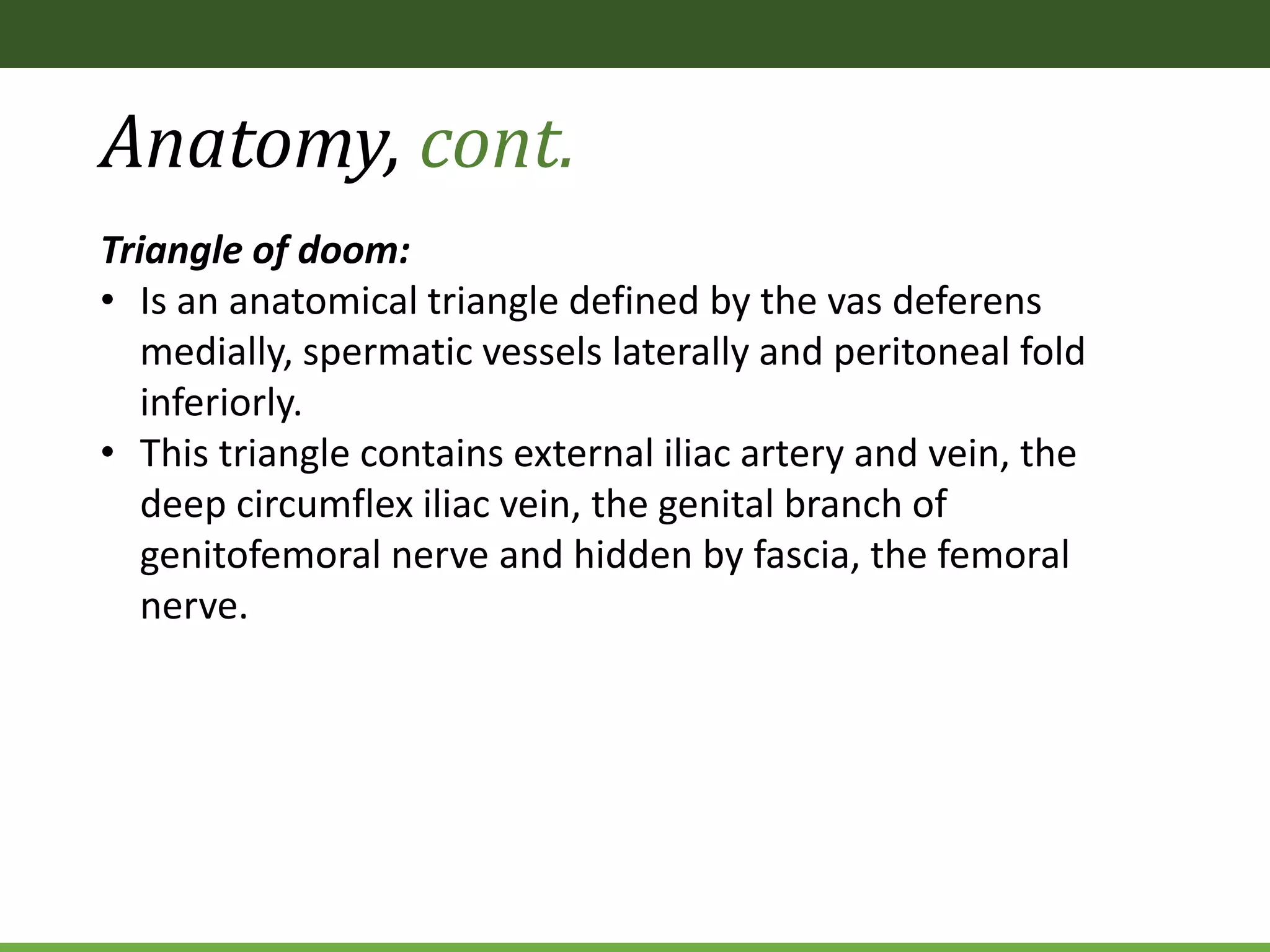
Anatomy, cont.
Triangle of doom:
• Is an anatomical triangle defined by the vas deferens
medially, spermatic vessels laterally and peritoneal fold
inferiorly.
• This triangle contains external iliac artery and vein, the
deep circumflex iliac vein, the genital branch of
genitofemoral nerve and hidden by fascia, the femoral
nerve.
Anatomy, cont.
Triangle of doom
Adapted from Schwartzs Principles of Surgery, 10th Edition.
Anatomy, cont.
Triangle of Pain:
• The region bordered by the iliopubic tract and gonadal
vessels, and it encompasses the lateral femoral
cutaneous, femoral branch of the genitofemoral, and
femoral nerves.
Anatomy, cont.
Adapted from Schwartzs Principles of Surgery, 10th Edition.
Triangle of Pain
Anatomy, cont.
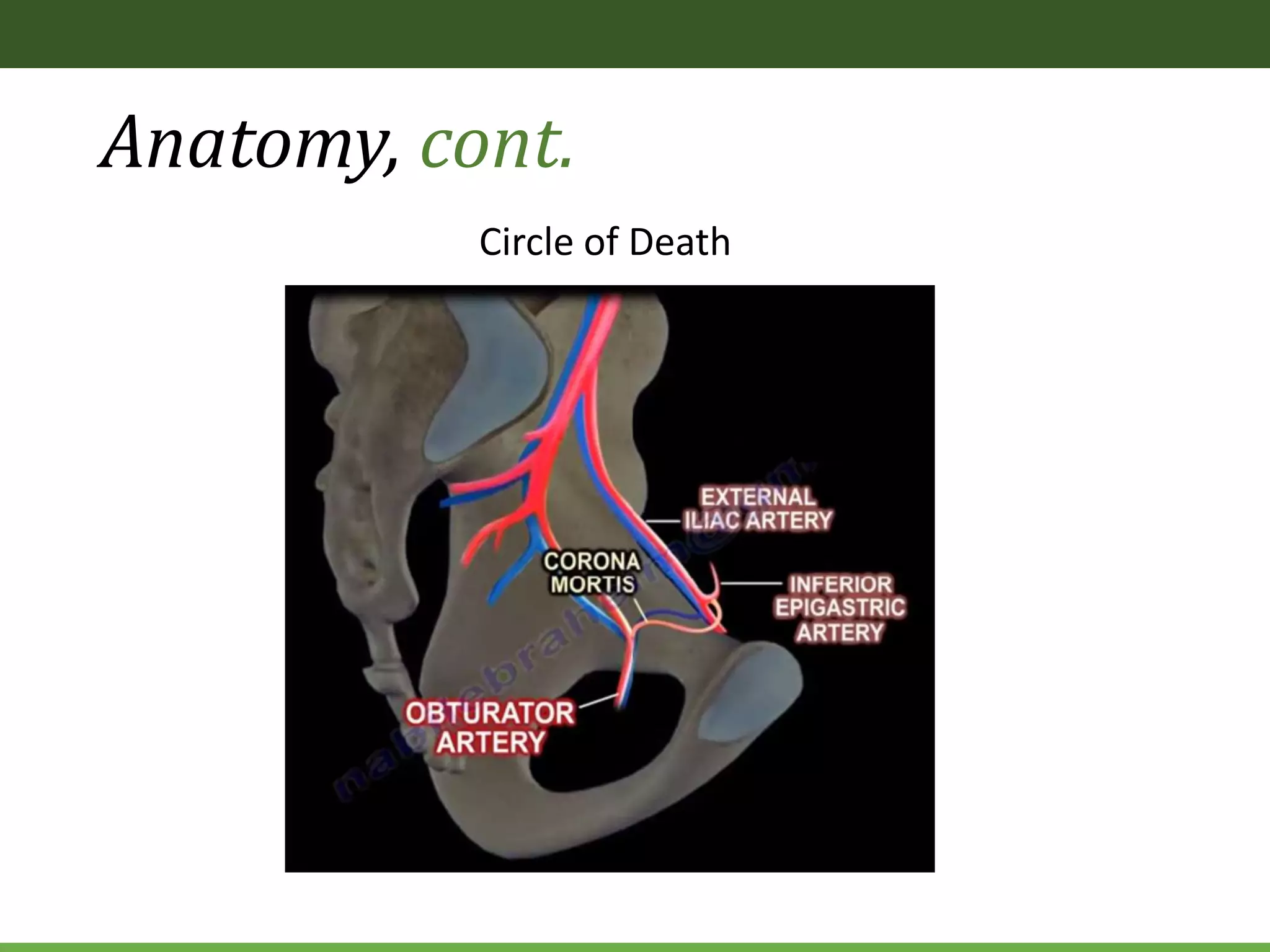
Corona Mortis:
• The circle of death is a vascular continuation formed by
the common iliac, internal iliac, obturator, inferior
epigastric, and external iliac vessels..
Anatomy, cont.
Circle of Death
TAPP - Transabdominal
Preperitoneal technique
TAPP: Definition
• A laparoscopic repair procedure wherein the surgeon
enters the peritoneal cavity, incises the peritoneum,
enters the preperitoneal space, and places the mesh
over the hernia; the peritoneum is then sutured or
tacked.
TAPP: Steps
• STEP 1: Entering the Intra-abdominal Cavity
• STEP 2: Creating the Peritoneal Flap
• STEP 3: Identifying the Anatomical Landmarks
• STEP 4: Dissecting the Hernia Sac
• STEP 5: Deploying and Anchoring the Mesh
• STEP 6: Closing the Peritoneum
• STEP 7: Taking out Sutures & Port Closure
TAPP: Preoperative Care
• It is recommended that the patient empty his/her bladder
before the operation.
• Restrictive per- and postoperative intravenous fluid
administration reduces the risk of postoperative urinary
retention.
• If you expect technical difficulties (e.g., after prostatic surgery,
Scrotal hernia) or an extended operating time, consider using a
urinary catheter during the operation.
• Patient with unilateral groin hernia should be asked to give
his/her consent to allow simultaneous repair if a contralateral
occult hernia is found.
TAPP: Patient Position
• Patient in Supine position.
• Head-down position during the operation and slightly
(approximately 15°) turned toward the surgeon.
• The operating surgeon & the camera assistant stay on opposite
sides of the hernia.
TAPP: STEP 1: Entering the Intra-
abdominal Cavity
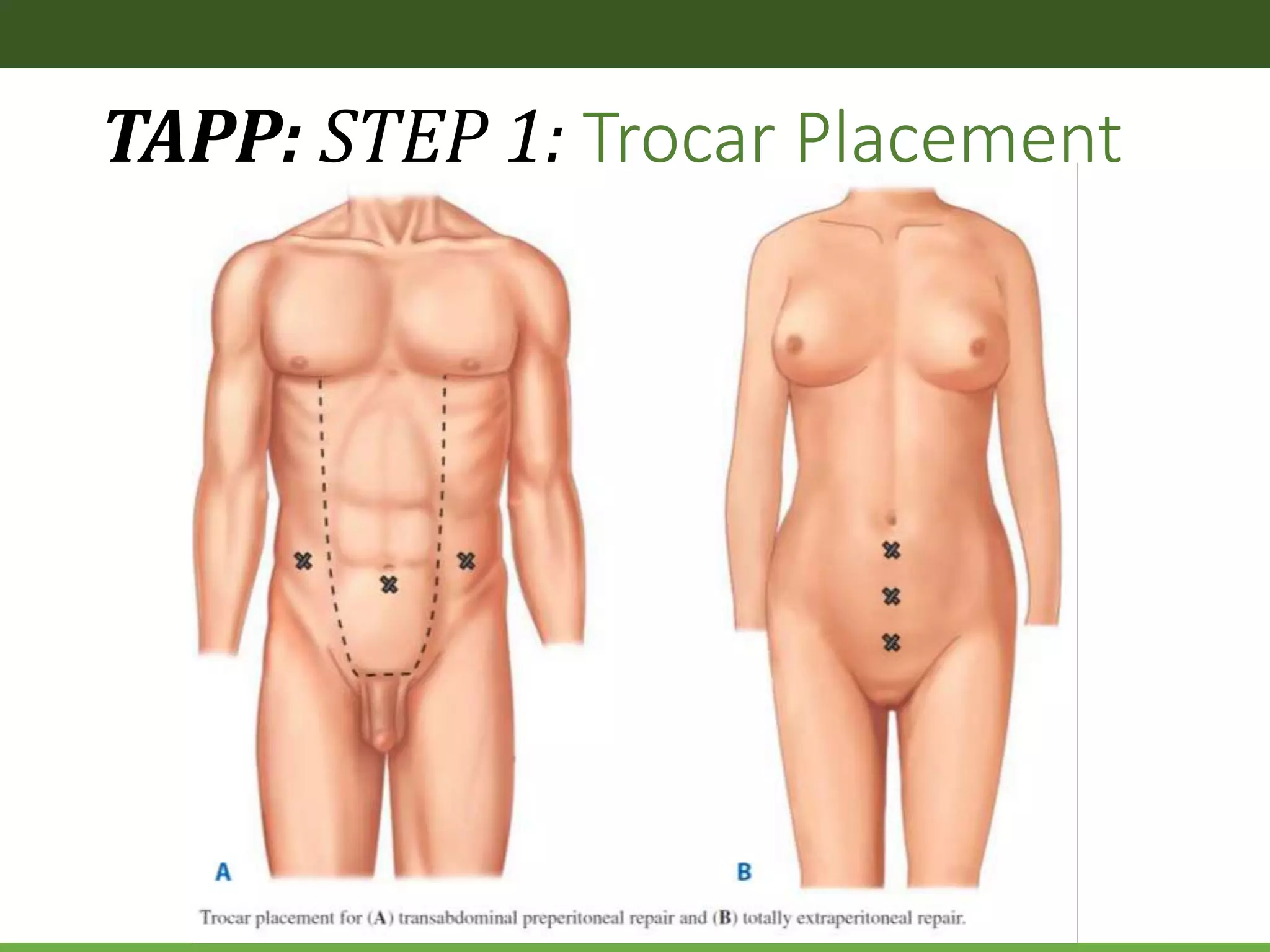
Trocar placement
• Establishing pneumoperitoneum using the Veress needle.
• 10 mm Camera trocar – supraumbilical
• Under laparoscopic view - Two 5 mm operating trocars on
the midclavicular line 2 cm below the level of the horizontal
line from the optical trocar.
TAPP: STEP 1: Trocar Placement
TAPP: STEP 1: Tips
• The intra-abdominal cavity is visualized with the Telescope
and intraabdominal findings are reported [intra-abdominal
pathology and inguinal hernia defects and sacs].
• If an asymptomatic hernia sac is identified on the
contralateral side, consider repair.
• The bladder, median and medial umbilical ligaments, external
iliac, and inferior epigastric vessels are visualized.
TAPP: STEP 1: Preperitoneal
dissection
• The aim of this step is to ensure the best positioning of the
mesh.
• An incision is made in the peritoneum at the medial umbilical
ligament 3 to 4 cm superior to the hernia defect, and it is
carried laterally to the anterior superior iliac spine.
• In this way several anatomic landmarks must be identified, as
well as a complete dissection of the hernia’s sac.
TAPP: STEP 1: Preperitoneal
dissection
• The inferior edge of incised peritoneum is retracted, and the
preperitoneum is dissected to expose the spermatic cord.
• If a direct hernia is encountered, the sac is inverted and fixed
to Cooper’s ligament to prevent development of hematoma or
seroma.
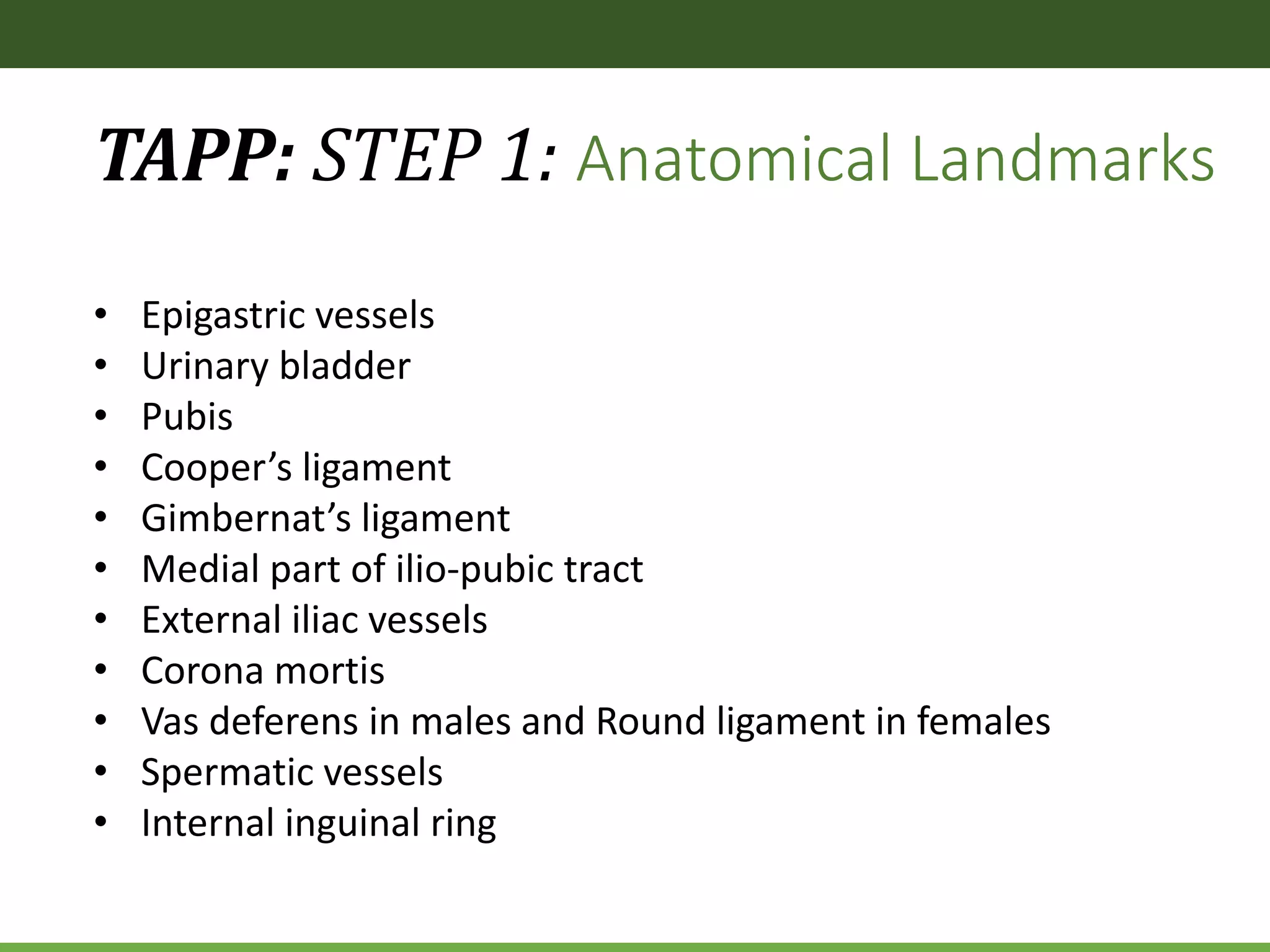
TAPP: STEP 1: Anatomical Landmarks
• Epigastric vessels
• Urinary bladder
• Pubis
• Cooper’s ligament
• Gimbernat’s ligament
• Medial part of ilio-pubic tract
• External iliac vessels
• Corona mortis
• Vas deferens in males and Round ligament in females
• Spermatic vessels
• Internal inguinal ring
TAPP: STEP 1: Anatomical Landmarks
TAPP: STEP 2: Creating the
Peritoneal Flap
TAPP: STEP 2: Creating the
Peritoneal Flap
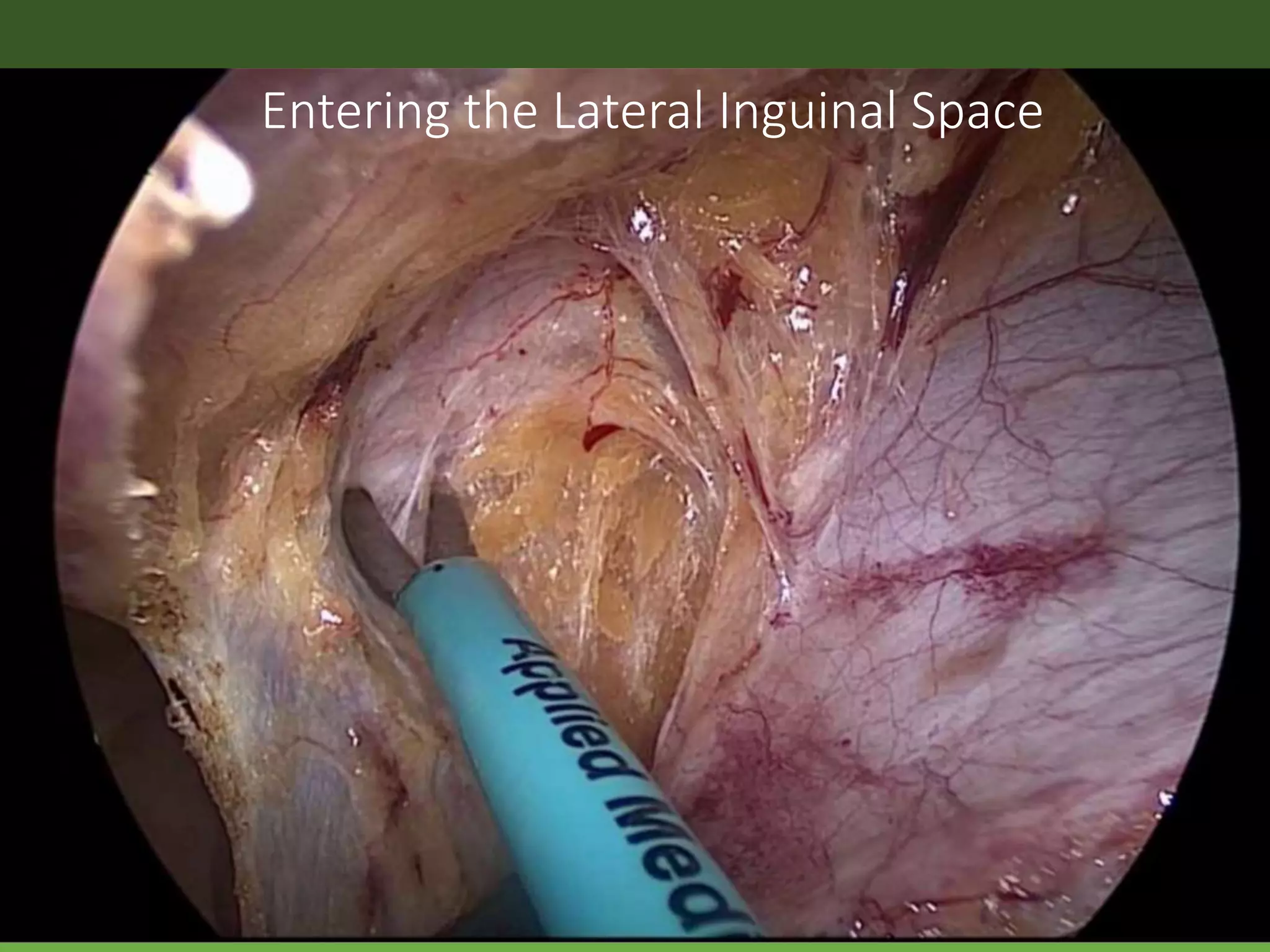
Entering the Lateral Inguinal Space
TAPP: STEP 3: Identifying the
Anatomical Landmarks
• The aim of the laparoscopic exploration is to identify the
anatomical landmarks, site and type of hernia.
• The two dangerous “triangles”:
1. Vascular triangle- Triangle of Doom and
2. Triangle of Pain must be well identified
And Corona Mortis
TAPP: STEP 3: Identifying the
Anatomical Landmarks
TAPP: STEP 3: Identifying the
Anatomical Landmarks
TAPP: STEP 4: Dissecting the
Hernia Sac
• The indirect inguinal hernia sac should be dissected carefully
from the Spermatic Cord.
• It is always essential to expose and know where the
spermatic cord is located.
• Direct hernia sacs are easily dissected.
• Care should be taken not to dissect lateral and inferior to
Cooper’s ligament, as the Iliac Artery and Vein will enter the
femoral canal at this site
TAPP: STEP 4: Dissecting the
Hernia Sac
The hernia sac dissection is performed using traction contra-traction maneuvers and
fine coagulation. To avoid the injuries of the Vas deferens and spermatic vessels the
sac dissection always starts anteriorly
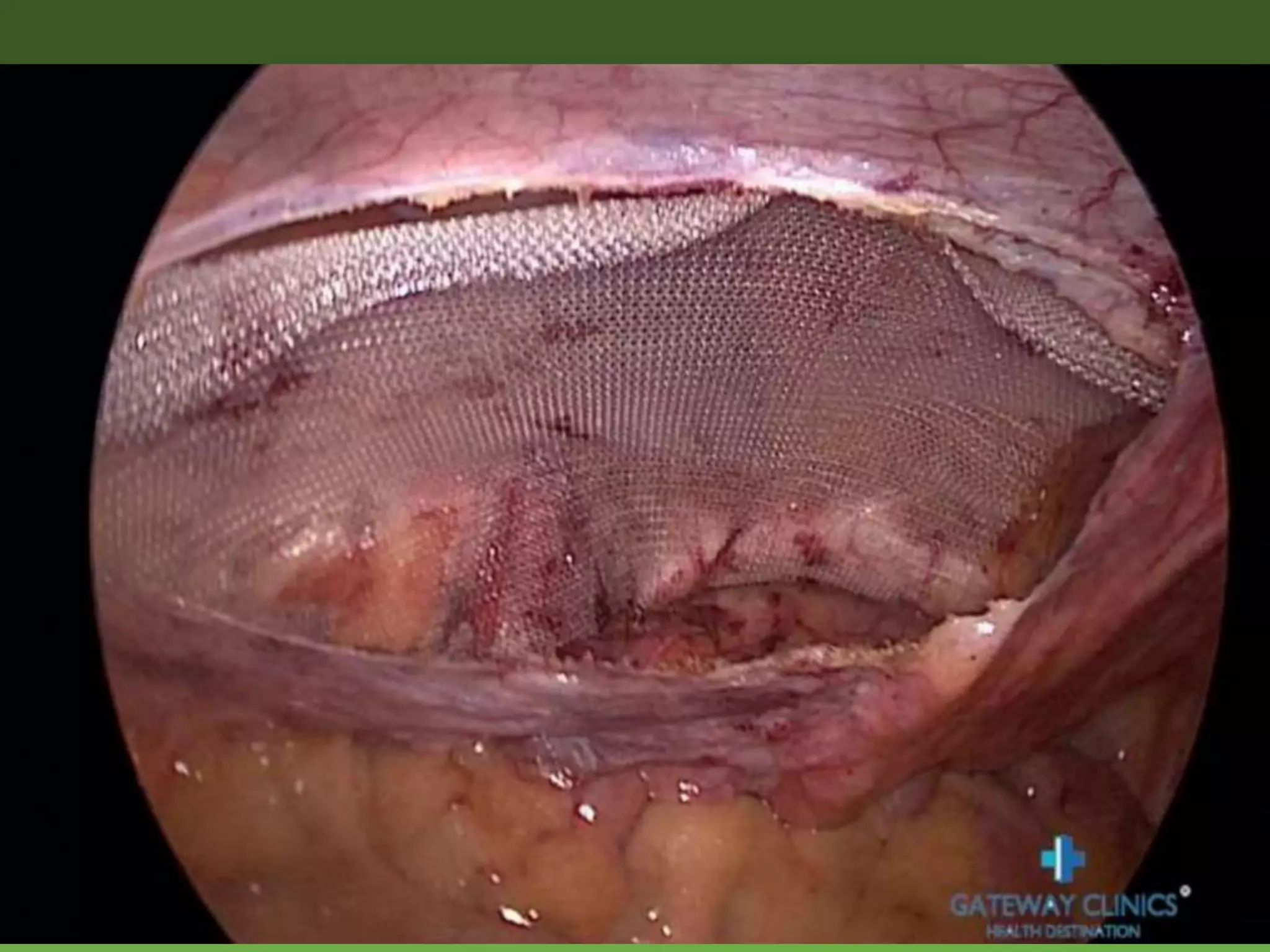
TAPP: STEP 5: Deploying and
Anchoring the Mesh
• The mesh is inserted from the Camera trocar. Then, placed in
the appropriate position.
• It is unrolled in the preperitoneal space and secured medially
to Cooper’s ligament using a spiral tacker.
• The mesh shouldn’t be sutured/stapled at the level of
dangerous triangles and epigastric vessels.
TAPP: STEP 5: Deploying and
Anchoring the Mesh
• During this fixation, the surgeon palpates the end of the
tacker from the abdominal surface to ensure its proper angle
and to stabilize the pelvis.
• The mesh is then pulled taut and fixed lateral to the anterior
superior iliac spine.
• Tacks are placed above the iliopubic tract to avoid injury to
the lateral cutaneous nerve of the thigh and the femoral
branch of the genitofemoral nerve.
TAPP: STEP 5: Deploying and
Anchoring the Mesh
TAPP: STEP 5: Deploying and
Anchoring the Mesh
TAPP: STEP 6: The peritoneal
closure
• The peritoneum should be closed completely to avoid contact
between the mesh and the intestine.
TAPP: STEP 7: Taking out Sutures
& Port Closure
• Local Anesthetics infiltrated to improve postoperative pain
control.
• The abdomen is desufflated and the trocars are removed.
• The fascial defect of the 12-mm port and the skin incisions
are appropriately closed.
References
• Laparoscopic Hernia Surgery, Gateway Clinics,
Coimbatore.
• Medscape.
• Schwartzs Principles of Surgery, 10th Edition.

Different types of laparoscopic hernia repair

  • 1.
    Different types of LaparoscopicHernia Repair Advanced Laparoscopic in Robotic and Bariatric Surgery King Saud University Medical City 3rd December, 2018 Ibrahim Abunohaiah R1, Urology
  • 2.
    Objectives • To discussthe definition of a hernia. • To discuss hernia types. • To discuss laparoscopic repair options.
  • 3.
    Definition of Hernia •A hernia is an abnormal protrusion of an organ or tissue through a defect in the fascia or muscles that contain it.
  • 4.
    Types of Hernias •Inguinal (Indirect and Direct) & Femoral Hernias • Ventral , Epigastric, and Incisional Hernias • Umbilical and Para-Umbilical Hernias • Hiatus and Paraesophageal Hernias • Congenital Diaphragmatic Hernias • Spigelian Hernia • Others (Richter’s, Littre’s, Lumbar, Obturator Hernias)
  • 5.
    Risk Factors • Smoking •Obesity • Steroid • Diabetes mellitus
  • 6.
    Inguinal and FemoralHernias Inguinal hernias: • Indirect and Direct Femoral hernias.
  • 7.
  • 8.
  • 9.
  • 10.
  • 11.
    Spigelian Hernia Surgical Anatomy •It occurs through slit like defects in the anterior abdominal wall adjacent to the semilunar line Diagnosis • Often Clinical • Confirmed by CT or MRI imaging Treatment • As Ventral Hernias
  • 12.
    Richter’s Hernia Richter hernia(partial enterocele) is the protrusion and/or strangulation of only part of the circumference of the intestine's antimesenteric border through a rigid small defect of the abdominal wall
  • 13.
  • 14.
    Hernia Surgical Repair •Laparoscopic • Open
  • 15.
  • 16.
    Background • Laparoscopic inguinalhernia repair originated in the early 1990s. • Inguinal hernias account for 75% of all abdominal wall hernias, and with a lifetime risk of 27% in men and 3% in women. • Repair of these hernias is one of the most commonly performed surgical procedures in the world.1 • In the United States, approximately 800,000 inguinal herniorrhaphies are performed annually. 2 1. Jenkins JT, O'Dwyer PJ. Inguinal hernias. BMJ. 2008 Feb 2. 336(7638):269-72 2. Rutkow IM. Demographic and socioeconomic aspects of hernia repair in the United States in 2003. Surg Clin North Am. 2003 Oct. 83(5):1045-51, v-vi
  • 17.
    Laparoscopic Options • Totallyextraperitoneal (TEP) repair • Transabdominal preperitoneal (TAPP) repair • Intraperitoneal onlay mesh (IPOM) repair
  • 18.
  • 19.
    Laparoscopic repair Preferred in: •Bilateral Hernias • Recurrent Hernias (Previous open) • Female Hernias • Combined with other procedure like Lap. Cholecystectomy Learning Curve: Laparoscopy v/s Open = 250 v/s 25 cases
  • 20.
    Anatomy Adapted from SchwartzsPrinciples of Surgery, 10th Edition.
  • 21.
    Anatomy, cont. Adapted fromSchwartzs Principles of Surgery, 10th Edition. Posterior view of intraperitoneal folds and associated fossa
  • 22.
    Anatomy, cont. Adapted fromSchwartzs Principles of Surgery, 10th Edition. Anatomy of the groin region from the posterior perspective.
  • 23.
    Anatomy, cont. Triangle ofdoom: • Is an anatomical triangle defined by the vas deferens medially, spermatic vessels laterally and peritoneal fold inferiorly. • This triangle contains external iliac artery and vein, the deep circumflex iliac vein, the genital branch of genitofemoral nerve and hidden by fascia, the femoral nerve.
  • 24.
    Anatomy, cont. Triangle ofdoom Adapted from Schwartzs Principles of Surgery, 10th Edition.
  • 25.
    Anatomy, cont. Triangle ofPain: • The region bordered by the iliopubic tract and gonadal vessels, and it encompasses the lateral femoral cutaneous, femoral branch of the genitofemoral, and femoral nerves.
  • 26.
    Anatomy, cont. Adapted fromSchwartzs Principles of Surgery, 10th Edition. Triangle of Pain
  • 27.
    Anatomy, cont. Corona Mortis: •The circle of death is a vascular continuation formed by the common iliac, internal iliac, obturator, inferior epigastric, and external iliac vessels..
  • 28.
  • 29.
  • 30.
    TAPP: Definition • Alaparoscopic repair procedure wherein the surgeon enters the peritoneal cavity, incises the peritoneum, enters the preperitoneal space, and places the mesh over the hernia; the peritoneum is then sutured or tacked.
  • 31.
    TAPP: Steps • STEP1: Entering the Intra-abdominal Cavity • STEP 2: Creating the Peritoneal Flap • STEP 3: Identifying the Anatomical Landmarks • STEP 4: Dissecting the Hernia Sac • STEP 5: Deploying and Anchoring the Mesh • STEP 6: Closing the Peritoneum • STEP 7: Taking out Sutures & Port Closure
  • 32.
    TAPP: Preoperative Care •It is recommended that the patient empty his/her bladder before the operation. • Restrictive per- and postoperative intravenous fluid administration reduces the risk of postoperative urinary retention. • If you expect technical difficulties (e.g., after prostatic surgery, Scrotal hernia) or an extended operating time, consider using a urinary catheter during the operation. • Patient with unilateral groin hernia should be asked to give his/her consent to allow simultaneous repair if a contralateral occult hernia is found.
  • 33.
    TAPP: Patient Position •Patient in Supine position. • Head-down position during the operation and slightly (approximately 15°) turned toward the surgeon. • The operating surgeon & the camera assistant stay on opposite sides of the hernia.
  • 34.
    TAPP: STEP 1:Entering the Intra- abdominal Cavity Trocar placement • Establishing pneumoperitoneum using the Veress needle. • 10 mm Camera trocar – supraumbilical • Under laparoscopic view - Two 5 mm operating trocars on the midclavicular line 2 cm below the level of the horizontal line from the optical trocar.
  • 35.
    TAPP: STEP 1:Trocar Placement
  • 36.
    TAPP: STEP 1:Tips • The intra-abdominal cavity is visualized with the Telescope and intraabdominal findings are reported [intra-abdominal pathology and inguinal hernia defects and sacs]. • If an asymptomatic hernia sac is identified on the contralateral side, consider repair. • The bladder, median and medial umbilical ligaments, external iliac, and inferior epigastric vessels are visualized.
  • 37.
    TAPP: STEP 1:Preperitoneal dissection • The aim of this step is to ensure the best positioning of the mesh. • An incision is made in the peritoneum at the medial umbilical ligament 3 to 4 cm superior to the hernia defect, and it is carried laterally to the anterior superior iliac spine. • In this way several anatomic landmarks must be identified, as well as a complete dissection of the hernia’s sac.
  • 38.
    TAPP: STEP 1:Preperitoneal dissection • The inferior edge of incised peritoneum is retracted, and the preperitoneum is dissected to expose the spermatic cord. • If a direct hernia is encountered, the sac is inverted and fixed to Cooper’s ligament to prevent development of hematoma or seroma.
  • 39.
    TAPP: STEP 1:Anatomical Landmarks • Epigastric vessels • Urinary bladder • Pubis • Cooper’s ligament • Gimbernat’s ligament • Medial part of ilio-pubic tract • External iliac vessels • Corona mortis • Vas deferens in males and Round ligament in females • Spermatic vessels • Internal inguinal ring
  • 40.
    TAPP: STEP 1:Anatomical Landmarks
  • 41.
    TAPP: STEP 2:Creating the Peritoneal Flap
  • 42.
    TAPP: STEP 2:Creating the Peritoneal Flap
  • 43.
    Entering the LateralInguinal Space
  • 44.
    TAPP: STEP 3:Identifying the Anatomical Landmarks • The aim of the laparoscopic exploration is to identify the anatomical landmarks, site and type of hernia. • The two dangerous “triangles”: 1. Vascular triangle- Triangle of Doom and 2. Triangle of Pain must be well identified And Corona Mortis
  • 45.
    TAPP: STEP 3:Identifying the Anatomical Landmarks
  • 46.
    TAPP: STEP 3:Identifying the Anatomical Landmarks
  • 47.
    TAPP: STEP 4:Dissecting the Hernia Sac • The indirect inguinal hernia sac should be dissected carefully from the Spermatic Cord. • It is always essential to expose and know where the spermatic cord is located. • Direct hernia sacs are easily dissected. • Care should be taken not to dissect lateral and inferior to Cooper’s ligament, as the Iliac Artery and Vein will enter the femoral canal at this site
  • 48.
    TAPP: STEP 4:Dissecting the Hernia Sac The hernia sac dissection is performed using traction contra-traction maneuvers and fine coagulation. To avoid the injuries of the Vas deferens and spermatic vessels the sac dissection always starts anteriorly
  • 49.
    TAPP: STEP 5:Deploying and Anchoring the Mesh • The mesh is inserted from the Camera trocar. Then, placed in the appropriate position. • It is unrolled in the preperitoneal space and secured medially to Cooper’s ligament using a spiral tacker. • The mesh shouldn’t be sutured/stapled at the level of dangerous triangles and epigastric vessels.
  • 50.
    TAPP: STEP 5:Deploying and Anchoring the Mesh • During this fixation, the surgeon palpates the end of the tacker from the abdominal surface to ensure its proper angle and to stabilize the pelvis. • The mesh is then pulled taut and fixed lateral to the anterior superior iliac spine. • Tacks are placed above the iliopubic tract to avoid injury to the lateral cutaneous nerve of the thigh and the femoral branch of the genitofemoral nerve.
  • 51.
    TAPP: STEP 5:Deploying and Anchoring the Mesh
  • 52.
    TAPP: STEP 5:Deploying and Anchoring the Mesh
  • 53.
    TAPP: STEP 6:The peritoneal closure • The peritoneum should be closed completely to avoid contact between the mesh and the intestine.
  • 54.
    TAPP: STEP 7:Taking out Sutures & Port Closure • Local Anesthetics infiltrated to improve postoperative pain control. • The abdomen is desufflated and the trocars are removed. • The fascial defect of the 12-mm port and the skin incisions are appropriately closed.
  • 55.
    References • Laparoscopic HerniaSurgery, Gateway Clinics, Coimbatore. • Medscape. • Schwartzs Principles of Surgery, 10th Edition.