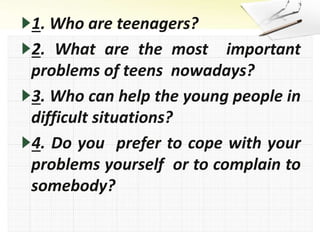
1. Who are teenagers?
2. What are the most important
problems of teens nowadays?
3. Who can help the young people in
difficult situations?
4. Do you prefer to cope with your
problems yourself or to complain to
somebody?
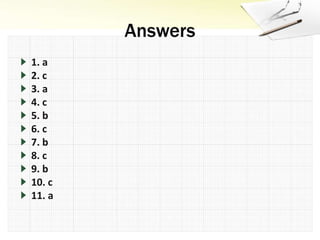
1. a
2. c
3. a
4. c
5. b
6. c
7. b
8. c
9. b
10. c
11. a
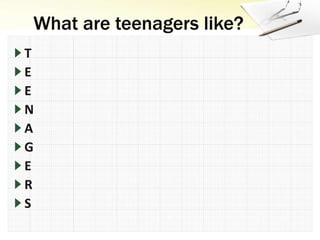
T
E
E
N
A
G
E
R
S
English Grammar
Examples:
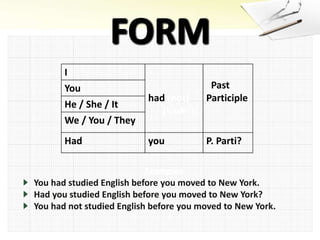
You had studied English before you moved to New York.
Had you studied English before you moved to New York?
You had not studied English before you moved to New York.
I
had (not)
(hadn’t)
Past
Participle
You
He / She / It
We / You / They
Had you P. Parti?
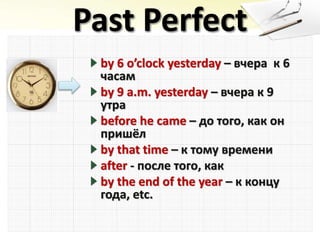
by 6 o’clock yesterday – вчера к 6
часам
by 9 a.m. yesterday – вчера к 9
утра
before he came – до того, как он
пришёл
by that time – к тому времени
after - после того, как
by the end of the year – к концу
года, etc.
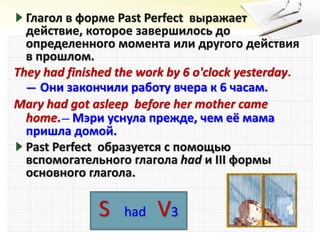
Глагол в форме Past Perfect выражает
действие, которое завершилось до
определенного момента или другого действия
в прошлом.
They had finished the work by 6 o'clock yesterday.
— Они закончили работу вчера к 6 часам.
Mary had got asleep before her mother came
home.— Мэри уснула прежде, чем её мама
пришла домой.
Past Perfect образуется с помощью
вспомогательного глагола had и III формы
основного глагола.
S had V3
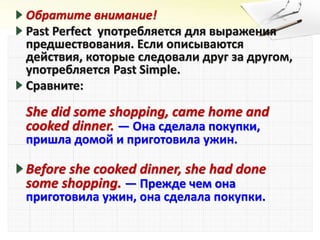
Обратите внимание!
Past Perfect употребляется для выражения
предшествования. Если описываются
действия, которые следовали друг за другом,
употребляется Past Simple.
Сравните:
She did some shopping, came home and
cooked dinner. — Она сделала покупки,
пришла домой и приготовила ужин.
Before she cooked dinner, she had done
some shopping. — Прежде чем она
приготовила ужин, она сделала покупки.
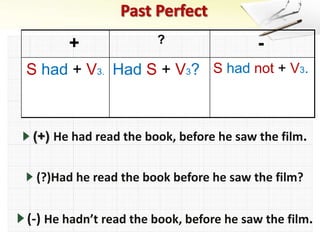
(+) He had read the book, before he saw the film.
(?)Had he read the book before he saw the film?
(-) He hadn’t read the book, before he saw the film.
+ ? -
S had + V3. Had S + V3? S had not + V3.
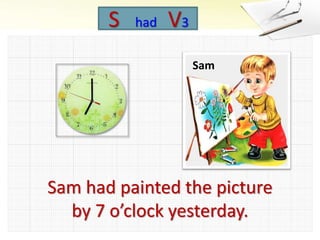
S had V3
Sam had painted the picture
by 7 o’clock yesterday.
Sam
Roman had cooked dinner
by 6 o’clock yesterday.
Roman
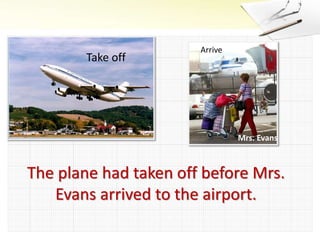
Take off
Arrive
Mrs. Evans
The plane had taken off before Mrs.
Evans arrived to the airport.
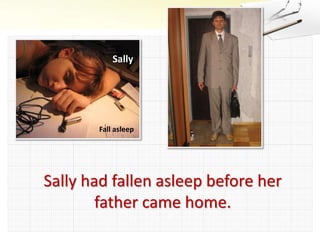
Sally
Fall asleep
Sally had fallen asleep before her
father came home.
The students had made cakes by 9 p.m.
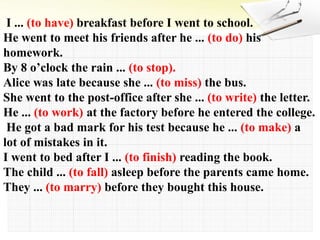
I ... (to have) breakfast before I went to school.
He went to meet his friends after he ... (to do) his
homework.
By 8 o’clock the rain ... (to stop).
Alice was late because she ... (to miss) the bus.
She went to the post-office after she ... (to write) the letter.
He ... (to work) at the factory before he entered the college.
He got a bad mark for his test because he ... (to make) a
lot of mistakes in it.
I went to bed after I ... (to finish) reading the book.
The child ... (to fall) asleep before the parents came home.
They ... (to marry) before they bought this house.
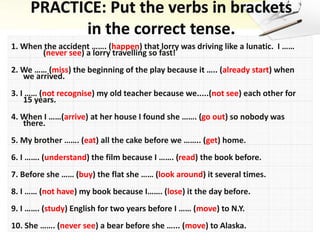
1. When the accident ……. (happen) that lorry was driving like a lunatic. I ……
(never see) a lorry travelling so fast!
2. We …… (miss) the beginning of the play because it ….. (already start) when
we arrived.
3. I …… (not recognise) my old teacher because we.....(not see) each other for
15 years.
4. When I ……(arrive) at her house I found she ……. (go out) so nobody was
there.
5. My brother ……. (eat) all the cake before we …….. (get) home.
6. I ……. (understand) the film because I ……. (read) the book before.
7. Before she …… (buy) the flat she …… (look around) it several times.
8. I …… (not have) my book because I……. (lose) it the day before.
9. I ……. (study) English for two years before I …… (move) to N.Y.
10. She ……. (never see) a bear before she …... (move) to Alaska.
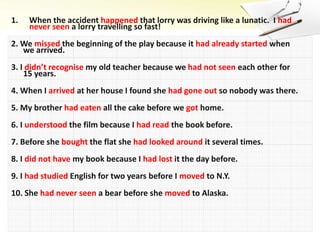
1. When the accident happened that lorry was driving like a lunatic. I had
never seen a lorry travelling so fast!
2. We missed the beginning of the play because it had already started when
we arrived.
3. I didn’t recognise my old teacher because we had not seen each other for
15 years.
4. When I arrived at her house I found she had gone out so nobody was there.
5. My brother had eaten all the cake before we got home.
6. I understood the film because I had read the book before.
7. Before she bought the flat she had looked around it several times.
8. I did not have my book because I had lost it the day before.
9. I had studied English for two years before I moved to N.Y.
10. She had never seen a bear before she moved to Alaska.
Home task:
Write an essay on the
topic,, Is it easy to be
young?’’
ex. 1 in writing on copy
with Past Perfect

Методическая разработка по английскому языку на тему: ,,Why is so hard to be a teenager. The problems of teenagers’’.

  • 3.
    1. Who areteenagers? 2. What are the most important problems of teens nowadays? 3. Who can help the young people in difficult situations? 4. Do you prefer to cope with your problems yourself or to complain to somebody?
  • 4.
    1. a 2. c 3.a 4. c 5. b 6. c 7. b 8. c 9. b 10. c 11. a
  • 5.
  • 7.
  • 8.
    Examples: You had studiedEnglish before you moved to New York. Had you studied English before you moved to New York? You had not studied English before you moved to New York. I had (not) (hadn’t) Past Participle You He / She / It We / You / They Had you P. Parti?
  • 9.
    by 6 o’clockyesterday – вчера к 6 часам by 9 a.m. yesterday – вчера к 9 утра before he came – до того, как он пришёл by that time – к тому времени after - после того, как by the end of the year – к концу года, etc.
  • 10.
    Глагол в формеPast Perfect выражает действие, которое завершилось до определенного момента или другого действия в прошлом. They had finished the work by 6 o'clock yesterday. — Они закончили работу вчера к 6 часам. Mary had got asleep before her mother came home.— Мэри уснула прежде, чем её мама пришла домой. Past Perfect образуется с помощью вспомогательного глагола had и III формы основного глагола. S had V3
  • 11.
    Обратите внимание! Past Perfectупотребляется для выражения предшествования. Если описываются действия, которые следовали друг за другом, употребляется Past Simple. Сравните: She did some shopping, came home and cooked dinner. — Она сделала покупки, пришла домой и приготовила ужин. Before she cooked dinner, she had done some shopping. — Прежде чем она приготовила ужин, она сделала покупки.
  • 12.
    (+) He hadread the book, before he saw the film. (?)Had he read the book before he saw the film? (-) He hadn’t read the book, before he saw the film. + ? - S had + V3. Had S + V3? S had not + V3.
  • 13.
    S had V3 Samhad painted the picture by 7 o’clock yesterday. Sam
  • 14.
    Roman had cookeddinner by 6 o’clock yesterday. Roman
  • 15.
    Take off Arrive Mrs. Evans Theplane had taken off before Mrs. Evans arrived to the airport.
  • 16.
    Sally Fall asleep Sally hadfallen asleep before her father came home.
  • 17.
    The students hadmade cakes by 9 p.m.
  • 18.
    I ... (tohave) breakfast before I went to school. He went to meet his friends after he ... (to do) his homework. By 8 o’clock the rain ... (to stop). Alice was late because she ... (to miss) the bus. She went to the post-office after she ... (to write) the letter. He ... (to work) at the factory before he entered the college. He got a bad mark for his test because he ... (to make) a lot of mistakes in it. I went to bed after I ... (to finish) reading the book. The child ... (to fall) asleep before the parents came home. They ... (to marry) before they bought this house.
  • 19.
    1. When theaccident ……. (happen) that lorry was driving like a lunatic. I …… (never see) a lorry travelling so fast! 2. We …… (miss) the beginning of the play because it ….. (already start) when we arrived. 3. I …… (not recognise) my old teacher because we.....(not see) each other for 15 years. 4. When I ……(arrive) at her house I found she ……. (go out) so nobody was there. 5. My brother ……. (eat) all the cake before we …….. (get) home. 6. I ……. (understand) the film because I ……. (read) the book before. 7. Before she …… (buy) the flat she …… (look around) it several times. 8. I …… (not have) my book because I……. (lose) it the day before. 9. I ……. (study) English for two years before I …… (move) to N.Y. 10. She ……. (never see) a bear before she …... (move) to Alaska.
  • 20.
    1. When theaccident happened that lorry was driving like a lunatic. I had never seen a lorry travelling so fast! 2. We missed the beginning of the play because it had already started when we arrived. 3. I didn’t recognise my old teacher because we had not seen each other for 15 years. 4. When I arrived at her house I found she had gone out so nobody was there. 5. My brother had eaten all the cake before we got home. 6. I understood the film because I had read the book before. 7. Before she bought the flat she had looked around it several times. 8. I did not have my book because I had lost it the day before. 9. I had studied English for two years before I moved to N.Y. 10. She had never seen a bear before she moved to Alaska.
  • 21.
    Home task: Write anessay on the topic,, Is it easy to be young?’’ ex. 1 in writing on copy with Past Perfect