SQL syntax
SQL Statements
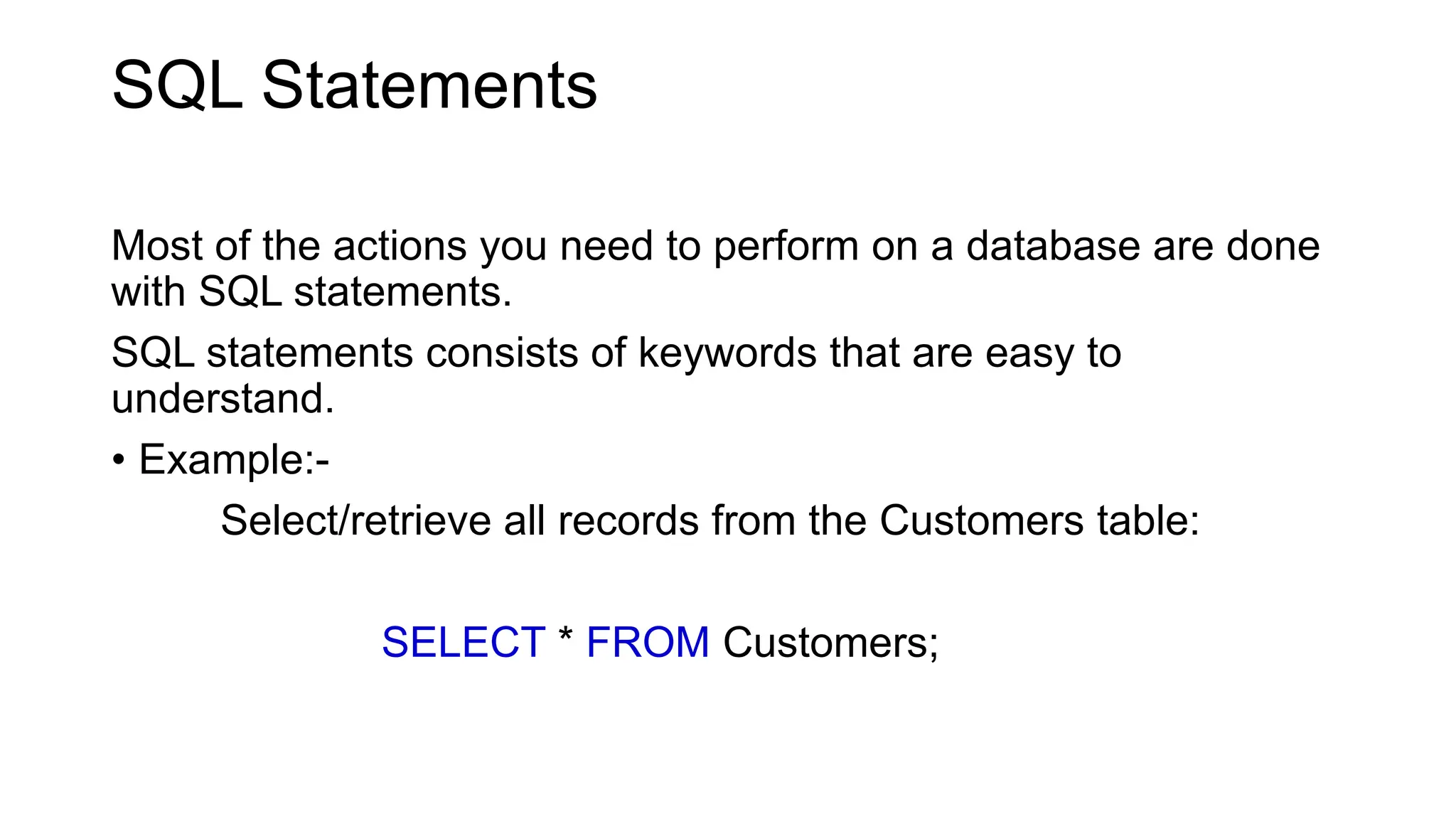
Most of the actions you need to perform on a database are done
with SQL statements.
SQL statements consists of keywords that are easy to
understand.
• Example:-Get your own SQL Server
Select/retrieve all records from the Customers table:
SELECT * FROM Customers;
Points to remember:-
• SQL keywords are NOT case sensitive: select is the same as SELECT
• Semicolon (;) is the standard way to separate each SQL statement in database
systems that allow more than one SQL statement to be executed at same time.
Most important SQL commands
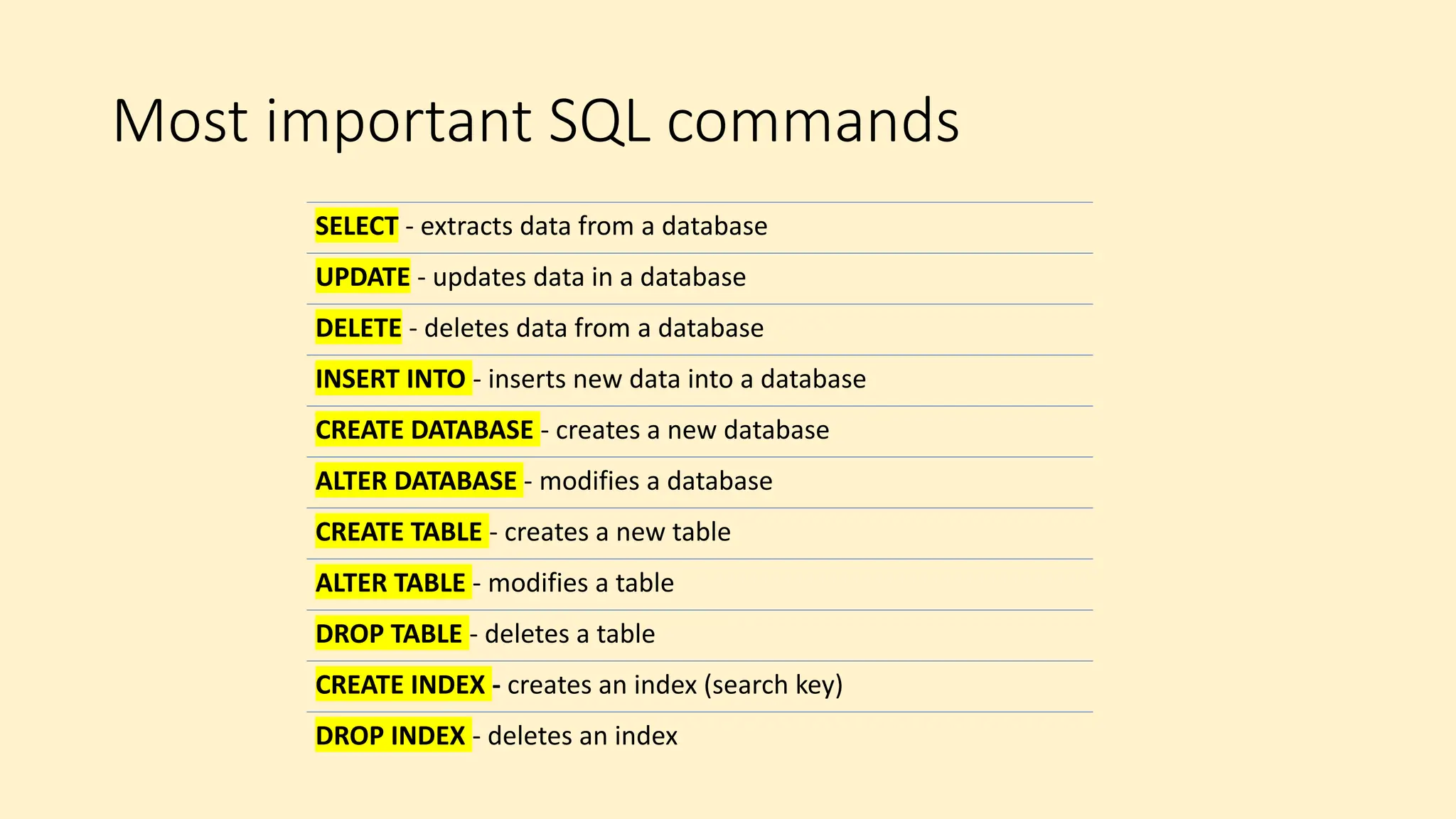
SELECT - extracts data from a database
UPDATE - updates data in a database
DELETE - deletes data from a database
INSERT INTO - inserts new data into a database
CREATE DATABASE - creates a new database
ALTER DATABASE - modifies a database
CREATE TABLE - creates a new table
ALTER TABLE - modifies a table
DROP TABLE - deletes a table
CREATE INDEX - creates an index (search key)
DROP INDEX - deletes an index
SQL syntax.pptx

SQL syntax.pptx

  • 1.
  • 2.
    SQL Statements Most ofthe actions you need to perform on a database are done with SQL statements. SQL statements consists of keywords that are easy to understand. • Example:-Get your own SQL Server Select/retrieve all records from the Customers table: SELECT * FROM Customers;
  • 3.
    Points to remember:- •SQL keywords are NOT case sensitive: select is the same as SELECT • Semicolon (;) is the standard way to separate each SQL statement in database systems that allow more than one SQL statement to be executed at same time.
  • 4.
    Most important SQLcommands SELECT - extracts data from a database UPDATE - updates data in a database DELETE - deletes data from a database INSERT INTO - inserts new data into a database CREATE DATABASE - creates a new database ALTER DATABASE - modifies a database CREATE TABLE - creates a new table ALTER TABLE - modifies a table DROP TABLE - deletes a table CREATE INDEX - creates an index (search key) DROP INDEX - deletes an index