SPLINTS IN
PERIODONTAL
THERAPY
SRI DHARSHINI.B
CRRI
TABLE OF CONTENTS
INTRODUCTION
OBJECTIVES
IDEAL REQUIREMENTS
CLASSIFICATION OF SPLINTS
PRINCIPLES
INDICATIONS
CONTRAINDICATIO
NS
ADVANTAGES
DISADVANTAGES
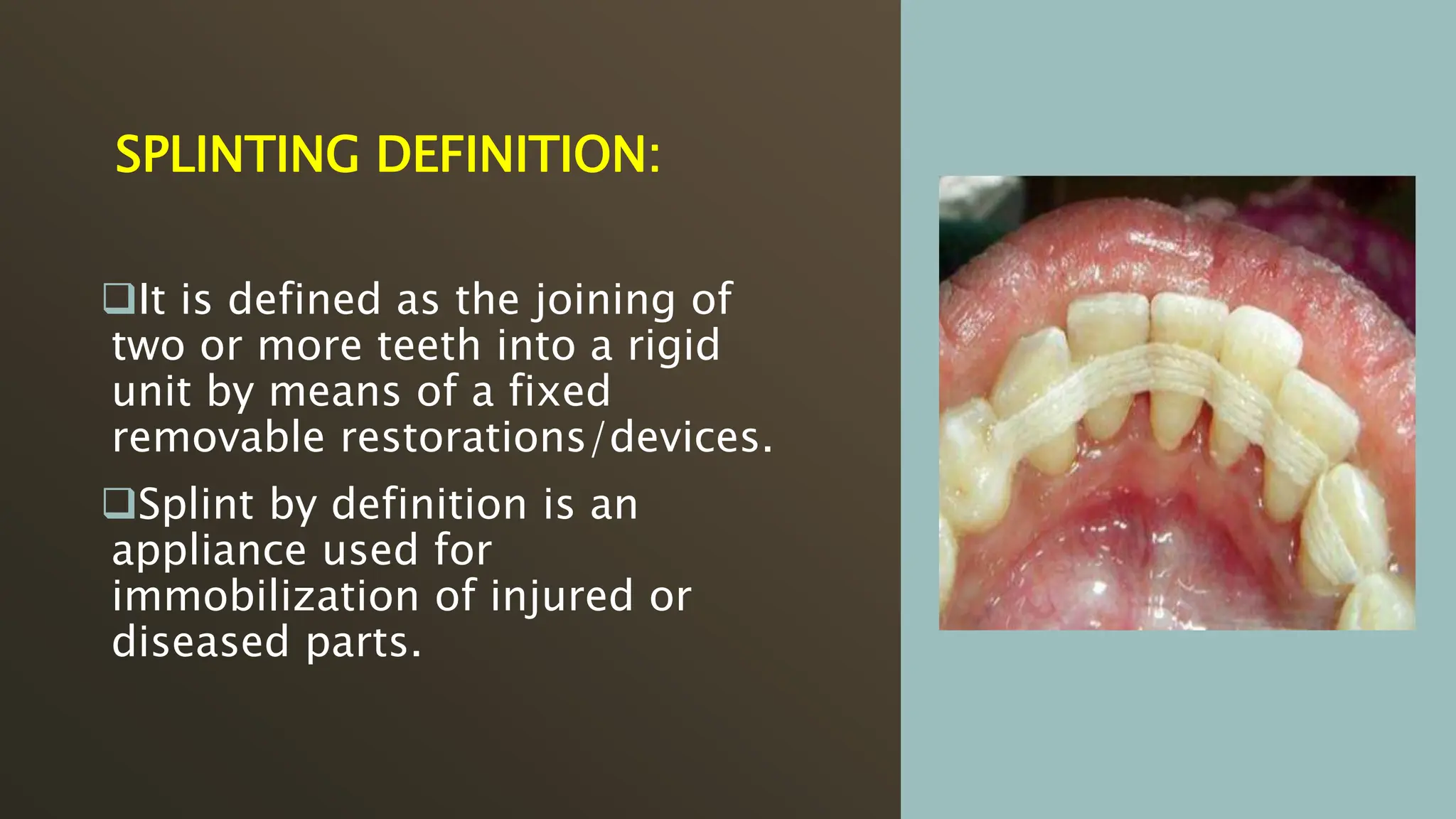
SPLINTING DEFINITION:
It is defined as the joining of
two or more teeth into a rigid
unit by means of a fixed
removable restorations/devices.
Splint by definition is an
appliance used for
immobilization of injured or
diseased parts.
OBJECTIVE
S
Provides rest
For redirection and
redistribution of forces
To preserve arch integrity
Restoration of functional
stability
To stabilize mobile teeth
during surgical, especially
regenerative therapy
To prevent supra-
eruption
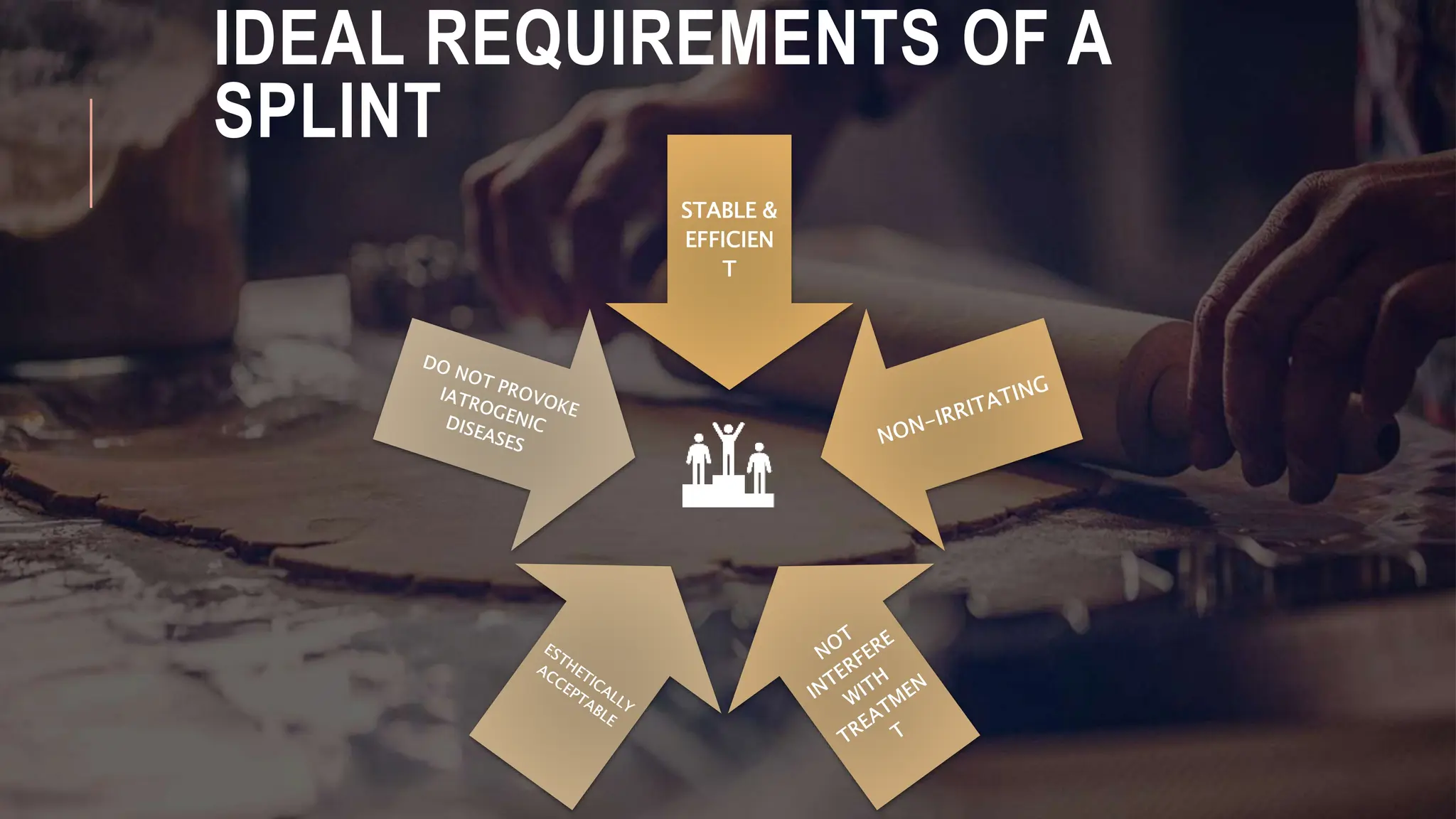
IDEAL REQUIREMENTS OF A
SPLINT
STABLE &
EFFICIEN
T
CLASSIFICATION OF SPLINTS
ACCORDING TO THE PERIOD OF STABILIZATION:
Temporary
Permanent
Provisional
ACCORDING TO THE TYPE OF MATERIAL:
Bonded, Composite resin button
Braided wire
A-splints
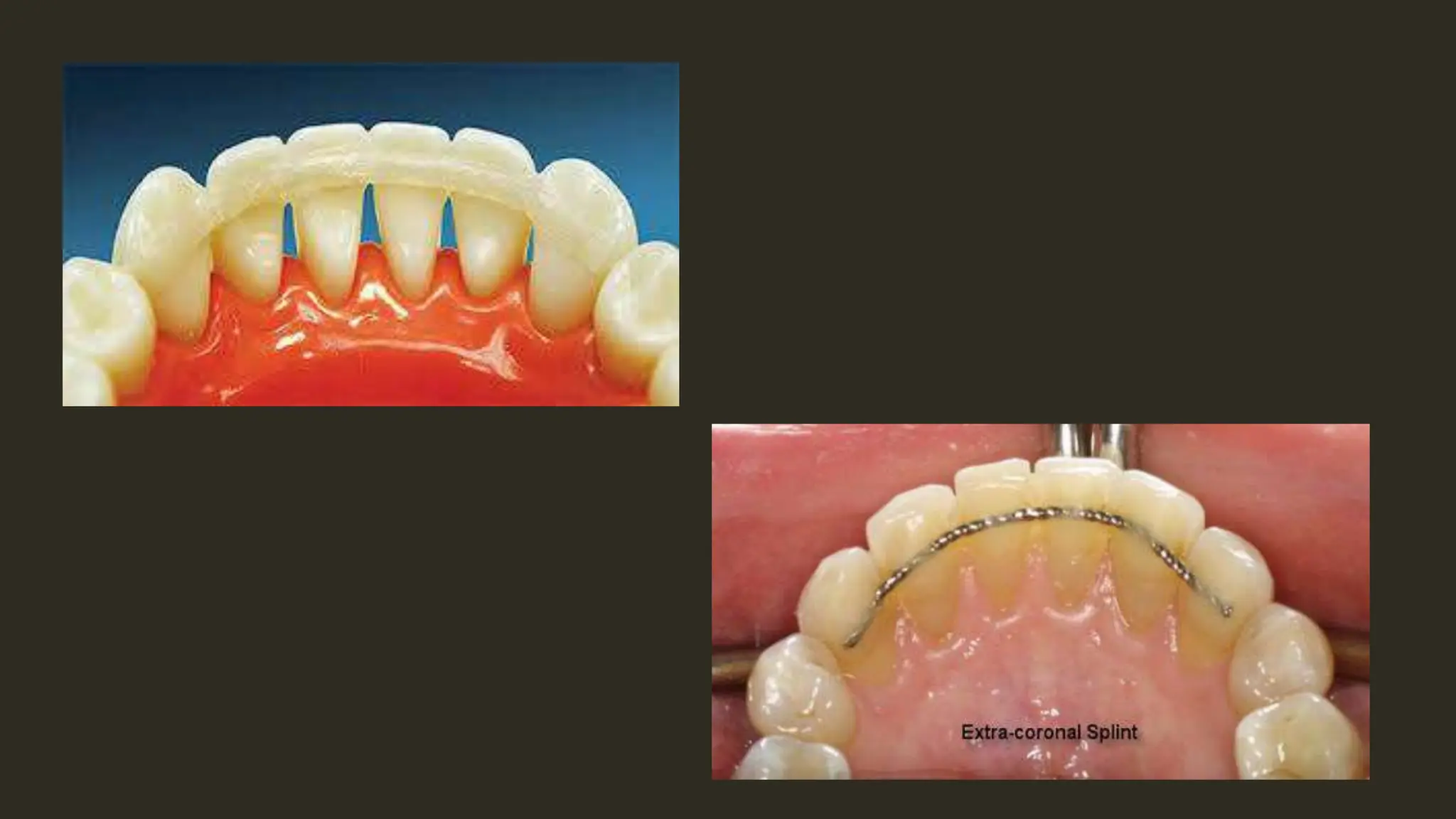
ACCORDING TO LOCATION ON THE TOOTH:
1.INTRA-CORONAL: 2.EXTRA-
CORONAL:
Composite resin with wire Tooth
bonded plastic
Inlays Night guard
Nylon wire Welded
VARIOUS COMMONLY USED SPLINTS:
1. Splints for Anterior teeth- a)Direct bonding system using acid etch
technique and a light cured resin
b)Intra-coronal wire and acrylic wire resin
splint
2. Splints for Posterior teeth- a)Intra-coronal amalgam wire splints
b)Bite-guards
c)Rigid occlusal splint
d)Composite splint
PRINCIPLES OF SPLINTING
1. Inclusion of sufficient number of healthy teeth
2. Splint around the arch
3. Coronoplasty may be performed to relieve traumatic
occlusion
4. The splint should be fabricated in such a way so as to
facilitate plaque control
5. Splint should be aesthetically acceptable and should
not interfere with occlusion
INDICATIONS
Moderate to advanced tooth
mobility which has not
responded to periodontal therapy
and occlusal adjustments
When it interferes with normal
masticatory function
Facilitates scaling and surgical
procedures
After orthodontic treatment
After acute dental trauma eg:
subluxation, avulsion etc…
CONTRAINDICATIONS
Moderate to severe tooth
mobility in the presence of
periodontal inflammation /
primary occlusal trauma
Insufficient no. of firm or
sufficiently firm teeth to stabilize
the mobile teeth
Prior occlusal adjustment has
not been done on teeth with
occlusal trauma
Poor oral hygiene
ADVANTAGES
May establish final stability and
comfort for patient with occlusal
trauma
Helpful to decrease mobility and
accelerate healing following
acute trauma to teeth
Allows remodelling of alveolar
bone and periodontal ligament
for orthodontically splinted teeth
Helpful in decreasing mobility
thereby favouring regenerative
therapy
Distributes occlusal forces over
a wide area
DISADVANTAGES
All the splints hamper patient’s
self care
Accumulation of plaque at the
splint margins can lead to further
periodontal breakdown in a
patient with already
compromised periodontium
Development of caries
Splints in periodontal therapy - dentistry.pptx

Splints in periodontal therapy - dentistry.pptx

  • 1.
  • 2.
    TABLE OF CONTENTS INTRODUCTION OBJECTIVES IDEALREQUIREMENTS CLASSIFICATION OF SPLINTS PRINCIPLES INDICATIONS CONTRAINDICATIO NS ADVANTAGES DISADVANTAGES
  • 3.
    SPLINTING DEFINITION: It isdefined as the joining of two or more teeth into a rigid unit by means of a fixed removable restorations/devices. Splint by definition is an appliance used for immobilization of injured or diseased parts.
  • 4.
    OBJECTIVE S Provides rest For redirectionand redistribution of forces To preserve arch integrity Restoration of functional stability To stabilize mobile teeth during surgical, especially regenerative therapy To prevent supra- eruption
  • 5.
    IDEAL REQUIREMENTS OFA SPLINT STABLE & EFFICIEN T
  • 6.
    CLASSIFICATION OF SPLINTS ACCORDINGTO THE PERIOD OF STABILIZATION: Temporary Permanent Provisional ACCORDING TO THE TYPE OF MATERIAL: Bonded, Composite resin button Braided wire A-splints ACCORDING TO LOCATION ON THE TOOTH: 1.INTRA-CORONAL: 2.EXTRA- CORONAL: Composite resin with wire Tooth bonded plastic Inlays Night guard Nylon wire Welded
  • 7.
    VARIOUS COMMONLY USEDSPLINTS: 1. Splints for Anterior teeth- a)Direct bonding system using acid etch technique and a light cured resin b)Intra-coronal wire and acrylic wire resin splint 2. Splints for Posterior teeth- a)Intra-coronal amalgam wire splints b)Bite-guards c)Rigid occlusal splint d)Composite splint
  • 8.
    PRINCIPLES OF SPLINTING 1.Inclusion of sufficient number of healthy teeth 2. Splint around the arch 3. Coronoplasty may be performed to relieve traumatic occlusion 4. The splint should be fabricated in such a way so as to facilitate plaque control 5. Splint should be aesthetically acceptable and should not interfere with occlusion
  • 9.
    INDICATIONS Moderate to advancedtooth mobility which has not responded to periodontal therapy and occlusal adjustments When it interferes with normal masticatory function Facilitates scaling and surgical procedures After orthodontic treatment After acute dental trauma eg: subluxation, avulsion etc… CONTRAINDICATIONS Moderate to severe tooth mobility in the presence of periodontal inflammation / primary occlusal trauma Insufficient no. of firm or sufficiently firm teeth to stabilize the mobile teeth Prior occlusal adjustment has not been done on teeth with occlusal trauma Poor oral hygiene
  • 10.
    ADVANTAGES May establish finalstability and comfort for patient with occlusal trauma Helpful to decrease mobility and accelerate healing following acute trauma to teeth Allows remodelling of alveolar bone and periodontal ligament for orthodontically splinted teeth Helpful in decreasing mobility thereby favouring regenerative therapy Distributes occlusal forces over a wide area DISADVANTAGES All the splints hamper patient’s self care Accumulation of plaque at the splint margins can lead to further periodontal breakdown in a patient with already compromised periodontium Development of caries