Abhishek jha
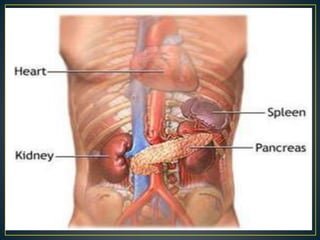
• 2nd lymphoid organ ,Oval in shape, 7 -14cm in length
and 150 -200 grams in weight.
• Lies just beneath the left half of the diaphragm
close to 9 ,10 and 11 ribs and on the left side of
abdomen.
• Pleural cavity separates spleen and diaphragm from
the rib.
• Has Diaphragmatic ,visceral and colic surface and
anterior ,posterior and inferior border.
Diaphragmatic surface or phrenic
surface :
• convex, smooth, and is directed upward,
backward, and to the left, except at its
upper end, where it is directed slightly to
the middle.
• It is under surface of the diaphragm, which
separates it from the ninth, tenth, and
eleventh ribs of the left side, and the
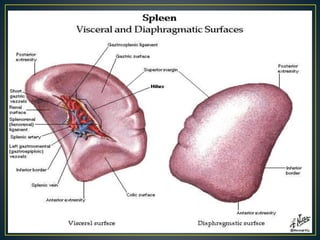
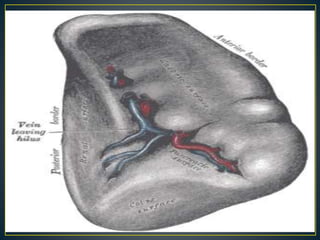
• visceral surface : divided by a ridge into two regions:
an anterior or gastric and a posterior or renal.
• The visceral surface is related to the left kidney,
stomach and splenic flexure of colon.
• Each surface is covered with visceral peritoneum,
which reflected as double layer onto the left kidney as
splenicorenal ligament.
• anteriorly border separated the surface from concave
visceral surface where hilus found ,Hilus is part where
vessels enter and leave the organ.
• Spleen forms parts of the reticuloendotelial
system.
• Main function is hematopoiesis in fetal life
and in adults with reutilization of iron from
hemoglobin of destroyed red blood cells.
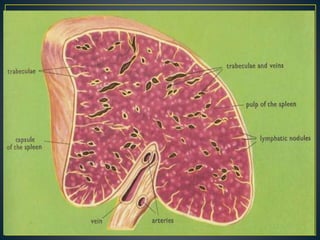
• Its has red and the white pulp, which are
separated by the marginal sinus.
• Red pulp composed sinuses, splenic
cord and marginal zone and main
function to filter red blood cells and
reserve monocytes.
• White pulp is composed of malpighian
corpuscles
and help in active immune response.
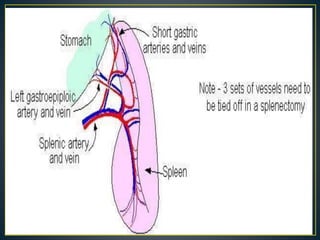
• Spleen is supplied with blood by splenic artery
and blood drains from splenic vein.
• Splenic artery is branch of celiac artery and
follows pancreas, short gastric artery and left
gastroepiploic to stomach.
• Splenic vein joins with superior mesenteric vein,
to form the hepatic portal vein and follows to
the pancreas.
• Spleen is undercover of thoracic cage and
is not palpable
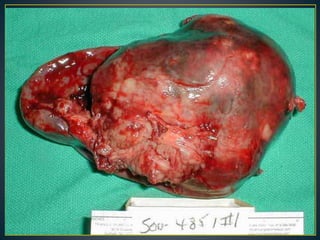
• Splenomegaly : enlarged spleen due to
cancer, specifically blood-based leukemia.
• Asplenia : where the spleen is not
present.
• Hyposplenia: reduce splenic functions..
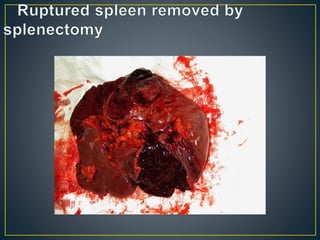
• Spleen is particularly liable to rupture in
falls and automobile accidents and
bleeding from it is difficult to control and
Splenectomy should be done.
• A splenectomy is a surgical
procedure that partially or completely
removes the spleen.
Spleen anatomy
Spleen anatomy

Spleen anatomy

  • 1.
  • 3.
    • 2nd lymphoidorgan ,Oval in shape, 7 -14cm in length and 150 -200 grams in weight. • Lies just beneath the left half of the diaphragm close to 9 ,10 and 11 ribs and on the left side of abdomen. • Pleural cavity separates spleen and diaphragm from the rib. • Has Diaphragmatic ,visceral and colic surface and anterior ,posterior and inferior border.
  • 5.
    Diaphragmatic surface orphrenic surface : • convex, smooth, and is directed upward, backward, and to the left, except at its upper end, where it is directed slightly to the middle. • It is under surface of the diaphragm, which separates it from the ninth, tenth, and eleventh ribs of the left side, and the
  • 7.
    • visceral surface: divided by a ridge into two regions: an anterior or gastric and a posterior or renal. • The visceral surface is related to the left kidney, stomach and splenic flexure of colon. • Each surface is covered with visceral peritoneum, which reflected as double layer onto the left kidney as splenicorenal ligament. • anteriorly border separated the surface from concave visceral surface where hilus found ,Hilus is part where vessels enter and leave the organ.
  • 8.
    • Spleen formsparts of the reticuloendotelial system. • Main function is hematopoiesis in fetal life and in adults with reutilization of iron from hemoglobin of destroyed red blood cells. • Its has red and the white pulp, which are separated by the marginal sinus.
  • 10.
    • Red pulpcomposed sinuses, splenic cord and marginal zone and main function to filter red blood cells and reserve monocytes. • White pulp is composed of malpighian corpuscles and help in active immune response.
  • 11.
    • Spleen issupplied with blood by splenic artery and blood drains from splenic vein. • Splenic artery is branch of celiac artery and follows pancreas, short gastric artery and left gastroepiploic to stomach. • Splenic vein joins with superior mesenteric vein, to form the hepatic portal vein and follows to the pancreas.
  • 13.
    • Spleen isundercover of thoracic cage and is not palpable • Splenomegaly : enlarged spleen due to cancer, specifically blood-based leukemia. • Asplenia : where the spleen is not present. • Hyposplenia: reduce splenic functions..
  • 15.
    • Spleen isparticularly liable to rupture in falls and automobile accidents and bleeding from it is difficult to control and Splenectomy should be done. • A splenectomy is a surgical procedure that partially or completely removes the spleen.