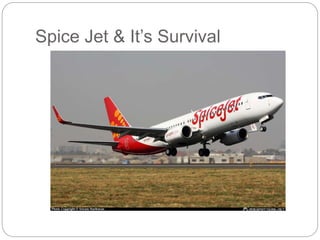
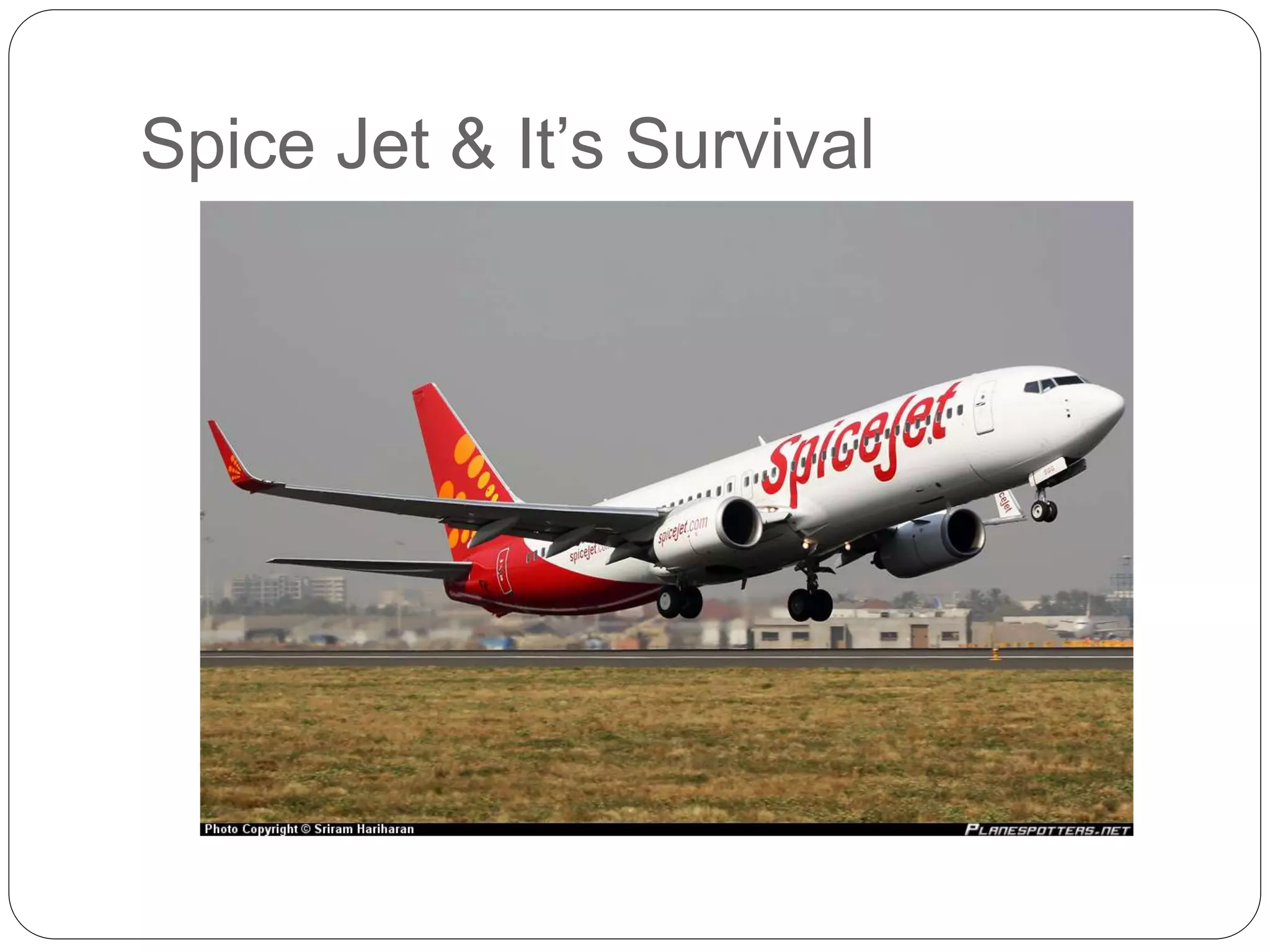
Spice Jet & It’s Survival
Indian Aviation
ď‚— 1932- Tata Airlines
ď‚— 1948-Air India
ď‚— 1953- Nationalization
ď‚— 1986-Private Airlines permitted as a Air Taxi
ď‚— 1991-Open sky policy
ď‚— 1994- Private Careers permitted to operate
scheduled services
ď‚— 2003-LCC
Spice Jet
ď‚— Spice jet is a low-cost airline based in New Delhi.
ď‚— It began service in 23 May 2005.
ď‚— 340 flights; 48 Destinations
ď‚— Fleet size :53 aircraft
 To become India’s most preferred low cost airline,
by providing the lowest air fares and the highest
consumer value to the price sensitive consumers
of the country.”
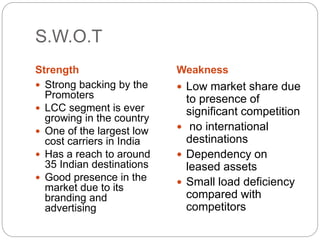
S.W.O.T
Strength Weakness
ď‚— Strong backing by the
Promoters
ď‚— LCC segment is ever
growing in the country
ď‚— One of the largest low
cost carriers in India
ď‚— Has a reach to around
35 Indian destinations
ď‚— Good presence in the
market due to its
branding and
advertising
ď‚— Low market share due
to presence of
significant competition
ď‚— no international
destinations
ď‚— Dependency on
leased assets
ď‚— Small load deficiency
compared with
competitors
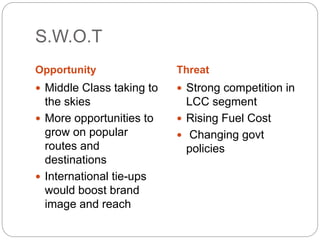
S.W.O.T
Opportunity Threat
ď‚— Middle Class taking to
the skies
ď‚— More opportunities to
grow on popular
routes and
destinations
ď‚— International tie-ups
would boost brand
image and reach
ď‚— Strong competition in
LCC segment
ď‚— Rising Fuel Cost
ď‚— Changing govt
policies
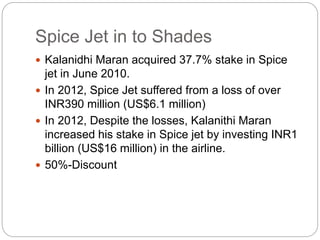
Spice Jet in to Shades
ď‚— Kalanidhi Maran acquired 37.7% stake in Spice
jet in June 2010.
ď‚— In 2012, Spice Jet suffered from a loss of over
INR390 million (US$6.1 million)
ď‚— In 2012, Despite the losses, Kalanithi Maran
increased his stake in Spice jet by investing INR1
billion (US$16 million) in the airline.
ď‚— 50%-Discount
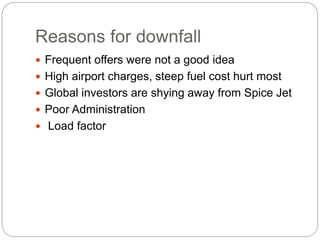
Reasons for downfall
ď‚— Frequent offers were not a good idea
ď‚— High airport charges, steep fuel cost hurt most
ď‚— Global investors are shying away from Spice Jet
ď‚— Poor Administration
ď‚— Load factor
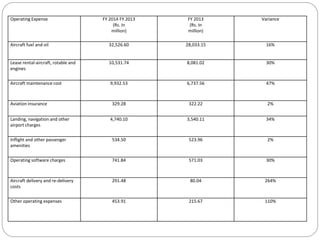
Operating Expense FY 2014 FY 2013
(Rs. In
million)
FY 2013
(Rs. In
million)
Variance
Aircraft fuel and oil 32,526.60 28,033.15 16%
Lease rental-aircraft, rotable and
engines
10,531.74 8,081.02 30%
Aircraft maintenance cost 9,932.53 6,737.56 47%
Aviation insurance 329.28 322.22 2%
Landing, navigation and other
airport charges
4,740.10 3,540.11 34%
Inflight and other passenger
amenities
534.50 523.96 2%
Operating software charges 741.84 571.03 30%
Aircraft delivery and re-delivery
costs
291.48 80.04 264%
Other operating expenses 453.91 215.67 110%
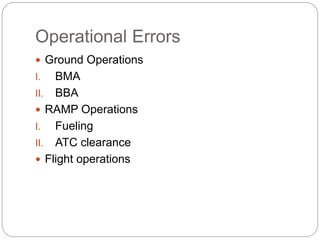
Operational Errors
ď‚— Ground Operations
I. BMA
II. BBA
ď‚— RAMP Operations
I. Fueling
II. ATC clearance
ď‚— Flight operations
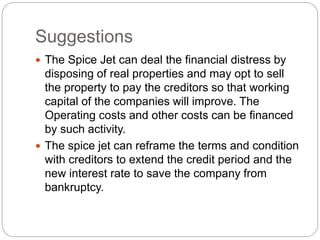
Suggestions
ď‚— The Spice Jet can deal the financial distress by
disposing of real properties and may opt to sell
the property to pay the creditors so that working
capital of the companies will improve. The
Operating costs and other costs can be financed
by such activity.
ď‚— The spice jet can reframe the terms and condition
with creditors to extend the credit period and the
new interest rate to save the company from
bankruptcy.
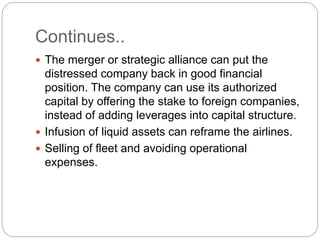
Continues..
ď‚— The merger or strategic alliance can put the
distressed company back in good financial
position. The company can use its authorized
capital by offering the stake to foreign companies,
instead of adding leverages into capital structure.
ď‚— Infusion of liquid assets can reframe the airlines.
ď‚— Selling of fleet and avoiding operational
expenses.
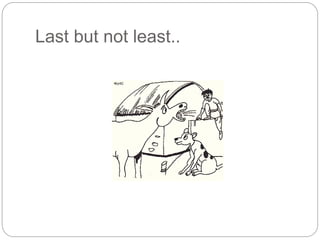
Last but not least..

SpiceJet Case

  • 1.
    Spice Jet &It’s Survival
  • 2.
    Indian Aviation ď‚— 1932-Tata Airlines ď‚— 1948-Air India ď‚— 1953- Nationalization ď‚— 1986-Private Airlines permitted as a Air Taxi ď‚— 1991-Open sky policy ď‚— 1994- Private Careers permitted to operate scheduled services ď‚— 2003-LCC
  • 3.
    Spice Jet  Spicejet is a low-cost airline based in New Delhi.  It began service in 23 May 2005.  340 flights; 48 Destinations  Fleet size :53 aircraft  To become India’s most preferred low cost airline, by providing the lowest air fares and the highest consumer value to the price sensitive consumers of the country.”
  • 4.
    S.W.O.T Strength Weakness ď‚— Strongbacking by the Promoters ď‚— LCC segment is ever growing in the country ď‚— One of the largest low cost carriers in India ď‚— Has a reach to around 35 Indian destinations ď‚— Good presence in the market due to its branding and advertising ď‚— Low market share due to presence of significant competition ď‚— no international destinations ď‚— Dependency on leased assets ď‚— Small load deficiency compared with competitors
  • 5.
    S.W.O.T Opportunity Threat ď‚— MiddleClass taking to the skies ď‚— More opportunities to grow on popular routes and destinations ď‚— International tie-ups would boost brand image and reach ď‚— Strong competition in LCC segment ď‚— Rising Fuel Cost ď‚— Changing govt policies
  • 6.
    Spice Jet into Shades ď‚— Kalanidhi Maran acquired 37.7% stake in Spice jet in June 2010. ď‚— In 2012, Spice Jet suffered from a loss of over INR390 million (US$6.1 million) ď‚— In 2012, Despite the losses, Kalanithi Maran increased his stake in Spice jet by investing INR1 billion (US$16 million) in the airline. ď‚— 50%-Discount
  • 7.
    Reasons for downfall ď‚—Frequent offers were not a good idea ď‚— High airport charges, steep fuel cost hurt most ď‚— Global investors are shying away from Spice Jet ď‚— Poor Administration ď‚— Load factor
  • 8.
    Operating Expense FY2014 FY 2013 (Rs. In million) FY 2013 (Rs. In million) Variance Aircraft fuel and oil 32,526.60 28,033.15 16% Lease rental-aircraft, rotable and engines 10,531.74 8,081.02 30% Aircraft maintenance cost 9,932.53 6,737.56 47% Aviation insurance 329.28 322.22 2% Landing, navigation and other airport charges 4,740.10 3,540.11 34% Inflight and other passenger amenities 534.50 523.96 2% Operating software charges 741.84 571.03 30% Aircraft delivery and re-delivery costs 291.48 80.04 264% Other operating expenses 453.91 215.67 110%
  • 9.
    Operational Errors ď‚— GroundOperations I. BMA II. BBA ď‚— RAMP Operations I. Fueling II. ATC clearance ď‚— Flight operations
  • 10.
    Suggestions ď‚— The SpiceJet can deal the financial distress by disposing of real properties and may opt to sell the property to pay the creditors so that working capital of the companies will improve. The Operating costs and other costs can be financed by such activity. ď‚— The spice jet can reframe the terms and condition with creditors to extend the credit period and the new interest rate to save the company from bankruptcy.
  • 11.
    Continues.. ď‚— The mergeror strategic alliance can put the distressed company back in good financial position. The company can use its authorized capital by offering the stake to foreign companies, instead of adding leverages into capital structure. ď‚— Infusion of liquid assets can reframe the airlines. ď‚— Selling of fleet and avoiding operational expenses.
  • 12.
    Last but notleast..