THE
JOY OF
FLYING
THE JOURNEY BEGINS
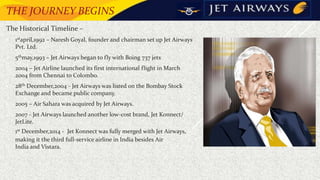
The Historical Timeline –
 1stapril,1992 – Naresh Goyal, founder and chairman set up Jet Airways
Pvt. Ltd.
• 5thmay,1993 – Jet Airways began to fly with Boing 737 jets
• 2004 – Jet Airline launched its first international flight in March
2004 from Chennai to Colombo.
• 28th December,2004 - Jet Airways was listed on the Bombay Stock
Exchange and became public company.
• 2005 – Air Sahara was acquired by Jet Airways.
• 2007 - Jet Airways launched another low-cost brand, Jet Konnect/
JetLite.
• 1st December,2014 - Jet Konnect was fully merged with Jet Airways,
making it the third full-service airline in India besides Air
India and Vistara.
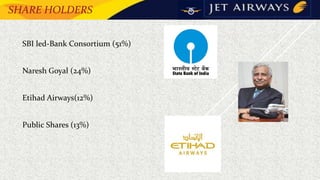
SHARE HOLDERS
• SBI led-Bank Consortium (51%)
• Naresh Goyal (24%)
• Etihad Airways(12%)
• Public Shares (13%)
MARKET STRATEGY
• Jet Airways was the biggest privately owned airline of India over 70 destination worldwide including 47
in India. Jet Airways' strategy in the 1990s was to position itself differently from Indian Airlines, which
was then the dominant player in Indian aviation.
 At that time Jet Airways was the best Full-Service Carrier; and provides meals catered by Taj SATS, a 5
Star Airline catering service.
 In Oct. 2008, Jet Airways formed an alliance with Kingfisher Airlines for collaboration on frequent-
flyer program and sharing crew and ground handling equipment.
 Jet Privilege Cards were provided to the frequent fliers, which gave them additional benefits.
 Main competitors - British airways, south west airlines (International)
Indian Airlines, King Fisher Airlines, Indigo, Go Air (National)
MARKET SCENARIO NOW
•
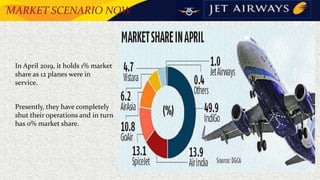
• In April 2019, it holds 1% market
share as 12 planes were in
service.
• Presently, they have completely
shut their operations and in turn
has 0% market share.
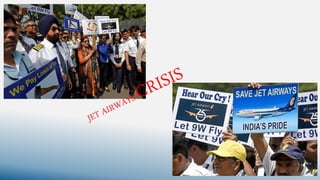
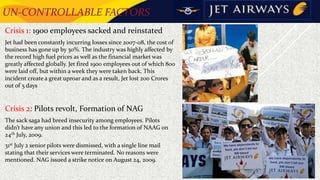
Crisis 1: 1900 employees sacked and reinstated
Jet had been constantly incurring losses since 2007-08, the cost of
business has gone up by 30%. The industry was highly affected by
the record high fuel prices as well as the financial market was
greatly affected globally. Jet fired 1900 employees out of which 800
were laid off, but within a week they were taken back. This
incident create a great uproar and as a result, Jet lost 200 Crores
out of 5 days
Crisis 2: Pilots revolt, Formation of NAG
The sack saga had breed insecurity among employees. Pilots
didn’t have any union and this led to the formation of NAAG on
24th July, 2009.
31st July 2 senior pilots were dismissed, with a single line mail
stating that their services were terminated. No reasons were
mentioned. NAG issued a strike notice on August 24, 2009.
UN-CONTROLLABLE FACTORS
DOWNFALL
5 Things went WRONG
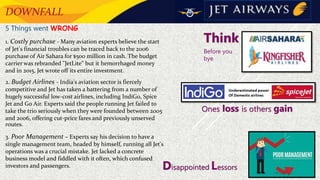
1. Costly purchase - Many aviation experts believe the start
of Jet's financial troubles can be traced back to the 2006
purchase of Air Sahara for $500 million in cash. The budget
carrier was rebranded "JetLite" but it hemorrhaged money
and in 2015, Jet wrote off its entire investment.
2. Budget Airlines - India's aviation sector is fiercely
competitive and Jet has taken a battering from a number of
hugely successful low-cost airlines, including IndiGo, Spice
Jet and Go Air. Experts said the people running Jet failed to
take the trio seriously when they were founded between 2005
and 2006, offering cut-price fares and previously unserved
routes.
3. Poor Management – Experts say his decision to have a
single management team, headed by himself, running all Jet's
operations was a crucial mistake. Jet lacked a concrete
business model and fiddled with it often, which confused
investors and passengers.
Think
Before you
bye
Ones loss is others gain
Disappointed Lessors
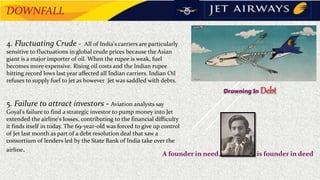
4. Fluctuating Crude - All of India's carriers are particularly
sensitive to fluctuations in global crude prices because the Asian
giant is a major importer of oil. When the rupee is weak, fuel
becomes more expensive. Rising oil costs and the Indian rupee
hitting record lows last year affected all Indian carriers. Indian Oil
refuses to supply fuel to jet as however Jet was saddled with debts.
5. Failure to attract investors - Aviation analysts say
Goyal's failure to find a strategic investor to pump money into Jet
extended the airline's losses, contributing to the financial difficulty
it finds itself in today. The 69-year-old was forced to give up control
of Jet last month as part of a debt resolution deal that saw a
consortium of lenders led by the State Bank of India take over the
airline.
A founder in need, is founder in deed
Drowning In Debt
DOWNFALL
EFFECTS
• Tentative rise in the fail of all other Air Carriers: Every low cost carriers have increased
their price
• Huge jobless: (approx. 22K people lost their jobs)
• Even ventured companies suffered loss: Investors were not able to claim their investment.
• Risk Premiums: The company was not able to pay the EMI of leased planes.
• Could not find the investors
CONCLUSION
Not only Full-Service Carriers but also the Cheap-Service Carriers are
experiencing problems because the Aviation Industry is prone to:-
High maintenance cost at ground and airline
High Ticket Price due to weak economy
Inflation in Aviation Fuel
Tough competition from International Players
Heavy Debts
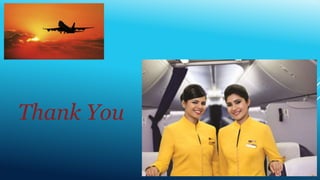
Thank You

Jet airways 2

  • 1.
  • 2.
    THE JOURNEY BEGINS TheHistorical Timeline –  1stapril,1992 – Naresh Goyal, founder and chairman set up Jet Airways Pvt. Ltd. • 5thmay,1993 – Jet Airways began to fly with Boing 737 jets • 2004 – Jet Airline launched its first international flight in March 2004 from Chennai to Colombo. • 28th December,2004 - Jet Airways was listed on the Bombay Stock Exchange and became public company. • 2005 – Air Sahara was acquired by Jet Airways. • 2007 - Jet Airways launched another low-cost brand, Jet Konnect/ JetLite. • 1st December,2014 - Jet Konnect was fully merged with Jet Airways, making it the third full-service airline in India besides Air India and Vistara.
  • 3.
    SHARE HOLDERS • SBIled-Bank Consortium (51%) • Naresh Goyal (24%) • Etihad Airways(12%) • Public Shares (13%)
  • 4.
    MARKET STRATEGY • JetAirways was the biggest privately owned airline of India over 70 destination worldwide including 47 in India. Jet Airways' strategy in the 1990s was to position itself differently from Indian Airlines, which was then the dominant player in Indian aviation.  At that time Jet Airways was the best Full-Service Carrier; and provides meals catered by Taj SATS, a 5 Star Airline catering service.  In Oct. 2008, Jet Airways formed an alliance with Kingfisher Airlines for collaboration on frequent- flyer program and sharing crew and ground handling equipment.  Jet Privilege Cards were provided to the frequent fliers, which gave them additional benefits.  Main competitors - British airways, south west airlines (International) Indian Airlines, King Fisher Airlines, Indigo, Go Air (National)
  • 5.
    MARKET SCENARIO NOW • •In April 2019, it holds 1% market share as 12 planes were in service. • Presently, they have completely shut their operations and in turn has 0% market share.
  • 7.
    Crisis 1: 1900employees sacked and reinstated Jet had been constantly incurring losses since 2007-08, the cost of business has gone up by 30%. The industry was highly affected by the record high fuel prices as well as the financial market was greatly affected globally. Jet fired 1900 employees out of which 800 were laid off, but within a week they were taken back. This incident create a great uproar and as a result, Jet lost 200 Crores out of 5 days Crisis 2: Pilots revolt, Formation of NAG The sack saga had breed insecurity among employees. Pilots didn’t have any union and this led to the formation of NAAG on 24th July, 2009. 31st July 2 senior pilots were dismissed, with a single line mail stating that their services were terminated. No reasons were mentioned. NAG issued a strike notice on August 24, 2009. UN-CONTROLLABLE FACTORS
  • 8.
    DOWNFALL 5 Things wentWRONG 1. Costly purchase - Many aviation experts believe the start of Jet's financial troubles can be traced back to the 2006 purchase of Air Sahara for $500 million in cash. The budget carrier was rebranded "JetLite" but it hemorrhaged money and in 2015, Jet wrote off its entire investment. 2. Budget Airlines - India's aviation sector is fiercely competitive and Jet has taken a battering from a number of hugely successful low-cost airlines, including IndiGo, Spice Jet and Go Air. Experts said the people running Jet failed to take the trio seriously when they were founded between 2005 and 2006, offering cut-price fares and previously unserved routes. 3. Poor Management – Experts say his decision to have a single management team, headed by himself, running all Jet's operations was a crucial mistake. Jet lacked a concrete business model and fiddled with it often, which confused investors and passengers. Think Before you bye Ones loss is others gain Disappointed Lessors
  • 9.
    4. Fluctuating Crude- All of India's carriers are particularly sensitive to fluctuations in global crude prices because the Asian giant is a major importer of oil. When the rupee is weak, fuel becomes more expensive. Rising oil costs and the Indian rupee hitting record lows last year affected all Indian carriers. Indian Oil refuses to supply fuel to jet as however Jet was saddled with debts. 5. Failure to attract investors - Aviation analysts say Goyal's failure to find a strategic investor to pump money into Jet extended the airline's losses, contributing to the financial difficulty it finds itself in today. The 69-year-old was forced to give up control of Jet last month as part of a debt resolution deal that saw a consortium of lenders led by the State Bank of India take over the airline. A founder in need, is founder in deed Drowning In Debt DOWNFALL
  • 10.
    EFFECTS • Tentative risein the fail of all other Air Carriers: Every low cost carriers have increased their price • Huge jobless: (approx. 22K people lost their jobs) • Even ventured companies suffered loss: Investors were not able to claim their investment. • Risk Premiums: The company was not able to pay the EMI of leased planes. • Could not find the investors
  • 11.
    CONCLUSION Not only Full-ServiceCarriers but also the Cheap-Service Carriers are experiencing problems because the Aviation Industry is prone to:- High maintenance cost at ground and airline High Ticket Price due to weak economy Inflation in Aviation Fuel Tough competition from International Players Heavy Debts
  • 12.