Tahir Shahzad Mphil Botany
THE SPECIES PROBLEM
– “No definition of species has yet satisfied all
naturalists; yet every naturalist knows vaguely
what he means when he speaks of species”
– The above statement of Darwin probably best illustrates the state of
perplexity that exists till today concerning the nature of species
WHAT IS SPECIES?
– Species concept is one of the most fundamental notions in biology
yet most complex and contentious of all
– The concept has been debated vigourously, nonetheless biologists
are far from reaching a concensus
– Many of the existing species concept are based on different
biological properties for example
1. Biological species Concept
2. Morphological species Concept
3. Genetic species Concept
4. Ecological species Concept
5. Phylogenetic species Concept
BIOLOGICAL SPECIES
CONCEPT
groups of actually or potentially interbreeding
natural populations which are reproductively
isolated from other such groups“
The definition of a species that is accepted as the Biological
species concept was founded by Ernst Mayr (1942)
– If individuals of two populations are able to breed this
indicates they belong to same species
– In case they fail to breed, they belong to different species
– Individual members possess some genetic, ethological or
ecological isolating mechanism that prevents
interbreeding with members of different species
– The BSC is greatly accepted amongst vertebrate
zoologists & entomologists
– the BSC is less widely used amongst botanists.
– It cant be applied to species that reproduce asexually
– The Biological species concept is also questionable in
those land plants that primarily self-pollinate.
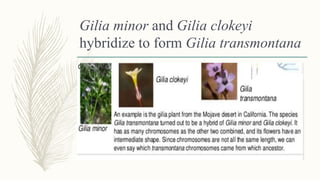
Gilia minor and Gilia clokeyi
hybridize to form Gilia transmontana
MORPHOLOGICAL SPECIES
CONCEPT
– The MSC classifies organisms into species based on their
morphology.
A species is a set of individuals with morphological
features in common
– Morphology is how an individual looks.
– It is their physical features and anatomical parts.
– When Carl Linnaeus first came up with his binomial
nomenclature taxonomy, all individuals were grouped by
morphology. Therefore, the first concept of the term
"species" was based on the morphology.
– Individuals in the same species are similar to one
another in morphology.
– Individuals in different species are different in
morphology.
– One problem with the MSC is that it is difficult to say what
differences in morphology are important for distinguishing species
– Many different species look the same
– POLYMORPHISM: significant morphological differences
between members of same species
– Males and females of sexually dimorphic species may be very
different from each other
– Cryptic species
For Example:
– the plant hydrangea may have pink "flowers" — they're actually
modified leaves — or blue "flowers." But that doesn't mean that
we should classify the two forms as different species. In fact, you
could cause a blue-"flowered" plant to become a pink-"flowered"
plant just by changing the pH of the soil and the amount of
aluminum taken up by the plant. the plant hydrangea may have
pink "flowers"
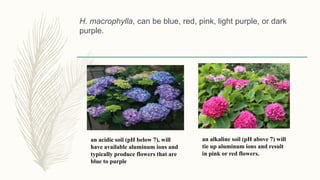
H. macrophylla, can be blue, red, pink, light purple, or dark
purple.
an acidic soil (pH below 7), will
have available aluminum ions and
typically produce flowers that are
blue to purple
an alkaline soil (pH above 7) will
tie up aluminum ions and result
in pink or red flowers.
GENETIC SPECIES CONCEPT
 A group of genetically compatible
interbreeding natural populations that is
genetically isolated from other such groups
It is one of the oldest concept proposed by Bateson and later
rehashed by Dobzhansky , Baker and Bicham
– The primary feature of genetic species concept is genetic isolation
– GSC uses genetic data especially DNA sequence data from
mitochondrial and nuclear genome to identify species
– At the genetic level, one talks of a gene pool: the set of genes that
are contained within an interbreeding population. Thus all members
of a species contribute to/are part of a common gene pool
– However, in the real world, it is time-consuming and expensive to
make the observations of organisms in their real habitat that would
allow us to say with confidence that such-and-such a set of
organisms really is a species
ECOLOGICAL SPECIES CONCEPT
– a group of phenetically similar organisms that
occupy or adapt to a same ecological niche
– Two species may be similar in appearance but
distinguishable based on
– What they eat?
– Where they live?
PHYLOGENETIC SPECIES
CONCEPT
"a diagnosable cluster of individuals within
which there is a parental pattern of ancestry
and escent, beyond which there is not, and
which exhibits a pattern of phylogenetic
ancestry and descent among units of like kind"
(Eldredge and Cracraft 1980:92).
– This concept can be applied to any population but there are disadvantages too
– Phylogenies are currently available for only a tiny subset of population on tree
of life
– Would probably lead to recognition of many more species than either of other
species concept

Species problem

  • 1.
  • 2.
    THE SPECIES PROBLEM –“No definition of species has yet satisfied all naturalists; yet every naturalist knows vaguely what he means when he speaks of species” – The above statement of Darwin probably best illustrates the state of perplexity that exists till today concerning the nature of species
  • 3.
    WHAT IS SPECIES? –Species concept is one of the most fundamental notions in biology yet most complex and contentious of all – The concept has been debated vigourously, nonetheless biologists are far from reaching a concensus – Many of the existing species concept are based on different biological properties for example 1. Biological species Concept 2. Morphological species Concept 3. Genetic species Concept 4. Ecological species Concept 5. Phylogenetic species Concept
  • 4.
    BIOLOGICAL SPECIES CONCEPT groups ofactually or potentially interbreeding natural populations which are reproductively isolated from other such groups“ The definition of a species that is accepted as the Biological species concept was founded by Ernst Mayr (1942)
  • 5.
    – If individualsof two populations are able to breed this indicates they belong to same species – In case they fail to breed, they belong to different species – Individual members possess some genetic, ethological or ecological isolating mechanism that prevents interbreeding with members of different species
  • 6.
    – The BSCis greatly accepted amongst vertebrate zoologists & entomologists – the BSC is less widely used amongst botanists. – It cant be applied to species that reproduce asexually – The Biological species concept is also questionable in those land plants that primarily self-pollinate.
  • 7.
    Gilia minor andGilia clokeyi hybridize to form Gilia transmontana
  • 8.
    MORPHOLOGICAL SPECIES CONCEPT – TheMSC classifies organisms into species based on their morphology. A species is a set of individuals with morphological features in common
  • 9.
    – Morphology ishow an individual looks. – It is their physical features and anatomical parts. – When Carl Linnaeus first came up with his binomial nomenclature taxonomy, all individuals were grouped by morphology. Therefore, the first concept of the term "species" was based on the morphology. – Individuals in the same species are similar to one another in morphology. – Individuals in different species are different in morphology.
  • 10.
    – One problemwith the MSC is that it is difficult to say what differences in morphology are important for distinguishing species – Many different species look the same – POLYMORPHISM: significant morphological differences between members of same species – Males and females of sexually dimorphic species may be very different from each other – Cryptic species
  • 11.
    For Example: – theplant hydrangea may have pink "flowers" — they're actually modified leaves — or blue "flowers." But that doesn't mean that we should classify the two forms as different species. In fact, you could cause a blue-"flowered" plant to become a pink-"flowered" plant just by changing the pH of the soil and the amount of aluminum taken up by the plant. the plant hydrangea may have pink "flowers"
  • 12.
    H. macrophylla, canbe blue, red, pink, light purple, or dark purple. an acidic soil (pH below 7), will have available aluminum ions and typically produce flowers that are blue to purple an alkaline soil (pH above 7) will tie up aluminum ions and result in pink or red flowers.
  • 13.
    GENETIC SPECIES CONCEPT A group of genetically compatible interbreeding natural populations that is genetically isolated from other such groups It is one of the oldest concept proposed by Bateson and later rehashed by Dobzhansky , Baker and Bicham
  • 14.
    – The primaryfeature of genetic species concept is genetic isolation – GSC uses genetic data especially DNA sequence data from mitochondrial and nuclear genome to identify species – At the genetic level, one talks of a gene pool: the set of genes that are contained within an interbreeding population. Thus all members of a species contribute to/are part of a common gene pool – However, in the real world, it is time-consuming and expensive to make the observations of organisms in their real habitat that would allow us to say with confidence that such-and-such a set of organisms really is a species
  • 15.
    ECOLOGICAL SPECIES CONCEPT –a group of phenetically similar organisms that occupy or adapt to a same ecological niche
  • 16.
    – Two speciesmay be similar in appearance but distinguishable based on – What they eat? – Where they live?
  • 17.
    PHYLOGENETIC SPECIES CONCEPT "a diagnosablecluster of individuals within which there is a parental pattern of ancestry and escent, beyond which there is not, and which exhibits a pattern of phylogenetic ancestry and descent among units of like kind" (Eldredge and Cracraft 1980:92).
  • 18.
    – This conceptcan be applied to any population but there are disadvantages too – Phylogenies are currently available for only a tiny subset of population on tree of life – Would probably lead to recognition of many more species than either of other species concept