SPECIAL TOPICS
EDUC 226

Prepared by: JOSE DAKILA N. ESPIRITU Ph.D.
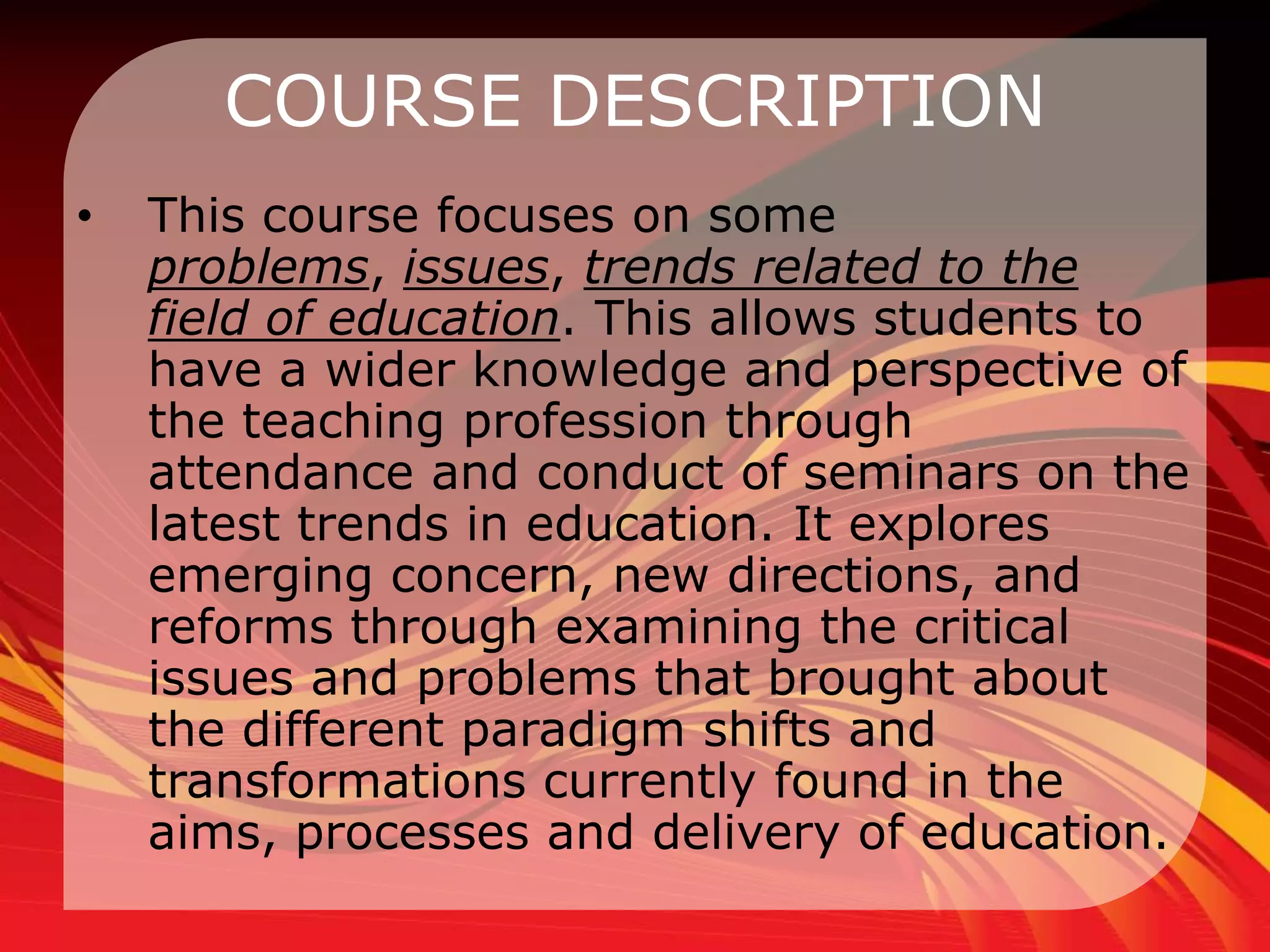
COURSE DESCRIPTION
•   This course focuses on some
    problems, issues, trends related to the
    field of education. This allows students to
    have a wider knowledge and perspective of
    the teaching profession through
    attendance and conduct of seminars on the
    latest trends in education. It explores
    emerging concern, new directions, and
    reforms through examining the critical
    issues and problems that brought about
    the different paradigm shifts and
    transformations currently found in the
    aims, processes and delivery of education.
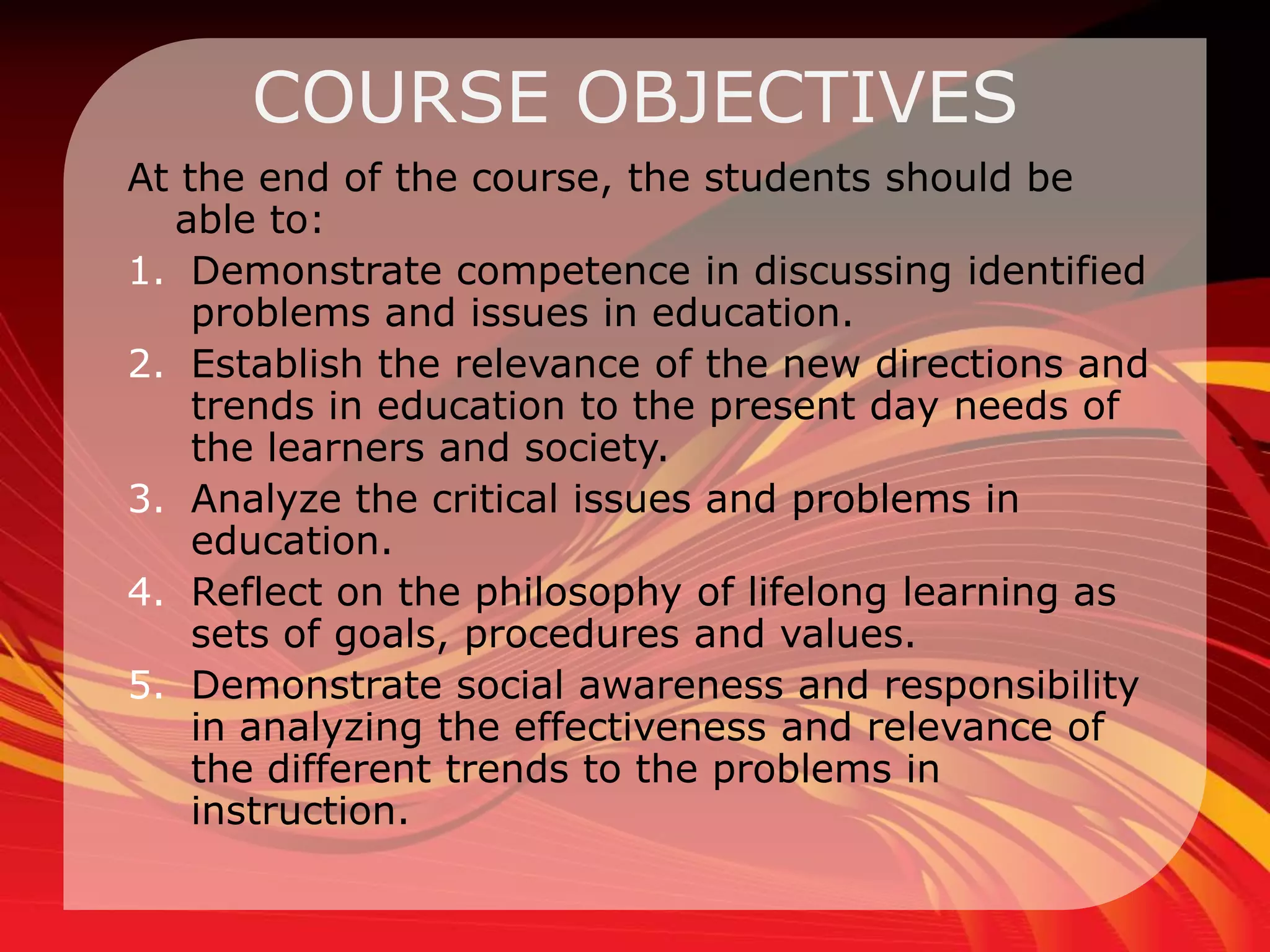
COURSE OBJECTIVES
At the end of the course, the students should be
  able to:
1. Demonstrate competence in discussing identified
    problems and issues in education.
2. Establish the relevance of the new directions and
    trends in education to the present day needs of
    the learners and society.
3. Analyze the critical issues and problems in
    education.
4. Reflect on the philosophy of lifelong learning as
    sets of goals, procedures and values.
5. Demonstrate social awareness and responsibility
    in analyzing the effectiveness and relevance of
    the different trends to the problems in
    instruction.
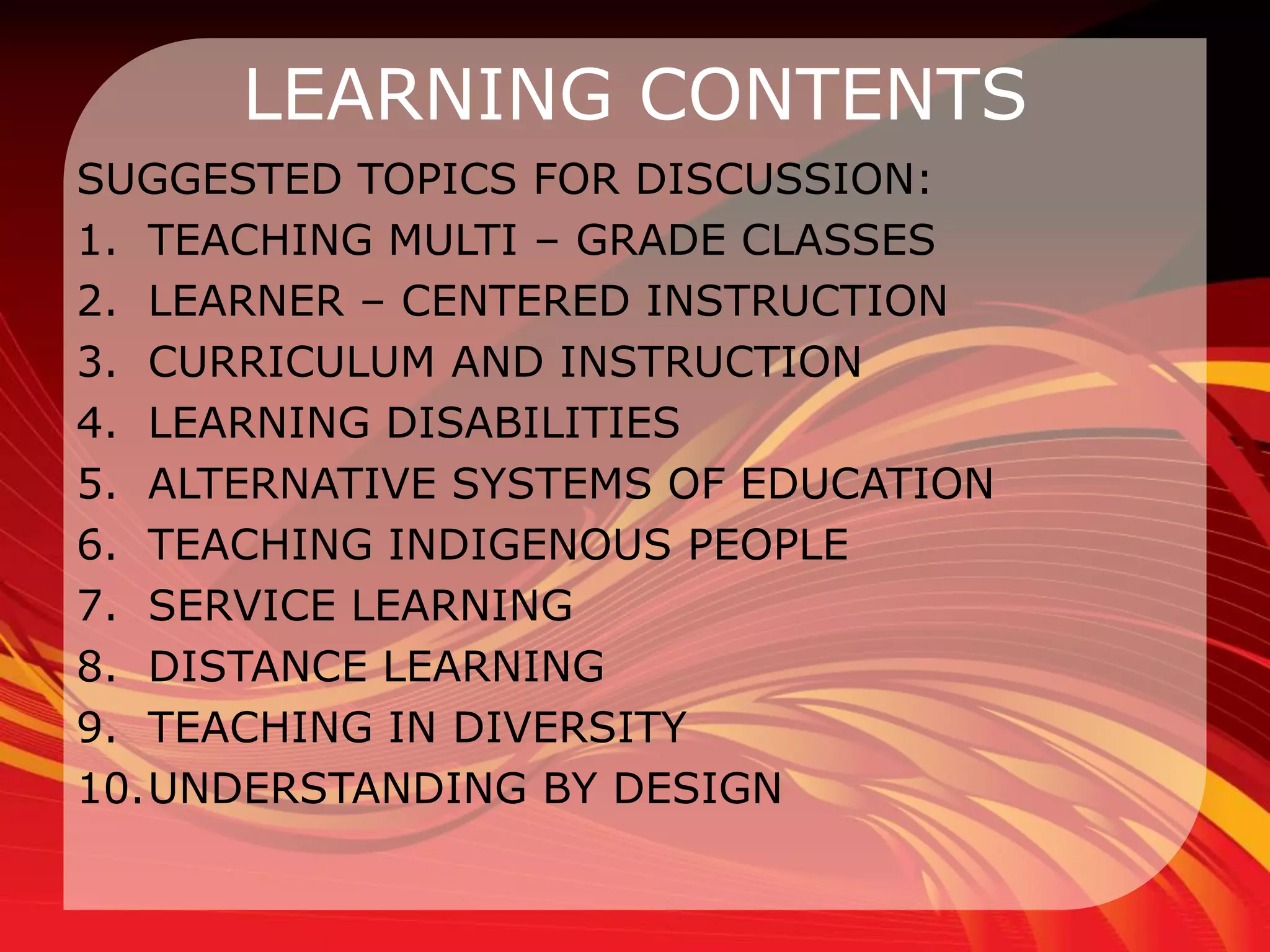
LEARNING CONTENTS
SUGGESTED TOPICS FOR DISCUSSION:
1. TEACHING MULTI – GRADE CLASSES
2. LEARNER – CENTERED INSTRUCTION
3. CURRICULUM AND INSTRUCTION
4. LEARNING DISABILITIES
5. ALTERNATIVE SYSTEMS OF EDUCATION
6. TEACHING INDIGENOUS PEOPLE
7. SERVICE LEARNING
8. DISTANCE LEARNING
9. TEACHING IN DIVERSITY
10.UNDERSTANDING BY DESIGN
REFERENCES
•   Bender, William N. (2008). Learning Disabilities:
    Characteristics, Identification and Teaching Strategies. Boston:
    Pearson / Allyn and Bacon.
•   Berman, Sally. (2006). Service Learning: A Guide to
    Planning, Implementing, and Assessing Student Projects.
    Thousand Oaks, Calif: Corwin Press.
•   Drake, Susan M. (2007). Creating Standards – based
    Integrated Curriculum: Aligning
    Curriculum, Content, Assessment, and Instruction. Thousand
    Oaks, CA: Corwin Press.
•   Stone, Randi. (2005). Best Classroom Management Practices
    for Reaching all Learners: What Award – Winning Classroom
    Teachers Do. Thousand Oaks, Calif: Corwin Press.
•   Berg, Gary A. (2002). Why Distance Learning? Higher
    Administrative Practices. Westport: Praeger.
•   Picciano, Anthony G. (2001). Distance Learning: Making
    Connections Across Virtual Space and Time. Upper Saddle
    River, NJ: Merrill Prentice Hall.

Special topics syllabus presentation

  • 1.
    SPECIAL TOPICS EDUC 226 Preparedby: JOSE DAKILA N. ESPIRITU Ph.D.
  • 2.
    COURSE DESCRIPTION • This course focuses on some problems, issues, trends related to the field of education. This allows students to have a wider knowledge and perspective of the teaching profession through attendance and conduct of seminars on the latest trends in education. It explores emerging concern, new directions, and reforms through examining the critical issues and problems that brought about the different paradigm shifts and transformations currently found in the aims, processes and delivery of education.
  • 3.
    COURSE OBJECTIVES At theend of the course, the students should be able to: 1. Demonstrate competence in discussing identified problems and issues in education. 2. Establish the relevance of the new directions and trends in education to the present day needs of the learners and society. 3. Analyze the critical issues and problems in education. 4. Reflect on the philosophy of lifelong learning as sets of goals, procedures and values. 5. Demonstrate social awareness and responsibility in analyzing the effectiveness and relevance of the different trends to the problems in instruction.
  • 4.
    LEARNING CONTENTS SUGGESTED TOPICSFOR DISCUSSION: 1. TEACHING MULTI – GRADE CLASSES 2. LEARNER – CENTERED INSTRUCTION 3. CURRICULUM AND INSTRUCTION 4. LEARNING DISABILITIES 5. ALTERNATIVE SYSTEMS OF EDUCATION 6. TEACHING INDIGENOUS PEOPLE 7. SERVICE LEARNING 8. DISTANCE LEARNING 9. TEACHING IN DIVERSITY 10.UNDERSTANDING BY DESIGN
  • 5.
    REFERENCES • Bender, William N. (2008). Learning Disabilities: Characteristics, Identification and Teaching Strategies. Boston: Pearson / Allyn and Bacon. • Berman, Sally. (2006). Service Learning: A Guide to Planning, Implementing, and Assessing Student Projects. Thousand Oaks, Calif: Corwin Press. • Drake, Susan M. (2007). Creating Standards – based Integrated Curriculum: Aligning Curriculum, Content, Assessment, and Instruction. Thousand Oaks, CA: Corwin Press. • Stone, Randi. (2005). Best Classroom Management Practices for Reaching all Learners: What Award – Winning Classroom Teachers Do. Thousand Oaks, Calif: Corwin Press. • Berg, Gary A. (2002). Why Distance Learning? Higher Administrative Practices. Westport: Praeger. • Picciano, Anthony G. (2001). Distance Learning: Making Connections Across Virtual Space and Time. Upper Saddle River, NJ: Merrill Prentice Hall.