Agenda
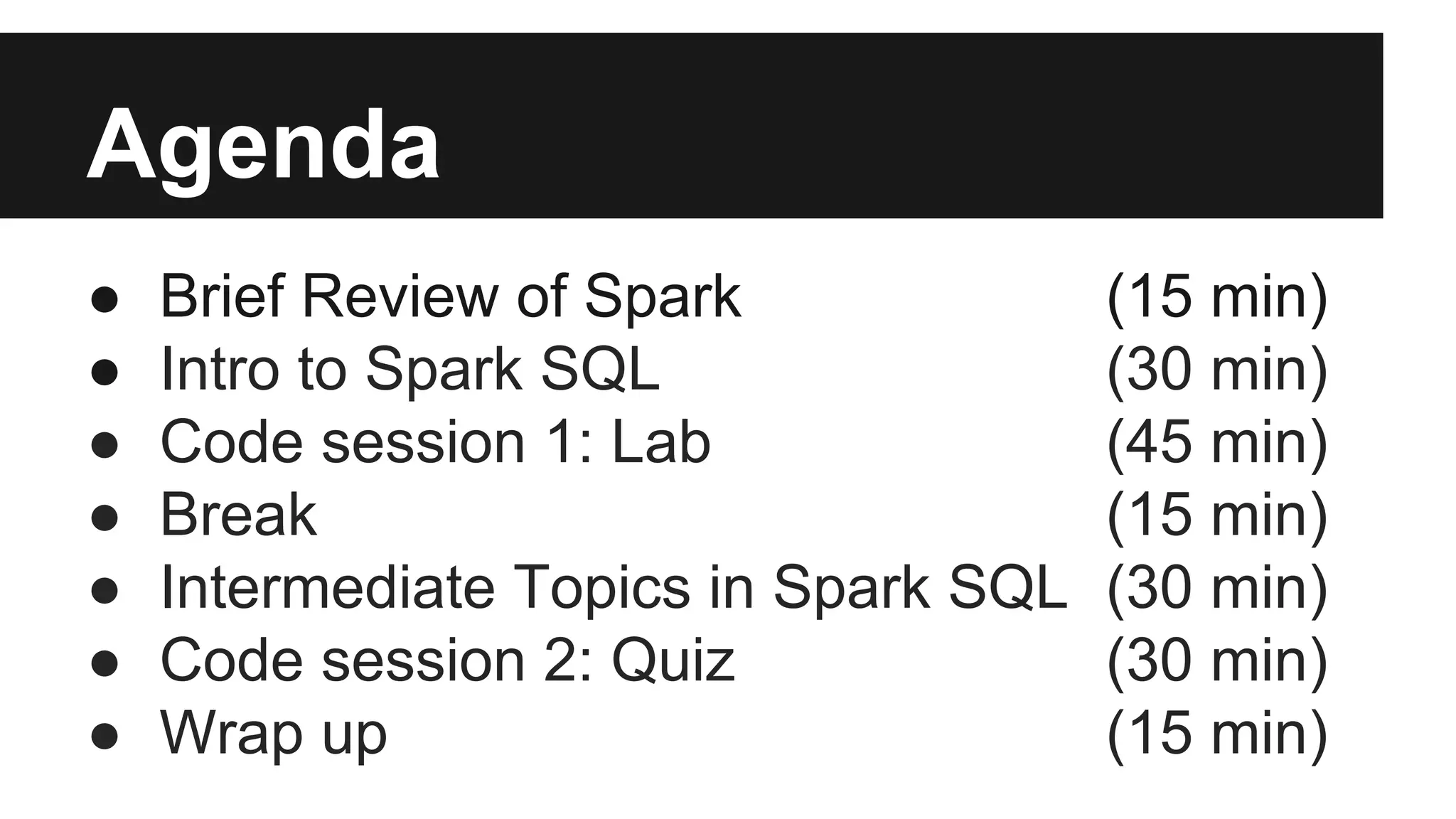
● Brief Review of Spark (15 min)
● Intro to Spark SQL (30 min)
● Code session 1: Lab (45 min)
● Break (15 min)
● Intermediate Topics in Spark SQL (30 min)
● Code session 2: Quiz (30 min)
● Wrap up (15 min)
Spark Review
By Aaron Merlob
Apache Spark
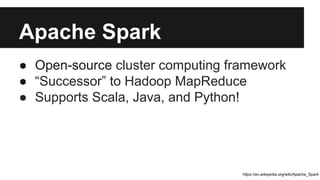
● Open-source cluster computing framework
● “Successor” to Hadoop MapReduce
● Supports Scala, Java, and Python!
https://en.wikipedia.org/wiki/Apache_Spark
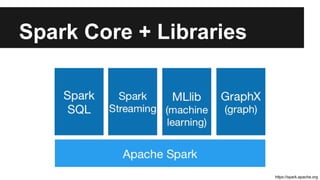
Spark Core + Libraries
https://spark.apache.org
Resilient Distributed Dataset
● Distributed Collection
● Fault-tolerant
● Parallel operation - Partitioned
● Many data sources
Implementation...
RDD - Main Abstraction
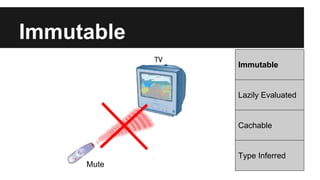
Immutable
Mute
Immutable
Lazily Evaluated
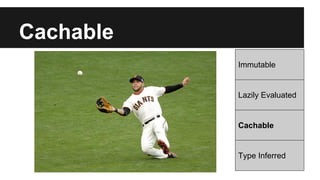
Cachable
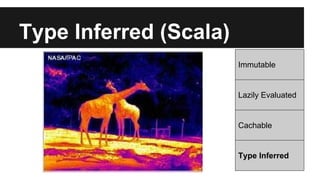
Type Inferred
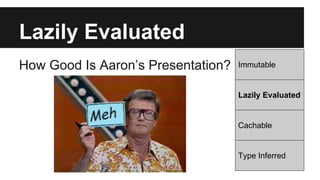
Lazily Evaluated
How Good Is Aaron’s Presentation? Immutable
Lazily Evaluated
Cachable
Type Inferred
Cachable
Immutable
Lazily Evaluated
Cachable
Type Inferred
Type Inferred (Scala)
Immutable
Lazily Evaluated
Cachable
Type Inferred
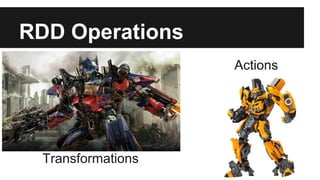
RDD Operations
Actions
Transformations
Cache & Persist
Transformed RDDs recomputed each action
Store RDDs in memory using cache (or persist)
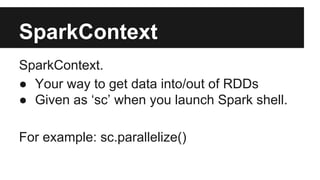
SparkContext.
● Your way to get data into/out of RDDs
● Given as ‘sc’ when you launch Spark shell.
For example: sc.parallelize()
SparkContext
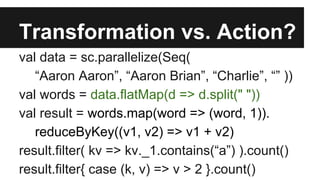
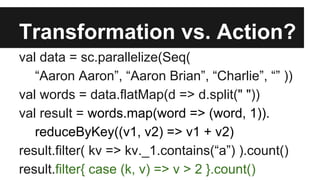
Transformation vs. Action?
val data = sc.parallelize(Seq(
“Aaron Aaron”, “Aaron Brian”, “Charlie”, “” ))
val words = data.flatMap(d => d.split(" "))
val result = words.map(word => (word, 1)).
reduceByKey((v1, v2) => v1 + v2)
result.filter( kv => kv._1.contains(“a”) ).count()
result.filter{ case (k, v) => v > 2 }.count()
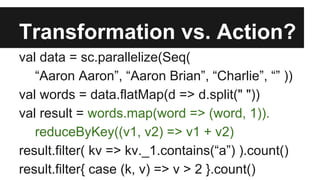
Transformation vs. Action?
val data = sc.parallelize(Seq(
“Aaron Aaron”, “Aaron Brian”, “Charlie”, “” ))
val words = data.flatMap(d => d.split(" "))
val result = words.map(word => (word, 1)).
reduceByKey((v1, v2) => v1 + v2)
result.filter( kv => kv._1.contains(“a”) ).count()
result.filter{ case (k, v) => v > 2 }.count()
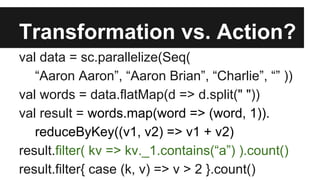
Transformation vs. Action?
val data = sc.parallelize(Seq(
“Aaron Aaron”, “Aaron Brian”, “Charlie”, “” ))
val words = data.flatMap(d => d.split(" "))
val result = words.map(word => (word, 1)).
reduceByKey((v1, v2) => v1 + v2)
result.filter( kv => kv._1.contains(“a”) ).count()
result.filter{ case (k, v) => v > 2 }.count()
Transformation vs. Action?
val data = sc.parallelize(Seq(
“Aaron Aaron”, “Aaron Brian”, “Charlie”, “” ))
val words = data.flatMap(d => d.split(" "))
val result = words.map(word => (word, 1)).
reduceByKey((v1, v2) => v1 + v2)
result.filter( kv => kv._1.contains(“a”) ).count()
result.filter{ case (k, v) => v > 2 }.count()
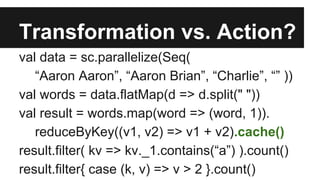
Transformation vs. Action?
val data = sc.parallelize(Seq(
“Aaron Aaron”, “Aaron Brian”, “Charlie”, “” ))
val words = data.flatMap(d => d.split(" "))
val result = words.map(word => (word, 1)).
reduceByKey((v1, v2) => v1 + v2).cache()
result.filter( kv => kv._1.contains(“a”) ).count()
result.filter{ case (k, v) => v > 2 }.count()
Spark SQL
By Aaron Merlob
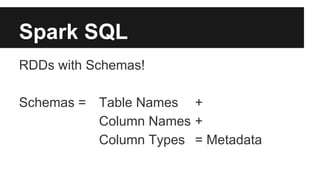
Spark SQL
RDDs with Schemas!
Spark SQL
RDDs with Schemas!
Schemas = Table Names +
Column Names +
Column Types = Metadata
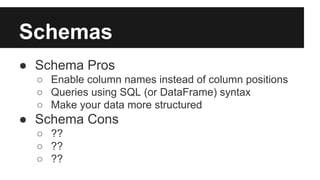
Schemas
● Schema Pros
○ Enable column names instead of column positions
○ Queries using SQL (or DataFrame) syntax
○ Make your data more structured
● Schema Cons
○ ??
○ ??
○ ??
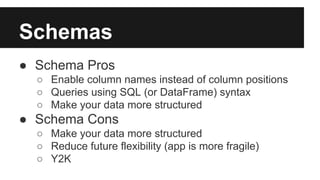
Schemas
● Schema Pros
○ Enable column names instead of column positions
○ Queries using SQL (or DataFrame) syntax
○ Make your data more structured
● Schema Cons
○ Make your data more structured
○ Reduce future flexibility (app is more fragile)
○ Y2K
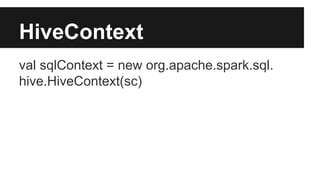
HiveContext
val sqlContext = new org.apache.spark.sql.
hive.HiveContext(sc)
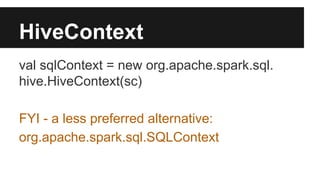
HiveContext
val sqlContext = new org.apache.spark.sql.
hive.HiveContext(sc)
FYI - a less preferred alternative:
org.apache.spark.sql.SQLContext
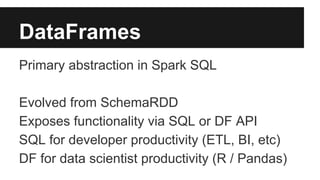
DataFrames
Primary abstraction in Spark SQL
Evolved from SchemaRDD
Exposes functionality via SQL or DF API
SQL for developer productivity (ETL, BI, etc)
DF for data scientist productivity (R / Pandas)
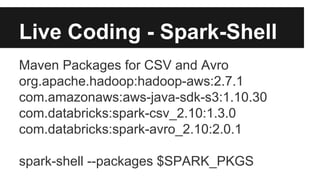
Live Coding - Spark-Shell
Maven Packages for CSV and Avro
org.apache.hadoop:hadoop-aws:2.7.1
com.amazonaws:aws-java-sdk-s3:1.10.30
com.databricks:spark-csv_2.10:1.3.0
com.databricks:spark-avro_2.10:2.0.1
spark-shell --packages $SPARK_PKGS
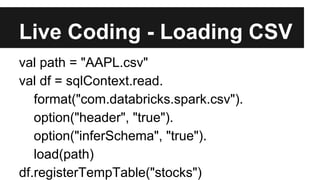
Live Coding - Loading CSV
val path = "AAPL.csv"
val df = sqlContext.read.
format("com.databricks.spark.csv").
option("header", "true").
option("inferSchema", "true").
load(path)
df.registerTempTable("stocks")
Caching
If I run a query twice, how many times will the
data be read from disk?
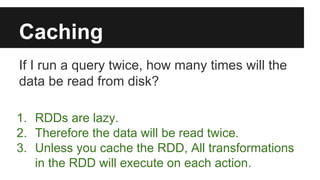
Caching
If I run a query twice, how many times will the
data be read from disk?
1. RDDs are lazy.
2. Therefore the data will be read twice.
3. Unless you cache the RDD, All transformations
in the RDD will execute on each action.
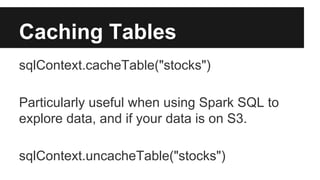
Caching Tables
sqlContext.cacheTable("stocks")
Particularly useful when using Spark SQL to
explore data, and if your data is on S3.
sqlContext.uncacheTable("stocks")
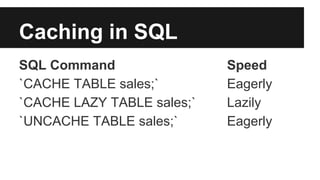
Caching in SQL
SQL Command Speed
`CACHE TABLE sales;` Eagerly
`CACHE LAZY TABLE sales;` Lazily
`UNCACHE TABLE sales;` Eagerly
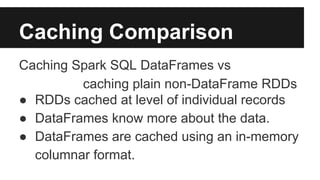
Caching Comparison
Caching Spark SQL DataFrames vs
caching plain non-DataFrame RDDs
● RDDs cached at level of individual records
● DataFrames know more about the data.
● DataFrames are cached using an in-memory
columnar format.
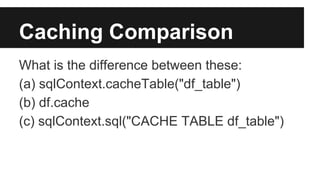
Caching Comparison
What is the difference between these:
(a) sqlContext.cacheTable("df_table")
(b) df.cache
(c) sqlContext.sql("CACHE TABLE df_table")
Lab 1
Spark SQL Workshop
Spark SQL,
the Sequel
By Aaron Merlob
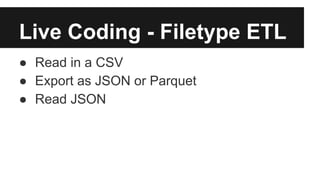
Live Coding - Filetype ETL
● Read in a CSV
● Export as JSON or Parquet
● Read JSON
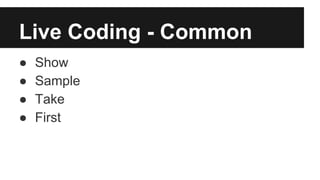
Live Coding - Common
● Show
● Sample
● Take
● First
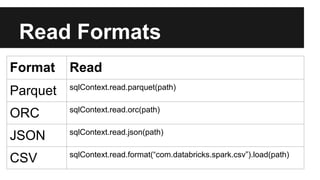
Read Formats
Format Read
Parquet sqlContext.read.parquet(path)
ORC sqlContext.read.orc(path)
JSON sqlContext.read.json(path)
CSV sqlContext.read.format(“com.databricks.spark.csv”).load(path)
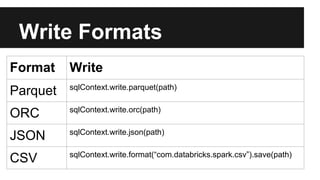
Write Formats
Format Write
Parquet sqlContext.write.parquet(path)
ORC sqlContext.write.orc(path)
JSON sqlContext.write.json(path)
CSV sqlContext.write.format(“com.databricks.spark.csv”).save(path)
Schema Inference
Infer schema of JSON files:
● By default it scans the entire file.
● It finds the broadest type that will fit a field.
● This is an RDD operation so it happens fast.
Infer schema of CSV files:
● CSV parser uses same logic as JSON
parser.
User Defined Functions
How do you apply a “UDF”?
● Import types (StringType, IntegerType, etc)
● Create UDF (in Scala)
● Apply the function (in SQL)
Notes:
● UDFs can take single or multiple arguments
● Optional registerFunction arg2: ‘return type’
Live Coding - UDF
● Import types (StringType, IntegerType, etc)
● Create UDF (in Scala)
● Apply the function (in SQL)
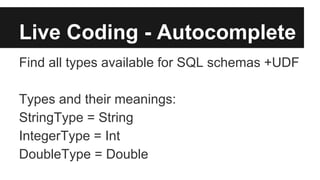
Live Coding - Autocomplete
Find all types available for SQL schemas +UDF
Types and their meanings:
StringType = String
IntegerType = Int
DoubleType = Double
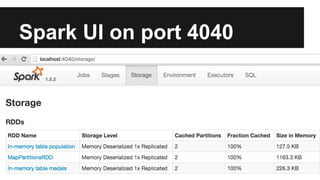
Spark UI on port 4040

DataEngConf SF16 - Spark SQL Workshop

  • 1.
    Agenda ● Brief Reviewof Spark (15 min) ● Intro to Spark SQL (30 min) ● Code session 1: Lab (45 min) ● Break (15 min) ● Intermediate Topics in Spark SQL (30 min) ● Code session 2: Quiz (30 min) ● Wrap up (15 min)
  • 2.
  • 3.
    Apache Spark ● Open-sourcecluster computing framework ● “Successor” to Hadoop MapReduce ● Supports Scala, Java, and Python! https://en.wikipedia.org/wiki/Apache_Spark
  • 4.
    Spark Core +Libraries https://spark.apache.org
  • 5.
    Resilient Distributed Dataset ●Distributed Collection ● Fault-tolerant ● Parallel operation - Partitioned ● Many data sources Implementation... RDD - Main Abstraction
  • 6.
  • 7.
    Lazily Evaluated How GoodIs Aaron’s Presentation? Immutable Lazily Evaluated Cachable Type Inferred
  • 8.
  • 9.
    Type Inferred (Scala) Immutable LazilyEvaluated Cachable Type Inferred
  • 10.
  • 11.
    Cache & Persist TransformedRDDs recomputed each action Store RDDs in memory using cache (or persist)
  • 12.
    SparkContext. ● Your wayto get data into/out of RDDs ● Given as ‘sc’ when you launch Spark shell. For example: sc.parallelize() SparkContext
  • 13.
    Transformation vs. Action? valdata = sc.parallelize(Seq( “Aaron Aaron”, “Aaron Brian”, “Charlie”, “” )) val words = data.flatMap(d => d.split(" ")) val result = words.map(word => (word, 1)). reduceByKey((v1, v2) => v1 + v2) result.filter( kv => kv._1.contains(“a”) ).count() result.filter{ case (k, v) => v > 2 }.count()
  • 14.
    Transformation vs. Action? valdata = sc.parallelize(Seq( “Aaron Aaron”, “Aaron Brian”, “Charlie”, “” )) val words = data.flatMap(d => d.split(" ")) val result = words.map(word => (word, 1)). reduceByKey((v1, v2) => v1 + v2) result.filter( kv => kv._1.contains(“a”) ).count() result.filter{ case (k, v) => v > 2 }.count()
  • 15.
    Transformation vs. Action? valdata = sc.parallelize(Seq( “Aaron Aaron”, “Aaron Brian”, “Charlie”, “” )) val words = data.flatMap(d => d.split(" ")) val result = words.map(word => (word, 1)). reduceByKey((v1, v2) => v1 + v2) result.filter( kv => kv._1.contains(“a”) ).count() result.filter{ case (k, v) => v > 2 }.count()
  • 16.
    Transformation vs. Action? valdata = sc.parallelize(Seq( “Aaron Aaron”, “Aaron Brian”, “Charlie”, “” )) val words = data.flatMap(d => d.split(" ")) val result = words.map(word => (word, 1)). reduceByKey((v1, v2) => v1 + v2) result.filter( kv => kv._1.contains(“a”) ).count() result.filter{ case (k, v) => v > 2 }.count()
  • 17.
    Transformation vs. Action? valdata = sc.parallelize(Seq( “Aaron Aaron”, “Aaron Brian”, “Charlie”, “” )) val words = data.flatMap(d => d.split(" ")) val result = words.map(word => (word, 1)). reduceByKey((v1, v2) => v1 + v2).cache() result.filter( kv => kv._1.contains(“a”) ).count() result.filter{ case (k, v) => v > 2 }.count()
  • 18.
  • 19.
  • 20.
    Spark SQL RDDs withSchemas! Schemas = Table Names + Column Names + Column Types = Metadata
  • 21.
    Schemas ● Schema Pros ○Enable column names instead of column positions ○ Queries using SQL (or DataFrame) syntax ○ Make your data more structured ● Schema Cons ○ ?? ○ ?? ○ ??
  • 22.
    Schemas ● Schema Pros ○Enable column names instead of column positions ○ Queries using SQL (or DataFrame) syntax ○ Make your data more structured ● Schema Cons ○ Make your data more structured ○ Reduce future flexibility (app is more fragile) ○ Y2K
  • 23.
    HiveContext val sqlContext =new org.apache.spark.sql. hive.HiveContext(sc)
  • 24.
    HiveContext val sqlContext =new org.apache.spark.sql. hive.HiveContext(sc) FYI - a less preferred alternative: org.apache.spark.sql.SQLContext
  • 25.
    DataFrames Primary abstraction inSpark SQL Evolved from SchemaRDD Exposes functionality via SQL or DF API SQL for developer productivity (ETL, BI, etc) DF for data scientist productivity (R / Pandas)
  • 26.
    Live Coding -Spark-Shell Maven Packages for CSV and Avro org.apache.hadoop:hadoop-aws:2.7.1 com.amazonaws:aws-java-sdk-s3:1.10.30 com.databricks:spark-csv_2.10:1.3.0 com.databricks:spark-avro_2.10:2.0.1 spark-shell --packages $SPARK_PKGS
  • 27.
    Live Coding -Loading CSV val path = "AAPL.csv" val df = sqlContext.read. format("com.databricks.spark.csv"). option("header", "true"). option("inferSchema", "true"). load(path) df.registerTempTable("stocks")
  • 28.
    Caching If I runa query twice, how many times will the data be read from disk?
  • 29.
    Caching If I runa query twice, how many times will the data be read from disk? 1. RDDs are lazy. 2. Therefore the data will be read twice. 3. Unless you cache the RDD, All transformations in the RDD will execute on each action.
  • 30.
    Caching Tables sqlContext.cacheTable("stocks") Particularly usefulwhen using Spark SQL to explore data, and if your data is on S3. sqlContext.uncacheTable("stocks")
  • 31.
    Caching in SQL SQLCommand Speed `CACHE TABLE sales;` Eagerly `CACHE LAZY TABLE sales;` Lazily `UNCACHE TABLE sales;` Eagerly
  • 32.
    Caching Comparison Caching SparkSQL DataFrames vs caching plain non-DataFrame RDDs ● RDDs cached at level of individual records ● DataFrames know more about the data. ● DataFrames are cached using an in-memory columnar format.
  • 33.
    Caching Comparison What isthe difference between these: (a) sqlContext.cacheTable("df_table") (b) df.cache (c) sqlContext.sql("CACHE TABLE df_table")
  • 34.
  • 35.
  • 36.
    Live Coding -Filetype ETL ● Read in a CSV ● Export as JSON or Parquet ● Read JSON
  • 37.
    Live Coding -Common ● Show ● Sample ● Take ● First
  • 38.
    Read Formats Format Read ParquetsqlContext.read.parquet(path) ORC sqlContext.read.orc(path) JSON sqlContext.read.json(path) CSV sqlContext.read.format(“com.databricks.spark.csv”).load(path)
  • 39.
    Write Formats Format Write ParquetsqlContext.write.parquet(path) ORC sqlContext.write.orc(path) JSON sqlContext.write.json(path) CSV sqlContext.write.format(“com.databricks.spark.csv”).save(path)
  • 40.
    Schema Inference Infer schemaof JSON files: ● By default it scans the entire file. ● It finds the broadest type that will fit a field. ● This is an RDD operation so it happens fast. Infer schema of CSV files: ● CSV parser uses same logic as JSON parser.
  • 41.
    User Defined Functions Howdo you apply a “UDF”? ● Import types (StringType, IntegerType, etc) ● Create UDF (in Scala) ● Apply the function (in SQL) Notes: ● UDFs can take single or multiple arguments ● Optional registerFunction arg2: ‘return type’
  • 42.
    Live Coding -UDF ● Import types (StringType, IntegerType, etc) ● Create UDF (in Scala) ● Apply the function (in SQL)
  • 43.
    Live Coding -Autocomplete Find all types available for SQL schemas +UDF Types and their meanings: StringType = String IntegerType = Int DoubleType = Double
  • 44.
    Spark UI onport 4040