Grammar Book Second Semester
Table of ContentsConditional Conditional irregularPresent perfectPresent perfect irregularsPast perfectSubjunctive perfectTanto vs. tanImpersonal seSaber vs. ConocerFormal commandsFormal irregular commandsInformal commandsInformal irregular commandsDOP and IOP placementNosotros commandsMono verbsSubjunctive with irregularsTrigger words for impersonal expressions, emotional expressions, andconjunctions of timeDemonstrative adjectives and pronouns
ConditionalUsed to describe uncertainty or polite requestsDescribe what you would, should, could, or probably doInfinitive + endingExample: Yocomeríaporquetengohambre.
Conditional IrregularsChange the verb to the root then add the same endings
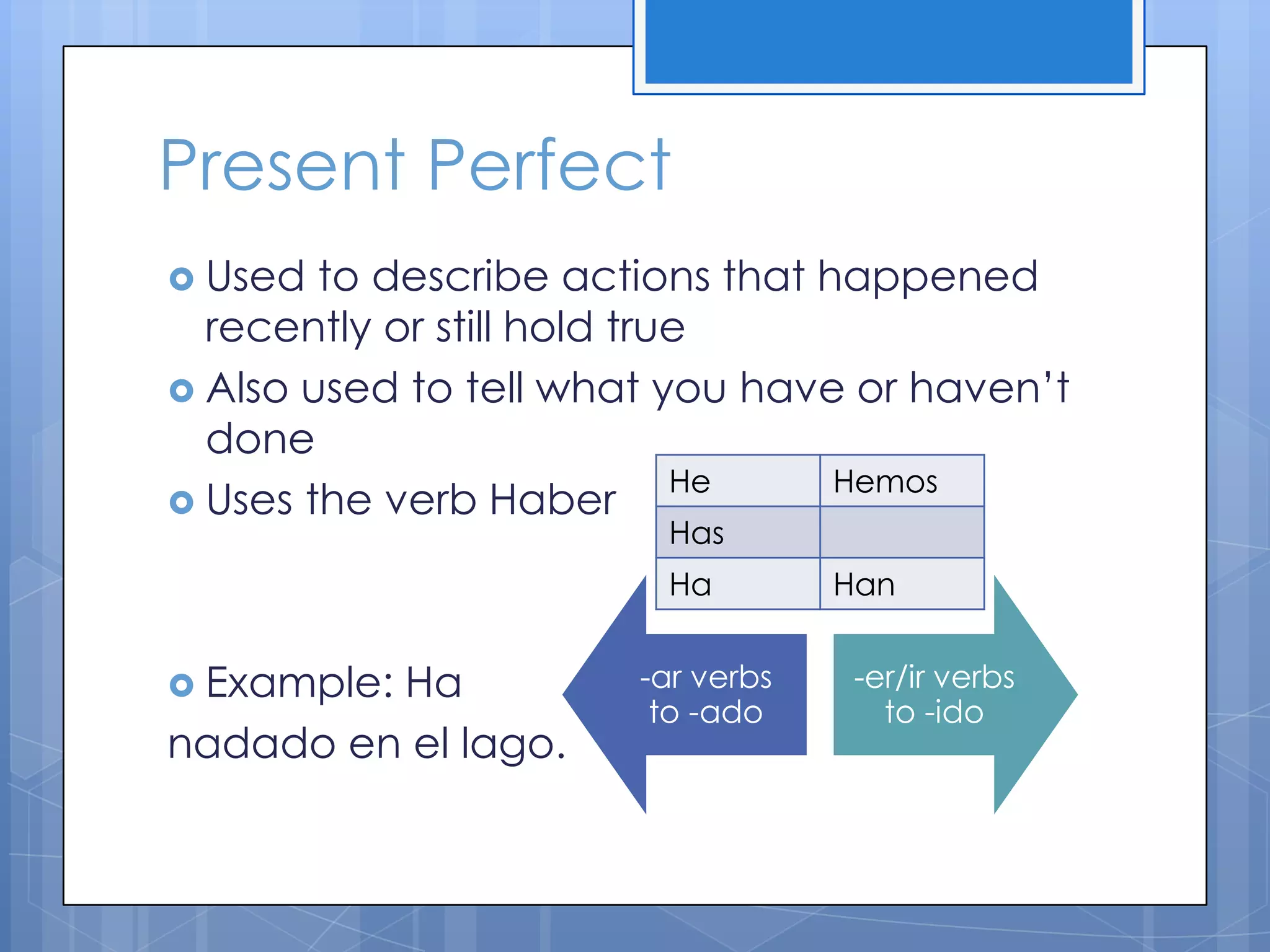
Present PerfectUsed to describe actions that happened recently or still hold trueAlso used to tell what you have or haven’t doneUses the verb Haber Example: Hanadado en el lago.
Present Perfect IrregularsUsed with Haber
Past PerfectUse both a main verb and an auxiliary verbUse haber plus a past participleDon’t separate the two verbs with pronouns
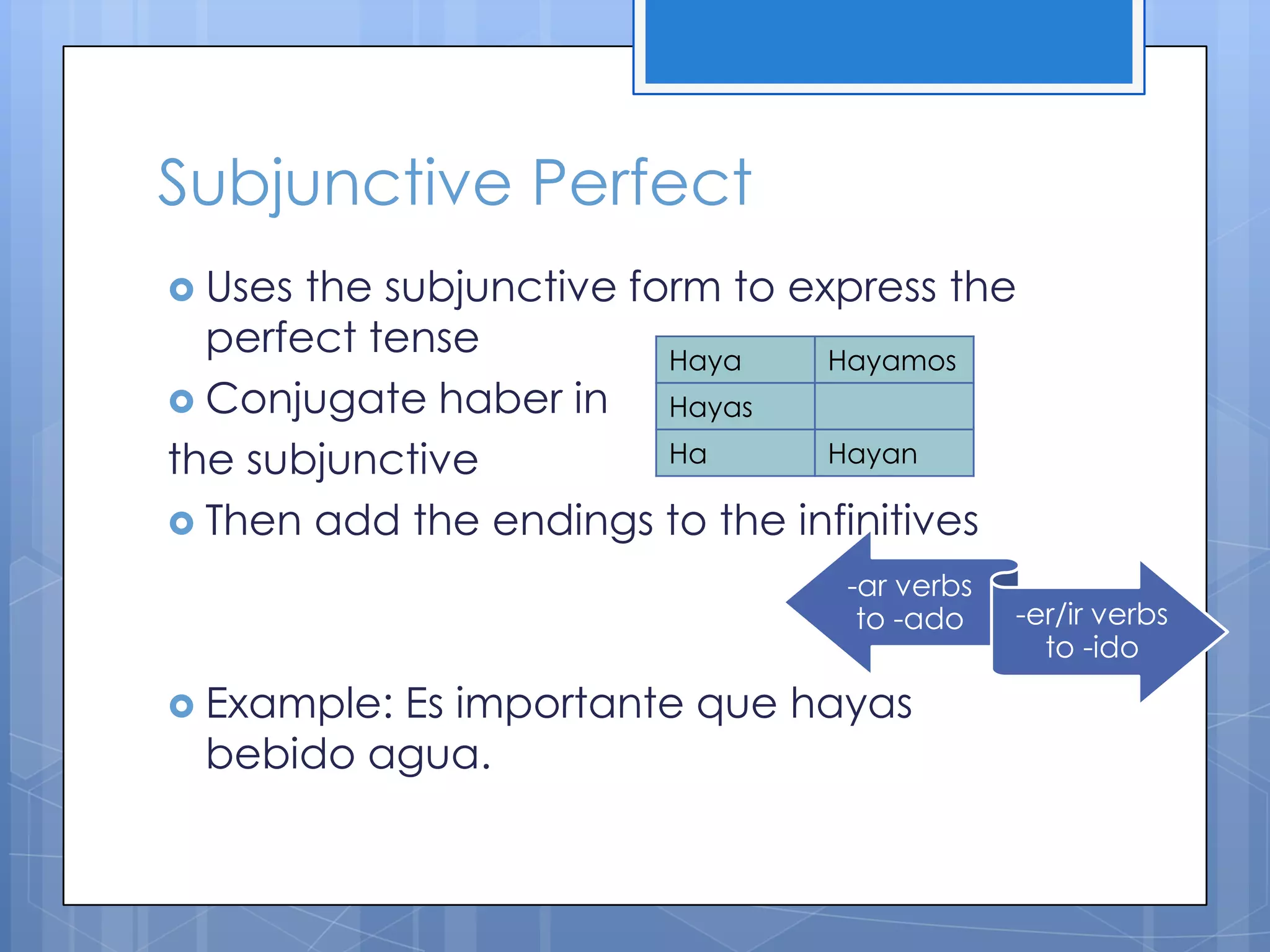
Subjunctive PerfectUses the subjunctive form to express the perfect tenseConjugate haber in the subjunctiveThen add the endings to the infinitivesExample: Esimportantequehayasbebidoagua.
Tanto vs. Tan
Saber Vs. Conocer
Formal Commands
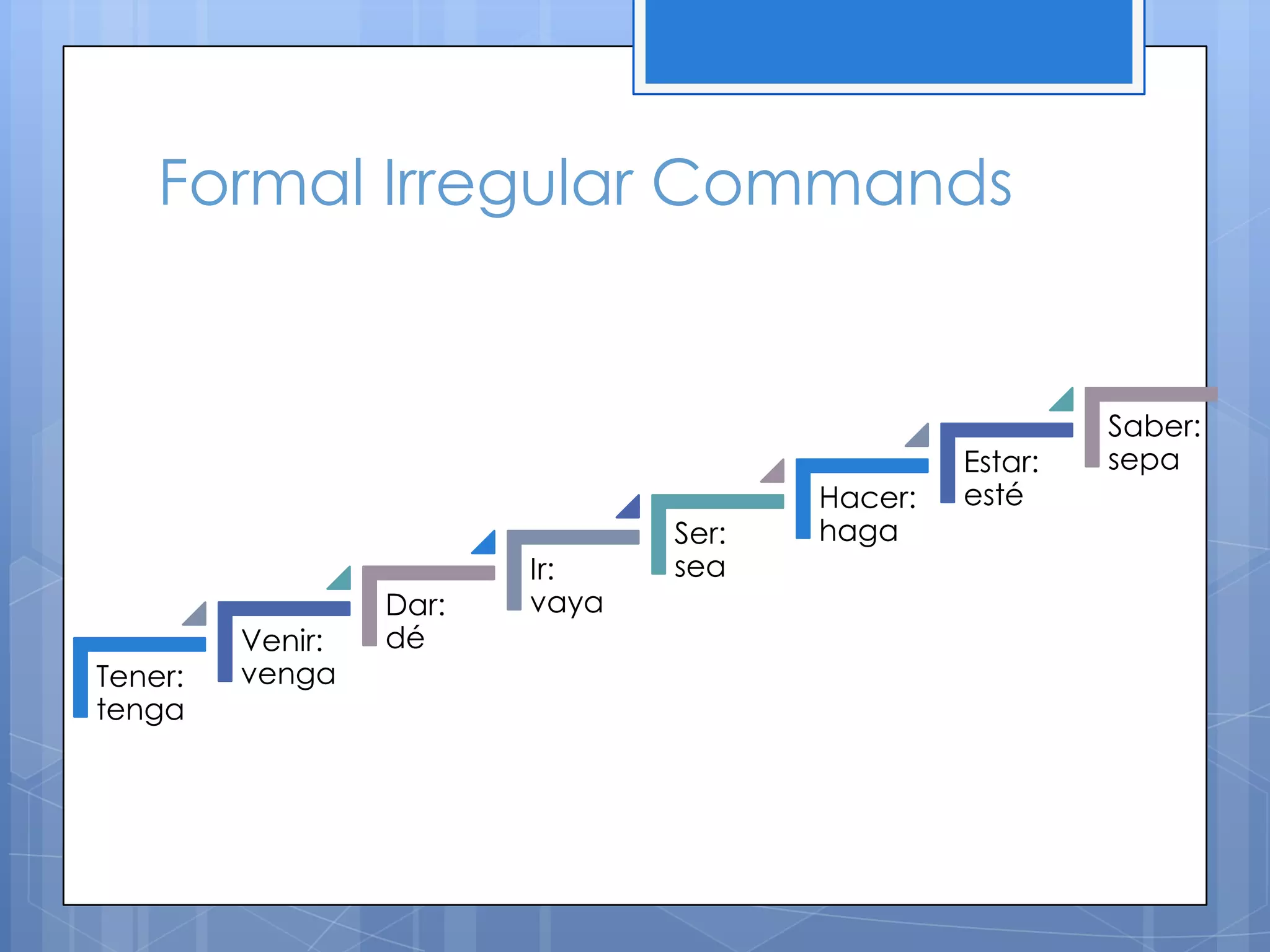
Formal Irregular Commands
Informal Commands
Informal Irregular Commands
DOP and IOP PlacementFor affirmative commands it can be attached to the end of the commandRemember appropriate accent rulesFor negative commands it is after the “no” but before the commandThey are not attached to the command
Nosotros Commands
Mono Verbs
Subjunctive Irregulars
Demonstrative Adjectives and PronounsAdjectives would match the nounAdd an accent on the first “e” to change it to a pronoun.

Spanish Grammar Book 2