Presented to,
Dr . G Shanthkumar
Professor Dept of Genetics &
Plant Breeding
COA,Hanumanamatti
Presented By
G R Gagana
UGS20AGR9901
COA,Hanumanamatti
INTRODUCTION
Botanical name: Sorghum bicolor
Family: Graminae
Origin: Ethiopia
Common name: Camel crop
Chromosome no: 2n=20
Seed (fruit type): grain (caryopsis)
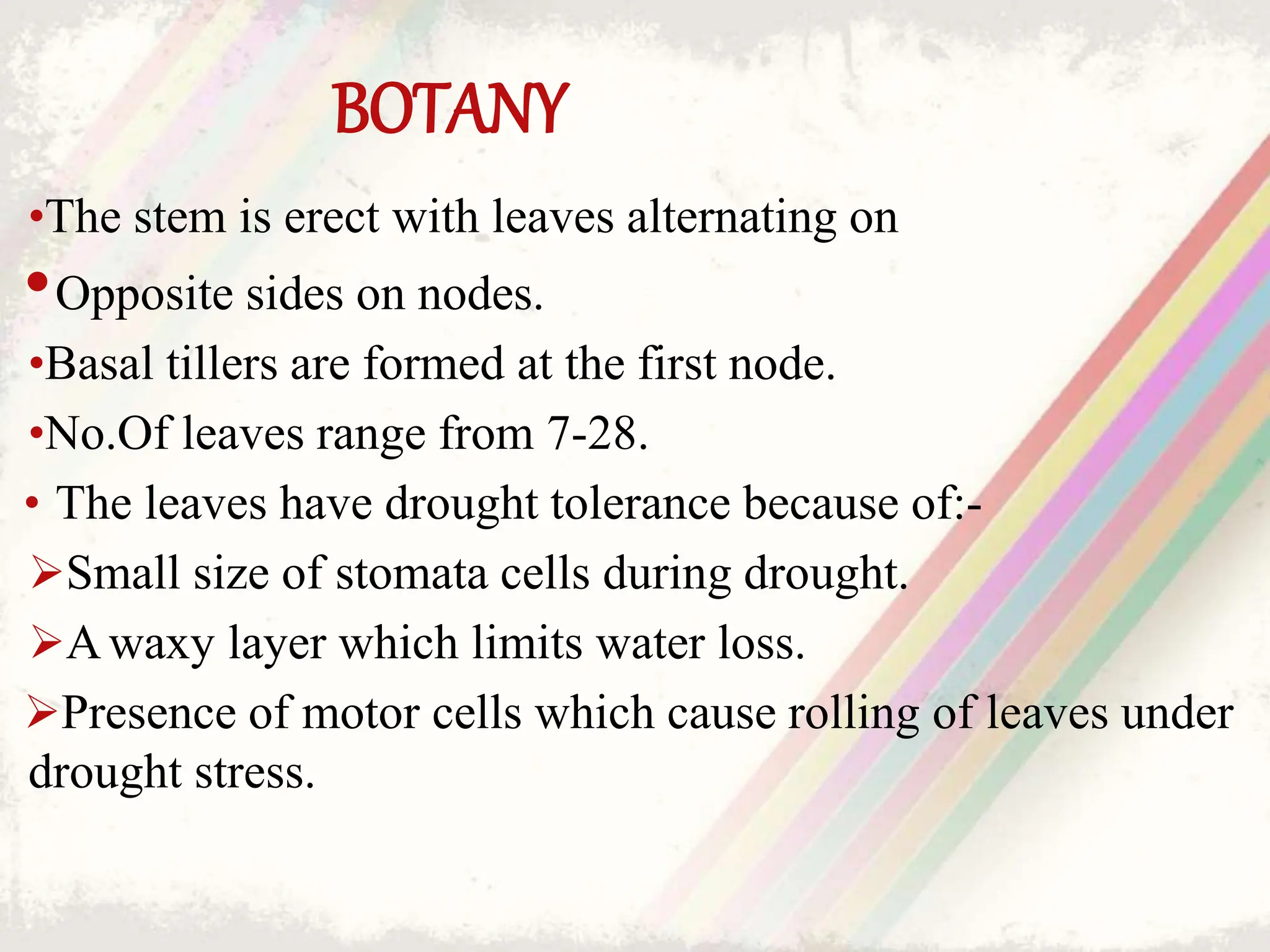
BOTANY
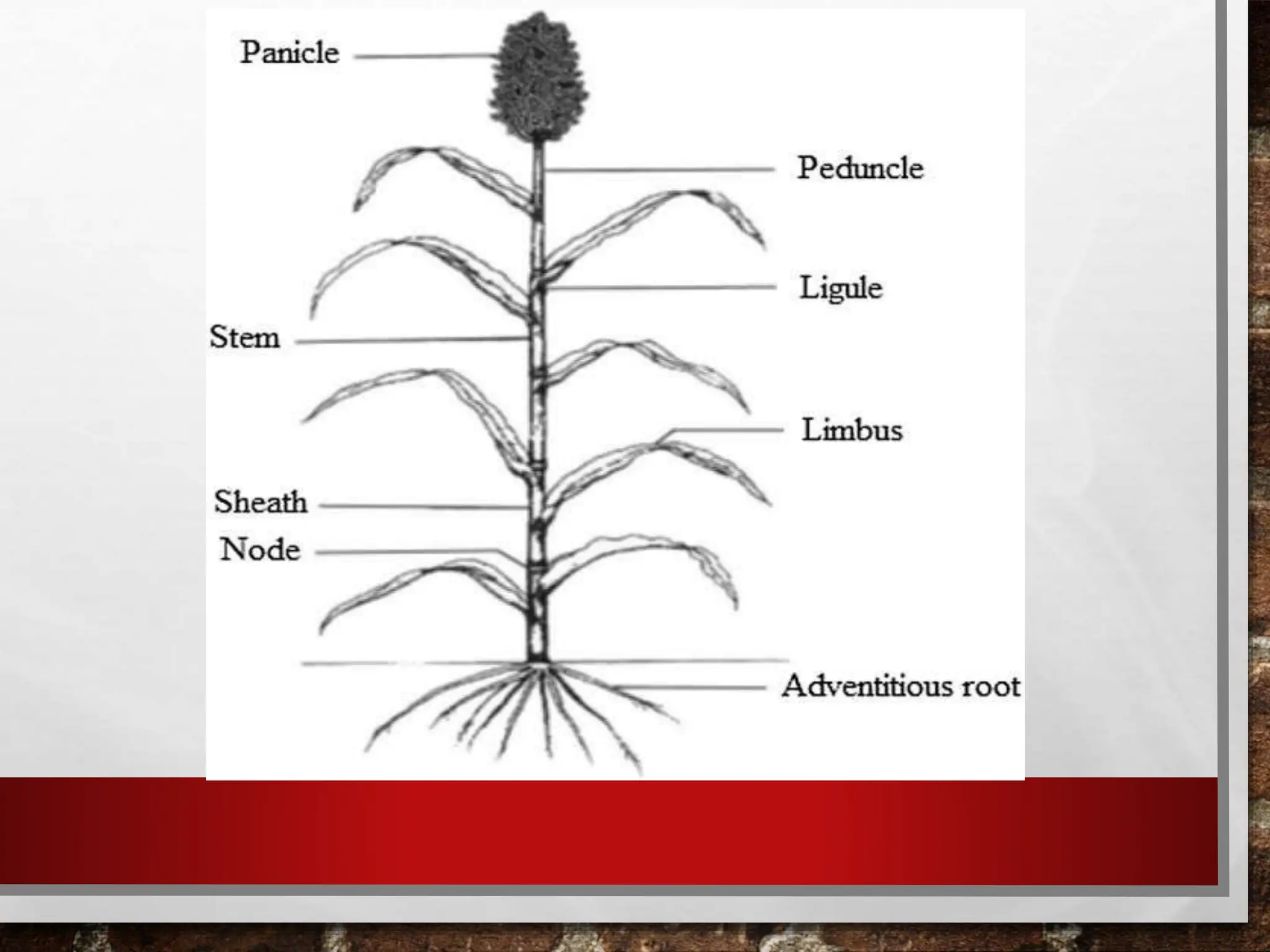
•The stem is erect with leaves alternating on
•Opposite sides on nodes.
•Basal tillers are formed at the first node.
•No.Of leaves range from 7-28.
• The leaves have drought tolerance because of:-
Small size of stomata cells during drought.
Awaxy layer which limits water loss.
Presence of motor cells which cause rolling of leaves under
drought stress.
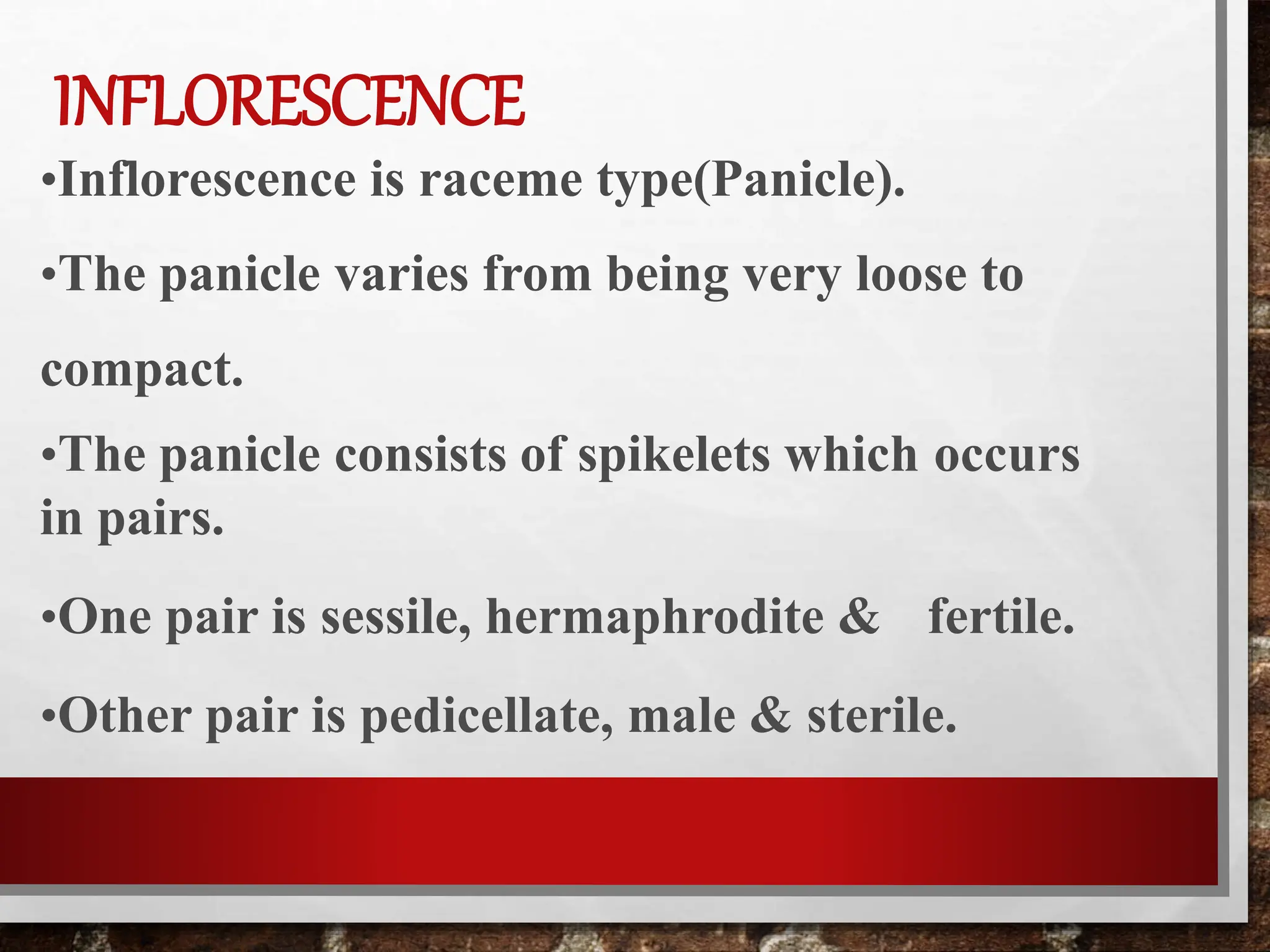
•Inflorescence is raceme type(Panicle).
•The panicle varies from being very loose to
compact.
•The panicle consists of spikelets which occurs
in pairs.
•One pair is sessile, hermaphrodite & fertile.
•Other pair is pedicellate, male & sterile.
INFLORESCENCE
LOOSE&COMPACT
INFLORESCENCE
PANICLEOF SORGHUM
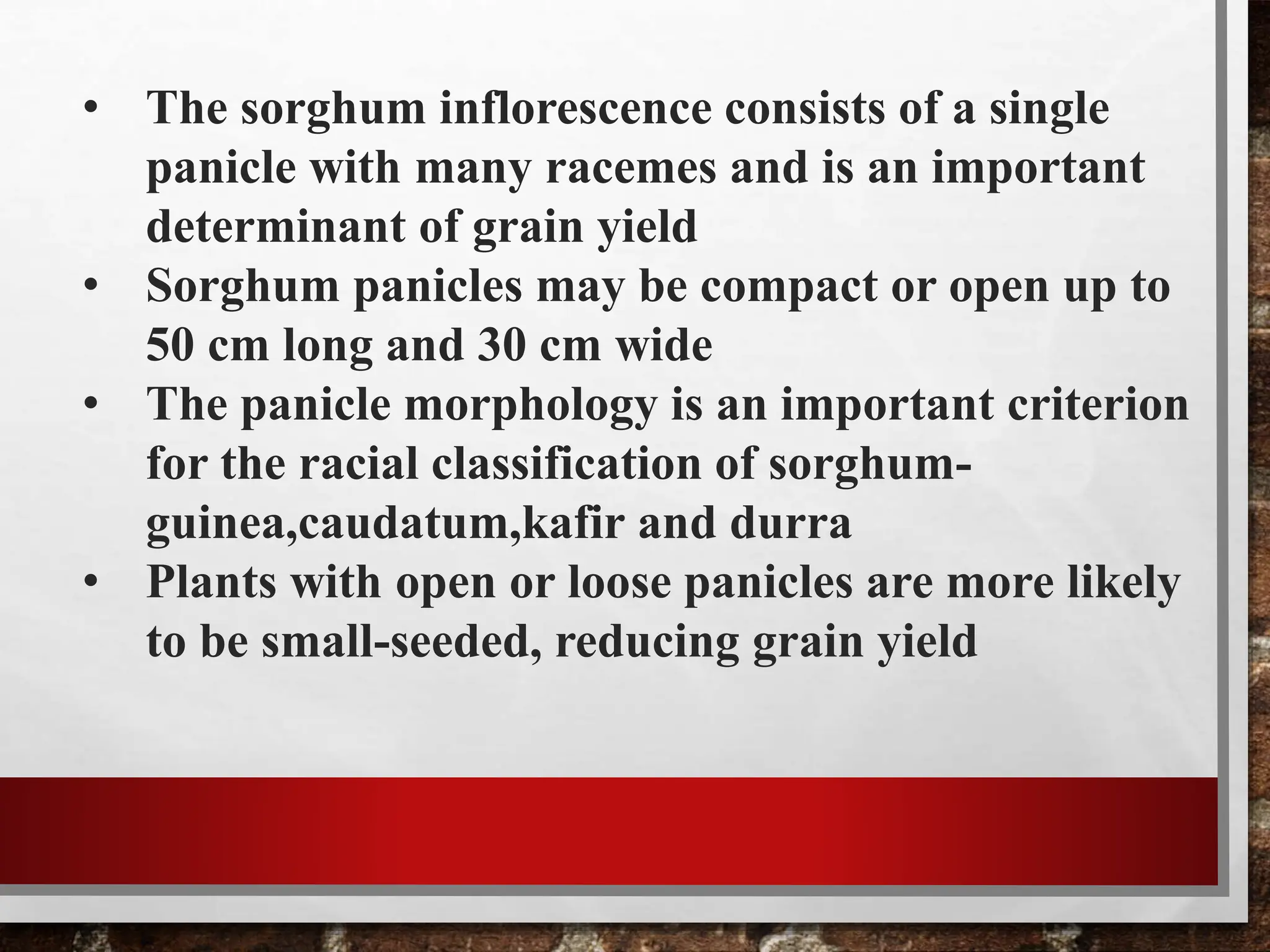
• The sorghum inflorescence consists of a single
panicle with many racemes and is an important
determinant of grain yield
• Sorghum panicles may be compact or open up to
50 cm long and 30 cm wide
• The panicle morphology is an important criterion
for the racial classification of sorghum-
guinea,caudatum,kafir and durra
• Plants with open or loose panicles are more likely
to be small-seeded, reducing grain yield
PAIROFSPIKELETS
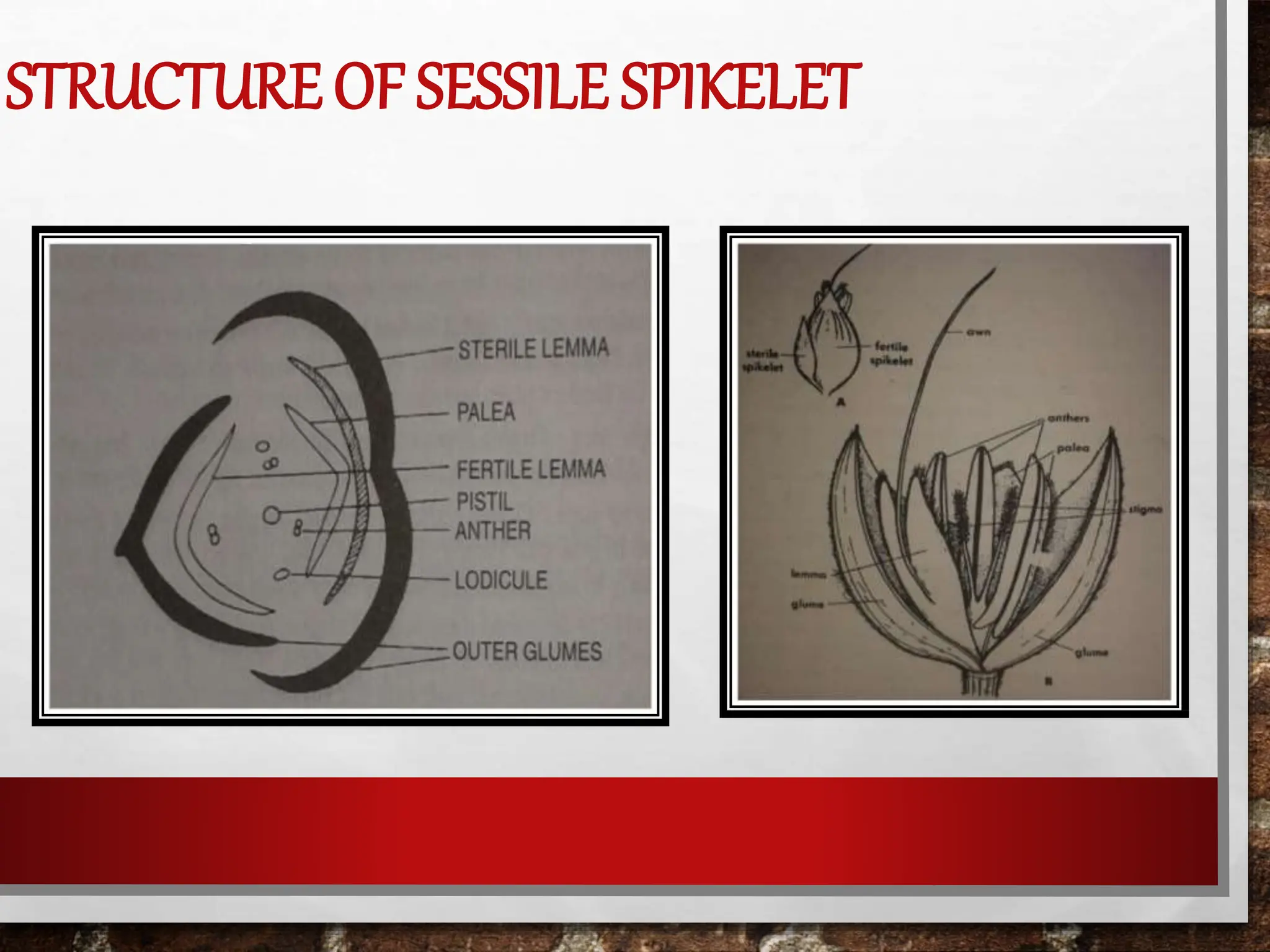
•The sessile spikelet has 2 glumes with 2 florets.
•One is fertile, bisexual consists of a
membranous lemma & a small thin delicate
palea.
•Two lodicles are present adjacent to fertile
lemma.
•Lodicules are fleshy and truncate.
•Stamens: 3
•Pistil: an ovary with two long styles with a
feathery stigma.
SESSILESPIKELETS
STRUCTUREOFSESSILE SPIKELET
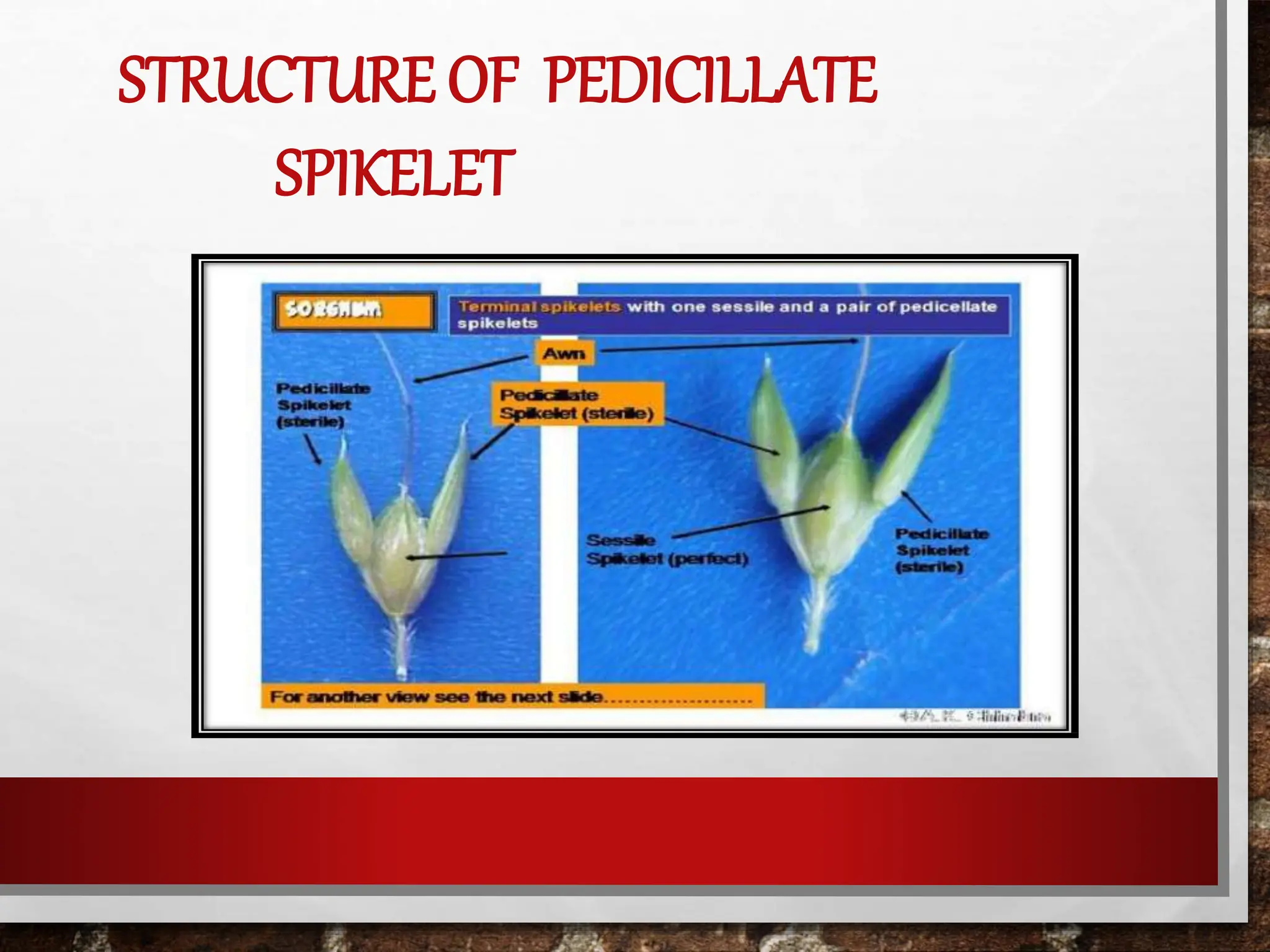
•Two leathery boat shaped glumes enclosing 2
florets.
•The lower floret is represented by lemma &
upper floret is staminate with short awned
lemma.
•Palea: absent
•Stamens: 3
•Pistil: absent
PEDICELLATESPIKELETS
STRUCTURE OF PEDICILLATE
SPIKELET
FLOWERING
•Flowering occurs 30-40 days after germination i.e 2-4
days after emergence of panicle from boot leaf.
•Flowering starts in sessile spikelets at tip of
inflorescence & progresses towards bottom.
•The pedicellate spilkelets open later & complete
flowering earlier than in sessile spikelets.
POLLINATION
•Sorghum is a self pollinated crop but 2-10% cross
pollination may occur.
•The anthers & stigmas push out as the glumes
open.
•Receptivity of stigma starts 2 days before opening
and remains for several days.
•Sorghum is a short day plant & hastened by short day
light periods and high temperatures.
SEEDDEVELOPMENT
•After fertilization, embryo is developed.
•The deposition of starch grains begin about 10 days
after fertilization.
•Seed development is in 3 stages:
Milk stage
Soft dough stage
Hard dough stage
•The seed consists of pericarp (outer coat, 6% by
weight), endosperm(storage tissue 84%) &
embryo(germ, 10%).
•Embryo is made of 70% fat and 13% in the grain.
STRUCTUREOF SEED
sorghum genetic breeding ,floral  biology

sorghum genetic breeding ,floral biology

  • 1.
    Presented to, Dr .G Shanthkumar Professor Dept of Genetics & Plant Breeding COA,Hanumanamatti Presented By G R Gagana UGS20AGR9901 COA,Hanumanamatti
  • 2.
    INTRODUCTION Botanical name: Sorghumbicolor Family: Graminae Origin: Ethiopia Common name: Camel crop Chromosome no: 2n=20 Seed (fruit type): grain (caryopsis)
  • 3.
    BOTANY •The stem iserect with leaves alternating on •Opposite sides on nodes. •Basal tillers are formed at the first node. •No.Of leaves range from 7-28. • The leaves have drought tolerance because of:- Small size of stomata cells during drought. Awaxy layer which limits water loss. Presence of motor cells which cause rolling of leaves under drought stress.
  • 5.
    •Inflorescence is racemetype(Panicle). •The panicle varies from being very loose to compact. •The panicle consists of spikelets which occurs in pairs. •One pair is sessile, hermaphrodite & fertile. •Other pair is pedicellate, male & sterile. INFLORESCENCE
  • 6.
  • 7.
  • 8.
    • The sorghuminflorescence consists of a single panicle with many racemes and is an important determinant of grain yield • Sorghum panicles may be compact or open up to 50 cm long and 30 cm wide • The panicle morphology is an important criterion for the racial classification of sorghum- guinea,caudatum,kafir and durra • Plants with open or loose panicles are more likely to be small-seeded, reducing grain yield
  • 10.
  • 11.
    •The sessile spikelethas 2 glumes with 2 florets. •One is fertile, bisexual consists of a membranous lemma & a small thin delicate palea. •Two lodicles are present adjacent to fertile lemma. •Lodicules are fleshy and truncate. •Stamens: 3 •Pistil: an ovary with two long styles with a feathery stigma. SESSILESPIKELETS
  • 12.
  • 13.
    •Two leathery boatshaped glumes enclosing 2 florets. •The lower floret is represented by lemma & upper floret is staminate with short awned lemma. •Palea: absent •Stamens: 3 •Pistil: absent PEDICELLATESPIKELETS
  • 14.
  • 15.
    FLOWERING •Flowering occurs 30-40days after germination i.e 2-4 days after emergence of panicle from boot leaf. •Flowering starts in sessile spikelets at tip of inflorescence & progresses towards bottom. •The pedicellate spilkelets open later & complete flowering earlier than in sessile spikelets.
  • 17.
    POLLINATION •Sorghum is aself pollinated crop but 2-10% cross pollination may occur. •The anthers & stigmas push out as the glumes open. •Receptivity of stigma starts 2 days before opening and remains for several days. •Sorghum is a short day plant & hastened by short day light periods and high temperatures.
  • 18.
    SEEDDEVELOPMENT •After fertilization, embryois developed. •The deposition of starch grains begin about 10 days after fertilization. •Seed development is in 3 stages: Milk stage Soft dough stage Hard dough stage •The seed consists of pericarp (outer coat, 6% by weight), endosperm(storage tissue 84%) & embryo(germ, 10%). •Embryo is made of 70% fat and 13% in the grain.
  • 19.