Somatoform disorders Somatization and Conversion Pain and Hypochondriasis  Body Dysmorphic Disorder
Somatoform symptoms Symptoms suggest a physical disorder Symptoms cannot adequately be explained physiologically Symptoms are often (but not always) described in dramatic ways Other disorders, such as anxiety disorders, mood disorders, and personality disorders, often co-exist
Somatization Disorder (Briquet’s syndrome) Many physical complaints Beginning before age 30 Must include Four different pains Two gastrointestinal symptoms One sexual symptom One pseudoneurological symptom Symptoms are unfounded or exaggerated
Conversion Disorder Physical symptoms suggesting neurological problems Sensory impairment: Any modality Paresthesias and paralysis (demonstrate) Sudden onset, sudden termination, sudden reappearance Mostly women; men in combat Often misdiagnosed: Overpathologized La belle indifference: 1/3 of cases
Pain Disorder Main symptom is pain May be exacerbated by psychosocial factors May be maintained by gain: Primary gain Secondary gain
Hypochondriasis No physical symptoms are necessary Preoccupied with the possibility that normal sensations are symptoms of serious disease Frequent visits to physicians Persists despite medical reassurance Over-report bodily sensations
Body Dysmorphic Disorder Excessive concern with real or imagined defects in appearance, especially facial marks or features. Frequent visits to plastic surgeons Culturally-influenced, but not culture-bound May be a symptom of more pervasive disorders: Obsessive-compulsive or delusional disorder, for example.
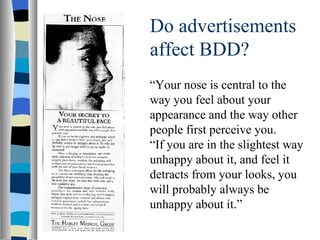
Do advertisements affect BDD? “ Your nose is central to the way you feel about your appearance and the way other people first perceive you. “ If you are in the slightest way unhappy about it, and feel it detracts from your looks, you will probably always be unhappy about it.”
More somatoform-like disorders Malingering Factitious disorder Personal By proxy Undifferentiated Somatoform Disorder Somatoform Disorder NOS Pseudocyesis (no everted umbilicus) Hypochondriacal symptoms < 6 months
Etiology of somatoform disorders Psychoanalytic theory Controlling repressed sexual urges  Displaced anxiety or secondary gain Sackheim: Deny  knowledge  but use information Behavior theory Malingering Social learning and reinforcement Secondary gain
DISSOCIATIVE DISORDERS
Dissociative Disorders Disruption in sense of coherent and stable personality identity
Dissociative Amnesia and Fugue Loss of memory for important personal information Fugue = amnesia + flight
Dissociative Identity Disorder (Multiple Personality)  Two or more distinct identities that control behavior Typical alter personalities = child, protector, persecutor 90% female >80% severely abused in childhood
Critics of Dissociative Identity Disorder Do clinicians elicit disorder? Use in insanity defense cases Can induce in normal person with hypnosis
Treatment of Dissociative Identity Disorder Confront trauma Develop coping skills Integrate personalities

Somatoform And Factitious Disorders

  • 1.
    Somatoform disorders Somatizationand Conversion Pain and Hypochondriasis Body Dysmorphic Disorder
  • 2.
    Somatoform symptoms Symptomssuggest a physical disorder Symptoms cannot adequately be explained physiologically Symptoms are often (but not always) described in dramatic ways Other disorders, such as anxiety disorders, mood disorders, and personality disorders, often co-exist
  • 3.
    Somatization Disorder (Briquet’ssyndrome) Many physical complaints Beginning before age 30 Must include Four different pains Two gastrointestinal symptoms One sexual symptom One pseudoneurological symptom Symptoms are unfounded or exaggerated
  • 4.
    Conversion Disorder Physicalsymptoms suggesting neurological problems Sensory impairment: Any modality Paresthesias and paralysis (demonstrate) Sudden onset, sudden termination, sudden reappearance Mostly women; men in combat Often misdiagnosed: Overpathologized La belle indifference: 1/3 of cases
  • 5.
    Pain Disorder Mainsymptom is pain May be exacerbated by psychosocial factors May be maintained by gain: Primary gain Secondary gain
  • 6.
    Hypochondriasis No physicalsymptoms are necessary Preoccupied with the possibility that normal sensations are symptoms of serious disease Frequent visits to physicians Persists despite medical reassurance Over-report bodily sensations
  • 7.
    Body Dysmorphic DisorderExcessive concern with real or imagined defects in appearance, especially facial marks or features. Frequent visits to plastic surgeons Culturally-influenced, but not culture-bound May be a symptom of more pervasive disorders: Obsessive-compulsive or delusional disorder, for example.
  • 8.
    Do advertisements affectBDD? “ Your nose is central to the way you feel about your appearance and the way other people first perceive you. “ If you are in the slightest way unhappy about it, and feel it detracts from your looks, you will probably always be unhappy about it.”
  • 9.
    More somatoform-like disordersMalingering Factitious disorder Personal By proxy Undifferentiated Somatoform Disorder Somatoform Disorder NOS Pseudocyesis (no everted umbilicus) Hypochondriacal symptoms < 6 months
  • 10.
    Etiology of somatoformdisorders Psychoanalytic theory Controlling repressed sexual urges Displaced anxiety or secondary gain Sackheim: Deny knowledge but use information Behavior theory Malingering Social learning and reinforcement Secondary gain
  • 11.
  • 12.
    Dissociative Disorders Disruptionin sense of coherent and stable personality identity
  • 13.
    Dissociative Amnesia andFugue Loss of memory for important personal information Fugue = amnesia + flight
  • 14.
    Dissociative Identity Disorder(Multiple Personality) Two or more distinct identities that control behavior Typical alter personalities = child, protector, persecutor 90% female >80% severely abused in childhood
  • 15.
    Critics of DissociativeIdentity Disorder Do clinicians elicit disorder? Use in insanity defense cases Can induce in normal person with hypnosis
  • 16.
    Treatment of DissociativeIdentity Disorder Confront trauma Develop coping skills Integrate personalities