SOLID WASTE MANAGEMENT
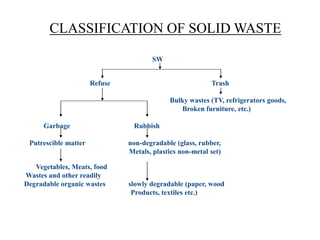
CLASSIFICATION OF SOLID WASTE
SW
Refuse Trash
Bulky wastes (TV, refrigerators goods,
Broken furniture, etc.)
Garbage Rubbish
Putrescible matter non-degradable (glass, rubber,
Metals, plastics non-metal set)
Vegetables, Meats, food
Wastes and other readily
Degradable organic wastes slowly degradable (paper, wood
Products, textiles etc.)
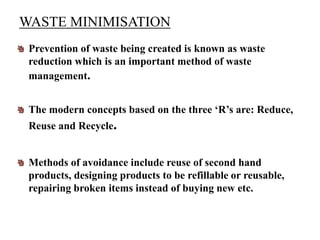
WASTE MINIMISATION
Prevention of waste being created is known as waste
reduction which is an important method of waste
management.
The modern concepts based on the three ‘R’s are: Reduce,
Reuse and Recycle.
Methods of avoidance include reuse of second hand
products, designing products to be refillable or reusable,
repairing broken items instead of buying new etc.
HIERARCHY OF
WASTE MINIMIZATION
PROCESSES CARRIED OUT DURING THE
SOLID WASTE MANAGEMENT
Integrated solid waste management through the following
processes can provide a better reliable solution for the
problem of municipal solid waste generation.
 WASTE COLLECTION
 SEGREGATION
 RECYCLING
 SHREDDING OR PULVERIZING
 COMPOSTING
WASTE COLLECTION
 From individual houses, wastes can be
collected in person with the help of
vehicle.
 To minimize the time and cost involved
in collecting waste through vehicles,
public can be given instruction to dump
their house wastes in one place (nearby
their street).
SEGREGATION
Segregation of wastes into degradable
and non-degradable wastes is to be done
to recover or divert non-degradable
wastes (electric items, plastics, tyres etc.)
and degradable items (wood, textiles etc.)
to its recycling plant and if possible, it
can be reused.
This process will help in reducing the
amounts of waste going for composting
and also earns money (through selling
wastes to recycling plant.
RECYCLING
The non-degradable and degradable wastes can be
recycled very economically in the recycling
plants.
Apart from sending wastes to recycling plant, recycling of
some organic waste is possible.
Some of the waste recycling techniques are: Fly ash,
Organic wastes, Slag and scrap, Industrial gases,
Waste waters, Recovery of silver from photographic films.
SHREDDING OR PULVERIZING
 This process involves in size reduction of organic wastes
before it goes for composting.
 This process reduces the overall volume by 40%.
ADVANTAGES:
 It will increase surface area availability for bacterial
activity (decomposition).
 Facilitates easy handling of moisture content and aeration.
COMPOSTING
Aerobic composting is one of the cheapest and easiest
methods that are being available for MSW.
Generally, composting can be carried out in three
techniques. They are
i) windrow composting
ii) Aerated static pile method
iii) In vessel method
Plastics by the Numbers
• The chasing arrow does not signifies the
material is recyclable. The number inside it
describes whether it can be recycled or not.
• Understanding the seven plastic codes will
make it easier to choose plastics and to know
which plastics to recycle.
• For example, water bottles that display 3 or
5 cannot be recycled in most jurisdictions in
the US. A three indicates that the water
bottle has been made from polyvinyl
chloride, a five means that it’s been made of
polypropylene, two materials that are not
accepted by most public recycling centers.
#1 – PET (Polyethylene Terephthalate)
• PET is most commonly used plastics in consumer
products, and is found in most water and pop bottles.
It is intended for single use applications; repeated
use increases the risk of leaching and bacterial
growth.
• PET plastic is recyclable and about 25% of PET bottles
in the US today are recycled.
#2 – HDPE (High-Density Polyethylene)
• HDPE plastic is the stiff plastic used to make milk
jugs, detergent and oil bottles, toys, and some plastic
bags.
• HDPE is the most commonly recycled plastic and is
considered one of the safest forms of plastic
Products made of HDPE are reusable and recyclable.
#3 – PVC (Polyvinyl Chloride)
• PVC is a soft, flexible plastic used to make clear
plastic food wrapping, cooking oil bottles, teething
rings, children’s and pets’ toys.
• PVC is dubbed the “poison plastic” because it
contains numerous toxins which it can leach
throughout its entire life cycle. Less than 1% of PVC
material is recycled.
#4 – LDPE (Low-Density Polyethylene)
• The plastic grocery bags used in most stores today
are made using LDPE plastic.
• Products made using LDPE plastic are reusable, but
not always recyclable.
#5 – PP (Polypropylene)
• Polypropylene plastic is tough and lightweight, and
has excellent heat-resistance qualities. It serves as a
barrier against moisture, grease and chemicals.
• PP is considered safe for reuse.
#6 – PS (Polystyrene)
• It is most often used to make disposable
styrofoam drinking cups. Polystyrene is also
widely used to make rigid foam insulation and
underlay sheeting for laminate flooring used in
home construction.
• Polystyrene may leach styrene, a possible
human carcinogen, into food products
(especially when heated in a microwave).
Polystyrene should be avoided where possible.
#7 – Other (BPA, Polycarbonate and LEXAN)
• Number 7 plastics are used to make baby bottles,
Sippy cups, water cooler bottles and car parts.
MAGNITUDE OF PROBLEM: Indian scenario
• Per capita waste generation increasing by 1.3% per annum
• With urban population increasing between 3 – 3.5% per
annum.
• Yearly increase in waste generation is around 5% annually
• India produces more than 42.0 million tons of municipal solid
waste annually.
• Per capita generation of waste varies from 200 gm to 600 gm
per capita / day. Average generation rate at 0.4 kg per capita
per day in 0.1 million plus towns.
THANK YOU

solid waste management- Rishabh Kanojia

  • 1.
  • 2.
    CLASSIFICATION OF SOLIDWASTE SW Refuse Trash Bulky wastes (TV, refrigerators goods, Broken furniture, etc.) Garbage Rubbish Putrescible matter non-degradable (glass, rubber, Metals, plastics non-metal set) Vegetables, Meats, food Wastes and other readily Degradable organic wastes slowly degradable (paper, wood Products, textiles etc.)
  • 3.
    WASTE MINIMISATION Prevention ofwaste being created is known as waste reduction which is an important method of waste management. The modern concepts based on the three ‘R’s are: Reduce, Reuse and Recycle. Methods of avoidance include reuse of second hand products, designing products to be refillable or reusable, repairing broken items instead of buying new etc.
  • 4.
  • 5.
    PROCESSES CARRIED OUTDURING THE SOLID WASTE MANAGEMENT Integrated solid waste management through the following processes can provide a better reliable solution for the problem of municipal solid waste generation.  WASTE COLLECTION  SEGREGATION  RECYCLING  SHREDDING OR PULVERIZING  COMPOSTING
  • 6.
    WASTE COLLECTION  Fromindividual houses, wastes can be collected in person with the help of vehicle.  To minimize the time and cost involved in collecting waste through vehicles, public can be given instruction to dump their house wastes in one place (nearby their street).
  • 7.
    SEGREGATION Segregation of wastesinto degradable and non-degradable wastes is to be done to recover or divert non-degradable wastes (electric items, plastics, tyres etc.) and degradable items (wood, textiles etc.) to its recycling plant and if possible, it can be reused. This process will help in reducing the amounts of waste going for composting and also earns money (through selling wastes to recycling plant.
  • 8.
    RECYCLING The non-degradable anddegradable wastes can be recycled very economically in the recycling plants. Apart from sending wastes to recycling plant, recycling of some organic waste is possible. Some of the waste recycling techniques are: Fly ash, Organic wastes, Slag and scrap, Industrial gases, Waste waters, Recovery of silver from photographic films.
  • 9.
    SHREDDING OR PULVERIZING This process involves in size reduction of organic wastes before it goes for composting.  This process reduces the overall volume by 40%. ADVANTAGES:  It will increase surface area availability for bacterial activity (decomposition).  Facilitates easy handling of moisture content and aeration.
  • 10.
    COMPOSTING Aerobic composting isone of the cheapest and easiest methods that are being available for MSW. Generally, composting can be carried out in three techniques. They are i) windrow composting ii) Aerated static pile method iii) In vessel method
  • 11.
    Plastics by theNumbers • The chasing arrow does not signifies the material is recyclable. The number inside it describes whether it can be recycled or not. • Understanding the seven plastic codes will make it easier to choose plastics and to know which plastics to recycle. • For example, water bottles that display 3 or 5 cannot be recycled in most jurisdictions in the US. A three indicates that the water bottle has been made from polyvinyl chloride, a five means that it’s been made of polypropylene, two materials that are not accepted by most public recycling centers.
  • 12.
    #1 – PET(Polyethylene Terephthalate) • PET is most commonly used plastics in consumer products, and is found in most water and pop bottles. It is intended for single use applications; repeated use increases the risk of leaching and bacterial growth. • PET plastic is recyclable and about 25% of PET bottles in the US today are recycled. #2 – HDPE (High-Density Polyethylene) • HDPE plastic is the stiff plastic used to make milk jugs, detergent and oil bottles, toys, and some plastic bags. • HDPE is the most commonly recycled plastic and is considered one of the safest forms of plastic Products made of HDPE are reusable and recyclable.
  • 13.
    #3 – PVC(Polyvinyl Chloride) • PVC is a soft, flexible plastic used to make clear plastic food wrapping, cooking oil bottles, teething rings, children’s and pets’ toys. • PVC is dubbed the “poison plastic” because it contains numerous toxins which it can leach throughout its entire life cycle. Less than 1% of PVC material is recycled. #4 – LDPE (Low-Density Polyethylene) • The plastic grocery bags used in most stores today are made using LDPE plastic. • Products made using LDPE plastic are reusable, but not always recyclable. #5 – PP (Polypropylene) • Polypropylene plastic is tough and lightweight, and has excellent heat-resistance qualities. It serves as a barrier against moisture, grease and chemicals. • PP is considered safe for reuse.
  • 14.
    #6 – PS(Polystyrene) • It is most often used to make disposable styrofoam drinking cups. Polystyrene is also widely used to make rigid foam insulation and underlay sheeting for laminate flooring used in home construction. • Polystyrene may leach styrene, a possible human carcinogen, into food products (especially when heated in a microwave). Polystyrene should be avoided where possible. #7 – Other (BPA, Polycarbonate and LEXAN) • Number 7 plastics are used to make baby bottles, Sippy cups, water cooler bottles and car parts.
  • 15.
    MAGNITUDE OF PROBLEM:Indian scenario • Per capita waste generation increasing by 1.3% per annum • With urban population increasing between 3 – 3.5% per annum. • Yearly increase in waste generation is around 5% annually • India produces more than 42.0 million tons of municipal solid waste annually. • Per capita generation of waste varies from 200 gm to 600 gm per capita / day. Average generation rate at 0.4 kg per capita per day in 0.1 million plus towns.
  • 16.