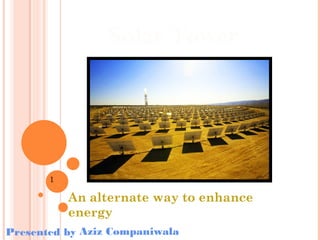
Solar Tower

1

An alternate way to enhance
energy
Presented by Aziz Companiwala
Contents
 What is Solar Tower
 Classifications
 Steam Based
 Molten Salt Based
 Heliostat
 Advantages of use of Solar Energy
 Application
 Newly setup solar towers
 Scope in India
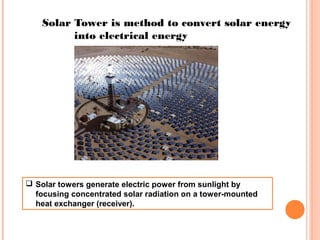
Solar Tower is method to convert solar energy
into electrical energy

 Solar towers generate electric power from sunlight by
focusing concentrated solar radiation on a tower-mounted
heat exchanger (receiver).
Solar Tower can basically classified as:1)Steam Based Solar Tower
 Water is used as medium which is converted
to steam to generate electric power

2)Molten Salt Based Solar Tower
 Here melted solution of potassium nitrate and
sodium nitrate is used instead of water as a
medium
1)Steam Based Solar Tower
Working Procedure: In solar tower, water is pumped to the receiver at
topmost part of Solar tower.
 Now solar radiation would be concentrated on
receiver via Heliostat
 Thus steam is generated due to rise in temperature
inside the receiver tank which is further used in
steam turbine generator
Working Procedure:-

 Thus Electric Power is generated from Solar
Energy
Heliostat
 Heliostat is a Greek word:Helios- sun
stat - stationary

 A Heliostat is a device that tracks
the movement of the sun.

 A heliostat is a device made of a plane metallic mirror,
which turns on as to keep reflecting sunlight towards
a predetermined target.
 Limitation of this method is there is no
alternative to produce electricity in
absence of sunlight.
2)Molten Salt Based Solar Tower
 Here melted solution of potassium nitrate and
sodium nitrate instead of water as a medium
 This molten salt mixture (60 % sodium nitrate and
40% potassium nitrate) is used due to its
properties of absorbing and accumulating heat
energy for long time.
This plant is known as Gama Solar Tower.
 This type of solar tower will work for
approximate 4-5 hours in absence of sunlight.
Advantages of use of Solar Energy
 Solar energy is renewable, and also accessible in any
part of the world.

 solar energy is non-pollutant, zero noise pollution –
since there are no moving parts in any of the devices
which are used to capture the sunlight.

 Maintenance costs are low as well – only occasional
cleaning and periodic battery replacements are
needed.
 long-life operation guaranteeing.
Applications
 In order to supply Electricity for street lights, &
wherever the grid electricity is unreliable or
unavailable, solar power tower technologies are
used.
 Solar Power can be used as Alternative for Wind &
Hydro power.
 These plants are best suited for utility-scale
applications in the 30 to 400 MW range.

 Provides rough enough Electricity for night use &
during Cloudy weather.
Newly setup solar towers
 Ivanpah Solar Power Facility:- 1,080 (GWh) Yearly
Production in United States.Estimated to be completed
till 2013.
 Crescent Dunes Solar Energy:- 500 (GWh) Yearly
Production in United States. Estimated to be completed
till 2013
 PS20 solar power tower:- 44 (GWh)
Yearly Production in Spain. Established
in 2009.
 Gemasolar:- 100 (GWh) Yearly
Production in Spain. Established in
2011.
 PS10 solar power tower:- 24 (GWh)
Yearly Production in Spain. Established
in 2006

PS10 solar power
tower in spain
Solar Project - Australia
Basic Prnciple:- Hot Air Rises
Establishment of solar tower in
India
 As this three basic need (Land, source, and solar
energy) are provided in India this can a great source of
energy in future.
 As Tropic of cancer line passes through India which
give indication that India can have great source of
solar energy.
 As Tropic of Cancer line passes through Gujarat(So
great amount of solar energy), and also a rich source of
sodium nitrate and potassium nitrate and a large flat
surface is available in Kutch, So that Gama solar tower
can be established there which will prove a great
source of energy in future.
Thank you
Presented by
Aziz Companiwala
2nd year mechatronics

Solar tower

  • 1.
    Solar Tower 1 An alternateway to enhance energy Presented by Aziz Companiwala
  • 2.
    Contents  What isSolar Tower  Classifications  Steam Based  Molten Salt Based  Heliostat  Advantages of use of Solar Energy  Application  Newly setup solar towers  Scope in India
  • 3.
    Solar Tower ismethod to convert solar energy into electrical energy  Solar towers generate electric power from sunlight by focusing concentrated solar radiation on a tower-mounted heat exchanger (receiver).
  • 4.
    Solar Tower canbasically classified as:1)Steam Based Solar Tower  Water is used as medium which is converted to steam to generate electric power 2)Molten Salt Based Solar Tower  Here melted solution of potassium nitrate and sodium nitrate is used instead of water as a medium
  • 5.
    1)Steam Based SolarTower Working Procedure: In solar tower, water is pumped to the receiver at topmost part of Solar tower.  Now solar radiation would be concentrated on receiver via Heliostat  Thus steam is generated due to rise in temperature inside the receiver tank which is further used in steam turbine generator
  • 6.
    Working Procedure:-  ThusElectric Power is generated from Solar Energy
  • 7.
    Heliostat  Heliostat isa Greek word:Helios- sun stat - stationary  A Heliostat is a device that tracks the movement of the sun.  A heliostat is a device made of a plane metallic mirror, which turns on as to keep reflecting sunlight towards a predetermined target.
  • 8.
     Limitation ofthis method is there is no alternative to produce electricity in absence of sunlight.
  • 9.
    2)Molten Salt BasedSolar Tower  Here melted solution of potassium nitrate and sodium nitrate instead of water as a medium  This molten salt mixture (60 % sodium nitrate and 40% potassium nitrate) is used due to its properties of absorbing and accumulating heat energy for long time. This plant is known as Gama Solar Tower.  This type of solar tower will work for approximate 4-5 hours in absence of sunlight.
  • 10.
    Advantages of useof Solar Energy  Solar energy is renewable, and also accessible in any part of the world.  solar energy is non-pollutant, zero noise pollution – since there are no moving parts in any of the devices which are used to capture the sunlight.  Maintenance costs are low as well – only occasional cleaning and periodic battery replacements are needed.  long-life operation guaranteeing.
  • 11.
    Applications  In orderto supply Electricity for street lights, & wherever the grid electricity is unreliable or unavailable, solar power tower technologies are used.  Solar Power can be used as Alternative for Wind & Hydro power.  These plants are best suited for utility-scale applications in the 30 to 400 MW range.  Provides rough enough Electricity for night use & during Cloudy weather.
  • 12.
    Newly setup solartowers  Ivanpah Solar Power Facility:- 1,080 (GWh) Yearly Production in United States.Estimated to be completed till 2013.  Crescent Dunes Solar Energy:- 500 (GWh) Yearly Production in United States. Estimated to be completed till 2013  PS20 solar power tower:- 44 (GWh) Yearly Production in Spain. Established in 2009.  Gemasolar:- 100 (GWh) Yearly Production in Spain. Established in 2011.  PS10 solar power tower:- 24 (GWh) Yearly Production in Spain. Established in 2006 PS10 solar power tower in spain
  • 13.
    Solar Project -Australia Basic Prnciple:- Hot Air Rises
  • 14.
    Establishment of solartower in India  As this three basic need (Land, source, and solar energy) are provided in India this can a great source of energy in future.  As Tropic of cancer line passes through India which give indication that India can have great source of solar energy.  As Tropic of Cancer line passes through Gujarat(So great amount of solar energy), and also a rich source of sodium nitrate and potassium nitrate and a large flat surface is available in Kutch, So that Gama solar tower can be established there which will prove a great source of energy in future.
  • 15.
    Thank you Presented by AzizCompaniwala 2nd year mechatronics

Editor's Notes